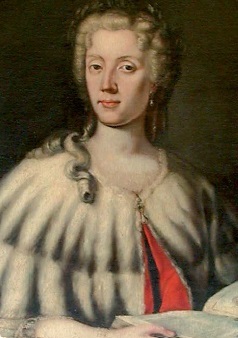
Laura Bassi was once called a “monster”. And she was. She was a monster of intellect. In 1732, she became the first female doctor of philosophy at the University of Bologna. Her doctoral degree defense was a highly public event, attended by foreigners, clergy, professors, nobility, and onlookers—yet she was still forbidden from teaching at the university and was deliberately excluded from a prestigious group of academics within the Institute for Science.
It’s not news that women have been denied the same educational and institutional opportunities, resources, and access as men, and that science’s history is often told through the stories of great men, with a few great women making an appearance here and there. But that approach misses the big picture. The history of science isn’t complete without women.
Leila McNeill, an author, editor, and historian of women and gender in science, introduces us to 10 lesser-known women who have, in their own unique ways, shaped the world in which we all live. As you hear about their lives and stories, you’ll discover a more complete picture of science—what science is, how it is done, and who gets to participate. You’ll see that women in science are not anomalies. They aren’t separate from the flow of time and onward march of history. Women, in their own innovative ways, have always played a part in shaping science and, in turn, our world and our understanding of our place in it.
Leila McNeill (also published as Leila A. McNeill) is an American writer, editor, and historian of science. She is an Affiliate Fellow in the History of Science at the University of Oklahoma and the co-founder and co-editor-in-chief of Lady Science Magazine. She has been a columnist for Smithsonian.com and BBC Future, and she has been published by The Atlantic, The Baffler, JSTOR Daily, and more.
This is a beautiful, short list of 10 lesser known women in science who made worthwhile and notable contributions to multiple fields of study. Definitely worth the listen. I love coming across these nuggets.
Yes, there are multi-volume books that attempt to list women in science throughout history along with their stolen, overlooked, and outright ignored contributions. And, thankfully, there is an ever increasing number of biographies as books, on blogs, and captured on various websites attempting to document stories of women in science.
But this audiobook is the perfect bite size book for a week of lunch breaks or during a few workouts, or while commuting. An easy read whether you wanted an introduction to women’s contributions or just enjoy an accessible reminder of a history that continues to be largely unknown and willfully ignored by many.
Women Who Made Science History by Leila McNeill is an inspiring and engaging listen. The audiobook highlights an impressive range of women whose scientific contributions have shaped the world, many of whom I had never heard of before. That alone made the experience feel fresh and eye‑opening. McNeill does a great job balancing well‑known figures with lesser‑known pioneers, and I particularly enjoyed how each chapter offers just enough context about their time, challenges, and achievements without ever feeling dense. The narration keeps the pace lively, making it easy to stay immersed. What stood out most was how fascinating it was to learn about so many women who made valuable, often overlooked contributions across so many fields. It’s the kind of audiobook that leaves you wanting to dig deeper into each story afterward. While I would have loved even more detail on some of the scientists, the breadth of coverage is impressive, and the overall experience is both educational and empowering. Highly recommend for anyone who enjoys history, science, or simply discovering the stories that deserved to be spotlighted long ago.
If you’ve ever picked up a history of science book, you’ve probably noticed a recurring trend: the narrative tends to treat women in STEM like rare, exotic glimmers in a massive sea of dudes in powdered wigs. You get Marie Curie, maybe Ada Lovelace if the author is feeling spicy, and then... crickets.
Leila McNeill’s Women Who Made Science History is here to politely (and thoroughly) shatter that lazy template.
What Makes This a Winner Beyond the White-Washed History: Let’s be real—so many books in this subgenre suffer from extreme Eurocentrism. McNeill actually did her homework, highlighting a genuinely multicultural array of women. It turns out that shaping the world wasn’t a regional pastime, and seeing these diverse, global perspectives is incredibly refreshing.
The Rise of the "Intellectual Monsters": The standout star of the narrative has to be Laura Bassi. In 1732, she became the first female doctor of philosophy at the University of Bologna. She was dubbed a "monster of intellect"—which is easily the coolest backhanded compliment in academic history.
The Bitter Sweetness of "Success": McNeill doesn't sugarcoat the historical hypocrisy. Bassi’s doctoral defense was a massive public spectacle attended by royalty and clergy, yet she was still barred from actually teaching or joining the university’s inner circle. It’s the ultimate 18th-century equivalent of "We love your work, but you can’t sit with us."
"Women in science are not anomalies. They aren’t separate from the flow of time and the onward march of history."
The Big Takeaway This book successfully reframes the entire conversation. Women weren’t "glitches in the system" or historical flukes who somehow snuck into the lab when the men weren't looking. They were always there, actively doing the work, even when institutional doors were slammed, locked, and barricaded in their faces. By focusing on 10 lesser-known figures, McNeill gives us a much more complete, realistic picture of how science actually evolved.
Why It’s a 4/5 (And Not a 5/5) While the writing is engaging and the historical research is top-notch, limiting the book to just 10 profiles feels like a tease. You’ll finish this book incredibly inspired, slightly enraged by historical gatekeeping, and wishing it was twice as long.
If you want to expand your scientific horizons beyond the usual suspects and appreciate a truly global history of innovation, this is absolutely worth the spot on your bookshelf.
Women were systematically denied education and access to scientific work, yet we do have women in history who had significant scientific achievements. However, we do not know about them, besides Marie Curie, even whose contributions were belittled as not coming from insight, but perseverance, because genius was reserved for men.
We do not know because they often had to carve out work in other places than academia - usually in their home, working with their husbands, or in low prestige work like tedious data collection. We do not know because their contributions went unattributed, absorbed into their male partners’ or bosses’ achievements, or were overlooked, neglected, and often deliberately erased. However, feminist historians now are looking to identify these women, and restore their place in history.
Leila McNeill identified ten little known women scientists and gave six lectures for on the life and contributions of these women, in this 3 hour long Audible original (available for free with an Audible subscription). Unfortunately this did not come with a PDF with the names of these women, so I have to re- listen and note them.
Lecture 1: Women at the Heart of Science Overview of women’s role in science and why we have trouble finding their contributions.
Lecture 2: When Women Ruled the City: Bassi and Morandi
Laura Bassi became the first female doctor of philosophy at the University of Bologna in 1732. Her doctoral degree defense was a highly public event, attended by foreigners, clergy, professors, nobility, and onlookers—yet she was still forbidden from teaching at the university and was deliberately excluded from a prestigious group of academics within the Institute for Science.
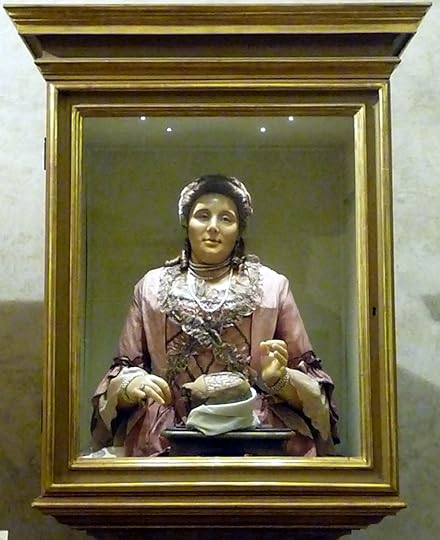
Anna Morandi Manzolini worked at the same time as Bologna’s lady anatomist, who, with her husband, was a creator of wax human anatomical figures. Anatomy was at the time a new science and her models were known not just for their scientific accuracy but their artistic merit as well.
Lecture 3: Protecting Nature: Ammal and Clark
Janaki Ammal was an India’s leading botanist, an expert in cytogenesis, who spearheaded the conservation of indigenous plants, advocated for indigenous methods of preservation, and was heading the efforts to preserve the rain forests.
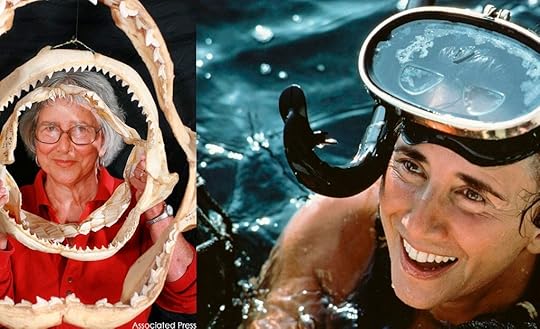
“Shark lady” Eugenie Clark has devoted her life to study marine life, and was fascinated by sharks. Her research and popularization of sharks changed our view of sharks as mindless eating machines into a vital part of maintaining balance in the food chain. She often dove with sharks and never got attacked.
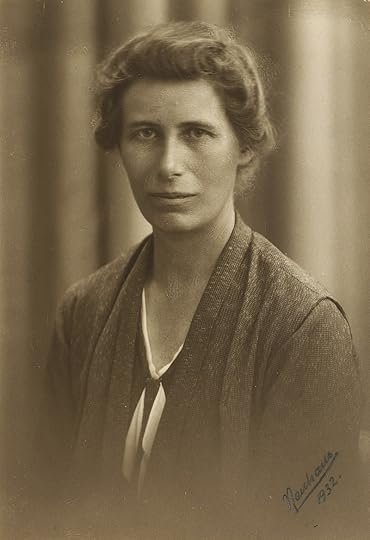
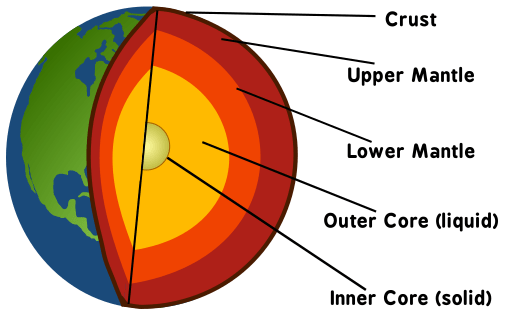
Lecture 4: A Revolution in Geology: Lehmann and Tharp Inge Lehmann was a geologist and seismologist who discovered that the Earth had a solid inner core.
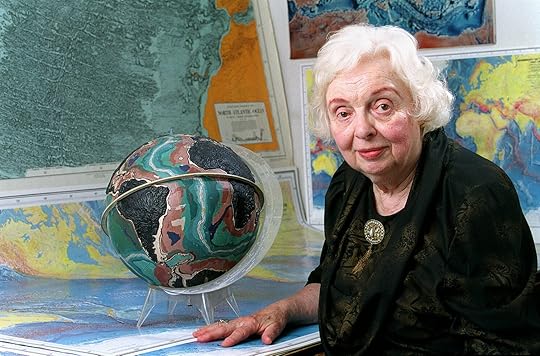
Marie Tharp was a geologist and cartographer who first mapped the ocean floor and produced the first evidence for plate tectonics and continental shift.
Lecture 5: Public Health vs. Private Interest: Hayden and Kelsey
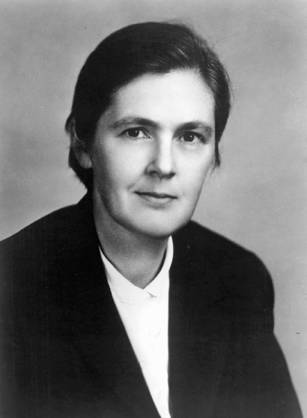
Frances Oldham Kelsey was a Canadian-American pharmacologist and physician who worked for the FDA and refused to authorize thalidomide for market because she had concerns about proof of safety. Thalomide was a drig that caused severe birth defects. She contributed to new drug safety laws and regulations, and their enforcement.
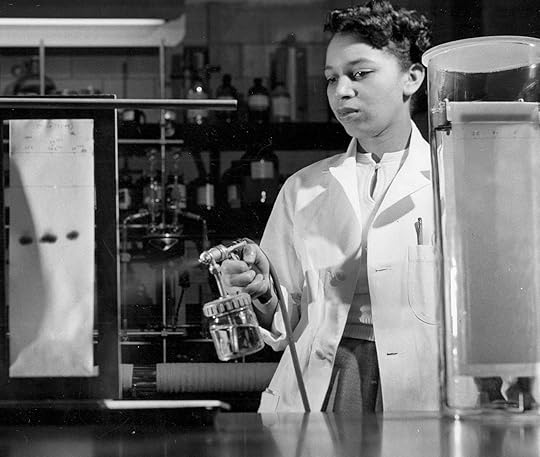
Alma Levant Hayden was a chemist, an expert in measuring how substances absorb light. She was the first African-American employed by a major US scientific agency, and possibly the first at the FDA. She played a major role in proving that anti-cancer drug Krebiozen did nothing, and prompted a change in US drug laws to require proof of efficacy as well as safety.
Lecture 6: To the Stars: Easley and Rubin
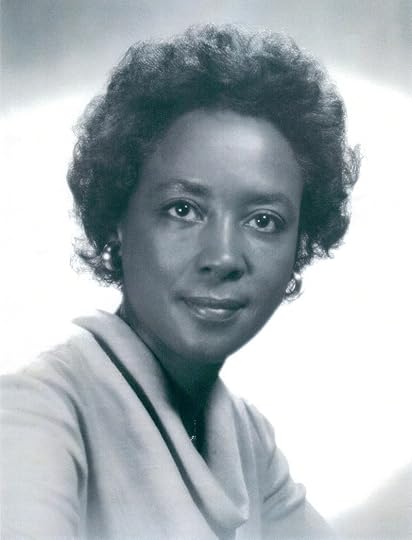
Annie Easley was a computer scientist, mathematician and rocket scientist who worked as a human computer for NASA, and later developed applications supporting NASA’s rocket and space probe launches.
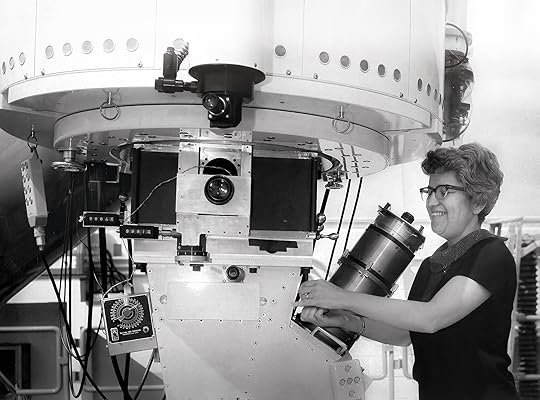
Vera Rubin was an astronomer who discovered dark matter. She uncovered the discrepancy between the predicted and observed angular motion of galaxies by studying galactic rotation curves. By identifying the galaxy rotation problem, her work provided evidence for the existence of dark matter. These results were later confirmed over subsequent decades. The Vera C. Rubin Observatory in Chile is named in her honor.
There are a lot of books like this one that attempt to humanize science by giving summaries of the contributions of individual scientists. What makes this one stand out is its focus on a handful of the thousands of women scientists who quietly advanced the field while their male peers took all the credit. McNeill does an excellent job of not only giving some well-deserved attention to these figures, but in describing the prejudices that handicapped them in the performance of their jobs. It’s a short read, but worthwhile.
Super interesting read! Amazing to hear the contributions of women from different backgrounds, races, and nationalities, and the immense difference they made across various fields. I'm glad a lot of them got their flowers (finally) after their hard work and I hope more are noted and their stories and contributions are realised
Very interesting look at the hidden women in science, how they have always been there, and how society has worked to diminish their accomplishments or transpose them onto the men in their lives.
Loved learning about these women - all but one of whom I’d never heard of. Also infuriating - the discrimination. Audiobook - narration is a little stilted, but very clear.
A bit dry, but the lecturer did a great job outlining the overlooked achievements of women in a diverse array of science fields. Worth a listen if the topic interests you.
This was a good summary of some women in science who had to fight to be seen and heard and most of their accomplishments went largely unnoticed within the scientific community and the public. These are just a few of many who should be acknowledged. These stories can inspire young girls today. Laura Bassi, 1732 became the first female Doctor of Philosophy but she was forbidden from teaching. There are many other women in the sciences from astronomy, physics, chemistry, biology, and the environment. Women have always played a part in shaping science.
I still love to learn more about History and about women making history, so I loved these courses about both! I didn't know much of what I learnt and I think I'll read books about the subject to fix the knowledge I acquired. I still want to read Forces of Nature: The Women who Changed Science by the same author!
3.5⭐️ It wasn’t bad, but nothing special either. I think the stories just weren’t approached from the angle that makes a life story or an achievement interesting to me.