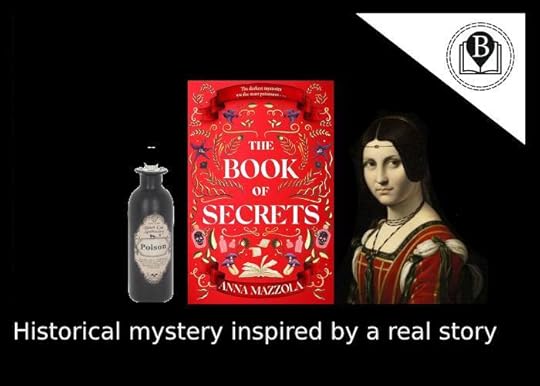
Months after the plague ravaged Rome, men are still dying in unnatural numbers, and rumour has it that their corpses do not decay. The Papal authorities commission lieutenant governor Stefano Bracchi to investigate as subtly as he can.
Meanwhile, to the north of the city, Anna Maria Aldobrandini, Duchess of Cesi, is trapped in an abusive relationship with a much older man she was made to marry when she was only a girl. Her friend, Sulpizia Vitelleschi, is in a similar position, but there is no prospect of divorce or escape. To the south, Cecilia Verzellina fears that, once her jealous son-in-law is released from prison, he will kill her beautiful daughter.
Bracci's investigation at the Tor di Nona will introduce him to horror, magic and an unthinkable discovery. And he begins to wonder: should certain deeds should remain forever unpunished...
Anna Mazzola is a writer of historical and Gothic fiction.
Her bestselling third novel, The Clockwork Girl, set in Paris in 1750, is a Sunday Times Historical Fiction pick for 2022
Her debut novel, The Unseeing, won an Edgar Allan Poe award. Her fourth novel, The House of Whispers, is a ghost story set in Fascist Italy and will be published in April 2023.
Anna also writes legal thrillers under the name Anna Sharpe, the first of which will be published in 2024.
When not writing or tutoring, Anna is a human rights and criminal justice solicitor, working with victims of crime. She lives in South London, with her husband, their two children, a snake and a cat.
She loves to hear from readers, so do get in touch on Goodreads or on social media.
The Book of Secrets alternates between three points of view: Stefano Bracchi, judge turned inquisitor, keen to prove he is not the weak character his father believes him to be; Anna, wife of a failed artist whose disappointments are expressed in violence; and Girolama, a Sicilian woman skilled in midwifery and the creation of herbal remedies. One particular ‘remedy’ of hers has become sought after, a recipe handed down and recorded in the ‘book of secrets’ of the title and distributed via a network of female associates to women in need of escape.
Although Stefano knows only that he has been asked to investigate a series of suspicious deaths amongst men of Rome, all of which exhibit unusual features, the reader knows from pretty early on what Girolama and her assistants are doing and why. It becomes less a mystery more an interesting moral question about whether the women’s actions are justified, but no less absorbing for that. It’s a question that even Girolama begins to ask herself, especially once many of her assistants are rounded up as part of the investigation. And can she be sure that in every case, the action was justified, that every man who died was an abuser or merely an obstacle standing in the way of financial gain? She’s strong but can her associates exhibit similar strength?
Stefano also faces a dilemma as he is forced by his superiors to use more and more severe methods – many of which are harrowing to read about – to try to extract confessions from Girolama and her associates. Is the suffering he is inflicting on the women justified merely in order to further his career? He finds himself wondering what kind of man has he become and wishing he had listened to his sister, Lucia, who warned him about the dark place his investigation might take him, and that it was a poisoned chalice.
Although inspired by real events, the author freely admits in the Historical Note that she has allowed herself a degree of artistic licence in places. That didn’t bother me at all as the book immerses the reader in the sights, sounds and smells of 17th century Rome. It’s a male-dominated society, though, one ‘preoccupied with honour, status and vendetta’. Women have few, if any, rights meaning they must find their own way to fight back. And it’s a society in which if you have power and influence you need not fear being brought to justice. I found it a compelling story and, even though it involves an investigation and a trial, more nuanced than a straightforward historical mystery.
“Why does one man’s life count for more than a cartload of women’s?” This is a key theme of the story that transfixed and absorbed me while reading this novel. This was an absolutely fabulous historical mystery set in Rome, where similarly to Britain, suspicion of witchcraft and female wiles were rampant. A very thought provoking read based on a real case. many thanks to Netgalley for an arc of this book.
The year is 1659, Rome. Many months after the great plague ravaged and destroyed Rome, men are still dying in unnatural and shocking numbers, and if you should listen to gossip and rumour, their corpses are not simply decaying and going back to the earth as nature intended. No, these bodies still hold a glow of the healthy, to give the illusion that one is simply slumbering. This is most disturbing and highly unusual. And the authorities need answers now. The Papal authorities commission prosecutor Stefano Bracchi to investigate, pressing the matter that he will need considerable mettle to reach the truth, but he won’t be doing it alone. He will need all the help he can get if he is to expose the horrid truth… To the west of the Tiber, Girolama and her friends are hard at work, protecting and helping other women with the safe yet treacherous passage of childbirth, and foretelling their futures, doing what they can do bring some solace in very dark times. Elsewhere in the city, a young wife, Anna, is desperately searching for a way to be free of her abusive husband but she must remember in a city built by men for men, this shall be no easy task and soon she will have to put everything she has ever known to the ultimate test. However Stefano must also tread carefully for his world is about to be exposed to horror, magic, and betrayal. Will the citizens of Rome ever know the extent of just what powers conspire to rid the men from their streets, or will Stefano be able to act fast enough to put a stop to it once and for all? A truly powerful slice of historical fiction, The Book of Secrets opens your eyes to a time when a simple accusation could mean the end of everything you once knew.
Rome in the mid-17th century is recovering after a severe outbreak of plague. But it comes to the attention of the authorities that men still seem to be dying in higher than expected numbers, and their bodies don’t seem to be decaying as quickly as they should. The governor, Baranzone, appoints a young lawyer, Stefano Bracchi, to investigate – discreetly, to avoid a panic. Soon Stefano will realise that a poisoner is at work, one who operates through a gang of women, selling their wares to beaten wives and daughters…
This is based on true events, although Mazzola has made some changes and filled in some of the many blanks in the historical record, all of which she explains in her afterword. The unfortunate thing about real life is that it tends not to play out as excitingly as fiction. Here we know from the beginning who the poisoner is and it’s not hard to guess how it will end. So it turns into a lengthy description of the investigation, complete with the imprisonment and ill-treatment of several of the women in the gang and one or two of the women who had bought and used the poison. To be perfectly frank, I found it dull. The story could have been told in a fraction of the space, and would probably have been more effective. Alternatively, since she was fictionalising the story anyway, Mazzola could have hidden the identity of the poisoner and made that the mystery element. As it is, there is no mystery and therefore very little tension.
Mazzola does her best to make the characters of the poisoner, the gang and the investigators interesting, but, while I sympathised with the women to the extent that they were oppressed and often cruelly treated, the overwhelming air of misandry wore me down. Maybe all Roman men were constantly beating their wives and daughters to death, but I felt the book badly needed a contrast of some good men who behaved well. Stefano is not cruel by nature, but he is tediously weak, unable to face either torturing the women or defying Baranzone’s orders. The only good man with a conscience is Marcello, the doctor who helps Stefano in his investigation. He isn’t enough to balance it. Every woman in the gang seems to have had at least one and often several husbands, all of whom had been cruel and tyrannical, and many of whom the women had murdered. Times change, and I accept the women of that period may/must have felt they could do nothing else but murder violent spouses or die themselves, but somehow I couldn’t find it in my heart to see a woman who sold poison for money to any woman claiming victimhood, without even checking, as any kind of feminist heroine. So, much though I tried to sympathise, the tone of the book simply didn’t sit well with me. Frankly I’m tired of misandry in current fiction writing. And I’m tired of every female author thinking she has to make female victimhood the central theme of every book. Is that all we are? Perpetual victims of evil men? There must be other stories to be told about women, surely.*
Add to all of this that it is written in the present tense. For some reason. 2½ stars for me, so rounded up.
* (Yes, I know other women are writing other stories, but I was feeling bitter when I wrote this… 😉)
NB This book was provided for review by the publisher, Orion via NetGalley.
4.5 stars This is a fascinating story of strong women and their fight in such a patriarchal world. The lives of Girolama and the women were so tough - it was clear from the very beginning how necessary the Book of Secrets was for their survival. I really enjoyed seeing how they rallied for eachother - the support provided so necessary. The heritage of the healing women from mother to daughter, from country to country was really interesting and I loved learning about Girolama’s history through the use of the herbs and plants shown to her by the strong women in her family. I thought the character of Stefano was really well written - his anguish at understanding what had driven these women to do the things they’d done was evident, but he was so keen to prove himself.
After recently visiting Rome I really enjoyed the setting of this book, especially the time period when the landmarks are in use. The multiple POV was very well done with each narrator having a distinct voice and the storyline was very engaging would highly recommend.
I was gifted this book from the published via Net Gallery with no obligation to review. My thoughts and opinions are my own.
Anna Mazzola’s new novel – her fifth and the fourth that I’ve read – is set in Italy and takes as its inspiration the real life story of a group of women accused of selling poison in 17th century Rome.
It’s 1659 and Stefano Bracchi, a junior magistrate at the Papal Court, has been commissioned by the governor of Rome to investigate some unusual deaths that have taken place in the city. The plague that recently swept through Rome took many lives, but this is something different. These deaths are all men and for some unexplained reason, the bodies haven’t gone through the normal process of decay.
Meanwhile, Anna is trapped in an abusive marriage and searching for a way of escape. Her maid introduces her to a woman who says she can help, but the sort of help she provides is not quite what Anna was expecting! As Stefano begins to close in on the people responsible for the mysterious deaths, Anna finds herself caught in his net, but will he be able to prove that she has done anything wrong?
The Book of Secrets is written from the alternating perspectives of Stefano, Anna and a third character – Girolama, a Sicilian woman with a knowledge of herbs, potions and fortune telling, who is said to possess the ‘book of secrets’ of the title. Because we see the story unfold through all three of these characters, there’s very little mystery involved in the book; we know what Girolama and her friends are doing to help the women of Rome, we know how Anna deals with her violent husband and we know how Stefano’s investigation is progressing. However, what I found interesting about this book was not so much the plot as the characters and the way each of them reacts to the situation in which they find themselves.
Our sympathies are naturally with Anna, a desperate woman who takes the only way out she feels is open to her, while Girolama is a more morally ambiguous character – she has the best intentions and her work does a lot of good, but at the same time she seems largely unconcerned that her actions may occasionally cause harm to innocent people. The Rome of 1659 is a male-dominated society and many of the women in the book are victims of men, but Stefano Bracchi is another nuanced character; as he begins to round up Anna, Girolama and their associates for interrogation at the Tor di Nona prison, he becomes torn between compassion for their suffering and the desire to keep his superiors happy for the sake of his career.
Before starting this book, I knew nothing about Girolama Spana and the case this novel is based on. Although Anna Mazzola hasn’t stuck to the historical facts and has invented or expanded parts of the story, she does explain her choices in her author’s note at the end of the book. The Clockwork Girl is still my favourite of her novels, but this is another fascinating one.
Stefano Bracchi is investigating a series of deaths.
The Book of Secrets is brilliant. The quality of Anna Mazzola’s writing is incredibly impressive; partly due to the fact that her narrative is based in meticulously researched real events, partly because of the perfect plotting, short, gripping chapters and the mix of realism with possible witchcraft, and partly as a result of the faultless narrative tone which is accessible and yet just right for the 1600s era. Combined, these elements mean that The Book of Secrets becomes far greater than the sum of its parts and is a fascinating, mesmerising and enthralling story.
There are engaging and entertaining twists and turns in an exciting plot that is historical, magical and has mystery at its heart so that it appeals to lovers of many genres. However, it was the themes of the story that I found so fascinating. Anna Mazzola tells an eternal story of man’s inhumanity to women with a freshness that doesn’t moralise bluntly, but rather educates and informs with such clarity that I found myself enraged every bit as much as entertained. The role of women in society, the fine balance between right and wrong, the concept of the end justifying the means, and the way perception and self-delusion can distort our behaviour and morality are intelligent, compelling and relevant to the modern reader, every bit as much as they are to the characters of the story.
Indeed, the characterisation is complex and thought provoking. At the opposite ends of events, Stefano and Girolama have far more in common than they may imagine, though you need to read the book to understand why as I’m not going to spoil the story. The impact of gender and social class, and the reasons why we become what we become are aspects underpinning all the characters, and these are illustrated with sensitivity and conviction, making for such a fabulous story. I particularly loved the Shakespearean Marcello. He is the voice of reason, a kind of touchstone against whom we can measure and judge the likes of Baranzone. There’s quite a cast of characters and each is distinct, layered and believable – indeed some are all too authentic and elicit a range of violent and emotional responses in the reader because they are so impactful.
I absolutely loved The Book of Secrets. It’s so hard to review without giving away too much of the plot, but it’s hard to imagine a better depiction of the poison inquisition in Rome in 1656. It’s one of those books that calls to the reader when they aren’t actually reading it and it reverberates in the mind after it is finished because it is immersive, entertaining and completely superb. I cannot recommend it highly enough.
"The Book of Secrets" by Anna Mazzola is an incredible novel that takes readers back to 17th-century Italy, specifically to the captivating city of Rome in 1659, just months after the devastating plague wreaked havoc. Get ready for a chilling and mesmerizing journey through real historical events!
Our protagonist is prosecutor Stefano Bracchi, who finds himself embarking on a thrilling investigation assigned by the Papal authorities. He's tasked with unraveling the mysterious deaths of several men and the astonishing rumor that their bodies refuse to decay as they should. But there's more to this story than Stefano's pursuit of justice. We also follow the extraordinary experiences of Girolama and her female cohorts, who provide aid to women in childbirth and dabble in the art of fortune-telling. Then there's Anna, a young wife desperate to escape the clutches of her abusive husband. These multifaceted characters come together in the haunting Tor di Nona prison, where they encounter horror, magic, and an unforgettable cast of personalities. As Stefano delves deeper into this eerie world, he begins to question whether some acts should remain unpunished.
Prepare yourself for a gripping historical thriller that offers a unique glimpse into the struggles faced by women in a society dominated by men. The novel masterfully explores the alluring power of secrets and the profound impact they have on individuals and their actions. Our characters grapple with the weighty choice of keeping or revealing their secrets, with far-reaching consequences. Through their trials and tribulations, you'll witness the lasting effects of past secrets on the present, and the delicate balance between curiosity and respect for others' privacy.
Moreover, as our characters untangle the truth and face the aftermath of their secrets, they must also seek forgiveness for the harm caused. In a world filled with deception and hidden truths, Anna Mazzola takes us on a journey that examines the complexities of secrets and the unwavering pursuit of truth.
Prepare to be captivated by the author's enthralling writing style, as well as the believable and endearing characters who will truly leave a mark on your soul.
I really enjoyed this book quite a lot! It really brought the Aqua Tofania story to life and had visceral descriptions of the lives of women who had to rely on this substance. Would recommend this book!
A gripping historical novel that offers a unique glimpse into the struggles faced by women in the 17th century society which is dominated by men and women are viewed as possessions. While there is an element of mystery involved it is very much a side story. The descriptions of the time and place are vivid and compelling and very well researched. It is a dark topic that is not as well known as some other similar era's in history as it is based on a true story. I received an advance review copy for free, and I am leaving this review voluntarily.
Intruiging premise, great historical details, good writing.....terribly boring story.
I think the issue with this book is that the blurb misleads on what to expect. Upon first glance, you're expecting a historical crime thriller/mystery. What you actually get is a story that gives away the poisoner's identity within the first couple of chapters and then drags on until the trial at the end. I'm not sure what the purpose of this book was, other than to highlight societal inequalities in 17th century Rome and provide a fictionalised account of a real-life trial which took place.
I really wanted to love this book but by about a quarter of the way in I was losing interest and I only finished it to see if there was a plot twist at the end. Spoilers - there is one, but it was incredibly underwhelming.
I really wanted to like this book but I forced myself to the end, this was slow and nothing drew me in. I didn’t feel a connection to any of the characters and saw all of the twists coming, it didn’t really stir any emotions in me. It wasn’t intolerable to read and I like any plot that intends to centre around witchcraft but I just lacked the connection with this book. For me personally there was a lot of tell rather than show but that might be purposeful or due to the tense chosen? Shame because this authors’ books are rated pretty highly so maybe I’ll try her other books!
I have recently come across the story of Giulia Tofana and her involvement in a real life historical mystery. She was a woman who lived in 1600s Rome and who concocted a poison that was then distributed to women who begged her for help in avoiding their abusive husbands. Anna Mazzola has taken this story and turned it on its head – giving Giulia herself a voice as well as letting the women in her circle speak. And the result is quite something!
The scene setting is wonderful if not dark. This is the time of the plague and the dictates of the Catholic Church, of persecution and of a society where women were controlled in every way. When the plague is under control, the authorities start to notice excess deaths where the body was described as looking healthy and ruddy. That of course brings an investigation in itself. Secrets and lies swirl around the dark corners of Rome and the insides of these women’s houses. The writing flows and creates the most vivid of places so that was a real treat for me.
Even though inspired by historical fact, the story is fictionalised and I think Anna has achieved a really good mix. Real people float through the pages and Anna’s imagination does the rest. It was fascinating to see the type of research involved in the author note.
Map of locations in The Book of Secrets Stefano is one of the few men in the book and for good reason – this is the story of the women and how they suffered and why they felt compelled to do what they did. The tension throughout is palpable. Even though you suspect what is going to happen at the end, there are still questions and time to reflect.
I wish I didn’t read in such a vivid way – I can still smell the stench of the Tor Di Nona prison and hear the dripping water down the walls. Worryingly, I did feel I got to know the women really well and started to ‘understand’ where they were coming from. I felt nervous for them reading Stefano’s chapters and willing them to ‘get a move on’ when they came up next. A great way of writing this story for tension!
A brilliant read which will lead to far too many hours on Google afterwards
(3.5) Another interesting read from Anna Mazzola. Based on real events in 17th century Rome, this is a man’s world where women are treated as chattels. Abuse is common. With no way out and their lives in peril, some are forced to seek help to bring their torment to an end. Their story unfolds through 3 narrators: a lawyer asked to investigate a number of strange deaths, an abused wife and a Wise Woman (midwife/herbalist.) The strength of this book is not in the plot per se - there is little mystery as we know who the perpetrators are from almost the outset. Rather it is about inequalities and the moral question: is criminal action ever justified? This book is not black and white and is all the stronger for that. We do not have a straightforward villain and heroine scenario here; the easy option for a writer. The reader has some sympathies for the investigator, pushed into a role he does not relish and, equally we have to question both some of the actions and attitudes of the ‘Wise Woman’, particularly in light of the fictional ending.
An absolutely stunning read based on true historical events. Couldn’t put it down. It grips you right til the final page. The storytelling is first class as is the characterisation throughout. And the message of women as powerless against the domination and violence of men is sadly as relevant now as in the book’s historical setting. A truly epic book. This is the first I’ve read of this author but won’t be the last.
Golden dagger award winner 2025 Interesting book- historical crime isn’t a genre I read often. Felt well crafted, once again a past Rome was a well crafted backdrop. The premise and historical basis of the book of women organising to get revenge on abusive men when the system would never be on their side was powerful, and the qualms of the investigator felt real. It just tied up a little too neatly and maybe the arguments in favour of allowing revenge were made a little too glibly for me. A good read though
Very interesting storyline which has a strong basis in real history. I found it a bit heavy going in parts but the ending is sound so was worth getting to the conclusion. Probably a 3.5
Another outstanding novel from this author. I loved her previous book The Clockwork Girl, and was thrilled to receive a review copy of her latest book- The Book of Secrets. This one is set in Rome and again, this author transports us to the story settings so vividly, whether it be the humble homes of the wise women dabbling in herbs and potions, or the dank dark prison settings whereby the lawyer tries to extract confessions. A fabulous, intricate piece of storytelling based on true events and highly recommended. Thank you NetGalley, the author and the publisher for the opportunity to read this excellent historical fiction.
The book lived up to the dedication. It was a perfect balance of rooting for both sides, and acknowledgement of the grey areas of morality.
Mazzola highlights the suffering of women- while also creating realistic characters who are selfish, self-preserving, traitorous and cruel, she shows how one doesn't subvert the other.
She also highlights the nature of misogyny- and that being complicit in a system has the same impact as being fervent in your hate- the importance of action, and the fallible nature of humans.
Frustrating and keeps you on edge, an enjoyable and resonant read.
Set in 17th-century Rome, The Book of Secrets is a gripping historical crime novel based on a true story.
Despite the fact there are very few mysteries for the reader to unravel (the use of multiple perspectives means we know more than any one character), I found the storytelling fast-paced and compelling. The prose is fluid and easy to read, and the charactesr are vivid and well-imagined. Through three different perspectives, Mazzola explores themes of crime and conscience, and what justice really means in a fundamentally unjust society.
Highly recommended for fans of historical fiction, The Book of Secrets is a compulsive and thought-provoking read.
*Thank you to Netgalley for the arc in exchange for an honest review*
I rooted for all of the women: poison makers and poisoners completely. The 17th century oppression and persecution of Italian women by their male family members as depicted by Anna Mazzola outraged this reader. What choice did an abused (common practice, sanctioned by law and society) woman have?
This well written historical fiction novel kept me turning the pages awaiting the fates of the characters. However, 3 stars because the drama dragged out much longer than was necessary. A solid read.
DNF at 53%. I thought this started strong but became excruciatingly boring in the middle. I tried but I just couldn't bring myself to carry on. Once the mystery of what was killing the men was solved pretty early on there was no suspense to keep me interested. I found the chapters told from Stefano's perspective to be especially boring and too heavy on the dialogue. A real shame as on paper this book was just up my street.
I adore Anna Mazzola’s writing and the Book of Secrets is another cracker, possibly her best yet!
Set in Rome in 1659 and told from multiple points of view, it is the story of how Stefano Bracchi, the youngest son of a merchant and a hard working though as yet junior lawyer takes on a commission from the Governor of Rome. It is a commission that he knows could make or break him and it is the biggest challenge of his career. It is also his chance to show his disdainful father that he is equal to the task.
But the road to success is paved with a lot of fault lines. A man has been found dead and the whispers are that his body did not decay as others have done and that his complexion remained ruddy for days after death. For a city that is just recovering from the plague, this suggests a threat of another kind may be on the horizon and the authorities are keen to understand what is going on before the whispers send the citizens into fear with the threat of another epidemic.
As Stefano begins his investigation we learn quite a lot about the role and place of women in Rome at the time. Anna is no more than her husband’s chattel. He can, under the law, beat her and abuse her as he pleases. The fact that she is heavily pregnant makes no difference. Her job is to cook, clean and obey her husband in all things and if his temper leads to a number of very bad beatings, then that’s simply to be borne. Anna tries to speak to her priest about this, because she fears she will lose her baby, but he sends her home with a flea in her ear.
Girolama is a healer, a midwife and a fortune teller. She tailors her money making activities according to the wealth of her clients, who are exclusively female. Well versed in the science of herbal healing, she makes potions, face creams and healing brews, the recipes for which she keeps in a locked book, the eponymous ‘Book of Secrets’. Many women have good reason to be grateful to her and the knowledge of her business is whispered by and among women seeking discreet help for their ills.
Anna Mazzola’s book is based on fact and I love the way that she blends fact and fiction together to bring the city and the people alive. This is a patriarchal and hierarchical society, ruled by noblemen and susceptible to stories of witchcraft and anything they don’t understand or can’t control.
When similar deaths come to light in Stefano’s investigations, each showing the same kind of post mortem traits, Stefano’s investigations lead him, via a tortuous route, to Girolama and her friends.
Stefano has no proof for what he thinks has happened, but the authorities want to make an example of these women, for could they not, in fact, be engaged in sorcery? And so they open up a prison which was previously closed down for being in too poor a condition for prisoners, and put the women in there. The conditions are dreadful. Dark, damp and riddled with rats they are kept in isolation and treated with violence, kept in need of food and clean water and essentially tortured for the truth.
This is not treatment with which Stefano is entirely comfortable, but he needs to succeed in his mission and intervening is not in his best interests if the truth is to come out. Though the descriptions of what these women undergo are not graphic, nor does Mazzola shield us from what happens to them and it does not stop the reader from becoming enraged with such inhumanity.
I could not help but admire Girolama’s courage and steadfastness in the face of such terrible treatment. Although I understood Stefano’s conflicted feelings, it was hard to forgive his complicity. Because Anna Mazzola has shown us the women’s backgrounds and personal stories, it is very hard not to understand what drove them to take action. This is a sisterhood which has come together to grant each other something that the men of Rome will not – some control over their lives.
You care about these women because they are so beautifully drawn and as the trial looms, the tension is palpable and my heart was thumping right up to the utterly gripping denouement.
Verdict: A story which brings both the people and 17th century Rome to life. A terrific blend of fact and fiction, Mazzola has struck a chord that resonates today. Dark, vivid, visceral and utterly compelling, I loved the story and adored the writing
Thanks to NetGalley and Orion for the advanced copy of this title in return for an honest review.
I do love an Anna Mazzola book. None have quite hit the heights that The Clockwork Girl met, for me, but they're all still very enjoyable. She can do historical novels like very few.
I know nothing about 1600s Italy, and therefore Anna could have written anything and I'd have taken it as truth, but there's so much detail here that you can tell the extent of her research. And it's not just the detail in the crimes or the location, it's the detail in the clothes, the food, the smells, the beliefs, the actions, the love. Everything is so precise, yet it doesn't feel bogged don in detail like a historical non-fiction text might do, it only adds to the strength of the story.
There are a lot of characters, which, to begin with, were a little difficult to keep on top of. But I think some of that might be because I'm not used to reading a lot of Italian names, so I'm not as familiar with them. But it doesn't have a negative effect on the story, and it didn't last long. It's soon so expertly woven that the names feel as natural as anything.
It definitely started with a bang. Some books take their time to get into, and that's absolutely fine. But this was straight in, and when I looked down to see how far I was, I was only 9% in, and yet so much had happened, and I hope it continued like this - which it did.
It's not full of action, it's not that kind of book, and I think it's actually all the better for it. Anna has given time to her characters, to the environment they live and work in, to their relationships, more than a heavy plot and I am glad of that. I'm not saying the plot wasn't interesting or worth reading, of course it was, but for me it was almost inconsequential to what Anna has created in terms of character.
We have three main POVs: we have Stefano, who is the lead character, I would say; he's a new lawyer looking to prove that he can live up to his expectations. Then we have Anna, a married woman who is at the will of her violent husband. And then we have Girolama, a type of midwife, a fortune teller, who appears to be the mother figure for the women around her. The three POVs all work separately, but they also work very well off of each other to make this complex story work.
I suppose it is a whodunnit at heart, but it's a subtle one. For me, it's more about the power struggles and gender inequalities (which isn't surprising considering it's set in the 1600s), than the actual whodunnit aspect. it's definitely a historical novel, of course, but it ponders some other genres. Is it a story about magic? Or science? Is it about spirits or humanity? About truth or lies? About fear and bravery?
It picks up on the fact that in those days, men were seen as the stronger ones, the ones in charge. But for me, it's their attempts at showing their strength that weakens them, and in turn, makes the women the more powerful.
As hard as it is to believe, this is based on a true story, which makes it all that more fascinating.
It still hasn't eclipsed The Clockwork Girl for me, although it's probably the book that has come the closest. But that doesn't make it any less of a really fantastic, clever, enjoyable, thrilling read.