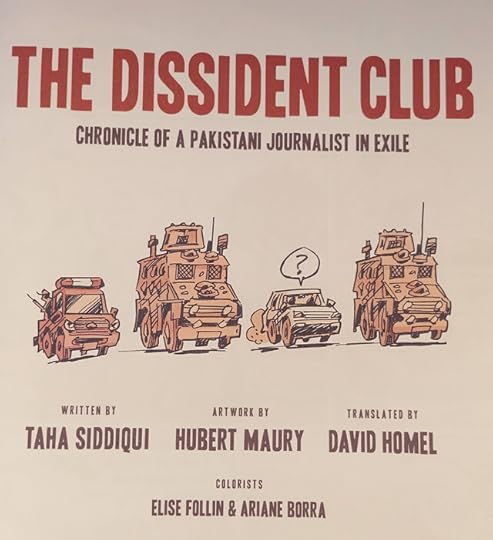
En 2018, après avoir été victime d’une tentative d’enlèvement et d’assassinat dans son pays d’origine, le journaliste d’investigation Taha Siddiqui trouve refuge en France. À travers ce roman graphique il revient sur sa jeunesse, son parcours et son combat pour la liberté de la presse.
Quand les parents de Taha quittent le Pakistan pour l’Arabie Saoudite c’est dans l’espoir d’une vie meilleure. Au pays de La Mecque, le quotidien du petit Taha est déjà régi par un islam rigoriste mais quand son père se radicalise, les choses se corsent. C’en est fini des coloriages de Batman et Superman, place à des livres moins profanes. Désormais les super-héros de Taha seront les leaders religieux ! En pleine Guerre du Golfe, la police des mœurs commence à sévir et bientôt il faudra aussi renoncer au foot de rue. C’est en l’an 2000 qu’une brèche s’ouvre... La famille se réinstalle alors au Pakistan où l’armée a pris le pouvoir. À l’âge de 16 ans, Taha rêve de faire des études d’arts, mais son père a d’autres projets pour ce fils qui rechigne à suivre le droit chemin. En attendant, Taha va découvrir une Société faite d’interdits que la jeunesse s’efforce de contourner. Jamais il ne s’est senti aussi libre malgré l’insécurité ambiante. Les attentats du 11 septembre vont profondément l’impacter, tout comme son entrée à l’université. Après avoir connu l’école coranique et la censure, Taha va progressivement s’émanciper et trouver sa voie… il sera journaliste. Sa détermination, sa foi en son métier et son engagement politique feront de lui une cible comme tant d’autres condisciples. Dissident Club retrace avec un humour libérateur et décomplexé le quotidien d’un jeune homme aux prises avec les fondamentalistes religieux ainsi que son combat pour un accès à l’information et la liberté d’expression. Coécrit et mis en scène par Hubert Maury, ancien diplomate, l’ouvrage offre une vision limpide du Pakistan et une réflexion sur la religion, ses dérives et les fractures d’une communauté.
Un album en partenariat avecReporters sans frontières et France Info.
Je ne lis que très rarement des BD. Celle-ci m'a été offerte, le sujet m'intéressait grandement.
J'ai plongé dedans tête baissée sans jamais en sortir. Une vraie claque, sur la réalité de l'islamisme et de ses dérives dans les pays du moyen orient. Un témoignage sincère, émouvant, parfois drôle.
J'estime que certaines personnes devraient lire ce type d'ouvrage qui nous apprennent grandement sur les réalités d'ailleurs et qui se développent désormais dans certains endroits de notre pays.
Biograficzno-reporterska pozycja, która spodoba się fanom "Araba przyszłości" i "Odyseji Hakima". To bardzo intensywna opowieść, zarówno jeśli chodzi o fabułę, jak i dynamiczną grafikę. Jedyne, do czego na siłę mógłbym się przyczepić to fakt, że twarze bohaterów bywają zbyt słodkie w porównaniu z tym, kogo reprezentują. Karykaturalny styl Riada Sattoufa sprawdziłby się tu chyba lepiej, ale to już moje luźne fanaberie. Nie przegapcie
THE DISSIDENT CLUB: Chronicle of a Pakistani Journalist in Exile by Taha Siddiqui and Hubert Maury translated from the French by David Homel is an amazing graphic memoir. I read this book slowly over a couple weeks and I loved the openness of Taha sharing his experiences growing up in Saudi Arabia and Pakistan living under the stern eye of his fundamentalist Islamic father and the wonderful illustrations that enhance this story. This book opens with Taha being kidnapped and I enjoyed how the structure of this book is full circle. I liked how Taha introduces himself and speaks directly to the reader and the distinct change in colour differentiates these interludes. Taha shares from his childhood to going to university and becoming a journalist while dealing with his strict father, his religion, the political climate and fighting for his personal beliefs and freedom. The illustrations were so expressive and this memoir will stay with me. I’d love to visit The Dissident Club one day!
Thank you to ZG Stories and Arsenal Pulp Press for my ARC!
Ciekawy punkt widzenia na konflikt amerykańsko-bliskowschodni z perspektywy Bliskiego Wschodu. W komiksie widzimy najważniejsze wydarzenia, które wstrząsały światem na początku XXI wieku oczami pakistańskiego dziennikarza, który swoją działalnością zwraca uwagę tajnych służb.
Niezwykle ciekawa perspektywa przedstawionych wydarzeń sprawia, że chociaż wiele informacji jest nam dobrze znanych, to zderzamy się z zupełnie innym odbiorem tychże wydarzeń przez bohaterów komiksu. Ten dysonans wydaje się być głównym atutem Klubu Dysydenta, nie jest jednak jedyny.
Historia prowadzona jest w sposób lekki, dosyć ogólnie opisując różne etapy życia głównego bohatera. Jedynym poważniejszym mankamentem jest w zasadzie fakt, że w momencie, w którym zaczyna robić się ciekawie (dziennikarska kariera Tahy zaczyns się rozwijać), to narracja bardzo przyspiesza i nie pozostawia zbyt dużo miejsca na kolejne, niezwykle ważne wydarzenia, co trochę spłyca historię.
Pozycja obowiązkowa dla miłośników reportaży i polityki zagranicznej.
This entire review has been hidden because of spoilers.
Interesting read. I learned a lot, but my interest has been piqued because I didn’t understand a lot of the references so I want to know more about the whole story, now. I didn’t like the art.
Erinnerungen eines pakistanischen Journalisten, der in Saudi-Arabien aufwuchs, und dessen anfangs säkulare Familie stark religiös wurde. Brachte mir einiges an Zeitgeschichte über Pakistan bei.
Informative, at times upsetting, but most importantly inspiring autobiographical graphic novel detailing the life of courageous journalist Taha Siddiqui. It's a compulsive read and a fantastic source of information on broad historical events and movements in Pakistan, with a particular focus and insight into growing up in a strict Muslim family.
Somewhat in the style of Sacco, Satrapani, and Guibert but not as dense and with illustrations that are... less precise, though very appropriate for this story. If you enjoyed their work then you will likely appreciate this.
Meanwhile, I will certainly add a visit to The Dissident Club, the author's nightclub/event space, to my itinerary for the next time I'm in Paris!
Un accablant témoignage (un de plus) sur un certain monde musulman et l'obscurantisme islamique. Le récit est factuel, autobiographique mais avec un tour journalistique que n'a pas L'Arabe du Futur par exemple.
Toujours étonnant (et flippant) de mon point de vue de constater le contraste entre ce qui se passe dans le monde musulman et l'avalanche de témoignages, ouvrages, articles (venus d'insiders ou de réfugiés politiques) mettant en garde contre l'islamisme et l'insouciance de l'Occident d'autre part, et en particulier la France, face à cette menace. Pakistan, Cachemire, Kosovo, Iran, Maghreb, Mali, etc. etc. évidemment ça ne peut pas arriver en Occident ! (l'Histoire ne se répète pas pour ceux qui croient qu'elle a pris fin ^^ ou pour ceux qui ne peuvent accepter la bassesse de certains de ses rouages...)
L'Occident ou l'orgueil drapé dans l'opium de l'humanisme et de la tolérance... il n'y a de pire aveugle que celui qui ne veut pas voir.
I love the honesty and humor in this graphic novel - in oppressive cultures, honest storytelling is really at a premium. I followed the author on social media after reading this though, and I don't love that his main focus has been rage-baiting devout Muslims rather than the other admirable missions he pursued earlier in his career - anti-corruption, anti-terrorism etc.
The Dissident Club est une bande dessinée qui est l’autobiographie de journaliste pakistanais Taha Siddiqui, lauréat du prix Albert Londres de journalisme en 2014. Les dessins sont faits par le dessinateur Hubert Maury, et il y a beaucoup de différents endroits du monde à dessiner dans cette histoire de Taha Siddiqui, y compris l’Arabe Saoudite, le Pakistan et la France.
Taha Siddiqui est exilé aujourd’hui en France, et la BD commence avec son enlèvement par les gangs engagés par l’armée pakistanaise. C'est à partir de ce moment qu'il remonte le temps pour expliquer ce qui l'a conduit à cette situation, ses débuts en Arabie Saoudite tant qu’enfant et puis sa carrière journaliste à Pakistan. Il est né a Djeddah en Arabe Saoudite d'une famille d'immigré.e.s pakistanai.e.s. Il explique ses défis de grandir dans une société trop conservatrice comme l’Arabe Saoudite et également sa famille, avec son père qui pratique un islam tellement fondamentaliste – par exemple, son père n’a accepté jamais a fêté l’anniversaire de ses enfants car selon lui, c’était contre l’islam. C'est l'histoire de Taha qui grandit, et à travers ses yeux, nous voyons l'évolution de la politique pakistanaise, de la pendaison de l'ancien premier ministre Zulfikar Ali Bhutto aux essais nucléaires réussis à la fin des années 90, avant de retomber dans la dictature militaire sous Pervez Musharaff.
Pour ce qui ne sont pas très au courant de la situation en Asie du sud, mais quand même intéressé.e à savoir, cette bande dessinée sera une bonne façon de commencer, car avec l’histoire de Taha, vous aurez également un compte rendu de la politique pakistanaise, ses relations avec ses pays voisins, etc. Dans le monde francophone, on a une tendance de mettre tous les pays comme Pakistan, Arabe Saoudite, Bangladesh, etc. comme des « pays musulmans » avec une identité homogène mais la situation là-bas est complètement différent – comme Taha qui s’est senti plus libre à Pakistan qu’en Arabe Saoudite ; car la société pakistanaise est beaucoup moins conservatrice que le royaume arabe.
Cela dit, j’ai profité un peu plus car je suis quelqu’un qui a grandit au pays voisin et également très intéressé par la politique depuis ma jeunesse. Tout d’abord, pour comprendre la situation personnelle de l’auteur, il faut savoir que l’armée pakistanaise a beaucoup de pouvoir à Pakistan et pour mettre en cause l’armée tant qu’un.e journaliste ou même un individu, c’est un grand risque et c’était pris par quelques journalistes comme Taha. Une autre chose par lequel j’ai été un peu choqué par l'omniprésence des organisations terroristes radicales dans la société pakistanaise comme Lashkar-e-Taiba (considéré comme groupe terroriste par le gouvernement pakistanais, indien, de l’union européen, américain, etc.) même dans les famille assez privilégiée comme celle de l’auteur.
Même si c’est différents noms comme des politiques pakistanais.es et ses organisations sont évident.e.s pour moi étant donné que je suis de la région, je ne suis pas sûr si c’est un peu trop d’information pour les francophones qui n’ont pas un lien avec l’Asie du sud (si vous avez lu, laissez un commentaire avec votre avis).
J’ai aussi aimé la partie où sa relation avec sa famille est décrite, avec ses parents (particulièrement son père) et également ses deux frères et sa mère. En fait, ça m’a rappelé les similitudes avec une autre bande dessinée française – l’Arabe du futur – où l’auteur a grandi dans un pays arabe avec deux frères et un père extrémiste et radical (dans l’Arabe du futur – le père d’auteur a adoré les dictateurs comme Saddam Hussein et ici, le père d’auteur a adoré le dictateur pakistanais d’années 80s, Zia Ul-Haq).
La dernière partie de mon avis de lecture, je vais parler sur les dessins d’Hubert Maury, j’ai aimé bien les couleurs utilisé, bien pour distinguer les pays – différents couleurs en arrière-plan pour Pakistan, Arabe Saoudite et France. J’ai également adoré les dessins des villes comme Karachi et Islamabad. La seule chose que j’ai trouvé et le fait que les jeunes femmes dessinées par l’auteur (il y a au moins trois personnes importantes) sont trop identiques et il m'était difficile de les distinguer.
Alors, pour conclure, je vais fortement recommander cette bande dessinée qui nous donne une histoire intéressante de vie de l’auteur et également, on peut jeter un œil sur la politique de la région de l’Asie du sud. Je donnerai la BD une note de quatre sur cinq.
Enriching and absorbing, this graphic non-fiction memoir highlights recent history while speaking to religious freedoms, courage under threat of violence, and coming-of-age.
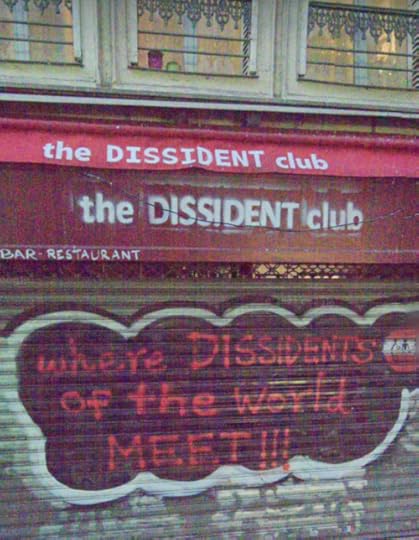
Taha Siddiqui was born to Pakistani parents but raised for a number of years in Saudi Arabia, where his parents became increasingly adherent to a more radical form of Islam. Moving to Pakistan, he pursued journalism and was increasingly threatened, culminating with an attempt on his life, after which he immigrated to France. He’s founded a bar there called The Dissident Club that hosts cultural, political and social events.
This graphic nonfiction novel is a worthwhile read on so many levels. His is a fraught history, and Siddiqui has written his life in wonderful detail, revealing himself to be an expert storyteller. I’m not sure if it’s great to have one’s life read as a page-turner, but there it is.
It’s also a history lesson, one that is steeped in place (Pakistan and the Middle East) and time (the 80s to 2010s). Siddiqui recounts many of the world events that I remember…but from the other side of the divide. This is the Islamic world, and I am of the “West”. It was such an eye-opener to read from a different perspective. It’s another reminder that a region’s people are not a monolith, one of the easy traps to fall into in a polarised world.
On a universal level, The Dissident Club is an excellent coming-of-age tale. I related to Siddiqui’s childhood fervency, and the way we as children adhere to the beliefs of our parents; but also to his gradual questioning of belief, of politics, and of the melding of the two. No matter what one’s background, choosing a different path can be hard but necessary and rewarding.
The art is great! I loved its muted tones and clear depictions. Credit too, to the translation from French by Montreal-based David Hormel.
A fantastic book all-round. I hope you consider reading it.
Thanks to Arsenal Pulp Press and Zg Stories for a gifted copy.
POPKulturowy Kociołek: Album Klub Dysydenta to komiksowa autobiografia Tahy Siddiqui, pakistańskiego dziennikarza śledczego, zmuszonego do ucieczki ze swojego kraju ze względu na swoje zaangażowanie przeciwko dyktaturze i fanatyzmowi.
Cała historia zaczyna się tu w Islamabadzie początkiem 2018 roku, kiedy jadąc taksówką na lotnisko, zostaje on zaatakowany i porwany przez grupę uzbrojonych talibów. Na całe szczęście udaje mu się jednak uciec, w przeciwnym razie mogło się to dla niego naprawdę źle skończyć. W ten oto sposób rozpoczyna on opowieść o swoim życiu, której zaczątkiem jest jego dzieciństwo w Arabii Saudyjskiej, dokąd jego rodzice wyemigrowali w poszukiwaniu pracy. To właśnie tam jego ojciec uległ znacznej radykalizacji, która mocno wpłynęła również na codzienność młodego bohatera. On jednak od małego kwestionował pewne przyjęte zasady i praktyki. Nasiliło się to w momencie, kiedy jako nastolatek spędził jakiś czas w Pakistanie u rodziny wujka. Kolejnym bodźcem do zadawania sobie pytań o zasadność pewnych norm stała się również jego pierwsza zakazana miłość. W miarę upływu czasu i dorastania Taha, pogłębia się więc przepaść pomiędzy nim, a jego rodzicami i wyznawanymi przez nich zasadami.
Na ponad 250 stronach autor przedstawia więc nam swoją stopniową emancypację z trudnego radykalnego środowiska, przy okazji dość dosadnie pokazując jego negatywne skrajności (za co jest nienawidzony). Jego historia nasycona jest również pewnego rodzaju nadzieją (dość nikłą) na lepsze jutro. Oczekiwaniami, że społeczeństwa zmienią swoje postrzeganie niektórych elementów świata, a co za tym pójdzie, zmieni się również oblicze niektórych krajów. Całość jest przy tym bardzo dobrze napisana, dość intensywnie angażując czytelnika, tak aby komiks przeczytać jednym tchem....
The Dissident Club is powerful story of a boy coming of age under a strict Islamist father in Saudi Arabia who will move to Pakistan, his family’s homeland and go against his father and become a journalist covering dangerous events in the country’s recent political history. Taha Siddiqui, the author and narrator, is in exile in France and tells his story over a cup of coffee/tea while the reader takes it in
This graphic memoir was like reading a suspenseful adventure story while at the same time educating the reader (or reminding them in my case) of the details of the last several years in Pakistan and Saudi Arabia and all of the many political and often devastating events that occurred. Illustrations in different colour schemes divided the past story and the author’s sidebars/present situation. The artwork was clear and it was easy to understand who was speaking.
At one point in the story, Siddiqui as an adult is speaking to another group of journalists and onlookers and makes the following statement which I found so powerful and eerily reminiscent of the current politics in the US: “Remember one thing: nothing strengthens authority like silence. We must not remain silent!
Siddiqui opened The Dissident Club in Paris in 2020, a bar where dissidents like himself gather for talks, performances, workshops and other such political events. There is still danger for him.
Thank you to @arsenalpulp and @zgstories for a copy in exchange for my honest opinions. I would love to see this one read by high school students and adults of all denominations alike. The Dissident Club: Chronicle of a Pakistani Journalist in Exile publishes April 22, 2025.
Just, wow. The author is a journalist, and the first pages show him escaping from a car after being basically kidnapped in his home country of Pakistan, probably by a government agency, most likely to kill him. It goes from there to a full biography, and only catches up with the beginning part toward the end.
He was born to Pakistani parents living in Saudi Arabia, and lived in both places for large parts of his childhood, finally staying with his mother and siblings in Pakistan while his father continued to work in Saudi Arabia. His parents were not super-religious at first, but became hard-liners; he wasn't allowed to do anything that was against the will of Allah as interpreted by religious leaders. He was totally indoctrinated, about both those hardline beliefs and belief in the military dictator, Musharraf. he didn't loosen up much until high school. The book was valuable to me for seeing how that mindset evolves.
By the time he got to college, where he studied journalism, he was questioning everything. He became a television reporter, and asked probing questions about the government, the jihadists (he had been brought up to think they were wonderful and not terrorists at all), and more, leading to threats and the event at the beginning of the book.
After that event, he moved with his wife and child to Paris, where he started the titular Dissident Club. Google it; it looks fascinating. I really want to go there!
**Should mention I read the Arsenal Pulp Press translation by David Homel, didn't see an entry for that in goodreads
The notion of a liberal cosmopolitan thinker surrounded by more rigid dogmatic ruling peoples (at least externally, perhaps more flexible and less hypocritical behind closed doors with a mixed drink), this notion is not unfamiliar.
And I worry a Dissident Club franchise may be opening here in our country all too soon. The only reviews of the Paris original launched by Taha are quite compelling, as is this brief autobiography. Fortunately not punctuated by an assassin's bullet.
The artwork here feels quick and friendly enough, to me the bitterness comes from all angles of Taha's family. His relation with his wife, his parents for whom I have a fair amount of empathy despite their protestations, and above all to his son - who at the time of this is sheltered. Or so it seems. Long may he be so.
Peace to all, and a blessed Ramadan especially to you. I remain a charismatic agnostic who admires the pure power faith gives individuals, but the corrupt power it wields when run through larger organizations. That said I think there is room for people to praise a deity, while also worshiping those devoted to journalism.
Autobiograficzna historia autora, z pochodzenia Pakistańczyka. Część życia spędził razem z rodzicami na emigracji w Arabii Saudyjskiej.
Z czasem rodzice bardzo zradykalizowali się religijnie i to było powodem wielu konfliktów na linii dziecko - rodzice. Przez niemalże wszystkie etapy edukacji szkolnej autor miał do czynienia z rówieśnikami, którzy mieli znacznie luźniejszy stosunek do religii. Być może to pozwoliło mu trochę szerzej widzieć świat.
Studia skończył w kierunku, który wybrał mu ojciec. Wbrew woli rodziców zaczął karierę zawodową związaną z dziennikarstwem. Ostatecznie z rodzicami stracił całkowicie kontakt. Założył własną rodzinę. A przez swoje ideały i wizję zawodu dziennikarza - opisującego fakty, ale nie cenzurowane przez władze - zmuszony był uciekać z ojczyzny. Schronienie znalazł w Europie.
Very enlightening. Pakistan truly is a place of contradictions. So much to learn and unearth.
This was a very interesting read. I would have liked to learn more about Sara, Taha's second wife, as well as his mother. Hearing about Pakistan in the 80's, 90's and beyond from a woman's perspective would be very interesting. I will need to dive in more deep into the relationship between Pakistanis and Saudis, as well as the geopolitical implications between Pakistan and Afghanistan, India, Bangladesh, Iran, Syria, China and the US.
Thank you Taha for speaking truth to power and doing what's right in spite of discomfort, pressure from others (including loved ones) to remain silent and imminent danger!!
This graphic novel was very interesting! I don't know too much about modern Pakistan history so it was really informative. The author is an exiled journalist who saw his parents get more and more fundamentalist as he grew up both in Saudi and Pakistan. I liked his exploration on what leads people to religious radicalism (although I think in this format he wasn't able to really dive deep into it) and him growing up and the different moments in his life that led him to form his own opinions, question his parents belief, and try to parse through truth and propaganda. I'm very curious about his Dissident Bar that he opened up in Paris at the end. I would love to visit it!
A compelling visual memoir — I was slightly surprised that it is primarily focused on Siddiqui’s childhood, teenage years and education as opposed to his professional career and assassination attempt.
However, his journey from Saudi Arabia, back to Pakistan and, ultimately, France — including his evolving relationship with religion and authority — is very interesting nonetheless.
Plus, there’s some good knowledge/context to be gained as a first-hand account of recent history and life in the region.
Pakistani investigative journalist Taha Siddiqui (TS) tells his life story in this engrossing GN. Growing up in Saudi Arabia TS is at odds with his family as to what profession he should choose to follow. His father tries to influence him, but TS finds that he has fundamental differences when it comes to his interpretation of Islam. Very informative, helped me to understand the differences between Shia and Sunni Muslims.
This was an amazing graphic memoir from Taha Siddiqui, detailing his life and experiences with radical Islam, rigid parental expectations and pressure, all while coming to his own as a fearless journalist in an authoritarian militarised Pakistan; something he almost lost his life for.
I really enjoyed reading this and I feel like I learned a lot. It's accessible and Siddiqui's story illuminates what it's like to live under such complex and trying conditions.
The illustrations are just what this story needed.
Une BD historique sur le parcours de Taha Siddiqui journaliste pakistanais exilé en France et toujours menacé pour avoir remis en cause le pouvoir de son pays d'origine. C'était aussi l'occasion pour moi de découvrir davantage l'histoire du Pakistan et de ses habitants.