

What do you think?

The Weather Book: Why It Happens and Where It Comes From
A delightful miscellany of everything remotely meteorological From exhilarating electrical storms to everyday drizzle, this book is the perfect entertaining guide to our favorite topic of small the weather. Our moods are affected by it; our plans are ruined by it; our conversations undoubtedly cover it - the weather is integral to our everyday lives. But while we groan at clouds obscuring the sun, rejoice when the rain stops, and gasp at loud cracks of thunder, for many of us the systems behind these weather patterns are a complete mystery. The Weather Book breaks down all manner of meteorological phenomena with handy diagrams and explanations in simple layman's terms. From electrical storms and cyclones to the everyday drizzle, and including fascinating anecdotes of weather at its most extreme, this is a practical and engaging guide to understanding all things meteorological. If you've ever wondered which old wives tales you can actually trust (does lightning really only strike once?) or wondered if there is any truth to the phrase 'raining cats and dogs' (in reality it's more likely to be raining frogs), this book will answer all your weather related queries and teach you more about this endlessly fascinating topic.
- GenresNonfictionScience
192 pages, Paperback
First published September 1, 2009
Ratings & Reviews
Friends & Following
Create a free account to discover what your friends think of this book!
Community Reviews
Displaying 1 - 16 of 16 reviews

January 21, 2014
Book 9/52 of my 2014 challenge to only read books by women
The book: The Weather Book: Why it Happens and Where it Comes From
The author: Diana Craig, on whom I can't really find any information with which to populate this section.
The subject: Weather! Weather! Irritating chummy asides! Some more weather!
Why I chose it: Because weather, because British.
The rating: One and a half stars out of five (rounded up because I'm feeling generous)
What I thought of it: Even though I find it very interesting in theory, and periodically wonder whether I should apply for a job in the Met Office after graduation, I don't know as much as I'd like to about the weather. That's why I picked up this book — or, at least, why I downloaded it from my home county's library eBook service. Sadly it didn't quite live up to my expectations. So now you know.
...Yes, that was a reference to one of my big problems with this book. The phrase "So now you know" only appears twice in the book, but that is two times too many. (It also reminds me of this Mitchell and Webb sketch, which is unfortunate.) It is just one example of one of this book's major issues. I think humour and colloquial language are important in science communication, but you have to use them right. This does not mean bombarding your reader with puns every paragraph or so (seriously, almost every paragraph is its own section, and each one has a punny title). I love puns. I use puns all the time. Diana Craig belongs in a punitentiary. (And the references to "impressing your friends and family". Stop it.)
The other major issue is that it isn't all that informative. Sure, there's lots of information, but it's so disjointed and poorly organised that the information becomes difficult to digest properly. It's as if someone wrote down, word for word, a lecture from a scatterbrained professor with a propensity for trying to make science FUN!!1! I did learn some interesting facts at least. Perhaps this book would work if it were reworked for children, with the tidbits of information presented colourfully on the pages with lots of pictures.
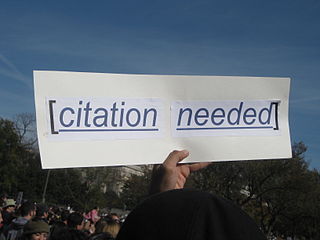
Did I mention, though, how many "facts" need to be taken with a positively hypertensive pinch of salt? For example, there's this quote, which can be found on page 114 of the paperback version:
If you want to learn about the weather in any sort of sensible way, this is not the book to pick up. As another reviewer mentioned, the bibliography gives a list of primers that Craig seems to have simply rewritten, so I'll probably pick up one of those in future instead.
Just one more thing: The old cliché about not judging a book by its cover seems to have, in recent years, spawned a sort of counter-cliché wherein people state that they do indeed judge books by their covers (quelle horreur!). Since I don't buy physical books very often any more and don't prize them as objects as much as I used to, this isn't such a big thing with me any more. However, I just have to say that this book is such a waste of a stylish cover!
The book: The Weather Book: Why it Happens and Where it Comes From
The author: Diana Craig, on whom I can't really find any information with which to populate this section.
The subject: Weather! Weather! Irritating chummy asides! Some more weather!
Why I chose it: Because weather, because British.
The rating: One and a half stars out of five (rounded up because I'm feeling generous)
What I thought of it: Even though I find it very interesting in theory, and periodically wonder whether I should apply for a job in the Met Office after graduation, I don't know as much as I'd like to about the weather. That's why I picked up this book — or, at least, why I downloaded it from my home county's library eBook service. Sadly it didn't quite live up to my expectations. So now you know.
...Yes, that was a reference to one of my big problems with this book. The phrase "So now you know" only appears twice in the book, but that is two times too many. (It also reminds me of this Mitchell and Webb sketch, which is unfortunate.) It is just one example of one of this book's major issues. I think humour and colloquial language are important in science communication, but you have to use them right. This does not mean bombarding your reader with puns every paragraph or so (seriously, almost every paragraph is its own section, and each one has a punny title). I love puns. I use puns all the time. Diana Craig belongs in a punitentiary. (And the references to "impressing your friends and family". Stop it.)
The other major issue is that it isn't all that informative. Sure, there's lots of information, but it's so disjointed and poorly organised that the information becomes difficult to digest properly. It's as if someone wrote down, word for word, a lecture from a scatterbrained professor with a propensity for trying to make science FUN!!1! I did learn some interesting facts at least. Perhaps this book would work if it were reworked for children, with the tidbits of information presented colourfully on the pages with lots of pictures.
Did I mention, though, how many "facts" need to be taken with a positively hypertensive pinch of salt? For example, there's this quote, which can be found on page 114 of the paperback version:
The air in ["persistent, noisy, seasonal winds"] is also positively charged which is not conducive to an upbeat mood (sic). We respond much better to negative ions — atoms or molecules with a negative electrical charge — which explains why we usually feel better after a heavy downpour when the air is full of negative ions.
If you want to learn about the weather in any sort of sensible way, this is not the book to pick up. As another reviewer mentioned, the bibliography gives a list of primers that Craig seems to have simply rewritten, so I'll probably pick up one of those in future instead.
Just one more thing: The old cliché about not judging a book by its cover seems to have, in recent years, spawned a sort of counter-cliché wherein people state that they do indeed judge books by their covers (quelle horreur!). Since I don't buy physical books very often any more and don't prize them as objects as much as I used to, this isn't such a big thing with me any more. However, I just have to say that this book is such a waste of a stylish cover!

March 4, 2018
I'm really interested in weather and my mum managed to find this book for me. It's pitched just right for an adult who has a basic knowledge but wants to learn more about how it all works. Very engaging, broken down into short chapters with headings so you're not forced to read super long and difficult passages. Has all the technical and scientific information, but also lots of interesting anecdotes and a chapter at the end about myths and legends.
January 21, 2022
I am striving to add non fiction to my reading list - and to learn stuff that might be useful en route. This was perfect- easy to read and a great little reference book. It is written with the science interspersed with good humour and ordinary understanding, myths busted or not, folk lore explained. It is comprehensive and interesting. I really enjoyed it and though I won’t remember all the science, I know it’s in there!

October 3, 2011
I wanted a fairly simple explanantion of weather systems but I don't recommend this. It's a series of fairly disconnected "facts". From the bibliography I get the sense that the author has simply read and regurgitated a few other primers on the subject and doesn't really understand all that much themselves.

June 23, 2022
When I first picked this book up, I thought it might help me grasp some key concepts in my A level geography. Was definitely not disappointed and Craig's writing made the explanations much easier to understand and take in. Also really enjoyed the touchings on myth and historical beliefs about the weather.

October 11, 2019
Teknik konularda bilgi vermeye çalışan bu tarz kitapların anlatımı çok önemli. Eğer size ansiklopedi okurmuş gibi bilgi vermeye çalışıyorsa ne yazık ki bir yerden sonra ilginizi kaybediyorsunuz, bu da öyle oldu. Kötü kitap olduğu söylenemez ama aynı konuda daha iyileri de vardır diye düşünüyorum.

June 25, 2021
Hava olayları üzerine bilgilendirici bir eser..

August 8, 2021
hemencik biten, ilginç olaylarla dolu bir kitaptı. hava da hep ilgi çekici zaten benim için, okumayı dinlemeyi seviyorum hakkında.
September 19, 2022
Small book, simple explanations, many subjects to learn.
And I love how she her language and narration. Love it.
And I love how she her language and narration. Love it.
April 10, 2023
A short read explained in layman's terms which could be easily understood by.anyone. The science was there along with the myths and legends which surround the weather all simply explained

July 27, 2026
2.5 stars. This is a small book covering key weather terms, forms of precipitation, weather fronts and wind types, basic cloud forms, extreme weather, and climate change. It includes some interesting facts, helpful black and white diagrams, and good definitions of key terms. There are also step-by-step instructions for making your own weather instruments e.g. a wind sock or barometer. However, the explanation are very simplistic and superficial. For example, it discusses relative humidity without ever explaining the importance of dew point. The book states that it will help you develop weather forecasting skills, but this is not really the case. Its strengths lie in providing basic vocabulary and I would really only recommend this to younger readers wanting to learn about the weather or trivia buffs who want bite-sized, trivia-worthy facts.

May 17, 2014
Looks promising but disappoints; the same old reheated guff you read in many sub-standard articles on the subject, but with little teaching insight and real feel for what is being explained. For anyone who doesn't already know a lot you'll struggle to get any genuine understanding; those who already have some knowledge will learn nothing new. Avoid.

November 15, 2011
This is a quick easy read. A pleasant book to while away some time. It would be an excellent waiting room ot toilet book as it comprises short chapters to dip into in any order. There is lots of interestinfg information and migth be valuable a for people setting quizzes.

November 29, 2011
irritating, little gobbets of science but with coy punning section headings which overall gave a condescending feel

October 6, 2015
I wanted to learn about how the weather works, not pick up Met Office terms that I could drop into conversations to impress my friends!
July 30, 2026
4.5 🌟 great read, i liked the part about the different names of the wind 💨
Displaying 1 - 16 of 16 reviews