

What do you think?

Horoscopes for the Dead
Goodreads Choice Award
Winner for Readers' Favorite Poetry (2011)WINNER—BEST POETRY—GOODREADS CHOICE AWARDS
NAMED ONE OF THE BEST BOOKS OF THE YEAR BY
NEWSWEEK /THE DAILY BEAST
NATIONAL BESTSELLER
Billy Collins is widely acknowledged as a prominent player at the table of modern American poetry. And in this smart, lyrical, and mischievous collection of poetry, which covers the everlasting themes of love and loss, youth and aging, solitude and union, Collins’s verbal gifts are on full display.
NAMED ONE OF THE BEST BOOKS OF THE YEAR BY
NEWSWEEK /THE DAILY BEAST
NATIONAL BESTSELLER
Billy Collins is widely acknowledged as a prominent player at the table of modern American poetry. And in this smart, lyrical, and mischievous collection of poetry, which covers the everlasting themes of love and loss, youth and aging, solitude and union, Collins’s verbal gifts are on full display.
103 pages, Paperback
First published January 1, 2011
About the author
Billy Collins
156 books1,650 followersWilliam James Collins is an American poet who served as the Poet Laureate of the United States from 2001 to 2003. He was a Distinguished Professor at Lehman College of the City University of New York, retiring in 2016. Collins was recognized as a Literary Lion of the New York Public Library (1992) and selected as the New York State Poet for 2004 through 2006. In 2016, Collins was inducted into the American Academy of Arts and Letters. As of 2020, he is a teacher in the MFA program at Stony Brook Southampton.
Ratings & Reviews
Friends & Following
Create a free account to discover what your friends think of this book!
Community Reviews
Displaying 1 - 30 of 527 reviews

December 21, 2025
Billy Collins is the type of poet
I always picture wearing slippers
Surely he writes most of his stuff
Ensconced in an old bathrobe
A bathrobe ordered from a Sears
Spring catalogue circa ’87
With moth holes scattered
Amid palm trees and parasols
I think the guy was born bald
Not cool-bald like Yul Brenner
But dweeb-bald like an annoying dad
Who’s always trying to sound clever
I mean I’m kinda like that too
(Though I’m the opposite of bald)
I'm a smart ass and I know it
I just don’t like it when poets
Resemble me too much
Annoyance is when you recognise
Your weaknesses in other people
The thing is Billy Collins gets paid
For his dumb jokes whiles I
I only get to joke about being poor
In the end I'd rather be me though
Than avuncular Billy Collins
A rich bald poet who writes easy verse
In an old bathrobe and slippers

October 29, 2020
Another lovely collection by one of my favorite poets. Collins has a way of making the ordinary seem a little more meaningful, a little magical, even if there is a hint of melancholy that can be found in so much of his work. Some of my favorites in this book are: Genesis, Cemetery Ride, Horoscopes for the Dead, Her, Gold, Flaneur, The Chairs that No One Sits In, and Drawing You from Memory.
If you are reluctant to read poetry, considering it a little pretentious or inaccessible, I think Collins would be a really good place to start:)
Find my book reviews and more at http://www.princessandpen.com
If you are reluctant to read poetry, considering it a little pretentious or inaccessible, I think Collins would be a really good place to start:)
Find my book reviews and more at http://www.princessandpen.com

Read
July 11, 2015In the glass half-full or half-empty department, I give you Billy Collins. What's maddening is how easy he makes it look -- the pedestrian topics, the casual voice, the sardonic wit. Sometimes the mix makes for magic. Sometimes it passes muster only because of the poet's name. This collection gives us poems representative of both, strong poems we associate with this former poet laureate, and anemic ones that look like an established hand cruising because he can.
What struck me is how many of these poems feature comfortable upper class themes. A man on a dock by his lakeside house. A man in an expensive hotel room. A man spending New Year's Day at a winter resort in Utah. A man sitting in fancy-ain't-the-word-for-it restaurant ordering an exotic trout dish.
Clearly we have that rarity or rarities -- a poet who has made money writing poetry and making appearances reading that poetry. Which is fine if it leads to clever little ditties like this:
Feedback
The woman who wrote from Phoenix
after my reading there
to tell me they were all still talking about it
just wrote again
to tell me that they had stopped.
A nice metaphor for fame, that. Passing. Like that big hunk of cumulus there. I also like when Billy reaches for his roots for material:
My Hero
Just as the hare is zipping across the finish line,
the tortoise has stopped once again
by the roadside,
this time to stick out his neck
and nibble a bit of sweet grass,
unlike the previous time
when he was distracted
by a bee humming in the heart of a wildflower.
Oh, well. Sometimes the poems seem devoid of poetic elements. Sometimes they seem dashed off on a restaurant paper napkin during lunch. But often they work anyway, and as a poet or a fan of poetry, you can't help but cheer the likes of Billy Collins because, no matter how uneven this collection or that may be, he's one of the few high-profile guys poetry has.
That's nothing to dismiss in a world so oblivious to poetry in general.
What struck me is how many of these poems feature comfortable upper class themes. A man on a dock by his lakeside house. A man in an expensive hotel room. A man spending New Year's Day at a winter resort in Utah. A man sitting in fancy-ain't-the-word-for-it restaurant ordering an exotic trout dish.
Clearly we have that rarity or rarities -- a poet who has made money writing poetry and making appearances reading that poetry. Which is fine if it leads to clever little ditties like this:
Feedback
The woman who wrote from Phoenix
after my reading there
to tell me they were all still talking about it
just wrote again
to tell me that they had stopped.
A nice metaphor for fame, that. Passing. Like that big hunk of cumulus there. I also like when Billy reaches for his roots for material:
My Hero
Just as the hare is zipping across the finish line,
the tortoise has stopped once again
by the roadside,
this time to stick out his neck
and nibble a bit of sweet grass,
unlike the previous time
when he was distracted
by a bee humming in the heart of a wildflower.
Oh, well. Sometimes the poems seem devoid of poetic elements. Sometimes they seem dashed off on a restaurant paper napkin during lunch. But often they work anyway, and as a poet or a fan of poetry, you can't help but cheer the likes of Billy Collins because, no matter how uneven this collection or that may be, he's one of the few high-profile guys poetry has.
That's nothing to dismiss in a world so oblivious to poetry in general.

May 3, 2021
I never had much of an interest in poetry until I stumbled across Billy Collins's Masterclass on the subject. After watching the entire class, I went to my local bookstore and bought as many poetry books as I could find. This was one of the gems I was able to pick up.
Horoscopes for the Dead
is a collection of fifty one poems about the beauty and often times complexities of everyday life. A beautiful read, highly recommended. Five stars.

December 21, 2019
This was beautiful. Loved his poems and the organization of this collection. My favorite: My Hero. A unique perspective on the Tortoise and the Hare. All around, if you are a fan of poetry and exploring the relationships of themes throughout our world, I highly recommend it.

May 20, 2017
Who Said I Had To Always Play/The Secretary Of The Interior?
Billy Collins asks the question above in his poem, "Returning the Pencil to Its Tray" which concludes his most recent collection of poems, "Horoscopes for the Dead" (2011). In the poem, Collins describes the joy of the everyday as "the first bits of sun are on/ the yellow flowers behind the low wall," and "people in cars are on their way to work,/ and I will never have to write again." Collins follows with the wonderfully paradoxical line which is given at the top of this review and which worked for me as a recent retiree from the Department of the Interior. Collins finds he is "getting good at being blank,/staring at all the zeroes in the air" and enjoying the flow of life, taking it as it comes.
Many of this poems in this collection contrast life in the everyday, enjoying the passing show with its loves, variety, and inevitable transience, with death. Thus, in the title poem of the volume, Collins meditates upon the death of a friend. He brings to bear various cliche-described responsibilities that the deceased will no longer have to meet: "I can't imagine you ever facing a new problem/ with a positive attitude"... "you no longer need to reflect carefully before acting, nor do you have to think more of others,/ and never again will creative work take a back seat/to the business responsibilities that you never really had."... "And don't worry today or any day/about problems caused by your unwillingness/to interact rationally with your many associates." As opposed to his dead friend and his release from certain dreariness of responsibility, Collins juxtaposes the simple joy of living in which, "putting on the clothes I wore yesterday" the poet finds himself "pushing off on my copper-colored bicycle/ and pedaling along the shore road by the bay." in a poem which quietly celebrates the fragility of life for the living.
The first poem of the collection, "Grave", also explores the contrast between death and the living as the poet meditates upon his life at the grave of his parents. "What do you think of my new glasses/I asked as I stood under a shade tree/before the joined grave of my parents,/ and what followed was a long silence". The poet invents "the one hundred kinds of silence/according to the Chinese belief/each one distinct from the others," as he and the reader come to realize that the living must pursue their own lives free from the dead hands of those that loved them.
The poems in the volume that I especially enjoyed also included "The Flaneur" in which the poet describes his walking through the streets of an unnamed city in Florida, just as I enjoy wandering through the streets of my own Washington, D.C. and Silver Spring. As he describes the sights on his walk the poet contrasts what he sees with what he might have observed in Paris. He finds "no girls selling fruits or sweets from a cart,/no prostitutes circled under a streetlamp,/no solicitude of the moving crowd/where I could find the dream of refuge." The poet still finds meaning in his walking as he mutters "Who needs Europe?" while he falls "into a reverie on the folly of youth/and the tender, distressing estrangement of my life." The poem "On the Three Hundredth Anniversary of the Trinity School" is an effective collage on the direction of three hundred years of American history. The diversity of history melds together in a moment of unity at the conclusion of the poem. Collins writes: "And then I heard their singing, all those voices/Joined in a fluid chorus, and all those years/ Synchronized by the harmony of their anthem,/History now a single chord, and time its key and measure."
In "Table Talk", Collins wittily contrasts certain forms of academic palaver with the immediacy of experience. "What She Said" satirizes thought-numbing patters of contemporary speech as the poem begins "When he told me he expected me to pay for dinner,/ I was like give me a break." "Cemetery Ride" is another poem which contrasts the finality of death with the transience and joy of living when one can. In "Poetry Workshop held in a Former Cigar Factory in Key West", Collins finds he cannot resist the temptation to "draw an analogy between cigar-making and poetry" in "the exemplary industry/ of those anonymous rollers and cutters -- /the best producing 300 cigars in a day/compared to 3 flawless poems in a lifetime if your lucky --".
Billy Collins, United States Poet Laureate from 2001 -- 2003, remains the best-known contemporary American poet. Many readers, who otherwise would avoid what they find to be the bristling complexities of contemporary American poetry enjoy his work. Collins is an effective poet in his colloquialism and accessibility. Collins' writing is unpretentious and works when it remains within its own limits. Many of the poems in this book would not qualify for the "3 flawless poems" that Collins observes remains the ideal of many poets. But I found this volume enjoyable. Readers can properly gain an appreciation of the continued appeal of poetry through the work of Billy Collins.
Robin Friedman
Billy Collins asks the question above in his poem, "Returning the Pencil to Its Tray" which concludes his most recent collection of poems, "Horoscopes for the Dead" (2011). In the poem, Collins describes the joy of the everyday as "the first bits of sun are on/ the yellow flowers behind the low wall," and "people in cars are on their way to work,/ and I will never have to write again." Collins follows with the wonderfully paradoxical line which is given at the top of this review and which worked for me as a recent retiree from the Department of the Interior. Collins finds he is "getting good at being blank,/staring at all the zeroes in the air" and enjoying the flow of life, taking it as it comes.
Many of this poems in this collection contrast life in the everyday, enjoying the passing show with its loves, variety, and inevitable transience, with death. Thus, in the title poem of the volume, Collins meditates upon the death of a friend. He brings to bear various cliche-described responsibilities that the deceased will no longer have to meet: "I can't imagine you ever facing a new problem/ with a positive attitude"... "you no longer need to reflect carefully before acting, nor do you have to think more of others,/ and never again will creative work take a back seat/to the business responsibilities that you never really had."... "And don't worry today or any day/about problems caused by your unwillingness/to interact rationally with your many associates." As opposed to his dead friend and his release from certain dreariness of responsibility, Collins juxtaposes the simple joy of living in which, "putting on the clothes I wore yesterday" the poet finds himself "pushing off on my copper-colored bicycle/ and pedaling along the shore road by the bay." in a poem which quietly celebrates the fragility of life for the living.
The first poem of the collection, "Grave", also explores the contrast between death and the living as the poet meditates upon his life at the grave of his parents. "What do you think of my new glasses/I asked as I stood under a shade tree/before the joined grave of my parents,/ and what followed was a long silence". The poet invents "the one hundred kinds of silence/according to the Chinese belief/each one distinct from the others," as he and the reader come to realize that the living must pursue their own lives free from the dead hands of those that loved them.
The poems in the volume that I especially enjoyed also included "The Flaneur" in which the poet describes his walking through the streets of an unnamed city in Florida, just as I enjoy wandering through the streets of my own Washington, D.C. and Silver Spring. As he describes the sights on his walk the poet contrasts what he sees with what he might have observed in Paris. He finds "no girls selling fruits or sweets from a cart,/no prostitutes circled under a streetlamp,/no solicitude of the moving crowd/where I could find the dream of refuge." The poet still finds meaning in his walking as he mutters "Who needs Europe?" while he falls "into a reverie on the folly of youth/and the tender, distressing estrangement of my life." The poem "On the Three Hundredth Anniversary of the Trinity School" is an effective collage on the direction of three hundred years of American history. The diversity of history melds together in a moment of unity at the conclusion of the poem. Collins writes: "And then I heard their singing, all those voices/Joined in a fluid chorus, and all those years/ Synchronized by the harmony of their anthem,/History now a single chord, and time its key and measure."
In "Table Talk", Collins wittily contrasts certain forms of academic palaver with the immediacy of experience. "What She Said" satirizes thought-numbing patters of contemporary speech as the poem begins "When he told me he expected me to pay for dinner,/ I was like give me a break." "Cemetery Ride" is another poem which contrasts the finality of death with the transience and joy of living when one can. In "Poetry Workshop held in a Former Cigar Factory in Key West", Collins finds he cannot resist the temptation to "draw an analogy between cigar-making and poetry" in "the exemplary industry/ of those anonymous rollers and cutters -- /the best producing 300 cigars in a day/compared to 3 flawless poems in a lifetime if your lucky --".
Billy Collins, United States Poet Laureate from 2001 -- 2003, remains the best-known contemporary American poet. Many readers, who otherwise would avoid what they find to be the bristling complexities of contemporary American poetry enjoy his work. Collins is an effective poet in his colloquialism and accessibility. Collins' writing is unpretentious and works when it remains within its own limits. Many of the poems in this book would not qualify for the "3 flawless poems" that Collins observes remains the ideal of many poets. But I found this volume enjoyable. Readers can properly gain an appreciation of the continued appeal of poetry through the work of Billy Collins.
Robin Friedman

April 6, 2011
Horoscopes for the Dead is another
in the somewhat long line of Billy Collins'
collections of poetry, and is of the same
kind as the rest; that is to say,
filled with his cold warmth, the distance
that comes from believing oneself just a little
smarter than everyone else in the room, a bit
cleverer with words, deeper in feeling,
and having a slightly more meaningful
insight into living than his reader.
in the somewhat long line of Billy Collins'
collections of poetry, and is of the same
kind as the rest; that is to say,
filled with his cold warmth, the distance
that comes from believing oneself just a little
smarter than everyone else in the room, a bit
cleverer with words, deeper in feeling,
and having a slightly more meaningful
insight into living than his reader.

February 22, 2012
I never tire of Billy Collins, especially when I just want a poem that makes sense, sounds beautiful when read aloud, is precise in its attention to detail, and connects to my soul. This book delivers.
I'm not sure if it's kosher to copy the text of a poem in its entirety and post it on Goodreads, but until Mr. Collins asks for it to be removed, here is one of my favorites called "Good News."
Good News
When the news came in over the phone
that you did not have cancer, as they first thought,
I was in the kitchen trying to follow a recipe,
glancing from cookbook to stove,
shifting my glasses from my nose to my forehead and back,
a recipe, as it turned out, for ratatouille,
a complicated vegetable dish
which you or any other dog would turn up your nose at.
If you had been here, I imagine
you would have been curled up by the door
sleeping with your head resting on your tail.
And after I learned that you were not sick,
everything took on a different look
and appeared to be better than it usually is.
For example (and that's the first and last time
I will ever use those words in a poem),
I decided I should grate some cheese,
not even knowing if it was right for ratatouille,
and the sight of the cheese grater
with its red handle lying in the drawer
with all the other utensils made me marvel
at how this thing was so perfectly able and ready
to grate cheese just as you with your long smile
and your brown and white coat
are perfectly designed to be the dog you perfectly are.
I'm not sure if it's kosher to copy the text of a poem in its entirety and post it on Goodreads, but until Mr. Collins asks for it to be removed, here is one of my favorites called "Good News."
Good News
When the news came in over the phone
that you did not have cancer, as they first thought,
I was in the kitchen trying to follow a recipe,
glancing from cookbook to stove,
shifting my glasses from my nose to my forehead and back,
a recipe, as it turned out, for ratatouille,
a complicated vegetable dish
which you or any other dog would turn up your nose at.
If you had been here, I imagine
you would have been curled up by the door
sleeping with your head resting on your tail.
And after I learned that you were not sick,
everything took on a different look
and appeared to be better than it usually is.
For example (and that's the first and last time
I will ever use those words in a poem),
I decided I should grate some cheese,
not even knowing if it was right for ratatouille,
and the sight of the cheese grater
with its red handle lying in the drawer
with all the other utensils made me marvel
at how this thing was so perfectly able and ready
to grate cheese just as you with your long smile
and your brown and white coat
are perfectly designed to be the dog you perfectly are.

June 24, 2011
On page 27. I took a nap and, when I woke, noticed that I'd been dreaming in Billy-speak. . . .
There are several good poems here. Much to admire for sure. And there are some not-so-good poems here. Scratch head. Turn page. It makes you wonder if everything he writes, good or bad, goes into the book.
He's self-deprecating and likable, witty, and sometimes humorous. But sometimes I feel as though the attempts at humor are strained or stretched too thin. Collins always seems to be caught up in a daydream, as if he has no particular work to do, place to go. He can idly muse about taking dead people (whose names he glimpses on headstones) for a ride on his copper-colored bicycle or make a sort of duck out of his hand and talk nonsense to it. There's no one listening, after all. Except we are. And sometimes I wish he actually had something more to say.
One of my favorite poems here was the first one in the book.
Grave
What do you think of my new glasses
I asked as I stood under a shade tree
before the joined grave of my parents,
and what followed was a long silence
that descended on the rows of the dead
and on the fields and the woods beyond,
one of the one hundred kinds of silence
according to the Chinese belief,
each one distinct from the others,
but the differences being so faint
that only a few special monks
were able to tell one from another.
They make you look very scholarly,
I heard my mother say
once I lay down on the ground
and pressed an ear into the soft grass.
Then I rolled over and pressed
my other ear to the ground,
the ear my father likes to speak into,
but he would say nothing,
and I could not find a silence
among the one hundred Chinese silences
that would fit the one that he created
even though I was the one
who had just made up the business
of the one hundred Chinese silences—
the Silence of the Night Boat,
and the Silence of the Lotus,
cousin to the Silence of the Temple Bell
only deeper and softer, like petals, at its farthest edges.
(Published in The Atlantic)
Then there's "Feedback."
The woman who wrote from Phoenix
after my reading there
to tell me they were still talking about it
just wrote again
to tell me that they had stopped.
To be fair, here's an example of one I just think is bad. So you can decide for yourself.
Night and Day
Funny how that works,
the breathing all day then it continuing
into the night
when I am absent from the company of the wakeful
oblivious even to the bedroom windows
and the ghost dance of the curtains
but still breathing
and turning in bed
pulling the covers tight around me
maybe caught in the irons of a dream
like that one about the birds, but
more like an evil society of birds
a kind of neighborhood watch group
throwing a block party
with the usual balloons and folding chairs
and tables covered with covered dishes
and many children running
in circles or jagged lines
only everyone with bird heads, bigger than life,
even the children with bird heads
and yes, you guessed it
the birds up in the trees
have little human faces
and they are all talking amongst themselves
about the cloudy weather
and the bushes laden with berries
as if none of it were the least bit funny.
(Published in Knockout)
Or how about:
My Hero
Just as the hare is zipping across the finish line,
the tortoise has stopped once again
by the roadside,
this time to stick out his neck
and nibble a bit of sweet grass,
unlike the previous time
when he was distracted
by a bee humming in the heart of a wildflower.
(Published in Superstition Review)
Yes, we know that Collins sees himself, or wants to portray himself, as the tortoise, taking his own sweet time to nibble the grass and smell the flowers along the way. Can't deny that there's something to be said for that. Not sure it's enough to warrant poem after poem.
Fine as light fare. Folksy. Just the thing for those people who like to brag that they don't really read poetry, but this is the kind of poetry they like.
And I really do like Collins. Yes, really. But there are collections I liked better than this one.
There are several good poems here. Much to admire for sure. And there are some not-so-good poems here. Scratch head. Turn page. It makes you wonder if everything he writes, good or bad, goes into the book.
He's self-deprecating and likable, witty, and sometimes humorous. But sometimes I feel as though the attempts at humor are strained or stretched too thin. Collins always seems to be caught up in a daydream, as if he has no particular work to do, place to go. He can idly muse about taking dead people (whose names he glimpses on headstones) for a ride on his copper-colored bicycle or make a sort of duck out of his hand and talk nonsense to it. There's no one listening, after all. Except we are. And sometimes I wish he actually had something more to say.
One of my favorite poems here was the first one in the book.
Grave
What do you think of my new glasses
I asked as I stood under a shade tree
before the joined grave of my parents,
and what followed was a long silence
that descended on the rows of the dead
and on the fields and the woods beyond,
one of the one hundred kinds of silence
according to the Chinese belief,
each one distinct from the others,
but the differences being so faint
that only a few special monks
were able to tell one from another.
They make you look very scholarly,
I heard my mother say
once I lay down on the ground
and pressed an ear into the soft grass.
Then I rolled over and pressed
my other ear to the ground,
the ear my father likes to speak into,
but he would say nothing,
and I could not find a silence
among the one hundred Chinese silences
that would fit the one that he created
even though I was the one
who had just made up the business
of the one hundred Chinese silences—
the Silence of the Night Boat,
and the Silence of the Lotus,
cousin to the Silence of the Temple Bell
only deeper and softer, like petals, at its farthest edges.
(Published in The Atlantic)
Then there's "Feedback."
The woman who wrote from Phoenix
after my reading there
to tell me they were still talking about it
just wrote again
to tell me that they had stopped.
To be fair, here's an example of one I just think is bad. So you can decide for yourself.
Night and Day
Funny how that works,
the breathing all day then it continuing
into the night
when I am absent from the company of the wakeful
oblivious even to the bedroom windows
and the ghost dance of the curtains
but still breathing
and turning in bed
pulling the covers tight around me
maybe caught in the irons of a dream
like that one about the birds, but
more like an evil society of birds
a kind of neighborhood watch group
throwing a block party
with the usual balloons and folding chairs
and tables covered with covered dishes
and many children running
in circles or jagged lines
only everyone with bird heads, bigger than life,
even the children with bird heads
and yes, you guessed it
the birds up in the trees
have little human faces
and they are all talking amongst themselves
about the cloudy weather
and the bushes laden with berries
as if none of it were the least bit funny.
(Published in Knockout)
Or how about:
My Hero
Just as the hare is zipping across the finish line,
the tortoise has stopped once again
by the roadside,
this time to stick out his neck
and nibble a bit of sweet grass,
unlike the previous time
when he was distracted
by a bee humming in the heart of a wildflower.
(Published in Superstition Review)
Yes, we know that Collins sees himself, or wants to portray himself, as the tortoise, taking his own sweet time to nibble the grass and smell the flowers along the way. Can't deny that there's something to be said for that. Not sure it's enough to warrant poem after poem.
Fine as light fare. Folksy. Just the thing for those people who like to brag that they don't really read poetry, but this is the kind of poetry they like.
And I really do like Collins. Yes, really. But there are collections I liked better than this one.

July 23, 2018
i love billy collins's poetry but i just wasn't very impressed by this particular collection

November 19, 2011
Billy Collins is one of my favorite poets for a multitude of reasons, notably for me - he has such an economy with words, using them in a way that evokes a wide range of emotions for each measure he takes on. He can be humored, but at the same time depict grief and coming to terms poignantly with each line. I think I credit my discovery of his work through my college studies, even dating as far back as his release of "Nine Horses" and then backtracking through his individual books from there.
I first read "Horoscopes for the Dead" last year around the time it was released, and I recently had the pleasure of rereading it as it was featured among several other books as a part of National Poetry Month (April). I loved it just as much as the first time around. "Horoscopes for the Dead" is a short compilation of poems that evoke a theme of remembrance, of life and death and the go-betweens. The very first poem in the collection, "Grave", I thought had a powerful touch to start the tone of the overarching book, especially with the speaker standing before the graves of his parents. For me, even to the point where the speaker was pressing his ear to his mother's grave, and then rolling to hear the response on his father's end and hearing nothing but imagining the measures for the silence that greeted him. "The Straightener" also appealed to me in the arrangement and significance of specific items to the speaker, even down to where they serve as a distraction for other things, an escape in orderliness.
In poems like "The Snag" - you get a sense of the speaker's lament of the passage of time, but even in the first few stanzas, there's a dark humor to it:
"The only time I found myself interested
in the concept of a time machine
was when I first heard that baldness in a man
was traced back to his maternal grandmother.
I pictured myself stepping into the odd craft
with a vial of poison tucked into a pocket
and, just in case, a newly sharpened kitchen knife
Of course, I had not thought this through very carefully."
To carry that thematic, even "Thieves" has a charming depiction of stealing time upon the hour, from the speaker observing a scurrying mouse to sitting on a rock, a "Volkswagen of stone" and wondering upon its orgins in the continued spectrum of time, among other factors. "The Guest" was powerful to me in its brevity because of the speaker arriving, yet noting the dying/dead flowers by his door, and "Genesis" was beautiful in its intimacy and reversal of notations.
The namesake of the collection, "Horoscopes for the Dead" is another of my favorites for the way it reflects upon loss and how the predictions for futures - good or bad - no longer apply to the beloved that has departed and reflects the steady state, yet the speaker carries forward.
"Simple Arithmetic" struck me for its notations throughout the poem, and especially through the final lines: "and there I go, too,/erased by my own eraser and blown like shavings off the page."
I had numerous other favorites in the collection, including "Roses", "What She Said", among others, but I believed the running thematic and reflections through the entire work were beautifully written, and certainly adds to my respect and future perusal of Collins' work.
Overall score: 4/5
Note: I received this as an ARC from NetGalley, from the publisher Random House.
I first read "Horoscopes for the Dead" last year around the time it was released, and I recently had the pleasure of rereading it as it was featured among several other books as a part of National Poetry Month (April). I loved it just as much as the first time around. "Horoscopes for the Dead" is a short compilation of poems that evoke a theme of remembrance, of life and death and the go-betweens. The very first poem in the collection, "Grave", I thought had a powerful touch to start the tone of the overarching book, especially with the speaker standing before the graves of his parents. For me, even to the point where the speaker was pressing his ear to his mother's grave, and then rolling to hear the response on his father's end and hearing nothing but imagining the measures for the silence that greeted him. "The Straightener" also appealed to me in the arrangement and significance of specific items to the speaker, even down to where they serve as a distraction for other things, an escape in orderliness.
In poems like "The Snag" - you get a sense of the speaker's lament of the passage of time, but even in the first few stanzas, there's a dark humor to it:
"The only time I found myself interested
in the concept of a time machine
was when I first heard that baldness in a man
was traced back to his maternal grandmother.
I pictured myself stepping into the odd craft
with a vial of poison tucked into a pocket
and, just in case, a newly sharpened kitchen knife
Of course, I had not thought this through very carefully."
To carry that thematic, even "Thieves" has a charming depiction of stealing time upon the hour, from the speaker observing a scurrying mouse to sitting on a rock, a "Volkswagen of stone" and wondering upon its orgins in the continued spectrum of time, among other factors. "The Guest" was powerful to me in its brevity because of the speaker arriving, yet noting the dying/dead flowers by his door, and "Genesis" was beautiful in its intimacy and reversal of notations.
The namesake of the collection, "Horoscopes for the Dead" is another of my favorites for the way it reflects upon loss and how the predictions for futures - good or bad - no longer apply to the beloved that has departed and reflects the steady state, yet the speaker carries forward.
"Simple Arithmetic" struck me for its notations throughout the poem, and especially through the final lines: "and there I go, too,/erased by my own eraser and blown like shavings off the page."
I had numerous other favorites in the collection, including "Roses", "What She Said", among others, but I believed the running thematic and reflections through the entire work were beautifully written, and certainly adds to my respect and future perusal of Collins' work.
Overall score: 4/5
Note: I received this as an ARC from NetGalley, from the publisher Random House.

February 3, 2018
How the heck do you rate and review poetry anyhow?!

January 12, 2024
Nice Collection
Nice variety of poems. This is my first time reading a book by Mr. Collins, but it will not be the last.
Nice variety of poems. This is my first time reading a book by Mr. Collins, but it will not be the last.

February 8, 2015
3 stars, because that means I liked it. Read this collection in one sitting, mainly because I had to for school. Collins is a great writer, writing about regular people and regular lives. His poetry is relatable, sad, and sometimes humorous.

March 18, 2023
This is my first time reading Billy Collins’ poetry and overall it was enjoyable, so much so that when I finished the book I started from the beginning again. His work gave me ideas for my own writing but also it opened my mind to the idea of using humor in my own work, which I’ve resisted in the past for fear of not honoring painful experiences I write about.
Some poems I thought were not very strong or meaningful, but poems like the title piece or Genesis are excellent, and when he combines that humor with his deeper thoughts is where the book really shines.
It’s easy to understand why he was made a poet laureate of the United States as he has the ability to create accessible poems that are still good. I think that is not an easy thing.
Based on just this one volume, it’s clear that not much in life escapes his observation, and everything can be a poem. And how meaningful life is when we create art from all of it.
Some poems I thought were not very strong or meaningful, but poems like the title piece or Genesis are excellent, and when he combines that humor with his deeper thoughts is where the book really shines.
It’s easy to understand why he was made a poet laureate of the United States as he has the ability to create accessible poems that are still good. I think that is not an easy thing.
Based on just this one volume, it’s clear that not much in life escapes his observation, and everything can be a poem. And how meaningful life is when we create art from all of it.

November 20, 2024
3.5, rounded up

September 9, 2020
Feedback
The woman who wrote from Phoenix
after my reading there
to tell me they were all still talking about it
just wrote again
to tell me that they had stopped.
Will come back to re-read because I took too many breaks in between and feel guilty I never did justice to Mr. Collins.
Also read few of them multiple times as they felt closer to my heart and I'm wondering why that was. (I guess I was biased with some)
The woman who wrote from Phoenix
after my reading there
to tell me they were all still talking about it
just wrote again
to tell me that they had stopped.
Will come back to re-read because I took too many breaks in between and feel guilty I never did justice to Mr. Collins.
Also read few of them multiple times as they felt closer to my heart and I'm wondering why that was. (I guess I was biased with some)

November 15, 2011
(A review I wrote for the University of Missouri's "Maneater")
Obtain equal parts Dane Cook and Thomas Hardy. Blend well. Publish. Yields: 51 Billy Collins poems.
A poet unrivaled in sarcastic wit and candor, Collins is the perfect antidote to English 2100 and up. Those jaded by Longfellow and Frost may be tempted to throw in the towel as the semester winds to a close, but Collins offers a fresh take on his chosen form of expression: the poem.
In Collins’ straightforward work, no theme lies buried under layers of impenetrable literary limestone, no lengthy metaphor aims to perplex. This wildly popular and widely appreciated poet has dished up a delightful collection that requires neither chisel nor spelunker's license.
Collins’ "Horoscopes for the Dead," published by Random House this April, is a fresh take on human mortality through the eyes of a poet who is just plain funny. Better yet, it’s a collection that can be equally enjoyed from the Ivy League East to the beach-bum West. It’s just that accessible.
That’s not to say "Horoscopes" is thematically shallow. On the contrary, Collins’ every piece calls for closer examination of the human condition. Collins handles heavy subjects like death, loss and transience, but it’s not often difficult to figure out how he feels about each.
The main idea of each poem wallops the reader in the face, but because Billy Collins is the author, it’s in a good-humored way.
Collins’ opening poem, “Grave,” showcases his signature just-kidding-but-really delivery. The first stanza, “What do you think of my new glasses/I asked as I stood under a shade tree/before the joined grave of my parents,” is a seemingly blasé remark followed by the gut-wrenching yet light-handed gravity for which Collins is so well known. Woe mixes with wit. The end result? An amusing middle ground.
The remaining 50 poems showcase the same balancing act between funny and weighty. They range in length (the longest is 63 lines, the shortest only five), style and, of course, subject.
Collins reflects on everything from the listless lifestyle of his dog to his own transience on Earth. He endures a hangover, pokes fun at the valley-girl dialect and compares mattress shopping to one of Dante’s circles of Hell. His jocular tone never falters.
While humorous, Collins’ work retains the core that makes it meaningful and universal. Readers who do choose to dive into "Horoscopes" with pick-axe and headlamp poised, will not be disappointed; they are bound to uncover Collins’ serious undertones.
"Horoscopes" mulls over human mortality more than any of Collins’ previous compilations. Titles such as “Cemetery Ride,” “Memento Mori” and “After I Heard You Were Gone” point to the pervading theme. Even the benign-sounding “Roses” describes flowers “expiring by degrees of corruption/in plain sight of all the neighbors passing by.”
Such morbidity, however, is sprinkled about with the lightest of hands. A thorough perusal of "Horoscopes" leaves the reader refreshed and ready for a second helping of Collins’ razor wit.
Unfortunately, future Collins offerings might be thin. His last poem, “Returning the Pencil to Its Tray,” has an air of finality. The line “I will never have to write again” carries something of that signature Collins subtlety.
One is left to wonder if the man is, at last, being serious.
For the full article, click the following link: http://move.themaneater.com/stories/2...
Obtain equal parts Dane Cook and Thomas Hardy. Blend well. Publish. Yields: 51 Billy Collins poems.
A poet unrivaled in sarcastic wit and candor, Collins is the perfect antidote to English 2100 and up. Those jaded by Longfellow and Frost may be tempted to throw in the towel as the semester winds to a close, but Collins offers a fresh take on his chosen form of expression: the poem.
In Collins’ straightforward work, no theme lies buried under layers of impenetrable literary limestone, no lengthy metaphor aims to perplex. This wildly popular and widely appreciated poet has dished up a delightful collection that requires neither chisel nor spelunker's license.
Collins’ "Horoscopes for the Dead," published by Random House this April, is a fresh take on human mortality through the eyes of a poet who is just plain funny. Better yet, it’s a collection that can be equally enjoyed from the Ivy League East to the beach-bum West. It’s just that accessible.
That’s not to say "Horoscopes" is thematically shallow. On the contrary, Collins’ every piece calls for closer examination of the human condition. Collins handles heavy subjects like death, loss and transience, but it’s not often difficult to figure out how he feels about each.
The main idea of each poem wallops the reader in the face, but because Billy Collins is the author, it’s in a good-humored way.
Collins’ opening poem, “Grave,” showcases his signature just-kidding-but-really delivery. The first stanza, “What do you think of my new glasses/I asked as I stood under a shade tree/before the joined grave of my parents,” is a seemingly blasé remark followed by the gut-wrenching yet light-handed gravity for which Collins is so well known. Woe mixes with wit. The end result? An amusing middle ground.
The remaining 50 poems showcase the same balancing act between funny and weighty. They range in length (the longest is 63 lines, the shortest only five), style and, of course, subject.
Collins reflects on everything from the listless lifestyle of his dog to his own transience on Earth. He endures a hangover, pokes fun at the valley-girl dialect and compares mattress shopping to one of Dante’s circles of Hell. His jocular tone never falters.
While humorous, Collins’ work retains the core that makes it meaningful and universal. Readers who do choose to dive into "Horoscopes" with pick-axe and headlamp poised, will not be disappointed; they are bound to uncover Collins’ serious undertones.
"Horoscopes" mulls over human mortality more than any of Collins’ previous compilations. Titles such as “Cemetery Ride,” “Memento Mori” and “After I Heard You Were Gone” point to the pervading theme. Even the benign-sounding “Roses” describes flowers “expiring by degrees of corruption/in plain sight of all the neighbors passing by.”
Such morbidity, however, is sprinkled about with the lightest of hands. A thorough perusal of "Horoscopes" leaves the reader refreshed and ready for a second helping of Collins’ razor wit.
Unfortunately, future Collins offerings might be thin. His last poem, “Returning the Pencil to Its Tray,” has an air of finality. The line “I will never have to write again” carries something of that signature Collins subtlety.
One is left to wonder if the man is, at last, being serious.
For the full article, click the following link: http://move.themaneater.com/stories/2...

February 21, 2014
I have a hard time reviewing poetry. Every collection, it'll have a few you love, a few you hate, and a bunch you won't remember. It's the most horrible thing I can think to say about something that someone pours their heart into. Imagine someone saying this about his three children. I love the one, the other one I hate, and the middle one I barely even remember.
I'll include a favorite here. Maybe that will help anyone on the fence make a decision.
Drawing You From Memory
I seem to have forgotten several features
crucial to the doing of this,
for instance, how your lower lip
meets your upper lip besides just being below it,
and what happens at the end of the nose,
how much does it shade the plane of your cheek,
and would even a bit of nostril be visible from this angle?
Chinese eyes, you call them
which could be the difficulty I have
in showing the flash of light in your iris,
and being so far away from you for so long,
I cannot remember what direction
it flows, the deep river of your hair.
But all of this will come together
the minute I see you again at the station,
my notebook and pens packed away,
your face smiling as I cup it in my hands,
or frowning later when we are home
and you are berating me in the kitchen
waving the pages in my face
demanding to know the name of this latest little whore.
On this topic, I have a weird dilemma that I'm hoping the Goodreads world might be able to help me out with.
This involves dreams. So if you hate hearing about dreams, just re-read that poem again.
I have a problem with dreams. Sex dreams in particular. The problem isn't what you might be thinking, though. The problem is that it is impossible for me to have a dream that's remotely sexy.
I have the LEAD UP to a sex dream all the time. Me, a lady. I assume it's a human lady, sometimes it's hard to remember when I wake up, but let's just say.
Things are about to happen, and then in the dream I think to myself, "Wait, I can't do this. I have a girlfriend. This is wrong. I'm putting a stop to this." Then I do. Then I wake up.
This happens regardless of whether I'm knee-deep in a long term relationship or have been single for years. There is no difference. I've never been married, and I've never cheated either. So I don't know where this is coming from.
So, Goodreads peeps, any ideas?
Oh, and I'm not super interested in the interpretation of these dreams. I should have mentioned that up front. I'm really looking for advice on becoming a better...uh..."closer" in the dream world. Because at the moment, this is as good as things get. She may be a faceless dream mistress, but damn it, she's MY faceless dream mistress who I really, really hope doesn't turn out to be a cat woman or demon.
I'll include a favorite here. Maybe that will help anyone on the fence make a decision.
Drawing You From Memory
I seem to have forgotten several features
crucial to the doing of this,
for instance, how your lower lip
meets your upper lip besides just being below it,
and what happens at the end of the nose,
how much does it shade the plane of your cheek,
and would even a bit of nostril be visible from this angle?
Chinese eyes, you call them
which could be the difficulty I have
in showing the flash of light in your iris,
and being so far away from you for so long,
I cannot remember what direction
it flows, the deep river of your hair.
But all of this will come together
the minute I see you again at the station,
my notebook and pens packed away,
your face smiling as I cup it in my hands,
or frowning later when we are home
and you are berating me in the kitchen
waving the pages in my face
demanding to know the name of this latest little whore.
On this topic, I have a weird dilemma that I'm hoping the Goodreads world might be able to help me out with.
This involves dreams. So if you hate hearing about dreams, just re-read that poem again.
I have a problem with dreams. Sex dreams in particular. The problem isn't what you might be thinking, though. The problem is that it is impossible for me to have a dream that's remotely sexy.
I have the LEAD UP to a sex dream all the time. Me, a lady. I assume it's a human lady, sometimes it's hard to remember when I wake up, but let's just say.
Things are about to happen, and then in the dream I think to myself, "Wait, I can't do this. I have a girlfriend. This is wrong. I'm putting a stop to this." Then I do. Then I wake up.
This happens regardless of whether I'm knee-deep in a long term relationship or have been single for years. There is no difference. I've never been married, and I've never cheated either. So I don't know where this is coming from.
So, Goodreads peeps, any ideas?
Oh, and I'm not super interested in the interpretation of these dreams. I should have mentioned that up front. I'm really looking for advice on becoming a better...uh..."closer" in the dream world. Because at the moment, this is as good as things get. She may be a faceless dream mistress, but damn it, she's MY faceless dream mistress who I really, really hope doesn't turn out to be a cat woman or demon.

April 27, 2012
I don't know. As always, Collins' humor and willingness to recognize the quirky in our lives carry him a long way. His "Vocation" here in Horoscopes for the Dead, in which he sees a new constellation of the Pig, is an example. For the first time Collins didn't satisfy. I think he always tries to straddle the fence, tries to say something serious by coming at it via funny misdirection, like the unfamiliar guest who isn't quite secure expressing ideas without giving himself an amusing back door to scuttle through if his assertions aren't well-received. Humorous verse, though, is always mostly about the chuckle and the comic association and can lack texture because of it. John Updike wrote it as well as Collins but always recognized his poetry as light verse. It's fun to think of the stars forming the shape of a pig. We like pigs because they're round and amiable and smart. But this kind of poetry doesn't make us forget the night sky also contains the unpredictable scorpion and the angular hunter, Orion.

August 14, 2011
A Billy Collins poem is very clearly a Billy Collins poem. The characters in a Billy Collins poem live regular lives and say regular things and eat regular food and do regular things. But there is always a twist, a what-if, a if-only. Beautiful little poems that can be read and enjoyed by old people or very young people. A little sadness, a little laughter.

April 20, 2012
I actually quit on this. Started ok, some were interesting. A few suddenly sounded pretentious and dumb, maybe because he was referencing his poems in the middle of his poems. That's where I draw the line I guess. The kicker was when I decided to give up on it I finally checked the flaps for the bio and pic: classic poet with his glasses in his mouth. That was just too much!

February 2, 2023
I laughed. This is my new favorite type of book to read before falling asleep. One never knows where the next poem will take one. My favorite poems were: Palermo, The Chairs That No One Sits In, Two Creatures, and My Unborn Children. The squirrel in Palermo is my absolute favorite with "his forepaws clutched against his chest, his face full of longing and hope."

February 7, 2025
Omg read this all today…for a class assignment we had to pick a poet from a list and read one of their books. This worked out so much better than expected. Billy Collins is very funny and witty, but this books was the perfect mix of serious and clever and mundane and deep all tied up into one awesome little book.

December 15, 2025
Billy Collins for little doses of daily happiness. Love remembering the small stuff.
June 2, 2012
I enjoy poetry, but I can't always explain why. When I read poetry, I do it for enjoyment and not as any type of scholarly exercise. So why do I feel guilty, sometimes, for liking Billy Collins so much? I guess because when I read it, I don't think to myself, oh now I'm going to try to dissect this obscure poem and wring some meaning from it. Instead, I just enjoy what I'm reading. They say the sign of true genius is making the difficult look easy. I don't think there is any English language poet doing that better than Collins. His wit is sharp, he observations are seemingly simple, but when I really analyze what he is doing and realize how wonderful his word choices are, I really see a sort of genius there.
This book of poetry, Horoscopes for the Dead, is no different. Billy treats us to his dark humor, his light humor, his humor humor, and his wonderful ability to put concise words to paper, one after another the absolute best he can. And the result is a treat. Buy this book! Buy all his books.
This book of poetry, Horoscopes for the Dead, is no different. Billy treats us to his dark humor, his light humor, his humor humor, and his wonderful ability to put concise words to paper, one after another the absolute best he can. And the result is a treat. Buy this book! Buy all his books.
Read
November 17, 2012I enjoy Billy Collins, but despite the airplane on the cover of this, the poems in this collection never really took off for me. The poems lack turn, they seem often to lack purpose. And sometimes they go on too long. The title poem, for example, is amusing and there's the promise that the writer might tie it up and make a point, but it just keeps meandering. Here it is online: http://www.pen.org/viewmedia.php/prmM...
The poem "Feedback" was just plain gratuitous, like the poet laughing at his own joke and not really minding that no one else will find it particularly funny.
My favorite poem was the opening one, "Grave," in which the poet visits his parents' grave and has a conversation with them, sort of: http://www.theatlantic.com/magazine/a...
I also liked the short, "My Hero," about a tortoise.
I appreciate Billy Collins - he has a sure touch, and I've have learned from reading his poems. I never looked to him for gravitas, but he seems yet lighter in this volume.
Two stars for "it was okay."
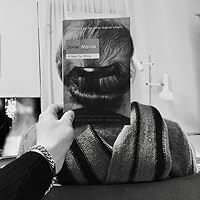
Beautiful cover, btw.
The poem "Feedback" was just plain gratuitous, like the poet laughing at his own joke and not really minding that no one else will find it particularly funny.
My favorite poem was the opening one, "Grave," in which the poet visits his parents' grave and has a conversation with them, sort of: http://www.theatlantic.com/magazine/a...
I also liked the short, "My Hero," about a tortoise.
I appreciate Billy Collins - he has a sure touch, and I've have learned from reading his poems. I never looked to him for gravitas, but he seems yet lighter in this volume.
Two stars for "it was okay."
Beautiful cover, btw.

February 26, 2019
This collection beat out my first collection for the Goodreads Choice Award back in 2011, so anything I write here will be tinged with that information. If I loved it, that could be a way to defend myself. If I hated it, that could be pettiness. If I gave it a fair and middling review, that would make me seem above it all.
I’m not above it all. This collection is not good. I maybe would have preferred to love it, but it’s greeting card poetry. It’s hammock and Mitch Albom novel poetry. It’s poetry for people who listen to Jimmy Buffet when they’re cooking dinner, which they’re going to eat on the deck out back, with a nice view of the lake and a large bottle of Barefoot Sauvignon Blanc, because isn’t it just such a beautiful night for it? Where’s the dog? Has anyone seen the dog? Rusty? Oh there he is, down by the water. Anyone want more steak tips? I’m gonna make some more steak tips.
Perhaps someday, after nine collections, I too will want more steak tips, but for now I do not love this poetry.
I’m not above it all. This collection is not good. I maybe would have preferred to love it, but it’s greeting card poetry. It’s hammock and Mitch Albom novel poetry. It’s poetry for people who listen to Jimmy Buffet when they’re cooking dinner, which they’re going to eat on the deck out back, with a nice view of the lake and a large bottle of Barefoot Sauvignon Blanc, because isn’t it just such a beautiful night for it? Where’s the dog? Has anyone seen the dog? Rusty? Oh there he is, down by the water. Anyone want more steak tips? I’m gonna make some more steak tips.
Perhaps someday, after nine collections, I too will want more steak tips, but for now I do not love this poetry.

December 11, 2011
I try to find poets I like who pick dirt from their fingernails and compare it with the moon. I read of despair and myth and omens in the middle atmosphere. But I blink and am less than ambitions about finishing another line - much less going on to poem number two. I would never even consider reading the poem aloud to the Christmas meeting of my book group. But Billy. Sweet balding Billy. I can always find a poem that makes me smile. And then .... wait a minute ... there is some hint of the scent of myth and omens if you can look (or sniff - if I plan to stick with the sense of smell) deeper into the languishing lab's eyes or hear, (OK - I guess I have no intention of being consistent) past the Marco Polo playing children in the motel pool. Yes Billy lights the poetry path for me.

August 27, 2011
This collection is rather mundane, as if Collins is running out of steam a bit and thus forced to include poems that don’t meet the standard one has come to expect of him. The title poem is the best. I also liked two poems about dogs—Good News and Two Creatures. Others such as Memento Mori, Hell, Poem on the 300th Anniversary of the Trinity School, The Chairs That No One Sits In, Unborn Children, Table Talk and Winter in Utah were good. However, too many were so-so and seem to have been included simply because they had been published previously.
Displaying 1 - 30 of 527 reviews