Jump to ratings and reviews
Rate this book

The Bridge

Rate this book
I was stiff and cold, I was a bridge, I lay over a ravine. My toes on one side, my fingers clutching the other, I had clamped myself fast into the crumbling clay.

20 pages, Hardcover

First published January 1, 1931

29 people are currently reading
229 people want to read

About the author

Franz Kafka

3,233 books38.7k followers
Franz Kafka was a German-speaking writer from Prague whose work became one of the foundations of modern literature, even though he published only a small part of his writing during his lifetime. Born into a middle-class Jewish family in Prague, then part of the Austro-Hungarian Empire, Kafka grew up amid German, Czech, and Jewish cultural influences that shaped his sense of displacement and linguistic precision. His difficult relationship with his authoritarian father left a lasting mark, fostering feelings of guilt, anxiety, and inadequacy that became central themes in his fiction and personal writings.
Kafka studied law at the German University in Prague, earning a doctorate in 1906. He chose law for practical reasons rather than personal inclination, a compromise that troubled him throughout his life. After university, he worked for several insurance institutions, most notably the Workers Accident Insurance Institute for the Kingdom of Bohemia. His duties included assessing industrial accidents and drafting legal reports, work he carried out competently and responsibly. Nevertheless, Kafka regarded his professional life as an obstacle to his true vocation, and most of his writing was done at night or during periods of illness and leave. Kafka began publishing short prose pieces in his early adulthood, later collected in volumes such as Contemplation and A Country Doctor. These works attracted little attention at the time but already displayed the hallmarks of his mature style, including precise language, emotional restraint, and the application of calm logic to deeply unsettling situations. His major novels The Trial, The Castle, and Amerika were left unfinished and unpublished during his lifetime. They depict protagonists trapped within opaque systems of authority, facing accusations, rules, or hierarchies that remain unexplained and unreachable. Themes of alienation, guilt, bureaucracy, law, and punishment run throughout Kafka’s work. His characters often respond to absurd or terrifying circumstances with obedience or resignation, reflecting his own conflicted relationship with authority and obligation. Kafka’s prose avoids overt symbolism, yet his narratives function as powerful metaphors through structure, repetition, and tone. Ordinary environments gradually become nightmarish without losing their internal coherence. Kafka’s personal life was marked by emotional conflict, chronic self-doubt, and recurring illness. He formed intense but troubled romantic relationships, including engagements that he repeatedly broke off, fearing that marriage would interfere with his writing. His extensive correspondence and diaries reveal a relentless self-critic, deeply concerned with morality, spirituality, and the demands of artistic integrity. In his later years, Kafka’s health deteriorated due to tuberculosis, forcing him to withdraw from work and spend long periods in sanatoriums. Despite his illness, he continued writing when possible. He died young, leaving behind a large body of unpublished manuscripts. Before his death, he instructed his close friend Max Brod to destroy all of his remaining work. Brod ignored this request and instead edited and published Kafka’s novels, stories, and diaries, ensuring his posthumous reputation.
The publication of Kafka’s work after his death established him as one of the most influential writers of the twentieth century. The term Kafkaesque entered common usage to describe situations marked by oppressive bureaucracy, absurd logic, and existential anxiety. His writing has been interpreted through existential, religious, psychological, and political perspectives, though Kafka himself resisted definitive meanings. His enduring power lies in his ability to articulate modern anxiety with clarity and restraint.

Ratings & Reviews

What do you think?
Rate this book

Friends & Following

Create a free account to discover what your friends think of this book!

Community Reviews

5 stars
117 (29%)
4 stars
98 (24%)
3 stars
106 (26%)
2 stars
43 (10%)
1 star
29 (7%)
Displaying 1 - 30 of 33 reviews
Profile Image for Glenn Russell.
1,518 reviews13.3k followers
Read
April 17, 2019


When I read this short short Kafka tale, I imagine Franz Kafka is a bridge stretched between all his readers on one side and the tales of Franz Kafka on the other. Hold up Franz! Ready or not, here we come.

THE BRIDGE by Franz Kafka
I was stiff and cold, I was a bridge, I lay over a ravine. My toes on one side, my fingers clutching the other, I had clamped myself fast into the crumbling clay. The tails of my coat fluttered at my sides. Far below brawled the icy trout stream. No tourist strayed to this impassable height, the bridge was not yet traced on any map. So I lay and waited; I could only wait. Without falling, no bridge, once spanned, can cease to be a bridge.

It was toward evening one day—was it the first, was it the thousandth? I cannot tell—my thoughts were always in confusion and perpetually moving in a circle. It was toward evening in summer, the roar of the stream had grown deeper, when I heard the sound of a human step! To me, to me. Straighten yourself, bridge, make ready, railless beams, to hold up the passenger entrusted to you. If his steps are uncertain, steady them unobtrusively, but if he stumbles show what you are made of and like a mountain god hurl him across to land.

He came, he tapped me with the iron point of his stick, then he lifted my coattails with it and put them in order upon me. He plunged the point of his stick into my bushy hair and let it lie there for a long time, forgetting me no doubt while he wildly gazed around him. But then—I was just following him in thought over mountain and valley—he jumped with both feet on the middle of my body. I shuddered with wild pain, not knowing what was happening. Who was it? A child? A dream? A wayfarer? A suicide? A tempter? A destroyer? And I turned so as to see him. A bridge to turn around! I had not yet turned quite around when I already began to fall, I fell and in a moment I was torn and transpierced by the sharp rocks which had always gazed up at me so peacefully from the rushing water.
Profile Image for Pakinam Mahmoud.
1,018 reviews5,198 followers
April 28, 2024
قصة من صفحتين وتخلص في دقيقتين..
بس هل دة معناه إني فهمت ايه المقصود منها؟
الصراحة مش أوي:)
متوفرة تحت إسم الجسر في الجزء الثالث من الأعمال الكاملة لكافكا..
Profile Image for David Meditationseed.
548 reviews34 followers
July 15, 2018
The central character of this story is the consciousness of a bridge. A bridge that knows what it is and understands its meaning: to connect two points on an abyss.

The bridge has theoretical consciousness about its death: "once erected, no bridge can stop being bridge without collapsing".

However, no one has ever experienced to use this bridge.

And even though it was forgotten, it was still a bridge.

So the first time someone tried to get cross her, he hurt her, deeply. She (the bridge) felt the pain. And she wanted to know who did that to her. She realized it was a man. And she understood how he hurt her. But she did not know the intensity of it.

And before discovering this, curious to see his face, or at least his form, she break down and falls.

So even knowing of her meaning, she never had utility.

And then a new question arises: do things lose their sense of being when they have no utility?

----
Dessa vez, o personagem central dessa historia é a consciência de uma ponte. Uma ponte que sabe o que é e compreende o seu sentido: o de unir dois pontos sobre um abismo.

A ponte tem consciencia teorica tambem sobre sua morte: "uma vez erguida, nenhuma ponte pode deixar de ser ponte sem desabar". No entanto, ninguem jamais passou por ela. E embora fosse esquecida, ainda era uma ponte.

Entao, a primeira vez que alguem tentou passar por ela, a machucou, a violentou. Ela sentiu a dor. E quis saber quem fez aquilo com ela.

Percebeu que foi um homem. E compreendeu como ele o machucara. Mas nao soube a intensao dele. E antes de descobrir isso, curiosa ao ver a face dele, ou pelo menos sua forma, morreu, machucada, mesmo sabendo de seu sentido, nunca teve utilidade.

E então surge uma nova questão: as coisas perdem o sentido de ser quando não tem utilidade?
Profile Image for Meg.
134 reviews
Read
April 28, 2022
this one freaks me out
Profile Image for Moataz Mohamed.
Author 4 books646 followers
February 24, 2015
Kafka is, unquestionably, one of the most exquisite writers in the field of vague writings. But for some reason, I just couldn't get around this one. Perhaps I will read it again and try to think it through a bit more.
76 reviews54 followers
May 19, 2016
This short story reminded me of one of Kafka's sayings. "In man's struggle against the world, bet on the world".
Profile Image for wiszi.
145 reviews59 followers
March 20, 2022
you know i love surrealism
Profile Image for Claire.
798 reviews86 followers
April 4, 2019
I borrowed this book online because I was intrigued with the illustrations. It was kind of a mash between impressionism and surrealism. The story was EXTREMELY SHORT and by far the weirdest.

I THINK this is a story about a bridge. A man is a bridge? He was conscious and surprised when another man decides to cross him/it. Seemed like nobody ever crossed the bridge, it wasn't on the map (I don't know how the bridge knew it wasn't on the map), and I guess he/it was kind of obsolete. However, according to the consciousness of the bridge, as long as they haven't fallen down and that one can cross it, they're still technically a bridge? But would it still be useful if it were not in use?

"So I lay and waited; I could only wait.
Without falling, no bridge, once spanned, can cease to be a bridge."
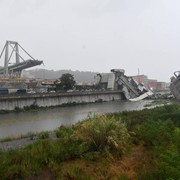

But spoiler alert! The bridge was surprised as it had been used. It tried to look at who crossed the bridge but the bridge fell before it could look at the person's face (whomever crossed the bridge).
Unfortunately, I'm not really sure what I'm supposed to be getting here... I'm thinking, the bridge doesn't make any sense. Like why would it have a consciousness and why wasn't it in use (except this one time before it collapsed)? If something doesn't make sense (this bridge), does it lose its meaning? Like was this (still) a bridge (that had now broken down)?

I'm not really sure if I understand this. If anyone knows, feel free to let me know in the comments.
Profile Image for dharmesh.
4 reviews2 followers
May 7, 2025
Kafka found me when I needed him the most :)
Profile Image for Pelle.
60 reviews
March 28, 2021
Tension is not only a physical phenomenon
Profile Image for Anda Kruetani.
67 reviews14 followers
March 21, 2022
Being tested and put under pressure despite being sure in oneself.
Profile Image for moonbinder.
20 reviews1 follower
November 9, 2025
A surreal monologue told from the perspective of a dying bridge, an object given consciousness, emotion, and doubt. Through this strange narrator, Kafka explores identity, purpose, and the absurdity of existence. The bridge’s collapse, caused by both an external force and its own contradictory impulses, mirrors the human struggle to reconcile inner being with outward function. Even the “peaceful” rocks below become symbols of how quiet forces can destroy us. Brief but devastating, it’s a parable of self-awareness turned inward to ruin.
Profile Image for Farhana Lüba.
225 reviews16 followers
July 7, 2019
When someone comes and wrecks the bridge, and the Bridge realizes at the end that she never really knew the person...I felt a pang in my heart.
"Who was it? A child? A dream? A wayfarer? A suicide? A tempter? A destroyer?"
And she collapsed. She was torn and pierced by the rocks which had always gazed upon her peacefully from the rushing water.
This entire review has been hidden because of spoilers.
Profile Image for antonia.
10 reviews4 followers
November 27, 2020
i think this will stick with me forever now...
1 review1 follower
November 22, 2023
Reading this is like being an overly idealistic youth again, waiting to find out what's on the other side of young adulthood.
Profile Image for highwayman.
167 reviews
April 1, 2024
(2.5) maybe one day I’ll bridge the gap in my understanding of this
Profile Image for san.
92 reviews
February 24, 2025
i am not qualified enough to talk about this one
Profile Image for ↟° IRIS ⇞↟⇞.
66 reviews1 follower
September 29, 2023


✦"I was stiff and cold, I was a bridge, I lay over a ravine. My toes on one side, my fingers clutching the other, I had clamped myself fast into the crumbling clay. The tails of my coat fluttered at my sides. Far below brawled the icy trout stream. No tourist strayed to this impassable height, the bridge was not yet traced on any map. So I lay and waited; I could only wait. Without falling, no bridge, once spanned, can cease to be a bridge."

Displaying 1 - 30 of 33 reviews

Can't find what you're looking for?

Get help and learn more about the design.