

What do you think?

André
Au début des années 1830, dans le Berry, André de Morand, jeune homme au caractère doux et craintif, fils d’un châtelain autoritaire et borné, s’éprend d’une jeune ouvrière en fleurs artificielles, Geneviève. D’un tempérament également doux et vertueux, Geneviève est néanmoins pragmatique et intelligente, et vit en marge de la société des grisettes de la ville. Leur amour, d’abord placé sous le signe du secret, est bientôt rendu impossible par le père d’André, qui rejette Geneviève et renie son fils.
D’apparence simple, l’intrigue d’André déjoue les stéréotypes du roman sentimental. En faisant d’André un personnage faible et indécis, et en lui opposant une Geneviève incarnant l’Artiste authentique, George Sand déploie dans ce roman tout en sensibilité les grands sujets qui feront son œuvre : l’éducation, l’égalité sociale, et l’égalité entre les sexes.
Préface, notes et dossier de Marie Baudry.
D’apparence simple, l’intrigue d’André déjoue les stéréotypes du roman sentimental. En faisant d’André un personnage faible et indécis, et en lui opposant une Geneviève incarnant l’Artiste authentique, George Sand déploie dans ce roman tout en sensibilité les grands sujets qui feront son œuvre : l’éducation, l’égalité sociale, et l’égalité entre les sexes.
Préface, notes et dossier de Marie Baudry.
- GenresClassics
352 pages, Pocket Book
First published January 1, 1869
About the author
George Sand
3,097 books971 followersAmantine Lucile Aurore Dupin de Francueil, best known by her pen name George Sand, was a French novelist, memoirist and journalist. One of the most popular writers in Europe in her lifetime, being more renowned than either Victor Hugo or Honoré de Balzac in England in the 1830s and 1840s, Sand is recognised as one of the most notable writers of the European Romantic era. She wrote more than 50 volumes of various works to her credit, including tales, plays and political texts, alongside her 70 novels.
Like her great-grandmother, Louise Dupin, whom she admired, George Sand advocated for women's rights and passion, criticized the institution of marriage, and fought against the prejudices of a conservative society. She was considered scandalous because of her turbulent love life, her adoption of masculine clothing, and her masculine pseudonym.
Like her great-grandmother, Louise Dupin, whom she admired, George Sand advocated for women's rights and passion, criticized the institution of marriage, and fought against the prejudices of a conservative society. She was considered scandalous because of her turbulent love life, her adoption of masculine clothing, and her masculine pseudonym.
Ratings & Reviews
Friends & Following
Create a free account to discover what your friends think of this book!
Community Reviews
Displaying 1 - 13 of 13 reviews

December 29, 2022
There is a scene in Émile Zola’s Pot-bouille, where the guests were debating the value of the romance novel. Some claimed it was bad for young women before they got married. M. Viullame, the father of Marie admits that months before her wedding, he allowed his daughter to read George Sand, ensuring her a liberal education. In his own words, reading André is “une œuvre sans danger, toute d’imagination, et qui élève l’âme.” She spent her time weeping after reading the book whereby the father admitted nothing good came from it.
Octave Mourand, the dashing main character of the Zola novel, has his eye on Marie, and right after hitting on another woman Valérie, offers to get a copy of the book to her. His good friend knows George Sand, he claims. So I became very curious.
André is the son of the Marquis de Morand. His father is a tough as nails character that loves to hunt and farm and cares little for much else. He decides that his “soft” son needs an education. This helps him to learn an array of things including science and literature but André is still a shy, reclusive lad.
Thanks for his best friend Joseph Marteau, André is introduced to some local girls who make artificial flowers, les grisettes, headed by Henriette. André is struck with love by one girl, Geneviève. He tries to teach her about botany. After all, she is making artificial flowers and why wouldn’t she want to know the entomology of what she is making? Love is in the air, literally, although they both have a hard time understanding their feelings. This is where Henriette comes in to get the two lovers aligned, and then she can announce the pending marriage. This is what good friends are for!
The bad news is the gossip of the two lovers spreads fast and tarnishes Geneviève’s reputation. In the early 19th century, this can spell doom. André keeps her on a pedestal despite her thorny disposition. “C’est ma Galatée, se disait-il ; mais elle ne s’est animée que pour regarder les cieux. Descendra-t-elle de son piédestal, et voudra-t-elle poser ses pieds sur la terre auprès de moi?” If any one has read Theocritus, Idyll 5, poor Polyphemus had it bad for the nymph Galatea. Any reference to an ancient Greek love poem must mean something, shouldn’t it, George Sand? Something bad, perhaps?
Let’s put the blame on the father. The Marquis does not take to kindly to the fact that his noble son wants to marry a commoner. Blame it on André. If I can’t have her then we will live on love! Sure André, without money, love doesn’t last long. Blame it on his friend Joseph. The timid, mousy André really cannot stand up to his father so he asks his good friend to help. How far can a friend go?
And that comes down to Geneviève. She is really in over her head. But she doesn’t take things sitting down. Isn’t she really the hero of the story? And now I understand why poor Marie in Pot-bouille cried after reading the book. Maybe this isn’t the kind of book a young woman should marry before her marriage? Or maybe it is? It is a romance, after all. Silly father.
Octave Mourand, the dashing main character of the Zola novel, has his eye on Marie, and right after hitting on another woman Valérie, offers to get a copy of the book to her. His good friend knows George Sand, he claims. So I became very curious.
André is the son of the Marquis de Morand. His father is a tough as nails character that loves to hunt and farm and cares little for much else. He decides that his “soft” son needs an education. This helps him to learn an array of things including science and literature but André is still a shy, reclusive lad.
Thanks for his best friend Joseph Marteau, André is introduced to some local girls who make artificial flowers, les grisettes, headed by Henriette. André is struck with love by one girl, Geneviève. He tries to teach her about botany. After all, she is making artificial flowers and why wouldn’t she want to know the entomology of what she is making? Love is in the air, literally, although they both have a hard time understanding their feelings. This is where Henriette comes in to get the two lovers aligned, and then she can announce the pending marriage. This is what good friends are for!
The bad news is the gossip of the two lovers spreads fast and tarnishes Geneviève’s reputation. In the early 19th century, this can spell doom. André keeps her on a pedestal despite her thorny disposition. “C’est ma Galatée, se disait-il ; mais elle ne s’est animée que pour regarder les cieux. Descendra-t-elle de son piédestal, et voudra-t-elle poser ses pieds sur la terre auprès de moi?” If any one has read Theocritus, Idyll 5, poor Polyphemus had it bad for the nymph Galatea. Any reference to an ancient Greek love poem must mean something, shouldn’t it, George Sand? Something bad, perhaps?
Let’s put the blame on the father. The Marquis does not take to kindly to the fact that his noble son wants to marry a commoner. Blame it on André. If I can’t have her then we will live on love! Sure André, without money, love doesn’t last long. Blame it on his friend Joseph. The timid, mousy André really cannot stand up to his father so he asks his good friend to help. How far can a friend go?
And that comes down to Geneviève. She is really in over her head. But she doesn’t take things sitting down. Isn’t she really the hero of the story? And now I understand why poor Marie in Pot-bouille cried after reading the book. Maybe this isn’t the kind of book a young woman should marry before her marriage? Or maybe it is? It is a romance, after all. Silly father.

July 7, 2009
André (1834) is another powerful, but tragic, novel from George Sand's so-called "anti-matrimonial" period. The book might have been more aptly named Genevieve for its long-suffering, gifted, and independent heroine rather than for her weak-willed husband, André. The novel, set in Sand's beloved rural Berry region of France, poignantly describes how ill-equipped and ill-tempered society is when it comes to accepting and granting a viable place for the gifted woman. The book also addresses the vulnerability of a superior woman to gossip and the concept that some women are so unusual that traditional love and marriage simply cannot fit happily into their lives. André is a young nobleman, who is educated but without profession or ambition, when he falls in love with the beautiful, sensitive Genevieve, a maker of artifical flowers. Sand's sympathy for the grisette or self-supporting working woman in skilled manual labor is evident as she also describes various other seamstresses and needleworkers who are Genevieve's friends. Although André and Genevieve's secret meetings in the flower fields are innocent and Platonic, local gossips, jealous of Genevive's talent and her spotless reputation, turn the liaison into a scandal. Soon Genevieve's reputation is in ruins over the slander, and her business suffers. André, very much in love with Genevieve, is delighted at the chance to recifty the scandal by marrying her, even though his plan is over the protest of his pompous father. Unfortunately, the couple's marriage marks the hastening of a nighmarish descent for Genevieve into illness, abuse, and perhaps worst of all, complete dependence on others. The social vice that closes around her with a finality is heart-breaking. As with her first three novels Indiana, Valentine and Jacques, Sand has effectively vilified the effect of marriage in her era on intelligent young women.

June 21, 2024
I liked this book because we recognize many of Georges Sand's characteristics with this love of the countryside and peasants who are simple, good and often pure and carefree. It’s reminiscent of her country novels and there’s a feminist presence that’s obvious.
The character of Geneviève, although tragic, is the real main character. André, although well-intentioned and very innocent and passionate, is a complete incompetent . It merges into a passionate and sincere declaration of love and fades away or sinks into depression at each small obstacle. André is at first very endearing because of his gentle and fearful appearance, but quickly these personality traits become exasperating. Indeed, André becomes less and less sympathetic to the reader because his weakness and his lack of courage in the face of his father also impacts poor Geneviève, who is nevertheless so reasonable. It's him who teaches her to love him when she only wanted to keep her freedom and her peace. He gives birth to a sincere love in her and ultimately leads her to her downfall by being unable to keep his promises.He is clearly not up to the task and it is precisely this fatalistic passivity that causes Geneviève's esteem for him to drop.
Conversely, the female character of Geneviève is the most reasonable and sensible.She leads a virtuous life and even when André destroys her reputation by being reckless, she remains upright and proud . She is also very reasonable and is aware of the dangers of love and passion. Unlike André who is purely passive and weak, she does not hesitate to run to his bedside despite the dangers and always remains good and attentive towards him even if she knows that he has ruined her life And that she will die with the child she is carrying .Même résigner Geneviève est digne d'administration . Even when she is Resigned She surrounds herself with her flowers, making her a poetic and intelligent character while André ultimately remains true to himself: upset and sick with grief and weakness.
Somehow we can only blame André because he did everything wrong: He ruined her reputation, Prevents her from leaving when it was the best solution to avoid a life of unhappiness married her without her father's consent, which made it an unfortunately and sad event, He gives her a child but is not able to ask his father for money , was fired from his teaching position which was the only source of income (just because he didn't like his job and was sad about it and therefore incompetent ...
In summary, his romantic and romantic character turns out to be very useless and frivolous because it seems that he makes no real effort to fix things and make Geneviève happy. He just repeats his love to her while crying but does nothing useful. Although their love is cute, fine and innocent at the beginning, we quickly come to the conclusion that Geneviève would have been much happier without him and that she would have avoided all this suffering.
André is not bad but too weak for this love story. He is not up to the situation and Geneviève . She loved him for his sensitivity but his incompetence takes over his qualities .I think that the character of Joseph would have been much more competent because in addition to loving Geneviève he is capable of imposing himself and getting what he wants while remaining good and loyal.
Obviously the fault also lies with a cruel father
The character of Geneviève, although tragic, is the real main character. André, although well-intentioned and very innocent and passionate, is a complete incompetent . It merges into a passionate and sincere declaration of love and fades away or sinks into depression at each small obstacle. André is at first very endearing because of his gentle and fearful appearance, but quickly these personality traits become exasperating. Indeed, André becomes less and less sympathetic to the reader because his weakness and his lack of courage in the face of his father also impacts poor Geneviève, who is nevertheless so reasonable. It's him who teaches her to love him when she only wanted to keep her freedom and her peace. He gives birth to a sincere love in her and ultimately leads her to her downfall by being unable to keep his promises.He is clearly not up to the task and it is precisely this fatalistic passivity that causes Geneviève's esteem for him to drop.
Conversely, the female character of Geneviève is the most reasonable and sensible.She leads a virtuous life and even when André destroys her reputation by being reckless, she remains upright and proud . She is also very reasonable and is aware of the dangers of love and passion. Unlike André who is purely passive and weak, she does not hesitate to run to his bedside despite the dangers and always remains good and attentive towards him even if she knows that he has ruined her life And that she will die with the child she is carrying .Même résigner Geneviève est digne d'administration . Even when she is Resigned She surrounds herself with her flowers, making her a poetic and intelligent character while André ultimately remains true to himself: upset and sick with grief and weakness.
Somehow we can only blame André because he did everything wrong: He ruined her reputation, Prevents her from leaving when it was the best solution to avoid a life of unhappiness married her without her father's consent, which made it an unfortunately and sad event, He gives her a child but is not able to ask his father for money , was fired from his teaching position which was the only source of income (just because he didn't like his job and was sad about it and therefore incompetent ...
In summary, his romantic and romantic character turns out to be very useless and frivolous because it seems that he makes no real effort to fix things and make Geneviève happy. He just repeats his love to her while crying but does nothing useful. Although their love is cute, fine and innocent at the beginning, we quickly come to the conclusion that Geneviève would have been much happier without him and that she would have avoided all this suffering.
André is not bad but too weak for this love story. He is not up to the situation and Geneviève . She loved him for his sensitivity but his incompetence takes over his qualities .I think that the character of Joseph would have been much more competent because in addition to loving Geneviève he is capable of imposing himself and getting what he wants while remaining good and loyal.
Obviously the fault also lies with a cruel father
This entire review has been hidden because of spoilers.

June 29, 2025
Critique social autour du village de L… et donc dans une société restreinte. Beaucoup de sujets sont traités dans ce roman où le personnage principal est aux antipodes de l’idée de virilité. André est extrêmement agaçant. S’il semble avoir un caractère doux il ne vaux dans le fonds pas mieux que son père et cause la perte de Geneviève par son égoïsme. Il force ses sentiments et abuse d’elle et de sa gentillesse. Au final, même si Joseph n’est pas le mec le plus safe non plus, ses sentiments semblent plus sincères (par contre il n’est pas cool du tout avec Henriette et s’en fout des réputations qu’il risque d’entacher). Henriette bien que jalouse reste le personnage qui a le plus d’affect pour Geneviève et s’en soucis le plus.
This entire review has been hidden because of spoilers.

September 30, 2024
Geneviève ma chouchoute :(

May 26, 2023
"Si vous m'aimez, vous ne demanderez pas pourquoi je vous aime ; vous le sauriez comme moi, sans pouvoir le dire"

April 17, 2025
George Sand possède un talent singulier - elle sait capter l’essence d’un topos romanesque (drame romantique, pastorale rousseauiste ou bildungsroman gothique) pour offrir au lecteur un remix féministe aux accents discrètement furieux.
Que se passe-t-il vraiment quand la jeune fille heureuse et indépendante épouse le jeune romantique enthousiaste et lâche ? Que se passe-t-il quand Charlotte écoute Werther ?
Elle souffre. Elle devient un jouet dans des mains bien plus tremblantes que les siennes. Son talent et sa force vive meurent en elle alors qu’elle devient la nourrice des caprices infantiles de son jeune premier.
Pas de salut dans le mariage ou dans les amours hétérosexuels ! Rousseau est un menteur et Goethe est un sot !
C’est un roman qui vous laisse une élégie hantée dans l’âme.
Que se passe-t-il vraiment quand la jeune fille heureuse et indépendante épouse le jeune romantique enthousiaste et lâche ? Que se passe-t-il quand Charlotte écoute Werther ?
Elle souffre. Elle devient un jouet dans des mains bien plus tremblantes que les siennes. Son talent et sa force vive meurent en elle alors qu’elle devient la nourrice des caprices infantiles de son jeune premier.
Pas de salut dans le mariage ou dans les amours hétérosexuels ! Rousseau est un menteur et Goethe est un sot !
C’est un roman qui vous laisse une élégie hantée dans l’âme.
This entire review has been hidden because of spoilers.

July 13, 2025
Ce livre s’intitule André et non Geneviève. Peut être car il n’y a pas tant à dire sur Geneviève, si ce n’est énoncer quelques noms de fleurs, quelques curiosités dans l’œil naïf et fier, le courage d’un personnage indépendant et solitaire. Tandis qu’André fait couler l’encre. C’est sur lui qu’on s’étonne et qu’on s’agace. Qu’on s’attendrit aussi. André, c’est un « désenchantement amer », la « poignante ironie » (Félix Davin). Une des façon de gâcher la vie et l’amour, mais surtout l’amour-propre. Le regret. L’absence de volonté. Mais le viol tout de même.
Un roman sentimental, un roman réaliste et idéaliste à la fois, mais surtout un roman impitoyable.
Joseph Marteau.
Henriette. Le marquis de Morand. Le Pré-Girault. Les leçons de science. Les fausses fleurs de Geneviève. Le triste mariage.
Un roman sentimental, un roman réaliste et idéaliste à la fois, mais surtout un roman impitoyable.
Joseph Marteau.
Henriette. Le marquis de Morand. Le Pré-Girault. Les leçons de science. Les fausses fleurs de Geneviève. Le triste mariage.
November 15, 2025
Aurore, pourquoi tu me fais souffrir comme ça?
November 26, 2024
Très intéressant, parle des classes sociales et du rapport de force de l'homme au XIX et de la position de la femme qui en découle... Surtout quand elle est issue d'une classe inférieure. On suit une femme forte qui s'éprend à d'un homme qui est riche et possède "tous les pouvoirs" mais qui est pourtant si faible ! Très intéressant et très loin du scénario "masculiniste" j'ai envie de dire, du type "l'homme riche vient sauver la femme pauvre".
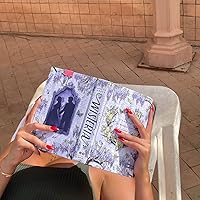
October 9, 2024
3.5 the rating is correct

September 1, 2026
Pauvre Geneviève…

March 10, 2024
Elle sait ce qu’elle fait, elle est ingénieuse et elle réussît toujours à intriguer.
Displaying 1 - 13 of 13 reviews