Finalist, 2025 Dorothy Livesay Poetry Prize Finalist, 2025 DC Reid Poetry Book Prize
Honest, elegiac, characteristically strange, and frequently funny, Midway is an exploration of grief in all its manifestations.
“I feel like the crud / I accidentally touch sometimes, whatever it is / that collects under cushions on my couch,” writes Kayla Czaga in her third collection, Midway, an exploration of grief in all its manifestations. In her search for meaning in the aftermath of her parents’ deaths, Czaga visits the underworld (at least twice), Vietnamese restaurants, the beach, London’s Tate Modern, Las Vegas casinos, and a fish textbook. Honest, elegiac, characteristically strange, and frequently funny, these poems take the reader through bright scenery like carnival rides with fast climbs and sudden drops. The meanings and messages Czaga uncovers on her travels are hopeful, bleak―both comforting and not. Along with the parents the poet mourns, this collection showcases a varied cast. A suburban father-in-law copes with a troubling diagnosis. Marge Simpson quits The Simpsons. Death is a metalhead who dates girls too young for him. Midway is a welcome and necessary collection from one of the most celebrated and accomplished poets of her generation.
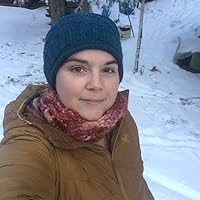
Kayla Czaga grew up in Kitimat and now lives in Vancouver, BC, where she recently earned her MFA in Creative Writing at UBC. Her poetry, non-fiction and fiction has been published in The Walrus, Best Canadian Poetry 2013, Room Magazine, Event and The Antigonish Review, among others.
For Your Safety Please Hold On was shortlisted for a 2015 Governor General's Award., and won the Gerald Lampert Memorial Award. The judges (Sonja Greckol, Charles Mountford and David Seymor) commmented that "Czaga unfulrs experience, observation and development with complexity and more than a little humour suspending a reader between this page's moment of assurance and the next moment's unsettling observation."
Some stunning poems in the collection. One of my favorites: "I Have Never Written a Poem about My Father,"
asleep on the toilet. I have never described him folded forward like an airplane safety card's illustration of brace position or slumped against the tank with his head tipped back and dentures slipping off his gums. [The poem is a page and a half and a gem.]
Another poem, "Thirteen Years" describes a writer friend's piece that Czaga doesn't "believe" [and why she doesn't]. It's tricky to make a poem such, but this one kept me. I nodded my head throughout.
I discovered Kayla Czaga in an odd way. I am grateful I did. Out of 15 new poets I explore in a month's time, there'll be one poet who grabs me. Kayla Czaga is my September win.
"Midway" is her third full length. Her first one "For Your Safety Please Hold On" is my favorite, but "Midway" is a close second. I love her honesty. I love her willingness to throw things at the canvas and see what/if sticks. There are poems in "Midway" I will go back to and relive.
Yet another (her third) extraordinary book from this gifted poet. Czaga in some ways reminds me of Miriam Toews -- she can write about such terrible sadness but it is so often leavened with gallows humour. It's the kind of humour that sees through the human condition in its pathos and absurdity. These poems don't relinquish compassion, but they refuse the easy emotion and especially the maudlin. What a magnificent book
I’d say these poems are immeasurably sad, but no - one can count them: there are 43 poems in Midway that explore and present the complicated simplicity of grief. Many of these poems are devastating. Some are weirdly, beautifully funny. Some wrestle with the absurd.
Together, they put together a pretty good picture of a person grappling with the ups and downs of the impactful death of family.
Kayla Czaga's work always makes me want to feel more deeply into my life and write more deeply too, with absurdist observations and dreams and a deep friendship for sorrow and grief. This collection ruined me and also reminded me what poems give us permission to do: to both call back the departed and sit with our lives, without them.