

What do you think?
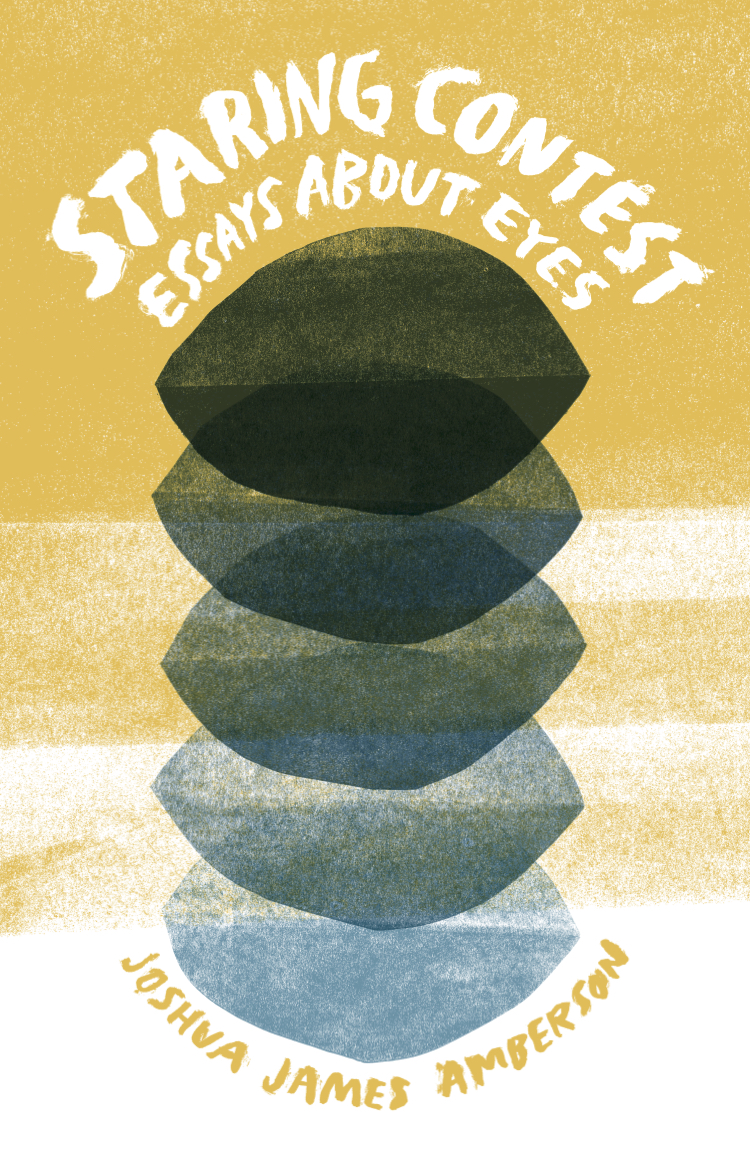
Staring Contest: Essays about Eyes
As a child, Joshua James Amberson was diagnosed with pseudoxanthoma elasticum, a rare genetic condition that may eventually lead to sightlessness. “In my own mild way,” his book opens, “I like to obsess,” and what follows is a relentlessly curious series of detours through oft-ignored aspects of vision and vision loss. Deftly weaving together such disparate subjects as Bette Davis’s career, the daily challenges of eye contact, and his own decade-long saga of periodic eye injections, Amberson digs deeply into the physical and existential consequences of living with such uncertainty. Staring Contest is wise, generous, and—given the subject matter—surprisingly funny.
- GenresEssays
224 pages, Paperback
Published May 16, 2023
Ratings & Reviews
Friends & Following
Create a free account to discover what your friends think of this book!
Community Reviews
Displaying 1 - 12 of 12 reviews

July 29, 2024
This is an amazing collection of essays about something most people take for granted: eyes and how we see the world. Amberson, who is low-key one of the finest writers we have in the Pacific Northwest, lives with a rare genetic condition that threatens his current and future days of seeing. The range of his topics (from pirates and Mister Magoo to boxing match stare-downs and eye violence in movies) is amazing and well-researched. The way he writes from his research and his own personal experiences is so caring and generous, it really feels like you're with one of your best friends throughout the whole book. This might be my favorite book in the "health memoir" field. Even if you don't think you're interested in blindness and the strange world of eyeballs, it's a moving, wise, occasionally funny, fascinating, and revealing book that everyone should read.
May 22, 2024
4.5. learned and related and thought a lot. didn't expect to confront my relationship with taking up space as much as i was forced to throughout but i'm not mad about it. he also references a good claudia rankine line for all my core 1 baddies
June 27, 2023
Such a stunning collection of essays from Amberson! Thoughtful and thought-provoking. I loved it!

April 13, 2023
As a young child, Joshua James Amberson purposefully blurred his vision. He believed haziness suggested the otherworldly; it provided an escape from reality, such as the realities of growing up working class in rural Washington. Issues of class recur throughout his multifaceted collection Staring Contest: Essays about Eyes, as the adult Amberson, underemployed and uninsured, faces the necessity of expensive and unpleasant treatments to prevent irreversible vision loss.
My review in the Chicago Reader: https://chicagoreader.com/arts-cultur...
My review in the Chicago Reader: https://chicagoreader.com/arts-cultur...
August 4, 2023
When we entrench ourselves in something that is whole, we become more believable. Imagine being with the person that made you feel that way. Do you imagine a partner, a parent, a child, a friend, a stranger? Or maybe just someone who sees you for who you are. Imagine,.. being with that being person on the beach... No not a partner, or someone that you don't truly care about, but someone you see who inspires you. That was the raw experience of meeting Joshua. In the realm of understanding human experience, someone who didn't give a fuck about what I thought was right but was just honest with me. Someone who listened to my most intimate thoughts and realized it was the experience that broadened both of our experiences beyond just what was in front of us. And that takes great insight and understanding of.what it is to be in a writer's spirit. To explore blindness and realize it was not death but the start of what you could see. I listened and read each page for what it was, reminiscing on the follies, foes, and forensics of blindness.
I was immersed and could not possibly see what I needed to do without this. A guide, a muse, something that felt prophetic.
He knew what I needed to do next, regardless of cohesion or clarity. More so respecting lines and boxes, than fragments and ideas. I wanted to see life thru a blind person, despite how schizophrenic it may seem.
I was immersed and could not possibly see what I needed to do without this. A guide, a muse, something that felt prophetic.
He knew what I needed to do next, regardless of cohesion or clarity. More so respecting lines and boxes, than fragments and ideas. I wanted to see life thru a blind person, despite how schizophrenic it may seem.

April 10, 2026
"We have blind spots, wear blinders, and the blind lead the blind as we turn a blind eye. Few of these embedded metaphors are positive - "blind luck" is about as good as it gets, and even that has an implied dopiness. Meanwhile, we applaud those who are insightful, farsighted visionaries who have an eye for eye-opening opportunities. This sort of language is so pervasive that, regardless of the intent behind it, the conclusions are undeniable: In our society, sight is celebrated while blindness is feared" (Amberson 62-63).
Nice collection of essays that touch on the author's personal life as well as his observations on the world at large as it relates to eyes, vision, and perception. I don't have too much to say other than it was a good read, and I am now terrified of the prospect of ever having a needle injected into my eyeball.
Nice collection of essays that touch on the author's personal life as well as his observations on the world at large as it relates to eyes, vision, and perception. I don't have too much to say other than it was a good read, and I am now terrified of the prospect of ever having a needle injected into my eyeball.

July 24, 2023
Amberson brings such vulnerability and care to his essays on eyes. We are brought into his literal and metaphorical worldview as he reflects on his sight, health, and fragility. He questions why we cry, stare, and look away. We hear from blind writers and artists about how they see the world and make meaning of things. When talking about the hate and misinformation on the internet, Amberson worries we are in “a time without nuance, without empathy”. I think this book is one step in the nuanced, empathetic direction and I highly recommend it.

August 12, 2023
Like staying up all night talking with one of your most thoughtful friends, winding through various sub-topics with honesty, open-ended insight, and great empathy for humanness and the many ways eyes interact with it. As I find is the typical result of reading Amberson, you put this book down feeling a renewed connection to the world.

October 26, 2023
A very interesting way to think about everyday things that we usually don’t notice - the different ideas about the eyes, eyesight in general, and the sense of sight. I really enjoyed how each chapter is so different, going between history and medical science, as well as more personal experience, creative writings.

November 1, 2023
These concise, entertaining, vulnerable, and engaging essays collectively read like a beautiful memoir complete with story arc and a very satisfying ending. Of course, each essay has its own arc and conclusion, its own focused attention on a certain cultural reference or medical elucidation or obsessive quirk, and in this way the story never gets stale, but effectively adds layer after layer to the whole until Amberson has transformed a collection of eye-related essays into an impressive topographical map of the human condition and the human spirit.

July 19, 2026
hmmm a concise meditation on the loneliness this man has experienced/is experiencing amidst the threat of blindness; detailing a life with a chronic illness. i bought this from some little gay souvenir & book shop in Portland many years ago & wish i had read it sooner🗿

January 1, 2024
Superb collection of essays - all relating to sight and eyes from many perspectives. From personal experiences with eye issues to 'Bette Davis Eyes' and much more.
Displaying 1 - 12 of 12 reviews