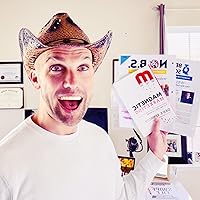
I am a NY Times Best Selling Author, internationally-recognized Sales Training Expert, Business Coach, and the Founder and CEO of 3 businesses: Cardone Training Technologies, Cardone Group, and Twin Capital Management. You may have seen me as the star and co-executive producer of a show, called TurnAround King.
In addition to speaking internationally to individuals, companies, and industry leaders on sales effectiveness, negotiating strategies, business development and business expansion, I am a regular contributor to networks including, Fox News, MSNBC, CNBC, Huffington Post, Business Week’s Business Exchange, The Wall Street Journal, CNN, Reuters, CNBC, Today Show and over 600 radio shows.
I am the author of four published books, with a fifth book slated to release in 2012. • "Sell To Survive" (2008): The definitive sales survival manual on how to SELL your way through any economy. • "The Closers Survival Guide" (2009): The ultimate guide to getting sales done. • "If You're Not First, You're Last" (2010): Sales strategies to dominate your market and beat your competition. • "The 10X Rule": Where to start, what to do, and how to follow up each action you take with more action to 10X your success!
I have also authored a number of business and motivational audio and video programs; The Rules of Success Motivational Program, Control Without Confrontation, 21st Century Selling, Maximizing Every Opportunity and a customized program for the auto industry called The One a Day Sales and Management Program.
I first became known in the business world with the development of a revolutionary new selling process, known as, Information Assisted Selling (a non-confrontational 21st Century selling approach)
To many people’s surprise, strong sales skills are a key requirement for most film producers. Thus having a background in this area has been a key asset for myself on this career path. Likewise the same could be said for many aspects of our day to day lives both business and personal. The business of sales is vital in ways many fail to appreciate, and it is an art form that in many ways resembles the structure and complexity of a language.
Thus we come to the The Closer's Survival Guide a book focused on perhaps the most important part of selling 'The Art of the Close'. Written by Grant Cardone— a veritable legend in the arena of sales. Thus, I had high hopes for this title.
Having read one of Cardone’s previous books The 10x Rule: The Only Difference Between Success and Failure, I know he is a capable author. However, what he delivers in The Closers Survival Guide feels like the missing appendix to a book I am yet to read (and one I’d imagine he is yet to write).
Cardone approaches this title with his usual energy and zeal. His comprehensive knowledge of the art of sales and closing is more than impressive, and it is clear he is a very capable and intelligent salesman. However, this genuinely feels like being asked to learn a language by being given a dictionary — with the worst thing being the dictionary is not even in alphabetical order and you are given no context of the grammar, forms and structures the language takes.
He just endlessly reels off close after close, after close — placed in a seemingly random and unrelated order, with no framework as to when or why to use each one, or how to integrate them into a sale. He occasionally warns against over using certain closes but without applicable settings his advice may actually undermine many sales people. Context for the closes is just absent, thus it ends up becoming a blur of Cardone just showing off his vast knowledge. Anyone with an experienced background in sales will be familiar with some if not many of the closes, but there will definitely be many closes that even the most accomplished sales person will not be familiar with — with some being broad versus some with more narrow scope and utility. Some are very similar (and would have been better organised into appropriate styles and categories) but the randomness of the presentation hinders the utility of everything presented.
Imagine being presented a food menu with 1000 random items, all uncategorised with no logical order, just a mass jumbled assortment — with no prices or values. Now tell me what do you want to pick for dinner?
Ultimately Cardone leaves the reader starving for structure, form and context. The total absence of organisation and lack of framework may leave many overwhelmed and actually set their progress backwards in terms of true understanding. Hence it might actually do more harm than good.
Unfortunately, this is a muddle that would need to be entirely rewritten to be of functional use in the arena of learning for real life sales. This is a shame as such a vast knowledge could have been put to far better use with the right application.
Great book about answering people's common objections to whatever I'm selling. I'm not a pushy sales person, so some of these I wouldn't even attempt to use or weren't applicable to my day-job of auto/home insurance, but many of them were so easy that I am excited to put them into practice!
The first half hour was just the author telling the reader how great he is (feel free to skip that if you've ever read a book by Grant Cardone before), and then the next hour or so was an introduction to why these closes work, and by the last 3-4 hours, it was all just a list of objections, followed by a suggested close, and then a short role-play in how that would actually work in real life.
Grant does a great job explaining the importance of the close as well as in giving you great, specific closes you can use to overcome objections. It's up to you to personalize them to your situation, but they're great closes that, when practiced, drilled and rehearsed, call help you close more deals! I love the book more so for the lessons about how there's nothing without the close, there's nothing without asking for the business and getting an agreement to exchange resources for something mutually beneficial, or "the winners exchange", as Grant calls it.
Το πρώτο μέρος του βιβλίου μου φάνηκε κάπως κουραστικό: πολλές λεπτομέρειες και κοινοτυπίες, με μόνη εξαίρεση τη θεωρία του Cardone περί exchange point.
Το δεύτερο μέρος όμως, όπου και εξηγούνται τα closing techniques, ήταν άμεσο, λακωνικό, σαφές και επεξηγηματικό.
Εξαιρετικός οδηγός για όλους εκείνους που θέλουν να ξεκινήσουν από κάπου.
Δέν είναι ένα βιβλίο που διαβάζεις μία φορά, αλλά περισσότερο ένας οδηγός που ανοίγεις και ξανανοίγεις μέχρι να αποκτήσεις το πολυπόθητο closing mastery.
The issue I have with this book is that it gives you closes but doesn’t give you the counter points grant sole it as the must but then he is selling you another course at the end of it.
1) Operating Principles (the “why” that drives every close) • Closing = service. You’re helping the buyer make a confident decision, not “winning an argument.” Treat resistance as care that needs direction, not conflict. • Agreement first. Disarm tension: “You’re right,” “I get that,” then pivot to solution. (You already like this principle—double down.) • Momentum beats logic alone. Tiny yeses → fast, specific ask → pen on paper. “One more ask” is a metric, not a mood. • Stay in the pocket. Whoever stays in the close longer—calm, positive, pen ready—wins. Don’t let them wander off (physically or mentally). • Pressure ≠ pushy. Ethical pressure = clarity + options + next step. Without (kind) pressure, there’s no action.
2) The 3×3 Decision Framework (diagnose → choose the right move)
When you feel stall/objection, quickly decide which bucket you’re in:
A. Decision status • Stall: “Think about it,” “Later.” • Concern: real issue to solve. • No-fit: wrong person/need/timing.
B. Confidence gap (which of the 4?) • Product fit • Price/terms • Company/you • Self (their ability to use/implement).
C. Movement you want • Clarify → Commit → Transact.
Mapping • Stall → Momentum / Scale 1–10 / Yes-chain closes. • Concern → Agreement + Specific Fix (payment/terms/alt package). • Self-doubt → Permission / “Do it anyway” / “It won’t be your last time” closes.
3) Close Ladder (light → firm), with one-liners you can drop 1. Delivery (Assumptive) – “When do you want to take delivery/start?” 2. Check-in – “Can we move on to the agreement screen?” 3. Scale 1–10 – “Where are you now? What gets us to a 10 today?” 4. Payment option – “Would quarterly or milestone-based make this easy?” 5. Price-to-terms – “Let’s lock terms first, we can finesse price inputs after.” 6. Refocus (Equipment/Value) – “Let’s get back to the core outcome you want.” 7. Title/Ownership – “Should the agreement be under Tencent America or studio parent?” 8. Spouse/Partner Stall 1 – “If they say no, what will they say no to?” 9. Spouse/Partner Stall 2 – “They know your direction—let’s secure the slot; you can update them tonight.” 10. Agreement (Yes-and) – “You’re right, it’s meaningful. That’s why we structure it this way—let’s sign here.” 11. Agreement 2 – “No one loves price; they love value. This gives you X—ok to proceed?” 12. “Not last time” – “You’ll make many of these; today we secure the upside.” 13. Be-grateful – “I’m grateful we can solve this now—shall we finalize?” 14. Congratulations – “Congrats on backing the winning path—signature here.” 15. Do-it-anyway – “Even with that concern, this still beats waiting—let’s lock it.” 16. Do-it-for-me – “Help me help you—let’s wrap this so I can brief the team.” 17. Inventory down-model – “Want the leaner option to move today?” 18. Move up-model – “The pro tier actually solves your edge-case—go with that?” 19. Selection alternative – “Pick A or B; both hit your must-haves.” 20. Package alternative – “Bundle X + Y gets you the outcome—sign here?” 21. Think-about-it (truth) – “Thinking doesn’t change facts. Let’s decide yes/no now.” 22. Think-about-it (1–10) – “You’re at a 7. What makes it a 10 today?” 23. Think-about-it (to 10) – “What would it take to get you to a 10—and if I do that, are we done?” 24. Yes-chain – Three quick yeses → “Great, let’s finalize.” 25. Third-party – “If I get management approval on X, do we have a deal?” 26. Ben Franklin – “List pros/cons together—pros win; let’s sign.” 27. Cheaper-elsewhere – “Which do you prefer and why? Let’s pick the one that wins your outcome.” 28. Unvoiced objection – “It’s a lot—totally. Does this solve your need, is payment doable, do you deserve this now?” 29. Acknowledge emotion – “I feel it too when deciding. Let’s choose the game that wins.” 30. Now > later – “Powerful people decide with facts—let’s move.” 31. It’s not your ‘decision-making’ – “It’s either product, terms, or trust. Which should we fix right now?” 32. Not rash – “We’ve been logical and solved each issue—let’s close.”
Use these as moves, not memorized speeches. Start light (1–7), escalate as needed.
4) Pre-Close Ritual (2 minutes) • Sit, breathe, smile, pen out, proposal in writing with value points highlighted. • Decide your ask and next best ask. • Pre-plan 2 options (premium + lean), 1 concession you can trade for speed.
5) During-Close Checklist • Agree first → label emotion → ask one more time. • Keep them engaged (no disappearing to “check something”). • Convert price talks → terms/outcomes. • Log the real objection in your tracker (product / terms / trust / self).
6) Post-Close Routine • Confirm next steps + calendar hold. • Send recap in writing within 15 minutes. • Ask for 1 referral or internal intro while energy is high.
7) Metrics to Run Your Life Like a Closer • Asks per meeting (goal ≥3). • Time in close (min before a stall). • Objection ID accuracy (did you pick the right bucket?). • Conversion from 6→8 on the 1–10 scale. • Follow-up cadence (touches to yes). • Written proposals rate (should be ~100% of real opps). • Yes-chain usage (≥1 per close). • One-more-time attempts (never end at zero).
Daily (10–15 min): • Rehearse 2 closes (out loud). • Log top objection you expect today + your first move. • After last meeting: score the 7 metrics, write 2 lines of what to adjust tomorrow.
Weekly: • Role-play one hard objection with a colleague. • Build/refresh your two alt packages (down-model & bundle). • Review 5 wins: what close got it done?
The Closer Survival Guide — core ideas • Closing is everything: you can’t get the life you want without getting agreement. • You need people to buy into your ideas; be able to handle objections. The key is practice. • Closing is an exchange of value. • Mediocrity is the belief “a nice pitch is enough.” It isn’t—closers get replaced by someone who can execute. • When you close, you create clients and referrals (“boomerang effect”). • “Know vs No”: deepen knowledge and wisdom; don’t rely on luck or volume alone. • Proactive > reactive learning: role-play, simulate, adjust live. • Record reasons you’ve successfully closed; the more you know, the more you’ll seek to know.
If you can’t predict your income… 1. You don’t know what you want, 2) You know it but don’t know how to get it, or 3) Both. Fear = you don’t know something. You can blame many factors, but in the end it’s on you. “Close or lose”: C = conviction, commitment, consistency, can-do. The one who stays in the close longest wins. Closing is a service: help the buyer make a decision to exchange value. Buyer must want, trust, decide, afford.
Ten reasons closers fail 1. Never attempt to close (fear of rejection). 2. Think pressure is bad; insistence seems rude—yet without pressure nothing happens. 3. Avoid emotions: between no and yes is emotional discomfort. Acknowledge theirs; don’t get emotional yourself. Be the voice of logic. 4. Lack conviction in product/service—you’ll be sold instead of selling. 5. Underestimate effort; prep beyond what you think is necessary (“margin of safety”). 6. Being “reasonable”—comfort kills drive; fight for each close. 7. No intentional plan—connect closes to life purpose; purpose fuels stamina. 8. Treat complaints as objections—some lines are just stalls; acknowledge and keep moving. 9. Lack of closing material—can’t stay in the close long enough. (Your page ends here.)
Rules of Closing 1. Be seated to negotiate/close. 2. Present proposals in writing; highlight value points. 3. Communicate the proposal clearly. 4. Maintain eye contact; project confidence. 5. Keep a pen ready for signature. 6. (Implied) Don’t manufacture pressure—lead with service. 7. Ask one more time. 8. Know which close to use; don’t repeat yourself mindlessly. 9. Stay with the buyer; don’t leave them alone to cool down or invent objections. 10. Treat the proposal like a delivery—make it tangible/real. 11. Believe you can come to agreement (can-do). 12. Keep a positive demeanor in any environment. 13. Always smile, regardless of outcome or objection. 14. Treat the buyer like they can (afford/decide). 15. Acknowledge the buyer’s position. 16. Always agree (disagreement = stalemate). 17. Always look for a solution. 18. Care so much you refuse not to close.
“100 closes” — ones I thought interesting 1. Delivery close – assume sale; ask delivery/start timing. 2. Check close – quick confirmation; pen ready. 3. Scale 1–10 close – find gap; solve; ask. 4. Payment close – shift to terms/monthly. 5. Payment-to-figures close – look at numbers to negotiate terms. 6. Equipment close – take focus off change, back to outcome/close. 7. Title close – “Whose name should the agreement be under?” 8. Spouse stall I – pre-agree the condition and ask. 9. Spouse stall II – “Let’s get it done now—your spouse already knows.” 10. Agreement close I – agree with the complaint; ask. 11. Agreement close II – no one loves price; agree and close. 12. Won’t be your last time close – acknowledge complaint; normalize. 13. Be-grateful close – agree + gratitude for solving the problem. 14. Congratulations close – praise wise decision; move forward. 15. Do-it-anyway close – action despite minor concern. 16. Do-it-for-me close – ask for the favor; borrow commitment. 17. Inventory move-down close – down-model test of commitment. 18. Move-up/upsell close – when “too much for X,” show better fit. 19. Selection alternative – give options; maintain the deal. 20. Package alternative – show the larger package; land on workable. 21. Budget close I – budget is a complaint; solve fit. 22. Budget close II – show how to make the numbers align. 23. Think-about-it (1) – define the decision; decide today or say no. 24. Think-about-it (1–10) – ask where they are; what gets to 10; then ask. 25. Yes-ladder close – stack simple yeses; then ask. 26. Third-party close – “If I get mgmt to agree on X, do we have a deal?” 27. Cheaper-other close – “Which do you prefer and why?” choose value, then ask. 28. Unwind/feel-felt-found + “sign here and here” when it clearly solves the need & payment is doable. 29. Do you deserve this now? tie to self-image and timing. 30. Never the best time – powerful people act with facts in front of them. 31. Not a decision-making problem – it’s confidence/terms/product; isolate & solve. 32. Not a rash decision – recap logic and problem-solving, then ask.
I really like how specific and practical this book is. Too many books spend all their time convincing you that you should without explaining how to do it. But many of his closing techniques are designed to tap into insecurity, pride, guilt, etc. He justifies his approach by saying that if you truly believe the product is right for them then you’re helping by pressuring them to do it. I’m okay with that in general—many of the closes are good and push them to be more logical or wise—but I’m not okay reinforcing flaws to make a sale. I did learn a few things, though.
Once you get past the very chatty beginning, there are lots of great closes in here. You really do need to be proactive with. Don’t just read it. Study, apply it to your own business, practice, role play. I think it’s a great resource. You just have to use it.
I left off a star because the book was so full of typos and damn exclamation points that if it didn’t have Grant Cardone’s name on the front, I probably would’ve laughed and tossed it aside. Hire an editor!
In his book he gives over 160 different closes and walks you through their scenarios. Everybody closes others on a daily basis. Therefore I highly recommend this book to everybody and see how to apply it, especially those that sale.
Laugh and Learn: Grant Cardone's Insightful Guide to Closing Sales
This book made me laugh so many times. I wasn't laughing at Grant Cardone, but I was laughing at his profound understanding of human psychology regarding decision-making when it comes to spending money or buying products, services, or whatever they're purchasing. It's a challenge for people trying to make decisions with their money. He has such good wisdom into how people think and different ways to help people lighten up and come to a decision.
Narration: What I like about the fact that this book is narrated by Grant Cardone himself is that you actually get to hear his expressions in the words. These are some of the things that you might not pick up if you read this in a paper form. If you listen to the audiobook, you might want to have a copy of the paperback just to study these different closing strategies.
Applicability: I can definitely see the power of listening to this audiobook over and over again, if you have anything that you're trying to sell. He makes the point that everybody is always selling, and this book is specifically on closing and very specifically for salespeople. However, it could be beneficial to anybody who wants to get better at selling their ideas and boost their confidence with getting what they want out of life.
Examples and Insights: Cardone comes up with so many different examples, and he keeps it generic at the same time. He gives specific examples but also tells you lots of different examples very quickly and how the different types of closes can apply in all kinds of different situations.
Audience: Anyone whose life is in sales and depends on big-ticket sales would find this book extremely valuable. Small business owners can benefit just as much as salespeople who sell high-ticket items. Overall, I think this book was outstanding and it really helped open my eyes. Cardone published this in 2011, but every one of his wise suggestions are still relevant.
Conclusion: This book is an outstanding resource for anyone looking to improve their sales skills and understand the psychology behind closing deals. Cardone's witty narration and practical advice make it a must-read for sales professionals and entrepreneurs alike.
Book Review: The Closer's Survival Guide by Grant Cardone
"The Closer's Survival Guide" by Grant Cardone is an insightful and practical resource for anyone involved in sales. This book is not just a leisurely read; it serves more as a reference manual, offering various strategies to effectively handle objections and close deals.
What sets this book apart is its interactive nature. Cardone encourages readers to engage actively with the material, using a pen to jot down notes and thoughts, making the learning process both dynamic and personal. This approach makes the content not only eye-opening but also actionable, allowing readers to apply the techniques directly to their selling strategies.
The book is structured to address the common objections salespeople face, providing a comprehensive toolkit to navigate these challenges. Each section is designed to empower the reader with the confidence and skills necessary to turn potential setbacks into opportunities for success.
Overall, "The Closer's Survival Guide" is a valuable addition to any salesperson's library. It's a quick read that packs a punch, delivering essential insights that can transform your approach to closing sales. For those willing to put in the effort, this book is a fantastic resource for taking decisive action in the competitive world of sales.
Do you sell? That depends, do you have ideas? Opinions? Products? Services? Research? Deal with people? Then yes, you sell. And if you sell, you will have greater results by learning what is called closing. Closing is taking the other party over a point of objection and to a firm actionable decision. Like sales, closing has a poor reputation from poor performers and crooks. And likewise, these types of people very rarely do well in the long run. The goal of a close is to win, a win is where both parties leave happy with the result. Learn to close, or continue to lose.
"Whenever you aren't getting "yes's," understand that is simply a shortage of knowledge, wrong knowledge or a misapplication of knowledge. And that can only be corrected by getting knowledge"
Am mai citit cărți scrise de acest autor și am apreciat mereu mentalitatea de învingător pe care o transmite în esență. De la această carte mă așteptam la mai mult și se vede că unele tehnici de închidere a vânzării sunt scrise în carte doar ca să iasă la număr și să fie 100 în total ca să corespundă cu titlul. Este o carte recomandată celor care lucrează în vânzări, cu amendamentul că unele tehnici de finalizare cu succes a vânzării s-ar putea să fie nepotrivite sau penibile pentru unele piețe sau clienți.
This guide is full of useful closing tips (over 100) and is really helpful for someone new to sales. This might not be helpful for every industry and some examples might be (will be) considered uncomfortable and extreme to some, the book does help close more sales so you as the seller and also your buyers can be freed up to move onto more important tasks than struggling to make a decision or not. Use this book for good and please only sell people what will benefit them.
Everybody is always either selling or being sold. That's a fact. In this book Grant goes over 100 closes. Not all of them are fit for you but for sure you WILL learn how to close better. I like his style, can't help it. A short read, not huge amount of content but for sure one to have on the shelf and in your hands from time to time if you are in sales.
Slow start, but still a good introduction. He talk about why you should learn this and how it can affect your life. Also talks a little about sale and buisiness. Then at about halfway mark this book takes off like a rocket. Get ready to go to the moon and back with closing lines and tecniques. A all inn all good book I would recommend.
Must read for anyone in sales and in business. He offers 20 rules for negotiating and over 120 closing techniques. Not all of them are equally valuable, but I bet anyone can get at least 30-40 new weapons in their arsenal. Worth the read regardless.
Until you close with a customer, you can't provide value to them. This book shows you hundreds of ways to do just that and, if you're in sales, you should probably read this a couple of times per year.
As much as I dislike sales training scripts, Grant does a great job of exploring why and how people react to particular statements in business negoatiations. This book is a must read for anyone in sales.
First hour or so is Grant talking smack, and there's a few closes in there that'd just end up getting people laughing at you in Australian culture. For the by and large though it's a pretty handy guide.
The book is split into thirds. The first two thirds are fluff. The last third are actual closes. The closes are creative and effective. If you skipped the rest of the book and went to the closes, it would be worth the read.
I enjoyed the sales wisdom from Grant - his drive, his life story and his accomplishments are jnspiring, to say the least. As a feedback tip: I would love to hear more practical tips for startup founders. Other than that, I can't wait to try out the "Congratulations" and the "Apology" closes. :)
Great book that provides great insights into the mindset you need to have to be successful in sales. Cardone also provides a ton of great actual closes that you can use today to start closing the deal.