Jump to ratings and reviews
Rate this book

Young Hearts Crying

Rate this book
Young, newly married and intensely ambitious, Michael Davenport is trying to make a living as a writer. His adoring wife, Lucy, has a private fortune that he won't touch in case it compromises his art. She in turn is never quite certain of what is expected of her. All she knows is that everyone else seems, somehow, happier.In this magnificent novel, at once bitterly sad and achingly funny, Richard Yates again shows himself to be the supreme chronicler of the American Dream and its casualties.

434 pages, Kindle Edition

First published January 1, 1984

72 people are currently reading
2510 people want to read

About the author

Richard Yates

65 books2,262 followers
Richard Yates shone bright upon the publication of his first novel, Revolutionary Road, which was nominated for the National Book Award in 1961. It drew unbridled praise and branded Yates an important, new writer. Kurt Vonnegut claimed that Revolutionary Road was The Great Gatsby of his time. William Styron described it as "A deft, ironic, beautiful novel that deserves to be a classic." Tennessee Williams went one further and said, "Here is more than fine writing; here is what, added to fine writing, makes a book come immediately, intensely, and brilliantly alive. If more is needed to make a masterpiece in modern American fiction, I am sure I don't know what it is."

In 1962 Eleven Kinds of Loneliness was published, his first collection of short stories. It too had praise heaped upon it. Kurt Vonnegut said it was "the best short-story collection ever written by an American."

Yates' writing skills were further utilized when, upon returning from Los Angeles, he began working as a speechwriter for then-Senator Robert F. Kennedy until the assassination of JFK. From there he moved onto Iowa where, as a creative writing teacher, he would influence and inspire writers such as Andre Dubus and Dewitt Henry.

His third novel, Disturbing the Peace, was published in 1975. Perhaps his second most well-known novel, The Easter Parade, was published in 1976. The story follows the lives of the Grimes sisters and ends in typical Yatesian fashion, replicating the disappointed lives of Revolutionary Road.

However, Yates began to find himself as a writer cut adrift in a sea fast turning towards postmodernism; yet, he would stay true to realism. His heroes and influences remained the classics of F. Scott Fitzgerald, Flaubert and short-story master, Chekov.

It was to his school and army days that Richard turned to for his next novel, A Good School, which was quickly followed by his second collection of short stories, Liars in Love. Young Hearts Crying emerged in 1984 followed two years later with Cold Spring Harbour, which would prove to be his final completed novel.

Like the fate of his hero, Flaubert, whose novel Madame Bovary influenced Revolutionary Road and The Easter Parade, Richard Yates' works are enjoying a posthumous renaissance, attracting newly devoted fans across the Atlantic and beyond.

Ratings & Reviews

What do you think?
Rate this book

Friends & Following

Create a free account to discover what your friends think of this book!

Community Reviews

5 stars
633 (26%)
4 stars
1,070 (44%)
3 stars
549 (22%)
2 stars
121 (5%)
1 star
25 (1%)
Displaying 1 - 30 of 246 reviews
Profile Image for Guille.
1,007 reviews3,283 followers
September 27, 2021
Una crítica que se suele hacer a la obra de Yates es que en sus historias siempre aparecen los mismos personajes enfrentados a parecidos problemas. Y es cierto, como es cierto que el repertorio de situaciones que atraviesan las parejas no es en realidad muy amplio y tanto los problemas como las alegrías suelen ser muy comunes. No somos tan originales como nos podamos creer.

Dicho esto, bien es verdad que esta obra guarda un gran paralelismo con su famosa Vía revolucionaria: un matrimonio de clase media, con una vida más que resuelta, aunque no haya colmado sus ambiciones juveniles, la pretensión de él de dedicarse a la literatura y el gusto por el teatro y la bohemia de ella. Una apariencia de éxito que esconde un fracaso frustrante. No obstante, los conflictos de pareja que sufren Michael y Lucy Davenport en esta novela se encaran y se resuelven de forma muy diferente a como lo hacen April y Frank Weelher en Vía revolucionaria y además, en mi opinión, con mayor acierto.

Los jóvenes corazones desolados no son en absoluto un dechado de virtudes, pueden incluso parecernos antipáticos: son débiles, cobardes, se sienten atrapados en una vida mediocre sin conseguir encontrar su verdadero camino y puede que equivocándose en la elección del que desearían recorrer. Él sufre una necesidad patológica de ser admirado y ella de admirar al hombre que ama. Esto, que parecería una base más que suficiente para una relación satisfactoria, es justo la fuente del conflicto. Primero porque la admiración de ella se retrae cuando descubre la necesidad de él. Y en segundo lugar, la autocompasión que siente Michael al dudar de su talento, al ser testigo del éxito de otros que en su opinión lo merecen menos que él, retrae aún más la admiración de ella, por lo que ...bah, "Todos estamos solos en esencia".

Sin parecerme un libro redondo -Las hermanas Grimes siguen siendo mi preferido del autor- me he leído sus 450 páginas casi sin darme cuenta. Yates es como los buenos árbitros de fútbol, pasa inadvertido: su escritura es sencilla, sin pretensiones, clara, transparente, dejando que toda la luz caiga sobre la vida de sus personajes. Los diálogos son fantásticos y consigue sin aparente esfuerzo que te creas todo lo que va relatando, lo identifiques claramente y comprendas a sus personajes y sus aspiraciones, sus temores, sus aciertos y sus errores.

Muy recomendable.
Profile Image for Orsodimondo.
2,460 reviews2,432 followers
October 1, 2025
REVOLUTIONARY ROAD


Foto di Mabel Amber autrice anche dello scatto sulla copertina.

I giovani cuori che piangono del titolo originale – forse non granché bello ma almeno collegato alla storia – diventa nell’edizione italiana lo stucchevole e sciocco Il vento selvaggio che passa.
E a me viene istintivo associarlo a quel film ridicolo che metteva in scena Anthony Hopkins con chioma selvaggia, per rivaleggiare con quella indomita del figlio Brad Pitt, che in originale aveva il suo perché e la sua bellezza, Legends of the Fall, e in italiano diventava l’insopportabile Vento di passioni.
Ma neppure la stoltezza della scelta editoriale italiana (peraltro applausi a Minimum Fax per altri motivi) ha minimamente scalfito il piacere di questa lettura. E il piacere di ritrovare Richard Yates dopo averlo abbandonato per tanti anni.


Penultimo romanzo di Yates, mi pare molto collegato al primo, il capolavoro indiscusso, quello che ha il titolo come il mio di questo commento. Periferia residenziale a vari livelli di lusso, ma soprattutto una coppia, un lui e una lei che si sposano, e iniziano subito a disgregarsi come coppia, a non amare quanto scoprono dell’altro e a nascondersi l’un l’altra armadi di segreti. Una coppia piena di sogni che resteranno chimere.
Anche qui è la donna il personaggio migliore, quello che si ha più voglia di abbracciare. Qui, addirittura, il protagonista maschile, Michael, è davvero poco simpatico. E tutta la sua lotta verso l’arte – Michael vuole fare il poeta e riuscirà nel giro di qualche decennio a pubblicare alcune raccolte di poesie pur continuando a rimanere sostanzialmente un poeta velleitario – il rifiuto dell’eredità di sua moglie Lucy, che potrebbe permettere a entrambi vita comoda, anche senza bisogno che sia agiata – ma no, facciamoci del male, io maschio mantenuto da mia moglie femmina!, impossibile, inammissibile, facciamo i bohemien, viviamo con il poco che io maschio riesco a portare a casa, che solo poco può essere perché il lavoro mi tiene lontano dalla mia arte – viene voglia di dire, lascia perdere Michael, fai qualcosa di vero e concreto, usa i soldi di tua moglie per essere libero, forse l’arte a te fa male se per mettere insieme una piccola raccolta di poesie ti servono anni e anni…


La famiglia si allarga, nasce la bimba, si trasferiscono in campagna, l’uomo di casa farà il pendolare con la grande città. La sera ad accoglierlo a casa un bel drink con ghiaccio già pronto. Il primo di una lunga serie.

Alla fine della prima parte, dedicata a entrambi, dove però Michael è un passo avanti, mi sarei aspettato che la seconda parte lo seguisse nel suo percorso di divorziato: e invece no, il narratore opta per lei, Lucy, è di lei che mi racconta come supera il divorzio, si costruisce una vita provando tante cose (scrittura, recitazione, pittura, anche lei come se al mondo ci fosse solo l’arte), le sue storie con altri uomini, il suo rapporto con la figlia Laura, il suo percorso di solitudine, il suo ricorrere all’eredità per semplificare le cose ma senza spreco, la crescita del suo impegno sociale e umanitario. Viva Lucy.
Ma anche Lucy è una perdente, in qualche modo. Quel particolare tipo di perdente che Yates è maestro a raccontarci. Non si salva neppur Lucy dalla mediocrità: il lettore lo capisce, i suoi amici Nelson probabilmente lo capiscono, dubito che ci arrivi Michael, e lei stessa si sentirà in qualche modo realizzata.
Ma nessuno sembra farcela davvero nelle storie di Yates. È la vita che vince, mai l’essere umano. Dal sogno alla realtà, si comincia giovani e pieni di speranze e ci si ritrova qualche decennio dopo a confrontarsi con l’oscenità dell’età adulta diventata vecchiaia.


Il narratore scrive molto bene: nitido, pulito, essenziale, chiaro, elegante. I personaggi crescono e si arrotondano nelle descrizioni: quando parlano, nei dialoghi sembrano raramente all’altezza di quanto trasmesso dal narratore, soprattutto Michael, che ogni tanto dovrebbe davvero tenere la bocca chiusa.
E intorno: l’America che esce dalla seconda guerra mondiale, si ricostruisce, cresce, espande, attraversa il boom, gli anni ’50, e poi quelli dopo, e il decennio successivo… Gli uomini abbandonano il cappello e lasciano crescere i capelli, la televisione rimane sempre più accesa, il Vietnam, la psicanalisi che prende sempre più piede ma la malattia mentale non arretra, le droghe, il vizio mondano dell’alcol…
Trenta e passa anni della vita di Michael e Lucy e affettuosamente gli altri e le altre.

”…e magari non ho mai fatto niente di buono in vita mia, però, porca puttana, sono andato lì e l’ho trovata e l’ho presa e riportata a casa e adesso sono fiero di me, cazzo, e questo è tutto”. Ma già mentre lo diceva gli venne il sospetto che non fosse proprio tutto, e che quello che restava non si potesse raccontare.

Profile Image for Steven Godin.
2,782 reviews3,395 followers
July 8, 2018
Behind the white picket fences and neatly trimmed hedges of the American dream, the bed of roses appears to have too many thorns. Sad, sour marriages going to the dogs, disillusioned people corroded by a suburban life that never quite feels right, hopes and dreams that go up in smoke, and added to that, alcoholism, mental illness, bad tempers and jealousy, this was never going to qualify for that cheerful 'summer read'. But Yates writes so convincingly, that I couldn't care less what time of year it was, he simply spares the reader nothing. If there are things going on in the bedroom, there is no waiting outside the door until morning, everything is up close and personal, he never takes a step back to give us some space. He was also a master at handling compulsive talkers. And the use of a dialogue heavy narrative works like a dream here. It's without doubt his strongest attribute. That, and looking at the non-fulfilment of others.

'Young Hearts Crying' is basically treading the same kind of territory as 'Revolutionary Road' and 'The Easter Parade'. It's more along the lines of a brother or sister than it is a distant cousin. For Yates, it's quite a long novel, that can looked at in thirds - we have a marriage, and its disintegration, then comes the story of the lives, post marriage, of both partners, Michael and Lucy Davenport, along with their daughter, Laura, growing up in the 60's. Structurally, its surprising and elegant, but never hides from the fact that most characters are generally unhappy. It treads on a bitter path, rather than a sweet one.

Lucy is wealthy, but Michael wants nothing to do with her money, wanting to stay independent, hoping for a bright career as a writer. Lucy has little idea how to play the content housewife, and mingling with neighbours and friends shows the sort of things she is missing out on. She comes off better once they separate, throwing herself into different artistic pursuits - trying her hand as an actress, a short story writer, and eventually, an amatuer painter. We see now that her need for Michael was based upon this. Both of them are drawn to the creative and artistic life, like moths to a flame, but raw ambition on his part, and naked desire on hers. They never quite achieve what they are looking for. She finds solace in therapy, him in drink and drunkenness . We move from the 50's to the 60's, times are a changing, and both embark on endless affairs that don't really get anywhere, for Michael, he can barely get it up. For Lucy there are sexual highs, her money enabling her to just throw herself in with some man and not be afraid of leaving. For Michael, he needs to be looked after and turns into an emotional wreck. As their daughter grows up, living with a single parent, she becomes more withdrawn, turns to drugs, and joins the hippies in California to her mother's displeasure.

The secondary characters play a big role in shaping the novel, and there are plenty of them. Some hang around for the entirety, whilst others come and go. The big question in Yates's work is whether we are being asked to see around, or beyond, the characters to some kind of symbolism, or just to take them literally. Are we supposed to forgive their shortcomings and their failures, or are they being offered up as intrinsically interesting, without extenuation. Is his perspective metaphysical or entomological? His characters seem shrunk by realism, robbed of invention and reduced to bleak and repetitive rituals, that appear to be never ending. And that's one of the downers looking at this novel, it drags on too long, through the same scenarios. There is only so much pity one can give, before the lights start to dim. And of all the characters, michael just isn't very likable. Having said that, for readers who want to wallow in other people's misery and misfortunes, this novel hits it right on the money.

Ultimately, Young Hearts Crying doesn't have the power of a Revolutionary Road, but I would still view it as one of his top three novels. For the Richard Yates fan, it might be more of the same, but why change a winning formula? Not many writers can match his observant nature, when it comes to peeking behind the curtains of suburban life.
Profile Image for Josh.
379 reviews263 followers
June 26, 2022
(4.5) When it came to Revolutionary Road, Disturbing the Peace and The Easter Parade, I found Yates had made me feel so much in such short volumes of work that I thought of him as one of my favorite authors. Then he was somewhat forgotten for several years until I came across this one. I finished this book last weekend and I really can't tell you why it took me so long to mark it as read.

From what I know about Richard Yates, I found this to be his most autobiographical work that he has written. Not only was he rumored to be bi-polar, but also an alcoholic and a heavy smoker. His books emanate the weakness involved of someone with a less than fortunate mental status and the ups and downs of marriage. Yates wrote about what he knew and what he went through. The main character in Young Hearts Crying, Michael Davenport, to me is Yates himself. Like Yates, Davenport tries to adapt to society after being a war veteran and perhaps like Yates, tries to write something timeless. The yearning to be known, the yearning to share his craft is immense and between his mental illness, jealousy of others and overall lack of self-confidence, he starts to push away the woman in his life, his wife Lucy.

Michael and Lucy both have dreams and aspirations. One is affluent, while the other is not, but both basically end up in the same place -- unhappy with life. Along with that, I did see the characterization of the daughter to be thought out and realistic as with everything else.

With this being one of his older novels, I find that he was mostly forgotten by many and probably isn't as well known as he should be now. I don't think he ever got the credit for being such a good writer in life, but perhaps in death he will, even though that doesn't amount to much.

This book came at a time in my life while I was dealing with some family things of my own, so it struck me harder and felt like I could relate more than if I had read this along with the previous three above.
Profile Image for Sasha.
108 reviews101 followers
Read
September 30, 2011
Dear Richard Yates,

I made sure to finish reading your novel Young Hearts Crying in time for your birthday. It’s now the February 3, and dude, if you were alive, you’d have been 84. 84, man, ain’t that swell? Anyway. Happy happy happy birthday to you. I hope you’re having a grand ol’ time wherever you are. You deserve it. I mean, you kinda had a sad life, and there was that terrifying period when no one was stocking your books, although no one could deny what a kick-ass writer you were—only unknown, and on the precipice of being forgotten.

But that’s all in the past. I mean, you’re being read now. And I love you. You oughta know. [I’ve read three of your books—Eleven Kinds of Loneliness, Liars in Love, and, of course, Revolutionary Road, and damn, I think I have a crush on your skillz.] It’s nice to return to you.

Young Hearts Crying is your second-to-the-last novel (1984), and there are echoes of your usual subjects. Michael and Lucy Davenport are two intelligent people, with quite a lot of flaws. We witness their whirlwind (whirlwind in its nothing happens one moment, it’s WTF the next) courtship, their marriage, the disintegration of said marriage, the lives they lead after. It’s after the war, so there’s that whole post-war-disillusionment (or misplaced illusions?) thing going on. Michael wants to be a poet-playwright, and Lucy–well, Lucy is a rich girl who doesn’t really pin her ambitions on anything; she just wants to be something else [a stint in a writing class, and then taking up painting--she notes a scene she thinks she could write about, but then reminds herself that she isn't a writer any longer. Girl's ambitions are in phases, for cripe's sake.] Michael and Lucy are so full of wanting and yearning, but a) they’re unaware of what exactly it is they want/yearn for; b) they don’t know how to go about it getting whatever that is; c) they’re constantly coming up against roles and their standing in society, their reputation, the glamorous artsy lives they imagine for their friends and peers.

That’s one of the things that struck me about this novel, Mr. Yates. Besides all the wanting and yearning–which I’ll get to later–Michael and Lucy are so engrossed in ideas of non-comformity and reputation. Michael absolutely scorns conformity, he can go on and on about it–but he’s so swept up in it. That is, instead of just doing his own poet-playwright stint in their happy little cottage, he refuses to give up his job–because that’s what men do, apparently. Never mind that Lucy is a “millionairess.” There’s so much in Michael that’s dedicated to analyzing what people are thinking about him, about the Davenports. He’s constantly pointing out traits and flaws of his more successful friends, when we all know he wants nothing more to be like them. I mean, hello dramatic irony. And Lucy. Lucy, Lucy, Lucy. Confused Lucy, bereft Lucy, forsaken Lucy, you-have-four-million-dollars-and-you-can’t-freaking-figure-out-what-to-do-?! Lucy. I like Lucy. She’s all over the place.

I am loving the depth of the secondary characters. How unassuming Thomas Nelson is, and how the Davenports are so wounded by this fact. The shiny-ness (can’t think of another word) of Paul Maitland, and how the Davenports are continually dazzled by this, even though they know they should know better. There’s the string of lovers for both Davenports, and I very much enjoyed playing voyeur to these affairs. Although, as usual, you seem to forget the existence of your couple’s child, Laura. Why do you do that? I mean, at first it’s admirable that you not talk about the kid at all–you meant to focus on the couple–but sometimes I think why you bothered about Laura. I do appreciate what Laura brings to the dynamics–that part where she has conversations with her imaginary sister was just damned awesome.

And you know what I noticed? Your form. I see you busting out the technique. It’s so subtle, I’d missed it until I was two-thirds of the way through. Part I, it’s mostly Michael’s POV–until Lucy speaks up at the end (and she speaks up within the story, and in the novel, ya see?). Part II is pretty much Laura’s life. Part III, we return to Michael and Lucy. It’s all so organic. [In Revolutionary Road, I was conscious of the fact that it's pretty much Frank Wheeler all the way--right up until that pivotal chapter, where we get into April's head, that chapter where it's of the absolute importance to get into April's head.] I also noticed that the chapters work as short stories, especially in Lucy’s case. They’re so episodic, but you make ‘em seamless. It gives the dork in me goosebumps. My favorite’s Part II, Chapter 2: the one with Jack Halloran. That made me wistful.

Your language gives me goosebumps too. It’s your usual straightforward style, and that just leaves so much room for depth, you know? It’s amazing. And you’re actually writing love scenes! Hah! That made me giggle. I love that you wrote them in Lucy’s stories–the scenes with her lovers, they’re so heartfelt, a little naive and heart-wrenching because of that.

Another thing, you sly badger you–despite the ambiguities of that ending, I do believe it’s happy. Oh, baby pandas are weeping at the thought, Mr. Yates! Confetti for you! Richard Yates and a happy ending, imagine that. Then again, I might just be projecting, haha. Like Lucy said, “How could you ever learn to trust the things you made up?”

So. I love Young Hearts Crying, although I am already Swimfan-crazy about you, so that may not come as a surprise to anyone. Still. I don’t know when I’ll get to read any of your other books, and that makes me sad. But, well, it’s always nice spending a couple of days with you, in your world. I’m so happy you’re part of my life now, haha.

Lastly, I apologize for sounding a little drunk. And for my alarming tendency to speak in italics.

Love always,

Sasha
Profile Image for piperitapitta.
1,051 reviews466 followers
October 25, 2022
Quattro, quattro e mezza: uno Yates molto diverso dagli altri per alcuni aspetti, ma molto Yates per tanti altri. Lo definirei uno Yates della maturità, con tutti i pregi che questa definizione comporta.
Profile Image for Xenja.
696 reviews98 followers
May 18, 2022
Michael Davenport è un giovane e promettente poeta, che lavora in una rivista per sbarcare il lunario. Lucy Blaine una ragazza colta e sensibile, che forse deciderà di recitare, forse di dipingere, forse di scrivere. Si amano e si sposano; e poiché sognano in grande, la loro vita dovrà essere migliore di quella che accontenta la maggioranza delle persone.
Qualcuno, leggendo le prime pagine, potrebbe pensare: ancora! ancora una coppia di giovani che aspirano a una vita migliore, più interessante, più creativa, una vita speciale. Ebbene sì, più di vent’anni dopo aver scritto Revolutionary Road Yates è ancora lì, su quello che chiaramente è stato il tema centrale della sua vita. Sappiamo che suo padre era un aspirante tenore che per vivere faceva il rappresentante, e sua madre una scultrice sempre sul punto di sfondare: e l’infanzia non si dimentica mai.
Chi pensa che questi personaggi siano insopportabili, lasci perdere subito questo romanzo. So che molti lettori li giudicano mediocri e al tempo stesso vanitosi, inetti e al tempo stesso ambiziosi; essenzialmente dei frustrati, parola sprezzante che andava tanto di moda anni fa. Inutile discutere su percezioni così differenti. Ci sono perfino lettori che detestano Madame Bovary! (Non a caso, il mito letterario di Yates: tutti i suoi personaggi sono Madame Bovary). Chi si accontenta gode, si sa, e oltre a godere, riscuote sempre la simpatia della gente.
I personaggi di Yates, invece, non si accontentano. Vorrebbero qualcosa di meglio. Ma se la meritano?
Mai, nemmeno una volta, in nessuno dei suoi romanzi, Yates ci dice se i suoi protagonisti hanno davvero talento oppure no. Questo cambierebbe tutto. Ma Yates non lo scrive, perché sa che nessuno può dirlo con certezza, e questa è l’essenza (terribile) del mondo dell’arte. Per questo i Davenport, come tanti altri personaggi yatesiani e come probabilmente Yates stesso, non smettono mai di chiedersi se hanno talento, se lo avranno sempre, se gli sarà riconosciuto presto o tardi; e se gli altri, quelli che hanno successo, hanno davvero più talento di loro.
È un poeta mediocre Michael, il protagonista, oppure un poeta poco compreso? Ed è davvero un genio Tom Norton, il suo amico pittore che fa soldi a palate? Paul Maitland è realmente un artista così puro da non volere il successo commerciale, o la sua è una posa? Perché, dopo aver scritto un bellissimo romanzo, Carl Traynor non riesce a scriverne altri? E il regista Ralph Morin si merita davvero il colpo di fortuna che lo porta dritto a Broadway?
I Davenport infatti, a differenza dei Wheeler di Revolutionary Road, sono circondati di persone ugualmente speciali, e per certi versi è peggio della solitudine. Yates ci descrive in modo acuto, ironico e doloroso al tempo stesso, la mortificazione di non essere invitati a una festa di amici vip, l’invidia di leggere sul giornale che un collega ha sfondato, lo sforzo umiliante di interessare un editore distratto, la ferita d’essere considerati dilettanti dai professionisti; le rivalità, i colpi bassi, le frecciatine malevole. Aggiungo: ce lo descrive come può descriverlo solo chi ci è passato, con sentimenti contraddittori, sperdimento, rabbia, fatalismo, autocommiserazione, orgoglio, disgusto di sé.
Non si sa chi merita il successo e chi no, e soprattutto, a Yates non importa. Quello che vuole raccontarci è il tormento incessante di questi giovani, via via non più giovani, che si spremono sulla macchina da scrivere, fra tele e pennelli, dietro le quinte di teatri. Con tutte le loro debolezze, e anche qualche meschinità. Perché i Davenport, come tutti i personaggi di Yates, sono tutt’altro che perfetti.
Sono egocentrici, insicuri, e irascibili, facili a perdere il controllo. Intravedono davanti a sé la minaccia della disperazione, la minaccia della pazzia. Se rinunciassero all’arte, potrebbero avere una vita facile e spensierata: ma non lo fanno. Perché la loro è una condanna. Il loro è un calvario. Ed è questo calvario che Yates ci racconta, come nessun altro; con la sensibilità, l’umanità e soprattutto con la franchezza unica che lo distinguono, sempre.

«Vorrei proporre un altro brindisi, se permetti». E Lucy alzò il bicchiere di vino all’altezza degli occhi.
«Affanculo l’arte», disse. «Davvero, Michael. Affanculo l’arte, d’accordo? Non è buffo che abbiamo continuato a inseguirla per tutta la vita? Morendo dalla voglia di entrare in intimità con chiunque sembrasse comprenderla, come se questo potesse esserci di aiuto; senza mai indugiare a chiederci se non fosse irrimediabilmente fuori dalla nostra portata... o se addirittura non esistesse. Perché eccoti un concetto interessante: e se l’arte non esistesse?»
Lui ci pensò su, o meglio assunse un’aria grave per dare a vedere che ci stava pensando su, tenendo il proprio bicchiere ben fermo sul tavolo.
«Ecco, no, mi dispiace, cara», cominciò, «su questo non posso essere d’accordo con te. Se mai pensassi che non esiste allora dovrei... non lo so. Farmi saltare le cervella, o qualcosa del genere».
Profile Image for Jean-Luke.
Author 3 books484 followers
July 14, 2025
It's Revolutionary Road Revisited, and brimming with Yates's favorite subjects. Writer husband. Actress wife. Glenn Miller. Delancey Street. Putnam County. Regional theater. Divorce. Mental breakdown. Bellevue. Alcohol, academia, and thwarted ambitions, of course.

Kurt Vonnegut's God Bless You, Mr. Rosewater opens with A sum of money is a leading character in this tale about people and in a way that is true of this novel as well. The amount in question here is between three and four million. Lucy Davenport, the heiress of this fortune, must be one of Yates's most annoying creations, second only to Frank Wheeler. Poor little rich girl who wants so badly to be interesting but has absolutely zero talent. The second part is told from her point of view and quickly becomes a slog. Michael Davenport is equally pathetic and only slightly more tolerable. But this is Yates's forte. Large portions in the middle of the book are devoted to the string of individuals the protagonists sleep with, but by the end I enjoyed it more than I thought I would.

This was my last unread Richard Yates book and the one it took me three attemps to get through. I've never finished a book and wished I'd read it when I was older, but the final pages of this one made me feel that way. Not exactly a Pride month read—homophobia rears its head a number of times—although this gem did make me laugh:
"Oh," Michael said. "Well; too bad. And I guess young Greg the dancer is a little on the queer side, too."
"I'd say that's a fairly safe assumption, yes."
"Well, but if he and old Ann are shacked up together, how do you suppose they work it out?"
"It's called being ambidextrous, I think," she said. "It's called being able to swing from both sides of the plate."
Profile Image for N.
1,215 reviews59 followers
July 15, 2024
This is unquestionably one of those novels that begs to be rediscovered, because it is a book of substance, heartache, and bittersweet all at once. Lucy and Michael Davenport are a suburban couple trying to attain some semblance of the American Dream, which is a central motif that often permeates Mr. Yates' other work. I have not read "Revolutionary Road" and I've seen the Sam Mendes/Kate Winslet film which was very good; and I have read Mr. Yates' "The Collected Short-Stories" which for me were brutal, unflinching and solid vignettes of losers and lovers we see back then, and today.

Lucy and Michael struggle through marriage, and does their daughter Laura who becomes a victim of counterculture peer pressure in the 1960s. Michael is a selfish-self centered poet struggling to publish; resentful of Lucy's hidden fortune of over $3 million dollars in the bank. This resentment and quest to rise above emasculation is what drives Michael and Lucy's marriage to crumble.

Both go from mate to mate, sleeping around aimlessly- only with Lucy to try pursuing other professions: acting, painting, and trying to become an unsuccessful Blanche DuBois under the direction of a selfish actor/director boyfriend; and Michael to fall for Sarah, a girl half his age, and Laura's guidance counselor. Their quest for love is all at once funny, sad and all too human.

Note: Bought and read this copy while attending school in the University of Edinburgh, 2014
Profile Image for Chrissie.
2,811 reviews1,421 followers
August 16, 2022
Covers too much—skims through the events of the afterwar years and the hippie generation. However, the telling lacks depth!

Yates’ other books take one of the several topics skimmed over here and focuses on just that. These books are much stronger.

The audiobook narration is good, but not exceptional. Three stars for the narration.

Book completed August 4, 2022. Doing this on my phone for the first time and I cannot figure out how to register the date.

********************

*Revolutionary Road 5 stars
*A Special Providence 4 stars
*The Easter Parade 4 stars
*Disturbing the Peace 4 stars
*Young Hearts Crying 3 stars
*Cold Spring Harbor 1 star
Profile Image for João Carlos.
670 reviews317 followers
July 12, 2016

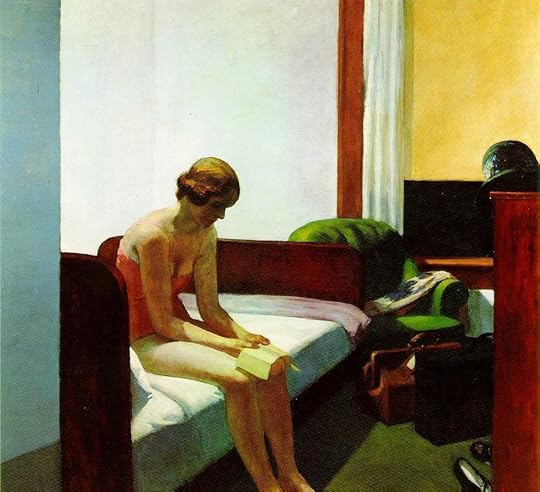
“Hotel Room” (1931) de Edward Hopper

O norte-americano Richard Yates (1926 – 1992), é um dos meus escritores preferidos: os seus livros “O Desfile da Primavera” (1976) – 5 estrelas, “Perto da Felicidade” (1986) – 4 estrelas e “Onze Tipos de Solidão” (1962), um livro de contos - 4 estrelas, revelaram-se excelentes opções literárias.
“Jovens Corações em Lágrimas” (1984), no original “Young Hearts Crying”, tem na edição portuguesa da “Quetzal” uma magnífica capa com o quadro “Hotel Room” (1931) de Edward Hopper, e “conta-nos” a história de dois jovens: Michael Davenport tem vinte e três anos, serviu na Força Aérea dos Estados Unidos da América na Segunda Guerra Mundial, formado em Harvard, ”queria escrever peças de teatro e poemas.”. (Pág. 12) e Lucy Blaine, “Era a rapariga mais bonita que conhecera, mas também era a primeira rapariga bonita que alguma vez demonstrara interesse nele.” (Pág. 14), uma culta e rica herdeira; um namoro que se inicia, um casamento que se consuma, um longo caminho a percorrer…
Michael e Lucy estão numa encruzilhada, inseguros nos objectivos de vida, deslumbrados com os “amigos” e com uma complexa vida social, pressionados pela ambição, atormentados por sonhos que não se concretizam, anseios frustrados que se vão ampliando com as decepções do dia-a-dia, mas que acabam por revelar, apesar de tudo, uma procura incessante pela felicidade.
Richard Yates vai desenvolvendo a narrativa de “Jovens Corações em Lágrimas” de uma forma subtil, por vezes ambígua, numa escrita elegante e melancólica, com diálogos primorosos, sem excesso de “palavras”, permitindo-nos reflectir sobre os desígnios e as amarguras da vida, sem restrições morais, num registo, simultaneamente, triste e divertido.
Agora fica a faltar o seu livro mais conhecido e emblemático "Revolutionary Road".

“… numa noite em que tentava adormecer, começou a descobrir que já não lhe apetecia escrever…
Escrever levava à depressão, à insónia e a andar todo o dia com uma expressão de perdida estampada na cara, e Lucy não se sentia suficientemente velha para isso. Mesmo os prazeres da privacidade e do silêncio podiam afundar-se em apenas solidão quando a cabeça estava cansada. Podia-se beber demasiado ou a pessoa começar a punir-se por não estar a escrever, só para descobrir que qualquer dessas duas opções a privava da própria escrita.”
(Pág. 233)

”… Toda a gente está essencialmente só.” (Pág. 459)
Profile Image for Nood-Lesse.
427 reviews324 followers
March 4, 2023
La scrittura è una cosa che, grazie al cielo, si fa in privato e in silenzio (*1)

Il libro è diviso in tre parti, la prima è senz’altro la migliore. Si sviluppa dalla fine della seconda guerra mondiale alla metà degli anni cinquanta e racconta la storia di due giovani che vorrebbero frequentare degli artisti, ancora prima di esserlo a loro volta. Michael un ex militare che scrive poesie, Lucy una ragazza benestante che ha vari interessi culturali. Hanno frequentato lo stesso college, decidono di sposarsi e per dieci anni cercano amicizie talentuose sperando di dimostrarsi alla loro altezza. La creazione, la maturazione e lo sfascio della coppia sono descritti con particolare bravura. La ricchezza di Lucy si rivela una bomba ad orologeria; Michael infatti vorrebbe farne a meno, sente la propria dignità messa in discussione e ciò innesca l’inevitabile conflitto con la moglie.
La seconda parte narra la storia di Lucy dopo la separazione, i suoi tentativi reiterati di farsi strada nel campo dell’arte. Segue prima un corso di scrittura, poi uno di teatro, quindi uno di pittura. Ogni volta finisce fra le braccia degli uomini che incontra lungo i propri percorsi trasversali, ogni volta è costretta a fare i conti con l’infondatezza delle proprie velleità.
Nella terza parte si racconta della sorte di Michael, un collezionista di donne con la metà dei suoi anni, uno che subisce un ricovero per un episodio psicotico e raggiunge un briciolo di fama con un paio di libri di poesie.
Se avevo riscontrato un’anomalia in “Revolutionary road” era che non si parlasse abbastanza della prole. Per “Il vento selvaggio che passa” non si può dire lo stesso, Laura, la figlia dei coniugi Davenport è un personaggio delineato che soffre della separazione dei propri genitori. Essi, impegnati a ricostruirsi una vita, la trascurano determinandole l’insorgenza di disturbi alimentari. Mentre leggiamo dei Davenport sfilano gli anni cinquanta, la questione razziale, il conflitto in Vietnam, quindi il movimento hippies a cui anche Laura si unirà. L’arco di tempo in cui i personaggi agiscono è ventennale.
Durante la lettura ho sottolineato e marcato con “Bere” tutti i periodi che avessero a che fare con l’alcool e con le abitudini al consumo. Per intenderci periodi come questo

Lucy lo scotch non era mai piaciuto, ma adesso stava scoprendo che una volta superato il sapore non era poi tanto peggio del bourbon. Faceva quello che doveva fare. Faceva sparire le avversità della giornata.

Il conteggio finale supera le trenta occorrenze. Non lo scopro certo io, l’alcool è un personaggio in tutti i romanzi di Yates.

L’anomalia in “Revolutionary road” forse ha contribuito al capolavoro, quel romanzo ha ritmo, tensione, pulizia stilistica è la bella copia di questo. Yates stesso era convinto di aver scritto un solo grande romanzo: il primo. Ho notato delle analogie con “L’uomo dal vestito grigio”, a quanto pare queste analogie furono riscontrate anche in “Revolutionary road” la cui prima stesura venne rifiutata negli anni cinquanta (Fu pubblicato nel 1961) per una certa somiglianza con il libro di Sloan Wilson.
Le mie sono tre stelle un po’ ingenerose, ma io ho preferito Cold Spring Harbor.
A “Le undici solitudini” e a “Rev. Road” ho dato il massimo dei voti.

COLONNA SONORA:
..Se all’improvviso tutti si fossero messi a cantare la prima strofa di «Auld Lang Syne» avrebbe cantato anche lui, con le lacrime agli occhi.
https://www.youtube.com/watch?v=W_6Vs...

(*1) Anche la lettura, fortunatamente, è una cosa che si fa in privato e in silenzio
Profile Image for Mahima.
177 reviews139 followers
February 17, 2017
Young Hearts Crying is a book that lies somewhere between depressing and kind of cathartic. There is an undertone of sadness running throughout the book, but you wouldn't think of calling it either of those things at first, but by the time you’re done with it, that’s the only bracket you can put it in. And if it were just the story itself (which was very predictable) which I was drawn to, I wouldn't have liked it so much. I read this book for the book club I and my friend have recently started in college, and I’m so glad we chose my friend’s recommendation, but I honestly did not expect this book to be as good as I found it to be. I’m really very eager to read more by Yates.

Yates writes such simple sentences that somehow manage to move you so much that it's like you're in a haze and when you come out, you can't, for the life of you, figure out exactly how he managed to do that. It's probably not in the words but the tone of them. It's very subtle but it does manage to make you feel a certain way. And one of the most important things is probably that he's very subtle with what he's saying. He doesn't tell us how to feel. He lets us decide that for ourselves, which, I think, is one of the best things about good writing.

Yates is also, I discovered, very clever. I really liked this one passage in the middle of the book. We've covered half the story. It's as if just that half is something the author thinks won't work very well, won't really last, and he kind of fits that anxiety in Lucy's idea for a new story. And not just that. He keeps fitting what might have been his own doubts about this very novel into the characters' criticisms of other works.

Somehow this book also seemed very reminiscent of Gatsby, although you always do know that this is a different story, a different age. But it’s probably the most important similarity – the chronicling of a certain nuanced disappointment evoked by the jaded American dream – which kept reminding me of Gatsby at almost every moment.

As far as the characters are concerned, I never could decide whether I actually liked them or not. But then it’s really not about liking them. It’s much more nuanced than that. Michael Davenport is a minor (and forever disappointed with his life) poet, and as sad as his life is, it is his very flawed character which makes you pity him. Lucy Davenport is lost, so is Sarah davenport, in a way, but the thing about Yates is that when it comes to his male and female characters (if what I've read about him is true), he likes to make sure we can distinctly see the women as the stronger characters.

There were, of course, a few things that were a bit disappointing, but the thing is that it is the ending of this book that holds it together. It would've, for various reasons, fallen apart under any other ending. It is the ending which leaves you with a wistful hopefulness not very dissimilar to that that you get from Gatsby’s ending, and, for the most part, it was just this that made me love the book as much as I did.
Profile Image for Nacho.
53 reviews12 followers
November 4, 2017
Lo compré de oferta y fue sin dudas, el mejor libro que leí de Yates hasta el momento.
Una vez más, el autor vuelve a sus obsesiones: matrimonios que se aburren uno del otro, escritores y artistas fracasados, envidias a los que triunfan, los suburbios de Nueva York, amigos que no son tan amigos, y whisky... mucho whisky.
Sin dudas, Yates fue fuente de inspiración para los guionistas de Mad Men.
Profile Image for Raven.
131 reviews48 followers
November 20, 2021
“‘That’s a funny way of putting it don’t you think? Does a person ‘lose’ another person? Is that really what happens?’ … ‘Well, but wouldn’t that imply a state of ownership to begin with? And how would that make any sense? I think I’d prefer to believe that everybody’s essentially alone,’ she said. ‘and so our first responsibility is always to ourselves. We have to make our own lives as best we can.’”

I cannot formulate words to describe how much I love this novel; I’ve been trying for days. It’s the sort of folks doing things boring (but absolutely not boring) realism that is my jam. In Young Hearts Crying, Yates decided that we would feel the entire spectrum of human emotions. In a lot of ways this novel is quite sad. It’s about a relationship that doesn’t work in the ways that Lucy and Michael want it to (but that doesn’t necessarily make it a failure), and it’s about feeling like you’re the only person in the world who doesn’t know what’s going on, and it’s about relentlessly trying to connect with other people and failing in novel ways every time.

This book is also infused with a really wacky sense of humor that just jives with me. Like this scene in which Lucy is visiting an acquaintance, ”Lucy didn’t really want coffee, and the trouble with the raisin cookie was that it looked at least six inches wide. She didn’t know how she was ever going to get through it.” And so, Lucy is sitting at the table holding this big ass cookie in front of her face, and in this moment her internal monologue is a ream of insults directed at Peggy (the woman sitting across from her). Yet, Lucy is trying to make polite conversation and Peggy is giving her absolutely nothing but one word answers and silence. It’s not as funny when I attempt to summarize it, but Yates is so masterful at crafting these humorous scenes.

It’s disappointing that Richard Yates is a “writer’s writer,” which is to say that he’s a wonderful writer that no one really reads. There’s a scene in the latest season of You in which a character namechecks Yates. Maybe that’ll get the kids interested? Maybe we’ll have a Yates revival? Either way, I’ve decided that I’ll try to be a Yates completist and that I’ll ramble on about the merits of this novel to anyone who makes the mistake of discussing books with me.

P.S. Richard Yates wrote women really well; it's as if he had met one or two in his time. And I'm not giving him a gigantic raisin cookie for that, but Lucy is vibe.
Profile Image for Cecily.
1,322 reviews5,343 followers
July 14, 2015
This starts in the 50s when Michael falls in love with Lucy at university. Michael marries her “without being fully aware of how it had all come about” and is stunned when he discovers how wealthy she is. He is determined to support them as a writer and would rather make ends meet writing for Chain Store Age than be tainted by touching her trust fund. Money is the big issue they can never discuss – that and the fact that neither of them have ever felt they fitted in (as when “fear of seeming to be a snob impelled her... to become one”). As they glimpse more bohemian lives of their friends, they become increasingly unsettled and more aware of that.

The recurring theme is the desire “to make difficult things look easy”, along with the converse of having but wasting talent and/or wealth. The irony is that money is an issue in all the relationships portrayed (including friendship), and it taints them all, even in those where it isn’t apparently an issue. It is also about the process and toll of writing, although Michael is a writer whose main word-related quality is saying the wrong thing in the wrong way when it matters most.

The story proceeds in three parts, spread over subsequent decades, with the second focusing on Lucy and the third on Michael (it might be intriguing to read 3 and 2 the other way round and consider what would need changing to make that work). It is interesting to see things through Lucy’s eyes, especially when she almost becomes Michael, by using his and their life in her work.

*** SPOILERS FOLLOW ***

Their early days together are too easy, and there is a hint of residual sadness and someone always holding back. As this is Yates, the happiness doesn’t last and there are some painfully awkward scenes, such as when Michael is pleased at the way Lucy defends his career (or lack of) to her father, only to be told she did it for her, not for him: the “clumsiest embrace of their lives” follows. Similarly, there were friends who “wouldn’t feel like themselves until he was gone” – ouch.

It felt less polished than other Yates I have read. For example, I felt there were many gaps, particularly an understanding of what Michael writes, his style, what drives him etc, and the lack of input from friends and relatives at various times in their lives. There are also long stretches with oddly little mention of their daughter Laura (you lose track of how old she is, wonder who is babysitting or if she’s being left alone etc); she seems a ghost remnant of their marriage, but maybe that was the intention.

Despite its weaknesses, I found it utterly compelling (I dreamed about it) and was almost reluctant to get to the end.

Oh, and there is a section where it helps (but is not essential) if you’re familiar with Tennessee Williams’ Streetcar Named Desire.
Profile Image for Dolceluna ♡.
1,265 reviews158 followers
March 21, 2020
A suo discapito deve ammettere di averlo letto in un bruttissimo periodo in cui la mia mente, ahimè, è particolarmente agitata e confusa, poco ricettiva a una bella lettura.
Però, se rifletto sugli altri romanzi in cui mi sto imbattendo in questo malaugurato periodo e soprattutto sugli alti romanzi di Yates letti in passato, beh, devo ammettere con amarezza che questo mi ha lasciato molto meno.
I protagonisti sono due giovani sposini, Michael Davenport, poeta e scrittore ambizioso e un po’ ingenuo, di mediocre estrazione sociale, e la moglie Lucy, snob ereditiera, mai completamente felice, mai completamente appagata. I due si circondano di vari personaggi, intellettuali, artisti, fuggevoli dongiovanni, ragazze affascinanti, in un girotondo di rapporti sociali che rivelano la loro inconsistenza e la loro superficialità, e finiscono per allontanarsi loro stessi, consapevoli di una distanza incolmabile fra il loro modo di pensare e le loro aspirazioni. In mezzo c’è una figlia, Laura, che crescerà a sua volta disorientata e allo sbando.
Sì, i temi sono quelli già presenti in altri romanzi di Yates, dalla vita coniugale soffocante e fallimentare al contrasto, duro, tra ambizioni e realtà, che finisce per schiacciare l’antieroe al centro, con tutto il suo peso. Però qui manca qualcosa. Troppi volti e poche vicende approfondite. E si sente l’assenza di un finale decisivo, anche tragico, che renda il romanzo più incisivo, più memorabile.
Mi limito ad assegnargli una pallida sufficienza, consigliando magari a chi si avvicina per a prima volta a Yates, scrittore dal grandissimo talento, di non partire proprio da questo titolo.
Profile Image for Rafa .
539 reviews34 followers
January 20, 2016
Lleno de esos momentos en los que las relaciones personales se diluyen.
Profile Image for Korcan Derinsu.
585 reviews410 followers
July 18, 2023
4.5/5

Richard Yates bu romanında sevdiği meselelerden olan evliliği odağına alıyor ve sanatçı olmaya hevesli orta halli bir ailenin çocuğu Michael ile milyoner bir ailenin kızı Lucy’nin neredeyse 20-25 yıllık hikayesini anlatıyor. Kitap üç bölümden oluşuyor, ilk bölüm çiftin hikayesine odaklanırken, ikinci bölüm Lucy’ye, üçüncü bölüm ise Michael’e odaklanıyor. Karakterlerin ikisi de çok güçlü. Michael yeteneğiyle hırsları arasında uçurum olan, düzenle kaos arasında gidip gelen ve ne yapsa da mutlu olamayacağı belli olan bir çocuk adam; Lucy de benzer şekilde ailesinden gelen paranın rahatlığıyla kendini arayan ama bulamayan bir çocuk kadın. Bu iki insanın evliliği de ebeveynliği de sonradan başkalarıyla kuracakları ilişkilerde hep buna göre oluyor. Sürekli bir olmama, olduramama hali var. Richard Yates’in hemen hemen tüm eserlerinde karakterlerin hayata dair yaşadıkları hayal kırıklıkları burada da ön planda. Bu defa sanata meyilli karakterler seçmesi ayrı bir boyut katıyor işin içine. Amerika Rüyası başka bir açıdan ele alınmış oluyor ve sonu yine hüsran oluyor.

Richard Yates büyük şaşırtmalara, dönüşlere başvurmuyor. Her şey olduğu gibi, hayatın içinde nasılsa öyle yer alıyor. İnceliklerle dolu her şey. Sessiz ama güçlü bir akış var, karakterler çok ciddi şekilde savruluyorlar bir oraya bir buraya ama bir şekilde sükunetle devam ediyorlar hayatlarına. Bu anlatım tercihi yazara alışık olmayanlara biraz monoton gelebilir. Doğruya doğru eğer yaratılan evreni ve karakterleri çok sevmediyseniz anlatım hayli düz ve basit. Fakat sevdiyseniz de çok etkileyici. Ben çok sevdim. Otobiyografik olduğunu bildiğim için sanki yazarın hayatına bakıyormuş gibi de hissedip, ayrı bir zevkle de okudum.
Profile Image for JacquiWine.
676 reviews175 followers
May 18, 2019
I’ve written before about Richard Yates, a writer with an innate ability to understand his characters’ failings and self-delusions, portraying the bitter cruelty of their dashed dreams with real insight and humanity. In this, his penultimate novel, Yates offers us another riff on this theme by focusing on a young couple, Michael and Lucy Davenport, just starting out on their lives together in 1950s New York.

To read my review, please visit:

https://jacquiwine.wordpress.com/2019...
Profile Image for Natacha Martins.
308 reviews34 followers
September 2, 2020
Jovens Corações em Lágrimas é, mais uma vez, um livro onde nada parece correr bem às personagens. Página a página vamos vendo as decisões que tomam e vamos sentido que mais tarde ou mais cedo, algumas trarão consequências.


A história gira à volta do jovem casal Michael Davenport e Lucy Blaine. 

Ele um aspirante a escritor, de origens humildes, formado em Harvard. Moderadamente conhecido por um poema que publicou quando era mais novo, e que lhe trouxe alguma notoriedade no meio.

Ela veio de uma família abastada, bonita e culta. Quando conhece Michael é uma jovem alegre, cheia de ideias e, fica um pouco fascinada pela cultura de Michael.

Conhecem-se, apaixonam-se, casam-se e têm uma filha. Michael, por orgulho, não aceita que Lucy utilize o dinheiro de família para os sustentar ou ajudar na sua carreira literária.

Enquanto trabalha no seu novo livro de poemas, o livro que sente o consagrará como um escritor de culto e de relevância, trabalha para uma revista, trabalho que lhe permite pagar as contas. 

Vivem, por isso, sem luxos, num pequeno apartamento em Nova Iorque, cidade que fervilha de ideias, onde tudo acontece e onde vivem todas as novas mentes brilhantes do século XX.

Para Lucy, a mudança de vida é grande, mas respeita a decisão de Michael e, na verdade, sente-se feliz com o que tem. Sente-se encantada por Michael e pelo seu talento.

Os dois desejam pertencer à nova cena artística. Conhecem, por mero acaso, alguns desses artistas e começam a ser presença assídua nas festas e encontros do meio.

Parece que desejam pertencer a este meio mais do que desejaram alguma outra coisa nas suas vidas. Não querem apenas conhecer estas pessoas, artistas das mais diversas áreas, querem ser os seus melhores amigos. Querem pertencer e ser reconhecidos, pelo que acham ter para oferecer ao mundo.

São um casal apaixonado que vemos, inicialmente, com uma certa candura e inocência. Desejam ficar na história, de certa forma, mudar o mundo. São jovens e parecem ter tudo para serem felizes. No entanto, a constante insatisfação, a vontade de se destacarem e de pertencer, torna-os extremamente infelizes. Ao estarem tão focados nos outros, são incapazes de reconhecer neles próprios motivos para serem felizes.

Michael torna-se ciumento, amargurado e imensamente infeliz. Lucy, que sempre foi mais uma espectadora na vida dos dois do que propriamente participante, percebe que necessita de outras coisas na vida dela e afasta-se de Michael, divorciando-se dele.

Após a separação, e depois de uma fase inicial onde se sente perdida, Lucy, inicia um processo de autodescoberta onde experimenta a escrita, a pintura e a representação. Chegando à conclusão de que não é especialmente boa em nenhuma delas.

Michael, após a separação, oscila entre fases de profunda depressão, associadas à bebida, e fases de esperança alucinada.

O livro, embora até seja um livro volumoso, lê-se muito bem. 

É um livro que nos põe a reflectir sobre a vida e sobre aquilo que nos faz felizes. Põe-nos a pensar sobre as pessoas da nossa vida e de como todos nós mudamos ao longo dos anos. Mudamos a muitos níveis, mudamos fisicamente, mudamos de opiniões, descobrimos que afinal já não faz sentido perseguir algo que sonhamos ter desde sempre. Crescemos, mudamos e, acho que, se mantivermos a mente aberta, descobrimos coisas que nunca pensámos vir a descobrir quanto mais gostar.

Ter objetivos é muito bom, essencial até, mas estes objetivos têm de deixar algum espaço para a descoberta. Nem sempre a linha recta, sem possibilidade de desvios é o melhor caminho para alcançarmos o que quer que seja. Temos de tentar viver o melhor possível, com aquilo que sabemos e com o tempo que temos disponível.

Richard Yates não me desilude. Gosto dos livros dele e pronto, não há mais nada a dizer!

Recomendo e boas leituras!
865 reviews173 followers
January 13, 2010
What is with this guy and juvenile, disillusioned suburban couples???

When I read Revolutionary Road I felt I had never in my life encountered so perfect a novel. It was moving, with elegant prose that was never pretentious (a feat few novelists I've read have evinced) and the story was troubling, to be sure, but incredibly moving and deeply felt.
YHC has the gorgeous writing, but little else to redeem it, or its characters. There are too many characters with few distinguishing features who keep re-appearing - once again we have a couple whose child seems totally off their radar, let alone ours or the author as in Rev Road, but there it seemed fitting for the characters, here it just seemed strange - we have a whole lot of immaturity and little visible growth - we have increasingly predictable plot changes (hm, a new woman is introduced, let me guess, she will be with Michael before the next page) - a whole lot of objectification of women - primarily weak and unlikable women to boot - and in general a sort of, what was your point kind of feeling.
I think Yates is super talented and the writing was enough to hold me - but the bottomless pit quality to the storyline was more than I could take.
Profile Image for Mosco.
450 reviews44 followers
October 8, 2020
4* perché è Yates, ma sarebbe da 3.5 secondo me
(e ripensandoci tempo dopo lo rivaluto 3)

Ma quanto trincano gli americani? I personaggi sono sempre col bicchiere in mano, quasi sempre a cavallo fra lucidità e sbronza, presuntuosi e ambiziosi ma fragili, invidiosi dell'arte altrui, convinti di essere speciali ma piuttotsto ordinari, imprigionati fra matrimoni figli e compromessi. Tutti belli, tutti sedicenti artisti.
Scritto prima dell'HIV ovviamente, le ragazze, splendide e con gambe lunghissime, saltano un po' troppo allegramente da un letto all'altro senza pensarci molto. E altrettanto allegramente spariscono. Era davvero così?
E davvero farcivano ogni frase con "piccola" o "bella mia"? Ho fatto fatica a empatizzare con le loro pippe mentali, non ho trovato un personaggio simpatico. Sicuramente Yates sapeva quel che faceva e niente è scritto per caso, ma Revolutionary road mi è piaciuto molto di più
Profile Image for Bob Peru.
1,246 reviews50 followers
June 14, 2016
yates is as good as, or better than, updike and cheever.
Profile Image for F.R..
Author 37 books221 followers
February 2, 2010
Apparently Richard Yates thought that one of his biggest problems as a writer was that his first book – ‘Revolutionary Road’ – was his best book. And certainly the most successful part of ‘Young Hearts Crying’ is the opening hundred or so pages, which closely echo his debut novel. There’s the ambitious couple living in the suburbs, propelled by thoughts of art but falling out of love with each other. The wife even performs in local theatrics. However, when the couple breaks up the novel seems to lose all focus, just drifting along through their post-married lives.

It’s a strange book then: the best parts remind me of a different (and better) novel, while the rest feels like even Yates can’t muster much in the way of interest in it. I’m giving it three stars though because it’s beautifully written throughout, but ultimately I just didn’t really see the point of it.

I’ve only read two of his works, but so far Richard Yates was right in his opinion.
44 reviews2 followers
September 5, 2013
Reading this book I feel like I might have handed out the "5 stars" too easily to some of the other books on my list. This is one of Richard Yates's last books and much like The Easter Parade and Revolutionary Road it's about ordinary people looking to discover what they are good at, figuring out what to do with their lives and how to be happy. There were a few passages I read last night over and over, and I was reminded how reading a certain book at a certain time can change your life. Totally absorbing and every word is perfect.
Profile Image for Jeremy.
13 reviews10 followers
August 6, 2012
Young Hearts Crying is a novel about failure and hope, examining the lives of an American couple from painful beginning to painful end. Only 'end' would be an inapt word for a novel that, like Revolutionary Road, doesn't offer a cheerful resolution.

Yates's literary canon is known for underlining the quiet despair of middle-class suburbia that is masked by cheerful conformity. (As a critique of middle-class life, his Revolutionary Road stands above Paula Fox's Desperate Characters in execution, vision, and characterization.) As in Revolutionary Road, Young Hearts cultivates an eloquent show-and-tell narrative, almost with an autobiographical tone for third person.

Young Hearts follows the lives of Michael and Lucy, from their courtship and marriage in the `50s to their divorce and separate but entangled lives through the `70s. Michael is a poet with high hopes for an artistic future, and Lucy is an heiress eager to prove that her worth is more than her inheritance. Michael penned a critically successful poem that occasionally lulls him out of perennial disappointment. For him, it doesn't matter that he hasn't managed to pull the poetic trigger again in a way that satisfies his own impossible standards - that breakthrough poem, which later lands him a job at a prestigious university, was proof enough that he did, can, and should live up to his lofty ideals, regardless of how illusory they are.

At first, the couple seem content to live a simple, dry middle-class existence. Michael lands decent corporate job, even though he hates it, Laura gives birth to a child, Laura (who never seems to take on a life of her own), they find a country cottage and hobnob with boorishly `cultivated' people who seem to have life figured out. Before long, suburban dreariness curdles Michael's idealistic blood, and then later, Lucy's. Michael's unfulfilled ambitions lead to an alienating and contagious restlessness (and later, several stints in institutions) that, when united with Lucy's own unrealistic longings, leaves their marriage in shambles. The rest of the novel -- which is much too long -- follows their lives as they pursue mostly sour relationships and drive themselves crazy under the pressures of unrealized ambitions. The characters are rarely, if at all, at peace. And there's a depressing sense that they are victims of capriciousness not of their own doing. We feel that the stronger they long for things and the more risks they take to acquire them, the more they're entitled to have them.

Young Hearts, Yates's fifth title, was written when the author was in his 50s. His characters age into their 50s by the third part of the novel, and we get a sense of what it was like for men and women who grew up in the conformist 40s trying to make sense of the 1960s/'70s, with its in-your-face hedonism, political activism, and social change (one of the characters exemplifies the so-called single-mother revolution). But like Revolutionary Road, this novel isn't a period piece. It's about unfulfilled yearning, a couple's failed relationship, a family's relationship, the friction between generations, the existential choices people make and the consequences that follow. Above all, it's about the human experience.

Later in the novel, Michael has finished a book of poems he admits isn't greatness but considers a promise of coming greatness. I don't doubt Yates shared these feelings about much of his work, including Young Hearts Crying--especially after the New York Times panned it (Yates was well into obscurity when this was published). Overall, the novel feels unfinished, unwieldy, and uneasy in structure. And yet, this is precisely why I liked the book. The structure is appropriate for the subject matter.

At the end of the novel, the long-divorced pair meet up and Lucy says, matter-of-factly,"F*** art, okay?" Michael doesn't quite agree, but he doesn't quite disagree, either. Art, or the desire to live up to impossible self-standards, is what they'd been chasing all their lives. When we part with Michael, he is a man obsessed with his increasingly wizened, withering look, a man who seems at peace with the prospect of a soon-to-be-ex-wife, a man who, as Yates puts it, would no longer be "plunging ahead in pursuit of ephemeral things." And yet, there's not a trace of regret.
Profile Image for Kirsty.
2,792 reviews190 followers
July 14, 2016
I very much admire Richard Yates’ work. Young Hearts Crying, published in 1984, is his penultimate novel, published eight years before his death. The New Statesman describes his work as follows: ‘Bad couples, sad, sour marriages, young hopes corroded by suburban life’.

Here, Yates presents not just a married couple or a family to us, but a whole community; we are given a feel for how intrinsically individuals fit into a particular place or setting. The protagonists of the piece, regardless, are a young married couple named Michael and Lucy Davenport. The pair are very much in love at the beginning of the novel, yet cracks soon begin to appear within their marriage. When Young Hearts Crying begins, Michael is a new Harvard graduate, who wants desperately to become a poet. Rather than live upon Lucy’s sizeable trust fund, he is determined to make a living by himself; when he gets a job which he is not entirely satisfied with in New York, his friends and acquaintances begin to syphon off, doing bigger and better things.

As protagonists, Michael and Lucy are both well built. Whilst Michael is not at all likeable (I would go as far to say that he is actually moderately awful in most of his thoughts and behaviour), Lucy is; the balance struck between the pair, augmented by their small daughter Laura, is pitch perfect. One of Yates’ definite strengths here is the way in which he encompasses secondary characters from all walks of life, from the privileged to the poverty-stricken. Young Hearts Crying is not overly heavy in its plot, and whilst one is able to guess what is going to happen as the story moves forward without any great effort, these elements do not make it any less compelling.

I always say this of Yates, but he is an incredibly aware and perceptive author. Young Hearts Crying is so well written, and whilst it is not his strongest novel, it is a great, striking and relatively easy read nonetheless.
Profile Image for Patricia L..
568 reviews
May 14, 2018
p. 419
"A sad fanciful expression when you think about it. The world of art? And for that matter, isn’t art itself a maddening shitty little word? In any case, I think I’d like to propose another toast, if I l may." And Lucy brought her wine glass up to the level of their eyes.
"Fuck art," she said. "I mean really, Michael, Fuck art, okay? Isn’t it funny how we’ve gone chasing after it all our lives? Dying to be close to anyone who seemed to understand it, as if that could possibly help; never stopping to wonder if it might be hopelessly beyond us all the way ⎯ or even if it might not exist? Because there’s an interesting proposition for you: what if it doesn’t exist?”

He thought it over, or rather made a grave little show of pretending to think it over, holding his drink firmly on the table.

“Well, no, I’m sorry, dear,” he began, knowing at once that a “dear” should have been edited out of the sentence, "I can’t go along with you on that one. If I ever thought it didn’t exist I think I’d ⎯ I don’t know. Blow my brains out, or something.”
Displaying 1 - 30 of 246 reviews

Can't find what you're looking for?

Get help and learn more about the design.