

What do you think?
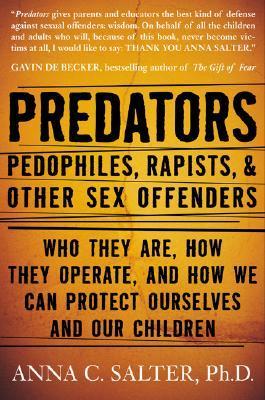
Predators: Pedophiles, Rapists, and Other Sex Offenders
(...)in the creative ways they exclude their children from the discussion.
"You're so right," they say: "Sexual abuse is an enormous problem, particularly for young teens. Thank God mine aren't there yet."
No, sorry, says reality, the most common age at which sexual abuse begins is three.
"Well sure, if you have homosexuals around small children, there's a risk."
No, sorry, says reality, most sexual abuse is committed by heterosexual males.
"Yeah, but that kind of pervert isn't living in our neighbourhood."
Sorry, says reality, but that kind of pervert IS living in your neighbourhood. The Department of Justice estimates that on average, there is one child molester per square mile in the United States.
"Well, at least the police know who these people are."
Not likely, says reality, since the average child molester victimises between 50 and 150 children before he is ever arrested (and many more after he is arrested).
When all defenses against reality are taken away, some parents switch to resignation, literally resigning from responsibility: "Well, there's nothing you can do about it anyway." This misplaced fatalism actually becomes fatal for some children.
Another common refrain uttered by deniers of the dangers of sexual abuse is: "Well, kids are resilient. When bad things happen, they bounce back."
Absolutely not, says reality. Children do not bounce back. They adjust, they conceal, they repress, and sometimes they accept and move on, but they don't bounce back..
(From the foreword written by Gavin de Becker)
288 pages, Paperback
First published January 1, 2003
About the author
Anna C. Salter
15 books99 followersAka Anna Salter
Anna Salter, Ph.D., is a forensic psychologist and internationally known authority on sex offenders. She is the author of novels featuring Dr. Michael Stone. She also lectures worldwide and has written two academic books on sex abuse. Dr. Salter is in private practice in Madison, Wisconsin, and consults to the Wisconsin Department of Corrections.
Anna Salter, Ph.D., is a forensic psychologist and internationally known authority on sex offenders. She is the author of novels featuring Dr. Michael Stone. She also lectures worldwide and has written two academic books on sex abuse. Dr. Salter is in private practice in Madison, Wisconsin, and consults to the Wisconsin Department of Corrections.
Ratings & Reviews
Friends & Following
Create a free account to discover what your friends think of this book!
Community Reviews
Displaying 1 - 30 of 172 reviews

February 13, 2017
My ability to still keep faith with the human kind astonishes me. As its title suggests, this is a work about sex offenders of all kinds, be they psychopathic or not. Some of the interviews in this book are very graphic; it is not the description of what they've done that bothers me, but the attitude of the man or woman who did something to a child that I could never dream of doing. One of the interviews in this book is on Youtube: a good looking, smiley man with a slow Southern accent tells of how he groomed a 12-month old, and molested her at 18 months, purely shaping her as a future sex mate for himself. He was her stepdad. If you watch the video, you'll hear Salter go: "groom her as a mate", as if even she was taken aback by the astonishing narcissism and certainty of that statement. What this book is very useful for is understanding that: 1) you have no chance of knowing who is and who isn't a sex offender, 2) you can differentiate against high-risk and low-risk situations, 3) you can take steps that will either minimize or bring your risk situation down to 0, 4) even if you do all of that, you might still get attacked (either as an adult, a teenager, or a child). It gives very, very important insight into typical sex offender behaviours and statistical data, as well as tips on how you can notice discrepancies in them by listening to their voice, watching their body language or even analyzing their life as a whole in order to make a risk assessment. I would recommend this to any woman (yes, ANY woman, especially those who believe their feminism entitles them to "not need a man" to walk them home at night, and even those who live in a bubble where they think nothing of the sort will ever happen to them), any man who wants to protect his loved ones and I would go as far as recommending it even to young readers, maybe as young as 11 or 12 (even though, even that might be too late...).
And, I'm sure, all the pedophiles and sex offenders out there with a little brain have read it. Don't panic, boys. Even if you know how we might spot or fight against you, you're still pieces of shit.
And, I'm sure, all the pedophiles and sex offenders out there with a little brain have read it. Don't panic, boys. Even if you know how we might spot or fight against you, you're still pieces of shit.

March 24, 2025
Що ж, я взагалі не раджу комусь читати цю книгу, бо тут так багато страшних жахливих історій. Витримати таке реально складно. Водночас вона точно виконує свою місію інформування про реальних злочинців і як вони граються зі суспільством.

January 19, 2022
«Хижаки. Педофіли, ґвалтівники та інші сексуальні злочинці: хто вони такі, як вони діють і як ми можемо захистити себе та своїх дітей»
⠀
Анна Солтер
⠀
Видавництво «Фабула», 2021
⠀
“Predators: Pedophiles, Rapists, And Other Sex Offenders”
⠀
Book by Anna Salter, 2003
⠀
«… мінімум одну з дев‘яти жінок у нашій країні (США) буде зґвалтовано в якийсь період її життя…»
⠀
“232 розбещувачі дітей визнали, що здійснили понад 55 000 спроб домагання. Вони стверджували, що успішними були 38 000 спроб, і повідомили про понад 17 000 жертв. І все це лише з боку 232 чоловіків.»
⠀
«Від машини до будинку. Від будинку до машини,- колись казав мені один злочинець в інтерв‘ю.- Ви й гадки не маєте, наскільки ви є вразливою.»
⠀
Коли читаєш цю книжку, спочатку отримуєш шок.
⠀
Шок від негативної статистики та кращого розуміння ситуації та мотивації.
⠀
Потім, починаєш говорити про книжку з іншими.
⠀
А тоді, окрім коментарів ти чуєш щось дуже особисте.
⠀
Забуте чи заховане глибоко в пам’яті.
⠀
І ти запитуєш:
⠀
А чому ти ніколи про це не казала?
⠀
І чуєш:
⠀
Бо напевно було не на часі…
⠀
І знаєте що? Це страшно.
⠀
До цієї книжки потрібно бути морально готовим, але я щиро раджу її прочитати.
⠀
Бо обізнаний = захищений!
⠀
Усе про книжку:
⠀
«Що мотивує сексуальних насильників? Чому так мало цих злочинців спіймано та засуджено? Спираючись на досліджені нею історії насильників, Анна Солтер — американська психологиня і міжнародно визнана фахівчиня з питань сексуальних злочинів — демонструє, що сексуальні хижаки використовують складні методи обману і покладаються на хибні уявлення більшості людей у своєму оточенні, щоби уникнути викриття. Стверджуючи, що навіть найсвідоміших серед нас можна обдурити, авторка розвіює міфи про сексуальних хижаків і надає нам інструменти для захисту своїх дітей і себе.»
⠀
#примхливачитака
⠀
Анна Солтер
⠀
Видавництво «Фабула», 2021
⠀
“Predators: Pedophiles, Rapists, And Other Sex Offenders”
⠀
Book by Anna Salter, 2003
⠀
«… мінімум одну з дев‘яти жінок у нашій країні (США) буде зґвалтовано в якийсь період її життя…»
⠀
“232 розбещувачі дітей визнали, що здійснили понад 55 000 спроб домагання. Вони стверджували, що успішними були 38 000 спроб, і повідомили про понад 17 000 жертв. І все це лише з боку 232 чоловіків.»
⠀
«Від машини до будинку. Від будинку до машини,- колись казав мені один злочинець в інтерв‘ю.- Ви й гадки не маєте, наскільки ви є вразливою.»
⠀
Коли читаєш цю книжку, спочатку отримуєш шок.
⠀
Шок від негативної статистики та кращого розуміння ситуації та мотивації.
⠀
Потім, починаєш говорити про книжку з іншими.
⠀
А тоді, окрім коментарів ти чуєш щось дуже особисте.
⠀
Забуте чи заховане глибоко в пам’яті.
⠀
І ти запитуєш:
⠀
А чому ти ніколи про це не казала?
⠀
І чуєш:
⠀
Бо напевно було не на часі…
⠀
І знаєте що? Це страшно.
⠀
До цієї книжки потрібно бути морально готовим, але я щиро раджу її прочитати.
⠀
Бо обізнаний = захищений!
⠀
Усе про книжку:
⠀
«Що мотивує сексуальних насильників? Чому так мало цих злочинців спіймано та засуджено? Спираючись на досліджені нею історії насильників, Анна Солтер — американська психологиня і міжнародно визнана фахівчиня з питань сексуальних злочинів — демонструє, що сексуальні хижаки використовують складні методи обману і покладаються на хибні уявлення більшості людей у своєму оточенні, щоби уникнути викриття. Стверджуючи, що навіть найсвідоміших серед нас можна обдурити, авторка розвіює міфи про сексуальних хижаків і надає нам інструменти для захисту своїх дітей і себе.»
⠀
#примхливачитака

May 2, 2014
UPDATED SEPTEMBER 2018: I reread this after conversations surrounding Brett Kavanaugh and other sexual assault stories made me recall certain pieces of this book.
Overall this has has help up well and so has my review.
A few more things:
I very much appreciate her distinctions between sadists and psychopaths. This is an important piece and this distinction is not made at all, or is obscured, in typical media discussions of psychopathy.
The chapter on staff seduction is particularly illuminating because it shows how charismatic these individuals can be, and who is vulnerable to their manipulation even AFTER these criminals are caught for very violent crimes (and their crimes are known).
What stood out as being weak to me after reading this time around was the parts on deception. She is quite right about humans being very bad at detecting deception. Her remarks on polygraphs, though, have not aged well. Polygraphs are junk science and more useful as an interrogation tool (the results she refers to in the book come from good interrogators who convince the subjects they are able to detect deception). She fails to mention how easy it is for psychopaths to beat the tests in her chapter on psychopathy, a very bad omission, in my opinion. She also discusses statement analysis which is not nearly as useful, we now know, than it seems from this book.
Her core point is that humans can't really tell when people who are practiced at lying are lying, which is completely true and is the real takeaway here. Verify everything, don't be pressured into making decisions, and don't take people at face value.
*********************
I bought this book over four years ago when I was involved at a place that helped immigrant victims of crime, and some of them were victims of the some of the types of predators described in the book. Exactly how that played out for me or what my role was, I won't go into publicly, for many reasons. Suffice to say, some information and background was certainly helpful. I read most of the chapters of the book at that time. Recently, remembering something that was written in it, I picked it up and read the chapters that I skipped when I first bought it.
This is, again, one of those books that can be helpful and informative, and yet is very, very, very difficult to read. I can't even imagine how difficult it must be if you have children. It's not for the faint of heart.
The book is divided by chapters that address some commonalities to predators (types of deception), and break down types of offenders, and then discusses certain common situations, trauma, and then, at the end, a section on detecting deception (which Dr. Salter is very bearish on, for good reason), and a section on what she calls "deflection".
The weakest section of the book, for me, is the last chapter on "deflection." In my opinion, she gave out some inadequate security advice, and this chapter would have been better left to be written by a true security professional. There was too much reliance on anecdotes. However, this was most obvious in the "low-risk" section of the deflection chapter. What she is correct on is the "high-risk" scenario, which essentially distills to: "be present with your children, pay attention to them, know what they're doing, and be involved in their activities". Good advice all around, predators notwithstanding.
Overall this has has help up well and so has my review.
A few more things:
I very much appreciate her distinctions between sadists and psychopaths. This is an important piece and this distinction is not made at all, or is obscured, in typical media discussions of psychopathy.
The chapter on staff seduction is particularly illuminating because it shows how charismatic these individuals can be, and who is vulnerable to their manipulation even AFTER these criminals are caught for very violent crimes (and their crimes are known).
What stood out as being weak to me after reading this time around was the parts on deception. She is quite right about humans being very bad at detecting deception. Her remarks on polygraphs, though, have not aged well. Polygraphs are junk science and more useful as an interrogation tool (the results she refers to in the book come from good interrogators who convince the subjects they are able to detect deception). She fails to mention how easy it is for psychopaths to beat the tests in her chapter on psychopathy, a very bad omission, in my opinion. She also discusses statement analysis which is not nearly as useful, we now know, than it seems from this book.
Her core point is that humans can't really tell when people who are practiced at lying are lying, which is completely true and is the real takeaway here. Verify everything, don't be pressured into making decisions, and don't take people at face value.
*********************
I bought this book over four years ago when I was involved at a place that helped immigrant victims of crime, and some of them were victims of the some of the types of predators described in the book. Exactly how that played out for me or what my role was, I won't go into publicly, for many reasons. Suffice to say, some information and background was certainly helpful. I read most of the chapters of the book at that time. Recently, remembering something that was written in it, I picked it up and read the chapters that I skipped when I first bought it.
This is, again, one of those books that can be helpful and informative, and yet is very, very, very difficult to read. I can't even imagine how difficult it must be if you have children. It's not for the faint of heart.
The book is divided by chapters that address some commonalities to predators (types of deception), and break down types of offenders, and then discusses certain common situations, trauma, and then, at the end, a section on detecting deception (which Dr. Salter is very bearish on, for good reason), and a section on what she calls "deflection".
The weakest section of the book, for me, is the last chapter on "deflection." In my opinion, she gave out some inadequate security advice, and this chapter would have been better left to be written by a true security professional. There was too much reliance on anecdotes. However, this was most obvious in the "low-risk" section of the deflection chapter. What she is correct on is the "high-risk" scenario, which essentially distills to: "be present with your children, pay attention to them, know what they're doing, and be involved in their activities". Good advice all around, predators notwithstanding.
November 6, 2009
Here is an excerpt from the foreword of this book (written by Gavin de Becker):
~*~
I'm beginning this Foreword as I will close it: Thank you, Anna Salter, for casting your authoritative light on sexual abuse while most people find it easier to look away or even deny that it exists. It is easier for most parents to wring their hands about the unknown molester who might wander into the neighbourhood, than to accept that someone who they invited into the house is sexually abusing their child - even though the majority of sexual abuse is committed by someone the family knows.
Hard as it is to accept the idea that a well-liked neighbour or family friend might be sexually abusing a child, imagine the idea that it's someone in your own family. It's easy to replace that unwelcome thought with a warmer one like, "Not in this family."
And yet one in three girls and one in six boys will have sexual contact with an adult, so it must be occurring in someone's family...
If a discussion requires exploration of harsh truths some parents will try to wriggle away: "Talking about those things, you just bring them on," or "Yes, I know all about that stuff; can we please change to a happier subject?" Under pressure, though, they will ultimately acknowledge the risks, realising that appearing to know is often the best defence against unwanted knowledge. These parents are not stupid - to the contrary, there is brilliance in the creative ways that they exclude their children from the discussion. "You're so right," they say: "Sexual abuse is an enormous problem, particularly for young teens. Thank God mine aren't there yet."
No, sorry, says reality, the most common age at which sexual abuse begins is three.
"Well sure, if you have homosexuals around small children, there's a risk."
No, sorry, says reality, most sexual abuse is committed by heterosexual males.
"Yeah, but that kind of pervert isn't living in our neighbourhood."
Sorry, says reality, but that kind of pervert IS living in your neighbourhood. The Department of Justice estimates that on average, there is one child molester per square mile in the United States.
"Well, at least the police know who these people are."
Not likely, says reality, since the average child molester victimises between 50 and 150 children before he is ever arrested (and many more after he is arrested).
When all defenses against reality are taken away, some parents switch to resignation, literally resigning from responsibility: "Well, there's nothing you can do about it anyway." This misplaced fatalism actually becomes fatal for some children.
Another common refrain uttered by deniers of the dangers of sexual abuse is: "Well, kids are resilient. When bad things happen, they bounce back."
Absolutely not, says reality. Children do not bounce back. They adjust, they conceal, they repress, and sometimes they accept and move on, but they don't bounce back.
~*~
I've never made it a secret that I had a pretty god-awful childhood in some respects (and in other ways, I consider myself as having been quite fortunate). I have a wonderful psychologist who I knew previously in another capacity, who is now helping me through some of the worst stuff I've ever had to deal with. He recommended the above book to me. He specialises in paedophiles and their victims, and said that while he wouldn't necessarily recommend every survivor of sexual assault to read such books, he felt that knowing me as he does, this book would be of great help to me - especially regarding my constant questions of, "But why?". He was right.
The author, Anna Salter, is a psychologist who also specialises in paedophiles and their victims, and has written this amazing book that will let you get inside the minds of the scum of society. She includes excerpts of interviews with such predators, illustrating just what they really are - as opposed to what they would have us see and think they are.
Who would have thought that a 272-page book could have such a profound impact on me? I certainly didn't. Reading this book would have to be up there on the list of the "Best Ten Things I Ever Did During my Life". In the time it took me to read this book, I made progress I doubt I could have otherwise made, and certainly had never made in the decades following a year's worth of sexual abuse perpetrated against me by a neighbour, from the ages of four to five. Any guilt that I may have experienced lifted and vanished as the truth of these vile creatures was laid out in front of me - often in paedophiles' own words.
Now, I have known forever that it is NEVER the child's fault, and on a rational level I never believed myself to be responsible. But due to the things that this person did, and the things that he said, on an emotional level there's long been a question lingering in the back of my mind. However, after reading Salter's book, there are no such questions anymore. I liken this experience to a child believing that Santa Claus didn't visit because she was naughty - and then the realisation dawns that no, Santa Claus didn't visit because Santa was NEVER who and what she believed him to be to begin with. The stunned shock, the relief that her suspicions had been right all along - there never really was a magic man that got all the way around the world in one night - and then the anger at the deception. Why? Why would someone do that? And then the utter relief that there was NOTHING she could have said or done to make Santa visit or not, because Santa was a sham. Ditto for paedophiles. These parasites prey on those that have no protection and little (if any) defence. Their victims are chosen with patience and care. They groom children - and the families of these children - over time, to develop trust, test boundaries, and find out whether a selected child is a suitable target. As Salter points out in her book, people constantly make the mistake of confusing "nice" with "trustworthy". ANYONE can be "nice" for as long as necessary, in order to get what they want. "Well, he seemed nice enough" or "But she was so nice!" are the sorts of things many people say when they discover the crime and deception. Of COURSE they were nice. Do you think you'd let your child be alone with them if they WEREN'T?!
My mother (like the parents of many victims of childhood sexual assault) has blamed herself for what happened to me - she has told herself that she should have known; she shouldn't have let me visit to play with the offender's son, she should have done something, she should-- Forget it. Seriously. As I have said to my mother countless times: In no way do I, or have I ever, held her responsible. If she HAD known, it wouldn't have happened, would it? If he were going to do it in front of her, she could have stopped it. It's the offender's fault, not hers. If a person walks through the bush and doesn't see a snake and gets bitten, it's not that person's fault. Snakes do what snakes do. Does that mean you'll never walk through the bush? Likewise, predators do what they do, and it's not the child's fault, or the fault of the parents (if they didn't know and weren't told). Does that mean that you'll never let your child out of the house?
This reminds me of a story I read as a child.
A tiger and a snake happened to bump into each other at a river. They both needed to get to the other side.
"Oh Tiger," said the snake, "I can't get across the river. Would you be so kind as to let me ride on your back to the other side?"
"No way!" said the tiger. "You're a snake. How do I know you won't bite me?"
"Well," replied the snake, "If I bite you, both of us will drown. What good would that do me? Trust me. I won't bite you - I promise."
The tiger didn't like the idea, but thought that the snake's point was logical. He reluctantly let the snake slither onto his back, and they set across the river together. Just as they reached the other side, the snake lunged forward and bit the tiger. The tiger screamed in pain. "You promised you wouldn't bite me! Why did you do that?!" he cried.
The snake stared unfeelingly at his dying victim. "I'm a snake," said the snake - and he slithered away.
Moral of the story:
Some people simply aren't trustworthy. Paedophiles are paedohpiles. They abuse children. It's what they do. Is it worth the risk, no matter how logical it seems to think you can trust them?
Trust your gut. Your instinct is there for a reason.
Salter's book has given me a type of freedom I've never known before. The insights PREDATORS offer are priceless. My only word of caution is that there is a chapter on sadists. Approach with caution, especially if you are going to let a minor or someone who's fragile, read it. Other than that, this book will show you how sex offenders operate, what to look for, and the few things you can do to help keep your kids safe. Learn how to spot a snake. I shouldn't have to tell you that it's worth it.
~*~
I'm beginning this Foreword as I will close it: Thank you, Anna Salter, for casting your authoritative light on sexual abuse while most people find it easier to look away or even deny that it exists. It is easier for most parents to wring their hands about the unknown molester who might wander into the neighbourhood, than to accept that someone who they invited into the house is sexually abusing their child - even though the majority of sexual abuse is committed by someone the family knows.
Hard as it is to accept the idea that a well-liked neighbour or family friend might be sexually abusing a child, imagine the idea that it's someone in your own family. It's easy to replace that unwelcome thought with a warmer one like, "Not in this family."
And yet one in three girls and one in six boys will have sexual contact with an adult, so it must be occurring in someone's family...
If a discussion requires exploration of harsh truths some parents will try to wriggle away: "Talking about those things, you just bring them on," or "Yes, I know all about that stuff; can we please change to a happier subject?" Under pressure, though, they will ultimately acknowledge the risks, realising that appearing to know is often the best defence against unwanted knowledge. These parents are not stupid - to the contrary, there is brilliance in the creative ways that they exclude their children from the discussion. "You're so right," they say: "Sexual abuse is an enormous problem, particularly for young teens. Thank God mine aren't there yet."
No, sorry, says reality, the most common age at which sexual abuse begins is three.
"Well sure, if you have homosexuals around small children, there's a risk."
No, sorry, says reality, most sexual abuse is committed by heterosexual males.
"Yeah, but that kind of pervert isn't living in our neighbourhood."
Sorry, says reality, but that kind of pervert IS living in your neighbourhood. The Department of Justice estimates that on average, there is one child molester per square mile in the United States.
"Well, at least the police know who these people are."
Not likely, says reality, since the average child molester victimises between 50 and 150 children before he is ever arrested (and many more after he is arrested).
When all defenses against reality are taken away, some parents switch to resignation, literally resigning from responsibility: "Well, there's nothing you can do about it anyway." This misplaced fatalism actually becomes fatal for some children.
Another common refrain uttered by deniers of the dangers of sexual abuse is: "Well, kids are resilient. When bad things happen, they bounce back."
Absolutely not, says reality. Children do not bounce back. They adjust, they conceal, they repress, and sometimes they accept and move on, but they don't bounce back.
~*~
I've never made it a secret that I had a pretty god-awful childhood in some respects (and in other ways, I consider myself as having been quite fortunate). I have a wonderful psychologist who I knew previously in another capacity, who is now helping me through some of the worst stuff I've ever had to deal with. He recommended the above book to me. He specialises in paedophiles and their victims, and said that while he wouldn't necessarily recommend every survivor of sexual assault to read such books, he felt that knowing me as he does, this book would be of great help to me - especially regarding my constant questions of, "But why?". He was right.
The author, Anna Salter, is a psychologist who also specialises in paedophiles and their victims, and has written this amazing book that will let you get inside the minds of the scum of society. She includes excerpts of interviews with such predators, illustrating just what they really are - as opposed to what they would have us see and think they are.
Who would have thought that a 272-page book could have such a profound impact on me? I certainly didn't. Reading this book would have to be up there on the list of the "Best Ten Things I Ever Did During my Life". In the time it took me to read this book, I made progress I doubt I could have otherwise made, and certainly had never made in the decades following a year's worth of sexual abuse perpetrated against me by a neighbour, from the ages of four to five. Any guilt that I may have experienced lifted and vanished as the truth of these vile creatures was laid out in front of me - often in paedophiles' own words.
Now, I have known forever that it is NEVER the child's fault, and on a rational level I never believed myself to be responsible. But due to the things that this person did, and the things that he said, on an emotional level there's long been a question lingering in the back of my mind. However, after reading Salter's book, there are no such questions anymore. I liken this experience to a child believing that Santa Claus didn't visit because she was naughty - and then the realisation dawns that no, Santa Claus didn't visit because Santa was NEVER who and what she believed him to be to begin with. The stunned shock, the relief that her suspicions had been right all along - there never really was a magic man that got all the way around the world in one night - and then the anger at the deception. Why? Why would someone do that? And then the utter relief that there was NOTHING she could have said or done to make Santa visit or not, because Santa was a sham. Ditto for paedophiles. These parasites prey on those that have no protection and little (if any) defence. Their victims are chosen with patience and care. They groom children - and the families of these children - over time, to develop trust, test boundaries, and find out whether a selected child is a suitable target. As Salter points out in her book, people constantly make the mistake of confusing "nice" with "trustworthy". ANYONE can be "nice" for as long as necessary, in order to get what they want. "Well, he seemed nice enough" or "But she was so nice!" are the sorts of things many people say when they discover the crime and deception. Of COURSE they were nice. Do you think you'd let your child be alone with them if they WEREN'T?!
My mother (like the parents of many victims of childhood sexual assault) has blamed herself for what happened to me - she has told herself that she should have known; she shouldn't have let me visit to play with the offender's son, she should have done something, she should-- Forget it. Seriously. As I have said to my mother countless times: In no way do I, or have I ever, held her responsible. If she HAD known, it wouldn't have happened, would it? If he were going to do it in front of her, she could have stopped it. It's the offender's fault, not hers. If a person walks through the bush and doesn't see a snake and gets bitten, it's not that person's fault. Snakes do what snakes do. Does that mean you'll never walk through the bush? Likewise, predators do what they do, and it's not the child's fault, or the fault of the parents (if they didn't know and weren't told). Does that mean that you'll never let your child out of the house?
This reminds me of a story I read as a child.
A tiger and a snake happened to bump into each other at a river. They both needed to get to the other side.
"Oh Tiger," said the snake, "I can't get across the river. Would you be so kind as to let me ride on your back to the other side?"
"No way!" said the tiger. "You're a snake. How do I know you won't bite me?"
"Well," replied the snake, "If I bite you, both of us will drown. What good would that do me? Trust me. I won't bite you - I promise."
The tiger didn't like the idea, but thought that the snake's point was logical. He reluctantly let the snake slither onto his back, and they set across the river together. Just as they reached the other side, the snake lunged forward and bit the tiger. The tiger screamed in pain. "You promised you wouldn't bite me! Why did you do that?!" he cried.
The snake stared unfeelingly at his dying victim. "I'm a snake," said the snake - and he slithered away.
Moral of the story:
Some people simply aren't trustworthy. Paedophiles are paedohpiles. They abuse children. It's what they do. Is it worth the risk, no matter how logical it seems to think you can trust them?
Trust your gut. Your instinct is there for a reason.
Salter's book has given me a type of freedom I've never known before. The insights PREDATORS offer are priceless. My only word of caution is that there is a chapter on sadists. Approach with caution, especially if you are going to let a minor or someone who's fragile, read it. Other than that, this book will show you how sex offenders operate, what to look for, and the few things you can do to help keep your kids safe. Learn how to spot a snake. I shouldn't have to tell you that it's worth it.

December 1, 2025
Чесно кажучи, світ буде подобатися вам більше, якщо ви цього не прочитаєте.
Бо читати було достобіса важко.
Але книга справді важлива. І так, неприємна, моторошна, гидка, тривожна, але саме тому потрібна.
Бо читати було достобіса важко.
Але книга справді важлива. І так, неприємна, моторошна, гидка, тривожна, але саме тому потрібна.

February 5, 2023
Visnotaļ skarba grāmata.
Bet vērts vismaz vienreiz izlasīt. Kā raksta autore: " Normāli, veselīgi cilvēki sagroza realitāti, lai savos priekšstatos radītu labāku un mierīgāku pasauli, nekā tā ir patiesībā. Šāda realitātes sagrozīšana lielākoties iedarbojas labvēlīgi un padara cilvēkus laimīgākus, veselīgākus un dzīvē veiksmīgākus. Cerība ir īsta dāvana, un, ja tai ir arī kāda ēnas puse - loteriju mēdz saukt par nabagu nodokli -, kopsummā tā dod vairāk nekā atņem. Dzīvot bez jebkāda optimisma un cerībām noteikti būtu ārkārtīgi grūti."
Bet, ņemot verā ieprieks sacīto - jāņem vērā arī šis: "Protams, vēlāk, ja upuris izdzīvo, šī cilvēka domāšana mainās. Spēcinošās pozitīvās ilūzijas ir satriektas drupās, pāri palicis pavisam citāds skatījums uz pasauli."
Doma, ko vēlos paņemt no šīs grāmatas, uz pēc iespējas ilgaku laiku ir - nevainot upurus. Lai arī cik psiholoģiski dabisks mehanisms ir upuru vainošana, tas nekādā ziņā nemaina to, ka par upuri var kļūt ikviens, arī es.
Bet vērts vismaz vienreiz izlasīt. Kā raksta autore: " Normāli, veselīgi cilvēki sagroza realitāti, lai savos priekšstatos radītu labāku un mierīgāku pasauli, nekā tā ir patiesībā. Šāda realitātes sagrozīšana lielākoties iedarbojas labvēlīgi un padara cilvēkus laimīgākus, veselīgākus un dzīvē veiksmīgākus. Cerība ir īsta dāvana, un, ja tai ir arī kāda ēnas puse - loteriju mēdz saukt par nabagu nodokli -, kopsummā tā dod vairāk nekā atņem. Dzīvot bez jebkāda optimisma un cerībām noteikti būtu ārkārtīgi grūti."
Bet, ņemot verā ieprieks sacīto - jāņem vērā arī šis: "Protams, vēlāk, ja upuris izdzīvo, šī cilvēka domāšana mainās. Spēcinošās pozitīvās ilūzijas ir satriektas drupās, pāri palicis pavisam citāds skatījums uz pasauli."
Doma, ko vēlos paņemt no šīs grāmatas, uz pēc iespējas ilgaku laiku ir - nevainot upurus. Lai arī cik psiholoģiski dabisks mehanisms ir upuru vainošana, tas nekādā ziņā nemaina to, ka par upuri var kļūt ikviens, arī es.
March 30, 2024
Well-written and educational. Not for the weak minded. Protect your kids (and yourselves) folks! Already looking for the next book to read from this author!

January 21, 2026
Життєво необхідна книга для КОЖНОЇ ЛЮДИНИ. На початку важкі історії від яких інколи фізично погано, але вони є реальними і саме завдяки ним розумієш наскільки ми живемо у ідеалізованому САМИМИ нами світі, у власних ілюзія та рожевих окулярах.
-багато корисних порад як захистити себе та інших
-як звертати увагу на дивних чуваків і зрозуміти що вони педефіли
- про мову тіла та інші способи виявлення брехні
- реальні історії
- безліч посилань на наукові праці психологів і тд
- % значення що ніхто не захищений від насильства, аварії, смерті тощо
Книга перевертає погляд на цей світ на всі 100%
-багато корисних порад як захистити себе та інших
-як звертати увагу на дивних чуваків і зрозуміти що вони педефіли
- про мову тіла та інші способи виявлення брехні
- реальні історії
- безліч посилань на наукові праці психологів і тд
- % значення що ніхто не захищений від насильства, аварії, смерті тощо
Книга перевертає погляд на цей світ на всі 100%

September 23, 2019
A gruesome, harrowing book, but by no fault of the author. It's a gruesome, harrowing subject.
Salter has worked with kids for her entire career. When she first started, she was surprised by how prominent sexual abuse was; for a while she thought that her little corner of New Hampshire was some kind of incest vein, the factory from which all the pedophiles in the world were manufactured. The longer she stayed in psychology, the more she realized there was nothing special about New Hampshire. It's like that everywhere, and nobody talks about it.
Salter has interviewed hundreds child abusers over the course of her career. Her disgust is palpable, and her rage is contagious. She suggests that child molesters live deliberate double lives, pulling an elaborate con on everyone around them. Molesting kids is the only thing that matters to them, and they'll put it any amount of work and deceit in order to protect it.
We can't conceive of this for three reasons.
1) The concept of being sexually attracted to children is so gonzo fuckin' bonkers to us that it doesn't even process.
2) We think child molesters are visibly monstrous. We'll be able to see them, they'll give off an aura of evil, they wheeze and snivel when they talk. The cub scout leader is such a nice guy, he can't be that kind of creature. We would have to doubt our personal radars and our intuition.
3) No one is that driven. We all have dreams, we go to work, we take vacations, we do our part to achieve our goals in dribs and drabs, we maintain a work-life balance and get cases of the Mondays. We can't wrap our minds around someone who devotes their every thought, every word, every action to arranging a circumstance where they can get away with pedophilia.
But they're out there, and they do. Doc Salter is trying to warn us. It's nearly impossible to prosecute a sex offender, and even more difficult when they're offending against children because nobody believes children.
The pedophiles have orchestrated their entire lives to put them in positions of power over children -- the priest, the teacher, the loving father -- and if a kid has the wherewithal to even understand what is happening, their cries fall on deaf ears. Most of the pedophiles Salter interviews were only caught due to increasing escalation. Fear of getting caught often adds to the appeal for the offenders, and they eventually became so brazen that they *were* caught, in the act, by the family. And the family still wouldn't believe it. I know that sounds fake, but denial really is that powerful.
That's the take home of the book. We have to be vigilant, we have to be paranoid, because these animals are out there, and this is what they do. This is all they do. The author is so haunted by this knowledge, and her realization that she can do so little about it, despite her thirty year campaign encouraging us to pull our heads out of our collective asses and acknowledge the horrific child abuse statistics, that in her free time she writes mystery novels following the same theme.
She touches on psychopaths, sadists, and serial killers in the book, but they're sort of an afterthought. They're not her area of expertise, except where there's an overlap.
There are wolves among us. She never said the word evil, but her description is as close to fairy-tale monsters as you can get. The book is thorough, well-researched, and heartbreaking.
She's our voice. Our outrage. Our collective id that calls for blood, but even in the book she says that's a cop out. Saying "they should all be killed" is a way of not thinking about the issue. That's the exact ostrich syndrome negligence that's letting them get away with it.
It's not light reading. There are parts that might make you ill. But it's an important book, especially if you work in psychology or social services.
Salter has worked with kids for her entire career. When she first started, she was surprised by how prominent sexual abuse was; for a while she thought that her little corner of New Hampshire was some kind of incest vein, the factory from which all the pedophiles in the world were manufactured. The longer she stayed in psychology, the more she realized there was nothing special about New Hampshire. It's like that everywhere, and nobody talks about it.
Salter has interviewed hundreds child abusers over the course of her career. Her disgust is palpable, and her rage is contagious. She suggests that child molesters live deliberate double lives, pulling an elaborate con on everyone around them. Molesting kids is the only thing that matters to them, and they'll put it any amount of work and deceit in order to protect it.
We can't conceive of this for three reasons.
1) The concept of being sexually attracted to children is so gonzo fuckin' bonkers to us that it doesn't even process.
2) We think child molesters are visibly monstrous. We'll be able to see them, they'll give off an aura of evil, they wheeze and snivel when they talk. The cub scout leader is such a nice guy, he can't be that kind of creature. We would have to doubt our personal radars and our intuition.
3) No one is that driven. We all have dreams, we go to work, we take vacations, we do our part to achieve our goals in dribs and drabs, we maintain a work-life balance and get cases of the Mondays. We can't wrap our minds around someone who devotes their every thought, every word, every action to arranging a circumstance where they can get away with pedophilia.
But they're out there, and they do. Doc Salter is trying to warn us. It's nearly impossible to prosecute a sex offender, and even more difficult when they're offending against children because nobody believes children.
The pedophiles have orchestrated their entire lives to put them in positions of power over children -- the priest, the teacher, the loving father -- and if a kid has the wherewithal to even understand what is happening, their cries fall on deaf ears. Most of the pedophiles Salter interviews were only caught due to increasing escalation. Fear of getting caught often adds to the appeal for the offenders, and they eventually became so brazen that they *were* caught, in the act, by the family. And the family still wouldn't believe it. I know that sounds fake, but denial really is that powerful.
That's the take home of the book. We have to be vigilant, we have to be paranoid, because these animals are out there, and this is what they do. This is all they do. The author is so haunted by this knowledge, and her realization that she can do so little about it, despite her thirty year campaign encouraging us to pull our heads out of our collective asses and acknowledge the horrific child abuse statistics, that in her free time she writes mystery novels following the same theme.
She touches on psychopaths, sadists, and serial killers in the book, but they're sort of an afterthought. They're not her area of expertise, except where there's an overlap.
There are wolves among us. She never said the word evil, but her description is as close to fairy-tale monsters as you can get. The book is thorough, well-researched, and heartbreaking.
She's our voice. Our outrage. Our collective id that calls for blood, but even in the book she says that's a cop out. Saying "they should all be killed" is a way of not thinking about the issue. That's the exact ostrich syndrome negligence that's letting them get away with it.
It's not light reading. There are parts that might make you ill. But it's an important book, especially if you work in psychology or social services.

February 23, 2025
Ця книга - не зайве нагадування зберігати пильність в будь-якому місці, в будь-який час, та з будь-якими людьми.
Цікаво, що згідно з дослідженнями початку 2000-х (книга написана в 2003 році), навіть професіонали здатні бачити брехню приблизно в половині випадків, тобто це просто лютий рандом. Зважаючи на те, що гвалтівники, психопати та інші девіантні особистості вміють відмінно маскуватись, ідентифікувати таку людину практично неможливо.
Тож ваш сусід Андрій, подруга Оленка і отець Феодосій можуть не від доброго серця простягати руці до вашої дитини…
Я сподівалась на більш глибокий аналіз теми - дізнатись саме причини таких відхилень, та як і за яких чинників відбувається становлення злочинців із нормальних дітей, підлітків або дорослих.
Спойлер: та ніхто не знає.
Місцями авторка повторюється. Частенько у виданні трапляються одруки і дивні текстові звороти.
Останні декілька розділів вже змушувала себе дочитувати.
Цікаво, що згідно з дослідженнями початку 2000-х (книга написана в 2003 році), навіть професіонали здатні бачити брехню приблизно в половині випадків, тобто це просто лютий рандом. Зважаючи на те, що гвалтівники, психопати та інші девіантні особистості вміють відмінно маскуватись, ідентифікувати таку людину практично неможливо.
Тож ваш сусід Андрій, подруга Оленка і отець Феодосій можуть не від доброго серця простягати руці до вашої дитини…
Я сподівалась на більш глибокий аналіз теми - дізнатись саме причини таких відхилень, та як і за яких чинників відбувається становлення злочинців із нормальних дітей, підлітків або дорослих.
Спойлер: та ніхто не знає.
Місцями авторка повторюється. Частенько у виданні трапляються одруки і дивні текстові звороти.
Останні декілька розділів вже змушувала себе дочитувати.

August 29, 2009
Read this for work. Nothing too enlightening here. Predators are everywhere, but most likely will be someone you know, sex abuse screws up kids, yahdayahda... written from an extremely alarmist perspective.

December 25, 2015
Predators: Pedophiles, Rapists, And Other Sex Offenders
Anna C. Salter, PhD
This is a very good mix of theory, data, psychology, and first person narrative.
But the subject is a slippery one. For those who just want the bottom line, the bottom line will not help. One has to get rid of all the mental garbage that gets in the way of understanding. Then understand a new reality. Then, maybe, the bottom line is for you.
Notes while reading:
0. Forward by Gavin de Becker
page ix-x
0. Introduction
- under-reporting
- "Sex offenders only very rarely sneak into a house in the middle of the night. More often they come through the front door in the day, as friends and neighbors, as Boy Scout leaders, priests, principals, teachers, doctors and coaches."
1. The Problem
- One survey result: 232 molesters attempted 55,000 attempts, clamed 38,000 incidents, on more then 17,000 victims.
- Another survey: 561 offenders, more then 291,000 offenses, more then 195,000 victims.
2. Deception
- People just do not believe it is happening.
- He is so nice and considerate, he couldn't be a molester.
- Respected member of our society/church/group/...
- The child is not believed, even with creditable accounts.
3. Techniques of Deception
- The double life. Straight, nice, talented, religious vs. a molester.
- Deceptions one on one.
-- look a person in the eye when lying.
-- have an element of truth in your lies.
-- setup a pattern that supports the molestation. eg: repeated visits might suggest an existing affair when none exists.
-- groom the family, groom the kid. Be their good friend.
4. Child Molesters
- The author refutes early theories of "blame the victim" and no harm.
- Are molesters caused by being molested at an early age? The author points out that molesters will lie, if it benefits themselves. Also, it is satisfying to establish a cause-effect relationship. So, not likely, but not proven.
- "... this problem had a persistence and a compulsiveness that few outside the drug addition world could appreciate."
5. Rapists
- Opportunistic
- Compulsive
- Distorted thinking
- The fantasy and the act
6. Sadists
- Feed off the pain of others.
- Like a drug; must increase the intensity.
7. Psychopaths: Fooling People for the Thrill of It
- Predators, but not necessarily sexual predators.
- "If violence was all, psychopaths would simply be thugs."
- "... they have personality traits which allow them to manipulate people pretty much with impunity."
- generally likable.
- "... their lying and manipulation are just to difficult to detect."
- An Old Problem: the author details Alcibiades, 400 BCE, as an early example.
- the author also describes how a present day psychopath is able to con others from a prison cell.
8. Staff Seductions
- Manipulation of prison staff by inmates.
- Obtain information about staff. Often verbally.
- Overhear staff conversations.
- Behavioral observations.
- Target selection.
- Tactics of seduction: the role of reciprocity.
- The demand and the lever.
9. Rose-Colored Glasses and Trauma
- Self-Regard: The average person is better than the average person.
- Having too few doubts.
- Personal control over events.
- The world is a pretty nifty place.
-- Table 9.1, Lifetime Exposure to Trauma in Four U.S. Cities
-- versus estimates by individuals
-- big difference
- A just world.
-- Is it really just?
-- What about randomness?
-- and badness?
- Impact of positive illusions on mental and physical health.
-- Often helpful.
- The Impact of trauma.
-- several examples:
-- Jonathan was sexually abused at a day-care facility.
-- His world view was majorly affected. He expected bad things to happen to him, and that he would die young.
-- Chowchilla, California school bus capture:
The behavior of the kids was a clue to what was little understood in 1976, that trauma that did not leave physical scars could leave emotional ones that would prove longer lasting and harder to heal.
-- One researcher described the result as massive interferences with optimism and trust.
-- Life after trauma ... is not just different emotionally, it is different cognitively.
-- ... documented systematic changes in the victim's sense of how meaningful, orderly, and predictable the world is.
10. Detecting Deception
- There are no checklists we can use to spot a predator.
- We need to understand our illusions, some are healthy, some are OK in general but not in specific.
- eg: most people are good. But, is _this_ person good?
- Detection
-- What doesn't work: gaze aversion and fidgeting
-- "All liars ... respond in some way to a consideration of the stakes and are also affected by their confidence level."
-- "... the response that conventional wisdom tells us to expect - shame, guilt, nervousness - will not necessarily be there."
-- Detection apprehension may be high or low. Practice and success will improve a predators method and decrease apprehension.
- Emotional Leakage
-- There are no signs of deception, just of emotional leakage, and these are subtle.
-- Facial Expressions
--- Micro expressions
--- Squelched expressions
--- Automatic expressions
--- Smiles
--- Asymmetry
--- Timing
--- All the above are difficult to catch 'live'; more easily spotted on video.
-- Illustrators, ie, talking with one's hands.
--- Must have a baseline, then look for less or more usage.
-- Emblems, self-explanatory, do not require words, are consciously made.
--- examples: thumbs up, hitch-hiking, "the finger".
-- Voice characteristics
--- not words
--- pitch, rhythm, stumbling over words, repeating, ...
--- variations within population can be misleading.
--- Ekman study: combo of voice measures and facial analysis gave best results for detecting deception.
--- But, need video analysis, not live session.
-- Words
--- Evasive answers
--- Disharmony
- bottom line: detection is not good enough, even by experts; and the average person is not an expert.
11. Protecting Our Children and Ourselves: Deflecting Sex Offenders
- pay attention to probabilities and avoid high-risk situations.
-- high risk: a man who works with kids, the kids are often of the same age and sex, he has no adult love interest, offers gifts, has overnights.
--- monitor sports practices. a pedophile will focus on someone else.
--- pedophiles go where the opportunity exists: sports, religion, education, male choirs, ...
--- Dating
---- How much does one really know about another? Has all that info been supplied by the other one.
---- Have a third person there initially.
-- low risk: avoid 'low risk' and 'no reward' situations.
--- eg: a photo of your child on your desk at work.
-- carry a mobile phone.
-- have deadbolt locks
-- maybe a dog
Anna C. Salter, PhD
This is a very good mix of theory, data, psychology, and first person narrative.
But the subject is a slippery one. For those who just want the bottom line, the bottom line will not help. One has to get rid of all the mental garbage that gets in the way of understanding. Then understand a new reality. Then, maybe, the bottom line is for you.
Notes while reading:
0. Forward by Gavin de Becker
If a discussion requires exploration of harsh truths some parents will try to wriggle away.
"Talking about these things, you just bring them on," or
"Yes, I know about all that stuff; can we please change to a happier subject?"
[...]
"Sexual abuse is an enormous problem, particularly for young teens. Thank God mine aren't there yet."
No, sorry, says reality, the most common age at which sexual abuse begins is three.
"Well, sure, if you have homosexuals around small children, there's a risk."
No, sorry, says reality, most sexual abuse is committed by heterosexual males.
"Yeah, but that kind of pervert isn't living in our neighborhood."
Sorry, says reality, but that kind of pervert is living in your neighborhood.
The Department of Justice estimates that on average, there is one child molester per square mile in the United States.
"Well, at least the police know who these people are."
Not likely, say reality, since the average child molester victimizes between 50 and 150 children before he is ever arrested (and many more after he is arrested).
[...]
"Well, there's nothing you can do about it anyway."
[...]
"Well, kids are resilient. When bad things happen, they bounce back."
Absolutely not, says reality. Children do not bounce back. They adjust, they conceal, they repress, and sometimes they accept and move on, but they don't bounce back.
page ix-x
0. Introduction
- under-reporting
- "Sex offenders only very rarely sneak into a house in the middle of the night. More often they come through the front door in the day, as friends and neighbors, as Boy Scout leaders, priests, principals, teachers, doctors and coaches."
1. The Problem
- One survey result: 232 molesters attempted 55,000 attempts, clamed 38,000 incidents, on more then 17,000 victims.
- Another survey: 561 offenders, more then 291,000 offenses, more then 195,000 victims.
2. Deception
- People just do not believe it is happening.
- He is so nice and considerate, he couldn't be a molester.
- Respected member of our society/church/group/...
- The child is not believed, even with creditable accounts.
3. Techniques of Deception
- The double life. Straight, nice, talented, religious vs. a molester.
- Deceptions one on one.
-- look a person in the eye when lying.
-- have an element of truth in your lies.
-- setup a pattern that supports the molestation. eg: repeated visits might suggest an existing affair when none exists.
-- groom the family, groom the kid. Be their good friend.
4. Child Molesters
"... it is a misconception that child molesters are somehow different from the rest of us, outside their proclivities to molest. They can be loyal friends, good employees, and responsible members of the community in other ways."
"People often confuse issues of traits of character with issues of sexual orientation or the type of sexual interest an individual has."
- The author refutes early theories of "blame the victim" and no harm.
- Are molesters caused by being molested at an early age? The author points out that molesters will lie, if it benefits themselves. Also, it is satisfying to establish a cause-effect relationship. So, not likely, but not proven.
- "... this problem had a persistence and a compulsiveness that few outside the drug addition world could appreciate."
5. Rapists
- Opportunistic
- Compulsive
- Distorted thinking
- The fantasy and the act
6. Sadists
- Feed off the pain of others.
- Like a drug; must increase the intensity.
7. Psychopaths: Fooling People for the Thrill of It
- Predators, but not necessarily sexual predators.
- "If violence was all, psychopaths would simply be thugs."
- "... they have personality traits which allow them to manipulate people pretty much with impunity."
- generally likable.
- "... their lying and manipulation are just to difficult to detect."
- An Old Problem: the author details Alcibiades, 400 BCE, as an early example.
- the author also describes how a present day psychopath is able to con others from a prison cell.
8. Staff Seductions
- Manipulation of prison staff by inmates.
- Obtain information about staff. Often verbally.
- Overhear staff conversations.
- Behavioral observations.
- Target selection.
- Tactics of seduction: the role of reciprocity.
- The demand and the lever.
9. Rose-Colored Glasses and Trauma
- Self-Regard: The average person is better than the average person.
- Having too few doubts.
- Personal control over events.
- The world is a pretty nifty place.
-- Table 9.1, Lifetime Exposure to Trauma in Four U.S. Cities
-- versus estimates by individuals
-- big difference
- A just world.
-- Is it really just?
-- What about randomness?
-- and badness?
- Impact of positive illusions on mental and physical health.
-- Often helpful.
- The Impact of trauma.
-- several examples:
-- Jonathan was sexually abused at a day-care facility.
-- His world view was majorly affected. He expected bad things to happen to him, and that he would die young.
-- Chowchilla, California school bus capture:
The behavior of the kids was a clue to what was little understood in 1976, that trauma that did not leave physical scars could leave emotional ones that would prove longer lasting and harder to heal.
-- One researcher described the result as massive interferences with optimism and trust.
-- Life after trauma ... is not just different emotionally, it is different cognitively.
-- ... documented systematic changes in the victim's sense of how meaningful, orderly, and predictable the world is.
10. Detecting Deception
- There are no checklists we can use to spot a predator.
- We need to understand our illusions, some are healthy, some are OK in general but not in specific.
- eg: most people are good. But, is _this_ person good?
- Detection
-- What doesn't work: gaze aversion and fidgeting
-- "All liars ... respond in some way to a consideration of the stakes and are also affected by their confidence level."
-- "... the response that conventional wisdom tells us to expect - shame, guilt, nervousness - will not necessarily be there."
-- Detection apprehension may be high or low. Practice and success will improve a predators method and decrease apprehension.
- Emotional Leakage
-- There are no signs of deception, just of emotional leakage, and these are subtle.
-- Facial Expressions
--- Micro expressions
--- Squelched expressions
--- Automatic expressions
--- Smiles
--- Asymmetry
--- Timing
--- All the above are difficult to catch 'live'; more easily spotted on video.
-- Illustrators, ie, talking with one's hands.
--- Must have a baseline, then look for less or more usage.
-- Emblems, self-explanatory, do not require words, are consciously made.
--- examples: thumbs up, hitch-hiking, "the finger".
-- Voice characteristics
--- not words
--- pitch, rhythm, stumbling over words, repeating, ...
--- variations within population can be misleading.
--- Ekman study: combo of voice measures and facial analysis gave best results for detecting deception.
--- But, need video analysis, not live session.
-- Words
--- Evasive answers
--- Disharmony
- bottom line: detection is not good enough, even by experts; and the average person is not an expert.
11. Protecting Our Children and Ourselves: Deflecting Sex Offenders
- pay attention to probabilities and avoid high-risk situations.
-- high risk: a man who works with kids, the kids are often of the same age and sex, he has no adult love interest, offers gifts, has overnights.
--- monitor sports practices. a pedophile will focus on someone else.
--- pedophiles go where the opportunity exists: sports, religion, education, male choirs, ...
--- Dating
---- How much does one really know about another? Has all that info been supplied by the other one.
---- Have a third person there initially.
-- low risk: avoid 'low risk' and 'no reward' situations.
--- eg: a photo of your child on your desk at work.
-- carry a mobile phone.
-- have deadbolt locks
-- maybe a dog

February 20, 2023
Книжка дуже цікава і важлива, але українське видання - сире і не підготовлене належно до друку. Хоча у вихідних даних зазначені редактор і коректор, текст виглядає так, ніби взагалі не проходив редактуру і коректуру. Пробіли між цифрами і відсотками, численні одруківки, невиправлені неоковирні формулювання - все це псує враження від твору. Український переклад точно потребує уваги редактора і коректора.
Попри недоліки видання, книга чудова: вона достатньо добре написана, щоб провести читача складною і неприємною темою сексуальних злочинів. Мені навіть здається, що цей твір має прочитати кожен, аби позбутися ілюзій і не діяти несвідомо на користь злочинців.
На диво, останній розділ, який відповідає на питання, як захиститися від злочинців, сподобався мені найменше. Можливо, тому що у ньому дуже помітно: книга написана до ери смартфонів і соцмереж, тож, відповідно, не враховує нові реалії (але це не робить її менш актуальною).
Попри недоліки видання, книга чудова: вона достатньо добре написана, щоб провести читача складною і неприємною темою сексуальних злочинів. Мені навіть здається, що цей твір має прочитати кожен, аби позбутися ілюзій і не діяти несвідомо на користь злочинців.
На диво, останній розділ, який відповідає на питання, як захиститися від злочинців, сподобався мені найменше. Можливо, тому що у ньому дуже помітно: книга написана до ери смартфонів і соцмереж, тож, відповідно, не враховує нові реалії (але це не робить її менш актуальною).

Read
April 24, 2024TRIGGER TRIGGER TRIGGER TRIGGER TRIGGER TRIGGER TRIGGER TRIGGER
I DO NOT WANT ANYONE ATTEMPTING TO READ THIS UNLESS YOU HAVE WORKED THROUGH THE ISSUES THESE DESPICABLE CRETINS FORCE UPON US AND CAN FEEL STRONG ENOUGH TO VIEW THIS BOOK AS SOMEONE WHO WORKS IN THE SYSTEM TRYING THE BEST ONE CAN TO PROTECT CHILDREN. AND SADLY BECAUSE OF THESE TRAUMAS ADULTS ARE OFTEN STUCK AT THAT AGE. PLEASE BE CAREFUL. LOVE YOURSELF.
I am disgusted and this is not an easy read by which I mean I cant in good conscience read and turn the page without in some way viscerally reacting. I’ve only been able to work through the majority of my issues because my father died while I was in my late 40s and I finally realized I no longer had his thumb on me. But I read because I want to understand. My bipolar allows me to open three drawers in my mind file cabinet and the first file in each drawer is labeled “why?” It makes me nauseous to realize just exact how often and how many children are not believed. How would a child know these despicable acts without having experienced them?
I think I’m going to have to take this book in small doses. If not my ocd and gad will become overpowering and we all know my bipolar is already uncontrollable.
5/22 so I finally finished.it took a twist and added adult female attacks so I was able to read a bit more at a time. One of my team members at work said something about a friend’s gf who somehow was able to finagle her way back into the relationship by faking a rape. I was livid! Women who do this have a special place in hell waiting for them. I may either royal we wave or flip them off when I pass them. Statistics being what they are they’re lucky or maybe they are lying about the lie itself. See? Too much fibbing to keep up with for a very long time.
I DO NOT WANT ANYONE ATTEMPTING TO READ THIS UNLESS YOU HAVE WORKED THROUGH THE ISSUES THESE DESPICABLE CRETINS FORCE UPON US AND CAN FEEL STRONG ENOUGH TO VIEW THIS BOOK AS SOMEONE WHO WORKS IN THE SYSTEM TRYING THE BEST ONE CAN TO PROTECT CHILDREN. AND SADLY BECAUSE OF THESE TRAUMAS ADULTS ARE OFTEN STUCK AT THAT AGE. PLEASE BE CAREFUL. LOVE YOURSELF.
I am disgusted and this is not an easy read by which I mean I cant in good conscience read and turn the page without in some way viscerally reacting. I’ve only been able to work through the majority of my issues because my father died while I was in my late 40s and I finally realized I no longer had his thumb on me. But I read because I want to understand. My bipolar allows me to open three drawers in my mind file cabinet and the first file in each drawer is labeled “why?” It makes me nauseous to realize just exact how often and how many children are not believed. How would a child know these despicable acts without having experienced them?
I think I’m going to have to take this book in small doses. If not my ocd and gad will become overpowering and we all know my bipolar is already uncontrollable.
5/22 so I finally finished.it took a twist and added adult female attacks so I was able to read a bit more at a time. One of my team members at work said something about a friend’s gf who somehow was able to finagle her way back into the relationship by faking a rape. I was livid! Women who do this have a special place in hell waiting for them. I may either royal we wave or flip them off when I pass them. Statistics being what they are they’re lucky or maybe they are lying about the lie itself. See? Too much fibbing to keep up with for a very long time.

November 21, 2013
Anna Salter is a very good, engaging author with terrifically graphic descriptions of how these people think, react, and plan. While this is an upsetting book to read, it should be required reading if you work with children. For parents, the best part of the book is the last 20 pages. While detecting lies and dangerous people is extremely difficult and chancy, deflecting abusers from your children sounds relatively easy. First, be involved in your child's life--know the coaches, go to your kids' games and practices, be a chaperon on overnights, watch their online accounts, etc. Keep your kids close and know that anyone in a high risk group--those that work with kids, have no adult love interests, and are focused on your child--could be a predator. Second, develop safety plans/habits that make you aware--alarms, no walking at night, closing your curtains, etc. Third, don't display your child for outsiders. No pictures in the workplace, no personal details on Facebook, Google or Twitter. Fourth, talk about internet, stranger, and family safety. Sometimes Uncle Bilbo makes your stomach feel uneasy. This is something you should pay attention to.
I've gone one further and my family is in self defense classes. While this doesn't protect them from all harm, it at least gets us talking about safety. Good luck to you and your family. But don't think you are immune to predators. They are out there and no one, not even experts, can tell who they are.
I've gone one further and my family is in self defense classes. While this doesn't protect them from all harm, it at least gets us talking about safety. Good luck to you and your family. But don't think you are immune to predators. They are out there and no one, not even experts, can tell who they are.

March 21, 2025
Можливо для людей, яких ця тема стосується на рівні професії, книга буде корисною. Для мене ж вона виявилася абсолютно ні про що. Всю важливу інформацію можна було б умістити максимум на 5-10 сторінках замість 200+. Я очікувала отримати статистику, детальний опис випадків нападу хижаків і їхнього затримання, особливостей їхньої психіки, а головне - чіткі практичні рекомендації, як їх розпізнавати, як говорити з дітьми, як поводитися, якщо є певні сумніви. Певною мірою всі ці теми підіймаються, але яким чином:
«В світі багато хижаків і просто психопатів» - нічого нового, але ок.
«Хижаки обманюють, а обман виявити непросто» - оце так новина. Ну добре
«Хижаки вивчають вас і придивляються, часто намагаються втертися в довіру» - не може бути (читати з сарказмом)
«Не залишайте дітей наодинці з дорослими, особливо вночі. Навіть приємні люди чи знайомі можуть бути хижаками» - і знову ж таки, оце так новина
«Довіряйте інтуіції»
В усьому цьому нічого нового я для себе не побачила, більшість порад очевидні, тому читати було нудно та нецікаво. Не вистачило системності, більш чіткої подачі, вивірених алгоритмів дій в конкретних ситуаціях
«В світі багато хижаків і просто психопатів» - нічого нового, але ок.
«Хижаки обманюють, а обман виявити непросто» - оце так новина. Ну добре
«Хижаки вивчають вас і придивляються, часто намагаються втертися в довіру» - не може бути (читати з сарказмом)
«Не залишайте дітей наодинці з дорослими, особливо вночі. Навіть приємні люди чи знайомі можуть бути хижаками» - і знову ж таки, оце так новина
«Довіряйте інтуіції»
В усьому цьому нічого нового я для себе не побачила, більшість порад очевидні, тому читати було нудно та нецікаво. Не вистачило системності, більш чіткої подачі, вивірених алгоритмів дій в конкретних ситуаціях

June 2, 2014
This book had a lot of new information in it. I know we all hear about these things in the news, but how much do we really know? Is it enough to keep you safe? This book answers those questions.
It starts with information on the offenders and how they got away with it for so long, and how they finally got caught. The scary part is how long most of them got away with it. And how many people they victimized before they were locked up.
At the end of the book is information on how to spot someone who would take advantage of you, or your kids. This is so helpful. Because some of these people do not think anything like what we would consider normal, and if they think a different way then the things you look for to spot a normal lier are not going to help you with them.
It starts with information on the offenders and how they got away with it for so long, and how they finally got caught. The scary part is how long most of them got away with it. And how many people they victimized before they were locked up.
At the end of the book is information on how to spot someone who would take advantage of you, or your kids. This is so helpful. Because some of these people do not think anything like what we would consider normal, and if they think a different way then the things you look for to spot a normal lier are not going to help you with them.

July 1, 2020
Not for the faint of heart. This book provides valuable insight for people working with victims of child sexual abuse. If this isn’t your field, it’s a very hard read. I’m a forensic interviewer and I struggled with some of the content and had to skip the chapter on sadists in its entirety.
I highly recommend this book to anyone who has ever heard themselves defending someone who has been accused of rape and/or sexual abuse. All of you “people” who insist the offender was too nice to do something like that... read this, use your critical thinking skills, and try again.
I highly recommend this book to anyone who has ever heard themselves defending someone who has been accused of rape and/or sexual abuse. All of you “people” who insist the offender was too nice to do something like that... read this, use your critical thinking skills, and try again.

December 5, 2009
While I don't think many mothers would add this to their list of light reading - I SUGGEST YOU DO! There is no better defense than a good offense and knowing how to protect yourself and your children is so important. While I know this book may not sound like the greatest thing to read, I think it's more important than a lot of other books. Please at least just consider it. It's a quick read filled with lots of information, examples and ways to protect your children...just read it.

January 10, 2013
Don't make this the first book you read on this subject. It's a realistic look at predators--not quite as brutal as I, Monster, but close enough to warrant caution. Nevertheless, it should be on the shelves of anyone who has been harmed by a predator.
The chapter titled "Rose Colored Glasses and Trauma" could be invaluable to victims, family and counselors.
Anna C. Salter has written a wise and useful book.
The chapter titled "Rose Colored Glasses and Trauma" could be invaluable to victims, family and counselors.
Anna C. Salter has written a wise and useful book.

March 14, 2024
МАСТ рід для абсолютно всіх

May 13, 2025
I had this on my radar for quite a while but held off on reading it due to a disinterest fueled by the disparity between the gravity of the topic at hand and my uneventful experience as a regular joe. Surely, there are no predators around me and my family right, right? I think what this book excelled at doing was shattering the perceived safety I had about society and life in general. This was not because I was a delusional birdbrain as habit would have it, but more so on the unassuming nature of most of us, societal pressure to conform, and how devious and so out of the realm of expectations predators are.
Admittedly some sections of this were painful to go through. Some things described in this book are some of the ugliest things a human can ever do. At some instances I was lost for words, had a lump in my throat, and shed some tears because of how harrowing it is. still if you want to be educated on this matter, I cannot recommend this enough.
Admittedly some sections of this were painful to go through. Some things described in this book are some of the ugliest things a human can ever do. At some instances I was lost for words, had a lump in my throat, and shed some tears because of how harrowing it is. still if you want to be educated on this matter, I cannot recommend this enough.
November 24, 2025
This felt like such a great amalgamation of a lot of really complex, nuanced texts. This way the average person can get an understanding of what they’re facing in the dating world/in taking care of their kids but they don’t have to read 20 books on psychopaths, sociopaths, narcissists, rage, sadism, deception detection, etc.
It’s also amazing to read about the life of someone with the courage not to deny or dissociate from the darkness of the world. Her clarity and willingness to see this has undoubtedly kept so many of the right people in jail and helped heal countless victims. What a trail blazer and a life changing person to have on your team. I’m so glad to be in the same field with someone like her.
It’s also amazing to read about the life of someone with the courage not to deny or dissociate from the darkness of the world. Her clarity and willingness to see this has undoubtedly kept so many of the right people in jail and helped heal countless victims. What a trail blazer and a life changing person to have on your team. I’m so glad to be in the same field with someone like her.

January 29, 2025
важлива книга про те, як діють психопати та злочинці. і головне, як ми можемо бути більш пильними.
для мене особливо цікавою виявився розділ про загально-людське позитивне ставлення для світу, і як воно може робити нас вразливішими для тих, хто хоче цим скористатись.
і ще одне нагадування про те, що навіть якщо нам здається, що ми завжди знаємо, коли людина навпроти нас бреше, - то ми тільки обманюємо самих себе. чимало досліджень продовжують підтверджувати висновки, що наші шанси розпізнати брехню - це скоріше за все справа випадковості. як підкинути монетку - 50/50.
психопати - це не те саме, що і людина, яка зробила неправильний вибір і опинилась у скрутній ситуації. психопати планують свої дії, вони точно знають, що вони вчиняють зло. і саме це приносить їм найбільше задоволення.
для мене особливо цікавою виявився розділ про загально-людське позитивне ставлення для світу, і як воно може робити нас вразливішими для тих, хто хоче цим скористатись.
і ще одне нагадування про те, що навіть якщо нам здається, що ми завжди знаємо, коли людина навпроти нас бреше, - то ми тільки обманюємо самих себе. чимало досліджень продовжують підтверджувати висновки, що наші шанси розпізнати брехню - це скоріше за все справа випадковості. як підкинути монетку - 50/50.
психопати - це не те саме, що і людина, яка зробила неправильний вибір і опинилась у скрутній ситуації. психопати планують свої дії, вони точно знають, що вони вчиняють зло. і саме це приносить їм найбільше задоволення.

January 16, 2023
Наскільки неприємно читати цю книгу, настільки її і необхідно читати.
Так страшно і сумно від того, що багатьом людям простіше не помічати, не звертати увагу на те, що відбувається на їхніх очах в житті їхніх дітей, лише б не стикатися з наслідками власної довірливости, недбалості чи ілюзій. Ну це ж наш друг, він не міг такого зробити! Ну це ж священник, що ти таке кажеш? Ну це ж брат/дядько/кум/батько/вітчим/вчитель/лікар…
Хочу, щоб ця книга була в кожній родині.
Так страшно і сумно від того, що багатьом людям простіше не помічати, не звертати увагу на те, що відбувається на їхніх очах в житті їхніх дітей, лише б не стикатися з наслідками власної довірливости, недбалості чи ілюзій. Ну це ж наш друг, він не міг такого зробити! Ну це ж священник, що ти таке кажеш? Ну це ж брат/дядько/кум/батько/вітчим/вчитель/лікар…
Хочу, щоб ця книга була в кожній родині.

May 16, 2025
Šo grāmatu nebija viegli lasīt, bet vērtīgi. Autore visu mūžu pētījusi, intervējusi un analizējusi dažāda veida seksuālos noziedzinieku, tāpēc grāmatā ir gan pētījumi, gan case study un izgriezumi no intervijām ar noziedziniekiem.
Grāmata ir izdota 2003.gadā, tāpēc beigas likās mazliet novecojušas, bet problemātika no tā nemainās - seksuālie noziedzinieki ir visapkārt, viņi ir rafinēti un noķer viņus reti.
Grāmata ir izdota 2003.gadā, tāpēc beigas likās mazliet novecojušas, bet problemātika no tā nemainās - seksuālie noziedzinieki ir visapkārt, viņi ir rafinēti un noķer viņus reti.

December 14, 2017
This book is unspeakably important. I cannot overemphasize how valuable this work is. Dr. Salter presents her analysis clearly and brilliantly, and she's a great writer to boot, which helps make the subject matter more digestible (though -- warning! -- you will most likely find this read deeply upsetting, and I myself wonder if I could still have read this book if I had children). There's just not more to say except that this is information everyone should know. The difficulty many have in accepting Salter's plain truths just serves to show why it's critically important we understand, and know that we are our own worst enemies when it comes to identifying and dealing with sexual predators.

March 7, 2019
Predators is an eye-opening book by clinical psychologist Anna Salter, focused on sexual abuse (of mostly minors) in the US. 38% of young women and 9-16% of young men mention they experienced some sort of abuse during their lifetime in victim surveys. Needless to say, these rates are extremely high. According to Salter these (incredulously high) sexual crimes are committed by a small minority of very active sexual offenders (pedophiles, rapists, sadists, psychopaths, etc.) who make many victims. One cause is a naive general public who often tend not to believe victims and wrongfully trust charming and seemingly nice people. Another cause: many victims never admit being abused and blame themselves. The self-blame serves a disturbing self-deceptive function to the victim: if they could have prevented the crime by behaving differently to the attacker, the crime might not have happened. It’s an illusion of control: if you think you could have prevented abuse, the world might be a safe place after all.
Salter also discusses different kinds of predators and describes their crimes in detail. This stuff isn’t for the faint of heart, especially the sadist part; this is a straight up plea for the death penalty, if you ask me. Abuse isn’t like a broken arm, either, it sticks. You can never become un-abused. While many children move on after abuse, they are scarred. They tend to not (or ever) feel safe again; they often take drugs or alcohol to cope; and in significant difference from non-abused children, go on to be abusers themselves. Very sad. While the abuse is horrific by itself, trauma increases when children are disbelieved when they disclose abuse. The reasons for this vary, but predators tend to have good public standing – they only show their true self to the children. Predators are over-represented among caregivers, gym coaches, Catholic preachers, Boy Scout leaders and other people who work with vulnerable children. This is not an accident: predators seek out weak prey. Weak meaning easy, unsupervised, vulnerable.
In the latter part of the book Salter gives a lot of practical advice to decrease risk of abuse. Don’t let your kids surf the internet unsupervised; keep a cellphone in your bedroom and your car; have a security system in your house; get a dog; switch locks when your keys are missing; don’t let your children be alone at stuff like soccer practice or piano lessons; distrust charming/nice single men who like to work with children in general, etc., etc. Thus: children of single mothers who let their children go on camps/places unsupervised and don’t object to grooming (e.g. giving presents) are at highest risk of an attack. The book is a red pill: you will probably recognize your children are at greater risks, than you previously thought. Why? Because predators are more active and depraved than normal people imagine.
Salter also discusses different kinds of predators and describes their crimes in detail. This stuff isn’t for the faint of heart, especially the sadist part; this is a straight up plea for the death penalty, if you ask me. Abuse isn’t like a broken arm, either, it sticks. You can never become un-abused. While many children move on after abuse, they are scarred. They tend to not (or ever) feel safe again; they often take drugs or alcohol to cope; and in significant difference from non-abused children, go on to be abusers themselves. Very sad. While the abuse is horrific by itself, trauma increases when children are disbelieved when they disclose abuse. The reasons for this vary, but predators tend to have good public standing – they only show their true self to the children. Predators are over-represented among caregivers, gym coaches, Catholic preachers, Boy Scout leaders and other people who work with vulnerable children. This is not an accident: predators seek out weak prey. Weak meaning easy, unsupervised, vulnerable.
In the latter part of the book Salter gives a lot of practical advice to decrease risk of abuse. Don’t let your kids surf the internet unsupervised; keep a cellphone in your bedroom and your car; have a security system in your house; get a dog; switch locks when your keys are missing; don’t let your children be alone at stuff like soccer practice or piano lessons; distrust charming/nice single men who like to work with children in general, etc., etc. Thus: children of single mothers who let their children go on camps/places unsupervised and don’t object to grooming (e.g. giving presents) are at highest risk of an attack. The book is a red pill: you will probably recognize your children are at greater risks, than you previously thought. Why? Because predators are more active and depraved than normal people imagine.

February 6, 2022
Книжка, яку варто прочитати кожній мамі і татові.
Коли в батьківському чаті у вайбері почали спиратись повідомлення, що в одній із шкіл виявили педофіла, який переодягнувся жінкою і намагався роздягнути дитину в туалеті, я зрозуміла, що ця книжка мені дуже потрібна.
Чи страшна ця книжка? Про маньяків/педофілів/ґвалтівників є сотні фільмів і тисячі книжок. Але ця особлива, бо лякає вона тим, що все описане в ній - правда. Без прикрас, без художньої вигадки. Просто сухі факти, від яких піднімається тиск і росте тривога.
Лякає навіть не те, що на Землі існують люди, які знущаються з інших, і не те, що їх важко викрити і осудити. А те, що безліч добрих людей стає на захист цих злочинців. Бо ці злочинці - відмінні маніпулятори, в яких відсутня емпатія. Вони вміють брехати так, що навіть досвідчені психологи та слідчі вірять їм. Не кажучи вже про пересічного громадянина.
Після сотні прочитаних детективів я чомусь вважала, що злочинців легко викрити. Ця книжка довела мені, що це не так. Педофілом може виявитись будь-хто: сусід, родич, директор садочку, вчитель, вихователь, священник, 13-літній підліток... Вони втираються в довіру, приємні ззовні, завжди раді допомогти - особливо, коли треба побути наодинці з дитиною. Вони одинаки, що не цікавляться іншими дорослими. І єдиний спосіб від них захиститись - це зняти рожеві окуляри і повсякчас пильнувати, хто оточує моїх дітей.
Авторка книжки - науковиця, психолог з багаторічним досвідом, яка неодноразово спілкувалась з психопатами, педофілами, ґвалтівниками, щоб дослідити їх поведінку. Вона легко та доступно розповідає про цих людей, по те, що їх мотивує і як вони думають. А також міркує про те, як захистити себе та своїх дітей від страшного досвіду.
Коли в батьківському чаті у вайбері почали спиратись повідомлення, що в одній із шкіл виявили педофіла, який переодягнувся жінкою і намагався роздягнути дитину в туалеті, я зрозуміла, що ця книжка мені дуже потрібна.
Чи страшна ця книжка? Про маньяків/педофілів/ґвалтівників є сотні фільмів і тисячі книжок. Але ця особлива, бо лякає вона тим, що все описане в ній - правда. Без прикрас, без художньої вигадки. Просто сухі факти, від яких піднімається тиск і росте тривога.
Лякає навіть не те, що на Землі існують люди, які знущаються з інших, і не те, що їх важко викрити і осудити. А те, що безліч добрих людей стає на захист цих злочинців. Бо ці злочинці - відмінні маніпулятори, в яких відсутня емпатія. Вони вміють брехати так, що навіть досвідчені психологи та слідчі вірять їм. Не кажучи вже про пересічного громадянина.
Після сотні прочитаних детективів я чомусь вважала, що злочинців легко викрити. Ця книжка довела мені, що це не так. Педофілом може виявитись будь-хто: сусід, родич, директор садочку, вчитель, вихователь, священник, 13-літній підліток... Вони втираються в довіру, приємні ззовні, завжди раді допомогти - особливо, коли треба побути наодинці з дитиною. Вони одинаки, що не цікавляться іншими дорослими. І єдиний спосіб від них захиститись - це зняти рожеві окуляри і повсякчас пильнувати, хто оточує моїх дітей.
Авторка книжки - науковиця, психолог з багаторічним досвідом, яка неодноразово спілкувалась з психопатами, педофілами, ґвалтівниками, щоб дослідити їх поведінку. Вона легко та доступно розповідає про цих людей, по те, що їх мотивує і як вони думають. А також міркує про те, як захистити себе та своїх дітей від страшного досвіду.
Displaying 1 - 30 of 172 reviews