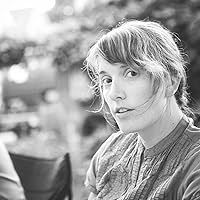
With each poetry collection, Martha Ronk has further refined her unique use of the sentence, its textures and tangents, to extend the ways that a meditative lyric might address the most intimate and subtle experiences of living. Yet Ronk's diction remains as direct and urbane as it is mulitvalenced in its range from serious to wry to confidential to questioning. In these poems, we find Ronk's most stealthy syntactic turns, returns, and juxtapositions, which expose to us the rhetorics we unconsciously use to frame our perceptions of the daily. In a landscape of having to repeat, Ronk offers a language of attention that is composite, disruptive, and vibrantly immediate.
I am a great admirer of Martha Ronk's work--the subtle surfaces,her use of sentence and phrasing. This may be my favorite book of hers. There's a useful formal range in the sections of the book. Her poetry interacting with the art of Eva Hesse is particularly moving to me, but then I also love the "In the Vicinity Sequence." Consider this quote from "Screens and Toothbrushes:" . . . and time was endless and radiantly boring, like looking through the screen to another world in which not only is reality brought down to size, framed and re-colored, but also time itself . . .
It makes me so sad when I go to rate a book and Jake's rating is there. I'm going to need to mitigate that sadness or try to deal with it. Can I learn to celebrate his life instead? Thank you Jake for being smart, engaged, kind.
I'm almost through the Ronk books. Well, the ones at the ASU Library anyway. Since I read them in chronological order it's hard to tell if her work grew on me or if it just got better with each book.
I really like this one. Ha. That's what 4 stars means. I did really like it. So many moments made me stop, breathe, think.
Here are some moments that resonated for me:
what about touching all the clothes in the closet as if they belonged to you.
trying is not something anyone can do
How odd to have had the thought, I'm going to have a splendid time.
This is a color I'd like to avoid.
Must the events of the day disappear in order to be daily.
One: In a Landscape of Having to Repeat Ronk uses birds almost as if to show the passage of time. To move the reader through the poems and to show the connection of everyday occurances. Using repeated words and ideas her lyrics float back and forth between the past and present.
Two: In the Vicinity Each poem is written like a dream that is remembered upon waking. A mix of simple observations and the bizarre. Her poems flawlessly intertwine these ideas in such a way that leaves the reader or listener unsuspecting.
Three: Quotidian These poems made me think of sticky notes with messages to remind oneself of certain thoughts or happenings. Each seemed to be more and more intimately written, exposing the narrator against their will.
This collection pushes poetry in great new directions. It's not merely well written, but it works at the edges of "What is a poem?" The language is strong and moving, but it takes the reader in directions they may not be prepared for.
I felt like this collection made me a better writer and gave me a broader understanding of the craft.
The poems in the first section didn't grab me right away-- I'll have to go back and read them again, now that I've read the whole book-- but wow, the sequence of prose poems in the second section, "In the Vicinity," is fascinating. And the final section, "Quotidian" is lovely, and perfectly placed in the collection.
Poetry usually isn't my thing but I had seen the awards this book received and thought I should read it. Ronk has some great poems, I especially like Home Movies in Part II. I didn't like Part III, the format didn't grab my attention like the rest of the collection did. I do say you should try it, she has some great imagery and she's really inspired by birds:)
This was interesting because of the section on dreams and the final one on the everyday and normal. Many references to getting or being at home, wherever home is such as in the mind or the physical home where one grew up or moved out of or into later in life.
She states, “Objects have no thoughts about anything else.” (85) Yet humans do, and Ronk manufactures her unique memory from that slippery stash of the ordinary.
I am really into the section called "In the Vicinity," which consists of thirty-odd linked prose poems. Having trouble getting into the rest right now...