

What do you think?

Backbone of the Nation: Mining Communities and the Great Strike of 1984-85
A powerful new history of the Great Strike in the miners’ own voices, based on more than 140 interviews with former miners and their families
Forty years ago, Arthur Scargill led the National Union of Mineworkers on one of the largest strikes in British history. A deep sense of pride existed within Britain’s mining communities who thought of themselves as the backbone of the nation’s economy. But they were vilified by Margaret Thatcher’s government and eventually deprived of their jobs, their livelihoods, and in some cases, their lives.
In this groundbreaking new history, Robert Gildea interviews those miners and their families who fought to defend themselves. Exploring mining communities from South Wales to the Midlands, Yorkshire, County Durham, and Fife, Gildea shows how the miners and their families organized to protect themselves, and how a network of activists mobilized to support them.
Amid the recent wave of industrial action in the United Kingdom, Backbone of the Nation highlights anew the importance of labor organization—and intimately records the triumphs, losses, and resilience of these mining communities.
Forty years ago, Arthur Scargill led the National Union of Mineworkers on one of the largest strikes in British history. A deep sense of pride existed within Britain’s mining communities who thought of themselves as the backbone of the nation’s economy. But they were vilified by Margaret Thatcher’s government and eventually deprived of their jobs, their livelihoods, and in some cases, their lives.
In this groundbreaking new history, Robert Gildea interviews those miners and their families who fought to defend themselves. Exploring mining communities from South Wales to the Midlands, Yorkshire, County Durham, and Fife, Gildea shows how the miners and their families organized to protect themselves, and how a network of activists mobilized to support them.
Amid the recent wave of industrial action in the United Kingdom, Backbone of the Nation highlights anew the importance of labor organization—and intimately records the triumphs, losses, and resilience of these mining communities.
496 pages, Hardcover
First published September 19, 2023
About the author
Robert Gildea
16 books18 followersRobert Nigel Gildea FBA FRHistS is Emeritus Professor of Modern History at the University of Oxford and is the author of several influential books on 20th century French history.
Ratings & Reviews
Friends & Following
Create a free account to discover what your friends think of this book!
Community Reviews
Displaying 1 - 18 of 18 reviews
September 28, 2025
I hate Margaret Thatcher

Read
September 27, 2023In the UK, May and June 2022 were officially a ‘hot strike summer’, in which the context of the country’s cost of living crisis generated popular support for workers’ action and admiration for plain-speaking union leaders such as the RMT’s Mick Lynch. The whole thing seemed underpinned by a certain nostalgia, not least bringing to mind that other ‘hot strike summer’ of 1984.
In his introduction, Robert Gildea notes the resonance of Lynch’s rhetoric as a reason to pay the strike renewed attention. He also acknowledges the breadth of scholarship on the strike, both contemporary reportage and memoirs and more recent explorations: Seumas Milne (1994) on the involvement of state intelligence services, Diarmaid Kelliher (2021) on the cultural links developed between London and the coalfields, and Huw Beynon and Ray Hudson (2021) on the strike’s bleak legacy. All of which might cause us to ask not whether we should now pay attention to the Miners’ Strike, but whether we have paid enough already.
What Backbone of the Nation offers, however, is the first comprehensive oral history of the strike based on new interviews supplemented with archived testimony from across Wales, England and Scotland. It has a cast of ordinary characters (some, like MP and scholar Hywel Francis and activist Anne Scargill, are better known than others) and its objective overview extends to the miners of Nottinghamshire and Leicestershire as well as the rock-solid strongholds of Yorkshire and south Wales.
The book’s title is reflected in the opening outline of coal mining’s development in Britain. From our post-industrial perspective, the story is overshadowed by the knowledge of impending disaster, but mining communities at the time of the strike had also glimpsed what was coming. Siân James, whose journey from miner’s wife and activist to MP formed part of the 2014 film Pride, recalls that 1984 had ‘the inevitability of a train wreck’.
Gildea is clear that, although demand for coal had been in decline for decades before Thatcher, the 1984-85 strike was a deliberate act. The intricacies of internal ballots, picketing strategies and tactical divisions across different regions of the coalfield – keenly debated here by contributors – were secondary to the overall desire for a titanic clash of people and state. In preparation, the government stockpiled coal, appointed the hawkish Ian MacGregor as National Coal Board chairman, and drew up a list of colliery closures that would decimate the industry. On the other side, Gildea records an uncompromising generation of young miners, often Marx-reading students of industrial relations, economics and politics, intent on shaking up their union’s staid bureaucracy.
Read the rest of the review at HistoryToday.com.
Rhian E. Jones writes on history and politics.
In his introduction, Robert Gildea notes the resonance of Lynch’s rhetoric as a reason to pay the strike renewed attention. He also acknowledges the breadth of scholarship on the strike, both contemporary reportage and memoirs and more recent explorations: Seumas Milne (1994) on the involvement of state intelligence services, Diarmaid Kelliher (2021) on the cultural links developed between London and the coalfields, and Huw Beynon and Ray Hudson (2021) on the strike’s bleak legacy. All of which might cause us to ask not whether we should now pay attention to the Miners’ Strike, but whether we have paid enough already.
What Backbone of the Nation offers, however, is the first comprehensive oral history of the strike based on new interviews supplemented with archived testimony from across Wales, England and Scotland. It has a cast of ordinary characters (some, like MP and scholar Hywel Francis and activist Anne Scargill, are better known than others) and its objective overview extends to the miners of Nottinghamshire and Leicestershire as well as the rock-solid strongholds of Yorkshire and south Wales.
The book’s title is reflected in the opening outline of coal mining’s development in Britain. From our post-industrial perspective, the story is overshadowed by the knowledge of impending disaster, but mining communities at the time of the strike had also glimpsed what was coming. Siân James, whose journey from miner’s wife and activist to MP formed part of the 2014 film Pride, recalls that 1984 had ‘the inevitability of a train wreck’.
Gildea is clear that, although demand for coal had been in decline for decades before Thatcher, the 1984-85 strike was a deliberate act. The intricacies of internal ballots, picketing strategies and tactical divisions across different regions of the coalfield – keenly debated here by contributors – were secondary to the overall desire for a titanic clash of people and state. In preparation, the government stockpiled coal, appointed the hawkish Ian MacGregor as National Coal Board chairman, and drew up a list of colliery closures that would decimate the industry. On the other side, Gildea records an uncompromising generation of young miners, often Marx-reading students of industrial relations, economics and politics, intent on shaking up their union’s staid bureaucracy.
Read the rest of the review at HistoryToday.com.
Rhian E. Jones writes on history and politics.

February 14, 2024
Although it’s only forty years since the Miners’ Strike of 1984-5, the political and cultural landscape of the UK has changed so fundamentally since then that it seems to belong to another, more distant, era altogether. I was at a university on the edge of one of the smaller coalfields (one where every mine was threatened with closure) at the time of the strike and I remember it as having the feeling of a long drawn-out death of an altogether different way of life even then. This fine book by Robert Gildea (an eminent historian of France) is an oral history of the impact of the strike on mining communities and in that respect, presumes a basic understanding of the wider context and the chronology of the strike (Jeremy Paxman’s Black Gold would be an excellent introduction). Extensively researched and footnoted, and written with a winning combination of academic rigour and a strong sense for a story and a sensitive ability to let personal and family experiences speak for themselves, this is a timely book. I now live in a much larger ex-coalfield area and the impact on local communities of the strike and the ensuing wholesale withdrawal from coal, is plain to see in the pit villages robbed of their reason for existing.

April 3, 2024
I was involved in an online discussion with some people who have made contributions to this book and it piqued my interest. So i pre-ordered the paperback then promptly forgot until it arrived.
As an adult i studied Politics, Philosophy and Economics at the Open University. It was very hard, it was a lot of work, there were a lot of tears but it was absolutely one of the very best decisions I've ever made. Before you start on the actual PPE, as with all social-science degrees (I think) at the OU, and one of the modules covered the notion of what the Welsh call Hiraeth, in connection to the miners strike of 1984/85. This word has no direct translation in English, i think maybe Heimat comes close in German. According to one academic* (yeah, i am not doing harvard referencing) "It is a mixture of longing, yearning, nostalgia, wistfulness or an earnest desire for the Wales of the past."
This book is about the mining communities, the strikers, the non-strikers, those who held out, those who went back to work. The marches, the fund raising, the soup kitchens, the picketing and above all the communities working together to get through that ultimately futile fight. It is remarkable to see the differences in what happened in the different coalfields, how the Welsh seemed to be more of a community, Yorkshire feisty and up for a fight, Scotland a mixture of both. The nearly forgotten Kent mines, the Dirty Thirty in Leicestershire and of course the Nottingham miners who mostly didn't strike.
If you know nothing about the strike, what was going on in the UK at that time or anything at all about the period i think you'll still get a lot out of reading this. As someone who lived through this period, with no skin in the game at all, i can say that a lot of what happened shocked, enraged and infuriated me at the time and again reading about it. But ultimately this is a book about community, about hope. About sheer hard work. And above all: the blinding truth that without the women who supported their families, this would have been much, much worse.
*Boynton, Jessica. "Hiraeth". Eastern Michigan University. Archived from the original on September 12, 2006 (it's in the Wikipedia page about Hiraeth under sources)
As an adult i studied Politics, Philosophy and Economics at the Open University. It was very hard, it was a lot of work, there were a lot of tears but it was absolutely one of the very best decisions I've ever made. Before you start on the actual PPE, as with all social-science degrees (I think) at the OU, and one of the modules covered the notion of what the Welsh call Hiraeth, in connection to the miners strike of 1984/85. This word has no direct translation in English, i think maybe Heimat comes close in German. According to one academic* (yeah, i am not doing harvard referencing) "It is a mixture of longing, yearning, nostalgia, wistfulness or an earnest desire for the Wales of the past."
This book is about the mining communities, the strikers, the non-strikers, those who held out, those who went back to work. The marches, the fund raising, the soup kitchens, the picketing and above all the communities working together to get through that ultimately futile fight. It is remarkable to see the differences in what happened in the different coalfields, how the Welsh seemed to be more of a community, Yorkshire feisty and up for a fight, Scotland a mixture of both. The nearly forgotten Kent mines, the Dirty Thirty in Leicestershire and of course the Nottingham miners who mostly didn't strike.
If you know nothing about the strike, what was going on in the UK at that time or anything at all about the period i think you'll still get a lot out of reading this. As someone who lived through this period, with no skin in the game at all, i can say that a lot of what happened shocked, enraged and infuriated me at the time and again reading about it. But ultimately this is a book about community, about hope. About sheer hard work. And above all: the blinding truth that without the women who supported their families, this would have been much, much worse.
*Boynton, Jessica. "Hiraeth". Eastern Michigan University. Archived from the original on September 12, 2006 (it's in the Wikipedia page about Hiraeth under sources)

August 31, 2026
I myself was born in 1964 in London. What we heard on the news was the media's account of the strikes and words like Scargill, Thatcher, picket lines, scabs and close a pit, kill a community. They were on the TV, but that was it for me, I was a teenager playing sports, mixing with females and going out with the lads.
After reading this book which was written following interviews with people affected by the strike, who were part of it and who lived through it the story is very different indeed. Thatcher was so resolute in the closing down of the pits and did not give one thought to the communities and the families affected by her brutal destruction of proud, hardworking and productive mines that were no longer to be part of her vision for the UK.
The truth is revealed about the tactics used by the government and the web of lies to get what it wanted. Arresting people, blacklisting people and treating them scum . The government waged war on the strikers and it would be a horrible war.
The story of the miners wives and how they rallied round and become towers of strength in their own immediate families, their community and even further afield. They matched into the battle on the front lines and in support with a purpose and a passion that brought the rights of women and feminism into the forefront.
The lesbian and gays supporting the strike was an enlightening development challenging oppression, discrimination and solidarity. How the railway and printers stood up and supported the movement and eventually how the strikers supported those that supported them.
Nasty tactics were being used by the government and by the coal industry to try and get the miners back into work. It was a year long war where eventually the miners lost the main fight, but many, many battles were won.
The issues between striking miners and non-striking miners still exist today, people lost great friends, good jobs and even their own families. Maybe this was part of the government's plan, divide and conquer, whatever the consequences.
However a lot of good has come from the fight the communities that were ravished with lack of work, drug and drink addiction are bouncing back with the help of those trying to rebalance the score and give back to the communities.
It is a story of fighting for one's rights,, survival, relationships, trust, deception, passion and a sense of once you have worked all your life you can be thrown out in the slag heap.
A great read that has left me wanting to find out more and delve deeper into the struggle of the strikes and the continuation of those struggles today.
After reading this book which was written following interviews with people affected by the strike, who were part of it and who lived through it the story is very different indeed. Thatcher was so resolute in the closing down of the pits and did not give one thought to the communities and the families affected by her brutal destruction of proud, hardworking and productive mines that were no longer to be part of her vision for the UK.
The truth is revealed about the tactics used by the government and the web of lies to get what it wanted. Arresting people, blacklisting people and treating them scum . The government waged war on the strikers and it would be a horrible war.
The story of the miners wives and how they rallied round and become towers of strength in their own immediate families, their community and even further afield. They matched into the battle on the front lines and in support with a purpose and a passion that brought the rights of women and feminism into the forefront.
The lesbian and gays supporting the strike was an enlightening development challenging oppression, discrimination and solidarity. How the railway and printers stood up and supported the movement and eventually how the strikers supported those that supported them.
Nasty tactics were being used by the government and by the coal industry to try and get the miners back into work. It was a year long war where eventually the miners lost the main fight, but many, many battles were won.
The issues between striking miners and non-striking miners still exist today, people lost great friends, good jobs and even their own families. Maybe this was part of the government's plan, divide and conquer, whatever the consequences.
However a lot of good has come from the fight the communities that were ravished with lack of work, drug and drink addiction are bouncing back with the help of those trying to rebalance the score and give back to the communities.
It is a story of fighting for one's rights,, survival, relationships, trust, deception, passion and a sense of once you have worked all your life you can be thrown out in the slag heap.
A great read that has left me wanting to find out more and delve deeper into the struggle of the strikes and the continuation of those struggles today.
March 16, 2026
★★★★☆ Review – Backbone of a Nation
As someone who grew up in a mining town, Backbone of a Nation felt both powerful and deeply personal. The book captures the grit, pride, and hardship that shaped communities built around the coal industry. What stands out most is how it doesn’t just focus on the politics of the strike, but on the people — the families, the friendships, and the sense of identity tied to the pits.
Reading the stories of those who lived through the strike brought back a lot of the atmosphere that still lingers in mining towns today. The book does a good job of showing how the strike wasn’t just an event in the 1980s; its impact is something communities continue to feel decades later. The divisions it caused, the resilience it built, and the memories passed down through generations are all explored with care.
What I particularly appreciated was hearing directly from people who experienced it firsthand. Their voices give the book authenticity and remind readers that history is lived, not just recorded.
The reason I’ve given it four stars rather than five is that at times it feels slightly uneven in pacing, and I would have liked a little more depth in some of the personal accounts. Still, it’s a compelling and important read, especially for anyone from a mining background or interested in how the strike shaped communities that are still living with its legacy today.
As someone who grew up in a mining town, Backbone of a Nation felt both powerful and deeply personal. The book captures the grit, pride, and hardship that shaped communities built around the coal industry. What stands out most is how it doesn’t just focus on the politics of the strike, but on the people — the families, the friendships, and the sense of identity tied to the pits.
Reading the stories of those who lived through the strike brought back a lot of the atmosphere that still lingers in mining towns today. The book does a good job of showing how the strike wasn’t just an event in the 1980s; its impact is something communities continue to feel decades later. The divisions it caused, the resilience it built, and the memories passed down through generations are all explored with care.
What I particularly appreciated was hearing directly from people who experienced it firsthand. Their voices give the book authenticity and remind readers that history is lived, not just recorded.
The reason I’ve given it four stars rather than five is that at times it feels slightly uneven in pacing, and I would have liked a little more depth in some of the personal accounts. Still, it’s a compelling and important read, especially for anyone from a mining background or interested in how the strike shaped communities that are still living with its legacy today.

December 31, 2025
Helen Colley: One of the things in terms of their international outlook was the whole thing around South Africa, because Thatcher was importing coal from South Africa. There was a connection with the RMT, the rail workers, because they were expected to transport the coal ... The RMT were also very involved in supporting their counterpart union in South Africa, there was a whole left-wing leadership under Geoff Revell. Soo there was a kind of triad thing which meant that the anti-apartheid stuff that I'd got involved in more centrally when I was living in London — going on pickets and demonstrations, the South Africa Embassy — but then I got really involved in it when I went to Nottingham. There was a really close relationship between the NUM, the RMT and the anti-apartheid movement. We did a lot of things together. We did joint conferences. I've got some photos. There's me, Geoff Revell and a guy called Panduleni Itula who was a member of SWAPO and Betty Heathfield. And there's a picture taken from the fundraising social at the end of the evening and there's me, one of my friends from the anti-apartheid movement and Itula, and we look hot and sweaty and happy and exhausted. (295)

June 2, 2024
I haven't read many oral histories before and this one will help encourage me to change that fact. I picked it up as i was familiar with the author from his french history work so knew i was on safe enough hands.
Illuminating life during the miners strike, the book doesn't shy away from the internecine conflict between strikers and strike breakers as well as conflict with the police. Based on testimony at the time and in recent follow ups it is quite effective in giving all the power to the voices of those there with all their honest memories and reflections. Subjective reflections of course bur the volume of voices that come through still give you a genuine flavour of life from South Wales to Durham and Yorkshire and in Nottingham too.
Illuminating life during the miners strike, the book doesn't shy away from the internecine conflict between strikers and strike breakers as well as conflict with the police. Based on testimony at the time and in recent follow ups it is quite effective in giving all the power to the voices of those there with all their honest memories and reflections. Subjective reflections of course bur the volume of voices that come through still give you a genuine flavour of life from South Wales to Durham and Yorkshire and in Nottingham too.
October 19, 2024
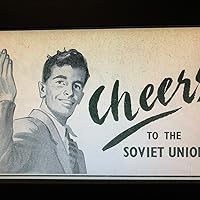
Dear Mr Scargill, what’s it like being the most vindicated man in Britain?
Great bottom-up history of the monumental dispute of the post war years. Gildea relies on first hand accounts which is great for hearing directly from miners and their families but it has it’s failings. What I mean by this is he interviews strikebreakers and tries to umm and ahh about it and show neutrality but it’s clear he supported the strikers so he may as well admit it and follow such a line. Furthermore, he hints and whispers about state collusion, agent provocateurs but just leaves it in the quotations and moves on and not really addressing it - but I suppose that’s not necessarily in the scope and aim of this.
Enjoyable
Great bottom-up history of the monumental dispute of the post war years. Gildea relies on first hand accounts which is great for hearing directly from miners and their families but it has it’s failings. What I mean by this is he interviews strikebreakers and tries to umm and ahh about it and show neutrality but it’s clear he supported the strikers so he may as well admit it and follow such a line. Furthermore, he hints and whispers about state collusion, agent provocateurs but just leaves it in the quotations and moves on and not really addressing it - but I suppose that’s not necessarily in the scope and aim of this.
Enjoyable

August 25, 2024
I heard Robert speak about his book and how he came to research and write it. My mining family in South Yorkshire lived through this and I still have memories and strong feelings on this.
Robert presents this with a balanced perspective and details the conflict within the mining communities whilst exposing the manipulative strategies of the Government and the unacceptable role the Police.
It is good to have a new look at this with the benefit of history and understand the personal stories involved.
Robert presents this with a balanced perspective and details the conflict within the mining communities whilst exposing the manipulative strategies of the Government and the unacceptable role the Police.
It is good to have a new look at this with the benefit of history and understand the personal stories involved.
April 11, 2025
A really fascinating insight into the Miners’ Strike, an event which I am particularly interested in, not least because of my family and local history. I thought the book could have been a bit better written in places and it was sometimes a little difficult to keep track of who’s who given the sheer number of interviewees but apart from that it was a thoroughly enjoyable read; I would recommend this book to anyone interested in hearing personal stories from the strike.

September 4, 2024
Accessible and dignified oral history of an infinitely inspiring and pivotal period of British history. The sentiment of resilience during the strike and the decades since comes across emotionally and powerfully. Not 5 stars due to some self-repeating but otherwise a delight.
May 13, 2024
Informative and detailed a little repetitive at times.
August 4, 2024
Superb book from start to finish!!!!

December 4, 2024
Absolutely brilliant.
Read
December 21, 2024A sympathetic and engaging oral history of the strike and its aftermath.

November 16, 2025
Longgggg and comprehensive.
March 21, 2026
Thatcherism personified.
Displaying 1 - 18 of 18 reviews