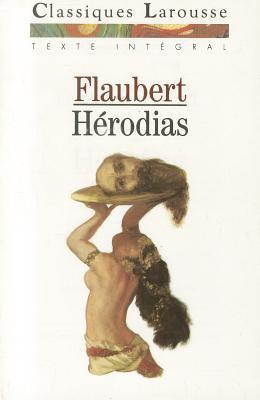
Dans sa citadelle de Makawir, au bord de la Mer morte, Hérode retient prisonnier Jean-Baptiste, qui condamne publiquement son union incestueuse avec Hérodias, sa nièce. Celle-ci, qui n'était poussée que par l'intérêt, craint d'être répudiée. Lors d'un grand festin, Salomé, fille d'Hérodias, danse pour Hérode, puis demande, et obtient, la tête de Jean-Baptiste.
Gustave Flaubert was a French novelist. He has been considered the leading exponent of literary realism in his country and abroad. According to the literary theorist Kornelije Kvas, "in Flaubert, realism strives for formal perfection, so the presentation of reality tends to be neutral, emphasizing the values and importance of style as an objective method of presenting reality". He is known especially for his debut novel Madame Bovary (1857), his Correspondence, and his scrupulous devotion to his style and aesthetics. The celebrated short story writer Guy de Maupassant was a protégé of Flaubert.
Herodías, escrita por Flaubert, no vas mas allá que la historia de Juan el Bautista, Herodes de Antipas y Herodías. Centrando todo su esfuerzo en la lucha entre las Herodías mundanas y los justos Iaokanan.
El torbellino de intereses políticos y religiosos que rodea a Herodes Antipas y su esposa es la antítesis de la simple pero terrible predicación del Bautista. El poder de Herodías se duplica en la persona de la joven Salomé, la encarnación de la vida sensual, mientras que Iaokanann se borra a sí mismo como un doble para Jesús, el Mesías. Iaokanann habla desde las sombras, una voz poderosa cuyos ecos sacuden la ciudadela, mientras Herodías impacta visualmente al lector; ella está en la luz, de color brillante, de bordes afilados. El punto central de esta lucha se alcanza en la escena familiar de la danza de Salomé, la trampa para el vacilante Herodes, que encuentra una especie de alivio al ver que la decisión de Herodías se toma por él. La ejecución de su enemigo parece una victoria para Herodías, sin embargo, es solo a través de la muerte de Iaokanann que Jesús puede resucitar; la disminución personal del Bautista contribuye al eventual triunfo del Mesías.
Un interesante retrato al estilo de la imaginación nutrida de realismo como bien sabido al estilo de Flaubert.
Kitap, tarihi bir olayın derinlerinde yatan insan doğasını ve iktidar hırsını incelikli bir üslupla sunuyor. Flaubert’in bu kısaltılmış metninde, Vaftizci Yahya’nın idamına giden süreç, hem Herodias’ın entrikaları hem de Herodes Antipas’ın güçsüzlükleri üzerinden anlatılıyor. Flaubert’in betimlemelerinde, tarihsel figürlerin insani zaafları ve tutkuları ustalıkla işlenirken, okuyucu adeta o dönemin havasını soluyor.
Eserin gücü, yalnızca olayların tarihsel anlatımında değil, Flaubert’in dilinde saklı. Her cümle, sanki bir tablo çiziyormuş gibi ayrıntılı, ancak bir o kadar da akıcı. Herodias, sadece bir karakter değil, kendini hırslarının içinde kaybetmiş bir figür olarak trajik bir simge. Yahya’nın başını bir tepsi üzerinde istemesi, sıradan bir vahşet anlatısından öte, zamanın ahlaki çöküşüne tanıklık eder gibi. Flaubert’in diliyle bu an, hem büyüleyici hem de dehşet verici bir şekilde okuyucunun zihinlerine kazınıyor.
Roman, sadece tarihsel bir olayın kurgusal yeniden anlatımı değil, aynı zamanda iktidar, ahlak ve kader üzerine bir sorgulama. Herodias’ın tutkuları ve intikam duyguları ile Herodes’in ikilemde kalışı, tarihsel dramın ötesinde evrensel bir insanlık durumuna işaret ediyor. Flaubert’in güçlü anlatımı sayesinde, karakterlerin psikolojik derinliği ve olayların kaçınılmaz sonu, adeta bir trajedi gibi gözlerimizin önünde seriliyor.
Uno de los últimos tres cuentos publicados por el incomparable escritor francés, en una bella edición con prólogo de Maupassant y una irreprochable traducción de Sergio del Valle.
La historia es bien conocida, legendaria: la larga jornada del festejo del cumpleaños de Herodes Antipa, en una vertiginosa confluencia de pueblos, ejércitos y tradiciones, del tiempo antiguo y del que ha de venir.
Flaubert nos ofrece, junto con su depuradísima y justamente célebre, insuperable, escritura (del que este cuento bien puede servir de magistral ejemplo), un muy digno de mención giro de perspectiva, poniendo ya desde el título a la denostada, la ultrajada pecadora reinante en el papel capital.
En este tan completo relato, barroco hasta la exasperación en su ambientación y presencia de todo tipo de personajes cada cual con su voz perfectamente delimitada, la maldita figura de Herodías, de la que incluso su nombre parece un reflejo de su marido, la que parece pervivir a través de la juventud (que en ella ya es perdida) de su hija, relampaguea y se enseñorea de la Historia, rompiendo las barreras de la tradición: el triunfo de la voluntad.
"Contra un ataque de las legiones hubiera tenido valor. Pero aquella fuerza, más peligrosa que una espada, no podía sujetarse, era invencible. Pensando en ello recorría la terraza pálida de ira, sin encontrar palabras que expresaran su indignación. (...) Desde niña había alimentado el sueño de dominar un gran imperio."
"Cruzaron con él palabras misteriosas, como hacen los ladrones por la noche en las encrucijadas de los caminos."
"A la esperanza seguía el abatimiento. Sus actitudes expresaban languidez y corría por toda su persona tan deliciosa voluptuosidad que no se sabía si lloraba q un dios o si moría al influjo de sus caricias. Con los párpados entornados retorcía la cintura, agitaba el vientre con ondulaciones de ola, hacía temblar sus dos senos, y el rostro permanecía inmóvil y los pies seguían agitándose como llamas."
"El carácter de los judíos le parecía odioso a Vitelio. Su Dios bien podría ser Moloch, a quién habían erigido altares que él mismo había encontrado por los caminos; y vinieron a su recuerdo los sacrificios de niños, con la historia del hombre cabado con ellos misteriosamente. Su corazón de latino palpitaba de asco por aquella intolerancia, aquel furor iconoclasta, aquella tozudez brutal."
En este cuento breve el autor nos relata el complot organizado por Herodía, esposa de Herodes Antipas (tetrarca de Perea y Galilea desde el 4 a. C. hasta el 39 d. C. personaje con un papel fundamental, según el Nuevo Testamento en los acontecimientos que desembocarían en la muerte tanto de San Juan Bautista como de Jesús de Nazaret), para acabar con la vida del santo. Con la prosa magistral que caracteriza la obra de Flaubert nos relata todos los hechos que se sucedieron y cómo Herodías se sirvió de todas las armas a su alcance para conseguir sus objetivos. El problema que yo he tenido con este relato es que no soy muy conocedora de esos hechos y la narración, aún siendo magnífica en su forma, es algo enrevesada y caótica para que un desconocedor, como yo, de la historia que nos cuenta llegue a entender del todo los hechos que se relatan. Para enterarme bien de la historia que había leído he tenido después que buscar información sobre los hechos y poder así hacerme una mejor idea de lo que autor había querido contar. Soy consciente de que ésto es más problema mío que de la obra en sí, pero mi valoración de la misma se debe a mi experiencia lectora. Aún así, animo a los lectores a que la lean y saquen sus propias conclusiones.
Berbat değildi ama çok beğendiğimi de söyleyemem. Bir kitaba başlamadan önce genelde yorumlara bakan birisi olarak tarihten isimleri görmek beni çok zorlamadı. O yüzden kitaba başlamadan Kahin Yahya'nın hayatına bakmanızı tavsiye ederim. Roma tarihinden de birçok isim vardı: Herodias, Antipas, Salome, ve Herod Agrippa gibi. Kitap kısaca Yahya'nın ölümünü anlatıyor. Çok ilgimi çekmedi ama yine de okuması kolaydı, özellikle kitap kısa olduğu için. Roma mitolojisinden Bacchus'un (Dionysos) ismini görmek güzeldi. Araştırdığım kadarıyla Flaubert Oscar Wilde'ın Salome (1891) adlı oyunundan esinlenip bu hikayeyi yazmış. Wilde'ın oyunu da aynı olayı anlatıyor ve filmi de varmış. Bu yönden bağlantılı olmaları da güzel. Ben kitabı "idare eder" buldum ama bir deneyin derim.
#cevizyorumluyor #herodias #gustaveflaubert Roma dörtlü yönetiminde görevli tetrarch Antipas, Heroidas ile evlenmiştir. Heroidas kızı salomeyi kullanarak john the babtist yani yahya peygamberin ölümünde rol alıyor. Anlatım akıcı ancak konu ve kişiler çok karışık. Konuya hakim birisi daha severek okuyacaktır. İnternette Ürdün de yer alan eski Machaerus kalesini inceledim görmek istediğim yerler arasına girdi diyebilirim. Testament isimleri olan Antipas ve heroidas'ı da öğrenmiş oldum.Ortaçağ Avrupa'sında yaygın bir inanç, Herodias'ı, Diana, Holda ve Abundia ile eşanlamlı olan sözde bir cadı kültünün doğaüstü lideri olarak görüyormuş.
If we think at the Bible as a literary text, we might consider the story of John the Baptist as a story within a story. Flaubert writes a detailed and difficult analysis of the events and characters. The book offers much food for thought. By the weakness of man to resist temptations, to sickly determination of Herodias willing to put in place her daughter in order to achieve her goals. I would not consider the act of Herodias, as has often been done, typically tricky feminine but as the act of a human being, ready for anything, to achieve goals.
Zor bir kitabın üstüne yine kaçış yöntemim olan Can Yayınları'nın Lacivert Klasikler serisinin sonlarına yaklaşırken, bu sefer daha önceden okumuş olduğum bir yazarla yıllar sonra yolum kesişti. Gustave Flaubert'in Madam Bovary'sini okurken çok hoşlanmamıştım kitaptan, fakat bunun sebebi sanırım okuduğum yayınevinden dolayıydı. Bu sefer de bu seriden bir kitabı çıkmışken bunu da tüketmek ve yazarı bir hatırlamak istedim. Kapak fotoğrafıyla ilgi çekici görünen fakat sanki sıkıcı bir metin okuyacakmış hissini de aynı anda veren bir duruşu vardı. Biraz bu şekilde başladım ama Lacivert Klasikler'in diğer kitapları gibi bu da kısa bir metin olduğu için bir çırpıda başladım ve bitirdim.
Kitap tek bir metni içeriyor. Aslında tarihi bir kurgu da diyebiliriz çünkü anlatılan şeyler tamamen kurgu değil. Roma İmparatorluğu'nun toprak üstüne toprak kattığı zamanların Orta Doğu'sunda, Yahudiliğin yaygın olduğu topraklarda şu an peygamber olarak andığımız tarihi figürleri okuyoruz. Yahya, esir alınmış ve idam cezasına çarptırılmış olarak kaderini bekliyor. Çünkü krallığın prensesinin yasak ilişki yaşadığını iddia ediliyor. Bunun dışında bu krallığa giren çıkan insanlar, soyluların bu konu hakkındaki yorumlarını okuyoruz. Roma İmparatorluğu içinde Yahudilik ön planda olmaya başlamış olsa da artık bir yerden sonra eski dinlere inananların sayısı da azalıyor. Fakat yeni bir mucizeler yaratan adamdan bahsediyor herkes. Mesih olanın o olduğuna inanıyorlar ve bu süreçteki tüm karışıklığı düzeltecek olan kişi de İsa. Bu noktada döneminin Orta Doğu'sunda şuanki İsrail, Filistin, Suriye gibi ülkelerin topraklarında geçen bu olay aslında gerçekte olan şeylerin kısa bir kurmacası. Bir yandan Roma İmparatorluğu bir yandan Yahudilik ve oluşmaya başlayan Hristiyanlık teorisini yan yana görünce biraz şaşırtıcı duruyor ama aslında bu geçiş bu dönemde yaşanıyor. Biz de bu imparatorluğun bu bölgesinde geçen krallıkta Herodias adındaki bu kadının ön planda olduğu bir dönem hikayesi okumuş oluyoruz.
Öncelikle yazarın dili ve çeviri bence başarılıydı ve beklediğimden daha güzel bir konusu vardı kitabın. Kısa olmasına rağmen döneminin atmosferini iyi yansıttığını düşünüyorum, hatta uzun bir kurgu haline dönüştürülse bir roman haline bile gelebilirdi bence. Öyle bir potansiyeli vardı bu tarihi kurgunun ve bu kalemin. Fakat kitabın en kötü ve kitaptan aldığım zevki minimuma indiren yanı ise; konuya bodoslama dalmasıydı yazarın. Benim gibi bu konu hakkında hiç bilgisi olmayan bir okurun bu metni anlaması biraz zor. Kim kimdi, kim nerenin nesiydi, gibi sorulardan kitaba çok zor entegre oldum. Bu noktada da her ne kadar anlatım ve seçilen konu başarılı olsa da kitabın altı çok doldurulamamış gibi geldi bana. Bu noktada da kısacık da olsa kitabın neredeyse yüzde 75'inde karakterleri ve ortamı kafamda tam oturtamadım. Bu da kitaptan aldığım zevki tek başına indirmeye sebebiyet verdi. Yoksa gerçekten daha düzgün bir olay örgüsü ile çok başarılı bir kitap ortaya çıkardı, ben kesinlikle buna inanıyorum. Belki bu olayları iyi bilen birisi bu kitabı benden çok daha iyi anlardı ama bu sonuçta bir kurgu olduğu için bilgi seviyesi aramamalı bence. Bu noktada kitabı sırf bu özelliği sebebiyle maalesef çok beğenemedim.
Normalde bir iki özellik kitaptan aldığım zevki bu kadar kırmazdı benim ama bu özellik direkt kitabın akışını ve idrak edilmesini etkilediği için kitabı yer yer öylesine okumak için okuyormuş gibi hissettim. Bu da benim okurken sevmediğim bir deneyim. Bu yüzden üzülerek kitabı çok beğenemediğimi söylüyorum. Yine de anlatılan olayların ve dilin iyi seviyede olmasından dolayı kitaba puanım 5 üzerinden 2.5
Flaubert, Yahya Peygamber’in katledilişini anlatan dini bir öykü kaleme almış gibi görünse de, arka planda siyasi entrikaların ve tensel yozlaşmanın hüküm sürdüğü bir atmosfer kurmuş. Mekân tasvirleri ve yoğun betimlemeler, metni salt okunur olmaktan çıkarıp seyredilir kıldığından; kimi anlarda kendimi olayları kenardan izleyen bir tanık gibi hissettim.
Eser, Yahya Peygamber’in ölümü ve dönemin coğrafi–tarihsel bağlamı hakkında ön bilgisi olmayan okur için zorlayıcı ya da sıkıcı olabilir. Okuma sürecimde bu eksikliği hissettiğim noktalarda kısa araştırmalar yapma ihtiyacı hissettim. Metni tamamladıktan sonra hikâye üzerine kaleme alınmış akademik çalışmalara yöneldiğimde, C.H. Wake’in "Symbolism in Flaubert's Hérodias: An Interpretation" başlıklı makalesine ulaştım. Bu çalışma, zihnimde dağınık duran parçaları bir araya getirmemde oldukça yardımcı oldu. İncelememin bundan sonraki kısmı eserin içeriğine dair değerlendirmeler içerdiğinden SPOİLER!
Bu kısa öykü, düz bir anlatı olarak okunup geçilebilir. Ancak imgesel ve düşünsel katmanlarına dikkat edildiğinde, insan ruhuna, iktidara ve arzuya dair derinlikli bir sorgulama sunduğu görülecektir. Okumayı düşünenlere önerim, Yahya Peygamber’in öldürülüşü bağlamında dönemin tarihsel arka planına kısaca göz atmaları. Aksi halde yazarın vermek istediği alt metin kolaylıkla gözden kaçabilir. Ne bekleyeceğinizi bilerek başlarsanız, bu kısa metnin zihninizde uzun süre kalacağına inanıyorum.
Herodías es un relato escrito por Gustave Flaubert en 1877. Cuenta Guy de Maupassant en su prólogo que Flaubert es ante todo un artista, un autor impersonal que maneja las marionetas humanas que deben hablar por su boca y que se reserva el derecho a pensar por sí mismo, sin que se vean los hilos o se reconozca su voz. En el relato, Flaubert muestra esta faceta de autor impersonal, así como su gran erudición. Es a través de esa prosa formalista y perfectamente elaborada, casi una labor de orfebrería, como el escritor francés nos lleva de la mano en su descripción del paisaje y de los personajes, en su puesta en escena colorista y rica en detalles, en la profundidad de sus personajes, de sus miedos y de sus anhelos, de sus virtudes y de sus obsesiones, hasta plantearnos, en una escena absolutamente climática, el objeto del relato: narrar la decapitación de San Juan Bautista. Herodías, la mujer que da nombre al relato, es la mujer de Herodes Antipas y madre de Salomé. Siente un odio acérrimo a Iaokanann (San Juan Bautista) por una ofensa pasada y trama un ardid para cobrarse la venganza en bandeja de plata (y nunca mejor dicho, pues es en esa bandeja donde presentaron la cabeza del bautista). El relato nos brinda luz y perspectiva para conocer mejor tanto las razones subyacentes de ese crimen, como las consecuencias que tuvo en el pueblo hebreo el mismo. Es un texto sublime. Pero no me puedo quedar sin ponerle dos peros al bueno de Flaubert: su antisemitismo y su misoginia. El primero de esos pecados queda claro en este fragmento en el que el escritor francés refleja su opinión (aunque esconda los hilos) en el pensamiento de Vitelio: “El carácter de los judíos le parecía odioso a Vitelio. Su Dios podía ser Moloch, a quien erigían altares que él mismo había encontrado por los caminos; y vinieron a su recuerdo los sacrificios de niños, con la historia del hombre cebado con ellos misteriosamente”. Un burdo argumento que se convirtió en el bulo que justificó infinidad de pogromos en Europa los últimos siglos y que, a día de hoy, sigue utilizándose por movimientos conspiranoicos ultraderechistas como QAnon. Ya lo dijo Hannah Arendt en “Los orígenes del Totalitarismo”, “Los factores sociales, que no son tenidos en cuenta en la historia política o en la economía, ocultos bajo la superficie de los acontecimientos, jamás percibidos por el historiador y registrados sólo por la fuerza más penetrante y apasionada de poetas y novelistas (hombres a quienes la sociedad había impulsado a la desesperada soledad y al aislamiento de la apología pro vita sua), cambiaron el curso que el simple antisemitismo político hubiera seguido si hubiese estado abandonado a sí mismo” El segundo, la misoginia, palpita latente en todo el relato. Sin embargo, literariamente, el escrito es una auténtica joya y la edición realizada por Archivos Vola muy manejable y cómoda.
‘Herodias' is the familiar Biblical story of the beheading of St John the Baptist by Salome. What Flaubert makes of it gives us the historical background, the political intrigues, the deep doctrinal and ritual schisms among the Jews, which in turn coloured their political antagonism toward Rome and its often absentee governors. That is part of the background noise. Front and centre stage stands Herodias, the wife of Herod Antipater, with her political will and ambition unstoppable; everything is subordinate to her love for power and the control over others. Herod loathes his wife for being what she is, as sexually dominant as she is nakedly power-hungry. She despises him for his weakness before Rome, through whose amiability he holds power in Judea. Their marital and sexual tensions are the lynchpins of the plot.
John (Iaokanann) is seen only in one scene, when Vitellius the proconsul pays an official visit to Herod. During an examination of the underground dungeons, they glimpse a shadowy figure whose power of creative invective has not deserted him. In particular, John’s curses are directed to Herodius, her licentious behaviour and her base motives in coming to see him. For the rest, we hear of John only through the speeches of the other visitors. Curiously, Herod’s own attitude to John is curious and even sympathetic.
The story was banned in Paris when it appeared, on the grounds that it was appalling to decency and public morality. Whether the murder of St John or the act of a mother in indecently exposing her daughter to the eyes of men was the prime factor behind the banning is not clear.
This story is so dramatic that I always think of it as a play performed before my eyes. Every movement is choreographed and every word uttered has a dramatic impact on the action. In her utter ruthlessness, Herodias reminded me of Aeschylus’s Clytemnestra. I can see how a great craftsman like Flaubert would not risk placing two such powerful characters face-to-face, and so the morally stronger person is always kept offstage, so to speak. I read this in a translation from Project Gutenberg, but the book does not carry the translator’s name.
My spouse was taking a class about some stories by Gustave Flaubert. This was one of them. She and I had quite some discussion about the background of the story, which comes from the Bible. It seems that I've spent more time reading the Bible than she, so I was able to comment on some of the goings on from a Biblical perspective. Whoa! It seems one's Biblical perspective is colored by the version one reads. I knew the NIV, favored by American, Southern, white Evangelicals, was unreliable, in that it had very clearly been mistranslated in a number of places so as to coincide with Evangelical political positions. But, even comparing KJV and NRSV shows differences in this particular story. Who knew?
Anyway, the book reads like the outline for a Cecille B. Demille block buster from the 1950s, starring Charlton Heston, Yul Brenner and Debora Kerr. Not very interesting reading. So, it's really 3*-, were that a thing.
Over "Salammbô" schreef ik: "Flaubert is hier uitzonderlijk expliciet wat het erotische aspect betreft (misschien omdat het om een pure beschrijving gaat, daarin zwelgt hij ook in andere omstandigheden), want in de “Samson et Dalilah”-achtige sleutelscène wordt meer gesuggereerd dan effectief gezegd. Dat is ook in “L’Atlantide” van Pierre Benoit het geval. De zwoele, bijna verstikkende atmosfeer heeft Benoit ongetwijfeld aan Flaubert ontleend. (...) Ook Flaubert zelf heeft zijn succes trouwens nog eens willen overdoen met “Hérodias” in 1877." Deze keer is Flaubert minder expliciet, eigenlijk integendeel zelfs, want de fameuze sluierdans (het zijn er geen zeven bij hem) overvalt de lezer een beetje. Het beste wat men over dit verhaal dan ook kan zeggen is dat het nogal kort is.
A clear influence on Wilde's Salome, who took the prompts offered here and ran with them to their decadent and painfully conflicted conclusions. Flaubert's story gives a convincing portrait of Herod's court and the internecine political and philosophical intrigues of the time. Its description of Iokanaan (the Baptist) down in his dungeon, screaming denunciations, is strong and memorable. Even though the title refers to Herod's queen, the story is more focused on the concerns of Herod Antipas; Salome is barely developed, entering late and operating only as an object of desire and proxy for her mother's schemes.
Ioakanaan au fond de sa tombe qui regarde les Juifs et les Romains avec ses yeux de fou, aussi noirs que l'enfer. Hérode, hébété, et Hérodias, plus effrayée encore, qui comprennent tous deux que l'homme qu'ils ont enchaîné au fond de ce trou peut abattre sur eux la terreur de l'autre monde. La danse hachée, saccadée de Salomé, qui tord son corps dans des angles impossibles, traverse la salle du banquet sur les mains et demande la tête du prophète avec la voix grêle d'une enfant. La vision de Mannaeï, qui alors qu'il s'engouffre dans la prison du prophète pour le mettre à mort, trouve la porte gardée par un Grand Ange aux mille ailes et aux mille yeux. Catalogue de visions d'horreur.
Flaubert's retelling of the beheading of John the Baptist. Herodias holds a large birthday party for her second husband, Herod Antipas. Unknown to him, she has concocted a plan to behead John, who is in their captivity. She entices her teenage daughter Salome to ask for John's head - she knows her husband is in love with his stepdaughter and can't refuse her anything...
This story (1877) formed the basis for Oscar Wilde's play Salome (1893), and that again for the opera by Richard Strauss (1905).
Flaubert'in Madam Bovary'sinden sonra okuduğum ikinci eseri. Bu metinde Roma Tarihi ve İncil merkezlilik görüldüğünden, haliyle anlamak ve içselleştirebilmek adına bu konularda bilgi sahibi olmak gerekiyor. Bilhassa Hz. İsa'ya göndermeler oldukça ilginç ve bizdeki menkıbe kültürünü anımsatıyor. Ayrıca mekân tasvirleri günümüz okuruna boğucu gelebilir. Ancak Roma mimarisine ve kültürüne ilgi duyanlar içinse etkileyici bir rehber konumunda.
I mean say what you want but Flaubert really nailed the Bible's writing style, transforming a story so exciting and eventful into teeth-pulling boringness. I like the story and I like the descriptions at times but my goodness is this told in such an uninspiring and overwritten way it really took me out at times. Through his quest for objective storytelling, Flaubert has reached something even more impressive: absolute mediocrity. 2.5/5.
Olay örgüsü ve karakterlerin direkt olarak anlatımı beni hikayenin içine sürükleyemediği için okumakta oldukça zorlandığım ve zor bitirdiğim bir kitap oldu. Hikayenin tarihi bir gerçekliğe dayanması ve o dönemin soylularının enteresan -uzanarak yemek yedikleri yemek masası gibi- bilgilere kitap sayesinde ulaşmam kitabın hoşuma giden tarafları oldu.
Tive que ler pra faculdade. Até que consegui ler rápido mas eu demorei muuuuitoo pra conseguir entender alguma coisa, achei bem confuso. Agora eu tenho que fazer uma recensão crítica mas não me sinto capaz de opinar kkkkk
Şuana kadar lacivert klasiklerde böyle beğenmediğim kitap çıkmadı Yani pat diye başlayıp pat diye biten Müjdeci Yahya'nın Solomenin isteği üzerine başının vurulmasını anlatıyor ama başka bir şey var mı o dönemki Aulus'un yemesi de ayrı midemi bulandirdi ben beğenmedim net.