

What do you think?

L'Enfant noir
« Je ne pensais qu'à moi-même et puis, à mesure que j'écrivais, je me suis aperçu que je traçais un portrait de ma Haute-Guinée natale. » Au-delà du récit autobiographique d'un jeune écrivain de 25 ans, L'Enfant noir nous restitue, dans toute sa vérité, la vie quotidienne, les traditions et les coutumes de tout un peuple. Un livre plein de finesse et de talent qui s'est imposé comme l'un des classiques de notre temps.
221 pages, Paperback
First published January 1, 1953
About the author
Alex Haley
81 books1,371 followersAlexander Murray Palmer Haley was an American writer. He is best known as the author of Roots: The Saga of an American Family, and of The Autobiography of Malcolm X, the latter of which he wrote in collaboration with Malcolm X.
Ratings & Reviews
Friends & Following
Create a free account to discover what your friends think of this book!
Community Reviews
Displaying 1 - 30 of 267 reviews

October 14, 2019
This is a classic of African literature from 1954. It’s not a novel but an autobiography of a boy growing up in French Guinea in West Africa, now the independent Republic of Guinea. It reminds me a lot of two other books set in West Africa that I read recently: Things Fall Apart by Chinua Achebe and Agatha Moudio’s Son by Francis Bebey.
The boy grows up relatively well off in his village because his father is a blacksmith and goldsmith. We learn about traditional customs endangered by modernization. The boy is taught, for example, that a snake that lives in a hole in the wall of his father’s workshop represents his ancestors. When a woman comes to have a gold brooch made from gold dust she has panned from the river, she brings along a man who plays a harp and sings the praises of the smith before they negotiate the deal.
His father has apprentices who live in their house and the boy befriends some and learns from them. Meanwhile he is bullied, even terrorized, by older boys at school.
He goes to a neighboring village to live with his grandmother in the summer and he compares rural and village life. The author emphasizes the dignity of rural people.
A major event of his life is circumcision, a long elaborate ritual with six weeks of recovery. Of course the boy is terrified.
The boy goes to Conakry, the big city and capital, to attend a technical school. He lives with an uncle's family and experiences his first love and the death of one of his best friends. He does so well at school that he receives a scholarship to go to college in Paris. Despite all his reassurances, his mother is devastated at what she knows will be his eventual loss to her.
The author (1928-1980) wrote a couple of other novels and he did return to West Africa in his late twenties to work in government positions in Guinea and some neighboring countries. However he eventually got into political trouble in his home country and was not able to return.
It's a very readable book with a good story and again, an autobiography, not a novel. It’s almost anthropological in its detail of customs, rituals, ceremonies and religious beliefs.
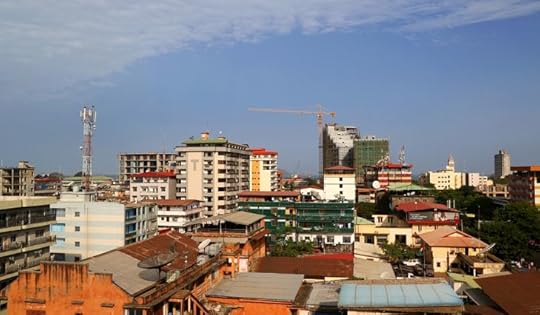
Photo of Conakry from worldatlas.com
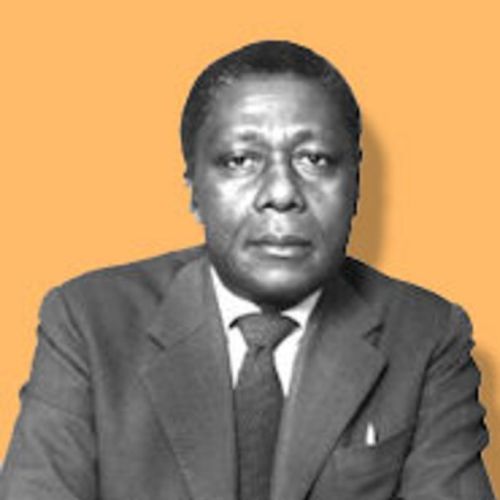
Photo of the author from bedetheque.com
The boy grows up relatively well off in his village because his father is a blacksmith and goldsmith. We learn about traditional customs endangered by modernization. The boy is taught, for example, that a snake that lives in a hole in the wall of his father’s workshop represents his ancestors. When a woman comes to have a gold brooch made from gold dust she has panned from the river, she brings along a man who plays a harp and sings the praises of the smith before they negotiate the deal.
His father has apprentices who live in their house and the boy befriends some and learns from them. Meanwhile he is bullied, even terrorized, by older boys at school.
He goes to a neighboring village to live with his grandmother in the summer and he compares rural and village life. The author emphasizes the dignity of rural people.
A major event of his life is circumcision, a long elaborate ritual with six weeks of recovery. Of course the boy is terrified.
The boy goes to Conakry, the big city and capital, to attend a technical school. He lives with an uncle's family and experiences his first love and the death of one of his best friends. He does so well at school that he receives a scholarship to go to college in Paris. Despite all his reassurances, his mother is devastated at what she knows will be his eventual loss to her.
The author (1928-1980) wrote a couple of other novels and he did return to West Africa in his late twenties to work in government positions in Guinea and some neighboring countries. However he eventually got into political trouble in his home country and was not able to return.
It's a very readable book with a good story and again, an autobiography, not a novel. It’s almost anthropological in its detail of customs, rituals, ceremonies and religious beliefs.
Photo of Conakry from worldatlas.com
Photo of the author from bedetheque.com

September 5, 2018
Eh bien ... je n'ai pas vraiment aimé ce livre. Cela a bien commencé, mais l'intrigue est devenue inintéressante. Deux chapitres entiers ont été consacrés aux circoncisions ... EWWW! Cependant, je dois dire que j'ai apprécié la fin. C'était un livre bien écrit, mais l'intrigue ne m'intéressait pas du tout.
Traduit en anglais:
Well ... I didn't really like this book. It began well, but the plot became uninteresting. Two entire chapters were devoted to circumcisions ... EWWW! However, I must say that I appreciated the ending. This was a well written novel, but the plot did not interest me at all.
Traduit en anglais:
Well ... I didn't really like this book. It began well, but the plot became uninteresting. Two entire chapters were devoted to circumcisions ... EWWW! However, I must say that I appreciated the ending. This was a well written novel, but the plot did not interest me at all.

November 25, 2021
I actually feel bad for this rating but this is HANDS DOWN the most boring book I've ever read in my entire life. And I've read The Old Man and the Sea.
220 pages. Took me four months to get through. Only upside is that reading it brought me closer to my goal of reading 12 books in French this year.
The Dark Child is Camara Laye's first novel, published in Paris in 1953. Considered "one of the founding texts of contemporary African literature", this largely autobiographical work received the 1954 Charles Veillon Prize and inspired a 1995 film of the same name, directed by Laurent Chevallier.
In The Dark Child we follow Laye, a young boy living with his parents in Kouroussa, a village in Upper Guinea. His father, a blacksmith and silversmith, teaches him the techniques of his art, but doesn't necessarily want him to take over the family's business; he wants better for his son and sees education as the only way to secure his future. In Kouroussa, Laye goes to a French school, where he consistently belongs to the best of his class.
During the book, Laye sometimes visits his grandmother who lives in Tindican, a neighboring village, where he – with growing age – discovers the difference between the peasantry and those folks who live in the big(ger) cities.
As an uninitiated teenager, Laye has to undergo the rites of circumcision at some point, which is an essentia tradition in the culture of his people. A large chunk of The Dark Child is focused on the rites of circumcision and what this transition from boy- to manhood means to the boys who undergo it.
The last part of the book is focused on Laye's studies in Conakry, Guinea's capital city, where he obtains a vocational certificate and is offered the opportunity to continue his studies in France. After allaying his mother's doubts, Laye accepts the offer and the book ends with him on a plane to Paris.
The Dark Child is a well-known African novel that is widely studied in European schools. This success can be explained by the youth of the hero (it's basically a coming of age tale) and by the fact that Camara Laye tried to make African culture as "accessible" as possible by describing a peaceful Africa, without evoking the violence of colonialism.
And whilst this might appeal to European class rooms, it wasn't for me. The book felt quite inauthentic as it avoided the subject of colonialism and French rule of Guinea altogether. I also didn't enjoy (even though I understand why it was "necessary" at the time) that Laye's whole message basically was: African people aren't (what the European call) "savages", they're just human beings like Europeans. UGH. It's just sad that African writers (especially back in the day) had no other choice but to write for European audiences and adhere to their gaze and expectations.
The whole book is just so basic and useless. I didn't learn anything new (bc everything is hella superficial with no care for actual detail), and the writing overall was lacking. Like I said, I never read a more boring book. Everything was soooooo descriptive. This whole book was a huge TELL, not show. There was no introspective, nor a reason for the plot to move forward ... it was all so senseless??? None of the characters felt real because we didn't get to know them AT ALL. They were like cardboard copies. And I shit you not, nothing really happens in this book??? Laye really just wrote it to show Europeans that Africans are peaceful, with no care for an actual, interesting plot.
Laye's lack of political commitment in a period of anti-colonial struggle (I mean this book was written in the 50s after all – during a time when Memmi published fucking The Colonizer and the Colonized) earned him some criticism though, most famously from Cameroonian author Mongo Beti, who shared his grievances in a famous article published in "Présence africaine" in 1954. Other African writers, though, came to Laye's defense, stating that African writers should write as aesthetes, and not as sociologists or historians. [Oscar, is that you?]
But no matter which side you're on, there is no denying that The Dark Child is just overall lacking as a novel. I cannot imagine anyone of you enjoying it... therefore, funnily enough, it is the perfect book for a curriculum. Oh gosh, how I would've hated reading that book in school ... it would've fit right in with all the other trash books our teachers made us read bc they would be "oh so relatable" and "teach us so much" – whilst all they did in actuality was make me rage!
220 pages. Took me four months to get through. Only upside is that reading it brought me closer to my goal of reading 12 books in French this year.
The Dark Child is Camara Laye's first novel, published in Paris in 1953. Considered "one of the founding texts of contemporary African literature", this largely autobiographical work received the 1954 Charles Veillon Prize and inspired a 1995 film of the same name, directed by Laurent Chevallier.
In The Dark Child we follow Laye, a young boy living with his parents in Kouroussa, a village in Upper Guinea. His father, a blacksmith and silversmith, teaches him the techniques of his art, but doesn't necessarily want him to take over the family's business; he wants better for his son and sees education as the only way to secure his future. In Kouroussa, Laye goes to a French school, where he consistently belongs to the best of his class.
During the book, Laye sometimes visits his grandmother who lives in Tindican, a neighboring village, where he – with growing age – discovers the difference between the peasantry and those folks who live in the big(ger) cities.
As an uninitiated teenager, Laye has to undergo the rites of circumcision at some point, which is an essentia tradition in the culture of his people. A large chunk of The Dark Child is focused on the rites of circumcision and what this transition from boy- to manhood means to the boys who undergo it.
The last part of the book is focused on Laye's studies in Conakry, Guinea's capital city, where he obtains a vocational certificate and is offered the opportunity to continue his studies in France. After allaying his mother's doubts, Laye accepts the offer and the book ends with him on a plane to Paris.
The Dark Child is a well-known African novel that is widely studied in European schools. This success can be explained by the youth of the hero (it's basically a coming of age tale) and by the fact that Camara Laye tried to make African culture as "accessible" as possible by describing a peaceful Africa, without evoking the violence of colonialism.
And whilst this might appeal to European class rooms, it wasn't for me. The book felt quite inauthentic as it avoided the subject of colonialism and French rule of Guinea altogether. I also didn't enjoy (even though I understand why it was "necessary" at the time) that Laye's whole message basically was: African people aren't (what the European call) "savages", they're just human beings like Europeans. UGH. It's just sad that African writers (especially back in the day) had no other choice but to write for European audiences and adhere to their gaze and expectations.
The whole book is just so basic and useless. I didn't learn anything new (bc everything is hella superficial with no care for actual detail), and the writing overall was lacking. Like I said, I never read a more boring book. Everything was soooooo descriptive. This whole book was a huge TELL, not show. There was no introspective, nor a reason for the plot to move forward ... it was all so senseless??? None of the characters felt real because we didn't get to know them AT ALL. They were like cardboard copies. And I shit you not, nothing really happens in this book??? Laye really just wrote it to show Europeans that Africans are peaceful, with no care for an actual, interesting plot.
Laye's lack of political commitment in a period of anti-colonial struggle (I mean this book was written in the 50s after all – during a time when Memmi published fucking The Colonizer and the Colonized) earned him some criticism though, most famously from Cameroonian author Mongo Beti, who shared his grievances in a famous article published in "Présence africaine" in 1954. Other African writers, though, came to Laye's defense, stating that African writers should write as aesthetes, and not as sociologists or historians. [Oscar, is that you?]
But no matter which side you're on, there is no denying that The Dark Child is just overall lacking as a novel. I cannot imagine anyone of you enjoying it... therefore, funnily enough, it is the perfect book for a curriculum. Oh gosh, how I would've hated reading that book in school ... it would've fit right in with all the other trash books our teachers made us read bc they would be "oh so relatable" and "teach us so much" – whilst all they did in actuality was make me rage!

March 26, 2026
O Menino Negro é uma autobiografia que narra a infância do autor, Camara Laye, na Guiné Francesa, na África Ocidental.
O livro acompanha o seu crescimento numa aldeia, mostrando desde a sua vida familiar com o pai ferreiro e ourives, até as tradições e rituais locais, como a circuncisão, e a comparação entre a vida rural e urbana quando passa temporadas em Conacri e estuda numa escola técnica.
Com uma escrita clara e fluida o livro é muito fácil de ler, mesmo quando descreve costumes e cerimónias detalhadamente. Oferece uma visão rica da cultura africana e da dignidade das pessoas do campo, com episódios de amizade, primeiro amor e perdas marcantes.
A história nem sempre é envolvente, e em alguns momentos parece lenta e repetitiva, mas não deixa de ser um livro importante para conhecer a vida naquela parte de África.
100/198 – Guiné

O livro acompanha o seu crescimento numa aldeia, mostrando desde a sua vida familiar com o pai ferreiro e ourives, até as tradições e rituais locais, como a circuncisão, e a comparação entre a vida rural e urbana quando passa temporadas em Conacri e estuda numa escola técnica.
Com uma escrita clara e fluida o livro é muito fácil de ler, mesmo quando descreve costumes e cerimónias detalhadamente. Oferece uma visão rica da cultura africana e da dignidade das pessoas do campo, com episódios de amizade, primeiro amor e perdas marcantes.
A história nem sempre é envolvente, e em alguns momentos parece lenta e repetitiva, mas não deixa de ser um livro importante para conhecer a vida naquela parte de África.
100/198 – Guiné

April 29, 2021
A coming-of-age memoir of a young man in Guinea, first published in 1954 when the author was studying in France, his departure for which is the culmination of the narrative. Young Laye grows up the eldest son of a blacksmith, sleeping in his mother’s hut in the town of Kouroussa and visiting his relatives in the country, where he helps gather the harvest. He writes about his experiences in school, relationships with his family, the interwoven animism and Islam that support life in the community, and key moments in his development, including a night of ceremony for uncircumcised boys and, eventually, his circumcision (rather harrowing, though the casual reference to a parallel excision ceremony for girls was more so).
There’s no explicit dealing with the colonial context - it’s about a boy growing up - but it still feels very much of its time, in the revolution of the colonial periphery around the metropole, the casual and uncomfortable use of ‘White Man’ as a flattering descriptor, and the firm insistence of the author on the dignity of those he grew up around. I read online that there is now some question as to whether he wrote the book himself, but I don’t know what sparked that discussion, and would like to learn more. In any case, I enjoyed it and liked learning more about a place and time I knew little about. 3.5.
There’s no explicit dealing with the colonial context - it’s about a boy growing up - but it still feels very much of its time, in the revolution of the colonial periphery around the metropole, the casual and uncomfortable use of ‘White Man’ as a flattering descriptor, and the firm insistence of the author on the dignity of those he grew up around. I read online that there is now some question as to whether he wrote the book himself, but I don’t know what sparked that discussion, and would like to learn more. In any case, I enjoyed it and liked learning more about a place and time I knew little about. 3.5.

August 1, 2021
A moving autobiographical account. Camara Laye wrote it in 1954 while studying in France. It is a child's view of his world which gradually becomes larger as he grows. He wants to stay where he is but knows his education will take him to a different land. Beautifully written.

May 29, 2024
Una storia di formazione di un ragazzino nero dell'Alta Guinea che segue un percorso di crescita tra superstizione, amicizia, affetti familiari, riti di iniziazione, ma anche stagionali, feste e studio. Dalla città in cui è nato alla capitale Conakry, facendosi sempre onore con il suo impegno nello studio e grazie al suo buon carattere che lo porta a ricevere l'affetto di molti.
E' un memoir molto sentimentale, non nel senso di sdolcinato, ma nel senso che è ricco di sentimenti, prevalentemente (forse quasi troppo) di buoni sentimenti e di amore. Scritto in maniera semplice, riesce tuttavia a trasmettere al lettore tutti i sentimenti positivi di cui è portatore e anche questo non è semplice.
Ai tempi fu duramente criticato da altri scrittori di origine africana perché non denunciava le atrocità del colonialismo e anzi mostrava un mondo troppo roseo e poco autentico. A distanza di anni possiamo dire che si tratta di un ottimo libro (benché non di denuncia), che fa piacere leggere anche ai giorni nostri.
E' un memoir molto sentimentale, non nel senso di sdolcinato, ma nel senso che è ricco di sentimenti, prevalentemente (forse quasi troppo) di buoni sentimenti e di amore. Scritto in maniera semplice, riesce tuttavia a trasmettere al lettore tutti i sentimenti positivi di cui è portatore e anche questo non è semplice.
Ai tempi fu duramente criticato da altri scrittori di origine africana perché non denunciava le atrocità del colonialismo e anzi mostrava un mondo troppo roseo e poco autentico. A distanza di anni possiamo dire che si tratta di un ottimo libro (benché non di denuncia), che fa piacere leggere anche ai giorni nostri.

November 2, 2010
This is a fairly short and simple autobiographical account of a boy growing up in Guinea in the 1930s and 40s. Camara Laye wrote it in 1954 while studying in France, and you can feel the nostalgia for his homeland. Although the writing style is quite understated, the emotion is communicated quite effectively, and it’s very moving in places.
As the title suggests, the book only deals with his childhood, and it is faithful to a child’s outlook on the world. At the start, his entire world is the veranda around his father’s hut. Then it gradually expands to the rest of the concession, then to school, the town of Kourassa, then the wider country of Guinea when he goes off to study in the capital Conakry. Finally the link with childhood is severed altogether as he gets on a plane to France.
The mixture of pain and excitement at each stage of growing up is beautifully rendered. He wants to be part of his family, to follow his father as a blacksmith or his uncle as a farmer, but always knows that his success in school is moving him further away from that. He is being marked out for a different future, his family are sacrificing to give him something better, and he wants that, but also wants to stay where he is. His parents, too, are caught in this conflict of wanting him to succeed but knowing that his success means his departure from their lives.
Quite a bit of time is spent describing the circumcision rite, which may be of anthropological interest to some, but was for me more interesting as a symbol of the other changes he goes through in the book, the pain and fear at something new, the loss of the old, but also the anticipation of being a man, the pride he feels when he is given his own hut and his own grown-up clothes.
My copy is from 1969, and made me realise a couple of things. First, the introduction emphasises again and again the “dignity” of the protagonist and his family, as if it’s some amazing discovery that Africans can have dignity. Some people of course would still hold similar views, but I’m glad that for most of us today the value of a book like this is no longer in the radical discovery that African people are actually human beings. The second thing I realised is that I need to start buying hardbacks – this paperback literally crumbled in my hands as I read it. Does anyone else have very old paperbacks (60s or earlier)? Do they last?
Anyway, I enjoyed this book as an insight into a life at a moment of great change, starting in a very traditional setting and moving very quickly into different worlds. A lot of the political context is absent – French colonialism, for example, is only a shadowy presence in the book – but I don’t see this as a fault. This is a childhood memoir, and does no more or less than you’d expect: it gives a faithful depiction of the author’s early years. I found it interesting and quite moving.
As the title suggests, the book only deals with his childhood, and it is faithful to a child’s outlook on the world. At the start, his entire world is the veranda around his father’s hut. Then it gradually expands to the rest of the concession, then to school, the town of Kourassa, then the wider country of Guinea when he goes off to study in the capital Conakry. Finally the link with childhood is severed altogether as he gets on a plane to France.
The mixture of pain and excitement at each stage of growing up is beautifully rendered. He wants to be part of his family, to follow his father as a blacksmith or his uncle as a farmer, but always knows that his success in school is moving him further away from that. He is being marked out for a different future, his family are sacrificing to give him something better, and he wants that, but also wants to stay where he is. His parents, too, are caught in this conflict of wanting him to succeed but knowing that his success means his departure from their lives.
Quite a bit of time is spent describing the circumcision rite, which may be of anthropological interest to some, but was for me more interesting as a symbol of the other changes he goes through in the book, the pain and fear at something new, the loss of the old, but also the anticipation of being a man, the pride he feels when he is given his own hut and his own grown-up clothes.
My copy is from 1969, and made me realise a couple of things. First, the introduction emphasises again and again the “dignity” of the protagonist and his family, as if it’s some amazing discovery that Africans can have dignity. Some people of course would still hold similar views, but I’m glad that for most of us today the value of a book like this is no longer in the radical discovery that African people are actually human beings. The second thing I realised is that I need to start buying hardbacks – this paperback literally crumbled in my hands as I read it. Does anyone else have very old paperbacks (60s or earlier)? Do they last?
Anyway, I enjoyed this book as an insight into a life at a moment of great change, starting in a very traditional setting and moving very quickly into different worlds. A lot of the political context is absent – French colonialism, for example, is only a shadowy presence in the book – but I don’t see this as a fault. This is a childhood memoir, and does no more or less than you’d expect: it gives a faithful depiction of the author’s early years. I found it interesting and quite moving.

June 9, 2022
does it really count as finishing a book if I only read four chapters... #whatevs i think i would have liked it if i actually read it
October 8, 2024
A wonderful autobiography that really bought a corner of Africa (Guinea) to life from a village to town, interior to coast. It’s a magical evocation.

Read
June 20, 2022I tried to read this book on my own outside of class. I even tried to listen to the audio book at x2 speed. I’m bored so since we finished it in class I’m just gonna say I finished it.

January 4, 2023
I found this fascinating and very enjoyable. The introduction speaks of the “tone of courteous modesty” – I agree. There is an immense dignity about it all, and it is a very absorbing insight into a completely different culture. It may be an idealised picture, but it is nevertheless a very attractive one. I was particularly interested by the descriptions of some of the ceremonies, such as circumcision, which although ostensibly Muslim seemed to be very pagan, with only a thin veneer of Islam.
It’s true that not a great deal happens. There is only one moment of pathos: (slight spoiler) and that is the death of the narrator’s friend. However, although this is sad, he had been introduced too briefly for the reader to be heavily invested in him.
I can understand why some readers feel bored by this, but as a charming coming of age tale set in a different time and place, I found it delightful.
It’s true that not a great deal happens. There is only one moment of pathos: (slight spoiler) and that is the death of the narrator’s friend. However, although this is sad, he had been introduced too briefly for the reader to be heavily invested in him.
I can understand why some readers feel bored by this, but as a charming coming of age tale set in a different time and place, I found it delightful.

Read
June 20, 2022didn't actually pay attention while we read this. i personally found the writing style to make the pacing feel sluggish. this book was also about a boy's coming of age and had a lot of deep themes but i'm a mood reader so this was not it.
no rating cuz i would give it a 2.5 rounded down but it prob deserves better
btw this is a lifesaver if ur "reading" for school
no rating cuz i would give it a 2.5 rounded down but it prob deserves better
btw this is a lifesaver if ur "reading" for school

February 12, 2014
Not much happens in this gentle, sentimental little book, but it’s a pleasant read all the same. There seems to be some disagreement about whether The Dark Child is a memoir or an autobiographical novel; my library shelves it as nonfiction, though given the abundant dialogue, the author clearly took some creative license.
Either way, it’s a nicely-written coming-of-age story of a boy from in a traditional village in Guinea in the 1930s and 40s. There are no atrocities, no violence (except from bullies at school), no political themes: you would not know from Laye’s writing that Guinea was under French rule at the time, gaining its independence only after this book’s publication in the 1950s. Other characters drift in and out of the story, but more than anything it’s the story of the author’s relationship with his own culture. In the first chapter, his mother introduces him to a snake that visits his father in his workshop – “the guiding spirit of our race,” the parents explain. No one sees any conflict between their superstitions, and his mother’s mysterious powers, and their Muslim beliefs. Later chapters are spent on harvest and coming-of-age rituals. Only toward the end does Laye leave the village to study. It’s a nostalgic story, developing at a graceful, measured pace, with perhaps a bit of stereotyping for the benefit of foreign readers, though at the time apparently any portrayal of life in Africa as calm and cheerful was groundbreaking. For that matter, it’s hardly common now.
At any rate, I’m not falling over myself to recommend this, but I enjoyed it and consider it worth reading. A solid 3.5 stars.
Either way, it’s a nicely-written coming-of-age story of a boy from in a traditional village in Guinea in the 1930s and 40s. There are no atrocities, no violence (except from bullies at school), no political themes: you would not know from Laye’s writing that Guinea was under French rule at the time, gaining its independence only after this book’s publication in the 1950s. Other characters drift in and out of the story, but more than anything it’s the story of the author’s relationship with his own culture. In the first chapter, his mother introduces him to a snake that visits his father in his workshop – “the guiding spirit of our race,” the parents explain. No one sees any conflict between their superstitions, and his mother’s mysterious powers, and their Muslim beliefs. Later chapters are spent on harvest and coming-of-age rituals. Only toward the end does Laye leave the village to study. It’s a nostalgic story, developing at a graceful, measured pace, with perhaps a bit of stereotyping for the benefit of foreign readers, though at the time apparently any portrayal of life in Africa as calm and cheerful was groundbreaking. For that matter, it’s hardly common now.
At any rate, I’m not falling over myself to recommend this, but I enjoyed it and consider it worth reading. A solid 3.5 stars.
July 20, 2024
Immense

November 12, 2021
3.5 stars. An interesting autobiography/memoir in which Camara Laye narrates his years growing up in pre-independence Guinea. I enjoyed the fluid writing, Laye's clear affection for his parents and learning about aspects of Guinean culture (or more specifically Malinke culture). But it remained a bit too much at surface level and I never felt I got a real feeling for who Laye is as a person. It also felt like it was overtly speaking to a white/Western audience; which is, of course, not surprising since the book was first published in 1953 but as a contemporary reader it is a bit jarring (especially those few times where Laye seems to feel he needs to apologise for certain belief systems). But I can see why it is considered an African classic and am glad that I finally read it.

May 10, 2021
3.5 stars. An interesting, easy to read, coming of age autobiography about the author growing up in a village in French Guinea in the 1940s. It is a short story about living with sacred traditions and the authors academic success taking him to distant cities.
The author’s father was a blacksmith and a goldsmith. The young boys of the village are circumcised during an event celebrating their becoming men.
This book was first published in 1953.
The author’s father was a blacksmith and a goldsmith. The young boys of the village are circumcised during an event celebrating their becoming men.
This book was first published in 1953.

April 26, 2016
First book I've read entirely in French, which I'm pretty proud of. It was an easy enough read for someone with 3-4 years of language experience.

November 10, 2019
Jó, hogy van ez a regény – nagyon jól mutat egy guineai szerző egy Afrika-kihíváshoz. Ez a szöveg engem halványan emlékeztet a kortárs magyar gyerekszemszög-regényekre (a „tyúkszaros gyermekkorom”-regények), amiket például Háy, Borbély vagy (időnként) Grecsó neve fémjelez, bár van némi különbség. Az egyik (a felszínesebb), hogy itt a lurkót nem a kendermagos kakas kergeti körbe az udvaron, hanem a mérgeskígyó. A másik, hogy amíg a magyar verzióban erősen (vagy néha: fölösen) hangsúlyozva van az ifjúkor megalázó, ha úgy tetszik: démoni oldala (optimális esetben megfelelő arányban vegyítve a tündéri aspektusokkal), addig Camara mintha ellopná a dolgok súlyát – valahogy nem érzem, hogy tétje, ereje lenne ennek a szövegnek. Benne van minden ától cettig, narancsfa az udvaron, apai bölcsességek, anyai szeretet, mágia és beavatás, csak egyik sem úgy, hogy meg legyek bűvölődve általuk. Biztos tévedek, de úgy éreztem magam, mintha bugyuta fehérembernek lennék nézve, akinek tárlatvezetést kell tartani guineai kultúrából. Ráadásul nem is egy múzeumban – ez csak egy szuvenírbolt.

October 25, 2023
Read around the world project - Guinea
The Dark Child is a piece of nonfiction from Camara Laye, who grew up in Guinea as part of the Malinke peoples. Laye wrote this in his twenties when studying in France (it was published in 1954), and the memoir reflects his experiences as a child and adolescent, navigating familial ties, friendships, and perhaps most memorable, the rituals of the Malinke people (including his circumcision as a teen). I found the prose descriptive and eloquent, but The Dark Child lacks an almost any sort of reflection - this is more a chronological regurgitation of events that occurred. For this reason, while the memoir was readable and enlightening, it likely won't stay with me long term.
The Dark Child is a piece of nonfiction from Camara Laye, who grew up in Guinea as part of the Malinke peoples. Laye wrote this in his twenties when studying in France (it was published in 1954), and the memoir reflects his experiences as a child and adolescent, navigating familial ties, friendships, and perhaps most memorable, the rituals of the Malinke people (including his circumcision as a teen). I found the prose descriptive and eloquent, but The Dark Child lacks an almost any sort of reflection - this is more a chronological regurgitation of events that occurred. For this reason, while the memoir was readable and enlightening, it likely won't stay with me long term.
April 1, 2026
2.5 stars- class read.

March 5, 2024
It took me a bit to finally understand the language and sentence structure in french, but in hindsight, it was a nice coming-of-age, sweet, cultural memoir and I liked it!

December 28, 2023
L’Enfant Noir retrace l’enfance de l’auteur, Laye Camara, un Malinké de Guinée. Laye nous y raconte avec nostalgie sa douce enfance, troublée en rien, dans son village natal. Une magnifique et enchanteresque immersion dans la campagne guinéenne du début du siècle passé, et ses rites et coutumes traditionnels. C’est bien écrit, touchant, et les personnages sont bienveillants. J’ai dévoré ce petit livre autobiographique!

November 18, 2011
I used several chapters of this book in my 4AP French classes. I have read the book many times. The book has an outlook which is unique. Camara Laye has a foot in two worlds. We see him as a boy in the villages of his father and grandmother. He opens a window for us into a world where spirits reside in every living thing and where a snake can speak and share knowledge with the leader of a clan.
He also shows us his introduction to European science-based culture. And even though the two worlds seem to be mutually exclusive, he does not invalidate one at the expense of the other.
I found it to be thought-provoking. The book allows the reader to question almost all of the givens in the knowledge bank he or she has acquired from Western civilization.
Those who read the book carefully can never fully trust their belief in the inferiority of an animistic culture to their own.
In one memorable chapter, Laye reminds us that politeness and good manners are never more important than in a small village. He shows us that the small group of people in his grandmother's village who knew that they would always have to live and get along with each other developed a code of behavior that provided everyone with respect and dignity.
I have only read this book in French. I have no idea if the English translation comes close to capturing the essence of the book.
He also shows us his introduction to European science-based culture. And even though the two worlds seem to be mutually exclusive, he does not invalidate one at the expense of the other.
I found it to be thought-provoking. The book allows the reader to question almost all of the givens in the knowledge bank he or she has acquired from Western civilization.
Those who read the book carefully can never fully trust their belief in the inferiority of an animistic culture to their own.
In one memorable chapter, Laye reminds us that politeness and good manners are never more important than in a small village. He shows us that the small group of people in his grandmother's village who knew that they would always have to live and get along with each other developed a code of behavior that provided everyone with respect and dignity.
I have only read this book in French. I have no idea if the English translation comes close to capturing the essence of the book.

August 24, 2024
Je me suis ennuyée tout le long de ma lecture mais c’était intéressant de lire l’enfance d’un guinéen ayant reçu une éducation traditionnelle. Il y a des passages qui m’ont paru invraisemblables et me dire que ces événements ont peut-être été réels me fascine. Je me demande si le fameux serpent par exemple était vraiment "le génie" de son père.
La différence de traitement que sa mère faisait avec ses amis du sexe féminin et masculin m’a beaucoup énervé 😠
P.S: Mais sinon à ma mère est l’une des plus belles dédicaces que j’aie lu 🥹
La différence de traitement que sa mère faisait avec ses amis du sexe féminin et masculin m’a beaucoup énervé 😠
P.S: Mais sinon à ma mère est l’une des plus belles dédicaces que j’aie lu 🥹

October 18, 2021
У своїх мемуарах Камара Лай згадує дитинство. Колись цілим світом для нього був лише його дім і майстерня батька-золотаря. Щоб золотий виріб вдався найкраще, батько пестив справжню чорну змійку, яка уособлювала їхніх предків, читав закляття, а замовники приводили співців епосу.
Поступово світ малого розширився: він їздив у гості до родичів із села, пішов до школи, потім до технікуму. Насамкінець його покликали продовжити навчання в метрополії – у Франції, що, мабуть, символізує відрив від традиційного ладу і прийняття західних цінностей. Або просто дорослішання і відрив від батьків. Звісно, автор написав книгу ще молодим і не міг знати, що згодом повернеться на батьківщину, щоб розбудовувати новостворену Гвінею та сусідні країни.
В цьому творі цікаво те, що радянський переклад 1991 року передрукували в 2020 році.
Поступово світ малого розширився: він їздив у гості до родичів із села, пішов до школи, потім до технікуму. Насамкінець його покликали продовжити навчання в метрополії – у Франції, що, мабуть, символізує відрив від традиційного ладу і прийняття західних цінностей. Або просто дорослішання і відрив від батьків. Звісно, автор написав книгу ще молодим і не міг знати, що згодом повернеться на батьківщину, щоб розбудовувати новостворену Гвінею та сусідні країни.
В цьому творі цікаво те, що радянський переклад 1991 року передрукували в 2020 році.

December 15, 2013
This is a wonderful little book. Why it is on the 1001 books to read list is a mystery to me - I thought that was meant to be a list of novels but this is clearly a childhood memoir.
The storytelling is unapologetically sentimental and extremely touching. It is refreshing to read an account of an African childhood not defined by war, the slave trade, famine, or other atrocities. This is a story of family love, deeply entrenched culture and custom, and the pull of a shrinking world in the early / mid 20th century. It's beautifully told and my only complaint is that it isn't longer and more detailed - there are a number of unanswered questions and dynamics here.
The storytelling is unapologetically sentimental and extremely touching. It is refreshing to read an account of an African childhood not defined by war, the slave trade, famine, or other atrocities. This is a story of family love, deeply entrenched culture and custom, and the pull of a shrinking world in the early / mid 20th century. It's beautifully told and my only complaint is that it isn't longer and more detailed - there are a number of unanswered questions and dynamics here.

January 8, 2012
This book, which I read in one sitting, will always be close to my heart. I identified so much with Camara Laye because of my own firsthand experience of leaving my childhood home post-Katrina, during the time of the New Orleans diaspora. His detailed, slice of life account of the enchanting lives of Muslims in the village of Kouroussa(Guinea--French Africa) was very moving. I can't wait to discuss it in my "Literature of the African Diaspora" class!

December 24, 2015
This memoir is an enjoyable read that is a picturesque coming of age story set in Africa. It's simply told without artifice or tremendous elaboration. We follow Laye's story as he is raised by his loving parents, attends primary school, falls for his first love, and finally becomes a man through a ritual circumcision. Unfortunately, the book ends on a bittersweet note and left me wanting more. Nicely rendered, but not likely to be memorable.

February 14, 2016
Fuck this fucking shit bruh
Displaying 1 - 30 of 267 reviews