Jump to ratings and reviews
Rate this book

A orillas del mar

Rate this book
Sexta novela de Abdulrazak Gurnah, Premio Nobel de Literatura 2021, A orillas del mar fue seleccionada para los prestigiosos premios Booker y Los Angeles Times Book Prize y continúa siendo uno de los relatos más conmovedores que se han escrito sobre los efectos de la colonización europea; la experiencia del exilio y el sentimiento de culpa que ésta acostumbra a llevar aparejada.

Huyendo de la vorágine en que se halla sumido su país de origen; mítica tierra de perfumes y especias acunada por los vientos monzones; Saleh Omar; un antiguo comerciante de sesenta y cinco años; aterriza en el aeropuerto de Gatwick con un pasaporte falso; un cofrecito de caoba con incienso y poco más. Siguiendo el consejo de quien le ha vendido el billete de avión; y a pesar de haberse educado en una escuela inglesa; Saleh finge no saber el idioma; así que; para comunicarse con él; los servicios sociales recurren a Latif Mahmud; un poeta de la misma nacionalidad; profesor y exiliado que reside apaciblemente en un apartamento de Londres. Cuando los dos hombres se e ncuentran en una pequeña ciudad a orillas del mar; empieza a desenmarañarse una larga historia de amores y traiciones; seducciones y desengaños; desplazamientos y litigios iniciada mucho tiempo atrás.

Gracias a la seductora cadencia de su prosa; a su ironía mordaz y la magistral combinación del punto de vista de los dos protagonistas; Abdulrazak Gurnah nos ofrece un cautivador mosaico de culturas milenarias -la india; la árabe; la persa y la africana-; al tiempo que nos sumerge en los abismos de una de las vivencias más traumáticas y desoladoras.

348 pages, Paperback

First published January 1, 2001

563 people are currently reading
12279 people want to read

About the author

Abdulrazak Gurnah

30 books2,142 followers
Abdulrazak Gurnah was born in 1948 in Zanzibar and lives in England, where he teaches at the University of Kent. The most famous of his novels are Paradise, shortlisted for both the Booker and the Whitbread Prize; By the Sea, longlisted for the Booker Prize and shortlisted for the Los Angeles Times Book Prize; and Desertion, shortlisted for the Commonwealth Prize. He was awarded the Nobel Prize in Literature in 2021 "for his uncompromising and compassionate penetration of the effects of colonialism and the fate of the refugee in the gulf between cultures and continents".

Ratings & Reviews

What do you think?
Rate this book

Friends & Following

Create a free account to discover what your friends think of this book!

Community Reviews

5 stars
1,392 (25%)
4 stars
2,381 (44%)
3 stars
1,306 (24%)
2 stars
241 (4%)
1 star
50 (<1%)
Displaying 1 - 30 of 622 reviews
Profile Image for Lisa.
1,108 reviews3,290 followers
October 26, 2021
Sometimes the Nobel Prize in Literature has the nice little effect of reminding you of a few of the authors you read and cherished a long time ago!

My bent and torn copy of By The Sea is shining in its old light, regardless of its newfound celebrity.

Gurnah is an author to be read in schools, but not because he was awarded the Nobel Prize in Literature today.

Only BECAUSE he gives the most vulnerable people a loud and clear voice!
Profile Image for Gumble's Yard - Golden Reviewer.
2,189 reviews1,794 followers
October 24, 2021
Yes but then you took my father’s name. Doesn’t that make us related? And we are in a strange land. That would more or less naturally make us related, or so people tell me when they ring to ask me for a favour. You still haven’t told me about that, why you took his name. It’s all history, anyway. None of it matters, really. I’m not saying that history does not matter, knowing about what happened so we understand what we are all about, and how we came to be what we are, and what stories we tell about it all. I mean I don’t want recriminations, all this family business, all this muttering that stretches back all the time ……… Have you noticed the incredible consequence of family squabbles in the history of Islamic societies.


The 6th novel by the 2021 Nobel Prize Literature winner

From the Nobel Citation

In Gurnah’s treatment of the refugee experience, focus is on identity and self-image, apparent not least in Admiring Silence (1996) and By the Sea (2001). In both these first-person novels silence is presented as the refugee’s strategy to shield his identity from racism and prejudice, but also as a means of avoiding a collision between past and present, producing disappointment and disastrous self-deception.

In By the Sea, another drama of disappointment and self-deception ensues. Saleh, the narrator of the first part, is an old Muslim from Zanzibar applying for asylum in England with a visa forged in the name of a bitter enemy. When he meets the enemy’s son, Latif, the narrator of the book’s second part, it is only because Latif has coincidentally been delegated to help Saleh adjust to his new home country. In their impassioned quarrels, Saleh’s suppressed past in Zanzibar rears up within him. But where Saleh despite all tries to remember, Latif does everything to forget. It creates a peculiar tension in the novel, where the choice of two narrators dissolves the fiction’s plotted path and direction, as well as the narrators’ authority and self-perception.


The novel was longlisted for the Booker Prize in 2001 and I first read this book in 2005, before revisiting in 2021 after the Nobel award.

The book starts with a melancholy air – the first party narrator (who we later find is called Saleh) is living in England at the age of around 65, in either (I think) 1995 or 1996 in a small, unnamed, town by the sea, having arrived from Zanzibar several months earlier a Gatwick Airport where he claimed asylum (in full knowledge that the British government had decided to allow asylum to anyone from the Islands – and possibly wider Tanzania – who claimed their life was in danger).

The narrator has been advised by those who helped his trip that he should stay largely silent and pretend not to speak English, and is travelling under what we also know is a false name – Rajab Shaaban (“not my real name, but a name I borrowed for the occasion of the life saving trip. It belonged to someone I knew for many years”) with his only real possession a mahogany casket filled with expensive incense.

The not speaking English is important to Gurnah’s writing as he himself of course famously writes his anti-colonial tales in the colonial language – but one that he says was invented by the British but now available to the world – and, as himself a (recently retired) Professor Of English and Post Colonial Literature he enjoys in his novels having characters from Zanzibar more familiar with the English literary canon than those they meet in England – here the narrator when finally admitting his deception and asked why he does not speak English says he “preferred not to” – a deliberate allusion to Herman Melville’s short story “Bartelby the Scrivener” which plays an important role in the novel.

The casket is confiscated by the immigration authorities, ostensibly for testing, but there is a clear symbolic link with the colonial powers taking for themselves the most beautiful artefacts of their former possessions, a recurrent theme in Gurnah’s writing and also as we find integral to the narrator’s occupation in his earlier life (as he had been an antique dealer whose main business was selling local artefacts to the colonial authorities or cruise ship passengers).

The casket acts in a second symbolic way – in what a contemporary Guardian review called “a pandora’s box of memories” – opening it starts the first in a revelatory series of stories (about the past – storytelling about the past in Zanzibar by characters now in exile in England being one of Gurnah’s key themes.

In this case the stories are fully bound up with a second key character in the novel – Latif, a Literary Professor himself, who is contacted by the immigration authorities when they think that the a translator is needed for the asylum seeker. When he is told that this is no longer needed – he both recognises the “Bartelby” reference and the name that the asylum seeker is using – as it is the name of his own Father (who he has not seen since fleeing to the UK from the GDR – where he was on a Dentistry training course from Zanzibar) some thirty years earlier. He immediately recognises that the only person who would use that name is someone he regards as a family enemy – Saleh Omar.

What unfolds from there is a series of inter-related stories.

It starts with Saleh’s story of how he came upon the incense – from a visiting Omani entrepreneur Hussein (note that one of the book’s great strengths is how it conveys the importance to the Islands of the trade winds that permitted triangular trade between Oman, Zanzibar and India – making Zanzibar the gateway to the East African Coast – but how Hussein was tied up with Latif’s family (with who he lodged) both via a seeming infatuation with Latif’s older brother Hassan and a dubious series of financial transactions with his drunkard Father Rajab Shaaban. Those transactions then, via further dubious machinations on Hussein’s behalf, later enmesh Saleh and his affairs with those of Rajab Shaaban with who he already has some inheritance complications and bad blood.

We then hear both of how Latif came to England and of how Latif has seen the same historical incidents and what he sees as Saleh’s double betrayal of his family, before hearing again from Saleh on what he believes to be the true story showing why in fact it is he who feels grievously wronged by Latif’s parents to an extent which goes way beyond inheritance or financial disputes. And even then some of Latif’s memories cast doubts a little on both versions.

There are a couple of related issues with the stories and the novel itself I think.

The stories are told indirectly – the effect is that the reader can feel strangely distanced from them with a lack of real immersion and there can be too much of a feel of “tell not show” which lessens the impact of the stories themselves (albeit some of the details – particularly of what happens to Saleh later in Zanzibar – are themselves hugely shocking).

And the stories themselves can be both complex and digressive: the stories of the different property disputes and family relations between the two families are difficult to really appreciate; while for example when Latif is telling of his trip to the GDR we learn first of a rather bizarre encounter with a penpal followed by the penpal’s mother’s family and their time in Kenya (none of which detail is at best more than tangential/incidental to the main narrative). In my original review I captured this by saying that the effect is somewhat like going to someone else's family, school or work reunion and that the writing style is very elegant however but the difficult to follow (or almost care about) detail makes it a less engrossing read than it otherwise would be.

But again a very interesting addition to the author’s works and one which in contrast to Bartleby sets out the importance of empathy and of understanding the refugee’s need for silence and the importance of stories no matter how hard they may be.

I have never thought of Bartelby like that [someone dangerous, someone capable of small susatined cruelties on himself and others weaker than himself] although he was cruel to himself, that was true. “Perhaps in these times you have come to see people who choose humility and withdrawal as duplicitous” I said “ To see them as damaged beyond redemption ……. Perhaps you have less tolerance for that desire which faith in a spirit’s ambition made heroic. So the kind of self-mortifying retreat Bartleby undertakes only has meaning as a dangerous unpredictability. Especially since this story does not allow us to know what has bought Bartleby to this condition, does not allow us to have sympathy for him … The story only gives us this man, who says nothing about himself or his past”
Profile Image for Boris.
509 reviews185 followers
May 18, 2023
Добре, че е Нобеловата награда, за да ни отвори очите за Гурна, когото иначе никога нямаше да забележим.

Прочетох “Край морето” за два дни. Първото ми впечатление е, че този роман е от Голямата литература, която ще се чете като класика и ще устои на времето.

Много приятна изненада - “Край морето” е пътуване в други светове, потапяне в чуждите брегове на Африканеца, в мислите на двама разказвача с характерни и различаващи се гласове, в послания, които пускат корени векове назад и се разлистват в модерната действителност.

Накратко: книга, която за малко светът да подмине. Благодаря на Нобеловия комитет, че промениха това.
Profile Image for Emiliya Bozhilova.
1,911 reviews381 followers
May 20, 2023
Homo homini lupus est. Край морето - това на Занзибар и това на Англия - двамата герои ще извървят отново и отново пътя от човека до вълка, и от вълка до човека.

По този път се търкаля най-напред дребнавичкото, банално, гърчещо се и скимтящо, привидно безобидничко и почти “невинно” битово зло. Клюкичките. Алчността за това, което не ти се полага. Завистта към по-умния и успелия. Злобата към слабия и поваления.

По пътя се срещат паметта с нейната подвеждаща избирателност, както и идентичността сред свои и сред чужди. Пътят прекосява колониализма, желязната завеса, диктатурата от варварски тип, където затворниците се разхождат върху натрошени стъкла просто за кеф на надзирателите си, та до емигрантския живот в бледия Албион с неговите различни фасетки.

Абдулразак Гурна е достатъчно силен, за да потопи всичко в меките последни лъчи на залеза, поне частица милост към героите си. Накрая, ако си още жив, какво остава освен малко мъдрост и доброта?

——
П. П. Чудесен превод! Тук таме несвършена коректорска работа, например след някои думи е оставена буквата q…или ориС вместо ориЗ.

******
🌊 “Звучеше, сякаш [британците] са ни преправили, и то по начин, който вече нямаше как да не приемем - толкова изчерпателен и убедителен беше разказът им за нас. Не мисля, че той бе разказан цинично, защото според мен му вярваха и те.”

🌊 “Преди картите светът е бил безграничен.”
Profile Image for Cheryl.
524 reviews844 followers
February 10, 2020
I recently read The Granta Book of the African Short Story, where the editor mentioned the overlooked influence Russian writers have over African writers. The prose and structural style of this novel made lucid that comment. Gurnah has written seven novels and I'm ashamed to say this is my first time reading his full-length work, even though I've read "Cages" a few times (I look forward to reading Admiring Silence soon).

There is a lot of sensory motion in this quietly paced novel of memory and regret. A man in his mid-sixties seeks asylum in the United Kingdom, after a life of turmoil with his neighbors in the Eastern region of Africa. Once a former furniture store owner in his homeland, he sold exquisite pieces to Europeans, lived comfortably, married the love of his life and they had a child. One day he meets a Persian dealer and what seems like an exciting business venture turns into a cataclysmic turn of events for him. This Persian dealer destroys a local family and leaves the country. The main character (who uses a fake name in the UK) is connected to the family destroyed and he faces the wrath of a corrupt government official who comes after him with vengeful force. With no one and nothing to live for in his home, the narrator flees and seeks asylum. His only request is that he live by the sea.

I wanted to sit alone in the dark and count the bones in my head.


The story is a rumination, the style retrospective, prose mellifluous. As a reader, one sits in a house by the sea as the main character speaks. There is melancholy that makes him empathetic, but only if the reader is willing to stick to the somewhat superfluous narrative, wherein front story is often evaded by elongated backstory. While in the UK, the main character encounters a son of the destroyed family; although the son has become a successful academic, he still has empty spaces that only the truth can fill. Both characters are forced to face the past together.

I needed to be shriven of the burden of events and stories which I have never been able to tell, and which by telling would fulfill the craving I feel to be listened to with understanding.

What's fascinating is how this quiet story also thrums with undercurrents. Once upon a time colonial trade maps transformed the horn of Africa, affecting small towns along the coastline with their markups. After those countries gained independence, traders abruptly left, leaving towns by the sea in disarray, no longer trading "ghee and gum, cloths and crudely hammered trinkets, livestock and salted fish, dates, tobacco, perfume, rosewater, incense..." Freedom comes at a cost: the death of activists and journalists, the effects of slavery, all highlight this. Post-colonial African countries dealt with the blows of freedom. This novel, in a subtle way, through symbols, manages to expound upon that narrative. The novel also reminds me of a Banville novel, as Gurnah captures memory and flawed characters in the way Banville does.
Profile Image for Cláudia Azevedo.
394 reviews218 followers
January 27, 2023
"Junto ao Mar" não é um livro fácil, mas vale muito a pena ler. Há uma espécie de encantamento sofrido que resulta desta história de um refugiado numa pequena cidade inglesa. Uma história que vai remetendo aos poucos para um triste ajuste de contas que dita a vida de duas famílias. No centro da contenda está uma casa e o que ela representa, um conflito encarniçado que vai custar muito caro a ambas as partes.
Adbulrazak Gurnah reflete, aqui, sobre a ambição e a vaidade, sobre os laços de sangue e os da amizade, sobre a injustiça e a desintegração dos valores morais e, acima de tudo, sobre dignidade e perdão. E fá-lo com uma grande sabedoria e elegância, não revelando tudo de uma vez, deixando que o leitor faça juízos para os desfazer a seguir, num exercício comovente.
Como extra, ainda nos dá a conhecer ou recorda, conforme os casos, uma época histórica, a do pós-colonialismo britânico naquela região, com todas as atrocidades cometidas.
Profile Image for Pia G..
437 reviews145 followers
March 28, 2025
salih ömer bir mülteci olarak ingiltere’ye geldiğinde, yanında sadece bir kutu tütsü vardır. o bir kutu tütsü geçmişin, anıların ve saklı sırların yükünü taşır. gürnah, salih’in hikâyesini anlatırken bir yandan geçmişe yolculuk yapmamıza izin verir, bir yandan da onun yalnızlığına tanık oluruz. bir okuyucu olarak salih'in dünyasına girmek, onun duygularını ve yaşadığı kültürel kopuşu anlamaya çalışmak etkileyiciydi.

kitabın ortalarına doğru latif'in dahil olmasıyla hikâye yeni bir perspektif kazanıyor. latif, salih ile farklı bir bağ kurarken iki adamın geçmişteki acıları üzerinden kurdukları sessiz ortaklık, kitabın en güçlü yerlerinden biri bana göre. aralarındaki o derin bağ, bazı yerlerde fazla sakin ilerlese de içtenliğiyle beni yakaladı.

yine de başlarda hissettiğim o heyecan, sanki sonlara doğru biraz azaldı. hikâyenin ritmi yavaşladı, yer yer kitaptan koptum. ancak bazı sahneleri ve cümleleri hâlâ zihnimde: özellikle salih ile latif arasındaki o bağ, çok şey anlatıyor..
Profile Image for Calzean.
2,770 reviews1 follower
August 5, 2017
There were parts of this book that were like listening to a maestro story teller, then there were parts of great mundane detail. Overall, a book that needs every word read.
Saleh Omar is a 65 year old from Zanzibar. He arrives in England and seeks asylum. The book is narrated by him and Latif Mahmud, a younger man who's father played an integral role in Omar's life.
Early in the book Omar tells of his hatred Imperialism, he is bitter about the changes it made to his country and in the mess it left when the English departed. These sections of the book did not become a theme but were one of the highlights to me.
The rest of the book tells of life in Zanzibar, the pettiness and mindless attempts at greed and duplicity in dealing with a person's estate after they had died.
Profile Image for Michelle.
1,555 reviews255 followers
January 23, 2024
This book is an atmosphere, a vibe. The crumbling streets of the UK v the crumbling society of Zanzibar.

We have two main characters, Saleh and Latif. Both from Zanzibar, both living in the UK, both with complicated histories.

Everything we see, we see directly from our main characters' minds, like a stream of consciousness in many ways. We only ever look backwards, in reminiscent.

This didn't grab me. It felt very drab, and I understand that's the vibe the author is going for here. I wasn't particularly engaged, and therefore, I don't have any strong feeling either way on this book. It was fine, OK.

Three stars.
Profile Image for Aslı Can.
774 reviews295 followers
October 13, 2024
Üf, bu kitabı nasıl anlatmalı bilmiyorum. Çok etkilendim ve çok sessizce gördü işini Abdulrazak Gurnah. Kusursuz bir cinayetti. Veya cinayet yoluyla hayata döndürme mi demeli?
Uzun zamandır zihnimde bu kadar katman katman açılan ve içimde baygın yatan edebiyat eleştirmenini uyandıran bir kitaba denk gelmemişim sanırım. Hakkında tez yazasım var, o derece...

Her şeyden önce bir göç hikayesi; yani anlatı bir göçle başlıyor. Sahte isimler, pasaportlar, havaalanları, güvenlik görevlileri ve göç şubesi...O sırada kesintisiz sessizliği, aptalı, cahili oynayan göçmenin, aşırı gürültülü ve bir o kadar keskin beyni.. Girişi, romanın en müthiş kısımlarından birisi bence. Elimden gelse de buraya bir sayfa alıntı bıraksam.

Edelman, bir Alman ismi miydi bu? Yoksa yahudi ismi mi ?Yoksa uydurma bir isim mi? Çiy'e, yahudiye, muskaya dönüşüp yürüse. Her neyse, Avrupa'nın sahibinin ismi bu, onun değerlerini bilen, bunlar için nesiller boyu bedel ödemiş birinin ismi. Ama zaten bütün dünya Avrupa'nın değerleri için bedel ödedi, hatta çoğu zaman ödeyip de tadını çıkarma fırsatı bulamadı. Beni de Avrupa'nın yanına alıp götürdüğü, o eşyalardan biri gibi düşün. Bu minvalde bir şey söylemek geçti aklımdan, ama söylemedim tabii. Ben bir sığınmacıydım, ...''

Sonra okudukça roman, hafıza üzerine, geçmiş üzerine, geride bırakıp kaçtıklarımız üzerine bir anlatıya dönüşüyor ve bence esas tılsımını, sessiz sessiz burada üflüyor üzerinize. Ben, okurken tam olarak neyin içine düştüğümü anlamadan okudum bir süre ama son sayfalara doğruu, zihnimde bir yerin pıt! diye açılıp, hava almaya başladığını hissettim.

Geçmişlerinden kaçıp geldikleri yerde, kaçtıkları geçmişleriyle karşılaşan iki insanın, birbirini sadece ve sadece geçmişle özgürleştirme hikayesi bu. Tam olarak bir iyileşme anlatısı.. Biri anlatarak acısından, diğeriyse dinleyerek öfkesinden özgürleşiyor.

''Anlat bana.'' dedi kaşlarını çatarak, üstüme yürümemek için kendini zor tutuyordu, benden bunu talep ediyordu. ''Pekala biliyorsun değil mi? Anlat bana?''

Okurken de ben, kendi küçük kişisel hikayemde beni hem acımdan hem öfkemden özgürleşmek için inanılmaz bir dürtü hissettim. Bitirip kapağını kapatınca birkaç dakika boşlupa bakıp, sonrasında uzun zamandır görmediğim bir arkadaşıma, ertelediğim bir mektubu yazıp yolladım. Öyle etkiledi bu roman beni.

Okuyun :')
Profile Image for Meltem Sağlam.
Author 1 book165 followers
November 7, 2021
Yazarın okuduğum ilk kitabı Sessizliğe Hayranlık’ı okurken aldığım tadı aldım. Yine bir göç hikayesi, fakat bu kez göç edilen ülkede değil, anavatanda yaşanan ve kahramanı ülkesini terk etmek zorunda bırakan baskı, zulüm ve insan ilişkileri, incelikle irdelenmiş. Sıcak ve akıcı bir anlatım ve merak uyandıran bir hikaye. Mazlum ve zalim her sayfada farklı görünümle karşımıza çıkıyor. Muhteşem anlatım, harika fikir, mükemmel kurgu.

Her iki kitabın kahramanını da çok sevdim.

Bu da ilk okuduğum kitabı Sessizliğe Hayranlık gibi, ayrılan zamanın karşılığını fazlasıyla veren bir kitap.
Profile Image for Claire.
811 reviews366 followers
June 29, 2025
By the Sea begins as a compelling narrative and mystery if a man who arrives at Gatwick airport from Zanzibar without a visa and refuses to speak English, until the crucial moment where he is about to be deported and he utters the words that will change his trajectory. Refugee. Asylum.

In trying to locate someone to translate for him, Latif is contacted and the two men realise they have a connection, a history that has perpetuated with major gaps often filled by those wishing them ill.

Their story began by the sea and will be retold by another, far away where few understand the nature of their experience of feuds and punishment, corruption and power, the petty rivalries over debts, possessions, and influences that drive a man to need yo flee for his life.

in three parts, the first two focus on each of these characters and their early life in Zanibar and something of their present while the third part is a kind of oral storytelling as the two meet and their intertwined story is retold from start to finish and perhaps something of a different connection may emerge, as they find themselves newly isolated in a place and around people uninterested in their journey.
Profile Image for Sve.
613 reviews189 followers
June 29, 2023
Със заплетените връзки между героите и начина на раказване ми напомни на 'Приказките от 1001 нощ.'
Profile Image for Ebru Çökmez.
264 reviews59 followers
February 3, 2022
Kitapçıda Gurnah’ın dört kitabı vardı. Arka kapaklarını okuyarak, Deniz Kenarında ve Son Hediye’yi aldım. Arka kapak yazılarını okuyarak kitap seçmek riskli. Yanıldığım çok oldu.

Deniz Kenarında’nın arka kapağında, iltica ettiği İngiltere’de “İngilizce bildiğini saklayarak görünmez olmayı seçen ve bir tür pasif direniş sergileyen Salih Ömer” in hikâyesi, ilk bakışta cezbetti beni. İyi ki almışım ve iyi ki Gurnah okumaya bu kitapla başlamışım. Roman, yazarın meselesini tam olarak ortaya seriyor ki bu sevdiğim birçok başka yazarın da temel ve çok anlatılmış meselelerinden. Göçmenlik, yabancı bir ülkede öteki olmak, sürgünlük…

Salih Ömer’le birlikte başkalarının da hikâyeleri var romanda. Farklı zihinlerde başkalaşmış anılar, nefret ve pişmanlıklarla doldurulmuş hafıza boşlukları, tek bir sahneyi farklı farklı anlattırıyor roman kişilerine. Çok fazla olay, bol karakter ve çetrefilli ilişkiler var. Yazarın anlatımı masalsı, Salman Rushdie gibi. Gurnah’ın farkı (en azından bu kitapta) “büyülü gerçekçilik”e takılmaması diyebilirim. Gurnah’ın kahramanları, çetrefilli ilişkilerini, toplumsal arka plana ironik bir şekilde serpiştirerek anlatıyor. Arka plan demişken İngiltere’nin Afrika’daki sömürgeciliğini ve İngilizler çekildikten sonraki karmaşayı kastediyorum.

Tüm kahramanlar birbirine uzun uzun hayat hikâyelerini anlatırken, günah çıkarırken, geçmişle hesaplaşırken yazarın sesini duyuyorsunuz. Salih Ömer uzun uzun kendi bakış açısıyla olayları anlatıyor. Latif Mahmut da öyle, Hüseyin de; ve hatta Latif’in mektup arkadaşının annesi Alman Elleke de. Bir an kafanız karışsa ya da elinizden kitabı bırakıp bir süre sonra tekrar alsanız, anlatanın kim olduğunu hatırlamak için bölüm başına dönmek zorunda kalıyorsunuz. Naçizane, okur olarak görüşüm; Gurnah gibi büyük bir yazarın anlatısında bu bir kusur değil, fırsat! Yazar her kahramanında aslında yüzyıllarca sömürülmüş büyük bir kıtanın, uzağa savrulmuş bir evladı olarak birden fazla yönden kendine bakıyor. Bunu Balzac, Kundera ya da Rushdie gibi olayların arasına bizzat kendi konuşmasını sokarak da yapabilirdi. Daha yetkin ya da acemi olmazdı.

Nobel Edebiyat Ödülünü iyi ki Gurnah almış bu yıl. Eminim ve umarım, zamanla Gurnah kitaplarının altı yorumlarla dolacak.
Profile Image for Gattalucy.
380 reviews160 followers
February 3, 2022
Un libro questo che ti si svela piano, con la sua ironia sul colonialismo, e sugli strascichi cha da questo sono derivati, in una costa orientale dell’Africa che potrebbe comunque essere la metafora di tutte le terre che l’hanno subito. E poi l’indipendenza, le rovine dei governi locali, violenti e corrotti. Terre da cui fuggire per avere altre vite, altre possibilità.
E nel mezzo le vite di due uomini, nemici in patria, entrambi fuggiti altrove, e ritrovatisi dopo le peripezie di ogni rifugiato. I ricordi di entrambi, come in una confessione, aiutano a ricostruire una memoria ormai sfrangiata dal tempo e dalla lontananza, e a ritrovare la pace.
Una bella lettura davvero. Mi sono solo persa dietro tutti i nomi arabo/Kiswahili dei personaggi numerosi delle rispettive famiglie. Ma è colpa mia: per i nomi sono negata anche per quelli italiani!
Profile Image for Lyudmila Spasova.
176 reviews57 followers
July 29, 2023
Very poetic and beautifully written but all the malice, backstabbing among relatives, members of huge families tied in many ways, made me feel really bad. There is something suffocating about the atmosphere of the book, some feeling that the world is a place of poisonous relationships.

The novel lacks strong female characters. The female protagonists are evil and small-minded creatures. I would love to have heard the voice of Aisha, how she would have justified the cruelty of her revenge.

I love the pace of the novel, but I find that at one point too many characters are introduced and they remain undeveloped. I would read some other books by this author though.
Profile Image for Ermocolle.
472 reviews44 followers
February 2, 2022
" A quale età si dovrebbe smettere di temere per la propria vita? O di voler vivere senza paura? Come faceva a sapere che la mia vita era meno in pericolo di quella dei giovani che lasciavano entrare? E perché era immorale volere una vita migliore e più sicura? Perché doveva trattarsi di avidità o di un gioco?".

Non mi sento di valutare se questo romanzo valga o meno il Nobel della letteratura che ha conseguito, mi limito ad esprimere il mio parere su un libro ben scritto e orchestrato con una storia a due voci che ti cattura lentamente fino a coinvolgerti pienamente.

Saleh Omar arriva a Londra come rifugiato politico. Ha sessantacinque anni, è stato un mercante di mobili, e la sua storia si intreccia ben presto con quella di un altro esule: Ismail, Latif Mahmoud, figlio del suo nemico in patria.

Vengono entrambi da Zanzibar, paradiso di grandi spiagge e acqua cristallina per i turisti che la visitano, ma terra di conflitti e discriminazioni per le varie etnie che la abitano.

Saleh e Latif raccontano entrambi la stessa storia, la loro storia, vicende che li accomunano e che li hanno portati entrambi lontano dalle loro radici e dalle loro certezze. Le loro voci colmano lacune, uno della versione dell'altro, attraversano rancori e rabbia fino ad arrivare al chiarimento, alla comprensione e alla pacificazione.

Gurnah conosce in prima persona la situazione che narra, perché è originario di Zanzibar, dove è rimasto fino a quando è arrivato in Inghilterra come rifugiato. Appartiene a una minoranza etnica araba, che è stata atrocemente perseguitata sin dal 1963 in Tanzania, da dove lui riuscì ad andar via, spostandosi con una cattedra universitaria prima in Nigeria e poi a Canterbury, dove ad oggi lavora e cerca di tenere alta l'attenzione per i diritti civili, per le minoranze, per i temi legati agli effetti sociali del post colonialismo.
Profile Image for Edita.
1,585 reviews591 followers
November 2, 2021
The moments slip through my fingers. Even as I recount them to myself, I can hear echoes of what I am suppressing, of something I've forgotten to remember, which then makes the telling so difficult when I don't wish it to be.
*
It made me feel happier to think of you living there by the sea, free and warm in bright sunlight, while we were here, apprehensive about small things. [...] And I supposed they got the idea that I lived free and warm by the sea from all those charming letters I used to write, as I too would never have imagined that where they lived was as it was. I would not have imagined them at all, did not even know they existed - just a voice, speaking smilingly out of that leopard-skin coat.
*
I feel worn out after all this time, after all these years of thinking about that time and that place.
And living here _with all the comings and goings, and the trooping of my life through hostilities and contempt and super­ciliousness. I feel worn out and raw, livid with sores. Do you know what I mean? You must know that feeling. I was thinking about that this week, how worn out I am after all these years of knowing and not knowing, of doing nothing about it and how it can't be helped.
Profile Image for Tyrone_Slothrop (ex-MB).
843 reviews113 followers
January 6, 2022
Zanzibar Memories (di amarezza e meschinità)

Sono convinto che la funzione giusta del premio Nobel, così arcinoto e annualmente frullato nell'enorme rumore di fondo dell' infotainment odierno, sia quello di far conoscere al grande pubblico (o almeno, al lettore quadratico medio) autori meritevoli e letterature sommerse dallo sconfinato mare dell'editoria contemporanea, piuttosto che stabilire un canone di qualità letteraria (per quello ci vogliono altre menti, altri tempi, altri metodi).
Quindi, ben contento del premio assegnato ad uno scrittore di Zanzibar, che mi ha dato l'occasione di allargare i miei limitati orizzonti alla letteratura dell'Africa - certo, Gurnah non passerà alla storia per uno stile rivoluzionario o per una grande innovazione nella creatività, però questa sua opera merita sicuramente una lettura attenta.
Soprattutto perchè il centro dell'opera è la memoria, concetto che, per noi europei, ricorda subito l'opera proustiana, mentre, in questo caso, assume caratteri meno nostalgici e dolci - il ricordo causa ancora dolori forti ai due rifugiati protagonisti del testo, sparge sale su ferite che si credevano (a torto?) cauterizzate.

e' un posto triste, il paese della memoria, un deposito buio con pavimenti marci e scale arruginite dove a volte si passa frugando fra cose abbandonate

Gurnah indovina il registro giusto per una narrazione sospesa tra affascinante affabulazione alla Sindbad e faticoso disvelamento di segreti dolorisi, anche se sorge il sospetto di un meccanismo narrativo costruito forse troppo in funzione del colpo di scena - il lento riempimento del buchi narrativi mantiene alta l'attenzione del lettore, ma rischia (a tratti) di scivolare nel giochino fine a se stesso. Molto buona, comunque, l'idea di dividere il libro affidandosi a due voci narranti diverse ed opposte (in tutti i sensi, come si capirà alla fine), riuscendo ad ottenere una rappresentazione potente e notevole della incredibile piccineria e meschinità degli uomini i quali, anche a Zanzibar, non sanno fare altro che procurarsi dolore per i motivi più stupidi quali soldi, case, orgoglio famigliare. Peccato, forse, che questa dicotomia diegetica non sia stata mantenuta nell'ultimo capitolo.

Significativa la citazione di Bartleby "Preferirei di no" che i due rifugiati dall'Africa cercano di usare una volta arrivati in Inghilterra, ottenendo solo sguardi interrogativi e sprezzanti - quella stessa citazione che finisce per avvicinarli al loro primo incontro (forse una stilettata un pò troppo sarcastica e facile contro l'ignoranza degli europei, ma ben giustificata).

La scrittura è piana, scorrevole e senza alcuna difficoltà - non mi sarebbe dispiaciuto qualche scorreria in qualche mondo più visionario e prerazionale (come nelle citazioni dei djinn o nei ricordi confusi dei protagonisti bambini), ma Gurnah mantiene una presa molto classica e convenzionale sul proprio materiale letterario.
Profile Image for Pedro.
825 reviews331 followers
June 16, 2022
Africano llega a Inglaterra y pide Refugio. Parece no entender inglés, por lo cual convocan a un experto para traducir. Y resulta que se conocen. Fin.

Este podría ser un resumen adecuado, aunque extremadamente simplificado de esta historia. Y una de las cosas que sabe hacer Gurnah, es escribir con gran precisión del lenguaje, para hacernos accesible un mundo, que nos suele ser ajeno y difícil de comprender. Un mundo complejo, de relaciones marcadas por la tradición islámica, sin los habituales estereotipos, con los conflictos y rencores entre familias, y las complejas relaciones familiares.

Una novela contada a dos voces, que en este caso comienza por el final, y vuelve en el tiempo para explicar el presente. Tal vez se podría haber ganado en interés y agilidad con un juego más complejo de los tiempos, como un mosaico; algunas partes resultan un poco tediosas y requieren gran atención para comprender, por cierta confusión entre los múltiples personajes.

Un muy buen libro, muy enriquecedor, que requiere ser leído con paciencia, siguiendo el ritmo parsimonioso del autor.
Profile Image for Consu Garcia.
193 reviews45 followers
September 24, 2022
Esta novela contada a dos voces que por diferentes motivos sus vidas están conectadas a traves de generaciones se encuentran en un país extranjero como refugiados y nos van contando dicha relación.
A ratos se me a hecho un tanto pesada porque me perdia en ese pasado de ambos.
Es una historia bien contada que refleja la vida y costumbres de un país que siempre a sido ocupado, aunque yo me hubiera centrado más en su vida como refugiados .
Profile Image for Karina  Padureanu.
121 reviews97 followers
December 9, 2024
Sunt țări a caror istorie ne este prea puțin sau deloc cunoscută dar, ca toate istoriile, te fac sa te revolți și sa te simți neputincios in a întelege cum a fost posibil.

"Pe țărm" este o călătorie în regiunea estului Africii, cu precădere în Zanzibar. De aici emigrează, la diferență mare de ani, doi bărbați ale caror povești de viață se întrepătrund, iar felul in care Gurnah le prezinta este minunat, te face sa citesti cu nerabdarea de a afla care le este taina.
Unul dintre ei crede ca are dreptul sa il acuze pe celalalt, a carui vina nu este atat de mare pe cat isi imagina.
Decizii aparent neinsemnate, sentimente de ranchiuna, lacomie, lipsa de intelegere si mandrie, nedreptatea istoriei mari, conduc la schimbari de destine.
O poveste cu realitati dure, dar si cu reflectii asupra vietii si consecintelor pe care le pot avea slabiciunile omenesti.
O poveste cu parfum exotic de "ud"(ud-al-kamari), o "rasina pe care n-o produce decat un arbore de aloe infestat de o ciuperca", o metafora a raului si binelui, laitmotiv al cartii, ca si nuvela lui Melville despre Bartleby.

Un scriitor la care vreau sa revin.
Profile Image for divayorgun.
186 reviews30 followers
February 5, 2025
Yazardan okuduğum üçüncü kitap Deniz Kenarında. Bu kitabı okudukça, içine girdikçe neden Nobel aldığını daha iyi idrak ediyorsunuz. Deniz Kenarında göçmenlik,mültecilik,aidiyet sorunu,ilişkiler,kültürel ilişkiler üzerine kurulu atmosferi sarsıcı bir roman.

Ülkesinden sahte bir pasaportla ve sahte bir isimle kaçan İngiltere'ye sığınma talebinde bulunan Salih Ömer'i yaşadıkları üzerinden aslında pek çok insanın yaşadıklarına şahitlik ederiz kitabı okurken.

İngiltere'de tanıştığı Latif onun geçmişinden kaçamayacağının göstergesi olurken aynı zamanda kendi geçmişiyle yüzleşmeye de götürecektir. Özellikle mültecilik ve sömürgecilik kavramlarına dair çok sarsıcı bir roman Deniz Kenarında.
Profile Image for Buccan.
313 reviews34 followers
October 6, 2024
Un gustazo haber leído esta novela; estando medio absorto por momentos con su prosa, muy cuidada y fluida y trabajada. El trazo narrativo, con sus saltos temporales muy bien enlazados, hacen que sea todavía más atractiva.
Y esos retazos de historia, sensaciones, cultura, política y sociología muy bien combinada, sin abrumar al lector pero haciéndole partícipe e interesado, hace que aumente el interés por su lectura, aunque, en mi caso, añorando lo que nos cuenta en sus primeras páginas (¡qué ya podría haberse explayado más!).
Quien huye con nostalgia, si es que se puede huir de otra forma, siempre se lleva su cajita de oud (el símil perfecto de todo lo acaecido); y eso lo hace bien el autor para con el lector: avanza a otro mundo página a página, sin tú darte cuenta, pero repasando y describiendo todo el sendero que lo ha llevado allí -y sus recuerdos, decepeciones, errores y esperanzas-, y también con el final; que no deja de ser otro principio para quien ha empezado de nuevo.
Y la mejor sinopsis o comentario del libro ya viene en una de sus frases: Una de las funciones de la edad madura es explicar y redimir la insensatez y la crueldad de la juventud con la esperanza de ofrecer reparación y recibir a cambio comprensión.
Recomendable.
Profile Image for Tabitia.
135 reviews3 followers
November 2, 2025
4,5 Stars
Only at first does it seem like a work of fiction. The more you read, the more it feels like the true memoirs of two men who met in a foreign country and discovered they shared a common history.

In my opinion, some events are overly shortened (the studies in East Germany and the escape itself). Others, such as the central legal and familial conflicts at home, are explored broadly. Given the emotional and cultural significance of these happenings, this is understandable, and they were particularly interesting to me. I would have liked to learn more about some of the characters, but we only know what the main characters know, which also contributes to the realistic impression described above.

I really recommend this book. It's a shame that even after Abdulrazak Gurnah winning the Nobel Prize, it doesn't get the public recognition it deserves.
Profile Image for Zornitsa Grozdeva.
121 reviews65 followers
January 27, 2024
Знам, че мнозина роптаеха срещу награждаването на Гурна, но ако трябва да съм честна, едва ли щях изобщо да подозирам за съществуването на автора, ако не беше именно тази награда. И щях да пропусна много. Великолепен разказвач е Гурна! Прозата му е фина, елегантна. Разбира се, отдавам дължимото и на преводача. Надявам се да имам удоволствието да се радвам на още негови книги.

"Смазваща мисъл: колко малко е възможно да знае човек и да е доволен от това."

"Функцията на зрялата възраст е да се опиташ да обясниш и изкупиш глупостта и лошотията на младостта, да поправиш стореното и да получиш разбиране."
Profile Image for Tuna.
184 reviews11 followers
March 3, 2025
Pandemi döneminde aldığı Nobel ödülü sayesinde adını duyduğum Gurnah’a “Deniz Kenarında” ile başlamam görüş ve önerilerine çok önem verdiğim değerli bir arkadaşımın bu kitabı bana emanet etmesi vesilesiyle oldu. İki farklı adanın ve kıtanın, iki farklı hikayesini anlatacağını duyuran roman Salih Ömer’in Gatwick Havaalanında pasaport polisiyle giriştiği sinir harbiyle başlıyor. Doğu-Batı, barbar-uygar, siyah-beyaz gibi son derece keskin karşıtlıkların masaya boca edildiği bu çarpışma günümüzün en yakıcı sorunlarından olan ırkçılığın ve yabancı düşmanlığının kısa bir monolog eşliğinde kusulmasıyla nihayetleniyor. Sonrasında kısa bir Doğu Almanya bölümünü saymazsak (sayılmaması büyük haksızlık olur, romanın diğer kahramanına önemli bir katman getiriyor) yönünü büyük ölçüde kara kıtanın bahtı kara insanlarına çeviriyor.

Salih Ömer, orada geçirdiği sığıntı hayatın ilk zamanlarında oldukça yıpratıcı sınamalardan geçiyor, bir yerden sonra koşulları değiştirmek adına tutumunda keskin bir değişikliğe gidiyor. Aradan geçen kısa bir sürenin sonunda geçmişinde yarım kalmış bir hesabın yeniden açılmasına sebep olacak sürpriz bir karşılamayla her şey altüst oluyor. İki farklı kuşak mültecinin gerilimine evrilen hikaye, maziye uzanan karmaşık problemlere odaklanıyor.

Salih Ömer’in Zanzibar’da geçirdiği çocukluğu, gençliği uzun geri dönüşlerle anlatılmaya başlandığında ise ülkesine göçmen kabul etmek istemeyen geçmişin azametli güneş batmayan Büyük Britanya imparatorluğu, günümüzün finans kapital merkezi İngiltere’nin Afrika Boynuzu ve Malaya dolaylarına emperyal iştahla züccaciye dükkanına dalan fil misali girip ortalığı darmadağın etmesi, bölgeye ve insanlara yaptığı bütün kötülükler saklanamaz bir biçimde ortaya saçılıyor. İnsanlığa güya armağan ettikleri değerler manzumesinin nasıl tek taraflı işletildiği, romanda özel olarak vurgulanan haritaların, batının çıkarları çerçevesinde cetvelle nasıl çizildiği gayet net olarak anlaşılıyor. Aynı zamanda yörenin ekonomik, sosyo-kültürel, siyasi ve ticari hayatına ilişkin kısa bilgiler veriliyor. Tabi Doğu’nun kadim tarihinden kopup gelen efsaneler ve söylenceler de anlatının içine süzülüyor.

Hikayenin en sevdiğim tarafı; okudukça kendinizi kaptırdığınız, sürekli farklı açılardan anlamlandırmaya çabaladığınız, kim haklı kim haksız ayırmaya çalıştığınız ilişkiler yumağını içeren bir derinliğe ve kurguya sahip olmasıydı. Anlatının ve çevirinin temiz dili de bunu destekler mahiyetteydi. Aldığı övgüleri fazlasıyla hakkettiğini, diğer eserlerini okumaya devam edeceğimi düşünüyorum.
Profile Image for Pilar.
177 reviews101 followers
December 23, 2023
No voy a negar que quería leer una novela africana en busca de exotismo. Lo he encontrado, pero por otro lado, no dejo de acordarme de las palabras de Coetzee en boca de su Elizabeth Costello, que decía que la mayoría de los novelistas africanos escriben mirando por encima del hombro hacia los extranjeros que los van a leer, aceptando el rol de intérpretes de África para sus lectores. Con el premio Nobel tanzano siento que pasa lo mismo. La novela está fantásticamente escrita, pero a la europea, con una sensibilidad anglófila. Venía buscando lo que yo suponía un ritmo y un estilo herederos de una tradición oral, y a este respecto me voy casi de vacío. Me ha encantado, pero no me ha roto los esquemas.

La historia es sencilla: a través de diversas narraciones con origen en Zanzíbar, se cuentan los destinos entrelazados de antemano de un refugiado solicitante de asilo en Europa y de un profesor de literatura que le hace de "confesor". La novela huele a mar turquesa, a almáciga y a oud. Es muy elegante y tierna a la vez. A gran escala, es una denuncia de las fracturas que deja el colonialismo, con las potencias mundiales metiendo baza en el caos de los gobiernos autóctonos y por otro lado acogiendo a los estudiantes nativos. En un plano más cercano, se relatan míseras trifulcas familiares que son un ejemplo más de la Historia con mayúsculas de las sociedades islámicas. Finalmente, una sale de ella un poco menos ignorante en lo tocante a cierta geografía cultural del sudeste africano, tierra de musulmanes que mezclan el inglés, el árabe y el suajili, que intercambian mercaderes con Bahréin, Malaca o Bangkok, territorios siempre, a orillas del mar.


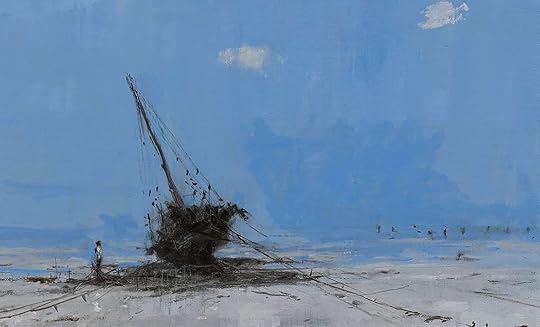
Playa en Bagamoyo, óleo sobre lienzo, Calo Carratalá
Profile Image for David Carrasco.
Author 1 book146 followers
July 18, 2025
¿Alguna vez has tenido que inventarte una vida entera para que te dejen quedarte en un sitio donde nadie te quiere?

No me refiero a un currículum inflado o a alguna que otra mentirijilla piadosa. Hablo de construir desde cero una identidad que no se parezca ni por accidente a lo que fuiste. De eso, y de tantas otras heridas invisibles, va A orillas del mar de Abdulrazak Gurnah, una novela que, si fuera un golpe, no dejaría moretón, pero dolería durante semanas.

La historia, como tantas otras, empieza con un hombre que calla más de lo que cuenta. Saleh Omar, un hombre ya entrado en años, llega a Inglaterra desde Zanzíbar solicitando asilo. Carga con una caja de caoba y un silencio que pesa más que cualquier equipaje. No tarda en cruzarse con Latif Mahmud, otro zanzibarí expatriado. Saleh Omar es alguien cuya dignidad no se puede aplastar del todo, aunque lo hayan intentado varias veces y con métodos bastante imaginativos. Latif Mahmud, su contraparte más joven, es un exiliado de otra clase: educado, desencantado, atrapado entre la necesidad de recordar y el impulso de huir del dolor. La relación entre ambos está hecha de silencios, de tensiones, de una tristeza que no necesita decirse en voz alta. Los une y los separa un pasado común, como una cuerda que se ha podrido por los extremos.

A través de sus voces, Gurnah nos va deshilachando el pasado colonial, las traiciones familiares, los pequeños pactos con la miseria y esa extraña mezcla de vergüenza y orgullo que arrastran quienes han sido desarraigados sin ceremonia ni despedida. No voy a hacerte ningún spoiler porque la historia es más una marea que una serie de olas; lo importante no es tanto qué pasa, sino cómo nos va arrastrando.

Y ese arrastre lento, casi hipnótico, nace directamente de la forma en que está escrito. La prosa de Gurnah es una de esas rarezas que no se nota hasta que te das cuenta de que te tiene atrapado. Nada de fuegos artificiales ni frases que reclaman ser subrayadas. Su lenguaje es como esos relojes de arena que usaban antaño los jugadores de ajedrez: constante, inevitable, sutilmente desesperado, pero paciente. Su prosa no grita, no se contorsiona buscando aplausos, no pone el arte por delante del dolor; escribe como quien abre una carta vieja y temblorosa. Es una narrativa contenida, de frases medidas, casi tímidas, como si el propio lenguaje temiera contaminar la fragilidad de lo que cuenta, y te deja con esa sensación de que cada palabra ha sido pulida no para brillar, sino para no hacer daño. Un inglés limpio, pero cargado de ecos: el inglés de quien lo aprendió después de vivir en otras lenguas, otras heridas.

Hay una ternura seca en la forma en que retrata a sus personajes, como si intuyera que la piedad también puede ser una forma de humillación. Y aunque el narrador alterna entre las perspectivas de Saleh y Latif, lo hace con tal naturalidad que no sientes el salto: parece que simplemente te has cambiado de silla en la cafetería y ahora estás escuchando a otro contar su historia.

Los personajes, sobre todo Saleh, son retratados sin la más mínima condescendencia. Saleh es a la vez víctima y cómplice de su desgracia, un hombre que ha hecho cosas horribles por razones perfectamente comprensibles. Latif, por su parte, encarna esa otra forma de exilio: la de quien se va y, sin embargo, nunca consigue irse del todo. Ambos son seres partidos, a quienes Gurnah ofrece algo mucho más valioso que redención: comprensión sin absolución.

La estructura, sin embargo, exige paciencia. Gurnah no te lo da todo de golpe, ni siquiera cuando ya estás temblando de frío en esa tierra extraña. La historia se despliega a base de confesiones parciales, recuerdos truncados, medias verdades que solo mucho después entiendes en su amargo esplendor. Es un recurso que recuerda a lo que hace Kazuo Ishiguro en Los restos del día o Nunca me abandones: narradores que, consciente o inconscientemente, te ocultan piezas fundamentales del puzzle. Porque a veces ni uno mismo quiere saber toda la verdad.

Si comparamos esta novela con otras de Gurnah, como Paraíso o El desertor, A orillas del mar se siente más contenida, menos épica en el sentido clásico. Pero en su sobriedad se esconde su verdadera fuerza. Si Paraíso recordaba al Joseph Conrad más sombrío, aquí Gurnah se acerca más a un V.S. Naipaul en su etapa de amarga lucidez, aunque sin el cinismo absoluto que a veces empapa a Naipaul. Hay dolor, sí, pero también una especie de dignidad obstinada que se niega a desaparecer del todo. Puede que a algunos les recuerde también a La vida ante sí de Romain Gary, por esa mezcla de ternura y brutalidad en el retrato de quienes son invisibles para el mundo. Y si afinamos más el oído, también podemos oír ecos de Desgracia de Coetzee: esa sensación de que el exilio no es solo geográfico, sino moral, existencial, íntimo.

Y justo de eso van los temas que atraviesan la novela: miedos callados que pesan como piedras —el desarraigo, la culpa, una identidad edificada sobre ruinas— y esa condena de no saber ya qué casa es tu hogar. Pero también habla de las historias que nos contamos para seguir en pie, de cómo, a veces, la única manera de avanzar es aceptar que hemos sido cómplices y víctimas, verdugos y supervivientes, todo al mismo tiempo. Aquí Gurnah no nos sirve moralejas. Más bien, nos susurra que sobrevivir, a menudo, es simplemente una forma más lenta y dolorosa de naufragar.

También hay una crítica sutil —pero demoledora— al trato que Europa da a quienes llegan cargando no solo maletas, sino cicatrices. Por eso a algunos les parecerá que A orillas del mar establece un diálogo silencioso con obras como Bienvenidos a Occidente de Mohsin Hamid, aunque Gurnah rehúye las soluciones mágicas o los sentimentalismos fáciles: aquí no hay puertas encantadas ni futuros luminosos, solo seres humanos intentando sobrevivir como pueden.

Leer A orillas del mar es como sentarte frente a alguien que ha vivido más de lo que debería y escucharle, sin interrupciones, mientras desgrana su historia a su ritmo. No es un libro que se lea con prisas ni que recompense al lector impaciente. Hay que dejarse arrastrar por la marea de su melancolía, sabiendo que no nos va a llevar a ninguna playa soleada, sino, quizá, a un rincón sombrío de nosotros mismos donde tampoco habíamos querido mirar demasiado.

Porque al cerrar el libro, uno se siente más consciente de la fragilidad absurda de eso que llamamos vida, de lo fácil que es quedar varado en algún lugar remoto, cargando una historia que nadie más está interesado en escuchar. Y, de alguna manera extraña, eso también es una forma de resistencia.

No, A orillas del mar no es un libro que recomendaría a cualquiera. Pero si alguna vez has sentido la necesidad de romperte en mil pedazos para poder seguir adelante, quizá deberías acercarte. Eso sí: trae abrigo. Y, si puedes, algo de paciencia. Los viajes más largos no siempre se miden en kilómetros.

Por eso le doy 4 estrellas. Porque A orillas del mar no es un libro fácil ni complaciente, y su prosa contenida merece respeto. Pero tampoco es perfecto: a veces se pierde en su propia sobriedad, y esa paciencia que pide puede ser un muro para muchos lectores. No es para devorar en una tarde ni para buscar emociones rápidas. Es un viaje lento, incómodo, que se agradece si tienes ganas de enfrentarte a la verdad sin disfraces, pero que no siempre recompensa con momentos de brillo deslumbrante. Y eso lo hace excelente, pero no perfecto.

Y al final, lo que queda en el aire es una pregunta: ¿qué es un refugiado sino alguien que carga a cuestas la versión más cruda de una verdad incómoda que todos compartimos? Que la casa, la patria o la identidad son ficciones frágiles, lo aprendemos a la fuerza. Basta un soplo de historia, un giro de viento, para encontrarte de repente buscando refugio a orillas de otro mar, preguntándote quién demonios eres y en qué momento se jodió todo.
Displaying 1 - 30 of 622 reviews

Can't find what you're looking for?

Get help and learn more about the design.