

What do you think?

Katharina die große und die kleine
„Nisam se samo ja raspadala. Izvan mojih mračnih zidova raspadao se svijet“, na jednom mjestu kaže glavna junakinja Katarina, dok od Male postaje Velika. Na ulicama crnogorskoga glavnog grada, koje u jednom trenutku postaju pretijesne pa se produže u beogradske i londonske, Katarina je autentičan glas koji nas u specifičnom autoričinom stilu koji podrazumijeva spoj intimnog i javnog, vodi putem rastavljanja i sastavljanja.
Od odrastanja u suton socijalizma, preko naznaka svega onoga što se na tim prostorima potom dogodilo i uranjanja u neku novu ratnu i tranzicijsku svakodnevicu, Katarina je dovoljno krhka i istovremeno snažna da si dopušta posustajanja i padove u najmračnije kutke društvenog podzemlja i najbolnije ljubavne i bračne katastrofe.
Olja Knežević spisateljica je čija proza ne uljuljkava u optimizam niti bježi u pomodni aktivizam; u njezinom romanu "Katarina, Velika i Mala" skeniraju se obiteljski odnosi i tragedije, ženska prijateljstva, ljubavne izdaje i prevare, odlasci i bjegovi, razni društveni miljei, ali i širi društveni kontekst konfuznih i neuralgičnih događaja koji (pre)usmjeravaju ljudske sudbine. Pomno osmišljeni i karakterizirani likovi i suvereno, dinamično pripovijedanje „Katarinu“ vode putem najboljih romana koji progovaraju o zbilji ovih prostora unatrag nekoliko desetljeća i uspijevaju (p)ostati romanima koje pamtimo po uvjerljivim, snažnim, neprilagođenim likovima punim strasti, kakva je nedvojbeno Katarina.
I kada je žele učiniti Malom i kada se trudi postati Velikom, ulovljena u mrežu koja prijeti njezinom duhu i tijelu, u kojoj se za dominaciju bore moć i novac, razne političke opcije, nasljeđa i zavičaji, Katarina je uvjerljiva i složena, kao život sam, kao i ovaj roman.
Od odrastanja u suton socijalizma, preko naznaka svega onoga što se na tim prostorima potom dogodilo i uranjanja u neku novu ratnu i tranzicijsku svakodnevicu, Katarina je dovoljno krhka i istovremeno snažna da si dopušta posustajanja i padove u najmračnije kutke društvenog podzemlja i najbolnije ljubavne i bračne katastrofe.
Olja Knežević spisateljica je čija proza ne uljuljkava u optimizam niti bježi u pomodni aktivizam; u njezinom romanu "Katarina, Velika i Mala" skeniraju se obiteljski odnosi i tragedije, ženska prijateljstva, ljubavne izdaje i prevare, odlasci i bjegovi, razni društveni miljei, ali i širi društveni kontekst konfuznih i neuralgičnih događaja koji (pre)usmjeravaju ljudske sudbine. Pomno osmišljeni i karakterizirani likovi i suvereno, dinamično pripovijedanje „Katarinu“ vode putem najboljih romana koji progovaraju o zbilji ovih prostora unatrag nekoliko desetljeća i uspijevaju (p)ostati romanima koje pamtimo po uvjerljivim, snažnim, neprilagođenim likovima punim strasti, kakva je nedvojbeno Katarina.
I kada je žele učiniti Malom i kada se trudi postati Velikom, ulovljena u mrežu koja prijeti njezinom duhu i tijelu, u kojoj se za dominaciju bore moć i novac, razne političke opcije, nasljeđa i zavičaji, Katarina je uvjerljiva i složena, kao život sam, kao i ovaj roman.
320 pages, Hardcover
First published May 1, 2019
About the author
Olja Knezevic
13 books51 followersOlja Knezevic was born and raised in Montenegro, but has lived in California, Belgrade, London and Zagreb.
She has an MA in Creative Writing from Birkbeck College, London, and was awarded an Overall Prize for the best MA Creative Writing dissertation of the year 2008. That dissertation grew into the novel ‘Milena & Other Social Reforms’, which ended up being published first in Montenegro, then in Croatia.
In both countries, it was a bestseller, although criticised harshly by the Government of Montenegro and the Government regime’s writers and reviewers. 'Milena' is now available in English.
Besides 'Milena & Other Social Reforms', Olja is the author of two more novels: 'Gospoda Black' (2015) and the award-winning 'Katarina, Velika i Mala' (2019).
Katarina will be published by UK publisher Istros Books as 'Catherine the Great and the Small' in June 2020.
Olja is the author of numerous short stories and columns published in various literary magazines and supplements, the best of which were collected and published in 2013, in a book titled Londonske Priče Juga (London & Stories of the South).
She has an MA in Creative Writing from Birkbeck College, London, and was awarded an Overall Prize for the best MA Creative Writing dissertation of the year 2008. That dissertation grew into the novel ‘Milena & Other Social Reforms’, which ended up being published first in Montenegro, then in Croatia.
In both countries, it was a bestseller, although criticised harshly by the Government of Montenegro and the Government regime’s writers and reviewers. 'Milena' is now available in English.
Besides 'Milena & Other Social Reforms', Olja is the author of two more novels: 'Gospoda Black' (2015) and the award-winning 'Katarina, Velika i Mala' (2019).
Katarina will be published by UK publisher Istros Books as 'Catherine the Great and the Small' in June 2020.
Olja is the author of numerous short stories and columns published in various literary magazines and supplements, the best of which were collected and published in 2013, in a book titled Londonske Priče Juga (London & Stories of the South).
Ratings & Reviews
Friends & Following
Create a free account to discover what your friends think of this book!
Community Reviews
Displaying 1 - 30 of 78 reviews

January 5, 2021
This year in my Around the World reading I'm tackling Europe - the countries I've never read anything from and deepening my knowledge of others. I posted a list to Twitter and got great suggestions so I jumped into this book from Montenegro author, Olja Knežević. It is translated by Paula Gordon & Ellen Elias-Bursac and came out in 2020 from Istros Books (who seem to be a good resource for translated literature from the Balkans.)
Catherine is coming of age in Titograd in the 1980s (which becomes Podgorica by the end of the novel,) and the book follows her life before and after the Balkan Wars. A lot of the political conflict and economic crises take place in the background of her life and her family and community. It looks at isolation and separation from home more than it tries to look at history and war.
"We each sit on the clean soft grass of our new countries, alone. Alone in a crowd, alone even when we’re with our new friends, who don’t hear the roar of the wild mounting inside us. Always at the start of summer we pine for the pungent smell of home."
Catherine is coming of age in Titograd in the 1980s (which becomes Podgorica by the end of the novel,) and the book follows her life before and after the Balkan Wars. A lot of the political conflict and economic crises take place in the background of her life and her family and community. It looks at isolation and separation from home more than it tries to look at history and war.
"We each sit on the clean soft grass of our new countries, alone. Alone in a crowd, alone even when we’re with our new friends, who don’t hear the roar of the wild mounting inside us. Always at the start of summer we pine for the pungent smell of home."

January 1, 2022
Set in Montenegro, this is Katarina’s story, looking back on her life. It is split into two parts – the first, Catherine the Small, is the story of her youth in the 1980s, and the second, Catherine the Great, reflects her adult life. The first half is a coming-of-age story that covers her friendships and relationships. The second half focuses on her dysfunctional marriage and motherhood.
Katarina is a wonderful character. She comes across as realistic and believable, a strong woman who has endured multiple tragedies and has not been defeated. Her role as narrator is effective. In the first section, Katarina sounds like a young person navigating interpersonal relationships. In the second section, her voice is more mature. She has experienced tough times in life and learned a great deal.
The story provides a good bit of Montenegrin history, as the region moves from a republic of Yugoslavia, under Tito, to an independent country, though the Bosnian War remains mostly in the background. This history is integrated into the narrative, so the reader is aware of it, but there are no long asides explaining the background. We see its impact on the characters. A reader unfamiliar with this region may want to do a bit of internet research.
I got more absorbed into the story as it progressed and vastly prefer the second half to the first. Knežević was born in Montenegro and is the first book I have read in this uncommon setting. She provides beautiful descriptions of the countryside. I read the English translation by Ellen Elias-Bursać and Paula Gordon.
Katarina is a wonderful character. She comes across as realistic and believable, a strong woman who has endured multiple tragedies and has not been defeated. Her role as narrator is effective. In the first section, Katarina sounds like a young person navigating interpersonal relationships. In the second section, her voice is more mature. She has experienced tough times in life and learned a great deal.
The story provides a good bit of Montenegrin history, as the region moves from a republic of Yugoslavia, under Tito, to an independent country, though the Bosnian War remains mostly in the background. This history is integrated into the narrative, so the reader is aware of it, but there are no long asides explaining the background. We see its impact on the characters. A reader unfamiliar with this region may want to do a bit of internet research.
I got more absorbed into the story as it progressed and vastly prefer the second half to the first. Knežević was born in Montenegro and is the first book I have read in this uncommon setting. She provides beautiful descriptions of the countryside. I read the English translation by Ellen Elias-Bursać and Paula Gordon.

July 6, 2020
We each sit on the clean soft grass of our new countries, alone. Alone in a crowd, alone even when we're with our new friends, who don't hear the roar of the wild mounting inside us. Always at the start of summer we pine for the pungent smell of home. Our new cities smell like overstocked department stores, eastern spices or smog. We are called back by the selfish pergola whose heavycloying smell fills our nostrils while we shoo away thirsty wasps. And the grape vines, dry and anorexic, untended, left to the mercy of the elements, but with a fragrance so piercing, smelling of sugar on the verge of ferment. Pine needles and wild plums, beaten down by the crazy sun; on the chapped earth, crushed mulberries; next to them, dusty plastic beach shoes.
Catherine the Great and the Small has been translated by Ellen Elias-Bursać and Paula Gordon from Olja Knežević's Montenegrin original, Katarina, Velika i Mala. The author introduces the novel here: https://blogs.exeter.ac.uk/translatin...
The book is published by one of my favourite publishers, Istros Books. who have done a wonderful job in bringing high quality literature from the Balkans and SE Europe to English speaking readers. Founder Susan Curtis explains the press's mission and how she came to publish this novel here: http://blogs.exeter.ac.uk/translating...
The novel is narrated by Katarina and begins I am Catherine the Great, hiding away in a small office, the sobriquet one of many bestowed on her during the novel by relatives and friends, and the location London, and the home she shares with her estranged husband.
She then takes us back in the first section, Catherine the Small, to her early years, from childhood through to early adulthood, in what was then Titograd in Yugoslavia, where she was born in the 1970s, the novel opening in 1978 with Boney M riding high in the charts. It is a turbulent tale, her childhood friend in particular caught up in drug addiction and then sexually exploitated.
It ends with Katarina meeting Vuksan, a rather more reliable, if dull, man than those she has mostly fallen in love with during her turbulent youth. With nationalism rising, and the country on the verge of civil war, he proposes emigrating, and her beloved Granny tells her I'll rest easier knowing you're in a safe place, far from the insanity that will run rampant in the streets.
The second section of the novel, Catherine the Great, set some time later (closer to the present day), after she and Vuksan have settled in London, with three children. Their relationship has deteriorated, and Katarina returns for the first time in some years to her hometown - now returned to its original name of Podgorica in Montenego - for her Granny's funeral, where her children and eventually Vuksan later join her, and she catches up on what has happened to her friends, and discovers some revelations about what really occured years ago.
The translators are a rather super-star team who explained their approach and how they worked together in this interview: https://blogs.exeter.ac.uk/translatin...
This is a novel that actually acquires an extra dimension in translation, in that it gives the English-speaking reader insight into a different world, and a particular, and turbulent, time and place, namely the transition in Yugoslavia from a socialist Republic, almost uniquely non-aligned between the East and western blocs, to the break-up and civil war, and the transition to a more capitalist society. But the novel does this very naturally via Katarina's story.
Even the most acclaimed historical fiction can have a tendency for significant people, events or years to be led out on stage, their identity proclaimed loudly in case one misses any allusion , which is a trap that this novel neatly avoids.
And what, to an English reader, might otherwise be lost, Paula Gordon and Ellen Elias-Bursać, restore with deft glosses and a brief afterword, avoiding the need for footnotes
As for the style of the novel, comparisons in reviews are , I admit, lazy and reductive , but can be helpful to post signpost readers and also draw out differences . And there was certainly enough in common - the intensity, the strong female voices, the emotional investment of the reader in the characters, the portrayal of long-term female friendships and romantic relationships - to regard this as a Montenegrin Ferrante. That said Catherine the Great and the Small has a:
- more significant geo-political canvas - the collapse of Communism and the Yugoslav state followed by civil war;
- world where exile doesn’t just mean leaving the neighborhood and the city, but the country ( to the US, Canada and, for the narrator, the UK);
- more focused cast of characters , with depth priotised over breadth . This is also a novel narrated by and centered on Katarina, and the account of her acquaintances' lives are those she witnessed or could discover (cf Ferrante 's use of narrative devices such as discovery of a notebook );
- less use of the Ferrantian frame-by-frame analysis (e.g. the wedding scene that ends book 1 and begins book 2 of the Neopolitan tetrology), with here the narrator more realistically looking back from many years in the future;
- and as a result, a more compact, although still very deep, and perhaps even more intense, novel.
Recommended
Other reviews which each bring out different aspects of the novel:
https://www.calvertjournal.com/articl...
https://www.scottishreview.net/Morell...
https://www.themodernnovel.org/europe...
Catherine the Great and the Small has been translated by Ellen Elias-Bursać and Paula Gordon from Olja Knežević's Montenegrin original, Katarina, Velika i Mala. The author introduces the novel here: https://blogs.exeter.ac.uk/translatin...
The book is published by one of my favourite publishers, Istros Books. who have done a wonderful job in bringing high quality literature from the Balkans and SE Europe to English speaking readers. Founder Susan Curtis explains the press's mission and how she came to publish this novel here: http://blogs.exeter.ac.uk/translating...
The novel is narrated by Katarina and begins I am Catherine the Great, hiding away in a small office, the sobriquet one of many bestowed on her during the novel by relatives and friends, and the location London, and the home she shares with her estranged husband.
She then takes us back in the first section, Catherine the Small, to her early years, from childhood through to early adulthood, in what was then Titograd in Yugoslavia, where she was born in the 1970s, the novel opening in 1978 with Boney M riding high in the charts. It is a turbulent tale, her childhood friend in particular caught up in drug addiction and then sexually exploitated.
It ends with Katarina meeting Vuksan, a rather more reliable, if dull, man than those she has mostly fallen in love with during her turbulent youth. With nationalism rising, and the country on the verge of civil war, he proposes emigrating, and her beloved Granny tells her I'll rest easier knowing you're in a safe place, far from the insanity that will run rampant in the streets.
The second section of the novel, Catherine the Great, set some time later (closer to the present day), after she and Vuksan have settled in London, with three children. Their relationship has deteriorated, and Katarina returns for the first time in some years to her hometown - now returned to its original name of Podgorica in Montenego - for her Granny's funeral, where her children and eventually Vuksan later join her, and she catches up on what has happened to her friends, and discovers some revelations about what really occured years ago.
The translators are a rather super-star team who explained their approach and how they worked together in this interview: https://blogs.exeter.ac.uk/translatin...
This is a novel that actually acquires an extra dimension in translation, in that it gives the English-speaking reader insight into a different world, and a particular, and turbulent, time and place, namely the transition in Yugoslavia from a socialist Republic, almost uniquely non-aligned between the East and western blocs, to the break-up and civil war, and the transition to a more capitalist society. But the novel does this very naturally via Katarina's story.
Even the most acclaimed historical fiction can have a tendency for significant people, events or years to be led out on stage, their identity proclaimed loudly in case one misses any allusion , which is a trap that this novel neatly avoids.
And what, to an English reader, might otherwise be lost, Paula Gordon and Ellen Elias-Bursać, restore with deft glosses and a brief afterword, avoiding the need for footnotes
As for the style of the novel, comparisons in reviews are , I admit, lazy and reductive , but can be helpful to post signpost readers and also draw out differences . And there was certainly enough in common - the intensity, the strong female voices, the emotional investment of the reader in the characters, the portrayal of long-term female friendships and romantic relationships - to regard this as a Montenegrin Ferrante. That said Catherine the Great and the Small has a:
- more significant geo-political canvas - the collapse of Communism and the Yugoslav state followed by civil war;
- world where exile doesn’t just mean leaving the neighborhood and the city, but the country ( to the US, Canada and, for the narrator, the UK);
- more focused cast of characters , with depth priotised over breadth . This is also a novel narrated by and centered on Katarina, and the account of her acquaintances' lives are those she witnessed or could discover (cf Ferrante 's use of narrative devices such as discovery of a notebook );
- less use of the Ferrantian frame-by-frame analysis (e.g. the wedding scene that ends book 1 and begins book 2 of the Neopolitan tetrology), with here the narrator more realistically looking back from many years in the future;
- and as a result, a more compact, although still very deep, and perhaps even more intense, novel.
Recommended
Other reviews which each bring out different aspects of the novel:
https://www.calvertjournal.com/articl...
https://www.scottishreview.net/Morell...
https://www.themodernnovel.org/europe...

August 23, 2020
I discovered "Catherine the Great and the Small," by Olja Knezevic, on Twitter, thanks to Women in Translation Month, a month I usually just call "August." It spurred me to pick up and read a number of translated books by women writers that had been sitting on my shelves unread; after reading some short reviews of "Catherine," I ordered this book, which is beautifully written, powerfully drawn yet prickly.
"Catherine the Great and the Small" opens in the summer of 1978, when Catherine "the small" is playing "guerillas and gendarmes" with her friends in the back alleys of Titograd (now Podgorica), the capital of Montenegro, then part of Communist Yugoslavia and named for Josip Broz Tito, the President of Yugoslavia from 1953 to 1980. It seems like a carefree summer, until Catherine's mother, an artist and art teacher, dies of cancer in the opening pages.
From then on Catherine is raised by her formidable Granny, the widow of a partisan who fought with Tito during World War II. It is Granny who offers stability and guidance to Catherine as she navigates her teenage and young adult years with her best friend Milica, a talented aspiring actress who descends into a drug-addled existence after moving to Belgrade for drama school.
Catherine is a model student, studying economics in Belgrade, when the breakdown of Yugoslavia, under the leadership of Slobodan Milošević (later charged by the International Criminal Tribunal for the former Yugoslavia (ICTY) with war crimes in connection to the wars in Bosnia, Croatia, and Kosovo) begins to intrude. Much of the story takes place in the backdrop of this war, as Catherine's friends are conscripted or flee the country. Catherine herself struggles to retain some nugget of happiness in the midst of the madness; working in a department store in Titograd, she arranges for Milica to appear in an advertising campaign for Italian shoes. The billboards survive Milica and seem like a metaphor for the ruined Yugoslavia:
"The advertising posters and the first billboards in town - with Milica's lovely figure, stretching contentedly on the beach, on the grass, on the parquet floor, surrounded by shoes and sandals - faded and began looking like a cruel joke, a sad reminder of the many possibilities for which we were still too backwards, unprepared.
Our country was coming apart at the seams from an illness whose cause I didn't understand."
Catherine survives this trauma and others: She makes a life for herself as a writer and a mother, now Catherine "the Great," because, as Milica says, "In the depths of your existence you find light. Waiting for you at the very bottom is this tiny glowing ball and you take it in your hands and bring it to the surface. You're a mermaid, but not me."
"Catherine the Great and the Small" opens in the summer of 1978, when Catherine "the small" is playing "guerillas and gendarmes" with her friends in the back alleys of Titograd (now Podgorica), the capital of Montenegro, then part of Communist Yugoslavia and named for Josip Broz Tito, the President of Yugoslavia from 1953 to 1980. It seems like a carefree summer, until Catherine's mother, an artist and art teacher, dies of cancer in the opening pages.
From then on Catherine is raised by her formidable Granny, the widow of a partisan who fought with Tito during World War II. It is Granny who offers stability and guidance to Catherine as she navigates her teenage and young adult years with her best friend Milica, a talented aspiring actress who descends into a drug-addled existence after moving to Belgrade for drama school.
Catherine is a model student, studying economics in Belgrade, when the breakdown of Yugoslavia, under the leadership of Slobodan Milošević (later charged by the International Criminal Tribunal for the former Yugoslavia (ICTY) with war crimes in connection to the wars in Bosnia, Croatia, and Kosovo) begins to intrude. Much of the story takes place in the backdrop of this war, as Catherine's friends are conscripted or flee the country. Catherine herself struggles to retain some nugget of happiness in the midst of the madness; working in a department store in Titograd, she arranges for Milica to appear in an advertising campaign for Italian shoes. The billboards survive Milica and seem like a metaphor for the ruined Yugoslavia:
"The advertising posters and the first billboards in town - with Milica's lovely figure, stretching contentedly on the beach, on the grass, on the parquet floor, surrounded by shoes and sandals - faded and began looking like a cruel joke, a sad reminder of the many possibilities for which we were still too backwards, unprepared.
Our country was coming apart at the seams from an illness whose cause I didn't understand."
Catherine survives this trauma and others: She makes a life for herself as a writer and a mother, now Catherine "the Great," because, as Milica says, "In the depths of your existence you find light. Waiting for you at the very bottom is this tiny glowing ball and you take it in your hands and bring it to the surface. You're a mermaid, but not me."

March 24, 2021
This is not a bad book by any means, it was just absolutely, definitely not my cup of tea, hence:
2.5*
2.5*

July 28, 2020
A family saga set in MONTENEGRO
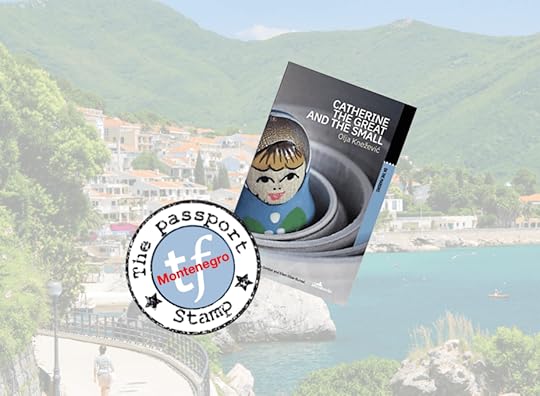
Catherine the Great and the Small opens in the summer of 1978. It is a hot one. The book is set near Titograd, Montenegro (as Podgorica was then known...). Catherine is making pocket money selling ice cream from a stall on the street. Her life progresses through school until she becomes a student in Belgrade. The story at this stage is a blend of a teenager living and experimenting against the background of the upcoming civil war in Yugoslavia. The Belgrade days are wild - not so much for Catherine herself - but for her cousin Milica, an aspiring actress severely inhibited by a drug habit, and for Siniša, her boyfriend from back home with some demons of his own to deal with.
She moves to London, where she ends up years later as the mother of two children in an abusive relationship. Not a happy person. She returns (in almost the present day) to Montenegro for a funeral. The children are with her, and her husband follows. The country has changed beyond recognition from the 70s and 80s.
Catherine the Great and the Small is the story of one person's journey through a troubled life. Her family is flawed, her friends are flawed - but she survives. What, though, I found particularly interesting was the development of Montenegro and the contrast between the country of the 70s/80s (part of Tito's Yugoslavia) and the country in the early 21st century. The old Soviet block - with all its restrictions on life can seem an awful long time ago. The characters are believable and well developed.
Catherine the Great and the Small is a book that explores the profound changes in the Balkans in a very human way. A fascinating social commentary.
Catherine the Great and the Small opens in the summer of 1978. It is a hot one. The book is set near Titograd, Montenegro (as Podgorica was then known...). Catherine is making pocket money selling ice cream from a stall on the street. Her life progresses through school until she becomes a student in Belgrade. The story at this stage is a blend of a teenager living and experimenting against the background of the upcoming civil war in Yugoslavia. The Belgrade days are wild - not so much for Catherine herself - but for her cousin Milica, an aspiring actress severely inhibited by a drug habit, and for Siniša, her boyfriend from back home with some demons of his own to deal with.
She moves to London, where she ends up years later as the mother of two children in an abusive relationship. Not a happy person. She returns (in almost the present day) to Montenegro for a funeral. The children are with her, and her husband follows. The country has changed beyond recognition from the 70s and 80s.
Catherine the Great and the Small is the story of one person's journey through a troubled life. Her family is flawed, her friends are flawed - but she survives. What, though, I found particularly interesting was the development of Montenegro and the contrast between the country of the 70s/80s (part of Tito's Yugoslavia) and the country in the early 21st century. The old Soviet block - with all its restrictions on life can seem an awful long time ago. The characters are believable and well developed.
Catherine the Great and the Small is a book that explores the profound changes in the Balkans in a very human way. A fascinating social commentary.

December 7, 2023
Olja Knezevic
Katarina Velika i Mala
Nesanica, gluho doba noci, mjesto radnje KBC Rebro, odjel kirurgije. Lampica za knjigu osvjetljava mi ovo, pomalo divlje stivo. I dok se ja nadam da ovaj puta PHD nalaz nece biti los, autorica ima svoje misljenje:
“ Rak ne napada zene koje zive po svome, rekla je tetka. Takve zene sve same određuju, i srce nasteluju da radi kad one hoce. Baba je umrla od dosade, zakljucila je tetka.” I zato, drage zene, zivite po svome, kao Baba Katarinina, budite gospodarice svog zivota i vremena, jer imate uvijek samo jednu sebe. Molim vas, oprezno baratajte s tom jednom.
U zivotu cesto mislim da samo jos budale, naivci ili endemske vrste stalno oprastaju, sve i svima, ali i Katarina je takva:
“Lako oprastas, instinktivno. Elegantno setas kroz ljudsko smece. Rijetka pojava, znas?” I onda kada si opet i opet dobar, i onda kada ti kazu dobar i budala, i onda kada kazu da si mekan, da si slabic, ti ne mozes protiv sebe. Jer svako ispoljavanje mrznje bio bi gubitak autenticnosti, a moguci epilog jest patnja. “Ne znas da ljudi nisu kao ti. Zato ces jednom platiti.” Jer, “ljudi hoce mrznju na mrznju, ne nekakvo razumijevanje. Oprost. Oprost je slabost. Ili tako neki invaliditet.”
Ima tu droge, seksa, alkohola, propale glume, glamura: “Projekat se jednom morao zavrsiti. Probudili smo se iz tog sna i oko sebe opet ugledali siromastvo, zapravo bijedu, jer bijeda ukljucuje i stanje duha.” Ima i sverca, lazi, uspjeha i kraha. Ljubavi, mrznje. Stanja duha, stanja nacije, dekadencije i migracije. U svakom slucaju ima puno dinamike i puno zivota. “Nasa se zemlja raspada od bolestine kojoj ne razumijem uzrok i kao da ponovo prolazim kroz veliki gubitak majke. Pa onda propadajmo, govorim svima. Propadajmo zajedno u ovoj rupi, uz turbofolk i tekstove o patnji zena za nevjernim muskarcima.”
Uspjeh, zodovoljstvo, koje su definicije istih i kakav je sustav vrijednosti koji to definira? “Krhko li je zadovoljstvo uspjesnih svojom pozicijom u drustvu, kada je to isto drustvo bez dubine, s nakaradnom elitom. Povrsina se lako zatalasa primarnim instinktima, zivotom od danas do sjutra, poljuljanim planovima, pozarima, poplavama, zemljotresima, opstim predosjecajem kratkorocnog opstanka”…i da ratom.
Olja Knezevic - novo otkrice, zena je baš frajerica (koja se takodjer cini skriva ispod malo filera i botoksa, ali neka, tko joj brani). Olja koja ispisuje zivot Katarine Velike i Male, neukrotivo, dinamicno, emotivno.
“Je li ispunjavanje duznosti prema slabijima od sebe ikada greska?” Olja nema egzaktan odgovor na ovo pitanje, ali nije ni bitno, radimo li to radi sebe, tesko je reci..
Ali nije tesko pohvaliti ovaj izuzetan roman.
“Zensko se stidi i kad krvari i kad ne krvari.
Katarina Velika i Mala
Nesanica, gluho doba noci, mjesto radnje KBC Rebro, odjel kirurgije. Lampica za knjigu osvjetljava mi ovo, pomalo divlje stivo. I dok se ja nadam da ovaj puta PHD nalaz nece biti los, autorica ima svoje misljenje:
“ Rak ne napada zene koje zive po svome, rekla je tetka. Takve zene sve same određuju, i srce nasteluju da radi kad one hoce. Baba je umrla od dosade, zakljucila je tetka.” I zato, drage zene, zivite po svome, kao Baba Katarinina, budite gospodarice svog zivota i vremena, jer imate uvijek samo jednu sebe. Molim vas, oprezno baratajte s tom jednom.
U zivotu cesto mislim da samo jos budale, naivci ili endemske vrste stalno oprastaju, sve i svima, ali i Katarina je takva:
“Lako oprastas, instinktivno. Elegantno setas kroz ljudsko smece. Rijetka pojava, znas?” I onda kada si opet i opet dobar, i onda kada ti kazu dobar i budala, i onda kada kazu da si mekan, da si slabic, ti ne mozes protiv sebe. Jer svako ispoljavanje mrznje bio bi gubitak autenticnosti, a moguci epilog jest patnja. “Ne znas da ljudi nisu kao ti. Zato ces jednom platiti.” Jer, “ljudi hoce mrznju na mrznju, ne nekakvo razumijevanje. Oprost. Oprost je slabost. Ili tako neki invaliditet.”
Ima tu droge, seksa, alkohola, propale glume, glamura: “Projekat se jednom morao zavrsiti. Probudili smo se iz tog sna i oko sebe opet ugledali siromastvo, zapravo bijedu, jer bijeda ukljucuje i stanje duha.” Ima i sverca, lazi, uspjeha i kraha. Ljubavi, mrznje. Stanja duha, stanja nacije, dekadencije i migracije. U svakom slucaju ima puno dinamike i puno zivota. “Nasa se zemlja raspada od bolestine kojoj ne razumijem uzrok i kao da ponovo prolazim kroz veliki gubitak majke. Pa onda propadajmo, govorim svima. Propadajmo zajedno u ovoj rupi, uz turbofolk i tekstove o patnji zena za nevjernim muskarcima.”
Uspjeh, zodovoljstvo, koje su definicije istih i kakav je sustav vrijednosti koji to definira? “Krhko li je zadovoljstvo uspjesnih svojom pozicijom u drustvu, kada je to isto drustvo bez dubine, s nakaradnom elitom. Povrsina se lako zatalasa primarnim instinktima, zivotom od danas do sjutra, poljuljanim planovima, pozarima, poplavama, zemljotresima, opstim predosjecajem kratkorocnog opstanka”…i da ratom.
Olja Knezevic - novo otkrice, zena je baš frajerica (koja se takodjer cini skriva ispod malo filera i botoksa, ali neka, tko joj brani). Olja koja ispisuje zivot Katarine Velike i Male, neukrotivo, dinamicno, emotivno.
“Je li ispunjavanje duznosti prema slabijima od sebe ikada greska?” Olja nema egzaktan odgovor na ovo pitanje, ali nije ni bitno, radimo li to radi sebe, tesko je reci..
Ali nije tesko pohvaliti ovaj izuzetan roman.
“Zensko se stidi i kad krvari i kad ne krvari.

July 26, 2024
An example of how a promising novel can devolve into a melodramatic mess. As of halfway through, I continued like a dutiful Catholic boy at Mass, hoping the pompousness would eventually lead to something meaningful. After another 50 pages, I decided enough was enough. I’m done. Life’s too short to roll my eyes through the last 50 pages.

August 21, 2024
reading around the world one book at a time 2024: montenegro
a great book if you want to read something vividly set in ever changing montenegro and serbia, from the yugoslavian years up until independence and present day - but the more i read, the less i cared about the protagonist's story
a great book if you want to read something vividly set in ever changing montenegro and serbia, from the yugoslavian years up until independence and present day - but the more i read, the less i cared about the protagonist's story

January 5, 2023
I had a lot of hopes for this book but somehow it went downhill for me after about halfway. Maybe I was not getting what she said. But it’s probably more that I got tired of waiting for the queer point of it. Was Kaća really into women? 3.5 stars but I wanted to give 4.
Catherine the Great and the Small by Olja Knežević translated by Paula Gordon & Ellen Elias-Bursac comes from a culture where diatribes about men come easy. It’s fiercely male dominated. I am so glad people can read this book which describes this unknown culture in English.
My father was born in Montenegro so I know the feeling of a culture not being understood. But the men…When I went there for visits I felt the patriarchy and harsh possessiveness toward women ever so clearly. Big talkers pumping themselves up all the time.
Kaća the protagonist does speak well of the women in her life but I got tired of her interest in her boyfriend Siniša who starts seeing a neighbor. There’s drugs, relating to elders, politics of Montenegro and Croatia. She gets married to a different jerk and has children but doesn’t get what she really needs.
I was so curious about Olja the author having grown up in that crazy violent splitting up of a country. I wanted to know how it affected a person but this book didn’t really explain. Maybe another will.
Catherine the Great and the Small by Olja Knežević translated by Paula Gordon & Ellen Elias-Bursac comes from a culture where diatribes about men come easy. It’s fiercely male dominated. I am so glad people can read this book which describes this unknown culture in English.
My father was born in Montenegro so I know the feeling of a culture not being understood. But the men…When I went there for visits I felt the patriarchy and harsh possessiveness toward women ever so clearly. Big talkers pumping themselves up all the time.
Kaća the protagonist does speak well of the women in her life but I got tired of her interest in her boyfriend Siniša who starts seeing a neighbor. There’s drugs, relating to elders, politics of Montenegro and Croatia. She gets married to a different jerk and has children but doesn’t get what she really needs.
I was so curious about Olja the author having grown up in that crazy violent splitting up of a country. I wanted to know how it affected a person but this book didn’t really explain. Maybe another will.

Read
December 3, 2020My thanks to the publisher for the free review copy!
Earlier this month I made a little visit to Montenegro, with Catherine the Great and the Small by Olja Knežević, translated from the Croatian by Ellen Elias-Bursać and Paula Gordon. This is another fascinating title from Istros Books, who focus on publishing works from South Eastern Europe and the Balkans! I'm always fascinated by an insight into a new country's history, and Montenegro was no exception.
.
Catherine the Great and the Small takes place from the eighties to the present day. I liked the way it was split in two, with part one set in Montenegro when the capital was still known as Titograd, part of the Socialist Federal Republic of Yugoslavia, and part two moving forwards in time when Titograd became Podgorica. It was a totally new culture and history to me, and thankfully I had flicked to the end at the start of reading and found some very interesting background information as well as an extremely handy pronunciation guide! That may have been better off at the front, as I definitely found my reading experience improved from reading it beforehand.
.
The story follows Katarina, from a young girl to a grown woman. I thought the two sections were quite distinct, and I very much preferred part one, Catherine the Small. I loved reading about Katarina's childhood, coming of age in a socialist country, her intense friendship with Mici. The second part sees Katarina move to London with her husband and children. Usually I love domestic narratives, and I can't quite put my finger on what happened to lessen my enjoyment here. Maybe Katarina's ongoing passion for her ex-boyfriend was a bit too soapy and melodramatic. Either way, it's not bad by any means, and the strong first half and the female relationships within the novel more than makes up for it.
.
This book is another good example of an author doing a fine balancing act between a personal story and a political history. Although we're focused on Katarina's trajectory, the shifting politics of her country are always playing out in the background. I'd say the personal definitely outweighs the political, but it was a fascinating little glimpse into life in Montenegro which I would like to learn more about!
Earlier this month I made a little visit to Montenegro, with Catherine the Great and the Small by Olja Knežević, translated from the Croatian by Ellen Elias-Bursać and Paula Gordon. This is another fascinating title from Istros Books, who focus on publishing works from South Eastern Europe and the Balkans! I'm always fascinated by an insight into a new country's history, and Montenegro was no exception.
.
Catherine the Great and the Small takes place from the eighties to the present day. I liked the way it was split in two, with part one set in Montenegro when the capital was still known as Titograd, part of the Socialist Federal Republic of Yugoslavia, and part two moving forwards in time when Titograd became Podgorica. It was a totally new culture and history to me, and thankfully I had flicked to the end at the start of reading and found some very interesting background information as well as an extremely handy pronunciation guide! That may have been better off at the front, as I definitely found my reading experience improved from reading it beforehand.
.
The story follows Katarina, from a young girl to a grown woman. I thought the two sections were quite distinct, and I very much preferred part one, Catherine the Small. I loved reading about Katarina's childhood, coming of age in a socialist country, her intense friendship with Mici. The second part sees Katarina move to London with her husband and children. Usually I love domestic narratives, and I can't quite put my finger on what happened to lessen my enjoyment here. Maybe Katarina's ongoing passion for her ex-boyfriend was a bit too soapy and melodramatic. Either way, it's not bad by any means, and the strong first half and the female relationships within the novel more than makes up for it.
.
This book is another good example of an author doing a fine balancing act between a personal story and a political history. Although we're focused on Katarina's trajectory, the shifting politics of her country are always playing out in the background. I'd say the personal definitely outweighs the political, but it was a fascinating little glimpse into life in Montenegro which I would like to learn more about!

March 13, 2022
I read this as part of my book club's visit to Montenegro. The book is about the life of Kaca, a Montenegrin woman, and is divided into two parts. The first part takes place before the Yugoslavian War, whereas the second part is set some time in 2010. The war isn't the main focus of this book, but is constantly lingering in the background and has an influence on all the characters. Kaca grew up in Titograd (later Podgorica) and the death of her mother in childhood really traumatized her. She grew very close to her grandmother, who encourages her to be strong and independent. As a teen, she moves to Belgrade, where her best friend and cousin Milica mingles with very bad people. Milica wants to become an actress but is also struggling with drugs. Kaca wants to get a university degree and falls in love with Sinisa, a childhood friend. Things go horribly wrong when the war approaches. This book was translated into English from Montenegrin and some parts of it felt really awkward. Even though Kaca is a witty and passionate person, I never really grew close to her, especially in the second part of the book. The author displays all her faults honestly, yet I felt like she was somewhat "inconsistent." The book managed to shed a light on Montenegrin culture, the importance of family and their way of talking. Unfortunately, I felt that some context was missing, maybe because the war was simply left out.
"Laugh and dance, laugh and dance, because dance is defiance, and laughter is the only mature reaction to this ridiculous world and ridiculous time, [...]"
"Laugh and dance, laugh and dance, because dance is defiance, and laughter is the only mature reaction to this ridiculous world and ridiculous time, [...]"

February 14, 2024
3.5 (when will GoodReads give us this option?)
This was part of my reading the world (Montenegro). I visited Podgorica last summer but had more fun on the coast (Budva and Kotor). The book is about a little girl growing in Montenegro in Yogoslavia era. I always like reading books that show different cultures, and this was full of it. While Kata grew old and returned to Montenegro as an independent country, I was looking for more details about the separation of the countries.
This was part of my reading the world (Montenegro). I visited Podgorica last summer but had more fun on the coast (Budva and Kotor). The book is about a little girl growing in Montenegro in Yogoslavia era. I always like reading books that show different cultures, and this was full of it. While Kata grew old and returned to Montenegro as an independent country, I was looking for more details about the separation of the countries.

January 22, 2021
Advice from Granny, from Milica, from Ceca, from Siniša:
"Medena, make a decision, firmly, before going to bed." That was one piece of advice. "Then you'll dream about how to make it happen."
"A degree tells men how much a woman values herself, so they know how much they should value her."
To say to young people, "this is the moment..." is like talking to cats; they catch the tone of voice, they don't grasp the words, they do whatever they like.
"If you feel nervous, immediately try to drop your voice an octave." It really does help.
"... You can't see that I'm leery of success? It scares me, out-and-out success, a proper relationship with myself. What do I do with that? It has to stay out of reach. On top of this we were born in a country where success is always false. Falsely successful people in a false country that means nothing, nowhere. Failing is so comforting. Because it is the real picture of who we are."
"Did she think suicide was a class act, that was her phrase, wasn't it? A class act, all romantic? What did she think, tell me, what did she think would happen after we listened to her favorite song? A round of applause? Someone would make a film about it? Get that thing away from me..."
"One day everything will fall into place of its own accord. Six weeks is the rule. That's forty days. Six weeks is how long it takes for everything to work out, just hang in there, child. Six by six. Everything will work out."
Cancer doesn't attack women who live on their own terms, my aunt said. Women like that dictate everything themselves, they even tweak their hearts to work jus as long as they want them to. Granny died of boredom, was my aunt's assessment.
"A woman is ashamed when she bleeds and when she doesn't."
"... You walk with majesty through the moorlands of human debris. A rare phenomenon, you know?"
this is the Columbia of the Balkans
They have no religion to uplift them, nor anything to keep them grounded.
"Medena, make a decision, firmly, before going to bed." That was one piece of advice. "Then you'll dream about how to make it happen."
"A degree tells men how much a woman values herself, so they know how much they should value her."
To say to young people, "this is the moment..." is like talking to cats; they catch the tone of voice, they don't grasp the words, they do whatever they like.
"If you feel nervous, immediately try to drop your voice an octave." It really does help.
"... You can't see that I'm leery of success? It scares me, out-and-out success, a proper relationship with myself. What do I do with that? It has to stay out of reach. On top of this we were born in a country where success is always false. Falsely successful people in a false country that means nothing, nowhere. Failing is so comforting. Because it is the real picture of who we are."
"Did she think suicide was a class act, that was her phrase, wasn't it? A class act, all romantic? What did she think, tell me, what did she think would happen after we listened to her favorite song? A round of applause? Someone would make a film about it? Get that thing away from me..."
"One day everything will fall into place of its own accord. Six weeks is the rule. That's forty days. Six weeks is how long it takes for everything to work out, just hang in there, child. Six by six. Everything will work out."
Cancer doesn't attack women who live on their own terms, my aunt said. Women like that dictate everything themselves, they even tweak their hearts to work jus as long as they want them to. Granny died of boredom, was my aunt's assessment.
"A woman is ashamed when she bleeds and when she doesn't."
"... You walk with majesty through the moorlands of human debris. A rare phenomenon, you know?"
this is the Columbia of the Balkans
They have no religion to uplift them, nor anything to keep them grounded.
August 31, 2020
"The splendid language of this novel is skilfully and vividly translated, and the narrative is compelling. What is also striking is the portrayal of the characters with all their flaws and foibles (and who gain our sympathy perhaps particularly because of them). This inclusiveness of vision towards both characters and places – without judgement, rejecting nothing – is a special quality. It is the viewpoint of our greatest organ of perception, the heart, a territory that Olja Knežević knows well and has made her own."
Morelle Smith, Scottish Review
"Catherine the Great and the Small, Olja Knežević’s fourth book and first to be translated into English, is a clinic in the art of contradiction. As its title suggests, it is a novel concerned with resisting the rigid binaries of selfhood, one which reaches for nuance, plurality, “a feeling of and”, as American author Maggie Nelson would assert. As Katarina, the narrator, traces her childhood from 1970s Yugoslavia to modern day Britain, we witness a life struggling to resist definition, to remain elusive, to find a certain private clarity in the confusion of exile and grief."
Matt Janney, The Calvert Journal
Morelle Smith, Scottish Review
"Catherine the Great and the Small, Olja Knežević’s fourth book and first to be translated into English, is a clinic in the art of contradiction. As its title suggests, it is a novel concerned with resisting the rigid binaries of selfhood, one which reaches for nuance, plurality, “a feeling of and”, as American author Maggie Nelson would assert. As Katarina, the narrator, traces her childhood from 1970s Yugoslavia to modern day Britain, we witness a life struggling to resist definition, to remain elusive, to find a certain private clarity in the confusion of exile and grief."
Matt Janney, The Calvert Journal
December 31, 2021
I think I was expecting more Balkan history from the blurb, like how lives are intertwined with history type of book. Aside from that not really happening, all of these people sucked. And not just sucked as human beings, but sucked like in a rom-com- not believable or admirable in any way. Everyone sucked but I felt like I was required to like them? They were all flat characters.

October 25, 2019
Generacijski je ovo roman - knjiga o odrastanju na prijelazu stoljeća u bolesnom i raspadajućem društvu. Ujedno i posveta ženama, koje svojim 'transformacijama' plaše muškarce.
May 14, 2026
Catherine the Great and the Small was a stunning choice for Montenegrin literature.
Through the eyes of our protagonist, Catherine, the author Olja Knežević delivers a narrative that is as evocative as it is heartbreaking.
The book is structured into two distinct parts, where we follow Catherine’s journey against the backdrop of a coming war and after the war.
Part I: Coming of Age in Titograd
Set in the 1980s, the first half captures a turbulent youth before the Balkan wars of the 90s. It is a gritty, honest look at a "coming of age" story marred by the presence of drugs, alcohol, and sexual abuse. Despite the darkness, I was captivated by the exploration of family and friendship. Knežević paints a vivid picture of people navigating deep personal flaws while living through a period of immense political and economic instability.
Part II: Motherhood and Roots
The second half shifts to the aftermath of the wars. Here, the focus turns toward Catherine’s adult life, delving into the complexities of an unhappy marriage, the weight of motherhood, Catherines emotional growth and her returning to her roots. There is a profound sense of "returning to one's roots" in this section, which ultimately made it my favorite part of the book.
The book has a fantastic cast of strong female characters. Each woman carries her own narrative weight, and makes it a strong and powerful read.
While there is a love story as well, this never overwhelms the plot; instead, it serves as a meaningful addition to Catherine’s journey. All of this is underscored by an ever-present tension; the politics, the looming war, and the regional divides you can feel them in the background of every page.
The authors prose is beautiful, defined by fantastic, imaginative writing. The contrast between Catherine’s youthful views on life and her voice as a grown up and a mother is handled with great skill.
My Favorite Passage:
"In the depths of your existence you find light. Waiting for you at the very bottom is this tiny glowing ball and you take it in your hands and bring it up to the surface. You're a mermaid, but not me. I dive deep and I find only more darkness, a bottomless darkness, and that’s what I'm telling you about, but how can you understand me when you come up to the surface with that ball of light cupped in your palms?"
This beautiful book is a huge recommendation not just for fans of translated fiction, but for book clubs everywhere. Between the political history and the intimate character studies, there is an incredible amount of material to discuss.
Through the eyes of our protagonist, Catherine, the author Olja Knežević delivers a narrative that is as evocative as it is heartbreaking.
The book is structured into two distinct parts, where we follow Catherine’s journey against the backdrop of a coming war and after the war.
Part I: Coming of Age in Titograd
Set in the 1980s, the first half captures a turbulent youth before the Balkan wars of the 90s. It is a gritty, honest look at a "coming of age" story marred by the presence of drugs, alcohol, and sexual abuse. Despite the darkness, I was captivated by the exploration of family and friendship. Knežević paints a vivid picture of people navigating deep personal flaws while living through a period of immense political and economic instability.
Part II: Motherhood and Roots
The second half shifts to the aftermath of the wars. Here, the focus turns toward Catherine’s adult life, delving into the complexities of an unhappy marriage, the weight of motherhood, Catherines emotional growth and her returning to her roots. There is a profound sense of "returning to one's roots" in this section, which ultimately made it my favorite part of the book.
The book has a fantastic cast of strong female characters. Each woman carries her own narrative weight, and makes it a strong and powerful read.
While there is a love story as well, this never overwhelms the plot; instead, it serves as a meaningful addition to Catherine’s journey. All of this is underscored by an ever-present tension; the politics, the looming war, and the regional divides you can feel them in the background of every page.
The authors prose is beautiful, defined by fantastic, imaginative writing. The contrast between Catherine’s youthful views on life and her voice as a grown up and a mother is handled with great skill.
My Favorite Passage:
"In the depths of your existence you find light. Waiting for you at the very bottom is this tiny glowing ball and you take it in your hands and bring it up to the surface. You're a mermaid, but not me. I dive deep and I find only more darkness, a bottomless darkness, and that’s what I'm telling you about, but how can you understand me when you come up to the surface with that ball of light cupped in your palms?"
This beautiful book is a huge recommendation not just for fans of translated fiction, but for book clubs everywhere. Between the political history and the intimate character studies, there is an incredible amount of material to discuss.

January 11, 2023
Inizia bene, la storia di due ragazzine che crescono nell'allora Titograd, e poi a Belgrado, tra gli anni '80 e '90; poi, intorno alla metà, si perde, dura troppo e mette troppa carne al fuoco (abusi su abusi, le tigri di Arkan, droghe, emigrazione, matrimoni falliti, amanti che ritornano, persino esplosioni nelle strade di Podgorica...) e sembra non finire più; mi è sembrato anche che non riuscisse mai a mettere del tutto a fuoco i personaggi, neanche la protagonista Kaća, anche per via del salto temporale tra la prima e la seconda parte, che fa perdere al lettore alcune fasi fondamentali della sua vita, come la scelta di sposarsi, andare via dal Montenegro, e l'esperienza della maternità.
L'ho concluso con una certa fatica, ma sarò curiosa di leggere le future opere di Knežević.
L'ho concluso con una certa fatica, ma sarò curiosa di leggere le future opere di Knežević.

June 29, 2023
I bought this book while in Croatia as I wanted to read some local authors. I had never heard of it, and was surprised to find that it’s slow, heavy start develops intro a truly unique, yet familiar and relatable, story of the female experience as it progresses from girl to womanhood. The protagonist and the female members of her family feel like all the women I know, including myself. I cannot stress enough how well these women are written, as they are crafted into realistic, flawed, extremely human women characters, while never becoming too specific or cartoonish that they lose their potential relativity to real ones. The language in this book is mostly spare and simple, until it shifts to beautiful poetic moments that (literally) took my breath away. It is a very tragic story, and yet it filled me with endless hope. Pleasantly surprised to say I can now call this one of my favourite books!
July 4, 2025
country #10 - Montenegro. loved it! great characters and a brutal but moving story.

July 12, 2026
This is an absolutely brilliant book - the first half, anyway, is written in a similar style to Elena Ferrante’s My Brilliant Friend, journeying through the childhood of a plucky protagonist and her best friend in a changing country. But the second half didn’t quite match the first - almost as if it were written or translated by someone else entirely. A shame, otherwise would have been one of my all time faves!
September 5, 2026
I love the first half of this book, but thought the second half dragged a little bit.

February 4, 2024
Reading around the world: Montenegro
Fell flat in the "Great" section for me... I felt like the twists didn't make much sense and the main character became pretty much unrelatable. Also the dialogue seems to suffer from translation.
However, the first part was entertaining and fascinating.
Fell flat in the "Great" section for me... I felt like the twists didn't make much sense and the main character became pretty much unrelatable. Also the dialogue seems to suffer from translation.
However, the first part was entertaining and fascinating.

February 26, 2025
Catherine the Great and Small tells the story of Katarina, her teenager years in 1980's Yugoslavia (the Small) and motherhood in London (the Great). The story covers a the fall of Tito's reign and formation of Montenegro as country with the first part of the book set in Titograd, now Podgorica. A beautifully written coming-of-age novel capturing the turbulent era in the Balkans through the experiences of the young protagonist. Highly recommend.
"Women definitely become more radical the older they get. Around fifty, step by step, inching forwards, no falling back. All that matters is their health. And a roof over their heads. They wake up from a hundred years' sleep and with their awakened spirits they immediately unfurl towards the light like a giant tree. Roots put down long ago, the trunk sturdy, and the canopy lush, fertile again, self-sustaining fruit, even if the berries are poisonous. Everything falls into place. Conclusion, it doesn't get any better than this. Until our deaths we believe it, this conclusion, and then, actually, everything really does fall into place."
"Women definitely become more radical the older they get. Around fifty, step by step, inching forwards, no falling back. All that matters is their health. And a roof over their heads. They wake up from a hundred years' sleep and with their awakened spirits they immediately unfurl towards the light like a giant tree. Roots put down long ago, the trunk sturdy, and the canopy lush, fertile again, self-sustaining fruit, even if the berries are poisonous. Everything falls into place. Conclusion, it doesn't get any better than this. Until our deaths we believe it, this conclusion, and then, actually, everything really does fall into place."

Read
March 21, 2021DNF
The writing is good, 55% of the way in and I’m not connecting with the characters or story. It felt one note throughout.
The writing is good, 55% of the way in and I’m not connecting with the characters or story. It felt one note throughout.

May 8, 2021
Este año comencé mi viaje alrededor del mundo leyendo libros de cada país. Buscando editoriales, me encontré con Istros Books, una magnífica editorial independiente especializada en literatura de los Balcanes y el sureste de Europa. Buscando entre los títulos disponibles (muchos y muy buenos), elegí este, que me llamó la atención, por el título, la autora y el país en el que se origina.
La historia comienza en Titogrado (posteriormente Podgorica), capital de Montenegro, en los años 70. En las calles de Titogrado conocemos a Catherine, una niña a la que seguiremos a través de los años, jugando en Titogrado, estudiando en Belgrado, viajando a Italia, Londres...
Siguiendo la vida de Catherine, la autora nos muestra el trasfondo político, económico y social de la antigua Yugoslavia, antes y después de la guerra de los Balcanes. Aún así, la autora nos consigue centrar más en la vida personal y familiar de Catherine que en el trasfondo de cambios políticos y sociales.
Le doy 4.5 estrellas. Una joya.
Aquí mi reseña:
¿QUÉ PASÓ EN MONTENEGRO 🇲🇪 ? #leyendoporelmundo -Olja Knežević - Catherine the Great and the Small https://youtu.be/JNPtxVPCIv8
La historia comienza en Titogrado (posteriormente Podgorica), capital de Montenegro, en los años 70. En las calles de Titogrado conocemos a Catherine, una niña a la que seguiremos a través de los años, jugando en Titogrado, estudiando en Belgrado, viajando a Italia, Londres...
Siguiendo la vida de Catherine, la autora nos muestra el trasfondo político, económico y social de la antigua Yugoslavia, antes y después de la guerra de los Balcanes. Aún así, la autora nos consigue centrar más en la vida personal y familiar de Catherine que en el trasfondo de cambios políticos y sociales.
Le doy 4.5 estrellas. Una joya.
Aquí mi reseña:
¿QUÉ PASÓ EN MONTENEGRO 🇲🇪 ? #leyendoporelmundo -Olja Knežević - Catherine the Great and the Small https://youtu.be/JNPtxVPCIv8

May 14, 2025
Catherine the Great and Small by Olja Knezevic isn't a bad read at all, but I realized pretty early on that I'm not the target audience and it wasn't for me. I am glad that it gave a context and pronunciation guide at the back of the book.

April 22, 2023
This was my read the world selection for Montenegro.
The first part of this book has ‘Catherine the Small’ growing up in 1980s amongst her fractured family, where her Granny is the only parent type figure she has. She has a couple of important relationships that shape her throughout her life in addition to her Granny.
The second part of the book sees ‘Catherine the Great’ living in England with her husband (another Montenegrin) and three children. She is not particularly happy with her husband and despite loving her children, she feels a disconnect in her life. When she returns to Montenegro for her Granny’s funeral she sees her birth country, her family, old friends and her life in England from a different perspective.
I have mixed feelings about this book. Although this book was set during the time of the Balkan Wars and the breakdown of Yugoslavia, this story does not focus on war but uses it as a backdrop for social change, which I found interesting. It also examines isolation, family legacies and self-worth, which I think it did well.
What I wasn’t so sold on was the fact that this story relies heavily on the characters - and I really didn’t feel any connection to any of them. I do think I would have enjoyed this book more had I felt more invested in the characters. Despite growing up in a similar time period to Kaca (Catherine), I couldn’t really relate to her at all.
I’m a bit on the fence with this one. It was well written and perfectly fine, but perhaps not particularly memorable for me. Probably more a 3.25/5, but am rounding down to ⭐️⭐️⭐️/5.
The first part of this book has ‘Catherine the Small’ growing up in 1980s amongst her fractured family, where her Granny is the only parent type figure she has. She has a couple of important relationships that shape her throughout her life in addition to her Granny.
The second part of the book sees ‘Catherine the Great’ living in England with her husband (another Montenegrin) and three children. She is not particularly happy with her husband and despite loving her children, she feels a disconnect in her life. When she returns to Montenegro for her Granny’s funeral she sees her birth country, her family, old friends and her life in England from a different perspective.
I have mixed feelings about this book. Although this book was set during the time of the Balkan Wars and the breakdown of Yugoslavia, this story does not focus on war but uses it as a backdrop for social change, which I found interesting. It also examines isolation, family legacies and self-worth, which I think it did well.
What I wasn’t so sold on was the fact that this story relies heavily on the characters - and I really didn’t feel any connection to any of them. I do think I would have enjoyed this book more had I felt more invested in the characters. Despite growing up in a similar time period to Kaca (Catherine), I couldn’t really relate to her at all.
I’m a bit on the fence with this one. It was well written and perfectly fine, but perhaps not particularly memorable for me. Probably more a 3.25/5, but am rounding down to ⭐️⭐️⭐️/5.
January 12, 2021
Roman koji me djelomično podsjeća na atmosferu Zagrepčanke, iako se odrastanje događa 1980-ih u Titogradu i Beogradu, a tamo 1970-ih u Zagrebu. Ali, pobuna protiv klasa, bunt, alkohol, droge, muzika... sve je tu. Zanimljiva i dinamična priča o odrastanju, bezuvjetnom prijateljstvu, Jugoslaviji prije raspada, fatalnoj ljubavi, obitelji, majčinstvu i oslobađanju jedne zrele žene.
Displaying 1 - 30 of 78 reviews