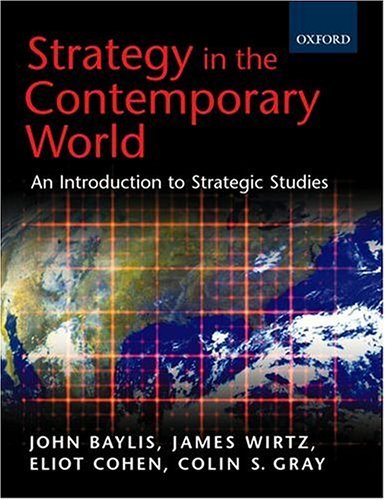
Strategy in the Contemporary World focuses on the traditional and contemporary uses of organized force for political ends. It brings together major scholars in the field and deals with both the theory and practice of strategy. Highlighting the continuing relevance of both traditional and new thinking about strategy, the text helps to clarify the complex issues of war and peace at the beginning of the twenty-first century. The editors' introduction emphasizes the central unifying theme of the the historical and continuing role of military power in support of political ends. Four broad sections the evolution of strategic thought; the theory and practice of land, sea, and air power; a range of new and adapted theories about peace and security that were developed during the Cold War; and developments in strategic thinking and practice that have taken place since the end of the Cold War, including Revolution in Military Affairs (RMA), Information (Cyber) Warfare, and Space Warfare. Strategy in the Contemporary World concludes with a return to some of the themes identified in the introduction and a discussion of the future direction of strategic studies. This carefully edited textbook offers an accessible and engaging introduction to strategic studies for all students of politics and international relations.
Pretty good as far as textbooks go. It is not without some obvious biases, but is anything? It's a textbook with an argument (one prominent one being that strategy is an art rather than a science and defends the relevance of strategic studies, that humanitarian aid is akin to war) more than a book that simply explains strategic studies. It sometimes gets into some very technical military stuff that I admit I kind of glossed over, but has several interesting chapters that give a decent overview of security and conflict in the modern day. I didn't mind the visible biases too much, but don't be bashing international humanitarian efforts when I'm just trying to learn, okay?
i haven't really read it. for sure. i've only read the introduction. but guess what, i find it really interesting. i'm sure this book will really helpfull when i enter my "thesis-writing gate." (hopefully, next year. cross fingers for me. hehehe).