

What do you think?

The Hierarchies of Cuckoldry and Bankruptcy
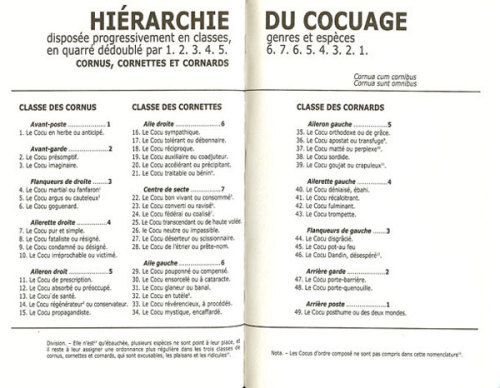
A zoological guidebook to cuckoldry and commerce Admired by Marx and Engels, the Surrealists, the Situationists, Walter Benjamin and Roland Barthes, the great utopian socialist Charles Fourier (1772-1837) has been many things to many a proto-feminist, a Surrealist ancestor, a cantankerous cosmologist, a social critic and humorist and to this day one of France's truest visionary thinkers. He was also, as this volume demonstrates, a maniacal taxonomist. In this zoological guidebook to cuckoldry and commerce, Fourier offers a caustic critique of the bankruptcy of marriage and the prostitution of the economy, and the hypocrisies of a civilization that over-regulates sexual congress while allowing the financial sector to screw over the public. Gathered together here for the first time are Fourier's two “Hierarchies” --humorously regimented parades of civilization's cheaters and cheated-on in the domestic sphere of sex and the economic sphere of buying and selling commodities. “The Hierarchy of Cuckoldry” --translated into English for the first time--presents 72 species of the male cuckold, ranging from such “common class” cases as the Health-Conscious Cuckolds, to the short-horned Sympathetic, Optimist and Mystical Cuckolds, and the Long-horned varieties of the Irate, Disgraced and Posthumous Cuckolds. For Fourier, these amount to 72 manifestations of women's “secret insurrection” against the institution of marriage. “The Hierarchy of Bankruptcy” presents 36 species of the fraudulent a range of Light, Grandiose, and Contemptible shades of financial manipulators who force creditors, cities and even nations to bail them out of ultimately profitable bankruptcies. In these attacks on the morality of monogamy and the perils of laissez-faire capitalism, Fourier's “Hierarchies” resonate uncannily with our contemporary world.
94 pages, Paperback
First published January 1, 1816
About the author
Charles Fourier
119 books109 followersFrançois Marie Charles Fourier was a French philosopher. An influential thinker, some of Fourier's social and moral views, held to be radical in his lifetime, have become main currents in modern society. Fourier is, for instance, credited with having originated the word feminism in 1837.
Ratings & Reviews
Friends & Following
Create a free account to discover what your friends think of this book!
Community Reviews
Displaying 1 - 28 of 28 reviews

February 26, 2012
This can be a handy handbook for those who are into the Occupy movement as well as being a jealous lover. Two subject matters all in one volume. Or maybe they're related to each other? Nevertheless Charles Fourier (1772-1837) was a philosopher who had a deep interest and concern for Society of his time and age. And of course, none of this have been dated at all. "Cuckoldry" and "bankruptcy" is both an unfaithful wife and economy. The two roads to ruin!
Fourier was much admired by Marx, Barthes, Walter Benjamin, The Situationists, and The Surrealists - and one can see why. Fourier has a very dry wit, and he also has a clear headed view on the culture of marriage and banking. The one big sour note in this book is that he wasn't much of a fan of the Jews. Because Jews were the bankers, blah blah. But still, don't throw the bath water out of the tub, or whatever that saying is. Wakefield Press, the publisher, is a remarkable press. Their books are small, but large in importance. I would buy their publications blindly. Please look over their site at http://wakefieldpress.com/index.html
Fourier was much admired by Marx, Barthes, Walter Benjamin, The Situationists, and The Surrealists - and one can see why. Fourier has a very dry wit, and he also has a clear headed view on the culture of marriage and banking. The one big sour note in this book is that he wasn't much of a fan of the Jews. Because Jews were the bankers, blah blah. But still, don't throw the bath water out of the tub, or whatever that saying is. Wakefield Press, the publisher, is a remarkable press. Their books are small, but large in importance. I would buy their publications blindly. Please look over their site at http://wakefieldpress.com/index.html

May 5, 2023
Gülmedim de değil aslında:)))


August 10, 2025
Caso esteja interessado em saber que tipo de cornudo é, este livro é para si. Eu não sabia de que tipo era e agora já sei.

September 15, 2015
Cojo este tipo de libros para evidenciar la intrepidez y mordacidad que tienen algunos autores de vilipendiar a la sociedad de su tiempo...
"Es aquel que hace bromas sobre sus colegas y los juzga imbéciles que bien merecen lo que les ha pasado. Quienes lo escuchan se miran sonriendo y le aplican tácitamente el versículo del Evangelio: ves la paja en el ojo ajeno y no lo viga en el propio" (6. El cornudo burlón)
Pues bien. Jerarquía de cornudos (Hiérarchie du cocuage, en su idioma original), es un pequeño libro escrito por el francés Charles Fourier y publicado por vez primera en 1837. La traducción al español está a cargo de Premia editora y además el libro contiene ilustraciones picantes a cargo de Franz von Bayros.
Lo puede conseguir, como ya es mi hábito, en su versión electrónica. Pese a su corta extensión, el libro es, dicho en pocas palabras, una larga lista de "tipos" de cornudos, cada uno acompañado de una breve pero concisa descripción relacionada, en la cual se evidencia una sátira muy aguda sobre estos personajillos de la sociedad de entonces y, ¿cómo no? de la actual. Es pues, un pequeño diccionario temático XD
"Es aquel que hace bromas sobre sus colegas y los juzga imbéciles que bien merecen lo que les ha pasado. Quienes lo escuchan se miran sonriendo y le aplican tácitamente el versículo del Evangelio: ves la paja en el ojo ajeno y no lo viga en el propio" (6. El cornudo burlón)
Pues bien. Jerarquía de cornudos (Hiérarchie du cocuage, en su idioma original), es un pequeño libro escrito por el francés Charles Fourier y publicado por vez primera en 1837. La traducción al español está a cargo de Premia editora y además el libro contiene ilustraciones picantes a cargo de Franz von Bayros.
Lo puede conseguir, como ya es mi hábito, en su versión electrónica. Pese a su corta extensión, el libro es, dicho en pocas palabras, una larga lista de "tipos" de cornudos, cada uno acompañado de una breve pero concisa descripción relacionada, en la cual se evidencia una sátira muy aguda sobre estos personajillos de la sociedad de entonces y, ¿cómo no? de la actual. Es pues, un pequeño diccionario temático XD

January 25, 2026
Komikti çevirisi de güzeldi
January 26, 2024
Hilarious, relevant, applicable, and useful.

June 3, 2013
The Transcendent or High-Flying Cuckold is the most cunning of the whole fraternity: for this reason he is placed in the center. He is the one who marries a very beautiful woman, shows her off with some fanfare, though without overdoing it, and once she has aroused general envy, he gives her up for something with high stakes, like a big position or an important partnership, after which he can make a trophy of the cuckoldry and say: "It isn't cuckoldry at that price. Do as I do and the last laugh will be yours."

September 27, 2011
Mathematician Charles Fourier's eccentric taxonomy of two of civilization's better-known hypocrisies: cuckoldry and bankruptcy, the latter far worse than the former, in Fourier's estimation, and as relevant today as when he railed against it 200 years ago. Nicely translated by Geoffrey Longnecker. Three-and-a-half stars: interesting but not spectacular.

April 8, 2025
"Civilization has never despised a great thief, but the little ones are truly men to be hung" - Charles Fourier
This was not as relevant or as funny as I'd hoped it would be.
I love Fourier the fantasist, when he's concocting absurd culinary solutions to the issues of war, imperialism, and xenophobia. He argues, in The World War of Small Pastries, that all the energies of the state war machine can be redirected into a globe spanning bake off, with cream bun canons directed into the salivating mouths of our enemies. It's a modern day gift economy adapted for the era of nation states. It's silly, but profound, because instead of rejecting nationalism, Fourier reworks it into something life sustaining. Rather than articulate an alternative conception of human nature (as unalienated! as truly human!), he simply expands it. Yes, nationalism is used to kill, but couldn't it be used to heal? I barely hear these kinds of arguments. I'm not fond of nationalism in any form, but Fourier shows that what we know as nationalism doesn't have to be. Spooks are fluid to the machines they haunt.
So yeah, Fourier the fantasist is amazing. I'm not so big on Fourier the analyst. I know it's unfair to judge everyone by Marx, but Fourier simply doesn't have any historical framework for understanding social phenomena through. He's an idealist, but one of the better ones. He believes cuckoldry is inevitable, because human desire is multiple. He details 80 species of cucks. Marriage is, clearly, unsatisfying. Monogamy constrains us, so our desire for freedom emerges through cuckoldry, an act we turn a blind eye to, delude ourselves over, or rage and revenge against. Where we could be joying in polymorphous perversities, we moralise in neurotic angst. Fourier was polyamorous and bisexual, and his characterisation of other men is that they are too, they just don't know it. They've been cucked by monogamy and heteronormativity—and they spend their whole lives in turmoil due to this conformity.
I would have loved for Fourier to go into the history of marriage. Of coverture laws that erase the legal personhood of women. Of imperialism, enforced heterosexuality, and the destruction of indigenous genders and sexualities. But all we get is an encyclopedia of cucks, and I get the feeling satirising encyclopedias was way funnier in the 19th century.
The second half, on bankruptcy, is mired in antisemitism. The introduction of the book makes a point that Fourier is an economic racist, not a biological one, but I think that's an awful take. Fourier conflates Jewish people with deceit and duplicity. He talks about how every bankruptcy they commit is celebrated. This is conspiracy logic: the idea that your enemy joys in your suffering. And like, I get that he's talking about robber barons, stockbrokers, and entrepreneurs, but the language he deploys is gross. For those of you who don't know, Jews were barred from property. For hundreds of years, it was stolen from them. That's why they're concentrated in banking. They were forced into it. Economic antisemitism is equivalent to white people complaining about migrant labourers doing their jobs better than they do at lesser wages. You mfs created these conditioned, then grew resentful when others worked better in them.
If we take the antisemitism out, Fourier is trying to articulation the absurdity of capitalist culture. Of celebrating people like Elon Musk, Mark Zuckerberg, and Travis Kalanick, who generate no fucking profit, produce increasingly worthless commodities, leech off state subsidies and investor funds, and yet are held up as leaders of industry. If we take out references to Judas Iscariot and some conniving Jewish fraternity (this is bad bad shit), he's talking about how our lives are governed by an economic fraternity of capitalists, who use PR to convince us that Steve Jobs is a genius, rather than a little bitch who threw tantrums when his workers failed him, because he relied on their labour to produce iPhones and MacBooks.
Anyway, this is probably the worst Fourier book I've read. If you've never read him before, I'd highly recommend The World War of Small Pastries instead.
This was not as relevant or as funny as I'd hoped it would be.
I love Fourier the fantasist, when he's concocting absurd culinary solutions to the issues of war, imperialism, and xenophobia. He argues, in The World War of Small Pastries, that all the energies of the state war machine can be redirected into a globe spanning bake off, with cream bun canons directed into the salivating mouths of our enemies. It's a modern day gift economy adapted for the era of nation states. It's silly, but profound, because instead of rejecting nationalism, Fourier reworks it into something life sustaining. Rather than articulate an alternative conception of human nature (as unalienated! as truly human!), he simply expands it. Yes, nationalism is used to kill, but couldn't it be used to heal? I barely hear these kinds of arguments. I'm not fond of nationalism in any form, but Fourier shows that what we know as nationalism doesn't have to be. Spooks are fluid to the machines they haunt.
So yeah, Fourier the fantasist is amazing. I'm not so big on Fourier the analyst. I know it's unfair to judge everyone by Marx, but Fourier simply doesn't have any historical framework for understanding social phenomena through. He's an idealist, but one of the better ones. He believes cuckoldry is inevitable, because human desire is multiple. He details 80 species of cucks. Marriage is, clearly, unsatisfying. Monogamy constrains us, so our desire for freedom emerges through cuckoldry, an act we turn a blind eye to, delude ourselves over, or rage and revenge against. Where we could be joying in polymorphous perversities, we moralise in neurotic angst. Fourier was polyamorous and bisexual, and his characterisation of other men is that they are too, they just don't know it. They've been cucked by monogamy and heteronormativity—and they spend their whole lives in turmoil due to this conformity.
I would have loved for Fourier to go into the history of marriage. Of coverture laws that erase the legal personhood of women. Of imperialism, enforced heterosexuality, and the destruction of indigenous genders and sexualities. But all we get is an encyclopedia of cucks, and I get the feeling satirising encyclopedias was way funnier in the 19th century.
The second half, on bankruptcy, is mired in antisemitism. The introduction of the book makes a point that Fourier is an economic racist, not a biological one, but I think that's an awful take. Fourier conflates Jewish people with deceit and duplicity. He talks about how every bankruptcy they commit is celebrated. This is conspiracy logic: the idea that your enemy joys in your suffering. And like, I get that he's talking about robber barons, stockbrokers, and entrepreneurs, but the language he deploys is gross. For those of you who don't know, Jews were barred from property. For hundreds of years, it was stolen from them. That's why they're concentrated in banking. They were forced into it. Economic antisemitism is equivalent to white people complaining about migrant labourers doing their jobs better than they do at lesser wages. You mfs created these conditioned, then grew resentful when others worked better in them.
If we take the antisemitism out, Fourier is trying to articulation the absurdity of capitalist culture. Of celebrating people like Elon Musk, Mark Zuckerberg, and Travis Kalanick, who generate no fucking profit, produce increasingly worthless commodities, leech off state subsidies and investor funds, and yet are held up as leaders of industry. If we take out references to Judas Iscariot and some conniving Jewish fraternity (this is bad bad shit), he's talking about how our lives are governed by an economic fraternity of capitalists, who use PR to convince us that Steve Jobs is a genius, rather than a little bitch who threw tantrums when his workers failed him, because he relied on their labour to produce iPhones and MacBooks.
Anyway, this is probably the worst Fourier book I've read. If you've never read him before, I'd highly recommend The World War of Small Pastries instead.

June 2, 2020
Charles Fourier è stato un filosofo francese vissuto tra il XVIII e il XIX secolo ed è stato uno dei principali esponenti del socialismo utopistico.
Il socialismo utopistico è la prima corrente del pensiero socialista che si è sviluppata appunto nel periodo in cui è vissuto Fourier e che a differenza del “socialismo scientifico”, basato su un'analisi della realtà socio-economica e politico-ecologica, si propone la costruzione di una società fondata sulla collaborazione comune e la fratellanza tra gli uomini, ma attuandone la realizzazione attraverso le riforme (metodo utopico secondo Marx, il quale propendeva più per la rivoluzione al fine di capovolgere il rapporto tra operaio e capitalista).
Ma torniamo al libricino di cui ho deciso di parlarvi.
“Elenco analitico dei cornuti”, pubblicato dalla casa editrice Il melangolo, è veramente un libro breve, di facile lettura e che impegna poco più di un’ora.
Pubblicato postumo dai suoi discepoli, lo scopo principale del saggio era divertire; per Fourier questa classificazione non era niente di più che un gioco.
La narrazione si divide in due parti: la prima riporta un elenco, per l’appunto, dei tipi esistenti di cornuti, catalogati in base alle loro caratteristiche.
Chi mai avrebbe potuto immaginare che esistono “i cornuti di ordine semplice” e “i cornuti di ordine composto”!
Tra i cornuti di ordine semplice, possiamo trovare il “cornuto immaginario”, ossia “quello che non è ancora cornuto, ma si affligge credendo di esserlo”, oppure il “cornuto stregato o orbo, che la moglie sa affascinare e inebetire al punto da fargli credere le cose più assurde.”
Tra quelli di ordine composto figura il “cornuto misantropo, che scoprendo la tresca, prende il mondo in avversione, proclama che i tempi sono marci e che la decenza è stata annientata.”
L’ironia è alla base dell’intera opera:
«Il cornuto rispettoso o procedurale: è un babbeo che protesta soltanto per valide ragioni, e senza derogare alle regole della buona educazione. Uno di questi trovando un gentiluomo a letto con sua moglie, gli disse: Molto male, signore. Non me lo sarei mai aspettato da un uomo come lei.” Poi, sedutosi su una poltrona, emise qualche altra rimostranza altrettanto energica. Al che il galante, seccato da queste apostrofi, si alza in camicia da notte e gli fa: Caro signore, mille scuse se la disturbo, ma lei è seduto sulle mie mutande. Il marito balza in piedi e dice molto cortesemente: Ah scusi, non le ho viste, ecco le sue mutande. Dopo di che andò avanti con le sue flebili lamentele.»
Dopo aver elencato i vari tipi di cornuti, nella postfazione scritta da Romain Pehel si giunge alla conclusione che le corna non sono né un bene, poiché risultano essere una semplice reazione della natura al vincolo matrimoniale, né un male, in quanto comandate dalle passioni.
Una lettura leggera che mi ha rallegrato molto, ideale per ingannare il tempo in caso di noia.
Il socialismo utopistico è la prima corrente del pensiero socialista che si è sviluppata appunto nel periodo in cui è vissuto Fourier e che a differenza del “socialismo scientifico”, basato su un'analisi della realtà socio-economica e politico-ecologica, si propone la costruzione di una società fondata sulla collaborazione comune e la fratellanza tra gli uomini, ma attuandone la realizzazione attraverso le riforme (metodo utopico secondo Marx, il quale propendeva più per la rivoluzione al fine di capovolgere il rapporto tra operaio e capitalista).
Ma torniamo al libricino di cui ho deciso di parlarvi.
“Elenco analitico dei cornuti”, pubblicato dalla casa editrice Il melangolo, è veramente un libro breve, di facile lettura e che impegna poco più di un’ora.
Pubblicato postumo dai suoi discepoli, lo scopo principale del saggio era divertire; per Fourier questa classificazione non era niente di più che un gioco.
La narrazione si divide in due parti: la prima riporta un elenco, per l’appunto, dei tipi esistenti di cornuti, catalogati in base alle loro caratteristiche.
Chi mai avrebbe potuto immaginare che esistono “i cornuti di ordine semplice” e “i cornuti di ordine composto”!
Tra i cornuti di ordine semplice, possiamo trovare il “cornuto immaginario”, ossia “quello che non è ancora cornuto, ma si affligge credendo di esserlo”, oppure il “cornuto stregato o orbo, che la moglie sa affascinare e inebetire al punto da fargli credere le cose più assurde.”
Tra quelli di ordine composto figura il “cornuto misantropo, che scoprendo la tresca, prende il mondo in avversione, proclama che i tempi sono marci e che la decenza è stata annientata.”
L’ironia è alla base dell’intera opera:
«Il cornuto rispettoso o procedurale: è un babbeo che protesta soltanto per valide ragioni, e senza derogare alle regole della buona educazione. Uno di questi trovando un gentiluomo a letto con sua moglie, gli disse: Molto male, signore. Non me lo sarei mai aspettato da un uomo come lei.” Poi, sedutosi su una poltrona, emise qualche altra rimostranza altrettanto energica. Al che il galante, seccato da queste apostrofi, si alza in camicia da notte e gli fa: Caro signore, mille scuse se la disturbo, ma lei è seduto sulle mie mutande. Il marito balza in piedi e dice molto cortesemente: Ah scusi, non le ho viste, ecco le sue mutande. Dopo di che andò avanti con le sue flebili lamentele.»
Dopo aver elencato i vari tipi di cornuti, nella postfazione scritta da Romain Pehel si giunge alla conclusione che le corna non sono né un bene, poiché risultano essere una semplice reazione della natura al vincolo matrimoniale, né un male, in quanto comandate dalle passioni.
Una lettura leggera che mi ha rallegrato molto, ideale per ingannare il tempo in caso di noia.
This entire review has been hidden because of spoilers.

November 12, 2023
Sel yayıncılığın geceyarısı kitaplarından Boynuzname. Zümrelerine, türlerine göre boynuzluları, aldatılan erkekleri sistematik bir şekilde tasnif etmiş. Kısa ve uzun boynuzlular zümresi olarak kategorize ettiği bölümlerle çok eğlenceli bir çalışma. Charles Fourier’in ondokuzuncu yüzyılda kaleme aldığı bu çalışma aslında boynuzlarlar arasındaki hiyerarşinin sınıfsal, kültürel, elbette davranışsal/ tutumsal dinamiklerini sarkastik bir şekilde tarif ediyor.
Moliere referansı çok olan bu “sözlük” çalışması, CF’nin mühendis olma isteğiyle de örtüşüyor. Öyle sistematik bir sınıflandırma, kodlama ve adlandırmayla iskeleti oluşturulmuş bir çalışma ki, taslaklarıyla birlikte son hâlini bilsek karşımıza bir “kare” çıkacak. “Aldatılma üzerine tertipli bir garabet” dediği şey bu köşeli, kapalı, aile/ evlilik kurumu sembolü olsa yeridir. 🔳
CF, politik bir dizi göndermeyle aile kurumunun, sofu, cumhuriyetçi ahlaklılığına nasıl galebe çaldığını gösteriyor. Ailenin değme yapısal işlevselcinin ulaşamayacağı bir faydalık ve işe yararlık hâli, ürkütücü derecede dikiş tutmuyor. 🧵
Kadınlara mahsuslukla erkeklere mahsusluğun toplumsal arenada nasıl oluştuğu ve çatıştığı durum komedisinde olduğu gibi ayakları üzerinde kalamıyor, düşüp düşüp güldürüyor, aksıyor. 👣
Yıkıla yıkıla kurulmaya çalışılan cumhuriyet erdemlerindeki “boynuzlanma” insanı “merdümgiriz” yapar oluyor. Diğer bir tarifiyle insan arasına çıkmaktan kaçınanla her fırsatta ahlak kurallarından dem vurana; “yalancı” sofudan, halktan kadınlara, martize; çirkininden dilbere evlilik kurumunun kaidesine kafasını çarpmayan yok. Eşitliğin ve özgürlüğün kılı kırk yaranla, gözü bağlıyla, veraset altında, sofu, pinti, dönek, hödük olanla ve niceleriyle bir araya gelinebilen belki de tek müessese olan evlilikte nasıl konuşulduğunun, ne tür müzakere, pazarlık edildiğinin, ne biçim ipliğinin pazara çıkarıldığının ayan beyanı. ❤️🔥
Bu arada kıymetli CF., feminist sözcüğü mucitliğin, ütopik sosyalistliğin kadar düşsel, büyüleyici. Takdir ederim. 🌱
Moliere referansı çok olan bu “sözlük” çalışması, CF’nin mühendis olma isteğiyle de örtüşüyor. Öyle sistematik bir sınıflandırma, kodlama ve adlandırmayla iskeleti oluşturulmuş bir çalışma ki, taslaklarıyla birlikte son hâlini bilsek karşımıza bir “kare” çıkacak. “Aldatılma üzerine tertipli bir garabet” dediği şey bu köşeli, kapalı, aile/ evlilik kurumu sembolü olsa yeridir. 🔳
CF, politik bir dizi göndermeyle aile kurumunun, sofu, cumhuriyetçi ahlaklılığına nasıl galebe çaldığını gösteriyor. Ailenin değme yapısal işlevselcinin ulaşamayacağı bir faydalık ve işe yararlık hâli, ürkütücü derecede dikiş tutmuyor. 🧵
Kadınlara mahsuslukla erkeklere mahsusluğun toplumsal arenada nasıl oluştuğu ve çatıştığı durum komedisinde olduğu gibi ayakları üzerinde kalamıyor, düşüp düşüp güldürüyor, aksıyor. 👣
Yıkıla yıkıla kurulmaya çalışılan cumhuriyet erdemlerindeki “boynuzlanma” insanı “merdümgiriz” yapar oluyor. Diğer bir tarifiyle insan arasına çıkmaktan kaçınanla her fırsatta ahlak kurallarından dem vurana; “yalancı” sofudan, halktan kadınlara, martize; çirkininden dilbere evlilik kurumunun kaidesine kafasını çarpmayan yok. Eşitliğin ve özgürlüğün kılı kırk yaranla, gözü bağlıyla, veraset altında, sofu, pinti, dönek, hödük olanla ve niceleriyle bir araya gelinebilen belki de tek müessese olan evlilikte nasıl konuşulduğunun, ne tür müzakere, pazarlık edildiğinin, ne biçim ipliğinin pazara çıkarıldığının ayan beyanı. ❤️🔥
Bu arada kıymetli CF., feminist sözcüğü mucitliğin, ütopik sosyalistliğin kadar düşsel, büyüleyici. Takdir ederim. 🌱

November 15, 2025
Creo que a introducción de geoffrey longnecker é máis interesante ca o resto do libro. What if un pensador socialista pre-marxista fixera unha exploración das dinámicas da traizón amorosa nos cornos e a traizón social dos comerciantes que fan malos negocios e declaran bancarrota? (a versión moderna sería queixarse dos rescates aos bancos) And what if dito pensador fose claramente autista e estivera obseso con organizar as cousas en categorías con nomes e con números redondos (80 cuckolds ordenados nunha escala de rancor a resignación (?), 1+2+3+4+5+6+5+4+3+2+1 = 36 tipos de ruínas dende as máis perdonables ata as máis rastreiras, etc). And what if dito pensador fose sorprendentemente feminista e non antisemita para a época? O tipo avogaba por unha especie de amor libre poliamor thingie con igualdade total na parella no século XIX, woke king
Realmente falar do libro faino máis interesante do que é, a parte dos cuckolds é entretida de ler pq son personaxes carismáticos, pero a da bancarrota perde toda a gracia moi rápido. A maior decepción é que non hai ningún paralelismo entre bancarrotas e cornudos, simplemente son dous textos inéditos que compilaron xuntos. Oh well polo menos da pra un xogo diver de tag yourself, eu estou entre o Health-Conscious Cuckold e o Tolerant or Easygoing Cuckold
Realmente falar do libro faino máis interesante do que é, a parte dos cuckolds é entretida de ler pq son personaxes carismáticos, pero a da bancarrota perde toda a gracia moi rápido. A maior decepción é que non hai ningún paralelismo entre bancarrotas e cornudos, simplemente son dous textos inéditos que compilaron xuntos. Oh well polo menos da pra un xogo diver de tag yourself, eu estou entre o Health-Conscious Cuckold e o Tolerant or Easygoing Cuckold

April 16, 2021
what a weird little book.
I'm not quite sure what to say about this. Fourier is one of the utopian Socialists that Marx and Engels criticize in their work, but Fourier is such a strange figure that its' no wonder that he both continues to fascinate (as seen in some of the works of Houellebecq) and to bore, in that no one really talks about him. But his eccentricities do potentially have something for us.
primarily, his incessant categorization and exhaustion of systems. Predating the OuLiPo, Fourier thinks economy thoroughly, not just through financial models but also ecologically and most strikingly, sexually. Fourier's most famous (or notorious) writings concern the problems of sexual economy: he is often concerned with the number of partners people have, the freeness of sexual association.
Thus this little book, concerning rankings of cuckolds and bankrupts, enclose the kernel of Fourier's thought. I'll read more of him, as this book seems more like a funny coffee table book than anything else. But maybe there's something more.
I'm not quite sure what to say about this. Fourier is one of the utopian Socialists that Marx and Engels criticize in their work, but Fourier is such a strange figure that its' no wonder that he both continues to fascinate (as seen in some of the works of Houellebecq) and to bore, in that no one really talks about him. But his eccentricities do potentially have something for us.
primarily, his incessant categorization and exhaustion of systems. Predating the OuLiPo, Fourier thinks economy thoroughly, not just through financial models but also ecologically and most strikingly, sexually. Fourier's most famous (or notorious) writings concern the problems of sexual economy: he is often concerned with the number of partners people have, the freeness of sexual association.
Thus this little book, concerning rankings of cuckolds and bankrupts, enclose the kernel of Fourier's thought. I'll read more of him, as this book seems more like a funny coffee table book than anything else. But maybe there's something more.

April 7, 2023
Strange? Yes. Incomplete? Yes. Absurd? Yes! And that's precisely what we're missing in our modern world! We've got plenty of logical arguments! Well-compartmentalised garble that proves nothing more than the arrogance of the ego.
Fourier truly was ahead of his time. He's not even in time! Total work of genius!
Fourier truly was ahead of his time. He's not even in time! Total work of genius!

November 6, 2021
Un testo che sembra satirico ma in realtà è sociologico. Catalogando le varie tipologie di cornuti Fourier analizza i mille compromessi, equilibri e convenienze che ruotano attorno al contratto sociale chiamato matrimonio.

April 13, 2020
cuck good. bankruptcy bad.

July 8, 2021
A brilliant social satire despite it's ages is more relevant than ever

May 31, 2022
I don't think taxonomy is as funny in the early 21st century as it was in the early 19th.

October 23, 2023
What cuckhold will you become when all shit hits the fan?

July 2, 2025
had to take some time to try and process whatever that was. fourier could definitely have benefitted from some sort of mental health help, but he was ahead of his time in some notions, an unexpected feminist, and an all around weird little guy. the categorisation upon categorisation, nested categorisation of the types of cuckolds and bankruptcies was hilarious but also absurd. he believed that if you categorise something enough it becomes scientific. and that is evident in his writing.
Read
May 4, 2023A wonderful text that escapes review, for fear of offending the cuckold, or the bankrupt (, and thus self).
Perhaps better appreciated if viewed as an analysis of character through taxonomy of cuckoldry. Would it be more/less enlightening if Buddha wrote the taxonomy of every pleasure that resulted in suffering?
Perhaps better appreciated if viewed as an analysis of character through taxonomy of cuckoldry. Would it be more/less enlightening if Buddha wrote the taxonomy of every pleasure that resulted in suffering?

November 15, 2010
Charles Fourier non si è mai sposato... per non diventare automaticamente cornuto, diceva scherzosamente. Sicuramente era un convinto libertino, tanto che scrisse in più fasi una serie di rapidi sketch che hanno portato a questo libro. Come capita spesso, i discepoli sono stati più realisti del re e hanno accuratamente nascosto il testo, che è stato pubblicato per la prima volta nel 1856 in versione troncata, mentre sembra che il suo primo nucleo risale addirittura al 1808. I vari ritratti, di poche righe ciascuno, sono spesso davvero azzeccati, con quell'aria retrò acuita dalla traduzione. Conviene probabilmente centellinarsi il testo, però, per gustarselo al meglio.
February 16, 2021
One of the rare Wakefield books I regret having picked up. Fournier's insight into cuckolds and bankrupts offer little to be remembered, aside from a penchant for categorization and hierarchical organization of individuals. I didn't find much to care about in the cuck section and even less in his snide tirades against those who go bankrupt — a section which has the added disgrace of being run through with antisemitism and an aristocrat's revulsion of the merchant class. I guess it was cute to tie this pair of Fourier's hierarchies into a slim volume, but, in all, one of the worst of the Wakefield series.
August 20, 2011
To be reviewed...
Here's the review: http://www.dalkeyarchive.com/book/?fa...
Here's the review: http://www.dalkeyarchive.com/book/?fa...

October 18, 2011
Curious and interesting.

April 14, 2024
If you are a collector of ways to specifically insult someone, this should be on your shelf. You should definitely try to get it into your local library.

April 25, 2017
Obra inacabada
Classificação de tipos de cornudos. Simples e composta. Por números
Classificação de tipos de cornudos. Simples e composta. Por números
Displaying 1 - 28 of 28 reviews