Jump to ratings and reviews
Rate this book

The Lifted Veil / Brother Jacob

Rate this book
Buy Serenity Publishers' paper edition of "The Lifted Veil & Brother Jacob" by George Eliot for only $5.99.

208 pages, Kindle Edition

First published January 1, 1864

40 people are currently reading
775 people want to read

About the author

George Eliot

3,120 books4,905 followers
Mary Ann Evans, known by her pen name George Eliot, was an English novelist, poet, journalist, translator, and one of the leading writers of the Victorian era. She wrote seven novels: Adam Bede (1859), The Mill on the Floss (1860), Silas Marner (1861), Romola (1862–1863), Felix Holt, the Radical (1866), Middlemarch (1871–1872) and Daniel Deronda (1876). Like Charles Dickens and Thomas Hardy, she emerged from provincial England; most of her works are set there. Her works are known for their realism, psychological insight, sense of place and detailed depiction of the countryside.
Middlemarch was described by the novelist Virginia Woolf as "one of the few English novels written for grown-up people" and by Martin Amis and Julian Barnes as the greatest novel in the English language.

Ratings & Reviews

What do you think?
Rate this book

Friends & Following

Create a free account to discover what your friends think of this book!

Community Reviews

5 stars
141 (16%)
4 stars
295 (33%)
3 stars
329 (37%)
2 stars
99 (11%)
1 star
16 (1%)
Displaying 1 - 30 of 97 reviews
Profile Image for Elizabeth.
1,576 reviews182 followers
October 4, 2024
First finish of Victober 2024 and my last George Eliot fiction! These stories are not typical for Eliot and they couldn’t be more different from each other! George Eliot must have had fun playing with the psychological trends of the day in The Lifted Veil. It’s rather sinister and has a weird but rather shocking twist.

Brother Jacob is humorous and quite clever at points. I can see Eliot having a lot of fun capturing the idiosyncrasies of a town and its families as well as delving briefly into the mind of a petty, cowardly, and selfish thief who has to contend with an unusual form of justice.
Profile Image for Leo.
4,984 reviews627 followers
April 10, 2024
2.5 stars. I only read the novella, Brother Jacob.
It was well writing and easy to get invested in. Stoughton I wanted a lot more from it. The ending feelt unsatisfactory as I wanted to know more and it felt like it ended to abruptly. Didn't like the main character but that wasn't the point either but I wanted a more justice for the ending.
Profile Image for W.D. Clarke.
Author 3 books350 followers
August 15, 2019
These two stories were a hoot, and though I actually read them in a paper Everyman's edition along with Silas Marner, I highly recommend this Oxford edition for the far superior explanatory material and "Introduction", which should be read as an afterword, and not only to avoid spoilers, but because the contextual contained therein really benefits from having a knowledge of these stories under your belt first.

Both pieces seemed to me to be so far from what I thought of GE from having read Felix Holt and Middlemarch as to be the work of a different writer. In "The Lifted Veil" she seems to be channeling Horace Walpole's Castle of Otranto, Poe's "Telltale Heart" and (avant la lettre) Wilde's Dorian, with its first person narrator and fantastical premise (of both clairvoyance and telepathy). Its "What If...?" is a big, philosophically resonant one: What...
...if the whole future were laid bare to us beyond to-day, the interest of all mankind would be bent on the hours that lie between; we should pant after the uncertainties of our one morning and our one afternoon; we should rush fiercely to the Exchange for our last possibility of speculation, of success, of disappointment; we should have a glut of political prophets foretelling a crisis or a no-crisis within the only twenty-four hours left open to prophecy. Conceive the condition of the human mind if all propositions whatsoever were self-evident except one, which was to become self-evident at the close of a summer’s day, but in the meantime might be the subject of question, of hypothesis, of debate. Art and philosophy, literature and science, would fasten like bees on that one proposition which had the honey of probability in it, and be the more eager because their enjoyment would end with sunset. Our impulses, our spiritual activities, no more adjust themselves to the idea of their future nullity, than the beating of our heart, or the irritability of our muscles. (29)
What if Middlemarch were not narrated by that wise, ironic, all-knowing voice, one wonders?

"Brother Jacob" is, by contrast, a humorous confection about a confectioner who is full of humors —but who possesses zero self-knowledge and an infinite capacity (in his own estimation, at least) for self-reinvention. This provides Eliot an opportunity to let loose upon a satire in the manner of Voltaire, say. David Faux steals his poor mother's savings, reinvents himself as a respectable burgher and dupes an entire town into abandoning their cherished traditions and buying from him foodstuffs that they used to make themselves. Nascent consumerism and the idiocies and complacencies of small-town life are thereby skewered before David must meet his inevitable comeuppance. A dee-lite!
Profile Image for Darryl Friesen.
178 reviews49 followers
October 6, 2024
The Lifted Veil ⭐️⭐️⭐️
Brother Jacob ⭐️⭐️⭐️⭐️⭐️

Two rather unusual novellas to finish off my Year of George Eliot! TLV is a bizarre exploration of the pseudoscience of GE’s day, and while it was probably appreciated as a psychologically creepy and morbidly fascinating tale then, like many Victorian tales involving things like phrenology, revivification, and mesmerism, it does not age well… However, BJ was HILARIOUS! I laughed the whole way through, and thoroughly enjoyed the interaction of humour and moralizing through the characters of the innocent Jacob and the worldly-wise David.

The hugest, most appreciative “Thank you” to all of the good friends who joined me along the way!! Your companionship and conversation greatly enriched my journey through GE’s fiction—I’m incredibly grateful for you all!!
Profile Image for Stephanie.
521 reviews84 followers
Read
October 7, 2024
I must admit that I went into this one with high expectations because George Eliot is one of my absolute favorite authors. These stories are very different from Eliot's usual style, and both stories are quite different! "The Lifted Veil" is pretty ominous with a weird yet shocking plot twist. I've read it three times, and I find it pretty unmemorable except for the end. "Brother Jacob" is a bit more clever. I read this with a lovely group of friends, and most of them found this one humorous, but for me the humor fell flat and was borderline cringeworthy. I enjoyed the themes explored in both stories, but overall they were fun but very mid for me. In my opinion, George Eliot really shines in novel form.
Profile Image for George.
3,258 reviews
January 19, 2023
Two engaging short stories of around 40 pages each.

‘The Lifted Veil’ is narrated by an old man, an egocentric clairvoyant, who recounts his fascination for Bertha Grant when he was a young man. He has visions about his future.

‘Brother Jacob’ is a satirical modern fable about David Faux, and industrious young man whose lies unravel him. His brother Jacob is an innocent, good natured, mentally handicapped young man.

‘The Lifted Veil’ was first published in 1859 and ‘Brother Jacob’ in 1860.
Profile Image for Pamela.
Author 10 books153 followers
April 27, 2015
After years of rereading George Eliot's major books--Middlemarch, Daniel Deronda, etc.--I wanted to experience some of her "minor" works. The two novellas in this volume are engrossing and and enjoyable examples of Eliot working in a somewhat different vein than I have previously seen. In "The Lifted Veil," it's the supernatural: a young man is tormented by his ability to hear the thoughts of those around him. The narrative amounts to a persuasive argument that our pleasure and sense of meaning in life are almost wholly dependent on the fact that much of the world remains mysterious to us. "Brother Jacob" is Eliot in full-out satirical mode. A humble country fellow tries to pass himself off as an haute-bourgeois, only to be exposed in comic fashion. Nobody comes off very well, but Eliot extends great tolerance to her community of fools.
Profile Image for Tocotin.
782 reviews116 followers
March 21, 2019

The Lifted Veil is outstanding. It’s apparently Eliot’s only one supernatural story, and I totally didn’t expect it from her! It contains a quite chilling scene of post-mortem blood transfusion, and the main character is a man gifted with a horrible ability to anticipate the thoughts and deeds of others. But the most interesting character is his fiancee Bertha, who in turn resembles my second-favorite Eliot’s character, the beautiful Rosamund from Middlemarch.

Brother Jacob is a story of a greedy young guy, who does some shameful deed, then gets to open a popular confectionery store and is going to marry a pretty daughter of a respected local squire, when… Well, it ends a bit predictably, and has a 18th-century feel of a story with a moral, so I was not wooed. Eliot’s style is very pleasurable, though.
Profile Image for Lee Foust.
Author 11 books213 followers
July 22, 2024
We, I somehow found both of these tales a bit tedious to read for some reason, yet they've stuck with me these last coupe of days while I've been contemplating what to say of them here. Apparently I'd read "The Lifted Vei" before and even reviewed it here and then forgotten all abut it. My comment then was that I found it insufficiently Gothic. This time through I had the opposite feeling, that it was rather too Gothic, even kind of a parody of E. A. Poe. Still, in the end, It is an interesting tale, focusing on the Romantic conception, I think, of the weak, dreamers among us, the syphilitic artists fading away with consumption and a dreamy dis-attachment with reality. Unhealthy yet revolutionary. 0f curse Eliot brings morality into it as we, in the form of human fellowship, and that makes the tale a tad more interesting as most romantic loner authors avoid the topic or are entirety hostile to society--and why not? The macho man standard does us no favors individually or as a culture unless you're a war profiteer. The ending, too, is a bit of a fizzle, really--we've had too much murder and mayhem in literature to be all that scandalized by a mere thought of murder.

This small collection's second tale irked a bit as it's a satire and grated after the more serious "Lifted Veil." While our editor finds it just the right anti-compliment, I found myself disappointed, hoping for a second, perhaps even better Romantic or Gothic tale. Even though I've written a satiric novel of my own--about the Trump presidency--I find that satire doesn't age all that well. At any rate, this is surely a tale to point to when they ask you why all these artists, intellectuals, and teachers are so down on capitalism: as the story points out, the present system incentivizes moral decay, opportunism, exploitation, and tooth decay. Time for something new, some far more humane system to build a word around.
Profile Image for Maan Kawas.
811 reviews101 followers
August 17, 2020
I really enjoyed these two novellas. "The Lifted Veil" is a kind of supernatural story which attracts you from the first lines. I particularly loved its philosophical deep dimension concerning the self, knowledge and living. "Brother Jacob", on the other hand, is a fable-like humorous and satirical novella.
Profile Image for Jo Books.
232 reviews58 followers
October 31, 2020
3.5/5🌟
Ha sido mi segunda lectura de la archiconocida Mary Anne Evans (George Eliot, autora de MIDDLEMARCH) y no puedo estar más enamorada de su estilo y sus dotes como escritora. Este año me inicié en su literatura con la obra "EL MOLINO DEL FLOSS", que a pesar de resultar denso en algunos momentos, se convirtió en una de mis mejores lecturas de este año, y antes de ponerme con su gran obra, el clásico inglés costumbrista por excelencia (ya sabéis que yo y el costumbrismo no nos llevamos muy bien) quería seguir indagando en algunas de sus otras novelas menos conocidas.
El otro día encontré estos dos relatos en la fnac, y me dije ¿por qué no? A pesar de no ser yo una amante de las novelas cortas o recopilaciones de relatos, pensé que para seguir haciéndome al estilo de la autora y teniendo en cuenta que el argumento me llamaba tanto la atención, serían una buena opción.
He de deciros que esta autora no decepciona y que me ha conquistado de nuevo en estas 200 páginas. Son dos historias sencillas, muy básicas y cortitas pero que ya con solo la prosa de Evans y todo lo que esconde detrás me ha enamorado.

Sin duda mi historia favorita ha sido la primera "El velo alzado", que tiene un punto de sobrenatural muy interesante y una historia muy guai. Creo que habla de temas muy profundos e interesantes como son la ciencia, la muerte, el tiempo, la ambigüedad de la vida, lo que significa vivir... Y todos estos temas llevados de forma muy sutil, a través de la metáfora de "el velo alzado" que me parece sublime. Este relato me ha fascinado y le doy 🌟🌟🌟🌟/5.

Y luego tenemos "El hermano Jacob", un relato muy distinto en todos los aspectos, en mi opinión algo menor, pero aún así muy disfrutable. Es cierto que si el otro trataba temas más ambiguos y filosóficos este es más directo y con cierta moralina, pero aún así es muy interesante. Habla de temas más palpables en esa época como las costumbres sociales, la función de ama de casa, la ambición, los lazos familiares, el mal que uno se hace a sí mismo a través de malas acciones, el karma... y todos estos temas se tratan con cierto humor y cierta maestría que los hacen mucho más complejos. Ha este relato le doy
🌟🌟🌟/5.

En definitiva, considero a Evans una de las autoras más inteligentes y brillantes que he leído, porque en cada frase hay un ingenio y una elocuencia de la que otros autores no pueden presumir. Además se mueve en diferentes campos y sabe jugar con toda clase de elementos. Me muero por seguir leyendo cositas de ella.
Profile Image for Magnús Jochum Pálsson.
279 reviews10 followers
July 27, 2021
Fyrri sagan, The Lifted Veil, olli miklum vonbrigðum. Náði mér ekki og vakti litla spennu.
Seinni sagan, Brother Jacob, var hins vegar mjög fyndin. Minnti mann á gott vandræðalegt breskt sjónvarp. Heildaryfirbragð bókarinnar er samt sem áður lala, skil ekki alveg af hverju þessar tvær eru flokkaðar saman.
Profile Image for izzy.
160 reviews82 followers
May 4, 2019
the lifted veil = the phantom thread
brother jacob = willy wonka and the chocolate factory
no i will not be taking criticism on this
Profile Image for Kyo.
514 reviews8 followers
July 11, 2022
Liked the first story, the second also was fun to read, but a bit predictable. However, a very solid fun read.
Profile Image for konstantina .
133 reviews8 followers
June 16, 2023
Read for uni. I didn’t really like the first story but hopefully I can skip it on the exams and write about sth else.
Profile Image for Iris ☾ (iriis.dreamer).
485 reviews1,178 followers
July 29, 2023
Mi incursión en la narrativa de George Eliot no resultó siendo lo que mi yo de la época esperaba. «Middlemarch», se me hizo cuesta arriba y no supe valorarlo positivamente, por ello en un futuro espero releerlo y sacarle mucho más jugo. Lo que sí que es una verdad irrevocable, es que esta posee el maravilloso don de la escritura (sumamente pulcra y perfecta) y se puede apreciar en este compendio de dos nouvelles publicadas por @albaeditorial.

Me ha sorprendido gratamente este reencuentro, más que nada porque he descubierto una cara de la autora que desconocía. En el primer relato (y sin duda mi preferido), titulado «El velo alzado», seremos partícipes de una historia que mezcla lo gótico con pinceladas de realismo mágico pues su protagonista tiene visiones y puede leer el pensamiento de los que le rodean. La oscuridad se cierne sobre él cuando se enamora perdidamente de una mujer a la que le rodea un halo mezquino y malvado.

Por otro lado, en «El hermano Jacob», seremos partícipes de una historia que bien podría definirse como fábula. Narrada con un tono casi humorístico nos presenta a un hombre que no está satisfecho con la vida que lleva y aspira a ser un gran aventurero aunque en el proceso deba obrar llevado por vergonzosos actos. Obviamente, la suerte le sonreirá hasta que los demonios de su pasado vuelvan al presente y le despierten de un sueño que nunca fue real.

Cabe destacar que esta es solo una pincelada de lo que encontraréis entre sus páginas. La maestría con la que George Eliot escoge las palabras, como traza con perfecta sutileza una trama a la que no le falta detalle, es sencillamente fascinante. Demuestra conocer en profundidad la sensibilidad del amor, de las emociones y las relaciones humanas jugando con un estilo narrativo de lo más acertado.

En definitiva, solo me queda deciros que me siento reconciliada con la autora y con ganas de seguir leyendo su obra. Si no os apetece de momento aventuraros a leer sus obras más largas os animo vehementemente a leer estos títulos pues creo que son una inmejorable primera toma de contacto.
Profile Image for Dillon.
79 reviews1 follower
October 24, 2022
a woman on the train just insulted george eliot so I read this even harder
Profile Image for Ella.
215 reviews
November 2, 2024
read brother jacob 23/10/2024

fascinating about learning disability and colonialism -- jacob presumed not to be a flaw in the plan due to his learning disability, also similar to of mice and men. if people didn't see some people's voices as unvaluable, david wouldn't have been able to get away with so much of his colonial and duplicitous activities!
Profile Image for Matthew.
1,172 reviews40 followers
August 10, 2025
The Lifted Veil and Brother Jacob are two lesser-known George Eliot works. This is not surprising since they are short stories, though some refer to The Lifted Veil as a novella. The stories do not have the length of a Victorian novel in which to breathe, so the reader must find other merits in them.

This the reader has failed to do if the ratings on Goodreads are anything to go by. Whether reading the stories separately or in this two-story edition, the ratings tend to peak at three stars for both stories. Allowing for my partiality to George Eliot, I think that both stories deserve a higher rating. I am awarding the book five stars. This is mainly for The Lifted Veil. Brother Jacob is perhaps a four-star story, but has enough points of interest to prevent me deducting a star.

Despite valiant attempts by Helen Small in her introduction to find common ground between the two stories, they do not share many features. The Lifted Veil is a ‘jeu de melancolie’, a grim Gothic tale that involves precognition, telepathy and attempted murder. Some critics even view the story as early science-fiction due to its ending which involves the revivification of a corpse, but I think that is pushing it a little bit. Brother Jacob is a ‘jeu d’esprit’, a light-hearted satire or fable that makes fun of human greed.

So let us look at The Lifted Veil first. The story is narrated by Latimer. Critics hasten to apply the clichéd phrase ‘unreliable narrator’ to him, but there is little reason to doubt what he is telling us, even if we acknowledge the gloomy slant that he puts on events.

Latimer has precognitive skills, and can predict the precise moment of his death, and the circumstances in which it will happen, even down to where the servants will be at the time. He is writing his account a month before the day that this will happen. By giving the reader this information, Eliot puts us into Latimer’s world. Like Latimer, we know the outcome of the story, and are powerless to unlearn this information or prevent the event happening.

Is the future preordained? Are we helpless to prevent it? How does this fit in with Eliot’s scepticism about a god? Eliot does not discuss the theological implications of the story. Her interest is in Latimer’s plight – the unusual gift that does not bring him happiness.

Indeed, Latimer seems doomed to an early death from the moment we meet him. His mental and physical health are precarious. He has a delicate, sensitive disposition, and his temperament is not helped by reading morbid German romantic books. I suspect he loves Goethe, and identifies with young Werther (a work I shall be reading soon).

Aside from predicting the future, Latimer can read minds. He soon finds that people’s minds are not worth reading:

“But this superadded consciousness, wearying and annoying enough when it urged on me the trivial experience of indifferent people, became an intense pain and grief when it seemed to be opening to me the souls of those who were in a close relation to me--when the rational talk, the graceful attentions, the wittily-turned phrases, and the kindly deeds, which used to make the web of their characters, were seen as if thrust asunder by a microscopic vision, that showed all the intermediate frivolities, all the suppressed egoism, all the struggling chaos of puerilities, meanness, vague capricious memories, and indolent make-shift thoughts, from which human words and deeds emerge like leaflets covering a fermenting heap.”

This is an extraordinarily pessimistic and misanthropic passage for a George Eliot story. She is usually the most outward-looking and generous-spirited of writers in relation to other people. However, Eliot, like Latimer, was prone to fits of depression. Perhaps this is how she sometimes saw others.

Latimer’s robustly healthy brother Alfred is due to marry Bertha Grace, but Latimer is fascinated by Bertha too. He imagines that Bertha might like him better, and has visions of their marriage. Sadly Bertha is proof against his telepathic powers, but he does experience a precognitive incident in which he imagines a time when Bertha will indeed be married to him, and will despise him.

This does not of course prevent these events from coming to pass. Alfred is killed in a hunting accident, and Latimer marries Bertha, who soon tires of him. She is not nearly as deep or exciting as Latimer imagines, her motivations being shallow and egotistical.

Events lead up to a surprising denouement involving Bertha’s servant, which I had better not reveal. The story is an intense and shocking one by Eliot’s standards, a leap into territory unexplored by her novels, and close to the work of Poe in spirit. Some reader find the story tedious, but if you are willing to invest in Eliot’s wordy and weighty style, this is a rewarding tale.

Brother Jacob is a lighter story, but not without many points of interest. Brother Jacob is not a monk, but an actual brother, and his fraternal relationship with the protagonist will prove essential to the story.

It is Jacob’s brother David who is the central character here. He is very much an anti-hero, a man who has foolishly decided to become a confectioner due to his sweet tooth. Now he has last interest in confectionery products, and wants to escape to the West Indies where he imagines that being a white person will give him special status.

Some critics cannot help stressing the story’s colonialist elements. David makes a living with products made with sugar, an important part of the trade that drove colonialism, and activities in countries around the world. He imagines himself possessing white privilege, but soon finds out that there are enough white men dominating the field in the West Indies.

David is also something of a capitalist. He seeks to make money, and use this money to better himself. In order to make his escape to the West Indies, David steals his mother’s savings. However, when he tries to hide them, he blunders into his simple brother Jacob. Jacob, armed with a scary pitchfork, is an imposing figure who will expose his brother’s theft.

To prevent this happening, David bribes Jacob with sweets, but this only endears Jacob more to his brother, making theft of the stolen money even more impossible. Jacob represents a simpler version of David. Both brothers are driven by appetites, David by money and Jacob by sweet products. Is David that much more civilised or sophisticated than the simple brother whom he despises?

Indeed, other characters are similarly easily swayed by other forms of sweet products, not all of them money or confectionery. After his West Indies trip fails, David returns home and sets himself up again as a confectioner, unable to escape his vocation. Now he has changed his name from the appropriate David Faux to the equally telling name of Edward Freely.

He may only be a confectioner, but Edward freely insinuates himself into the favours of the small town in which he lives. Soon, the local women are giving up home-made products in favour of Edward’s delicious but expensive ready-made items. They are being seduced by the ease of capitalism into giving up their own hard-earned talents.

Edward thus gains acceptance from the reluctant community. Despite his pasty complexion and his absence of lips (a point that Eliot dwells on with obvious amusement), he impresses the locals with tall tales of his time in the West Indies, and uses flattery to insinuate himself into the affections of the community, including Penny Palfrey, who is ready to give up her admirer and marry him.

David/Edward’s charms and character are like the products he sells – full of sugar that is appealing to the taste buds but empty of any serious substance, and perhaps even bad for you. Fortunately there is Nemesis in story for Edward Freely, and the morals of the town’s women who have started using his products in place of cooking their own will be saved.

When David’s parents die, he cannot resist claiming his heritage. Fortunately, his parents do not decide to punish him for his early theft. Less fortunately, contact with his family draws the attention of his brother Jacob, who descends on the town. Soon Jacob is happily demolishing his way through David’s confectionery store, and betraying both his relationship to David, and David’s earlier theft.

Jacob’s role in the story is that of a wise idiot. He lacks sense, but he exposes the foolishness of others. We may wonder who the real idiot is here – the harmless Jacob, the shallow and greedy David, or the gullible townsfolk who are so easily manipulated by David. All of them are easily led astray by a little sugar.

Eliot’s story is a humorous fable about greed and commercialism, but her satire is not too bitter. David’s amoral actions have no lasting consequences for anyone, not even for him, and we suspect he will set up his business in another small town and try his luck again.

For a seemingly trivial story, Brother Jacob is not as light as it first seems. Unlike David’s confectionery, this is not all sugar and no substance. There is a little vinegar in this product, and a moral too. It is also good fun to read.

I may not have been able to persuade you that these are great George Eliot stories, but they are as great as the short story medium allows them to be. Both stories are just over 40 pages long, and yet manage to pack a good deal of meaning into their short length.
Profile Image for yo entre letras y paginas.
103 reviews167 followers
April 13, 2021
Este libro incluye dos novelas cortas de George Eliot, son cortas pero tienen mucho que aportar, con mensajes profundos. El tema de la tentación es el que está presente en ambas y en las dos historias hay involucrados dos hermanos.

Disfruté muchísimo la historia de 𝐄𝐥 𝐯𝐞𝐥𝐨 𝐚𝐥𝐳𝐚𝐝𝐨, no me esperaba ese tipo de historia, tiene un poco de elementos góticos y fantásticos. El protagonista es un joven llamado Latimer, dice ser “un poeta sin voz” , Latimer es emocional, sensible a lo que el mundo expresa, y me refiero al mundo no a las personas; el correr del agua, la luz del sol por la mañana, por ejemplo.

"𝐸𝑟𝑎 𝑐𝑜𝑚𝑜 𝑠𝑖 𝑚𝑖 𝑟𝑒𝑙𝑎𝑐𝑖𝑜́𝑛 𝑐𝑜𝑛 𝑚𝑖𝑠 𝑠𝑒𝑚𝑒𝑗𝑎𝑛𝑡𝑒𝑠 𝑠𝑒 𝑟𝑒𝑑𝑢𝑗𝑒𝑟𝑎 𝑐𝑎𝑑𝑎 𝑣𝑒𝑧 𝑚𝑎́𝑠, 𝑎𝑙 𝑡𝑖𝑒𝑚𝑝𝑜 𝑞𝑢𝑒 𝑚𝑖 𝑟𝑒𝑙𝑎𝑐𝑖𝑜́𝑛 𝑐𝑜𝑛 𝑙𝑜 𝑞𝑢𝑒 𝑙𝑙𝑎𝑚𝑎𝑚𝑜𝑠 𝑒𝑙 𝑚𝑢𝑛𝑑𝑜 𝑖𝑛𝑎𝑛𝑖𝑚𝑎𝑑𝑜 𝑎𝑑𝑞𝑢𝑖𝑟𝑖́𝑎 𝑛𝑢𝑒𝑣𝑎 𝑣𝑖𝑑𝑎"

Un día, de repente, Latimer tiene el don de leer mentes e incluso tiene algunas visiones y sensaciones sobre el futuro. Esta capacidad que adquiere más la aparición de Bertha, futura prometida de su hermano mayor, llegan a dar un giro enorme a su vida. Aquí se abre la puerta y entra la tentación, el deseo de aquello desconocido, de aquello prohibido. Latimer puede leer el pensamiento de todos, pero no el de Bertha.

"𝐵𝑒𝑟𝑡𝘩𝑎 𝑒𝑟𝑎 𝑚𝑖 𝑜𝑎𝑠𝑖𝑠 𝑑𝑒 𝑚𝑖𝑠𝑡𝑒𝑟𝑖𝑜 𝑒𝑛 𝑒𝑙 𝑑𝑒𝑠𝑖𝑒𝑟𝑡𝑜 𝑚𝑜𝑛𝑜́𝑡𝑜𝑛𝑜 𝑑𝑒𝑙 𝑐𝑜𝑛𝑜𝑐𝑖𝑚𝑖𝑒𝑛𝑡𝑜."

𝐄𝐥 𝐡𝐞𝐫𝐦𝐚𝐧𝐨 𝐉𝐚𝐜𝐨𝐛: Aquí la historia gira alrededor de David Faux, un pastelero aprendiz que se considera y aspira ser un gran personaje. Él está seguro de que el lugar en donde está no es a donde pertenece, cree poseer más que todo aquello que le parece mezquino y diminuto. Así que decide robarle dinero a su madre para emprender el viaje a su nueva vida en las Indias Orientales.

"𝑆𝑢 𝑎𝑙𝑚𝑎 𝑠𝑒 𝘩𝑒𝑛𝑐𝘩𝑖́𝑎 𝑑𝑒 𝑙𝑎 𝑖𝑚𝑝𝑎𝑐𝑖𝑒𝑛𝑡𝑒 𝑠𝑒𝑛𝑠𝑎𝑐𝑖𝑜́𝑛 𝑑𝑒 𝑞𝑢𝑒 𝑑𝑒𝑏𝑖́𝑎 𝑙𝑙𝑒𝑔𝑎𝑟 𝑎 𝑠𝑒𝑟 𝑎𝑙𝑔𝑢𝑖𝑒𝑛 𝑖𝑚𝑝𝑜𝑟𝑡𝑎𝑛𝑡𝑒; 𝑑𝑒 𝑞𝑢𝑒, 𝑒𝑛 𝑠𝑢 𝑐𝑎𝑠𝑜 𝑑𝑒𝑠𝑐𝑎𝑟𝑡𝑎𝑏𝑎 𝑝𝑜𝑟 𝑐𝑜𝑚𝑝𝑙𝑒𝑡𝑜 𝑙𝑎 𝑝𝑜𝑠𝑖𝑏𝑖𝑙𝑖𝑑𝑎𝑑 𝑑𝑒 𝑡𝑒𝑛𝑒𝑟 𝑞𝑢𝑒 𝑎𝑐𝑒𝑝𝑡𝑎𝑟 𝑢𝑛 𝑑𝑒𝑠𝑡𝑖𝑛𝑜 𝑚𝑒𝑧𝑞𝑢𝑖𝑛𝑜...𝑑𝑒𝑠𝑑𝑒𝑛̃𝑎𝑏𝑎 𝑙𝑎 𝑖𝑑𝑒𝑎 𝑑𝑒 𝑟𝑒𝑠𝑖𝑔𝑛𝑎𝑟𝑠𝑒 𝑎 𝑠𝑒𝑔𝑢𝑖𝑟 𝑒𝑛 𝑙𝑎 𝑚𝑒𝑑𝑖𝑎"

David quería estar alto y que lo miraran con envidia

"𝐴 𝐷𝑎𝑣𝑖𝑑 𝑙𝑒 𝑔𝑢𝑠𝑡𝑎𝑏𝑎 𝑞𝑢𝑒 𝑙𝑜 𝑒𝑛𝑣𝑖𝑑𝑖𝑎𝑟𝑎𝑛; 𝑙𝑒 𝑖𝑚𝑝𝑜𝑟𝑡𝑎𝑏𝑎 𝑚𝑒𝑛𝑜𝑠 𝑞𝑢𝑒 𝑙𝑜 𝑎𝑚𝑎𝑟𝑎𝑛"

Pero David tiene un hermano, “el idiota Jacob”, quien en total ignorancia, se llega a convertir en su Némesis.

La ambición de David lo llevará lejos y alto, demasiado alto…

Hermosa prosa, fácil de leer y el libro está lleno de frases memorables. Definitivamente me quedo con el inmenso deseo de seguir leyendo a la autora, todo lo que haya publicado.
Profile Image for Paul Blakemore.
164 reviews8 followers
August 24, 2012
This book didn't feel like George Eliot when I read it. It has almost a sci-fi feel to it - and a sullen protagonist who narrates a claustrophobic and grim tale of a man cursed with a vision into the hidden thoughts of those around him. 

It's interesting to view this as a slightly gothic-feeling counterpoint to Middlemarch, a book concerned with understanding the inner workings of ordinary people and their often painful actions, whereas here we have a slightly macabre thought experiment into what it would literally be like to see and understand the people around us.


Again,  surprising in style: shallower, less serious and funnier than her later work, but I found it no less enjoyable for that. It's a simple morality tale at its heart but it has some enjoyable characters, none more so than the protagonist, David Faux, who is a wonderfully devious and cowardly reprobate. 
Profile Image for Kris.
1,646 reviews240 followers
December 15, 2013
A rather odd pairing of two tales. The first had a romantic Frankenstein-esque feel to it, a kind of prose I like reading, entertaining a suspension of disbelief. It was a nice short little story, gothic and tragic, with a great ending.
I felt The Lifted Veil was better than Brother Jacob, but both are very prose heavy, with only rare spurts of dialogue. Brother Jacob is much more humorous and derisive than The Lifted Veil. The first and second chapters at first seem irreconcilable, appearing to have nothing to do with each other, but the third chapter puts it together and has an interesting return to the beginning. I bet neither are Eliot's finest, but both are good samplings.
Profile Image for cardulelia carduelis.
680 reviews39 followers
December 25, 2020
Of the two stories in this collection, the Lifted Veil is by far the superior. There is a fantastical element to it, the eponymous veil is that of time and other people's minds. Our narrator can get the feel for a person, know how they perceive him, and because he has a weakened physical state and is a self-ascribed poet, it is often not favorable.

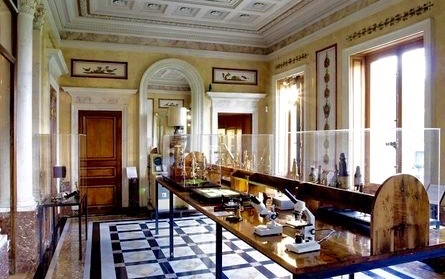
The story though is full of a doomed, dramatic romance, family, and an exciting account in Geneva - a place I am very familiar with and hold a lot of love for. Oh how I wish I could swim out in the lake again with those huge dark forms floating beneath me. Eating hot fried fish and potatoes on the beach side of the Bains de Paquis. Walking around the airy open spaces of the little house on the banks that was filled with microscopes, Geneva's own History of Science Museum just off the lake.
The story is very satisfying and well written and I was eager to pick up Brother Jacob.

Seriously, look at this place. It is my fantasy residence, just off of the lake.


Brother Jacob is a sad story but in a different way to the Lifted Veil. The good boy Davy can't help but be kind to his mentally impaired brother and in doing so finds his own downfall after stealing a small fortune in guineas from his mother and fleeing to the West Indies. The whole story is very on the nose about the expectations of young British men in the colonies, that people of color would fall over themselves with glee that the white man would appear on their shores.
Eliot phrases this beautifully here:

"When a man is not adequately appreciated or comfortably placed in his own country, his thoughts naturally turn towards foreign climes; where a young gentleman of pasty visage, lipless mouth, and stumpy hair, would be likely to be received with the hospitable enthusiasm which he had a right to expect."

I think it's the 'lipless mouth' that pushes it over the edge for me.
So Davy loses the gravy but makes some sweet sugary swans, no doubt he's already onto the next town with his story of exotic esotericism, pursued by his adoring, lozenge-additcted, rake-wielding brother Jacob.

This was my first read of Eliot and I really enjoyed the writing. Middlemarch will be read eventually!
Recommended.

Profile Image for Rocío G..
84 reviews4 followers
November 16, 2021
At first glance 'The Lifted Veil', George Eliot's famous fantasy short story, impressed me as particularly non-Eliotic. It is morbid, lurid and almost sensational. Like many of her novels, it is a testament to Eliot's keen interest in the scientific debates of her day. But it is darker, bleaker, less humanistically optimistic than I've grown to expect from her work. Yet Eliot's preoccupation with the importance of sympathetic attention is still there. Through the protagonist's clairvoyance Eliot explores what lies 'on the other side of silence', as she beautifully put later in Middlemarch. What would we find, truly, if we were to have uninterrupted access to other people's inner lives? Strikingly, Latimer finds no enrichment from his communion with other human 'souls', as he puts it, only torment. He finds no depths of motive or worth, but base pettiness and callousness. What is lacking? Could it turn out that sympathy might be, after all, not adequate in itself as the basis for moral life?

By total contrast, 'Brother Jacob' is very funny. It’s humour is of the Austen and Thackeray variety, it pokes fun at the vices and inconsistencies of human beings. It is also almost Dickensian in its nomenclature: the sly confectioneer at the centre of the story is called "Faux", though he briefly attempts to go by "Freely". Yet this sharply witty fable retains Eliot's characteristically sharp insight into the moral nature of man, providing a scathing indictment of the sort of 'instrumental reasoning' (as Charles Taylor would later put it) favoured by capitalism.
Profile Image for J..
332 reviews
February 1, 2024
I wanted to read a little more George Eliot to see if my initial tepid reaction was merited or not, so I picked up this volume containing two novellas by the pseudonymous author: The Lifted Veil and Brother Jacob.
The former story focuses on Latimer, a man who thinks himself to be clairvoyant. He also fancies his brother's fiancee, whom he marries after his brother's death. But perhaps he should have been able to see a little farther into the future in order to protect himself from impending doom.
Brother Jacob is the story of David, a young man who plans on stealing his mother's small fortune in order to seek riches in Jamaica. He returns to England under an assumed name and becomes a successful confectioner, until his past comes back to upset his carefully constructed new life.
Both stories seem to belong in the category of morality tales. They feel rushed, very plot driven, and offer much too facile endings with a very explicit ending tying things together. I did not care much for either the writing nor the stories themselves and, frankly, I feel like Eliot's works may not be for me, making me weary of ever wanting to tackle her much much longer works.
154 reviews
April 20, 2025
maybe i would’ve enjoyed the lifted veil more if i’d just stuck with it but i couldn’t read more than two or three pages at a time. latimer was soo annoying and insufferable, and i could understand why bertha wanted to poison him. yes the way that eliot presented the themes was interesting and the work has a lot of literary merit, but latimers so unnecessarily self-absorbed, so white man podcast-like that i couldn’t get enthralled. tbh maybe that anxiety and resolution that you can ready other people’s minds just spoke to me and im taking it out on latimer. i’m not surprised that people had suspicions that this was written by a woman, though — her awareness and commitment to the bit is truly unique and polished in a way that only a feminine spirit can conjure.
HOWEVER, i reallyyy loved brother jacob; david is a prick but easy to understand, and i found this commentary to be especially relevant and entertaining. george eliot is a wonder fr and i definitely need to read more of her work
Profile Image for Tallon Kennedy.
265 reviews5 followers
July 28, 2018
These two short stories from George Eliot are each about 40-50 pages, and the first one "The Lifted Veil" is really remarkable. It is so unexpected from Eliot because it's a gothic tale with Frankensteinien themes, delivered in the first-person. It ruthlessly examines the tensions between consciousness, empathy, and knowledge. It is a depressing story about the importance of ignorance within the human condition set in a time when anxieties surrounding increasing scientific knowledge were abound. Definitely give this a read. The second story is "Brother Jacob," which is a comical story in which Eliot takes on a less philosophical and serious tone to the writing. The story is simple and is a moral tale about the consequences of running away from the past and the tensions between tradition and an evolving economy. It's okay, the ending is well-done; but "The Lifted Veil" is the real stunner here.

The Lifted Veil -- 8/10
Brother Jacob -- 6/10
Displaying 1 - 30 of 97 reviews

Can't find what you're looking for?

Get help and learn more about the design.