

What do you think?

Curries & Bugles: A Memoir & Cookbook of the British Raj
Author Jennifer Brennan grew up in the heart of the British Raj in India, a witness to the unique lifestyle and delectable cuisine born of the fusion between the Anglo and Indian worlds. In Curries and Bugles, winner of the 1990 Best Book in Literary Food Writing by the International Association of Culinary Professionals, Ms. Brennan entertains readers with tales from this captivating culture, offering hundreds of recipes for breakfasts, lunches, snacks, teas, celebrations, and more. From Mulligatawny Soup to savory Chicken Stuffed with Apricots, from sumptuous desserts like Kulfi Malai (Indian ice cream) to pungent teas, home cooks can recreate the authentic tastes of the British Raj with ease, while colorful stories from history and the author's own experience amuse and entertain.
324 pages, Paperback
First published October 25, 1990
About the author
Jennifer Brennan
15 books2 followersWhile born in the United Kingdom, Brennan and her family had roots in India where her mother and grandmother were born. The author of several cookbooks, she lived a colorful life in a number of Asian countries.
Ratings & Reviews
Friends & Following
Create a free account to discover what your friends think of this book!
Community Reviews
Displaying 1 - 7 of 7 reviews

February 1, 2021
The title of Jennifer Brennan's Curries & Bugles: A Memoir & a Cookbook of the British Raj may seem inclusive enough but in fact, the book is much more than detailed on the cover, also containing a wonderfully instructive history of the British presence in India, with a focus on the period of the Raj, 1858 to 1947. Beyond that, there are very atmospheric black & white images + copious sketches and a series of watercolors by the author. And of course there are the recipes, 200 hundred of them, many Anglo-Indian in conception, i.e. the result of chefs from many different provinces within the Indian subcontinent attempting to cater to a British culinary palette.

Do most care if a cookbook contains anything beyond recipes? In this case, the memoir & historical insights Jennifer Brennan imposes on the reader are quite instructive, telling a story that the recipes alone could not do. And beyond that, anyone with an interest in India or the British colonial experience there would find the commentary as enhancing as the guidelines for an Indian Masala Omelette, Chingree Samosas, Kerala Clam & Shrimp Coconut Soup or Bombay Pudding. Anyone hungry yet?
A favorite of mine & also of the author is Mulligitawny Soup. Jennifer Brennan ate & loved the soup as a child living in Bangalore, the daughter of Major-General Gordon Arthur Thomas Pritchard, C.B.E., to whom the book is dedicated. Here is just one sample of the inserted commentary to go with the recipe for the famous Anglo-Indian soup, apparently concocted by a colonial chef with one British & one Indian parent and later celebrated by a bit of bad verse:
Jennifer Brennan represents the 3rd generation of her family to reside in India but very carefully exposes the excesses of the British presence in India, leading to the bloody 1857 Insurrection, also known as the Sepoy Rebellion. In fact, she labels the period beginning just after the rebellion until the start of WWI, the "zenith of the British colonial era in India", with the ultimate loss of the Crown Jewell of the British Empire at the time of independence in 1947, entailing the partition of the subcontinent into (mostly) Hindu India & (largely) Muslim Pakistan, representing a very bloody transition.
The memoir portion of the cookbook includes a description of a "marathon 5 day train journey" in 1943 down the entire length of India with a consist that included the author's mother, her English nanny, 2 Great Danes, 1 cocker spaniel. a Muslim "bearer" (servant) in charge of 27 pieces of assorted luggage, a trip from Rawapindi in present-day Pakistan, along 2,300 miles of track to Bangalore in the south-central part of India, occasioned by the transfer of her father from a military campaign against the Japanese in Burma.
Brennan describes the various Indian foods encountered in dining cars as they threaded their way through different Indian regions & cuisines, changing trains multiple times en route. Obviously, even as a young girl, she was open to all that India had to offer.
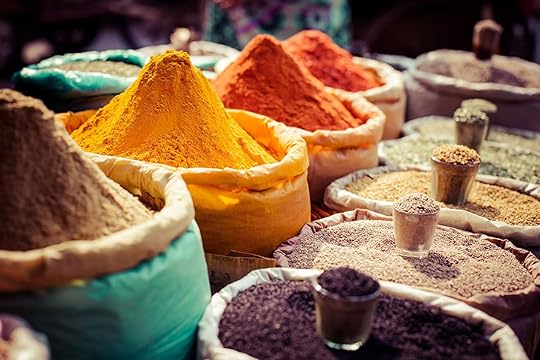
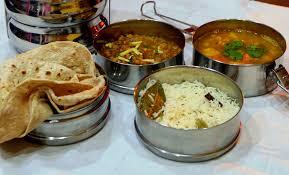
I don't think many will attempt to duplicate the recipe for Quails Darjeeling but many of the recipes are rather less challenging. And, there are sections dealing with: "The Spices & Aromatics of India"; "A Proper Tiffin" (lunch but also the tin dishes that enfold it); "The Raj at Tea Time"; "Children's Fare" (including Christmas recipes); and even one dealing with "Bugles & Barracks", i.e. food that would have been served to British troops in India. Another heading is "The Raj Preserved", an excellent treatment of chutneys + the spices & pickles required to preserve them.
Beyond the recipes for food & advice on how to prepare the dishes, I enjoyed the section of "The Raj Imbibes", cocktails to fit British tastes but with some ingredients less than available, an example being this comment from Francis Yeats-Brown on a perfect way to end a hot day under the tropical sun:
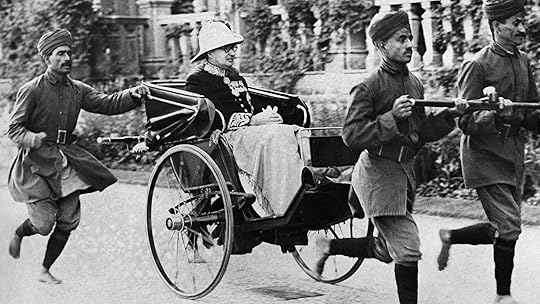
*Within my review, the images are of the author; tiffin (lunch) dishes within interlocking containers; a British official in India, 1895; colorful spices at a market in Kerala, South India.
Do most care if a cookbook contains anything beyond recipes? In this case, the memoir & historical insights Jennifer Brennan imposes on the reader are quite instructive, telling a story that the recipes alone could not do. And beyond that, anyone with an interest in India or the British colonial experience there would find the commentary as enhancing as the guidelines for an Indian Masala Omelette, Chingree Samosas, Kerala Clam & Shrimp Coconut Soup or Bombay Pudding. Anyone hungry yet?
A favorite of mine & also of the author is Mulligitawny Soup. Jennifer Brennan ate & loved the soup as a child living in Bangalore, the daughter of Major-General Gordon Arthur Thomas Pritchard, C.B.E., to whom the book is dedicated. Here is just one sample of the inserted commentary to go with the recipe for the famous Anglo-Indian soup, apparently concocted by a colonial chef with one British & one Indian parent and later celebrated by a bit of bad verse:
In vain our hard fate we repine; In vain our fortune we rail; On Mullaghee-tawny we dine, On Congee in Bangalore Jail.Ms. Brennan clearly has one historical foot in imperial India and the other well removed from the air of superiority & the legacy of intolerance, while celebrating the hybrid cuisine that was the result of the experience of empire that previous generations of her family participated in & which she was a party to for the first 15 or so years of her life. Oh & by the way, "Congee" is a very popular rice porridge dish found in India, as well as Burma, China & SE Asia.
Jennifer Brennan represents the 3rd generation of her family to reside in India but very carefully exposes the excesses of the British presence in India, leading to the bloody 1857 Insurrection, also known as the Sepoy Rebellion. In fact, she labels the period beginning just after the rebellion until the start of WWI, the "zenith of the British colonial era in India", with the ultimate loss of the Crown Jewell of the British Empire at the time of independence in 1947, entailing the partition of the subcontinent into (mostly) Hindu India & (largely) Muslim Pakistan, representing a very bloody transition.
The memoir portion of the cookbook includes a description of a "marathon 5 day train journey" in 1943 down the entire length of India with a consist that included the author's mother, her English nanny, 2 Great Danes, 1 cocker spaniel. a Muslim "bearer" (servant) in charge of 27 pieces of assorted luggage, a trip from Rawapindi in present-day Pakistan, along 2,300 miles of track to Bangalore in the south-central part of India, occasioned by the transfer of her father from a military campaign against the Japanese in Burma.
Brennan describes the various Indian foods encountered in dining cars as they threaded their way through different Indian regions & cuisines, changing trains multiple times en route. Obviously, even as a young girl, she was open to all that India had to offer.
I don't think many will attempt to duplicate the recipe for Quails Darjeeling but many of the recipes are rather less challenging. And, there are sections dealing with: "The Spices & Aromatics of India"; "A Proper Tiffin" (lunch but also the tin dishes that enfold it); "The Raj at Tea Time"; "Children's Fare" (including Christmas recipes); and even one dealing with "Bugles & Barracks", i.e. food that would have been served to British troops in India. Another heading is "The Raj Preserved", an excellent treatment of chutneys + the spices & pickles required to preserve them.
Beyond the recipes for food & advice on how to prepare the dishes, I enjoyed the section of "The Raj Imbibes", cocktails to fit British tastes but with some ingredients less than available, an example being this comment from Francis Yeats-Brown on a perfect way to end a hot day under the tropical sun:
We never drank conventional cocktails but had a mixture we called "pink peg" or "Khaitola cocktail". made up by a local chemist, which consisted of Justerini & Brook's best brandy, lashed with a small quantity of chloroform & ether. To this terrific tipple, we added soda & bitters. Its effect was like letting in the top gear of a racing car but we never drank it until the sun was over the yard arm.In the case of Jennifer Brennan's Curries & Bugles, there is a great deal to enjoy beyond the recipes within her excellent cookbook. Among other books, the author also developed is a book on Thai cooking and another called Tradewinds & Coconuts, dealing with the cuisine of the Pacific Islands. After India, she lived in Japan, Thailand & other ports of call, including California.
*Within my review, the images are of the author; tiffin (lunch) dishes within interlocking containers; a British official in India, 1895; colorful spices at a market in Kerala, South India.

March 26, 2009
I read this every morning over cereal in bits and bites and although every Liberal Arts class I ever had says "ohmygodcolonizationistheworstrunnnnnn", there is something to be said for the stodgy comfort of British food and routines like tea mixed with spicy unpredictable India. Comfort, but not the Edna Lewis kind.
November 7, 2015
I did enjoy reading this book and seeing the many recipes listed and the many things the English got up to at their hill stations and I wonder of all these things what did my ancestors make of all this and did they engage in the same activities or was it different for them as they were for the most part lowly soldiers.

April 4, 2011
Enjoyable. If I had wanted it for a recipe book, I would be well satisfied. I had hoped for more narrative, but overall I liked it.

April 24, 2014
I enjoyed this book of reminiscensces about the old days of the Indian Raj and the apparently very tasty recipes they enjoyed.

September 3, 2015
For some reason this book took me far too long to read, which for me means it wasn't interesting enough. Some recipes worth trying.

March 12, 2012
One of my favourite cookbooks.
Displaying 1 - 7 of 7 reviews