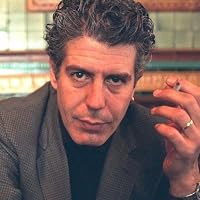
Frank O'Hara (1926-66) composed poems 'any time, any place', collaborating with and inspired by a circle of artists, musicians and poets, immersed in the creative life of New York. For O'Hara, the city was a place of possibility, both disorientating and exciting, and his poems have an immediacy that draws its energies from the pace and rhythms of city life, and from the contemporary artforms of jazz, film and painting. It is this openness to experience that makes O'Hara an indispensable poet of the imaginative experience of the modern city. Reviewing this new selection in the Guardian, Charles Bainbridge 'Frank O'Hara is a wonderful poet - funny, moving, chatty, engaging, enthusiastic, risk-taking, elegiac, supremely urban - and anything that encourages people to read him is a good thing. His poems have a disarming intimacy, a kind spontaneous enthusiasm and his work proves, with tremendous elan and energy, that you don't have to adopt a solemn tone in order to write poetry of seriousness and purpose. As O'Hara himself says of the nature of writing in the brilliantly comic " A Manifesto": "You just go on your nerve. If someone's chasing you down the street with a knife you just run, you don't turn around and shout, 'Give it up! I was a track star for Mineola Prep'." '
Collections of American poet Francis Russell O'Hara include Meditations in an Emergency (1957) and Lunch Poems (1964); playfulness, irony, sophistication, and a shared interest in the visual arts mark works of the New York School, an active group that included O'Hara during the 1950s and 1960s.
Parents reared O'Hara in Grafton, Massachusetts. O'Hara served in the south Pacific and Japan as a sonar man on the destroyer United States Ship Nicholas during World War II.
With the funding, made available to veterans, he attended Harvard University and roomed with artist-writer Edward Gorey. He majored in music and composed some works despite his irregular attendance was and his disparate interests. Visual art and contemporary music, his first love, heavily influenced O'Hara, a fine piano player all his life; he suddenly played swathes of Sergei Vasilievich Rachmaninoff when visiting new partners, often to their shock.
At Harvard, O'Hara met John Ashbery and began publishing poems in the Harvard Advocate. Despite his love for music, O'Hara changed his major and graduated from Harvard in 1950 with a degree in English.
He then attended graduate school at the University of Michigan in Ann Arbor. At Michigan, he won a Hopwood award and received his Master of Arts in English literature 1951. In that autumn, O'Hara moved into an apartment in city of New York with Joe LeSueur, his roommate and sometimes his lover for the next 11 years. Known throughout his life for his extreme sociability, passion, and warmth, O'Hara had hundreds of friends and lovers throughout his life, many from the New York art and poetry worlds. Soon after he arrived in New York, the Museum of Modern Art employed him at the front desk, and he began to write seriously.
O'Hara, active in the art world, working as a reviewer for Art News, and in 1960 was made Assistant Curator of Painting and Sculpture Exhibitions for the Museum of Modern Art. He was also friends with artists like Willem de Kooning, Norman Bluhm, Larry Rivers, and Joan Mitchell. O'Hara died in an accident on Fire Island in which he was struck and seriously injured by a man speeding in a beach vehicle during the early morning hours of July 24, 1966. He died the next day of a ruptured liver at the age of 40 and was buried in the Green River Cemetery on Long Island.
I disagree with myself on the right way to consume poetry. Seems like the right thing would be to read it in the sun, under a tree, perhaps with a friend or a love and a bottle of wine. Read some out loud, a sentence or the whole poem and really let it linger. Though most of the time I think a poem is better in mind voices, than really spoken. Or slowly over time, a poem read sporadically when needed and without greed. Or like today, when I spent all morning in bed with this, feeling a bit sad because I never want to party anymore. It was just what I needed and more-- and I am grateful- and greedy- and sad.
Haft den i väskan så länge nu, läst om och läst om och läst om: ”My heart is in my pocket, it is Poems by Pierre Reverdy” / My heart is in my pocket: Frank O’Hara / ”My heart is in my pocket” - Frank O’Hara
5 stars because Frank O’Hara is one of my all time favorite poets. However, I wouldn’t say that this book is a must-have for fans of O’Hara as many of the poems included in this collection are from Lunch Poems and Meditations in an Emergency, which I wish I knew before buying this. Still included some great poems that I haven’t read before so it wasn’t a total waste of money.
Insouciant, improvisational and often chatty poetry. O'Hara's conversational style is sometimes oblique or even opaque, but always beguiling. He doesn't do rhyming or scanning or any of that stuff, and that's OK by me.
This brief selection is full of good things, including the usual anthology pieces, and I'm now shopping for a larger selected.
"but we were all busy hoping our eyes were talking to Paul Klee. My mother and father asked me and I told them from my tight blue pants we should love only the stones, the sea, and heroic figures." (from Memorial Day 1950)
(Alex's recommendation. read in waterstones gower street, sitting on the floor in the poetry section)
This was just ... disappointing. Utterly disappointing. Especially when it's supposed to be one of his seminal collections. It's hard to believe the poems in this collection were written by the same poet who had written the extraordinary "Having A Coke With You"; a poet who received his education from Harvard ... It's astonishing to say the least. There were really only 2 poems that sparked my interest, that's about it. Besides details about the myriad of interesting people whom Frank had the honour of interacting with, this collection was just plain. In fact, I'm hesitant even on calling the pieces "poems", because to me they are literally just prose in verse form (meaning to say not even prose poetry). While there's still some experimentation in rhythm and structure, the way Frank presents his ideas is in general lacklustre, and the subject matters he meditates on are unbearably repetitive. For those like myself who feel this collection should bang having read "Having A Coke With You", I strongly urge you to not commit the same mistake I had committed, and stay away from this collection, for its quality is totally unlike that of "Having A Coke With You" ...
I first fell in love with Frank O'Hara when an English PhD student told me that 'Having A Coke With You' reminded him of me in June 2021. I listened to an audio recording he sent me of Frank O'Hara himself reading it, and I closed my eyes and listened, and felt that my own soul was being poured out onto the page. He has a way with words - a real way with words - that speaks to something deep in my psyche. That makes my own writing spill with 'Oh god it's wonderful to get out of bed and drink too much coffee and smoke too many cigarettes and love you so much'. So thank you to Harry Burrows for buying this book for me for my birthday and hugging me while I cried cause I love him to pieces for being such a great friend. And thank you, Christopher Griffin, for introducing me. Maybe we should go for that drink.
After reading more about the abstract expressionists I decided to delve into O'Hara's work. This was a great starting point. Mark Ford's intro is concise and well-placed, two qualities that are essential for anybody who wants to read O'Hara. The collection is well-ordered; I thought that the poems oscillated, the more provocative ones placed between feel-good texts. In my opinion, O'Hara is at his best in Poem Read at Joan Mitchell's and Joe's Jacket, where he is honest and personal, aware of and basking in his own obnoxiousness; where the poems spiral into beautiful resolutions. They get better every time I read them. A great collection that is best read in New York (or a similar city), where you can let O'Hara's words carry you along most easily.
Frank O'Hara nunca decepciona, y si encima son poemas inspirados en su época trabajando en el MoMA... Me quedo con el manifiesto final del libro: "Too many poets act like a middle-aged mother trying to get her kids to eat too much [...] I don't give a damn whether they eat or not. [...] if they don't need poetry bully for them"
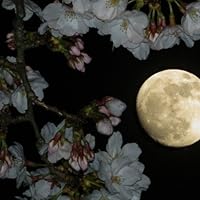
‘everything is too comprehensible/these are my delicate and caressing poems/I suppose there will be more of those others to come, as in the past/so many/but for now the moon is revealing itself like a pearl/to my equally naked heart’
Great curation. Jesus Christ does Frank O’Hara love an unnecessary name drop though. David, Norman, John, Agnes Hedlund, President Harding, that girl on the corner w the blonde hair