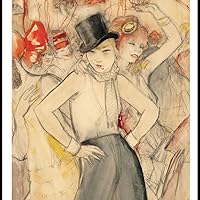
A groundbreaking contribution to debates on women’s oppression and consciousness, and the connections between socialism and feminism, this foundational text shows how the roles women adopt within the capitalist economy have shaped ideas about family and sexuality. Examining feminist consciousness from various vantage points – social, sexual, cultural and economic – Sheila Rowbotham identifies the conditions under which it developed, and how the formation of a new “way of seeing” for women can lead to collective solidarity.
Sheila Rowbotham is a British socialist feminist theorist and writer.
Rowbotham was born in Leeds (in present-day West Yorkshire), the daughter of a salesman for an engineering company and an office clerk. From an early age, she was deeply interested in history. She has written that traditional political history "left her cold", but she credited Olga Wilkinson, one of her teachers, with encouraging her interest in social history by showing that history "belonged to the present, not to the history textbooks".
Rowbotham attended St Hilda's College at Oxford and then the University of London. She began her working life as a teacher in comprehensive schools and institutes of higher or Adult education. While attending St. Hilda's College, Rowbotham found her syllabus with its heavy focus on political history to be of no interest to her. Through her involvement in the Campaign for Nuclear Disarmament, and various socialist circles including the Labour Party's youth wing, the Young Socialists, Rowbotham was introduced to Karl Marx's ideas. Already on the left, Rowbotham was converted to Marxism. Soon disenchanted with the direction of party politics she immersed herself in a variety of left-wing campaigns, including writing for the radical political newspaper Black Dwarf. In the 1960s, Rowbotham was one of the founders and leaders of the History Workshop movement associated with Ruskin College.
Towards the end of the 1960s she had become involved in the growing Women’s Liberation Movement (also known as Second-wave feminism) and, in 1969, published her influential pamphlet "Women's Liberation and the New Politics", which argued that Socialist theory needed to consider the oppression of women in cultural as well as economic terms. She was heavily involved in the conference Beyond the Fragments (eventually a book), which attempted to draw together democratic socialist and socialist feminist currents in Britain. Between 1983 and 1986, Rowbotham served as the editor of Jobs for Change, the newspaper of the Greater London Council.
This book is a short discussion by Sheila Rowbotham on the state of socialist feminism in the mid-1970s. Rowbotham is a British social feminist who offers the argument that sexist attitudes pre-date a capitalist society. Although more women leave the home to work a job in a capitalist society, they are still expected to manage the home which is a job in and of itself. Women do not receive equal pay or equal treatment and are relegated to female-oriented jobs, such as secretarial positions. Life at home resembles a feudal institution as women are provided a home and needful things in exchange for managing the home. Rowbotham believes that the feminist movement needs to make societal changes to eradicate the patriarchal life that women are bound to.
Although this was written in the mid-1970s, many of the concerns highlighted by Rowbotham continue today. This is a good foundational discussion on the modern feminist movement.
Rowbotham wrote this book in the 70s, recognizing the flawed system of movements only working for the upper class and neglecting the working class, minorities, and blacks. As a socialist, a lot of her thoughts were framed this way. She discussed unequal gender roles, household chores and even the unpaid emotional labour women do. She quoted a frustrated woman who complained in the papers in the 60s that she is the unpaid “psychologist, nurse, accountant, house cleaner, laundry, cook” for her husband and family. And I unfortunately still see women shouldering all of these roles today...!!! 😪 Seems to me that it is not that women do not have a voice, or need to be empowered to “find our voice”; we have it, we have been using it, and we have been fed up for centuries now! But some people just refuse to listen to us... because we live in a world where unfortunately men still listen to other men. . Reading this in 2018, is disheartening because these are the types of revolutions and movements we should be learning in history class - but we are not. Wouldn’t society be able to progress much further had we learnt about them when we were younger? We could have built upon the knowledge of our foremothers who spoke of the same frustrations centuries ago..
Picked this up for a quid in a second hand shop, so didn’t know what to expect. An extremely readable, yet still rich, blend of memoir with critique of political economy that Rowbotham uses to produce a fairly cutting analysis. A text I can definitely see myself referring back to in the future.
تتحدث شيلا عن تجربتها كامرأة اشتراكية في السبعينات وتربط تجربتها بقضية وعي النساء بشكل عام في عالم الرجال. تناقش الكاتبة كذلك مسألة اضطهاد المرأة بشيئ بمن التفصيل وكيف تشكّل الأدوار التي تتبناها المرأة في الاقتصاد الرأسمالي الأفكار والاعتقادات حول الأسرة والاستقلالية والجنس وغيرها وكيف ممكن لهذا الاضطهاد أن يتوقف من خلال نظرة أكثر شمولية لوضع المرأة يشارك فيها المجتمع ككل.
You’ve got to love an outright polemic. This is part memoir part manifesto.
It must have been so radical at the time it was published. It made me realise how far women have come in the workforce that a lot of the book was no longer relevant. I did laugh out loud when it said equal pay was expected in 1975. Indeed the Bill was and it did explain how difficult it would be to enact and everything she said has proven to be true.
Forty years later and women still don't have equal pay for equal work; they're still prepared to run personal favors for the bosses; they're still expected to do the bulk of the childcare and housework and if the current US political situation is any thing to go by, they're still denied access to contraception. Something ain't right...
Rowbotham is, as always, engaging, easy to read and fairly clear, although her ideas are often not as fully spelled-out as they should be, including in areas that might be rather critical to one's understanding, such as the relationship of gender to class - a common problem of pamphlet-length writing. The book contains some valuable insights in particular on the social and psychological dimensions of housework, and on the phenomenon of women's indifference to men's labor struggles, which for me were the highlight of the book. She lays out the basic impetus for a communist feminism fairly well.
The book founders, however, in two ways, which are really the same thing at base: first, in a local context she fails utterly to consider how racialization and disablement shape proletarian women's lives, and thus builds an image of proletarian women's situation which is more realistic for white and abled women in the upper strata of the proletariat, at the time of writing and now, than for nonwhite proletarian women, who have always wage-labored more and have had a different relationship to the feminization of labor (being servants in white bourgeois households for example), or disabled proletarian women, who have been infantilized and abused by institutions, the state, carers and family. Unsurprisingly, her vision of femininity is confined to women who were assigned female at birth, never touching on the rest of the feminized social world, outdated and pseudoscientific biological mythology about sexual dimorphism is assumed, and there's no mention of sex workers or indigenous women at all. On a global level this means she confines her considerations to the West, with no consideration of the nationalistic implications of a movement of mostly white college-educated women confined to the Western metropole, no consideration of the position of women in most of the world and no consideration of how women are affected by colonialism and imperialism in the so-called third world except for a (good) passage on immigrant night-shift cleaners and a rather eyebrow-raising chapter framing capitalism as making "imperialist" inroads on the housework "mode of production."
Which comes to the second problem, really the same as the first: she proceeds from a very poor model of class, a "dual-systems" model of capitalism and "patriarchy," which makes sense in terms of her *experience* of socialism and feminism as separate movements, but does *not* make sense in terms of a sound understanding of how social oppression and division within the proletariat have to be overcome integrally in the course of its coming into conscious being as an independent revolutionary class for itself, and hamstrings her ability to understand how women's oppression works. She cannot understand how capitalist society *constitutes us* as women, how class society develops and maintains gender itself, and so she's confined to viewing women as constituted sort of "beneath" capitalism; she edges far too close, in other words, to the radical-feminist notion that women are a class and that "patriarchy" *underlies* capitalism, although she explicitly rejects the sex-class model. This story makes a lot more sense if one's model hinges around the housewife as the central figure, of course, than otherwise - an especially archaic view now that housewifery is in long-term decline in the very same West that she unwisely and reflexively focuses on. As a result, most transgender women, whose lives have typically been defined by *exclusion* from the family and by social reproduction in forms like hooking & sugar-babying rather than housework, will find her model difficult to relate to. The book's model of femininity is, unsurprisingly, very shallow.
She thinks in terms of a cross-class, generic "feminist" movement for "rights and equality" - the bourgeois and racist character of the historic women's suffrage movement is never mentioned - that has to be carried on simultaneously with a generic revolutionary socialist movement, rather than thinking in terms of the proletariat having to overcome gender oppression in the course of coming into conscious action as a class, with proletarian communist women at the forefront, and ultimately coming to abolish gender itself.
Rowbotham is an admirable figure, but one should at the very least also read Marxism and the Oppression of Women by Lise Vogel (a far theoretically stronger book, though with disappointingly conservative political conclusions), Women, Race and Class by Angela Davis and Towards a Gay Communism by Mario Mieli (for an indispensable transgender angle of the same period) as a corrective, and draw one's own conclusions.
This short tract on socialist feminism, and the need for an analysis of women’s oppression specifically, reads like common sense today. But at the time it probably was a bombshell - calling out the ‘revolutionary’ men just as hard as the capitalist dogs. It’s about the means of production and the means of social reproduction, and this book provides accessible language for understanding that more deeply. There are also references to Black liberation and Gay liberation - but I do wonder what Rowbotham’s politics on trans rights would look like now, as I could see some arguments here being easily distorted into anti-trans framing (despite the acknowledgment of cultural constructions of much of ‘femininity’). Very worth the read, regardless.
Interesting book with some good takes on feminism. Somewhat like Simone de Beauvoir at times. But just read too much like a socialist pamphlet speaking the party line of historical materialism, all things being the fault of capitalism and all problems being solved once we have communism. I would have liked to see her stick to analysing the problems rather than enforcing a dogmatic solution when in reality we have no idea how a future society would work. We can’t sit in the present and promise that a certain theory of future society would solve things, and not everything can be summarised in economics or one simple theory. The world is more complicated than that.
Good critiques of feminist consciousness though I quite enjoyed the first half of the book.
Nothing quite as revivifying as revisiting some of the feminist texts from the 1970s. I enjoyed this trip down memory lane, great to reflect on changes, disturbing to see how somethings haven’t changed. The double load, for example, is still disproportionately shouldered by women, but now middle class women are (rightly) complaining about it. Doubt they were when that was almost solely the province of working class women.
Muy buen ensayo? Encontré muy refrescante la crítica desde un punto de vista un poco lejano a la situación actual, los problemas son diferentes en el Latinoamérica de nuestra época. A pesar de todo si me ayudo a cuestionarme cosas básicas dentro de la relación mujer- hombre.
the first half was really good, the second half was dense and repetitive and difficult to get through. regardless, sheila rowbotham is clearly a genius.
This is a short book but there is SO much in here. Rowbotham was ahead of her time, particularly in regards to intersectionality, and she doesn't get enough intellectual credit within the movement.
I think many of the problems Rowbotham identifies in this book are still very much in existence and even being fought over in our primaries. Many of them are rooted in our economic system, as she describes. It will be interesting to see how the election of a true progressive candidate such as Sanders might influence change on some of these problems.
I'd recommend that anyone who truly wants to see progression in gender equality, the freedom of men from restrictive gender codes, and the greater inclusion of women in the power structures around the world, should read this for an excellent diagnosis of our problems and a list of possible solutions. It's thoughtful and bite sized and definitely of use.
“The nature of female subordination is as subject to social change as any other kind of subordination. Women were oppressed before capitalism. But capitalism has changed the nature of female oppression.”