

What do you think?

Traveller
Examines the events of the Civil War through the eyes of General Robert E. Lee's closest companion and devoted horse, Traveller.
355 pages, Mass Market Paperback
First published May 12, 1988
About the author
Richard Adams
85 books2,434 followersAdams was born in Newbury, Berkshire. From 1933 until 1938 he was educated at Bradfield College. In 1938 he went up to Worcester College, Oxford to read Modern History. On 3 September 1939 Neville Chamberlain announced that the United Kingdom was at war with Germany. In 1940 Adams joined the British Army, in which he served until 1946. He received a class B discharge enabling him to return to Worcester to continue his studies for a further two years (1946-48). He took the degree of Bachelor of Arts in 1948 and of Master of Arts in 1953.
He was a senior civil servant who worked as an Assistant Secretary for the Department of Agriculture, later part of the Department of the Environment, from 1948 to 1974. Since 1974, following publication of his second novel, Shardik, he has been a full-time author.
He originally began telling the story of Watership Down to his two daughters, Juliet and Rosamund, and they insisted he publish it as a book. It took two years to write and was rejected by thirteen publishers. When Watership Down was finally published, it sold over a million copies in record time in both the United Kingdom and the United States. Watership Down has become a modern classic and won both the Carnegie Medal and the Guardian Children's Fiction Prize in 1972. To date, Adams' best-known work has sold over 50 million copies world-wide, earning him more than all his other books put together.
As of 1982, he was President of the RSPCA.
He also contested the 1983 general election, standing as an Independent Conservative in the Spelthorne constituency on a platform of opposition to fox hunting.
He was a senior civil servant who worked as an Assistant Secretary for the Department of Agriculture, later part of the Department of the Environment, from 1948 to 1974. Since 1974, following publication of his second novel, Shardik, he has been a full-time author.
He originally began telling the story of Watership Down to his two daughters, Juliet and Rosamund, and they insisted he publish it as a book. It took two years to write and was rejected by thirteen publishers. When Watership Down was finally published, it sold over a million copies in record time in both the United Kingdom and the United States. Watership Down has become a modern classic and won both the Carnegie Medal and the Guardian Children's Fiction Prize in 1972. To date, Adams' best-known work has sold over 50 million copies world-wide, earning him more than all his other books put together.
As of 1982, he was President of the RSPCA.
He also contested the 1983 general election, standing as an Independent Conservative in the Spelthorne constituency on a platform of opposition to fox hunting.
Ratings & Reviews
Friends & Following
Create a free account to discover what your friends think of this book!
Community Reviews
Displaying 1 - 30 of 133 reviews

April 7, 2013
I dreamt last night that there was wind and rain.
I got up and looked out, but all was strange;
A muddy track across a wooded plain;
A distant tumult, angry cries, exchange
Of fire. And then, out of that dreadful night,
Appeared a scarecrow army, staggering,
Defiant, famished. In the quenched starlight
They marched on to their bitter reckoning.
Their sleepless, bloodshot eyes were turned to me.
Their flags hung black against the pelting sky.
Their jests and curses echoed whisperingly,
As though from long-lost years of sorrow -
Why, You're weeping! What then? What more
did you see?
a gray man on a gray horse rode by.
All animal lovers should enjoy reading about the adventures of "Traveller" Robert E. Lee's beloved horse during the Civil War.
Traveller relates his experiences, as he understood them to be, in an entertaining manner..
He still has nightmares about the Blue Men as he rests comfortably in his old age.
Although the innocent animal didn't understand why the Blue Men kept advancing, he did know they were his master's enemy and therefore his as well.
The link below tells the true story of Traveller who turned out to be a pretty amazing horse in real life as well as in this book.
http://www.horseandman.com/horse-stor...
I've rated this book by the author of Watership Down 5 stars and found it to be just as magical.
I got up and looked out, but all was strange;
A muddy track across a wooded plain;
A distant tumult, angry cries, exchange
Of fire. And then, out of that dreadful night,
Appeared a scarecrow army, staggering,
Defiant, famished. In the quenched starlight
They marched on to their bitter reckoning.
Their sleepless, bloodshot eyes were turned to me.
Their flags hung black against the pelting sky.
Their jests and curses echoed whisperingly,
As though from long-lost years of sorrow -
Why, You're weeping! What then? What more
did you see?
a gray man on a gray horse rode by.
All animal lovers should enjoy reading about the adventures of "Traveller" Robert E. Lee's beloved horse during the Civil War.
Traveller relates his experiences, as he understood them to be, in an entertaining manner..
He still has nightmares about the Blue Men as he rests comfortably in his old age.
Although the innocent animal didn't understand why the Blue Men kept advancing, he did know they were his master's enemy and therefore his as well.
The link below tells the true story of Traveller who turned out to be a pretty amazing horse in real life as well as in this book.
http://www.horseandman.com/horse-stor...
I've rated this book by the author of Watership Down 5 stars and found it to be just as magical.

February 16, 2015
I must address something I've seen in other reviews on here and elsewhere on the internet. Some people seem confused or even put off that this glorifies the south... How does one explain that water is wet? The sky up? Two and two make four? Traveller was General Robert E. Lee's horse, and the story is told from his point of view. If I read a book called Blondi about WWII seen through the eyes of Hitler's German Shepard, I would expect it to glorify the Nazi cause. If I think that's too much for me to handle, then I'd best not try reading it. This is my advice for anyone thinking about reading this book: if you find the Confederacy offensive to the point that you can't look at the Civil War objectively, then don't read this.
Who'da thunk a Brit could capture the Virginian patois so well in print? I could hear Traveller's voice perfectly, and it sounded akin to my own. I was raised in Richmond, though I have rural roots and was always spending time with relatives in the country, so this is a good thing. Well done, Mr. Adams.
I'm afraid Traveller is a couple of oats short of a feedbag, but it's not really his fault. Not all equines can be as smart as Mr. Ed. Some of the other horses who understand battles better than he (such as Little Sorrel) point this out to him from time to time. He starts his journey looking forward to getting to the War everyone is excited about. (This was before Lee bought him). He figures a war must be a heavenly place with lots of good feed to eat, pastures to run though with plenty of good rolling spots, etc. He laments at the end of the book that he never gets to the war though he really lives through the whole thing and tells the barn cat all about it over the course of a few years after the war is over. He's convinced that Marse Robert (his name for General Lee because that's what his slaves and servants called him) won the war and is now commander of the whole country since he's still giving orders to people. (Lee at this point is president of Washington College which would become Washington and Lee University later). As near as I can tell all the facts are presented accurately, but Traveller's point of view provides an amusing twist.
He's still terrified of the blue men (his name for the Yankees) years later.
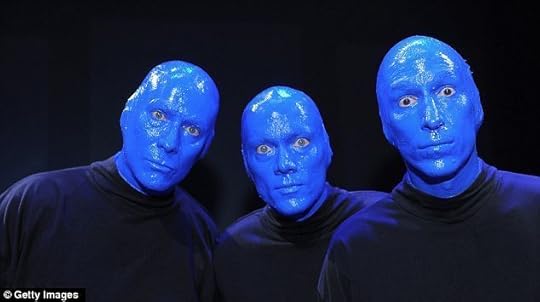
"What's so scary about us?"
I guess that's understandable after you've spent three years getting shot at by them.
He has his own names for most of the generals. It was sometimes hard keeping them straight, but it wasn't bad enough that I had to put the book down. Here are the more prominent ones:
Stonewall Jackson - Cap in his Eyes (because he often wore his hat low)
Longstreet - Old Pete (an actual nickname)
Stuart - Jine the Cavalry (because he suggested Traveller would be great in the cavalry and ought to join it)
A. P. Hill - Red shirt (you can probably figure this one out)
Pickett - Ringlets (due to his curly hair)
Though he's not as well known as the other confederate generals, my favorite was the nick for General Borcke as Vot-You-Voz. Borcke was German and spoke with an accent Traveller couldn't follow.
Traveller describes the battles to Tom the cat over the course of a few years after the war is over, and covers all of the ones Lee was involved in. However they're not listed by name (except occasionally in aside blurbs after the fact), so if you're not familiar with the battles this part would be really hard to follow. Also if you're not into Civil War battles, I can see how these parts would be repetitive and tedious which is a common complaint I've seen in other reviews. I'm all about this kind of stuff, though, so I loved it. I found myself getting lost in the battles, so I looked them up as I went along and used The West Point Atlas of War: The Civil War to refresh myself as it's been several years since I've studied the Civil War in detail. I was confusing Chancellorsville with Wilderness and Spotsylvania which is kind of understandable since they were pretty much fought on the same ground but in different years. I also confused a few details of some other battles, but I got it all straight in the end by looking up a couple of things. Still, I'm really impressed with how accurate everything is in this historical fiction.
There are also a lot of amusing bits between his battle yarns. At one point he finds that Tom has fallen asleep. "Well, isn't that just like a cat!" is his response to that. Sometimes he directs the cats in a campaign to get a rat that's hiding somewhere in the barn as if he were a general. He also relates some common jokes from the war: "Come on out of that hat. I know you're in there, I can see your legs hanging down." He explains this after telling Tom once to "Come on out of that fur." My favorite line was when he was talking about Joel Sweeney's (who may have written the song Jine the Cavalry with J.E.B. Stuart) banjo playing: "...he'd sit there and make it go pilly willy pinky winky pop, sometimes for the whole evening, and the fellas'd all get to singing, an' Jine-the-Cavalry'd fill up a big brown jug and laugh and tell Sweeny (sic) to play some more."
This book wasn't all fun and games, though. It definitely exposes the hardships of war for both sides, though mostly for the confederacy since that's what Traveller saw first hand. However he was also there for the Battle of the Crater which was pretty much the Union's "Pickett's Charge" moment and a complete slaughter of blue men. And it wasn't just battles that were hell. Conditions for the South were bleak for the last two years of the war. They couldn't replace anything they used, had no food, boots, clothes, anything. I believe more died from sickness and starvation than from battle wounds by the end of it.
Traveller captures the essence of Lee. He's considered to be a great human being. That's debated since he was a slave owner, though he fits the mold of a benevolent one. He educated his slaves (which was illegal), eventually freed them, helped fund the move to Liberia effort, and urged allowing slaves to serve in the Confederate army with manumission being a reward for doing so. Still, looking at him through 21st century eyes some will never see him as anything but evil because he once owned slaves. He was a complex man, but honor was a big part of him and his loyalties lay with his home state. He was also a really good general. He made a few boneheaded maneuvers such as Pickett's Charge, but a war that could've been over in six months to a year lasted instead for four years, and Lee's generalship is part of the reason for that due to a combination of skill, luck, and bad decisions from the Union generals he was facing (until he ran up against Grant who's kind of in a class all his own not only for US history but for world history as well). He also had a way of instilling confidence and loyalty in his men that no one else could manage. No matter how bleak something might seem, he was able to make people feel better about it and get them to carry on. (Grant wasn't as good at that, so nyah-nyah nyah-nyah nyaaah-nyaaah!) Traveller tells us all about it. And about how well Lee treated his horses even if he didn't have anything for them to eat sometimes. He did the absolute best he could with what he had.
This book won't appeal to a wide audience. In order to enjoy it you'll need an interest in the War Between the States and prior knowledge of it might be required for following it. An interest in battle specifics, strategy, and tactics wouldn't be amiss either. If you don't have those, reading this might be slow going for you. If you do have those, then this book is awesome.
And I'm going to leave this here because I can: Joan Baez - The Night They Drove Old Dixie Down. Now, I know some people consider it akin to sacrilege to prefer this cover over The Band's original version, but I can't help it; this one just does it for me even if Joan's politics makes my skin crawl. Like Linda Ronstadt, she has a wonderful voice though the personalities make me want to puke. Still, this song strikes a chord with me and she sings it beautifully.
"Virgil, quick come see; there goes Robert E. Lee." I bet he was riding Traveller.
Who'da thunk a Brit could capture the Virginian patois so well in print? I could hear Traveller's voice perfectly, and it sounded akin to my own. I was raised in Richmond, though I have rural roots and was always spending time with relatives in the country, so this is a good thing. Well done, Mr. Adams.
I'm afraid Traveller is a couple of oats short of a feedbag, but it's not really his fault. Not all equines can be as smart as Mr. Ed. Some of the other horses who understand battles better than he (such as Little Sorrel) point this out to him from time to time. He starts his journey looking forward to getting to the War everyone is excited about. (This was before Lee bought him). He figures a war must be a heavenly place with lots of good feed to eat, pastures to run though with plenty of good rolling spots, etc. He laments at the end of the book that he never gets to the war though he really lives through the whole thing and tells the barn cat all about it over the course of a few years after the war is over. He's convinced that Marse Robert (his name for General Lee because that's what his slaves and servants called him) won the war and is now commander of the whole country since he's still giving orders to people. (Lee at this point is president of Washington College which would become Washington and Lee University later). As near as I can tell all the facts are presented accurately, but Traveller's point of view provides an amusing twist.
He's still terrified of the blue men (his name for the Yankees) years later.

"What's so scary about us?"
I guess that's understandable after you've spent three years getting shot at by them.
He has his own names for most of the generals. It was sometimes hard keeping them straight, but it wasn't bad enough that I had to put the book down. Here are the more prominent ones:
Stonewall Jackson - Cap in his Eyes (because he often wore his hat low)
Longstreet - Old Pete (an actual nickname)
Stuart - Jine the Cavalry (because he suggested Traveller would be great in the cavalry and ought to join it)
A. P. Hill - Red shirt (you can probably figure this one out)
Pickett - Ringlets (due to his curly hair)
Though he's not as well known as the other confederate generals, my favorite was the nick for General Borcke as Vot-You-Voz. Borcke was German and spoke with an accent Traveller couldn't follow.
Traveller describes the battles to Tom the cat over the course of a few years after the war is over, and covers all of the ones Lee was involved in. However they're not listed by name (except occasionally in aside blurbs after the fact), so if you're not familiar with the battles this part would be really hard to follow. Also if you're not into Civil War battles, I can see how these parts would be repetitive and tedious which is a common complaint I've seen in other reviews. I'm all about this kind of stuff, though, so I loved it. I found myself getting lost in the battles, so I looked them up as I went along and used The West Point Atlas of War: The Civil War to refresh myself as it's been several years since I've studied the Civil War in detail. I was confusing Chancellorsville with Wilderness and Spotsylvania which is kind of understandable since they were pretty much fought on the same ground but in different years. I also confused a few details of some other battles, but I got it all straight in the end by looking up a couple of things. Still, I'm really impressed with how accurate everything is in this historical fiction.
There are also a lot of amusing bits between his battle yarns. At one point he finds that Tom has fallen asleep. "Well, isn't that just like a cat!" is his response to that. Sometimes he directs the cats in a campaign to get a rat that's hiding somewhere in the barn as if he were a general. He also relates some common jokes from the war: "Come on out of that hat. I know you're in there, I can see your legs hanging down." He explains this after telling Tom once to "Come on out of that fur." My favorite line was when he was talking about Joel Sweeney's (who may have written the song Jine the Cavalry with J.E.B. Stuart) banjo playing: "...he'd sit there and make it go pilly willy pinky winky pop, sometimes for the whole evening, and the fellas'd all get to singing, an' Jine-the-Cavalry'd fill up a big brown jug and laugh and tell Sweeny (sic) to play some more."
This book wasn't all fun and games, though. It definitely exposes the hardships of war for both sides, though mostly for the confederacy since that's what Traveller saw first hand. However he was also there for the Battle of the Crater which was pretty much the Union's "Pickett's Charge" moment and a complete slaughter of blue men. And it wasn't just battles that were hell. Conditions for the South were bleak for the last two years of the war. They couldn't replace anything they used, had no food, boots, clothes, anything. I believe more died from sickness and starvation than from battle wounds by the end of it.
Traveller captures the essence of Lee. He's considered to be a great human being. That's debated since he was a slave owner, though he fits the mold of a benevolent one. He educated his slaves (which was illegal), eventually freed them, helped fund the move to Liberia effort, and urged allowing slaves to serve in the Confederate army with manumission being a reward for doing so. Still, looking at him through 21st century eyes some will never see him as anything but evil because he once owned slaves. He was a complex man, but honor was a big part of him and his loyalties lay with his home state. He was also a really good general. He made a few boneheaded maneuvers such as Pickett's Charge, but a war that could've been over in six months to a year lasted instead for four years, and Lee's generalship is part of the reason for that due to a combination of skill, luck, and bad decisions from the Union generals he was facing (until he ran up against Grant who's kind of in a class all his own not only for US history but for world history as well). He also had a way of instilling confidence and loyalty in his men that no one else could manage. No matter how bleak something might seem, he was able to make people feel better about it and get them to carry on. (Grant wasn't as good at that, so nyah-nyah nyah-nyah nyaaah-nyaaah!) Traveller tells us all about it. And about how well Lee treated his horses even if he didn't have anything for them to eat sometimes. He did the absolute best he could with what he had.
This book won't appeal to a wide audience. In order to enjoy it you'll need an interest in the War Between the States and prior knowledge of it might be required for following it. An interest in battle specifics, strategy, and tactics wouldn't be amiss either. If you don't have those, reading this might be slow going for you. If you do have those, then this book is awesome.
And I'm going to leave this here because I can: Joan Baez - The Night They Drove Old Dixie Down. Now, I know some people consider it akin to sacrilege to prefer this cover over The Band's original version, but I can't help it; this one just does it for me even if Joan's politics makes my skin crawl. Like Linda Ronstadt, she has a wonderful voice though the personalities make me want to puke. Still, this song strikes a chord with me and she sings it beautifully.
"Virgil, quick come see; there goes Robert E. Lee." I bet he was riding Traveller.

December 11, 2016
I loved this book and Traveller so much I named my big grey warm-blood Traveller after him. (and my family fought for the North)
Traveller and me
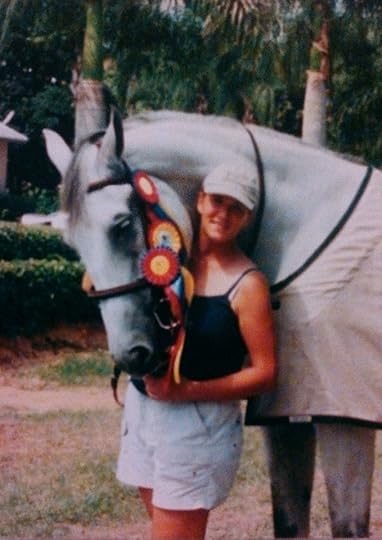
Traveller and me

August 23, 2008
I love this book. It is absolutely brilliant: the American Civil War, as seen by Confederate Commander Robert E. Lee's favorite horse, Traveller. The book begins with Traveller in a barn, the old campaigner telling stories to a rapt pair of cats. He explains how he started out, under another name and other ownership, a young horse with a good reputation. It is this which brought him to the attention of the Confederate command, and then to the man he would call "Marse Robert." Traveller tells the war as a horse would see it, taking on verbal tics (calling the Yankee enemy "those people" as Lee does, referring to artillery as "bangs") and interpreting Lee's 1863 heart attack just before Gettysburg as a fall due to Traveller's own misbehavior. It's also a great way to see the legends of the army: Traveller renames many of them, so that Stonewall Jackson becomes "Cap-in-Eyes," and J.E.B. Stuart is "Jine the Cavalry" for his habit of always saying "join the cavalry!" (Traveller is not cute, though, not with camp life or the realities of the war.) For those who might be confused about the timeline, there are paragraphs between the tales, explaining what is taking place between the armies. And through it all is an extraordinary love between horse and man.

February 21, 2022
Boy, the end of this one was a real tearjerker! I wasn't expecting that but it was just so sad! Water was pouring out of my eyes, I had to go run to blow the nose and even my throat felt achy for a few minutes because of the crying. I never thought I could end up crying for someone who had lived and died over a hundred years ago? But after reading this book for two days these characters have turned real (even though they were actual real people to start with versus fake made up characters), you feel that you know them. And yes, it is a war story so people are dying in it all the time and often in the most horrid ways...but it's vastly different when you reach the end of the book - those last few pages - and you realize what is going on. They don't declare it outright .. They don't have to .. It's very obvious. And then the crying starts.
So this is a retelling of the US Civil War through the eyes of a horse. His name is Traveller and he belonged to General Robert E Lee of the Confederate Army. The story starts with Traveller resting in the stables and he is telling the story of the war to the barn cat. But because he is a horse he doesn't realize that all the awful fighting he had seen for years is the "war" he has heard about. He also doesn't understand why the humans are busy killing each other. He just wants to be the best horse he can be. And he certainly tries to learn and get information from other horses to better understand what is going on. But he has to adjust to lots of things, especially the loud "bangs" he hears and countless other things.
I am not big on reading war stories. I will admit that. But this was very readable. There was one awful point in the book where something dreadful happened. I certainly didn't like that. It was pretty graphic and violent and it involved a horse. And I had paused my reading right after that because I found it upsetting. But the rest of the book wasn't that bad. Luckily. But some of the descriptions in here, especially of dead bodies, can be a tad blunt at times. It is a war and war is awful. But because its from the viewpoints of a horse that does soften it a lot. We also only know what Traveller knows. Plus a horse has different concerns.
And those concerns make this tale very unique. Often Traveller has to fight the terrain. Walking in deep mud, crossing rivers, being hungry, worrying about his hooves... And colic is in here too. Plus he gives nicknames for the main human characters. And he talks with an accent too! And no the accent is nit hard to read or understand as it can be in some books. The many problems the Confederate Army had during the war becomes clear when you read this.
There are many horses in here and each has different personalities. Each fares according to his or her own abilities. Many just fade out and we never know their fates because Traveller doesn't. But that is life as a horse as stablemates are sold off and you never see them again.
Reading this made me more curious about Robert E Lee and what had happened to him after the war. So I googled it.
I also love the drawing of him on Traveller on the back of the book. In fact I think I like that pic more than the cover image. Traveller looks very noble on that drawing (except he has his mouth open).
So this is a retelling of the US Civil War through the eyes of a horse. His name is Traveller and he belonged to General Robert E Lee of the Confederate Army. The story starts with Traveller resting in the stables and he is telling the story of the war to the barn cat. But because he is a horse he doesn't realize that all the awful fighting he had seen for years is the "war" he has heard about. He also doesn't understand why the humans are busy killing each other. He just wants to be the best horse he can be. And he certainly tries to learn and get information from other horses to better understand what is going on. But he has to adjust to lots of things, especially the loud "bangs" he hears and countless other things.
I am not big on reading war stories. I will admit that. But this was very readable. There was one awful point in the book where something dreadful happened. I certainly didn't like that. It was pretty graphic and violent and it involved a horse. And I had paused my reading right after that because I found it upsetting. But the rest of the book wasn't that bad. Luckily. But some of the descriptions in here, especially of dead bodies, can be a tad blunt at times. It is a war and war is awful. But because its from the viewpoints of a horse that does soften it a lot. We also only know what Traveller knows. Plus a horse has different concerns.
And those concerns make this tale very unique. Often Traveller has to fight the terrain. Walking in deep mud, crossing rivers, being hungry, worrying about his hooves... And colic is in here too. Plus he gives nicknames for the main human characters. And he talks with an accent too! And no the accent is nit hard to read or understand as it can be in some books. The many problems the Confederate Army had during the war becomes clear when you read this.
There are many horses in here and each has different personalities. Each fares according to his or her own abilities. Many just fade out and we never know their fates because Traveller doesn't. But that is life as a horse as stablemates are sold off and you never see them again.
Reading this made me more curious about Robert E Lee and what had happened to him after the war. So I googled it.
I also love the drawing of him on Traveller on the back of the book. In fact I think I like that pic more than the cover image. Traveller looks very noble on that drawing (except he has his mouth open).

April 11, 2008
Another all time favorite...I really love Richard Adams. This one tells the story of the civil war, from the point of view of Robert E. Lee's horse, Traveler. Again, could be read as a children's book, but it's really not and is as good a book on the civil war as any other I've read.

June 15, 2009
Ever wondered how Mr. Ed would have held up as a Civil War steed?
No. I haven’t either. But Richard Adams had such musings it seems, and they resulted in this novel novel. (Sorry, had to go for the trite word play.)
Robert E. Lee, legendary Confederate General, had a horse named Traveller. This is historical fact. The novel follows the Civil War from the horse’s point of view. As such, it’s limited in which aspects of the war the audience gets to see. Locked into that premise, the novel is a bit less satisfying than say, The Killer Angels . Still, the narrative is enjoyable and often intense, including a graphic depiction of the fate many horses faced. Just remember the horses often had it better than the foot soldier, if only because they were attached to well-fed officers.
Lastly, I will say this is a book I found without the aid of a catalog or search engine. I found it by wandering the shelves, happening on a familiar name, “Traveller,” and then opting to give it a try. If you’ve never bypassed the search engines and gone straight to the shelf to explore, you have likely missed a novel or two you would enjoy.
No. I haven’t either. But Richard Adams had such musings it seems, and they resulted in this novel novel. (Sorry, had to go for the trite word play.)
Robert E. Lee, legendary Confederate General, had a horse named Traveller. This is historical fact. The novel follows the Civil War from the horse’s point of view. As such, it’s limited in which aspects of the war the audience gets to see. Locked into that premise, the novel is a bit less satisfying than say, The Killer Angels . Still, the narrative is enjoyable and often intense, including a graphic depiction of the fate many horses faced. Just remember the horses often had it better than the foot soldier, if only because they were attached to well-fed officers.
Lastly, I will say this is a book I found without the aid of a catalog or search engine. I found it by wandering the shelves, happening on a familiar name, “Traveller,” and then opting to give it a try. If you’ve never bypassed the search engines and gone straight to the shelf to explore, you have likely missed a novel or two you would enjoy.
June 21, 2014
In my life I have read many books, and this is one of the weirdest.
There's great difficulty to knowing where this book was coming from, and close to the end I figured out why; because it is coming from three places at once. It is an experiment by a great writer. It is a indulgent exercise by a doddering old Englishman. And it is possibly the greatest book ever written from the point of view of a horse....which isn't saying much.
It isn't precisely a good book, and it definitely might be a bad book but not bad in a bad way. It's...uh....
Normally when I read a book on the American Civil War my first question is, what about slavery? What's this book's opinion on slaves?
Traveller has no opinion on slavery. He's a horse. As far as he's concerned the Civil War had no effect whatsoever on the sort of slavery that he's born into.
So is this a coded plea for animal rights? Considering the author, I had my suspicions. And then something truly baffling happened.
I very rarely give spoiler warnings, but if you have any serious intention of reading this book, you might want to skip this part or you will not be able to read the book in the way the author intended. Simply giving you this information will influence your feelings about the book the entire time and the giant synaptic "jump" at the end of the book, where Adams attempts to actually put you in the head of a horse, will not play quite out the same. I'm not saying it won't be a good book, but it won't be the same.
Ready?
Okay, the horse thinks that the South won the Civil War.
Which is so insane that it must be true.
And Adams mostly pulls it off, he mostly gets across the way that a horse actually *would* think that, how, from the horses's point of view, they sort of did!
But this is deeply undone by the long and winding middle of the book. Adams is obviously one of those weird British aficionados of the American Civil War, might even be one of those guys who goes out to a field near Colchester or something to re-enact Antietam. It's a real thing, look it up, they really do American Civil War re-enactments in England. Either way, Adams's middle-aged delight in knowing all the battles of the Civil War possesses him at some point, and he can't resist introducing you to all the officers of Lee's high command (and their horses) and taking you step-by-step through four years of war, every battle, every skirmish. I bet it's all historically accurate, too. When it's so dense and complex that it's obvious that not even a talking horse could understand it, then Adams actually squishes in news dispatches written in a sort of newspaper jargon, conveniently translating what just happened from "horse" to "history." But this leads to odd moments like the horse calling some commanders by name and keeping track of the news by the gossip of other horses. Basically the middle part is much, much too long to maintain the illusion that it's anything other than a magical talking horse. The real horse-y parts, at the beginning and end, are undermined by Mr. Ed Goes To War in the middle.
The ending, in which Traveller doesn't exactly understand that General Lee has passed away, doesn't really work in the same book as Traveller the Civil War Correspondent who tells us Stonewall Jackson was shot by one of his own sentries at the Battle of Chancellorville. Either a horse knows the news or he don't, but you can't change your mind mid-novel.
This book is marbled through and through with deep streaks of illogic and unseemliness. I was curious how the horse would deal with the starving soldiers eating horses, but that never comes up at all. He knows enough English to make fun of a German guy's accent but not enough to know what the word "war" means. Perhaps worst of all, Traveller's opinion of slavery is sufficient for a horse, but not sufficient for Mr. Ed. There are a lot of problems like that.
But, like I said, this book does a better job of getting inside a horse's head than any other book I've ever read...and that's not saying much. At times it really works. The American Civil War must be one of the greatest slaughters of horses in human history, and it's an important story that deserves to be told, and to be told from this particular and bizarre point of view. I only wish Adams had worked on it, not as a professional producing a book for the public, but as a maniac who can't let something go for decades. This book needed another decade of editing and polishing and general re-jiggering. Not a year, a decade. The quest to get into a horse's head can only succeed through discipline, research, and astounding leaps of intuition. The only way to do that is time. Lots and lots and lots of time.
And if you don't know anything about the American Civil War, you are definitely going to be confused.
However, this story raises some really important questions. Modern readers simply cannot get into the mindset of a slave. It is far too foreign. We can perhaps imagine what it's like to be a field hand and to be beaten into obedience every day, but the life of a "faithful slave" is impossible. We can't begin to imagine what it must have been like to be an uneducated, deeply oppressed individual who sides with their own oppressors against the very people who are fighting to free them. The closest mental framework that we have is found in animals and pets. The only door for a modern reader to understand how the slaves felt about the people who held them in bondage is through an animal metaphor, and this book does a better job of explaining how a "faithful slave" might have seen their owners during the Civil War than any other book I've ever read. The South was a time and a place when they were literally forcing human beings to live like animals, so it sort of works. Traveller is, on some level, a house slave's view of the Civil War from the South's side. That's a tremendously important and tremendously difficult story.
On the whole, I'm glad that I read this maddening, baffling, trivial, indulgent, tremendously experimental and courageous novel. We *should* learn more about how horses through history. It's a story that needs to be told, and maybe needs to be told better, but this is a good start. Maybe this needs to be a genre.
Plus, it definitely got me thinking. There are few books that have made me wonder like this one.
There's great difficulty to knowing where this book was coming from, and close to the end I figured out why; because it is coming from three places at once. It is an experiment by a great writer. It is a indulgent exercise by a doddering old Englishman. And it is possibly the greatest book ever written from the point of view of a horse....which isn't saying much.
It isn't precisely a good book, and it definitely might be a bad book but not bad in a bad way. It's...uh....
Normally when I read a book on the American Civil War my first question is, what about slavery? What's this book's opinion on slaves?
Traveller has no opinion on slavery. He's a horse. As far as he's concerned the Civil War had no effect whatsoever on the sort of slavery that he's born into.
So is this a coded plea for animal rights? Considering the author, I had my suspicions. And then something truly baffling happened.
I very rarely give spoiler warnings, but if you have any serious intention of reading this book, you might want to skip this part or you will not be able to read the book in the way the author intended. Simply giving you this information will influence your feelings about the book the entire time and the giant synaptic "jump" at the end of the book, where Adams attempts to actually put you in the head of a horse, will not play quite out the same. I'm not saying it won't be a good book, but it won't be the same.
Ready?
Okay, the horse thinks that the South won the Civil War.
Which is so insane that it must be true.
And Adams mostly pulls it off, he mostly gets across the way that a horse actually *would* think that, how, from the horses's point of view, they sort of did!
But this is deeply undone by the long and winding middle of the book. Adams is obviously one of those weird British aficionados of the American Civil War, might even be one of those guys who goes out to a field near Colchester or something to re-enact Antietam. It's a real thing, look it up, they really do American Civil War re-enactments in England. Either way, Adams's middle-aged delight in knowing all the battles of the Civil War possesses him at some point, and he can't resist introducing you to all the officers of Lee's high command (and their horses) and taking you step-by-step through four years of war, every battle, every skirmish. I bet it's all historically accurate, too. When it's so dense and complex that it's obvious that not even a talking horse could understand it, then Adams actually squishes in news dispatches written in a sort of newspaper jargon, conveniently translating what just happened from "horse" to "history." But this leads to odd moments like the horse calling some commanders by name and keeping track of the news by the gossip of other horses. Basically the middle part is much, much too long to maintain the illusion that it's anything other than a magical talking horse. The real horse-y parts, at the beginning and end, are undermined by Mr. Ed Goes To War in the middle.
The ending, in which Traveller doesn't exactly understand that General Lee has passed away, doesn't really work in the same book as Traveller the Civil War Correspondent who tells us Stonewall Jackson was shot by one of his own sentries at the Battle of Chancellorville. Either a horse knows the news or he don't, but you can't change your mind mid-novel.
This book is marbled through and through with deep streaks of illogic and unseemliness. I was curious how the horse would deal with the starving soldiers eating horses, but that never comes up at all. He knows enough English to make fun of a German guy's accent but not enough to know what the word "war" means. Perhaps worst of all, Traveller's opinion of slavery is sufficient for a horse, but not sufficient for Mr. Ed. There are a lot of problems like that.
But, like I said, this book does a better job of getting inside a horse's head than any other book I've ever read...and that's not saying much. At times it really works. The American Civil War must be one of the greatest slaughters of horses in human history, and it's an important story that deserves to be told, and to be told from this particular and bizarre point of view. I only wish Adams had worked on it, not as a professional producing a book for the public, but as a maniac who can't let something go for decades. This book needed another decade of editing and polishing and general re-jiggering. Not a year, a decade. The quest to get into a horse's head can only succeed through discipline, research, and astounding leaps of intuition. The only way to do that is time. Lots and lots and lots of time.
And if you don't know anything about the American Civil War, you are definitely going to be confused.
However, this story raises some really important questions. Modern readers simply cannot get into the mindset of a slave. It is far too foreign. We can perhaps imagine what it's like to be a field hand and to be beaten into obedience every day, but the life of a "faithful slave" is impossible. We can't begin to imagine what it must have been like to be an uneducated, deeply oppressed individual who sides with their own oppressors against the very people who are fighting to free them. The closest mental framework that we have is found in animals and pets. The only door for a modern reader to understand how the slaves felt about the people who held them in bondage is through an animal metaphor, and this book does a better job of explaining how a "faithful slave" might have seen their owners during the Civil War than any other book I've ever read. The South was a time and a place when they were literally forcing human beings to live like animals, so it sort of works. Traveller is, on some level, a house slave's view of the Civil War from the South's side. That's a tremendously important and tremendously difficult story.
On the whole, I'm glad that I read this maddening, baffling, trivial, indulgent, tremendously experimental and courageous novel. We *should* learn more about how horses through history. It's a story that needs to be told, and maybe needs to be told better, but this is a good start. Maybe this needs to be a genre.
Plus, it definitely got me thinking. There are few books that have made me wonder like this one.

August 6, 2009
I loved this book through and through. Richard Adams takes you into a horse's mind in a compelling and heart stirring way (sounds corny saying that).
When first contemplating reading Traveller a bit a sheepishness rises as you pull the book off the shelf and you wonder how an author could write a book about a horse for adults. Aren't horse books for young girls? But, let me tell you, this book is powerful and there's depths in it that probably little girls couldn't begin to fathom.
When first contemplating reading Traveller a bit a sheepishness rises as you pull the book off the shelf and you wonder how an author could write a book about a horse for adults. Aren't horse books for young girls? But, let me tell you, this book is powerful and there's depths in it that probably little girls couldn't begin to fathom.
July 4, 2013
Telling the story of the American Civil War, as seen by Confederate Commander Robert E. Lee's favorite horse, Traveller. The book told in the first person allows us to view the Civil War through Traveller's eyes. Fans of Watership Down will enjoy this book. Beautiful and sad this novel gives us a new spin on a piece of American history.

December 24, 2014
This could have been so much better than it was. The South is portrayed as the hero of this story. Huh? There were hints that what the horses went through was similar to what slaves went through, but this promising theme was never carried on. Instead, the book focuses on the battles of the Civil War -- which are incredibly repetitive.

July 8, 2009
Loved this book! A history lesson from the point of view of the horses that served in the Civil War.
November 16, 2017
This book was so boring. The horse Traveller did not have much insight into the events surrounding him, so it left me feeling very detached from the story. There was no character development so I didn’t care about any of the characters. The entire time Traveller says important stuff is happening but he doesn’t really know what it is. So unless you’re already a civil war buff, I can’t imagine how you can figure out what going on. There are a bunch of battles and shooting but that’s about it. This was a very painful read. I had to force myself to finish it. And I wouldn’t have if it weren’t our book club book this month.

May 9, 2015
I loved the book. It's a interesting method which keeps the reader's attention while displaying valid information about the Civil War and Robert E. Lee. Just a hint: It is told through the point of view of Lee's trusted steed, Traveller. If you like history AND something a little bit different, you will enjoy this book. I LOVE all of Richard Adams' books that I have read. I think you will, too.

September 29, 2020
After Watership Down. Shardik and some of the other Richard Adams books, this was sort of a letdown. A nice concept but it didn't really capture me.

March 27, 2012
The story of the Civil War from the perspective of General Lee's horse. I guess I was hoping this would be a story about a horse with the Civil War stuff used as background, but it was very focused on telling the straight-forward story of the Civil War. It was structured around Lee's battles and campaigning. It is more engaging and literary than reading a history textbook or even a lot of historical war fiction. If you want an account of the Civil War with an interesting, distinctive narrator, this is a good choice. It just isn't another Watership Down.
Read
August 23, 2012Excellent read. A sensitive and compassionate story told from the viewpoint of Genral Robert E. Lee's horse, Traveller. Travellor narrates a quaisi-history of his life and times as Lee's horse during the trials and tribulations of the Civil War. Adams does an excellent work in giving the horse life and character. As with all fiction, Adams takes liberty in giving human and horse characters personality, feeling and depth all while attempting to maintain a measure of historical accuracy.

January 14, 2016
Readers of all ages will probably enjoy this story of the Civil War. I enjoyed this book because the story is told through the viewpoint of General Robert E Lee's horse. It's definitely an interesting twist to what is otherwise a simple fictional account of a real life event. Fans of books such as "Watership Down" will also enjoy this one.

December 15, 2008
The perfect book for me! I love history (Civil war is a favorite) Plus I love horses,so Adam's tale about the Civil War Horse of Robert E. Lee is wonderful. Lee's story as told by his favorite horse Traveler.

May 7, 2011
The American Civil War as seen through the eyes of Traveller, Lt. Gen. Robert E. Lee's horse. Not as crazy as it sounds: Traveller probably understood the strategic situation better than many enlisted soldiers. I read this wonderful book several years ago, and I'm delighted to have found it again.

July 18, 2013
This is my favorite example of historical fiction. I have probably read this book ten times and enjoyed it more each time! I love the perspective of the horse on such a pivotal time in American history.
February 28, 2017
Tried to like this, but honestly I couldn't get past the premise of a horse talking in a (frequently incorrect) southern dialect to a barn cat. Others loved it, but talking animals just don't work for me--did not finish.
January 4, 2011
Adams best work. He writes about the Civil War from the perspective of the generals' horses. Touching and well thought.

August 7, 2015
The War Between the States (aka the Civil War) as seen through the eyes of Robert E. Lee's horse. A wonderful read.

April 28, 2021
Traveller is a memoir of the Civil War through the viewpoint of a horse, who Lee adopts early during the conflict. Traveller speaks in an obvious southern dialect, and provides a unique if limited perspective on the war; the memoir is delivered in musing memories to the barn cat that keeps Traveller company while Marse Robert is attending to his duties as a college president after the war. He doesn’t understand what the War thing is, or why men were so excited to attend it, and as a rule he prefers being well away from the bangs and booms. He endures them, though, because he loves General Lee, a man who he regards as being part horse: Marse Robert must be, to understand them so well. Traveller’s thoughts on the war are informed by what he overhears from men and horses talking; the book is peopled with an abundance of other equines, many reflecting their masters’ own personality. Speaking of, Traveller has his own dramatis personae, referring to Lee’s generals not by their names, but by the horse’s private name for them: Ol’ Pete, Cap-in-the-eyes, Jine-the-Cavalry. Although Adams occasionally inserts narrative at large milestones, the reader had better have some general idea as to the main battles of the Army of Northern Virginia, or he will be a bit confused. Traveller is only a horse and can’t tell you he’s just witnessed the Battle of Fredericksburg, but the moderately informed reader can figure out the when-and-where, and anticipate what is about to happen — as we do when “Cap-in-the-eyes” rides off into the dark, never to be seen alive again, at least not by Traveller. For the Civil War reader, this is a unique story, one especially of interest to those who cherish the memory of Lee and enjoy seeing his human side — the quiet man struggling with heart issues, faced with fighting an industrial army several times his size with enthusiastic but ragged country peasants, with little support from his own government, run as it is by feckless, self-absorbed patricians.

May 18, 2020
I have been a fan of Richard Adams since reading Watership Down. He does a wonderful job of humanizing animals & telling their stories in their words. This one was excellent. Traveller was Gen. Robert E. Lee's horse that he rode throughout the Civil War. He tells his life story to the stable cat from early days being raised on a farm to being sold into service to the Southern Army & becoming one of the trio of horses, & the favorite & most trustworthy of them, to carry Gen. Lee through the four years of battle. The war, the soldiers, the battles, & the General are interpreted through his eyes & understanding which is not as informed as that of a human. His portrait of Lee is beautifully done & emphasizes Lee's love of all creatures, but especially his horses & his fighting men. The descriptions of the hardship & sacrifice give a compassionate view of the Army of the South &, no matter your stand on the war & its reasons, you can't help but admire their courage & perseverance in the face of devastating conditions & loss. You feel as if you are right there with Traveller as he learns the hard lessons of being an army horse, losing people & animals that have become important in his life, learning how far he would go to please his general & do all that was asked of him. It is a beautiful story with, of course, a heartbreaking ending that will give you a different view of our history.
September 6, 2021
Isopäinen hevonen muistelee.

Read
July 27, 2011Another very creative novel from Richard Adams! This time, he tells the story of the Civil War from the perspective of General Robert E. Lee's horse. Traveller's southern drawl and country colloquialisms are just charming. Unfortunately, he often doesn't know the names of the battles, towns, or soldiers that he's describing. I could only have liked this book better if I remembered more about the Civil War from my history classes 20 years ago. Luckily, my husband recently watched the Ken Burns series on the subject, so he was able to answer many of my questions. A Civil War buff, I believe, would LOVE this book -- therefore, I'm sending it to my favorite high school teachers.

September 2, 2013
This novel is written in the style of Black Beauty, where Traveller tells his story. From his young days on the farm through the campaigns of the American civil war, he becomes the trusted horse of General Robert E Lee. The book is well written and you really get the sense of the horse trying to puzzle out the things he sees and does. From his point of view, the 'Blue Men' are the enemy and 'Marse Roberts' the man to give them a good seeing too. It's a book you can enjoy and smile at, even though some of the scenes are really harrowing, but Traveller's gentle nature sees him through.

March 3, 2010
Traveler is General Robert E Lee's horse through the American Civil War. In this book, the war is in the past and the old war horse is telling his story to a couple barn cats. The tale of the Civil War, through the eyes of the General's horse, is not the place for unbiased reporting, but it is a great story, nonetheless.
Displaying 1 - 30 of 133 reviews