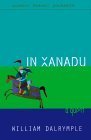
This is an an-times entertaining account of a late 80's attempt to retrace the Voyages of Marco Polo (follow the author hitching a ride through the Chinese desert on the back of a coal truck while hiding from the police!) But disappointingly, the book is betrayed by frequent forays into casual racism. Dalrymple is impressively knowledgeable about ancient history, texts and architecture, but is uninformed about the people who actually live in the places he's visiting in the present day, frequently relying on obsolete guidebooks. Dalrymple makes his way through Turkey, Iran, Pakistan, Xinjiang, and China while never speaking the native language, and thus can't effectively communicate with anyone besides his two British traveling companions and a rich college chum he stays with in Lahore. This wouldn't inherently be a problem, since he's ostensibly writing about Marco Polo rather than modern Central Asia, but Dalrymple can't resist making snide comments about people as they struggle to speak English to him. The non-whites in the book inevitably receive caricature-like portrayals. This happens enough that it becomes difficult to ignore. Consider some of the following examples, which stood out to me:
p.69 [an English version of a Turkish restaurant's menu pasted verbatim for the purpose of making fun of the poor translation. Remember that Dalrymple received this menu because he is unable to read the actual Turkish menu, while at a restaurant in Turkey.]
p. 71 "Good looks have been shared out unevenly among the Turks. Their men are almost all handsome with dark, supple skin and strong features: good bones, sharp eyes and tall, masculine bodies. But the women share their menfolk's pronounced features in a most unflattering way. Very few are beautiful. Their noses are too large, their chins too prominent. Baggy wraps conceal pneumatic bodies. Here must lie the reason for the Turks' easy drift out of heterosexuality."
p. 82 "10:30 p.m. Set off two hours late, only to stop at the bus station in Tarsus, the home of St. Paul. Enough to give anyone wanderlust: loud Turkish music and some sort of mewing Turkish transvestite. He/she/it tells me Tarsus is 'very romantic place.' It wore thick mascara, pink lipstick, and held a small yellow handbag."
p. 215 "Never sleep with an Afghan. They snore, and they rise indecently early."
p. 259 "but it was only when we stopped at a han for the night that I discovered that my side pocket had been ransacked and my razor blades, malaria pills, insect repellent, sun cream and athlete's foot powder were all gone. It was a terrible waste: the Chinese cannot grow beards, do not suffer from malaria or sunburn, and were unlikely to guess what to do with the athlete's foot powder or the Jungle Juice insect repellent. My only consolation was the thought that the wretches might try to eat them."
p. 280 "Mr. Flying Chicken was a gentleman of Singaporean origin who was remarkable chiefly for his kingly girth and his efforts to maintain it by constant feeding . . . Mr. Chicken produced a whole, cold boiling fowl. He lifted it aloft with the same reverence as a Catholic priest might lift the host at the elevation. He looked at Louisa and me with hungry eyes. 'Fly Chikky,' he murmured. . . . Mr. Chicken rose and made to leave the compartment. As he did so he turned and flashed a smile in our direction. 'I go gi' foo. I go gi' fly chikky.'"
p. 295 "The Mongols were ugly and inquisitive. They had narrow, high-set eyes and tight, dark skin . . . Lou suggested that they were all cousins and had interbred: that, certainly, would explain both their unusual stupidity and how so many of them managed to live in so few houses."
It is tempting to dismiss this sort of stuff because the book was written in the 1980's. But I don't think that's the reason - Patrick Leigh Fermor's A Time of Gifts, for example, describes a journey made in 1933 (albeit written in 1977) and has none of these issues, even when he encounters language barriers beginning in Germany. I don't recall this being an issue in any of Dalrymple's books about India which I read and enjoyed several years ago, so perhaps he matured with age. In any case, it's a major drag on In Xanadu. Travel writing as a genre is frequently criticized for ethnocentrism and this is a textbook example. It's another reminder of why Anthony Bourdain was so widely mourned, as he at least gave the impression of treating everyone he encountered with respect, no matter how humble the surroundings.