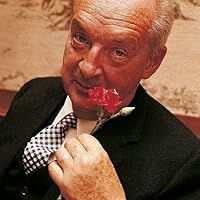
The Complete Short Stories of Thomas Wolfe stands as the most comprehensive edition of Thomas Wolfe’s short fiction to date. Collected by Francis E. Skipp, these fifty-eight stories span the breadth of Thomas Wolfe’s career, from the uninhibited young writer meticulously describing the enchanting birth of springtime in “The Train and the City” to his mature, sober account of a terrible lynching in “The Child by Tiger.” Thirty-five of these stories have never before been collected, and “The Spanish Letter” is published here for the first time. Vital, compassionate, remarkably attuned to character, scene, and social context, The Complete Short Stories of Thomas Wolfe represents the last work we have from the author of Look Homeward, Angel, who was considered the most promising writer of his generation (The New York Times).
People best know American writer Thomas Clayton Wolfe for his autobiographical novels, including Look Homeward, Angel (1929) and the posthumously published You Can't Go Home Again (1940).
Wolfe wrote four lengthy novels and many short stories, dramatic works and novellas. He mixed highly original, poetic, rhapsodic, and impressionistic prose with autobiographical writing. Wolfe wrote and published books that vividly reflect on American culture and the mores, filtered through his sensitive, sophisticated and hyper-analytical perspective. People widely knew him during his own lifetime.
Wolfe inspired the works of many other authors, including Betty Smith with A Tree Grows in Brooklyn, Robert Morgan with Gap Creek; Pat Conroy, author of Prince of Tides, said, "My writing career began the instant I finished Look Homeward, Angel." Jack Kerouac idolized Wolfe. Wolfe influenced Ray Bradbury, who included Wolfe as a character in his books.
Thomas Wolfe’s short stories have not aged so well in my opinion and with the exceptions noted below are not in the same league as say Hemingway’s short stories for example. This was a bit disappointing since Look Homeward Angel by Thomas Wolfe remains one of the best American novels ever.
With that said, here are the three that are a step above the others.
1. An Angel on the Porch - semi-autobiographical story about a woman who wants to purchase a most expensive headstone.
2. Chickamagua - An old Confederate remembers the famous Civil War battle, the second bloodiest after Gettysburg.
3. The Plumed Knight - a man, partly out of jealousy and disdain, tries to set his brother straight. The brother is a delusional Confederate veteran who as each year passes seems to grow into the embodiment of a hero from The Lost Cause despite his cowardice and ineptitude in battle.
En esta ronda he leído (o releído) las siguientes seis historias:
“An Angel on the Porch” (Scribner’s Magazine, August 1929) “Death the Proud Brother” (Scribner’s Magazine, June 1933) “Only the Dead Know Brooklyn” (The New Yorker, June 1935 y From Death to Morning, 1935) “The Child by Tiger” (The Saturday Evening Post, September 1937) “Chickamauga” (Yale Review, Winter 1938 y posth. The Hills Beyond, 1941) “A Prologue to America” (Vogue, February 1938).
Primera lectura
Cuatro relatos de Thomas Wolfe: 1.“El niño perdido”; 2.“Un ángel en el porche”; 3.“Una puerta que nunca encontré”; y 4.“La casa de lo lejano y lo perdido”.
Leídos en inglés en The Complete Short Stories of Thomas Wolfe, edición crítica de Francis Skipp, Scribner 1987 Algunos disponibles en español en editorial Periférica; todos en el volumen Cuentos, Páginas de Espuma, 2020. El relato corto "Un ángel en el porche" se puede leer en español, aunque algo adaptado, en el capítulo 19 de La mirada del ángel, Trotalibros, 2022.
Autor: Thomas Wolfe (1900-1938) Valoración global: 5/5 Traducciones de Periférica: 4/5 Traducción de Trotalibros: 3/5 Traducción de Páginas de Espuma: 2/5
Estos cuatro relatos, que van desde el cuento breve a la novela corta son en realidad episodios de una única narrativa, la de Thomas Wolfe en su whitmaniano intento de contarnos América a través de las sagas de los Gant y los Pentland. Son además una demostración de que cuando Wolfe cultivaba la novela corta era perfectamente capaz de mantener bajo control su narrativa, hacerla girar en torno a un foco y unificarla mediante una serie de leit motivs recurrentes.
La lectura de estos cuatro relatos en el orden que propongo sigue una progresión temporal en la acción narrativa. Los asuntos recurrentes son en mi opinión dos: el tiempo y la incapacidad de expresar eso que se quiere decir por faltarnos la palabra precisa o de llegar al sitio ansiado por no conseguir abrir esa última puerta. El inglés a menudo cultista y ligeramente arcáico de Wolfe tiene la virtud de acariciar los oídos del lector. Es una prosa lírica, a veces poesía en línea continua. Exige al lector la constante consulta del diccionario. Todo eso se pierde en gran medida al traducirlo.
I. “El niño perdido” (The Lost Boy) He oído decir que se trata de un texto que se descarto durante la edición de La mirada del ángel en 1929, pero no es correcto. De hecho no está en la versión original de dicha novela (publicada en el año 2000) que se tituló O Lost
Se trata de un episodio sobre la corta vida y la muerte de Grove Gant, hermano en la ficción de Eugene Gant, trasunto de Wolfe, cuando éste era casi un bebé. Wolfe juega aquí con sus tres ideas del tiempo: hay un tiempo que es propio de cada uno de nosotros: el tiempo presente; otro que controlan los que nos conocieron de niños: es el tiempo del pasado; y finalmente está el tiempo de las cosas, que es eterno e inabarcable, en el que somos pequeñas figuras.
Puede leerse en español en: Periférica 2016
II. “Un ángel en el porche” (An Angel on the Porch) Es el primer texto publicado por Wolfe. Fue en la revista Scribner's Magazine en agosto de 1929, unos meses antes de publicarse en otoño de ese año su primera novela Look Homeward, Angel. Es un breve relato que luego se incorporaría algo modificado en el capítulo 19 de dicha novela. Me ha resultado conmovedor.
Puede leerse en español, aunque algo modificado, en el capítulo 19 de La mirada del ángel, Trotalibros, 2022 o en el volumen Cuentos, de la editoril Páginas de Espuma, si bien la traducción en este último caso no es muy buena.
III. “Una puerta que nunca encontré” (No Door) Una de las novelas cortas más importantes de Wolfe, terminada en enero de 1933. El pasaje que describe el mes de octubre en la segunda parte de la novela es poesía pura. En contra de lo que se cree, todos estos relatos y novelas cortas publicados entre 1930 y 1934 no son las sobras de la poda editorial de las novelas largas de Wolfe, sino al contrario, unidades narrativas plenamente trabajadas que luego se incorporarían a su segunda novela Del tiempo y el río.
Puede leerse en español en: Periférica 2012
IV.“La casa de lo lejano y lo perdido” (The House of the Far and the Lost) Inicialmente era un segmento de la tercera parte de “Una puerta que nunca encontré” que Scribner decidió publicar en 1934 de manera separada. Es un relato sobre la exclusión que nos muestra a Wolfe en toda su plenitud como excelso narrador. Lamentablemente Periférica no lo incluyó en su edición de “Una puerta que nunca encontré”.
Puede leerse en: Cuentos, Páginas de Espuma, 2020.
Primera reseña (nada más terminar la lectura)
De los cincuenta y ocho relatos que componen el canon de Wolfe y que recoge esta edición crítica, he leídos cuatro que una buena parte de la crítica considera los más importantes:
- "No Door" (en español "Una puerta que nunca encontré", Periférica): una maravilla de relato, un ejemplo de prosa lírica.
- "The House of the Far and Lost": originalmente un episodio de "No Door"
- "The Lost Boy" (en español "El niño perdido", publicado por Periférica). Según Faulkner debía leerse antes de los anteriores por ser su precuela.
- "Boom Town" (en español "Especulación", Periférica): es la segunda vez que lo leo; la primera fue en 2015 en español. Esta relectura en inglés con el contexto de la lectura de los otros relatos, me ha descubierto aspectos que se me habían escapado (el uso del lenguaje, la reiteración de motivos frecuentes en Wolfe), pero la impresión general sigue siendo la de una historia compacta y potente, una metáfora sobre la histeria colectiva en búsqueda de la riqueza.
Además, he leído el primer cuento, de solo seis páginas y medias, que abre el volumen de Scribner y que no solo me ha parecido una pequeña obra maestra del relato corto, sino también representativo del mejor estilo de Wolfe: - “An Angel on the Porch” (Scribner’s Magazine, August 1929).
I do not think that Thomas Wolfe could write a story I didn't like, but discussing Wolfe is a rare and even lovelier occasion. Hence I was pleased when a friend asked if I had read a novella, called The Lost Boy, because it gave me a chance to search for it. Not having a copy of The Web and the Rock, nor having read it, I looked around and discovered this present huge tome with lots of stories I hadn't read and wondered whether I should take the plunge into the Riverrun of Wolfeland once more. It was a short argument which I could not avoid winning.
As it turns out, this book was edited by my undergraduate American literature professor at Miami, a wonderfully inspiring man by the name of Dr. Francis Skipp. He taught me any number of wonderful things, (the correct pronunciation of "Thoreau," for example,) as well as inspiring me to read and write about life. Naturally I bought a used tome which, oddly, came out of another library. I shudder to think that this wonderful literature was removed and some claptrap replaced it in popularity.
It is a shame that the story for which I purchased this book is incomplete. The editor used what he thought was the best information available, but The Lost Boy is divided into 4 parts... and in this book it is severely edited, almost completely missing one part because it was taken directly from a magazine publication. This is significant for several reasons, but primarily because Wolfe was experimenting with techniques at the end of his life and I believe that this is among the finest examples of the finished product. Without the fourth part, the story sort of hangs in the air, so to speak.
I have thought a great deal about this technique which Wolfe used effectively towards the end of his life and one may either ascribe magic to it or scoff as one sees fit, but I fervently believe that it is more than a device of literature. Much of Wolfe's writing is a kind of quantum version of life and I much prefer this kind of thinking to the overused terminology of “stream of consciousness” sort of thing which lumps one in with all sorts of people who are incapable of forming sentences.
Indeed, at a time when the heavyweights were people like Hemingway, Faulkner and Fitzgerald, Wolfe's pure description of activity pales by comparison. For example, Hemingway is forever getting drunk in and out of bars, volunteering for foreign wars, demonstrating virility in so many ghastly ways that flirt with death that Wolfe is a pansy by comparison. I think that Hemingway wasted no words in calling him “Little Abner,” after his death and essentially denigrating his writing. Faulkner originally said some laudatory words which he later seemed to take back for some reason. The point isn't about literature's desire for testosterone poisoning or even if some of it is really pretty flagrant and silly. The greater issue is that Wolfe seems to have been a fully functioning man, indeed a somewhat broken one by some measure, but exploring subtle venues that the world wasn't quite ready to see. The greater question is whether it takes a great deal of roaming around the world trying to impress other people in order to have an incredibly keen sense of understanding for the human condition.
By using the example of The Lost Boy, I can demonstrate a technique I have named, Recovering Unexperienced Memories. Imagine a young child, one who is the third child of a man and woman and he has been told all about his older brother who died when he was still very young when the family traveled to the St Louis World's Fair in 1904. This young boy was 3 or 4,(his older brother 12,) when all this occurred so all these things that he “remembers” are stories which have been told to him, first by his father, then his mother and then by his much older sister. The genius of putting it all back together, of course, is that it is told in sections as if it were a real memory. But the fourth part of the story is about the young boy, now all grown up, returning to St Louis and retracing the steps of the family and finding the house and trying to relive, as it were, those memories.
Now one might ask why anyone should wish to retrace this terrible tragedy in which one's own brother has died, but then he has had to listen to his mother talk about the boy and how he was the best of all her children...and perhaps there is no one who does not know or understand someone who has not had to live with the burden of someone who has forced someone to carry that for a lifetime and, thus, seek some sort of respite. Finding the house, he is able to sit with the occupant of the house and talk for a while, but for the most part they sit in quiet sympathy with one another. To my mind, Wolfe is telling us that this is not a restored kind of sympathy, but a kind of universal quiet empathy, an acknowledgement of each other's pain...and a willingness to endure as well as possible.
Indeed, one might read this story as a greater allegory for living but I leave the meaning to others. It is the technique that I find astonishing here, Wolfe forcing the character to recover clues to that life. It is not so much a piecing together as it is weighing the importance in our lives to ourselves. In the end, I suggest that it takes a greater man to be able to live with the weight of his sins than it does to die beneath the weight of them because they are too great a burden. Whether that makes Thomas Wolfe any better a writer than anyone else, he wrote some exceptional short stories here.
This entire review has been hidden because of spoilers.
Shamefully, I've never made it all the way through Look Homeward Angel, but I LOVE Wolfe's short stories. It's a shame that he's fallen out of fashion -- because in short stories he very much rivals Fitzgerald and Hemingway
These ‘stories’ are mostly chips from the vast blocks of manuscript Wolfe would gather and dump on his editor’s desk. ‘On Leprechauns’ is an appallingly self-serving defence of writing verbose, overcast prose - rather like Wolfe’s.
There is one good novella, ‘The Lost Boy’, and a superb story told in the vernacular ‘Only the Dead Know Brooklyn.’
James Dickey’s introduction scoffs at the idea Wolfe was essentially an undisciplined, relentless autobiographer whom most readers are right to outgrow and discard. You can’t help wondering if Dickey ever actually read these pages.
It took me years to get through this book because frankly a little bit of Thomas Wolfe goes a long way. But I enjoyed it and kept plugging away - a story here, a story there, in between my other reading, and I finally finished it. Well worth the read.
Thomas Wolfe was not known as a short story writer. Wolfe is most famous for his four mammoth novels, two published during his lifetime, and two published posthumously. However, he did publish many short stories, and the 1987 collection The Complete Short Stories of Thomas Wolfe, assembles all 58 stories in one volume. Many of Wolfe’s stories later appeared as episodes in his novels.
The book was edited by Francis E. Skipp, who taught literature at the University of Miami for 30 years. Skipp’s obituary says that he was an expert on Wolfe, Ernest Hemingway, and James Dickey, who wrote the Foreword for the book. Dickey, who taught at the University of South Carolina for many years, was renowned as a poet and the author of the novel Deliverance.
Skipp details the difficult process of assembling the different drafts of Wolfe’s stories and figuring out when changes were made by Wolfe himself, and when they were made by editors. Skipp has tried, I think rightly so, to keep the stories as close to what Wolfe himself wanted, which often means keeping extra material in the stories. I wish that Skipp presented the reader with more information about where and when these short stories were originally published. Fortunately, you can now find this information on the website of the Thomas Wolfe Society.
Dickey’s Foreword is a marvelous defense and celebration of Wolfe’s writing. Dickey quotes three paragraphs from Wolfe’s short story “The Four Lost Men,” and Dickey writes of those paragraphs: “This is what you read Thomas Wolfe for: complete immersion in a scene, imaginative surrender to whatever a situation or a memory evokes; quite simply, the sense of life submitted to and entered. In everything he wrote, Wolfe tells us that we have settled—are settling—for too little. We have not lived enough; we are capable of more.” (p xiv-xv)
Much of Wolfe’s fiction was autobiographical in nature, but The Complete Short Stories also demonstrates how Wolfe was able to create fiction that featured characters and situations very different from his own. One of my favorite stories in the book was “Polyphemus,” a five-page story about a Spanish explorer seeing the North American coast in the 1600’s. It’s about European imperialism, and how the Spaniard is blind to the treasure of America because the streets are not paved with gold.
Wolfe’s writing was full of beautiful lyricism. Wolfe’s publisher was Scribner’s, and his editor was Maxwell Perkins. Wolfe was one of a trio of great American writers Scribner’s had at that time, the others being F. Scott Fitzgerald and Ernest Hemingway. You can put these three writers on a continuum. At one end, you have the terse sentences and minimalism of Ernest Hemingway. (Although Hemingway also wrote sentences that went on and on and on, like the famous sentences at the beginning of A Farewell to Arms.) At the other end of the continuum, you have the maximalism and the powerful flood of words unleashed by Thomas Wolfe. Wolfe’s enthusiasm and passion for life spilled forth in his writing in long paragraphs of description. And in the middle, you would have the exquisite, beautiful sentences of F. Scott Fitzgerald. Fitzgerald was more descriptive than Hemingway, but his prose was leaner than Wolfe’s. These three writers are proof that great writing cannot be contained in just one model, or one mode of expression. Fitzgerald is my personal favorite of the three writers, but there are things I get from Wolfe and Hemingway’s writing that I don’t get from Fitzgerald’s.
“The Lost Boy” is one of my favorite stories of Wolfe’s. It’s about Wolfe’s older brother Grover, who died of typhoid at the age of 12. It’s a beautiful and haunting meditation on time, memory, and grief. Written in several different voices, it demonstrates Wolfe’s powers at their full display. The final section is narrated by Grover’s younger brother, essentially Thomas Wolfe himself. Wolfe went to the rented house in St. Louis where Grover died, to see as an adult the room where his brother died so many years ago. Here is the second to last paragraph of the story:
“I knew that I would never come again, and that lost magic would not come again, and that the light that came, that passed and went and that returned again, the memory of lost voices in the hills, cloud shadows passing in the mountains, the voices of our kinsmen long ago, the street, the heat, King’s Highway, and the piper’s son, the vast and drowsy murmur of the distant Fair—oh, strange and bitter miracle of Time—come back again.” (p.380)
Similar to F. Scott Fitzgerald, Thomas Wolfe felt a constant sense of time’s passage, and the irrecoverable nature of the past. There is a longing that is a constant presence in both men’s writing.
But Wolfe was not always melancholy, and his exuberant prose is a joy to read, like this sentence from “The Train and the City”: “Suddenly the streets were bursting into life again, they foamed and glittered with a million points of life and color, and women more beautiful than flowers, more full of juice and succulence than fruit, appeared upon them in a living tide of love and beauty.” (p.11)
One of Wolfe’s finest stories was “No Door.” The story was so long that it was published as two stories, “No Door” and “The House of the Far and Lost.” There’s a beautiful paragraph about October in “No Door” that is one of my favorites.
“October had come again, and that year it was sharp and soon: frost was early, burning the thick green on the mountain sides to the massed brilliant hues of blazing colors, painting the air with sharpness, sorrow, and delight. Sometimes, and often, there was warmth by day, and ancient drowsy light, a golden warmth and pollinated haze in afternoon, but over all the earth there was the premonitory breath of frost, an exultancy for all men who were returning and for all those who were gone and would not come again.” (p.79)
Wow. That’s just a showstopper of a paragraph, showing off the ways in which Wolfe could paint a picture with his words.
My favorite 12 stories from The Complete Short Stories of Thomas Wolfe are:
The Train and the City
Death the Proud Brother
No Door
The Four Lost Men
The House of the Far and Lost
Only the Dead Know Brooklyn
Polyphemus
Oktoberfest
The Child by Tiger
The Lost Boy
The Dark Messiah/The Spanish Letter (a story about Wolfe’s disillusion with Germany after Hitler’s rise to power. The story “The Dark Messiah” was assembled by Edward Aswell after Wolfe’s death, the material was taken from “The Spanish Letter”)
The Return of the Prodigal (about Wolfe’s return to his hometown of Asheville in 1937, after seven years away)
I would recommend The Complete Short Stories of Thomas Wolfe to fans of Wolfe’s writing, or to anyone interested in American literature. During his abbreviated career, Thomas Wolfe produced a lot of great writing.
قصص قصيرة رائعة و أسلوبه مميز جدا فى الحكى بيعتمد على تأكيد و تكرار الأحداث كأنه بيكلم أحد أصدقائه و القصص كلها واقعية و تشعر أنها تحكى عن نفس الشخص لكن فى مراحل عمرية مختلفة أول مرة أقرأ للكاتب ده لكن أعجبنى بشدة!
Loved it. I know it was written decades ago, and in many cases in a style we no longer use, but it is amazing that a man born in 1900 was able to offer us so many wonderful stories and die so early at the age of only 38. I love this book and consider it a treasure
First off, Wolfe is very racist, especially in the early stories. There are hack descriptions of minorities. But beyond that, stories like "The Child by Tiger" preach how no minority can be trusted, they are all dangerous. Deplorable. The good I took away from the author's works is his description of every day life. I see why he is compared to Walt Whitman. He captures and appreciates the common beauty all around us, the beauty of human activity. I enjoyed that he mentioned Cobb, Gehrig, Einstein.
Not something I recommend, but overall it felt just worth my time, the sum of the whole was greater than the sum of the parts. The Sun and the Rain and Oktoberfest were my favorites.
I'm reminded of Emitt Rhodes, the great pop singer-songwriter who never quite got the recognition he deserved because he was so stylistically similar and therefore eclipsed by McCartney.
Wolfe's brilliance is immediate. At its best his prose is lyrical and evocative yet tightly-wound, precise; one feels both supreme natural talent and fine craftsmanship. His biggest fault, I feel, was being born to close to the titantic and more talented Faulker to share so much similarity in technique, style, and subject.
Wolfe is one of the most brilliant authors I have ever read. His sentences are beautiful and his choice of words are amazing. Sometimes I have to read a sentence several times to savor it. This is a long collection of stories at 621 pages. It is so good I am going to read this again.
I got about halfway through and needed to jump into another book. I will come back to this one in the future. It's a slow, descriptive writing style. Not much action, just well-written descriptive narrative and travel logs.
🇪🇸 Thomas Wolfe es una joya, un universo inabarcable de vivencias, de sentimientos y pensamientos, de delicadeza y de melancolía, de energía y chispas de pura vida. me ha recordado muchísimo a Marcel Proust tanto por su estilo, como por su sinceridad desbordante y su amor a la vida y a las personas. una experiencia increíble que recomiendo a todos.
🇬🇧 Thomas Wolfe is a jewel, an endless universe of experiences, feelings and thoughts, of delicacy and melancholy, of energy and sparks of pure life. He reminds me a lot of Marcel Proust both because of his style, as for his overflowing sincerity and his love for life and people. An incredible experience that I recommend to everyone.