

What do you think?

Dead Elvis
An absorbing and eye-opening meditation on Elvis Presley's life--since his death. In 18 essays illustrated with more than 60 photos and line drawings, Marcus shows how Elvis remains alive in the cultural imagination of our place and time, and how the King's vitality has intensified in direct proportion to the obsession with his memory.
256 pages, Paperback
First published November 1, 1991
About the author
Greil Marcus
105 books276 followersGreil Marcus is an American author, music journalist and cultural critic. He is notable for producing scholarly and literary essays that place rock music in a broader framework of culture and politics. In recent years he has taught at Berkeley, Princeton, Minnesota, NYU, and the New School in New York. He lives in Oakland, California.
Ratings & Reviews
Friends & Following
Create a free account to discover what your friends think of this book!
Community Reviews
Displaying 1 - 15 of 15 reviews

November 26, 2013
A collection of previously-published writings on Elvis, Greil Marcus' Dead Elvis is an attempt to put Presley in a greater context, to reconcile his place in American culture. I'm not sure it's entirely successful, but I'm not sure it's something any one person can do, too.
The pieces range from book reviews to in-depth criticism to obituaries, published in places like The Village Voice, Artforum and Rolling Stone. Some look at works about Elvis: Joni Mabe's collages; Albert Goldman's trashy biography. Others have a looser connection, like the review of Nick Tosches' biography of Jerry Lee Lewis. Some of Marcus' impressions are insightful and intelligent, sometimes they're a little academic (like when he quotes Vaneigem). Throughout, it's juxtaposed by images of Elvis: art, collage, bootleg records and underground comics. Taken as a whole, they show society's fascination with someone who meant something to nearly everyone. But what he meant isn't quite clear.
With all the breakdowns of culture, the looks at myth-making and the role of art, Marcus' book is weighed down by it's own criticism. He spends so much time tying together the disparate elements of popular culture, it's easy to lose sight of the subject itself: Elvis often vanishes here, washed over by Melville, UK punk and art theory. The book builds to a climax, but what's the climax? Elvis is still dead, Elvis is still alive. Yes and...? It never seems to get that far.
No wonder there's a gushing quote by David Foster Wallace on the back: like his bloated Infinite Jest, this book pads out it's thesis with unneeded juxtaposition, analysis and, ultimately, rings hollow. Compared with his essay on Elvis in Mystery Train: Images of America in Rock 'n' Roll, this book feels superfluous. You might as well read that one again.
The pieces range from book reviews to in-depth criticism to obituaries, published in places like The Village Voice, Artforum and Rolling Stone. Some look at works about Elvis: Joni Mabe's collages; Albert Goldman's trashy biography. Others have a looser connection, like the review of Nick Tosches' biography of Jerry Lee Lewis. Some of Marcus' impressions are insightful and intelligent, sometimes they're a little academic (like when he quotes Vaneigem). Throughout, it's juxtaposed by images of Elvis: art, collage, bootleg records and underground comics. Taken as a whole, they show society's fascination with someone who meant something to nearly everyone. But what he meant isn't quite clear.
With all the breakdowns of culture, the looks at myth-making and the role of art, Marcus' book is weighed down by it's own criticism. He spends so much time tying together the disparate elements of popular culture, it's easy to lose sight of the subject itself: Elvis often vanishes here, washed over by Melville, UK punk and art theory. The book builds to a climax, but what's the climax? Elvis is still dead, Elvis is still alive. Yes and...? It never seems to get that far.
No wonder there's a gushing quote by David Foster Wallace on the back: like his bloated Infinite Jest, this book pads out it's thesis with unneeded juxtaposition, analysis and, ultimately, rings hollow. Compared with his essay on Elvis in Mystery Train: Images of America in Rock 'n' Roll, this book feels superfluous. You might as well read that one again.

October 2, 2012
This is a book about the mythical persona of Elvis that rose up after his death, which to me sounds interesting. In actuality, only about 20% of the book offers much thought on the matter, and the rest is a convoluted mess. It reads as if Greil Marcus wrote an essay for Rolling Stone that was really intriguing, and then it was forced into book form by including every single bizarre reference made to Elvis by artists, musicians, or...whomever from 1977 to 1990.
I liked the 20% that was actual information, but the 80% that is essentially meaningless is made more obnoxious by the fact that it's supposed to be cool by it's association to Rolling Stone magazine, which itself stopped being cool long before Elvis died.
I liked the 20% that was actual information, but the 80% that is essentially meaningless is made more obnoxious by the fact that it's supposed to be cool by it's association to Rolling Stone magazine, which itself stopped being cool long before Elvis died.

June 23, 2021
Not only is Memphis the most fascinating black box in American culture. Of all the totems of mid-century American culture, Greil Marcus posits that Elvis and the negative space of culture that inhabits his corpse can tell you a pretty interesting a comprehensive tale of the America that entombed Elvis and what they built on his grave. Also please check out the bootleg album "Elvis' Greatest Shits!"

October 31, 2008
As a sampling of writings pulled from other sources mostly over the decade and a half following Elvis' death in 1977 (book reviews, mock screenplays, collage art), this book is mostly a sort of Greil Marcus: the Collected Elvis Essays. Which is both good -- "Greil Marcus: Anything" may be as much recommendation as any book about music really needs -- and the bad -- unlike Lipstick Traces, there is no consistent narrative thread here, and the significance of Elvis must be assembled from a dozen broken up lenses pointing from opposing directions, talking over and echoing one another. And occasionally, via the many other voices that speak through the books in review, contradicting one another; though Marcus' views seem well defined and consistent, he also seems content to let an image emerge out of the babble on its own at times, indistinct and left for the reader to judge.
And what is that image Marcus is content to let emerge? Certainly not the Truth Behind Elvis, or even, as in a titling quip, "the Myth Behind the Truth Behind the Legend." Instead, Marcus seems primarily concerned with Elvis as Mythology. Ultimately his book is a survey of a culture reeling from an epochal shift -- no less than the emergence of rock and roll -- and then left to deal with with the early loss of its priest and avatar (and in a manner that seems as fitting a summation and indication of the American dream and its contradictions as Fear and Loathing in Las Vegas). To deal in ways ranging from deification to reinvention to appropriation to bitter excorism.
I myself have never had a specific interest in Elvis' music -- my first contacts with his work were less the fire of his early rockabilly days and more the bloat of later years -- but I could certainly not deny or minimize his relevance and impact. And so this book seems -- despite its padding with outdated bibliographies of past Elvis Literature -- to be an insightful, intriguing glimpse into the machinery of American pop culture.
And what is that image Marcus is content to let emerge? Certainly not the Truth Behind Elvis, or even, as in a titling quip, "the Myth Behind the Truth Behind the Legend." Instead, Marcus seems primarily concerned with Elvis as Mythology. Ultimately his book is a survey of a culture reeling from an epochal shift -- no less than the emergence of rock and roll -- and then left to deal with with the early loss of its priest and avatar (and in a manner that seems as fitting a summation and indication of the American dream and its contradictions as Fear and Loathing in Las Vegas). To deal in ways ranging from deification to reinvention to appropriation to bitter excorism.
I myself have never had a specific interest in Elvis' music -- my first contacts with his work were less the fire of his early rockabilly days and more the bloat of later years -- but I could certainly not deny or minimize his relevance and impact. And so this book seems -- despite its padding with outdated bibliographies of past Elvis Literature -- to be an insightful, intriguing glimpse into the machinery of American pop culture.

May 19, 2016
A fascinating idea that somehow became a convoluted mess on execution. First, I was somewhat put off by the total absence of any author's bio in this book - who is this person and why should I care about their thoughts on Elvis? I have never seen that before. Second, while some of the artwork reproduced is interesting (or disturbing), its hard to know exactly what the author is trying to accomplish with this.
The editorial decision to reproduce the introduction in 24 point font was tragic - the book begins with the author literally shouting at the reader. We are not children and it was distracting.
The biggest problem is that the text is non-linear nonsense. Perhaps Marcus was trying on a new style or thought stream of consciousness was an appropriate style for this work. It was not. I have no idea what this book is about or what Marcus is trying to say.
The idea that Elvis became bigger in death is fascinating, as is the notion that his image changed and his iconic status actually reduced him to something less than human. Too bad Marcus didn't really explore that. The editor, designer and publisher of this book bear as much blame as the author does here. This book is a hot mess.
The editorial decision to reproduce the introduction in 24 point font was tragic - the book begins with the author literally shouting at the reader. We are not children and it was distracting.
The biggest problem is that the text is non-linear nonsense. Perhaps Marcus was trying on a new style or thought stream of consciousness was an appropriate style for this work. It was not. I have no idea what this book is about or what Marcus is trying to say.
The idea that Elvis became bigger in death is fascinating, as is the notion that his image changed and his iconic status actually reduced him to something less than human. Too bad Marcus didn't really explore that. The editor, designer and publisher of this book bear as much blame as the author does here. This book is a hot mess.

August 10, 2015
This is the most enjoyable music related book I've read in quite a while.
Greil Marcus's "Dead Elvis" studies the industry and legend of Elvis AFTER his death, from the tourism of Graceland to urban myths of Elvis sightings, and references to Presley in everything from movies, cartoons, comedy, burgers and of course, Elvis imitators.
It's a breezy, fun read...but it also has some important points to make along the way.
Highly recommended.
Greil Marcus's "Dead Elvis" studies the industry and legend of Elvis AFTER his death, from the tourism of Graceland to urban myths of Elvis sightings, and references to Presley in everything from movies, cartoons, comedy, burgers and of course, Elvis imitators.
It's a breezy, fun read...but it also has some important points to make along the way.
Highly recommended.

October 24, 2020
BACKSTORY (skip if you don't care)
My memory, which may not be accurate, is receiving this book for Xmas from a then relative in the early 90s. Like most books gotten at Xmas, it got assimilated to be read later. Later ended up being 20some years. After moving this with me 3 times, I have finally read it.
REVIEW
This book starts off great! A wonderful bit of publishing craftsmanship, mixing prose with images in an enticing manner. I loved the first chapter and was very excited for what was to come.
But with each chapter I found myself getting more and more bored until I stopped reading about 1/5 of the way in, realizing I didn't have finish reading this. So I just looked at the images, which bored me too before I got the end.
Maybe I am just in a mood this morning. Your mileage may vary.
My memory, which may not be accurate, is receiving this book for Xmas from a then relative in the early 90s. Like most books gotten at Xmas, it got assimilated to be read later. Later ended up being 20some years. After moving this with me 3 times, I have finally read it.
REVIEW
This book starts off great! A wonderful bit of publishing craftsmanship, mixing prose with images in an enticing manner. I loved the first chapter and was very excited for what was to come.
But with each chapter I found myself getting more and more bored until I stopped reading about 1/5 of the way in, realizing I didn't have finish reading this. So I just looked at the images, which bored me too before I got the end.
Maybe I am just in a mood this morning. Your mileage may vary.

September 5, 2025
BACKSTORY (skip if you don't care)
My memory, which may not be accurate, is receiving this book for Xmas from a then relative in the early 90s. Like most books gotten at Xmas, it got assimilated to be read later. Later ended up being 20some years. After moving this with me 3 times, I have finally read it.
REVIEW
This book starts off great! A wonderful bit of publishing craftsmanship, mixing prose with images in an enticing manner. I loved the first chapter and was very excited for what was to come.
But with each chapter I found myself getting more and more bored until I stopped reading about 1/5 of the way in, realizing I didn't have finish reading this. So I just looked at the images, which bored me too before I got the end.
Maybe I am just in a mood this morning. Your mileage may vary.
My memory, which may not be accurate, is receiving this book for Xmas from a then relative in the early 90s. Like most books gotten at Xmas, it got assimilated to be read later. Later ended up being 20some years. After moving this with me 3 times, I have finally read it.
REVIEW
This book starts off great! A wonderful bit of publishing craftsmanship, mixing prose with images in an enticing manner. I loved the first chapter and was very excited for what was to come.
But with each chapter I found myself getting more and more bored until I stopped reading about 1/5 of the way in, realizing I didn't have finish reading this. So I just looked at the images, which bored me too before I got the end.
Maybe I am just in a mood this morning. Your mileage may vary.

August 27, 2018
I wasn't sure that I would enjoy it, but I really liked this book. It is fascinating in many ways. It shows us how Elvis kept influencing a lot of people long after his death. People loved him, hated him, worshipped him, but no one was indifferent.
The writing here is superb, well-thought-out, and always interesting.
The whole thing seems a bit disjointed at times, and one can be put off by it, but it all makes sense eventually and even though I didn't get every single reference, I enjoyed it a lot.
The writing here is superb, well-thought-out, and always interesting.
The whole thing seems a bit disjointed at times, and one can be put off by it, but it all makes sense eventually and even though I didn't get every single reference, I enjoyed it a lot.
April 7, 2022
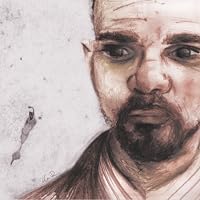
"Good career move." Anonymous Hollywood agent on Elvis's death in 1977. This chiller on the posthumous life of Elvis Presley, by Greil Marcus, a ROLLING STONE critic who knew him in life, serves as a metaphor for America's need for heroes, especially the dead kind. From the compilation album ELVIS'S GREATEST SHIT: THE VERY BEST OF HIS VERY WORST SONGS to women and men who have had plastic surgery to look just like the King, to the kitsch at Graceland as our very own Vatican. This volume is a delightful horror.
May 20, 2020
For anyone who has had some type of relationship with Elvis and/or his music, this could be an interesting read. Simply but intellectually examines what has happened after the passing of Presley and the icons that haunt the years after his death. Good reviews of Elvis biographies with much critical analysis.

July 9, 2019
Great read. Made me pick up His '68 comeback special cd/dvd when I saw it.
Elvis was sent by the Great White Brotherhood.
Elvis was sent by the Great White Brotherhood.

August 8, 2025
Grappling with mammoth
concept of Elvis; even
E wasn't all of it
concept of Elvis; even
E wasn't all of it
September 5, 2026
Not my kind of book! It's bazaar. This is so out there..... more of a fictional Elvis! Can't say anything more except don't bother! JMO

September 3, 2014
A respectful and fascinating exploration of Elvis' impact on popular culture--was a joy to read. Greil Marcus is nothing if not thorough and intellectually rigorous. Also provided great insight into assorted libellous and cruel trash pieces written by jealous hacks, the existence of which I was hitherto unaware.
Displaying 1 - 15 of 15 reviews