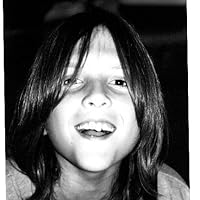
Missing: seventeen-year-old Kai Dionne and his dog Talia.
The search for these two spans a single day, morning twilight to late evening, from the time Kai leaps in a half-frozen river to save the dog to the hour he and Talia are recovered. Each person who comes to the river brings his or her secret needs and desires; each has known loss, and all are survivors: a homeless boy tries to find himself, his lost twin, his double; a childless mother grieves for her son and daughter; a man who shot his father recalls a tender, intimate night “when the father was kind, and not afraid, and not angry.” Kai and Talia belong to, and are loved by, a whole community. As strangers work together toward a single cause, they become family—bound by love not only to the ones lost, but to all who gather.
The perceiving consciousness is oceanic and atmospheric, embracing all living beings, swirling around a person, a bird, a bear, trillium blooming in dark woods, snow, stones, pines singing—moving closer and closer, loving, finally merging, sensing and knowing as one, before lightly whirling out again to embrace and love another. This powerful current of shared memory and experience, this ceaseless prayer, is a celebration of life, all life, mystery and miracle within an immense animate landscape, a song of praise, the voice of the river.
Melanie Rae Thon opens a new genre: call it Eco Avant-Garde, a confession of faith, and a love song to the world.
Few writers possess the gift of transforming the ugly into the beautiful or taking the marginal and making it mainstream. In "The Voice of the River," Thon illuminates the infinite goodness inherent in all of humanity by uniting the misfits and castaways in a common cause: to find a 17-year old boy and his beloved dog who have fallen into a frozen river.
With lyrical mastery and a good sense of story, Thon weaves each character's unique narrative into a tale full of magic and mystery. A must read for anyone curious about nature and spirituality.
Someone at the library told me I "had to" read this, so I checked it out, but I just don't get it. I couldn't keep track of all the characters, it bounces around so much and there are too many pronouns, and the narrative voice (is it the river?)wasn't engaging to me at all. I almost didn't finish this, but Megan shamed me into doing it, because I never not finish books.
Like all stories, this one is about Love and Death. In this case, though, it's not passionate or romantic love, but the suffusing love that holds together a family or a community. And not the sharp, dramatic death of a murder, say, but the broader sensation of loss and the slow seepage of grief. The Voice of the River is a sentimental novel, but in an unusually rigorous, earnest way, never cheap or manipulative, a novel reaching with all its heart for emotional connections, expanding outwards and overlapping in flutters of lyricism from a deep and open core. It's a polyphonic novel, circulating through the viewpoints of perhaps 15 members of a town as they search for a missing boy, tracing their own personal tragedies and joys. At points, Thon's descriptions swell with a kind of radiance-of-god's-love spilling equally over the human and natural worlds, and its at these points that she loses me a bit, even if I can't tell if this is actually in a religious sense or some more diffusely spiritual one. It doesn't really tip into the maudlin or saccharine, nor the preachy, but even so these floods of emotion blunt something that I think I could appreciate in subtler ways, but not quite this. Still, I can appreciate what she is doing. Sentimental, yes, but in search of something unusually all-encompassing.
Not quite sure how I feel about this one: it pulled me in and kept me engaged, but didn't leave me with a strong impression one way or the other. The poetic voice was a pleasure, and there are some powerful sections (the chapter about a young girl lost and wandering her neighborhood overnight, for instance). But it seemed to tread the same ground as several other novels (Kent Meyers The River Warren, Jon McGregor's If Nobody Speaks of Remarkable Things, and Brian Doyle's Mink River, for example) in the type of characters and the structure of interlaced lives around the event of a small town tragedy, and even the thematic notions about community and love and continuity it explores. It never stopped feeling familiar, perhaps because the "eco avant-garde" aspect emphasized in the publisher's description wasn't as much a part of the story as I'd hoped for. I guess I'm also not as convinced as the novel takes for granted that suffering is the only (or most) interesting aspect of a life, and found myself wishing for a bit more range in how these characters were shown, because as large and varied as the cast is they are defined almost exclusively by their pain.
Very poetic and beautiful to read. Sometimes I got a little confused with the narrative. Probably would have given a higher rating, but wasn't in the mood for a book like this.
Although I competed this book it was difficult. I felt the author tried to hard to be a hip writer. There were parts of the book that were compelling but overall I must admit I was bored.
This book definitely takes a minute to get into, so don't let the short length fool you. It reads quite lyrically, which took me a few chapters to understand but overall added to the almost whimsical mood of the story. I did end up enjoying it, and would definitely be interested to pick up other works by Thon.
Perfectly serviceable, just not for me. I’m finding I’m not big into environmental writing (unless you’re Janet Sarbanes). Poetic, daydreamy in tone, full of imagery, flows nicely between narratives. Loved that it fit into one day. Don’t have a lot of big thoughts for this one. Also: That list of names in the beginning? Fantastic.
Beautiful writing about pain, loss, and love. Excellent phrases and imagery throughout, often like reading poems. Brought Annie Dillard to mind. I read while recovering from a traumatic injury, which at first would seem like bad timing, but the novel helped me to rethink my experience.
A 17 year old boy Kai and his dog Talia fall through the ice on a river. The book details the search over the next 24 hours. The story is somewhat spiritual as members of search parties are looking for the boy while reflecting on their own lives. There is also abundant nature and wildlife in these reflections, sometimes too much in their graphic descriptions. The people who are looking for the pair include many "eccentric" people who have their own stories to tell. Unfortunately, I found it hard to follow their thoughts and rantings, finding it necessary to constantly re-read who was talking and whether this was in the present or past. There are way too many characters with a list of them included at the beginning of the book, although there are even too many to mention in that list. It's just too confusing and by the time I was half way through, I couldn't even be bothered to look back.
The book might be something to discuss in a book club, however I would hesitate to recommend it, as it probably should be read through a few times to get the full meaning of it. I'm sorry but I just could not become invested in all the different characters. This book was won through First Reads.
A love song to the world, that's what the prose sings to me. How love and then the loss of love brings together a community around the river, this artery of churning water coursing through this small town. Pitch perfect in terms of truth, with its insights into love and its shadow, loss. The "You" throughout is the boy lost in the river, and the "you," blurs with all the rest of the characters in the book. Soon, you begin to feel there are no borders between people, objects, animals, trees, crows, the river. It is one voice speaking.
If you interested in style, each page offers a gem.
Delicately cradles the line between nature's comforts and brutality. Wonderfully poetic & acutely aware of the sonic, visual, temporal devices on which the style relies so heavily. One of the few books I've read where style almost entirely swallows narrative and totally succeeds—still, the leanness of the narrative is still balanced, tenuous. I mean, it's just freaking gorgeous honestly. The chapters where Thon moves in and out of the second person POV are a masterclass show of how to do a nonlinear, unusual story.
Melanie scrutinizes every word and phrase when she writes, and it shows in the finished product! This lyrical, haunting story of a boy and dog gone missing along a frozen river, and the day long search to find them (the entire novel takes place within the single day), will stay with you long after you've put it down.
Update: This book just won the Fiction category of the 2011 Reading the West Awards, sponsored by the Mountains and Plains Indipendent Booksellers Association!
There were moments in the book that worked really well for me, but over all it was too abstract and not enough developed in the plot. There was a lot of characterization in terms of the individual, but I would have really liked to see more interaction between the characters. Great concept, and beautiful language, but maybe just not my kind of book.
Though I was initially a bit resistant -- to the lyricism, I suppose, and the fact of reading fiction (just someone making stuff up!) -- I was taken by this book in the end. It is nice, actually, to read rhythmic sentences full of striking imagery, and let someone tell you a story, after all.
Episode 37: 5. Hello Amanda! I am always looking for books that are not extremely well known. What are some great fiction books that you think have fallen under the radar?