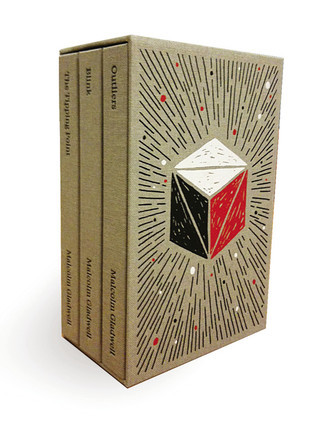
In the past decade, Malcolm Gladwell has written three books that have radically changed how we understand our world and The Tipping Point , Blink , and Outliers. Regarded by many as the most gifted and influential author and journalist in America today, Gladwell's rare ability to connect with audiences of such varied interests has ensured that each title become a phenomenal bestseller with more than ten million copies in print combined.
Now, Gladwell's landmark investigations into the world around us are collected together for the first time. Beautifully repackaged and redesigned, including for the first time illustrations throughout each book, MALCOLM COLLECTED is a perfect treasury of prose and provocation for Gladwell fans old and new.
Malcolm Timothy Gladwell is a Canadian journalist, author, and public speaker. He has been a staff writer for The New Yorker since 1996. He has published seven books. He is also the host of the podcast Revisionist History and co-founder of the podcast company Pushkin Industries. Gladwell's writings often deal with the unexpected implications of research in the social sciences, such as sociology and psychology, and make frequent and extended use of academic work. Gladwell was appointed to the Order of Canada in 2011.
I didn't read this edition, which includes Gladwell's Blink, Outliers, and The Tipping Point, but I did listen to all three books, plus What the Dog Saw, in the car. These were library CDs of varying quality, so I missed some of the narrative in each, but got the gist. Gladwell has a talent for finding fascinating true stories and telling them well. I think he makes giant interpretive leaps from anecdotes supported by spotty studies. I can't agree with many of the conclusions he draws. But I'd be happy to read another of his books.
Would recommend this podcast! Whether you start in season 1 or 2, start in any episode that captures you the most. I have to say the best thing about it would be Malcolm Gladwell... his voice is very easy to listen to. Plus, he captures all the interesting detail of the stories that he discusses.
Merged review:
So I only had 2 episodes left before I could say I was finished. I've been listening to this podcast (both season2) for several months now. But I'm going to post a full review here. (This will hopefully be my first "proper" review I've done of something so bear with me.)
I want to start with one particular episode that I loved to bits. That would be the one called "Hallelujah." Overall, it is mostly a bit of a review and history behind the song 'The Deportees Club' and the later 'Deportee' by Elvis Costello. If I'm being completely honest, it isn't something that interests me, but I wanted to see where the discussion was going. Where it picked up for me particularly was when Malcolm brings in some artists I can recognise. By artists I mean 'Picasso' and ' 'Cézanne.' He uses these two artists to discuss how most people who produce some kind of art are either one or the other... Oh, now I am interested.
Anyway. That's when the famous song we all know in one form or another 'Hallelujah' comes in to play. Leonard Cohen who created this song is dubbed as a Cézanne. Basically, he takes forever to perfect something that others see as perfect, but... he doesn't necessarily see how it could be finished. I loved this part of the podcast the most because it 1) gave me some background trivia I never knew of the song before such as... there are, like, 70 verses in the original lyrics and, 2) it made me feel like my own art I produce can be a Picasso (finished quickly) or a Cézanne and still become a masterpiece in its own right.
This is what a lot of the episodes tend to do. They give you some interesting facts about things you kind of know about, but not in that detail or that mindset. And on the other hand, they do something personal for you. They give you some sort of personal insight into someone's life that affects you one way or another. The episode about some man who had no power bringing McDonalds to its knees was able to tell its listener that we could do the same. Maybe not on the same scale, but we can do something incredible if we just put our mind to it and trudge on, no matter what we are facing. 'General Orthodoxy' is another beautiful story. For some, it will be more personal than others. For those others, you'll get to see another side of religion that you might have not heard of before—and you'll learn from it.
Overall, this is an amazing podcast and I do hope it continues. (I haven't heard of a season 3, but we can only hope, right?)
Anyway, please listen to some of these episodes. During a car ride, before you go to sleep, while you create your own masterpiece, whenever you have free time. It deserves a listen from everyone.
مراجعة احاول فيها تذكر ما قرأته من فترة من كتب غلادويل..من يرغب بكتبه في السعودية يجدها بمكتبة جرير قسم الكتب الأجنبية ولا يطلبها ويتكلف مبالغ كبيرة من امازون..اعمال غلادويل مثيرة لكن خرج عليها كلام كثير وتفنيد لبعض النظريات الي طرحها..لهذا ما يلزم الاخذ بأراءه كمسلمات لا تناقش
blink
احيانا تمر من امامك حادثة او مسألة وفجأة يمر ببالك حكم متيقن من صحته عنها..هذا الموضوع خطأ او فيه شك بصحته..ببساطة الكتاب يحاول يناقش فكرة الانطباع المبدئي ومدى صحته مقارنة بالانطباع المدروس والمتغير بالأراء الثانية..حسب رأي هو الكتاب الاقل شهرة مقارنة بالكتب الاخرى
tipping point
برأي افضل عمل لغلادويل..كيف لمنتج معين او ماركة ملابس وسط منافسة شديدة بأن ينطلق فجأة من شهرة قليلة الى شهرة واسعة وسمعة عالمية بين المنتجات الأخرى ؟ احد الاسباب الي يطرحها غلادويل هي الوورد اوف ماوث ومعناه هي تناقل الكلام بين الناس كنصيحة بجودة المنتج لشخص اخر وتستمر السلسلة إلى ان يصل لنطاق واسع..كتاب عظيم
outliers
الكتاب الي وضع فيه نظريته الشهيرة..لتتقن عمل بدرجة ابداعية لابد من تجاوز حاجز العشر الاف ساعة..واستدل فيها على اشخاص مثل بيل غيتس لما اكتسب معرفة واسعة بالبرمجة وتجاوز معدل التدريب بسن صغيرة بسبب هوسه بالبرمجة من صغره..من عنوان الكتاب يوضح ان هناك اشخاص كسرو القاعدة وكانو مختلفين عن اسلافهم..توفرت لهم ظروف مناسبة وخاصة ليصلو للقمة في اعمالهم..كتاب جيد ويعتبر الاكثر شهرة عالميا له
In his typical easy to read fashion, Gladwell presents multiple incidences of individuals or groups prevailing against tough odds by using unconventional tactics. He also presents some controversial topics, for example discussing how being a top student at a mediocre college can be better than being a mediocre student at a top college. This book did not seem as data driven or as focused as some of his other works which are among my favorites (Outliers and Tipping Point) but this is a thought provoking book and is a very quick read.
Got me questioning pre-conceived notions on topics that affect all of us in our day to day lives. Some of those topics: are smaller class sizes better? Is it always better to go to a top university? Is there a connection between great leaders and a loss of a parent early in life? Why are lots of industry stalwarts dyslexics?
These are some of the questions that Malcolm attempts to answer in this book...and very well I might add. Malcolm is definitely one of my top Canadian author.
I love all of Malcolm Gladwells' work. I especially loved this edition. If you are at all a MG fan and want to display his books, then definitely get this collection. The illustrations inside are really fun and interesting to look at while reading. The books themselves also have a really cool and fun feel to them. I highly recommend reading his books and getting this special edition collection.
definitely give episodes 3-5 a listen - Gladwell's position on social justice in education is On Point...(Lobster Night at Bowdoin, anyone?) Also, The Satire Paradox, episode 10: Yaaassss. (and i highly recommend following it up with NANETTE on netflix.)
I've listened to all 3 of these books over the past year, and they feel like extended podcasts more than books, so it feels weird to review them on Goodreads. I do want to share my general thoughts on this genre, and I'll point out my favorite parts of each book.
This style is very similar to Freakonomics, which has been called "pop psychology." I think these books are very entertaining, and I like the way they make you think about familiar issues in a new way. I worry that they take complex problems and try to condense them into a single chapter of a book. They give you the false sense that you understand the cause and solution to a historical challenge in society. I hope anyone making serious decisions based on these anecdotes uses them as a starting point for further research, rather than jumping to the same conclusions. I do like that Gladwell's books seem to have more coherent themes than Freakononics, which allows you to see his main idea.
The Tipping Point: I agree with the idea that lots of "outbreaks" from viruses to social movements, have critical points where they begin to increase exponentially. This means that simple causes, like the Sesame Street TV show, can have powerful outcomes. I think about the "broken windows" analogy often when it comes to classroom management.
Blink: This was the most surprising of the books--mostly the idea that our brain does so much subconscious analysis. It makes sense in the context of art critics, sports coaches, psychologists, and military generals. As powerful as it is, I can see how it could lead to irrational decisions with racial discrimination or even soda flavors. I thought the police shooting was a case where someone with more experience should be expressing the complex factors involved.
Outliers: This was my favorite because the concept was simpler and easy to set from the data. Of course when and where you are born affects your opportunities and behavior. The amount of time we have to practice is definitely a large factor in who rises to the top of any field. I especially liked how he explained his own opportunities that allowed him to be an Outlier. And everything at the end about education, from extended school year and rice paddies to simple Chinese numbers, was very memorable.
What the Dog Saw: This book seemed to focus a lot on business and marketing. The essays got more interesting as the book went on. There were a lot of insights about how difficult certain problems are to solve, but how they are more manageable if we focus on specific pieces. Stories about Enron and the Challenger make it seem hard to determine who is at "fault" when something goes wrong, if no one did anything technically illegal, but many shortcuts led to an overall bad picture. The last section is a lot like "Blink," which questions are immediate judgments, especially about people and their abilities.
David & Goliath: I think this might be the best one so far. I love the idea that David isn't really an underdog. He's bringing a pistol to a knife fight, doing things in a way that no one is expecting. We do overrate a lot of "powerful" people, most notable prestigious universities, which Gladwell discusses. I agree that it is more effective to get a good education at a place you are comfortable than to feel overwhelmed as the smallest fish in a big sea. That being said, I always worry with these books that people are going to take them too seriously, basing policy decisions on a writer's outside perspective rather than reading the original research. He does point out that not every dyslexic person ends up a CEO, and not everyone who goes through a tragedy becomes stronger, but when those are the only anecdotes he shares, you might get a false impression about the overall data. I really liked the final story of the Huguenots--that was an inspiring way to end.
As with the first two seasons, this series continues to entertain, educate and inspire thought. This season, how we perceive and react to failure and mistakes are recurring themes in Gladwell’s research. Neat topics for sure.
Merged review:
Season two of Malcolm Gladwell's Revisionist History podcast. A podcast is not a book, sure, but I'm including this in my reading list anyways. Gladwell is one my favourite writers because his books elevate my critical thinking skills and inspire deep thought. The Revisionist History podcast it is a natural extension of Gladwell's body of work. This season includes, among other things, several investigations into American race relations, a scathing criticism of golf course land use, an inquiry into Sir Winston Churchill's relationship with his BFF, and several explorations into the recent history of conventional cooking oils. I am beyond grateful that these podcasts exist and strongly encourage others to check them out.
Merged review:
Okay, so this isn't exactly something I "read" but this ten part series was one of the educational highlights of my year, so I decided to include it in my reading list. Anyone who has read Gladwell's work knows that he has a knack for asking fascinating questions, conducting thoughtful research and presenting enlightened ideas to his readership. Covering topics ranging from political satire to basketball free throw techniques, this podcast is a fitting addition to Gladwell's expansive body of work and a must read (err listen).
Some issues here but good overall. Well known spurious research at times and a lack of defining success is a big misstep to me. But, some good points here. Not as philosophically rigorous as I would have liked.
Another great season but it made me want the old version of McDonald's french fries. How can I get those???
Merged review:
This is a podcast. It's very entertaining, and I found all the episodes fascinating. However, I will say the he has a bias and that he draws LARGE conclusions from a small amount of data.
I've read so much by this author and at this point, I'm CONVINCED that I'll grow tired of Malcolm Gladwell each time I prepare myself to consume his latest work. I mean, how can someone continue to be so fascinating, so engaging, and so interesting? It seems impossible that any human can maintain the quality work like Gladwell (except the King of Tears, perhaps) has done here. The third season is incredible. Incredible.
**I've just subscribed to Broken Record, Gladwell's new Panoply production. I'm glad to know that the party hasn't ended.
Whether it's his books or podcasts, or any other form of writing and investigation by Gladwell, I never get tired of having my mind blown or my views changed. Every piece of his work is a study in human natural, sociology, or anthropology, per se - and it's always a pleasure to learn more about ourselves and how the world works... or doesn't. Highly recommend.
Merged review:
Some seriously eye-opening stories told in a very personal and passionate, but controlled and analytical manner. Fantastic!