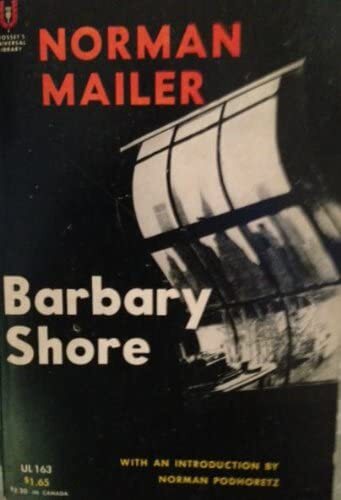
Mike Lovett rents a room in a Brooklyn boarding house with the intention of writing a novel. Wounded during World War II, Lovett is an amnesiac, and much of his past is a secret to himself. But Lovett's housemates have secrets of their own. As these mysterious figures vie for Lovett's allegiance, Barbary Shore plays havoc with our certainties, combining Kafkaesque unease with Orwellian paranoia and delivering its effects with a power that Mailer has made all his own.
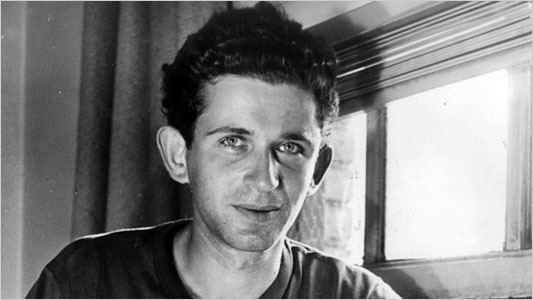
Norman Kingsley Mailer was an American novelist, journalist, essayist, poet, playwright, screenwriter, and film director.
Along with Truman Capote, Joan Didion, and Tom Wolfe, Mailer is considered an innovator of creative nonfiction, a genre sometimes called New Journalism, but which covers the essay to the nonfiction novel. He was awarded the Pulitzer Prize twice and the National Book Award once. In 1955, Mailer, together with Ed Fancher and Dan Wolf, first published The Village Voice, which began as an arts- and politics-oriented weekly newspaper initially distributed in Greenwich Village. In 2005, he won the Medal for Distinguished Contribution to American Letters from The National Book Foundation.
Barbary Shore follows the experiences of Mike Lovett, an amnesiac World War Two soldier after he checks into a boarding house to write a novel. There are a bunch of curious characters in the boarding house like the lascivious land lady who is coveted by everyone, Mike's two male neighbors - one an intellectual Macleod who works in a retail store and the other a seemingly undereducated country man who is trying to make it in wall street and finally a young woman who seems to be going through some sort of emotional breakdown.
But nobody is what they seem to be. Mike soon discovers that the intellectual could be an important socialist revolutionary on the run who took an active part in the two world wars and is now being hunted. And the wall street man could be his hunter.
Barbary Short is a complex thriller that is mostly dull. But portions of the novel are incredible. It was brave of Mailer to attempt such a complex novel after a bestseller like The Naked and the Dead. I think the conversations between General Cummings and Lieutenant Hearn in The Naked and the Dead predicted Barbary Shore. Mailer really let himself go during the part where Macleod gives a long speech about capitalism and socialism during his interrogation.
Excess has always been one of the main characteristics of Mailer's writing. It does not work here. I found a lot of the novel to be very frustrating especially in the middle. I thought it could have been an incredible thriller if Mailer had toned down the intellectual pollution (his own words) a little bit. But then, the intellectual stuff is also what makes the novel unique.
Barbary Shore is a bleak novel set in an Orwellian world where human beings are pitted against each other, cruelty is piled upon cruelty in an almost irreversible situation with the world heading towards inevitable destruction.
I would only recommend Barbary Shore if you are a fan of Mailer and are familiar with his writing style and themes. I am glad that I read it, though like I said, parts of it bored me to death. It is an activist novel that tries to be a thriller.
There Was Music in the Cafes at Night and Revolution in the Air
Published in 1951, when Norman Mailer was 28, "Barbary Shore" is a novel about sex and radical politics.
In a way, Mailer was defining his characters (and through them, himself) in terms of sexual exuberance and political engagement.
The New Man, of whom Mailer thought himself the epitome, was both sexually and politically active.
The Novelist as Novice
For the first 80 pages or so, while my reader’s training wheels were still finding their groove, the novel smacked of naivete. I suspected that Mailer wrote sometimes like a sexual virgin and a political neophyte.
Although he could write in perspicacious detail about his subject matter, he didn’t give the impression that he had lived what he was writing about. It all sounded too self-consciously fabricated.
It didn’t come across as if what he described had been learned from experience in between the sheets or in the hotbeds of radicalism.
However, as the book moved on inexorably, I realised that this first impression might be wrong.
In retrospect, what I was feeling was the product of Mailer’s choice of style for the novel, about which more later.
However, it seems that during and after his experience in the Army, Mailer learned plenty about sex. He also learned a lot about radical politics from his friend and mentor, Jean Malaquais, a Polish-born novelist then living in the United States, who translated "The Naked and the Dead" into French and to whom the novel is dedicated.
As a result, Mailer later said that "Barbary Shore" was his most autobiographical novel.
The Theatre of War
Over the course of 1949, Mailer and Malaquais were in Hollywood trying to write a script for a film of Mailer’s first novel, "The Naked and the Dead", for Sam Goldwyn. The attempt failed, but in the meantime Mailer was also working on his second novel, "Barbary Shore".
A good scriptwriter, likewise a good playwright, knows that a quality script is more than dialogue, but to a layperson a script seems like it’s all spoken word.
My initial response to this novel was that it seemed to be very theatrical, as if it had been composed with a play or perhaps even a film in mind.
The action is dialogue-driven. It’s all set in individual rooms in a four-storey brownstone Brooklyn Heights boarding house. There are six main characters, three male, three female (including a four year old girl). Various combinations of two, three and four of them are holed up in the one room, occupied by either affection or conflict.
It’s an ideal conceit for a play or, these days, an inexpensive indie film, if there still is such a thing.
A Dramatic Interrogatory
There are 33 chapters, discrete scenes, three minutes each and you’ve got a tense and tidy little 100 minute feature film.
Throw into the mix a large dose of existentialism, and you can see why Beckett and Pinter came to mind.
Still, as I adjusted to the style, particularly in the second half of the novel, I started to appreciate just how appropriate it was for what is effectively a Cold War allegory, in which individual characters represent whirring, warring worldviews.
It makes more sense when you realise that the war, the clash of cultures, happens across a table in a bedroom, become a makeshift interrogation room, complete with a bright shining lamp and drawn shades.
Eventually, I appreciated just how forensically crafted the whole novel was, as if it was a heist or a game of chess or poker, in which somehow every move or bid had been precisely plotted in advance.
I’m now tempted to argue that this novel has been wrongly neglected, possibly because it was published just as China invaded Korea at the commencement of what was to become the Korean War.
Just Lovett
The narrator is Mike Lovett, a 20-something war veteran, who is suffering from some level of amnesia, so much so that the first words of the novel are, "Probably I was in the war."
Having presumably fought for his country, we infer that he was a patriot or at least did his duty.
He moves into the boarding house in order to write a novel. Here, he witnesses the progress of a conflict between other tenants, some radical, some conservative. In a way, as he observes their shenanigans, he is the conscience of America or at least of a New America.
Lannie, Guinevere and the Jack of Hearts
For almost half of the novel, Lovett is busy finding his way, spontaneously meeting the other tenants in the corridor.
First, he encounters Beverly Guinevere, the landlady and an attractive, if dishevelled, 28 year old former burlesque artist, with a four year old daughter, Monina, who seems to contribute to, rather than detract from, the desire and sexual tension.
Then, Lannie Madison moves in, in mysterious circumstances, becoming not just a distraction for Lovett, but potentially a rival or deterrent in his pursuit of Guinevere.
Having got to know the women, having determined what he yearns for, Lovett learns that the other men in the house are also striving for some sort of contentment or satisfaction of their own.
The three men, Lovett, McLeod and Hollingsworth, now confront each other in a triangular antagonism.
Come Gather Around the Table
Inevitably, they must gather around the table to resolve their differences.
Perhaps, Guinevere, tattered as she is, is the America they are all fighting for and over.
If so, the table at which they debate might be a Round Table, divided, with McLeod the incumbent partisan King Arthur in decline; Lovett, a sympathiser, lance in hand, Sir Lancelot, eager to love and lance a lot; and Hollingsworth, a knight, a defender, a champion, whether black or white, for or against McLeod or Lovett, remains to be discovered.
Who will win Guinevere? Who will get to claim the flaming chalice of freedom and hold it aloft, in Brooklyn, whether in a basement or a loft?
Oh Norman, may thine be the glory, risen conquering son, but pray tell, how deep is thine allegory?
Left, Right, Left, Right
The political context derives from the fact that one of the men is a former high-ranking Communist organiser and agitator, on the run from both the FBI and his former comrades.
Lovett, whose own sympathies are undefined, but of the Left, manages to witness attempts to bring the Communist in.
He observes interrogations, negotiations, submissions, bids, pleas, speeches, rebuttals, arguments in a tense psychological drama.
He is our eyes and ears, almost by way of imitation of the democratic process. However, because he forms his own view, the appeal of the novel will potentially reflect our own political sympathies.
Revolt in Style
Regardless of allegiance, I think the novel succeeds as a dramatization of a political conflict.
It avoids the tendency to lecture in large slabs of passionate but unconvincing prose, instead using a dynamic adversary apparatus to assert the rival contentions.
The speechifying is restricted to one 15 page chapter towards the end. The speech is interrupted by self-doubt, irony, questions, challenges, guffaws and yawns. Even if one character was tempted to take himself too seriously, the others bring him down to ground level.
Perhaps Mailer believed what his character was advocating. At least, he posits the case of revolutionary socialism relatively authentically, if more lyrically than is usual.
Stylistically, I think Mailer transcended Socialist Realism and constructed a form of Socialist Hyper-Realism on the foundations of Kafka and Orwell, though it was a little too imaginative for his readers to embrace at the time.
He certainly attracted more than his fair share of criticism from both Left and Right on publication, the one questioning his political sincerity, the other his political deviance, both arguing the book was a literary failure.
These judgements have echoed in time until the present day. Still, we have to remember that the politics of 1951 was radically different from the relatively mundane politics of today.
With the collapse of Communism, there is not the same sense of rival ideologies: Capitalism versus Communism.
Sexual Politics
It’s arguable, too, that Sexual Politics has established more conventional modes of debate.
However, at the time, Mailer viewed "Barbary Shore" as a literary vehicle with which "I wish to attempt an entrance into the mysteries of murder, suicide, incest, orgy, orgasm and time".
Stung by the critical reception of his novel, he would later argue in his own defence:
"Yet, it could be that if my work is alive one hundred years from now, 'Barbary Shore' will be considered the richest of my first three novels.
"It has in its high fevers, a kind of insane insight into the psychic mysteries of Stalinists, secret policemen, narcissists, children, lesbians, hysterics, revolutionaries - it has an air which for me is the air of our time, authority and nihilism stalking one another in the orgiastic hollow of this century."
This self-analysis, this self-promotion, these "advertisements for [himself]" might sound almost hysterical now, but I still feel that there is something passionate and appealing in Mailer, just as there is in Henry Miller, that is missing from contemporary literature.
For me, Sex and Politics are Big Issues. I love reading fiction and non-fiction about them. It saddens me that so little contemporary fiction addresses either issue, if not both in unison.
Beyond the Love of an Ideal
Mailer’s triumph was that he turned up, got in the ring and challenged anyone and everyone to a fight on the Big Issues.
Perhaps, sometimes, he should have been less sexist, less of a bully, less of a braggart, more compromising, more loving, more of a lover and less of a fighter, but then perhaps that can be said of all of us, well at least us males.
As his revolutionary character admits:
"All my life I’ve loved ideas. So I loved the idea of loving my wife. And perhaps the child as well."
"Barbary Shore", whether intentionally or not, might just teach us that we must love the real, as much as, if not more than, the ideal. We must love in truth, not just in theory.
From Atop Barbary Shore
In the thirties There were some who Advocated Evolution, Fabians and Left liberals. While the vanguard Agitated Under red flags And black banners, Some hoped that war Would progress to Socialistic Revolution.
In the sixties Without Lenin To blame the Institution, People embraced John and Yoko, Spending weekends Naked in bed, Satisfied by Psychedelic Experience, They were convinced That we should change Our minds instead.
In the teenies Most of us think We’re better off, Risen above The working class, Enriched by all Money can buy, Preoccupied By threats to the Environment, Instead of people. Perhaps that’s how Politics turned From red to green.
Though we’re still chained To the machine, Mortgage ridden, Living in our Private spaces, Little boxes Or McMansions, Entertained by Cable, wifi And Amazon, Addicted to Different pills, Tangled up in The colour blue.
wow, very strange book. not at all like An American Dream, at least in the beginning; the insane desire-and-sense-driven narrative isn't here, instead there's a quiet, slow, almost kafka-esque build involving a bunch of mysterious and strange-talking roomers in a boardinghouse in what seems to be a twilight zone version of the cold war (or maybe something out of a sartre play). hints and allegations, insanity and duplicity, it's all very intriguing, and-- despite the fact that very little happens-- definitely a page-turner... until about halfway through, that is, when suddenly everything goes horribly wrong... all the cards get turned over at once and we're left with just a bunch of people sitting a room tiresomely debating communism. mailer's still an amazing writer, and i am greatly enjoying my rediscovery of him, but good lord, when he goes off the rails, he really goes off the rails... it's been a long time since the second half of a book let me down as much as this one.
oh wait... an american dream. seems to be a trend developing.
When you get into the work of a writer there comes an eventual time when you take it upon yourself to explore the lesser realms of his or her career -- the awkward phases, the ambitious but ill-considered projects, the embarrassing debacles -- usually with the intent to glean something long undiscovered by a majority of readers (who don't appreciate the brilliance of said writer nearly as much as you do) and waiting to be finally appreciated and declaimed as the misunderstood masterpiece it really is: "Yeah, everyone thinks _________________ is his best work, but it's ___________________ that those who actually get _________________ know is his magnum opus."
I wanted Barbary Shore to be such a novel among the triumphs (and even controversial disasters) of Norman Mailer, but it is not. It might perhaps be of some value for those who long for what might have been of Mailer the socially conscious leftist and writer of sober if still strange prose, but the the most shocking thing about it is how dull it is. Even when not writing in the hallucinatory, hyper-sensual style of An American Dream or the first-person electric reporting of Miami and the Siege of Chicago Mailer is an evocative writer: The Naked and the Dead, The Executioner's Song, The Castle in the Forest. Here everything is too flat and timid. The protagonist, Michael Lovett, is a war-inflicted amnesiac, but that doesn't mean he has to be so damn passive and blank. None of the characters except perhaps Guinevere ring true (especially Lannie, a mental health casualty cliche), the psychosexual chamber play fits terribly with the socialist hand-wringing political drama, and when in its second half the narrative bogs down in didactic speechifying all hope is lost. The problem here is false modesty, both aesthetically and scopic. I can't think of a trait that suits Mailer less than politeness.
There are no Mailer fans less avid than I, but Barbary Shore is an awkward, lead-footed novel in which the author is trying to turn a handful of notions about Marxism, existentialism, and an bizarre blend of Reichian/Laurentian sexual dialectics into a plausible accounting of one would-be writer's residence in a Brooklyn boarding house. One might excuse that his second novel was Mailer's attempt to write a fiction that wasn't yet another war novel like his first, the brilliant The Naked and the Dead, but the excuses go only so far for context; this work is failure, only occasionally elevated by a keen phrase or paragraph. The quicksilver prose that is Mailer's wouldn't develop until after the publication of Advertisements for Myself a few years later. Barbary Shore , you would think, seems to have been written by a lesser writer.
A mixture of Kafka and Henry Miller, this story is about an amnesiac veteran of world war II, a semi-clean slate, who is molded by the conflicting psyche's of the denizens of the apartment building where he boards. The characters are complex, none stereotypical, but each is fractured and struggling in post world war Brooklyn. The failed Communist revolutionary, his seductive wife, and their precocious child, the libidinous government agent trying to pursue the revolutionary, and the self-hating woman, unable to love or be loved, destroying her youth and beauty, reacting to her own whims with twisted insights into the surrounding universe. At a few points it was slow but there were points of brilliance..
At this point, Mailer's a newly minted Pulitzer winner for a big bawdy badass war novel (which I haven't read, weirdly enough) and he's starting to freak.the fuck.out.
He's popping pills, reading Freud and Trotsky obsessively, starting to get into his bearded weirdo not-exactly-inplicit violent phase.
This is a hodgepodge of half digested ideas, self-consciously drawn character studies, chopped plot, and essentially paranoid political ranting to a constitiency which resides between his ears and his ears alone.
A flop, and not exactly for any particular reason. Sophmore slump, plus he just tried to bit off WAY more than he could chew.
Worth it for diehards, but otherwise you're not missing much at all.
What started out as an interesting view into the life of a handsome young amnesiac living or perhaps surviving in post-WWII New York and pursuing his desire to write a novel soon spirals into a treatise on Communism told by the various inhabitants of his decrepit row house who aren't exactly who they seem when we meet them. Mailer's characters are vivid and leave a definete impression, but when the book ends I was left with angst for what could have been. A good read, but dated after all these years.
A fascinating look into a part of Norman Mailer’s prodigious imagination, this sophomore effort by this egoistic titan of American letters, is necessarily a lesser one to his epic first work, The Naked and the Dead, but it is enthralling, nonetheless.
The plot is both utterly simple and hopelessly tangled in numerous ambiguities. Mike Lovett walks the world as an amnesiac veteran of World War II, moves into a room in a flophouse in Brooklyn to write his novel and becomes witness to the capture and interrogation of a Soviet spy. But it’s the characters he comes in contact with that help to create the densely Kafkaesque nightmare. There’s Guinevere, the voluptuous rotund landlady, who has a strange child named Monina; McLeod is the suspected spy who may or may not have had a hand in Trotsky’s axe murder in Mexico; Hollingsworth is the handsome blond agent who has his own dubious intentions; and Lannie the young deranged woman with a past in the “Party”. These characters become deeply involved with Lovett, who may have his own vague connections to some Socialist organization, and all of them together create a profoundly disorienting atmosphere of mystery and dread fueled by the fears of the Cold War and the ensuing Red Scare.
Does the novel work? To some extent. The last quarter of the book gets mired in convoluted theoretical oratory about the Marxist revolution, its noble intent and its devastating failure, and though it feels necessary to the interrogation, it just goes on too long. But if one reads through the dialectical arguments carefully, one will see that Mailer has actually done his research and expressed his own ideas about the trajectories of “State Capitalism” and the hollow Soviet Socialist government as they impel each other to continual War. What makes this world struggle fascinating is that it takes place almost exclusively within the confines of this dingy apartment building.
There’s also a curious Maguffin: a small object which McLeod has taken from his superiors and which Hollingsworth wants very badly. We never learn what this object is. Is it a microchip with the names of other agents in the field? Is it some vital enigma machine which can overturn entire governments? Is it simply a code number for unraveling nefarious plots being formulated by one side or the other?
This is my first foray into Mailer and I found his style readily engaging and approachable. Barbary Shore is completely different from his prior masterwork, perhaps intentionally so. And the influence of his time on the Sorbonne is plainly evident. Barbary Shore feels European in its dark portrayals of the characters and in the generally absurdist feel. I also found it curiously cinematic. Shelley Winters seems to be the model for Guinevere and the flophouse reminds me of the apartment building in Polanski’s The Tenant.
This entire review has been hidden because of spoilers.
Currently reread this one. Read most of Mailer's work but wanted to revisit his sophomore outing.
He was a bestselling author at a young age. What was next. According to his personal account in "Advertisements For Myself" he had a choice. To go out and glean from newer experience or by gum sit down and write another. He chose. This novel was the result. It exists by cerebral basis alone by what he sort of knew by then and what all about politics and fiction he's read by then. He admits a long dialogue on ideology wound up knocking his book out of whack and never quite recovered toward the end. I still don't know what amount of authority Hollingsworth genuinely possessed, or what planet his female characters came from but I was in my early thirties when I finally read this and thought twenty-year-old me would've had a different opinion of it altogether. Well. It's an odd duck, I will give it that and on that basis I found it interesting when charting the development of Mailer into Mailer. Acerbic and erudite, sure, but after a few fingers of whiskey and a joint, then you saw some real mental acrobatics. Quoth the Vonnegut, So it goes.
“Meanwhile, vast armies mount themselves, the world revolves, the traveller clutches his breast. From out the unyielding contradictions of labor stolen from men, the march to the endless war forces its pace. Perhaps, as the millions will be lost, others will be created, and I shall discover brothers where I thought none existed. But for the present the storm approaches its thunderhead, and it is apparent that the boat drifts ever closer to shore. So the blind will lead the blind, and the deaf shout warnings to one another until their voices are lost.”
This book is from 1951 but describes well the familiar mental torment of an amnesiac American WW2 veteran, evoked by the realization that history so far has been the culmination of human struggle for dominance over one another and we are bound to repeat it in greater scale over and over again until one day, possibly, one time, the state will fall before the people are ground up in the war machine and then there might be a prospect for a future of unregulated conscious development of theorists learning from past mistakes
"La costa dei barbari" è una narrazione oscura, in un panorama orwelliano dove gli individui sono tutti in conflitto tra di loro, l'infamia si stratifica culminando in una condizione quasi irreversibile, mentre Il mondo si avvicina a un destino di distruzione inesorabile e inevitabile.
Se dalle prime pagine sembra trattare di sesso, scrittura e scoperta di sé, quella che viene fuori poi è una meditazione sui primi giorni della Guerra Fredda, con paranoia annessa.
Tutti i personaggi sono estremi e inverosimili, il romanzo è pieno di dialoghi, troppi dialoghi, di cui in alcune parti ho fatto fatica a capirne il senso. Ad un certo punto ho pensato fosse colpa della traduzione, ma qui la traduttrice è Delfina Vezzoli, una grande traduttrice (Underworld di DeLillo, Lo zen e l'arte della manutenzione della motocicletta di Pirsig, e tanti altri), quindi Mailer questi lunghi dialoghi li voleva proprio scrivere così, voleva farmeli rileggere più di una volta.
Hai presente quando capisci il senso di una frase ma non ne capisci il concetto? Tipo quando un tipo chiede che ore sono e l'altro gli risponde che il cielo è nuvoloso.
Altro difetto di questo romanzo, per quanto mi riguarda, è che il tono e la tensione non raggiungono mai del tutto il culmine febbrile che mi aspettavo.
It was my first time reading Norman Mailer, and definitely not my last. I cannot think of a better work of politicized fiction that is both narratively engaging and astonishingly insightful and bold in its social-commentary. All of the themes - socialism vs. capitalism, the dysfunctional American modernity, the intangibility and mystical allure of radical ideology - seem to be as pertinent now as ever, while simultaneously expanding my awareness of the peculiar era of McCarthyism, which for obvious reasons was not given much attention in the nationalist educational curriculum that I learned under.
In summary, I found it to be a very useful and poignant read in today's political context with all of the "socialist" fear-mongering making a steady advance back into the national consciousness.
I'd read this back in my 20's and didn't enjoy it; for some reason I picked it up again to see if I would like it any better and I hated it. Look, if you want to write an essay about socialism, just write an essay about socialism, don't write a novel about six dreary characters bickering in a boarding house. I suspect the entire book was just a pretext for the long monologue in chapter 29, of which "The inescapable corollary is that state capitalism as a social organism has lost hope in its own ability to improve productivity" is a typical sentence. It's hard to tell if the rest of it is Surrealism, metaphor or nonsense.
It's pretty baffling that Norman Mailer followed up The Naked and the Dead with a book that seemed like its author had no idea how to write engaging fiction, but he did go on to better things, so whatever his problem was I guess he worked his way through it.
This is a strange book, and not that good. What begins as a rather interesting, Kafka-esque tale of paranoia and amnesia slowly develops into a half-baked soap opera of stilted romantic encounters, lectures on communism and socialism that make little sense, and utterly nonsensical dialogue. It was an absolute chore to finish the last third of the book.
The first book I ever read by Mailer. One of his earlier books, it's a quick read with a twist from the depths of hell near the end that blew my mind. Starts out as a coming of age story, and goes off the deep end into mid century paranoia.
Silly, with nauseating detail of Bolshevism and the effects of shock therapy and whiskey on crazies. At points boring/exasperating--at others, fascinating. The color of the characters almost makes it wholly worthwhile. As is, though, it's half way.
I don't know. I admired it, and certainly there were powerful moments. I can't say I enjoyed it, though. How to think about books like this that you respect but didn't like reading? Is it worth it to finish them?
This book is 70 years ahead of its time, insofar as it's a steaming pile of raving bullshit. The speech about late-stage capitalism in Chapter 29 is surprisingly well-written, considering how incoherent the rest of the book is. Also, it's wrong. As another reviewer pointed out, the entire novel seems to be an excuse for this character to deliver this speech. In order to get there, we get a barely-coherent plot, populated by incoherent /r/antiwork space cases. But even THOSE people wouldn't enjoy this book. There is a sincere effort that seems to have been put into its writing, revealing the essence of Mailer in all his unconscious futility and despair. In the initial chapters, I anticipated that Barbary Shore would merely fail to go anywhere - a cash grab after The Naked and the Dead, surely - but it actually subverts even the meagerest expectations of novelistic enjoyment. Ironically, I'm reminded of a scene in Mailer's aforementioned debut: a general becomes inspired to wax philosophical in his journal, only to re-read his thoughts and feel humiliation at how confident he had just felt in recording such circular, unoriginal musings. No doubt the success of Mailer's debut had wrongfully assured him that this could never happen to ours truly. Aside from the shameful political pandering, Mailer's greatest mistake is his use of the first-person. The narrator, whose amnesia is never justified, only serves to slow down a narrative that was already burdened with the fatal flaw of being absolutely pointless. The only good thing about Barbary Shore is this little-used cover art of a window shaped like a sail. It's honestly one of the best book covers I own.
I started this book with high expectations because it's Norman Mailer, and I was spell bound by the previous Mailer book I read. However, that first book was journalism, and "Barbary Shore" is fiction. And I was so disappointed by this novel, Mailer's second publication.
The story follows the protagonist, Michael Lovett, a Second World War vet suffering from amnesia who takes a room in a boarding house so he can write a book. While there, he discovers that the house's other occupants are mysterious: McLeod is uptight and rigid; Guinevere, the landlady, talks about a rotten husband that nobody has ever seen; Hollingsworth is a sex-obsessed maniac; and Lannie appears mysteriously out of nowhere.
And then the novel impales, the last hundred pages a confusing and pointless witch hunt of communist executioners. It's seemingly a rip off of Kafka's "The Trial," but whereas "The Trial" was deliberately confusing from its beginning, "Barbary Shore" is confusing for only its last third. And its first two thirds was focused on Lovett's attempts to sleep with Guinevere. So the novel is absolutely pointless. It's worthy of two stars only because of Mailer's sometimes beautiful prose.
I fell in love with Mailer when I read The Deer Park last year and over this year I've read Oswald's Tale, Tough Guys Don't Dance, The Executioner's Song, The Spooky Art, Advertisements for Myself, Harlot's Ghost and now, Barbary Shore. Far and away Barbary Shore is my least favorite of his novels so far. As always his language and characters are brilliant but this feels more like a long political diatribe, much of which I did find interesting, than any type of story. Now that I've finished the novel I have only the vaguest idea of who these people were, what they were actually doing or how and why Lovett decided to sublet the room in this rooming house to begin with. He tells us he wanted it because it was cheap. Perhaps Mailer means this as a caveat. Apart from Lovett there are only five characters in the story. They are very distinct people but one has to work very hard to assess what each of them actually brings to the narrative. Harlot's Ghost covers some of the same subject matter but much more effectively than does Barbary Shore. Nonetheless, there is an entire highly successful career between the two books.
I had high hopes for a novel set in the McCarthy era. However, most of the novel, I thought, felt flat.
The surface level story had great potential: a bunch of characters living in a rooming house. One being an important figure in the global socialist movement and the other hunting him. A cat and mouse tension was certainly present in their scenes, a similar feeling when reading a Kafka. But for the most part, their interactions, and the interactions between the rest of the residents, are dull.
The back of the book describes it as an "intellectual slugfest", and it certainly was that. It's filled with plenty of writing, arguably too much, debating socialism that bogged down the novel, and quite frankly, were difficult to read. Although I can appreciate the sentiment, I think Mailer's points could have been made more concisely and comprehensible.
Women, of course, are written poorly by Mailer, and this novel is no exception. Women of Barbary Shore are seductive, promiscuous, and emotional wrecks, and nothing more.
My phone corrected Barbary Shore to Barbary Snore, and I must agree, it isn't wrong.
mailer's much maligned second novel has a lot going for it. it hops genres between the soap operatic sex drama in the beginning toward the near-spy novel and ultimately into something significantly more like an academic dialogue about the possibilities of socialism amongst the failings of state capitalism. Underneath all this, we have a thread of menace that is bolstered by how casual the characters are about that menace. Threats are muted with friendly delivery, but they hover. Mailer's narrator, Lovett, is a Nick Carraway figure: he's an amnesiac and basically a cypher. As the book goes on he fades into the background to allow the intellectual battle rage between Hollingsworth and MacLeod. The book hinges on abstraction and is completely tonally inconsistent, each of which at times functions as a strength and a weakness. It really is kind of a remarkable follow up to The Naked and the Dead, in how different it is. Mailer starts flexing muscles here that feel undeveloped at the time, but evolve into real intellectual heavyweight stuff.
Norman Mailer just isn't my cup of tea. I tried to read "The Naked and the Dead" but couldn't stay interested because I didn't see where the story was going. The same thing happened with "Barbary Shore". The problem is there is no plot. The protagonist and other characters don't want anything so there's no motivation to read about them. I swear Mailer just woke up every morning and started making it up as he went along. There are interesting characters in the book. The whorish landlady, her retarded daughter, the slimy young roommate, the wise old man. Everybody is that kind of 1950s tough, except for the naive yound lady that shows up halfway through the book. I cannot tell you what this book is about other than a couple of people who live in an apartment building and just sit around, have conversations, and try to bang eachother. I don't like cutting out of a book without finishing it, but as with "The Naked and the Dead" I just was not invested in what these people were doing, and dreaded picking the book up.
In a sense Mailer was right when he wrote that Barbary Shore possessed the "high fevers" of his psyche, particularly when that psyche is besotted by now-antique Marx, Freud and the imported existentialism of his friend Jean Malaquais. But as with his other early novels, his claims seem to exceed the work. Barbary Shore was to have been the first in a Proustian series of novels with the goyishe protagonist Sergius O'Shaugnessy at its center. Mailer's early fame after The Naked and the Dead seems to have launched him as a performing self and "quick-change artist," as he himself admitted. Perhaps that reached its apogee in the New Age journalism of Miami and the Siege of Chicago and The Armies of the Night in which "Norman Mailer" figures as their own anti-hero. Barbary Shore was, as always, less good than the author thought it was.