It is 414 A.D. and the once-powerful Roman Empire is in its death throes—split between East and West, menaced by barbarian hordes almost literally at its gates. The Emperor Honorious cowers in the marsh-bound city of Ravenna, where he has moved the government. There is the Prefect Hadrian, a powerful official and fanatical Christian convert; Marcus Anicius, the pagan aristocrat who is clinging to a dyping past, and the Jew Eliezar ben Elijah, hemmed in by his own traditions and burdened by his dark vision of the future.
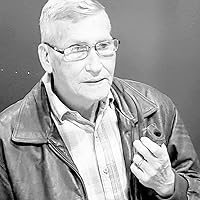
Hella S. Haasse (1918 - 2011) was born in Batavia, modern-day Jakarta. She moved to the Netherlands after secondary school. In 1945 she debuted with a collection of poems, entitled Stroomversnelling (Momentum). She made her name three years later with the novella given out to mark the Dutch Book Week, Oeroeg (The Black Lake, 1948). As with much of her work, this tale of the friendship between a Dutch and an Indonesian boy has gained the status of a classic in the Netherlands. Titles such as Het woud der verwachting (In a Dark Wood Wandering, 1949), Een nieuwer testament (Threshold of Fire, 1966) and Mevrouw Bentinck of Onverenigbaarheid van karakter (Mrs Bentinck or Irreconcilable in Character, 1978) have been greatly enjoyed by several generations.
This brilliant Roman historical novel by this Dutch author, is a tale about Roman justice in AD 417, and the struggles between two people originally from Egypt, the Magistrate of Rome, Prefect Hadrianus and the ten years ago convicted former poet at the court of Emperor Honorius while living with General Stilicho and his wife, Serena, a man who used to be called Claudius Claudianus, while being born in Egypt as Klafthi, but who is now called Niliacus while hiding in Rome after his conviction, and that combined with the religion fights between Christians and non-Christians, or called non-believers or heretics in the eyes of Emperor Honorius and the Catholic Church.
Storytelling is excellent, all characters are very believable and lifelike, and the trial and the circumstances within and without this trial are wonderfully pictures and described in this remarkable story.
It's a tale of mixed emotions and beliefs between two people from Egypt, Hadrianus and Claudius Claudianus aka Niliacus, and what will unfold on the 5th and 6th July AD 417 during and after the trial that will turn events on its head in the end, and all old by the author in a most astonishing fashion.
Really recommended to all Dutch readers, but also to English and French readers for its also available in English as "Threshold of Fire" and in French as "Un goût d'amandes amères, for this is a wonderful retelling of a forgotten Imperial poet, Claudius Claudianus, and that's why I like to call this: "A Captivating Testament"!
Actually 4.5 stars but I rounded it up to 5. I was really engrossed in this one and had to keep reading until the finish. I read it aloud to make it last, so I could linger over every word. I was sorry when it did end. The author's writing was nothing short of brilliant. There was no violent 'action' but somehow this one moved me, through the author's powerfully giving us the psychology of her characters. Her descriptions of Egyptian, Alexandrian, Roman life [from the Hall of Justice to the squalor of the Subura to the Tullianum] were very well crafted.
The year is 414 AD. The state religion is Christianity. The Goths have invaded. Rome is on a downward spiral.
The Prefect of the City, Hadrian, is a fanatical Christian Egypto-Roman. He is hearing the case of a patrician pagan, Marcus Anicius Rufus. Anicius is accused of permitting pagan rites in his home. Hadrian questions a man who calls himself Nilicias, accused of actually conducting the pagan ceremony, decapitation of a cock. At the dinner beforehand, a slimy actor and his mime troupe performed some of the pagan myths. Since the Empire is officially Christian, pagan rites are forbidden. In the course of the interrogation, Nilicias answers the prefect: "I swear I have never sacrificed a cock unless it was in your presence." This statement brings back Hadrian's memories of his boyhood in Egypt. He remembers a cock being killed by the illegitimate grandson of the rich landowner, Eliezar ben Ezekiel and the blood on the boy's hands. The younger Hadrian had visited Eliezar many times when he was in Egypt.
The grandson is sent to Alexandria to study, then becomes a court poet with the Latinized name of Claudius Claudianus. Ten years before, he had insulted Hadrian in one of his epigrams. As a result, Hadrian had "excluded him from fire and water", essentially, banished him. Should he re-enter Rome anyone was permitted to kill him. The poet did come back under an alias. He barely scraped out an existence teaching Subura residents their letters.
Hadrian runs across this same verse in Anicius's confiscated documents. His discovery calls up ghosts from the past. Politics of that time involving the weak and ineffectual Emperor Honorius and his guardian, General Stilicho, take up a big part of the novel. The novel alternates between the Prefect and Claudius and their memories and dreams, circling back to the Prefect, who must render a final verdict.
The black and white marble floor in the courtroom or Eliezar's chess set expresses the idea that no character in the novel is completely black or white. The psychological delineation of these fully-rounded characters was mesmerizing. The description of the murder of Stilicho was excellent. The Introduction was invaluable for an overview of that period and of the novel.
Highly recommended for those who like fiction set in the latter days of the Roman Empire. The non-military and thoughtful nature of this novel sets it apart from most Roman historical fiction.
Centred on the historical court poet Claudian, here genuinely infatuated with the deeds of the general Stilicho, the Last Roman. Who wasn't Roman by nativity and few of the main cast are. Claudian and his conscience-stricken judge were Egyptian with Egyptian names, but Roman by conviction or by social climbing or an interesting tangle of both.
This is a nicely structured short novel, around a court case for pagan practice, told from several perspectives. The Dutch title translates as A Newer Testament – a pity to lose that – testaments are a theme. The perverts were a bit gaudy but she has the excuse of publication date. I'm not sure the end did it justice, but I say that of 90% of ends.
It must be the only novel about Claudian? I've only heard him aspersed as a Silver Latin poet, or were they into Tinsel by the 400s? – and made mock of in Napier's Attila. Napier quotes a swathe of authentic Claudian, flattery of the emperor, and I confess it was hilarious. This is a more serious novel.
Of course, I read this in the original Dutch ('Een nieuwer testament'). Set in the period 404-417 AD in Rome and Roman Egypt, with the poet Claudian as protagonist, and the confrontation between christianity and paganism as central theme. Haasse offers a good composition but her elaboration is not not entirely successful. Especially the beginning seems very confused, and parts 1 and 3 are rather dull. Of course, the evocation of the pivotal period at the beginning of the 5th century is very interesting from an historical point of view. Rating 2.5 stars.
This was a translation from Dutch. It is a bit confusing initially, I'm not sure if that was due to the translation or the non-linear narrative. Maybe it was a bit of both. All in all, I like historical fiction and ancient Rome fascinates me; having said that, it was hard for me to be involved w/the characters of the book. The illusions of the Prefect combined w/the illusions of the poet, made for an interesting contrast. However I didn't personally feel vested in the characters. Maybe b/c the book is so slim in length but I still think some depth could have been added. Hadrian is a man who views himself as a new Roman and thus rejects his roots. Claudianus is a man who also views himself as Roman and also rejects his roots. The nature of the contention is to what constitutes a true Roman? Is it piety towards the old gods or deference to the new Christian God? Is it faith in an institution, the Emperor or a man behind the throne, Stilicho? Those are interesting questions w/not clear-cut answers...shades of grey is what the world of Rome as shown by Haasse appears to be. So despite the moral ambiguity of the story, the main characters choose fates that are sharply defined by their definition of their code of life. This lends to a feeling as shown in the book of a general tragedy, predestination has trapped the characters in a cycle which they cannot escape b/c they cannot change their viewpoint. A sad tale b/c it is a bit of a downer.
Hella Haasse’s Threshold of Fire is a slender little book, just a handful of characters, half a dozen locations, no longer than a novella. Besides that, it’s a translation. But do not think it is a trifle.
It is Roman historical fiction set at the collapse of the Empire, but it is much more than that. That can be diagrammed linearly. Threshold beats with the quivering heart of a rabbit in panic. Much is delineated in broad strokes. Much more shudders unspoken. It is a work of the highest poetry. I stand in awe of it, the work of genius. It will haunt me till I breathe no more.
Do I understand it? Maybe a little.
Does the author understand it? Maybe a little.
Can it be pegged? No. But having read it, my life will never be the same.
Weer eens een Hella Haasse gelezen: Een Nieuwer Testament, uit 1991.
Het geheel speelt zich af in het net gekerstende Rome (vijfde eeuw), waar andere godsdiensten streng verboden zijn door de eerste (?) christelijke keizer Honorius.
Een man (Niliacus, hij die van de Nijl komt) staat voor het gerecht, beschuldigd van het offeren van een haan: afgoderij dus. Blijkt dat deze man vroeger de rechter (prefect, Hadrianus is zijn naam) heeft gekend en zelfs een poosje diens protegé is geweest.
Niliacus is onder zijn vroegere naam Claudius Claudianus een gevierd hofdichter geweest, maar 10 jaar eerder uit Rome verbannen, ook al wegens afgoderij. Het ziet er dus slecht voor hem uit. Maar de prefect koestert nog de herinneringen aan vroeger. Wat zal er gebeuren: doodstraf? bekering?
In ieder geval slaat de titel op a. het gekerstende Rome, en op het testament dat Niliacus in de dodencel maakt, een brief aan de (groot)vader die hij nooit gekend heeft.
Mooi boekje, maar niet zo soepeltjes geschreven als Sleuteloog. Komt ook door de tijd waarin het speelt, vermoed ik. Romeinen en zeker zo'n beschrijving van een rechtszaak nodigen uit tot een tikje plechtstatige taal.
Een verhaal dat leest als zitten op een rechte houten stoel, of een marmeren bank op zijn romeins, zo je wilt. Beeldend, stuurs, barbaars. Een konkelend en elegant plot, zoals ik me het oude Rome voorstel.
This is a novel set in the waning years of the Western Empire, the late 5th c. Christianity has become the official imperial religion, and Vandals, Egyptians and other non-Romans are increasingly an integral part of Roman governance. The many changes in aristocratic society have been resisted by some--and it is in one patrician's resistance to Christianity in favor of traditional sacrificial rites that provides the plot. What was the nature of Anicianus' party? Did he break imperial law by sacrificing a chicken? Who else was involved? What does this have to do with the weak emperor Honorius living in Milan/Ravenna? The point of view of the Egyptian-Roman prelate who is trying the case provides the bookends--and much of his point of view is described in terms of his own insecurity as a Roman citizen born in Egypt. In the middle is situation recounted by the poet Claudius Claudianus, (a former Egyptian slave) who had been sentenced to life "without water or fire" ten years before the event in question for a politically sensitive poem he wrote, but whose knowledge of the imperial court and the Anicii family provides an alternative view of the context leading up to the event in question.
It has taken me more than a few pages to fully grasp the psychological differences between some of the characters presented. The way in which Haasse unfolds the story through the insecurities and memories of her main characters can be confusing--but I think therein lies the potential draw and power of her writing. Nothing is clear, nothing is black and white. There is no true reality--it is made up of the views of individuals, themselves shaped by capricious fate and events over which they had/have no power. While some of these recounting-of-life-stories gets a little long, they are punctuated by passages of literary beauty in the form of philosophical musings--the clarity of the text reflects the clarity of the character's mind.
I think one would have to really want to read about 5th c. Rome to get into this book--but if one is able to slow down, and appreciate Haasse's rejection of a formulaic and linear story for a--dare I say real--reflection of humanity, it's an interesting read. Not one for the airport probably, but it's been good for a few pages here and there before bed.
This novel is set during the cataclysmic transformation that accompanied the death of the Roman Empire at the beginning of the middle ages when the Christian Church stamped out the vestiges of Roam cultural and religious heritage.It was Theodosius in the late 4th century that mandated trinitarianism and struck down all pagan forms of worship. He hastened the fall of Rome by splitting the empire into two sections, leaving his inheritance to two sons, both incompetent: Honorius ruled in the West; Arcadius in Constantinople. The hostility between the two malcontents forms the backdrop for the novel which begins and ends in the year 414 A.D. although flashbacks take it back further.
Ambrose, Bishop of Milan, is a prominent character. By thwarting Theodosius's demands for restitution to Jews for their destroyed property -- Theodosius protected Jews -- Ambrose began the struggle between the state and religious authority for supreme power. Ambrose and Hadrian, an ex-Roman civil administrator both view the world through restricted vision which was to become the predominant view for many centuries thereafter. These views are reflected by the drama surrounding a Roman who is arrested for ostensibly conducting archaic and illegal religious celebrations.
Een nieuwer testament biedt genoeg stof tot overpeinzing. Het is behalve een historische roman - het verhaal is gesitueerd in het West-Romeinse Rijk begin 5e eeuw (en als je tijdens het lezen even het een en ander opzoekt op internet dan steek en passant het een ander op over die tijd) - ook een roman over vader-zoon relaties, en over authenticiteit (als ik dat veel misbruikte en uitgesleten woord hier mag gebruiken, ik vind geen beter woord). Haasse schrijft verzorgd, je zou kunnen zeggen enigszins statig proza. De toon is beschouwend, afstandelijk, cerebraal. De thematiek en de situering van de roman is beslist interessant, maar door Haasses stijl kwam het verhaal voor mij niet echt tot leven. Heel anders dan bijvoorbeeld Per Olav Enquist, wiens de De vijfde winter van de magnetiseur uit 1964 stamt (Haasses roman is van 1966). Slotoordeel: ik ben nog op zoek naar de roman van Haasse die mij echt voor haar wint.
In Een nieuwer testament van Hella S. Haasse is het overduidelijk dat de auteur een klassieke opleiding heeft gevolgd, iets dat ik niet heb. Ik had dan ook af en toe behoorlijk wat moeite om het verhaal goed te kunnen volgen. Dat gezegd hebbende, is het al met al toch een interessant boek om een keer gelezen te hebben, en ik heb er dan ook geen spijt van :-)
Niet eenvoudig dit boek om te lezen. Ik heb het nu uit en ook het einde blijft raadselachtig. Zelden vertelt Haasse hoe het afloopt en ook deze keer moet de lezer raden. Ik ga het voor de bespreking nog een keer lezen, omdat het een boek is dat je na een keer lezen nog niet helemaal kunt doorgronden. Het heeft gelukkig maar 150 pagina's. Het onderwerp is interessant en speel in Rome. Geschiedenis dus en een van de items is de heidense gebruiken t.o. het christendom. Een interessant onderwerp daar we in deze tijd heel wat clashes meemaken met verschillende godsdiensten.
I love ancient Rome, so it goes without saying that I wanted to love this book. It did keep me interested while I was reading it, only for me to put it down afterwards and think, "That's it?" Haasse spends so much time creating these fascinating characters, and she uses non-linear storytelling to create suspense, but then it all builds up to a rather uninspired ending that just doesn't have the significance or emotional impact that it so badly wants to.
Historical fiction about the early 5th c. AD, when Rome had to face invading barbarians and was turning its back on its pagan, classical past in a big way, it's a good, quiet, understated book, with some ever-timely criticism of the way in which Christianity becomes tainted by hypocrisy when co-opted by secular powers. That said, I preferred Vidal's _Julian_ as a rather spicier evocation of this inflection point in history.
Un libro extraño, amargo y triste: breve pero difícl de leer, una reflexión amarga sobre la religión, la vida, la muerte, el paganismo, el cristianismo y las motivaciones detrás de nuastros actos. El poeta Claudiano y su juez nos muestran su visión del mismo mundo, pero ninguno de los dos está seguro de su verdad. Quiza no es una gran novela, pero si un gran punto de partida para reflexionar sobre nuestras creencias y nosotros mismo: eso lo consigue, y eso ya la hace muy interesante.
I'm interested in historical fiction set in the collapsing Western Roman empire, and this novel, like many others, follows the pattern of identifying Christianity with opportunism at best and fanaticism at worst. A creeping Gibbonism, I suppose. I look forward to reading on to see if there are any other, more nuanced treatments.
Not a bad book but still a disappointment. The author herself has said that this is the best book she had written, if that is the case I do not want to read the rest. Which is a shame because I have such respect for this woman.
Not what i expected. Had some nice moments but the non-linear storytelling didn't work for me. It was too small to be dramatic. Some nice descriptions but the main character was a little out of age (his writing a bit too modern.)
Zonder klassieke opleiding is er geen doorkomen aan. Wat een gortdroge verhandelingen. Ja, ik heb het uit met veel moeite, maar nee, dit was niets voor mij.
behoorlijk teleurstellend. een boek dat qua thema's helemaal in mijn straatje past (oude Romeinen, stukje kerkgeschiedenis), maar op de een of andere manier gewoon niet bij me binnenkomt.
Bijzonder boekje, een stukje fictie dat zich afspeelt begin vijfde eeuw in Rome. Interessant vanuit historisch oogpunt: het verval van Rome met de groeiende invloed van de Ostrogoten en de daaran gekoppelde evolutie van machtsposities enerzijds en de onverdraagzaamheid van de nieuwe staatsgodsdienst, het christendom, t.a.v. al wie nog weemoed heeft naar de oude Romeinse goden. Boeiende wisselwerking tussen prefect Hadrianus en dichter Claudius Claudianus, die zowel elkaars gelijke als elkaars tegengestelde waren.
Het heeft mij echter niet helemaal overtuigd, mijn niet helemaal gegrepen omdat Haasse de roman iets te ingewikkeld opbouwt (waar door je meer bezig bent met het begrijpen wat waar het precies overgaat dan met het genieten van de roman) en een wat plechtstatige zware taal hanteert die - voor mij - iets te moeilijk las.
Haasse bewijst dat ze erudiet is en schitterend kan schrijven maar voor mij was dit boekje net iets te lastig.
Hadrianus, prefect van het Romeinse Rijk, wordt bij een proces in 417 geconfronteerd met de vroegere hofdichter Claudianus, die hij 10 jaar eerder heeft laten verbannen. Claudianus werkt nu onder een valse naam als onderwijzer in een volkswijk van Rome. Hij confronteert Hadrianus met diens verleden en dwingt hem na te denken over zijn leven en carrière. Deze roman valt op door zijn hechte constructie. De levensgeschiedenissen van de beide hoofdpersonen en het verleden zijn knap met elkaar verweven. Het leven in Rome wordt boeiend beschreven. De strijd van Hadrianus is zeer geloofwaardig, maar krijgt iets teveel nadruk, zodat Claudianus in vergelijking wat weinig aandacht krijgt.
This entire review has been hidden because of spoilers.
Clevere roman over de relatie tussen ideologie, rechtsstaat en individu. Verrassend actueel. Je leest er zonder al te veel moeite hedendaagse problemen zoals polarisering, nepotisme en woke-discussies in. Als ik eerlijk ben: tikkeltje te technisch qua verhaalstructuur (wisselende en warrige focalisatie, complexe tijdsstructuur).
Un libro muy interesante y valiente que cuestiona el desmoronamiento del imperio de occidente a expensas del crecimiento de un cristianismo dogmático a favor del poder. El persbale Claudio Caludiano está muy logrado