

What do you think?

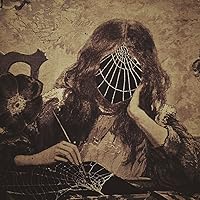
The Art of Grieving: The Beauty Behind Victorian Mourning Customs
Grief transcends time.
While it can be said that the Victorians were obsessed with death, and some of their rituals may seem morbid and garish by today's standards, there is something to be said about the Victorians and how they were prepared for the day when a loved one might die.
Get to know some of the misunderstood mourning customs from the Victorian Era, including jewelry made of human hair, strict fashion guidelines, and even post-mortem photography. Journey back to the American Civil War, and get to know Mary Todd Lincoln and Queen Victoria--two women who publicly grieved for their husbands. You'll soon come to realize that the Victorians were not obsessed with death... but they did accept it... Something we still struggle to do today.
Join the curator of The Traveling Museum of Memento Mori as she introduces you to the history of Victorian mourning customs as well as the customs themselves. You'll learn that there can be beauty in grief and death and that we might be able to learn how to mourn from the Victorians, even in the 21st Century.
While it can be said that the Victorians were obsessed with death, and some of their rituals may seem morbid and garish by today's standards, there is something to be said about the Victorians and how they were prepared for the day when a loved one might die.
Get to know some of the misunderstood mourning customs from the Victorian Era, including jewelry made of human hair, strict fashion guidelines, and even post-mortem photography. Journey back to the American Civil War, and get to know Mary Todd Lincoln and Queen Victoria--two women who publicly grieved for their husbands. You'll soon come to realize that the Victorians were not obsessed with death... but they did accept it... Something we still struggle to do today.
Join the curator of The Traveling Museum of Memento Mori as she introduces you to the history of Victorian mourning customs as well as the customs themselves. You'll learn that there can be beauty in grief and death and that we might be able to learn how to mourn from the Victorians, even in the 21st Century.
- GenresNonfictionHistoryGrief
204 pages, Paperback
Published April 3, 2023
About the author
Amanda R. Woomer
35 books54 followersWriter, former international English teacher, and historian, Amanda R. Woomer was born and raised in Buffalo, NY. With a degree in anthropology, she won her first award for her writing when she was only 12 years old. She has publications in anthologies and magazines all over the globe and is currently a featured writer for the award-winning Haunted Magazine and the owner of Spook-Eats.
Ratings & Reviews
Friends & Following
Create a free account to discover what your friends think of this book!
Community Reviews
Displaying 1 - 6 of 6 reviews
August 13, 2023
Beautifully written, well researched and formatted in a lovely way. I enjoyed the information and the heartfelt connections the author made.

October 11, 2024
Read this for work- interesting look at Victorian mourning customs. Even though we find many of these morbid today, they were originally done out of love.

September 14, 2023
Brilliant introduction into the history of grief and mourning in the west and their variety of Memento mori, from photographs to hair, cemetary art, spirtualism & occultism and fashion. Many of us in today's world find the topic of death and grief morbid or taboo, we shy away from it even though it's a natural part of life. In the victorian era having the priviledge of a mourning photo, mourning doll or trinket enabled individual's to keep a memory of those who've passed alive which I find quite beautiful. This book shows us that beneath our prejudice and calling these practices or rituals odd, at it's core it's all about love and what it means to be utterly human-- our fragility, our heartbreak for losing a loved one and how we manage that overwhelming emotion?
“Grief, I've learned, is really just love. It's all the love you want to give, but cannot. All of that unspent love gathers in the corners of your eyes, the lump in your throat, and in the hollow part of your chest. Grief is just love with no place to go.”--Jamie Anderson
“Grief, I've learned, is really just love. It's all the love you want to give, but cannot. All of that unspent love gathers in the corners of your eyes, the lump in your throat, and in the hollow part of your chest. Grief is just love with no place to go.”--Jamie Anderson

June 25, 2025
A very interesting and well researched book that was a quick read. I loved the inclusion of relevant pictures, particularly in the Cemetery Art chapter. The author handles delicate topics with care and is obviously passionate about the subject matter. I highly recommend this book if you're interested in death and/or its related customs.

February 23, 2025
Easy read, and well written. Would recommend this to anyone, especially those who may find death scary or Victorian Mourning Era funeral customs garish. It is not, we all mourn differently. We should all respect that.
August 1, 2026
Great book and easy read. Would have liked higher quality coloured photos though, as it was hard to see the art being referred
Displaying 1 - 6 of 6 reviews