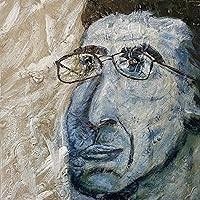
Learn the art of ceramics with a master! Step into the studio with master artist Robin Hopper as he opens the door to his more than 50-year exploration of ceramics in Robin Hopper Ceramics. Discover the "hows" and "whys" behind Robin's artistry while he shares his innovative insight, personal reflection and life's work. Robin Hopper Ceramics paints an intriguing self-portrait of the man within the legendary artist, teacher and arts activist as it urges artists to push themselves further in their work. More than 400 photos and illustrations showcase finished pieces, ideas and instructions ceramists can easily apply to their own work. Join Robin as he inspires and instructs artists on topics including form, surface, function, design, development and themes. This is the one autobiography that all ceramic artists should have in their studios to exhilarate, educate and encourage them to explore!
Robin Hopper’s memoir-cum-manual stands as a singular achievement in contemporary ceramics literature, marrying the reflective tone of autobiography with the precision of a practical studio guide. From the first chapter, Hopper situates his personal narrative within the broader arc of postwar craft movements, offering a nuanced perspective on how the tides of modernism, folk traditions, and global ceramic dialogues shaped his vision.
Structure and Scope
Divided into three parts—Genesis, Practice, and Pedagogy—the book traces Hopper’s journey from his formative years in England and early exposure to pottery, through his decades-long studio practice in Canada, to his role as a mentor and educator. This tripartite structure enables Hopper to move seamlessly between anecdote and exposition: readers witness the young apprentice’s awe upon seeing Bernard Leach’s pots, only to be guided moments later through the chemistry of celadon glazes.
Thematic Depth
At its heart, the book meditates on transmission—of ideas, techniques, and philosophies—across generations and geographies. Hopper repeatedly returns to the notion that a pot, however utilitarian, embodies an exchange: between clay and hands, teacher and student, maker and user. His chapters on wood-firing, for instance, are less technical manuals and more ritualistic explorations, celebrating the unpredictability of flame as both constraint and collaborator. Such passages elevate process over product, reminding readers that “the soul of a vessel resides in its becoming” (p. 142).
Equally compelling is Hopper’s treatment of place. His relocation to Nova Scotia in the 1970s becomes a lens for examining how environment informs material choices: the region’s abundant slate and seaweed-inspired ash glazes, the stark coastal light influencing form and surface. This ecological attunement resonates with current dialogues around sustainability in craft, positioning Hopper as both practitioner and proto-environmentalist.
Stylistic Considerations
Hopper writes with clarity and warmth, striking a balance between technical exactitude and lyrical reflection. The text is interspersed with black-and-white photographs of his studio, kiln stacks, and finished works—images that function less as ornamentation and more as visual annotations. The prose occasionally luxuriates in painterly detail (“the glaze bloomed like frosted jasmine across the bowl’s curve”), yet never at the expense of instructional clarity.
Pedagogical Legacy
Perhaps the most enduring contribution of this volume lies in its final section on teaching. Hopper’s philosophy is refreshingly student-centered: he advocates for open studios, encourages imitation as a formative step, and champions failures as “gifts” that deepen understanding. Educators in art and craft will find rich material here, from class-planning templates to philosophical provocations about the role of assessment in creative disciplines.
Robin Hopper Ceramics: A Lifetime of Works, Ideas and Teachings offers more than a retrospective; it presents a living dialogue between maker and reader. Hopper’s narrative invites us into his studio, challenges us to reconsider the relationship between maker and material, and ultimately urges us toward a more thoughtful, interconnected practice. For ceramists, educators, and enthusiasts of craft alike, this volume stands as both a treasured memoir and an indispensable guide.