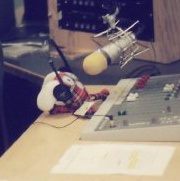
The Goons first went to air at the BBC in May 1951. There then began a terrible rasping, squealing, giggling, snorting period of lunacy which continued unabated until 1960. Fifty years after the show there is still huge interest in the Goons, with each new generation discovering afresh the anarchic humour that has had such a huge influence on so many of today's top comedy performers. This fascinating collection of reminiscences, photographs and sketches is the definitive story of Eccles, Bluebottle, Neddy, Bloodnok, Grytpype-Thyne, Moriarity, Minnie Bannister, Henry Crun et al from those who knew them best. Under the patient guidnace of Spikes manager Norma Farnes, Spike Milligan and the late Sir Harry Secombe, along with a select handful of friends including Eric Sykes, delve into their dusty old memories to help piece together the history of the Goons. This is the definitive celebration of one of Britain's best-loved comedy shows, a fascinating collection of photographs, scripts, reminiscences and sketches.
A piecemeal hitch potch dragged over the line by nicely candid interviews by Spike, Sellers and Seagoon and cameo contributions by other contributors to The Goons Phenomenon. Padded out unnecessarily by four scripts, this could have been so much better. Money for jam, conceived by the industrious Norma Farnes (Spike’s secretary), methinks.
My admiration for The Goons - and especially Spike, who, as scriptwriter, says it literally nearly drove him insane - remains undiminished.
This Norma Farnes authored book is a bit of a mish-mash, with some good elements and some that are unsatisfactory. Ultimately this is down to the mixed aims of the book; it tries to be a history of 'The Goon Show' where oral history and pictures dominate and a serious attempt to map episodes and develop a narrative is mostly put aside. It is nowhere near as impressive as an analytical history of 'The Goon Show' as The Goon Show Companion by Roger Wilmut, however it does a very good job of bringing in some image and voices of key players within the program.
What is most rewarding for those who are already enamoured with the work of Spike Milligan, Harry Secombe and Peter Sellers, who are at heart the core of 'The Goon Shows', is that Farnes' provides an avenue for the likes of Eric Sykes and Max Geldray to offer their insights into the show. Sykes's testimony is very significant because he was a major help to Milligan with collaboration on some scripts, and wrote some episodes by himself. Geldray's insights reminds one that whilst 'The Goon Show' was mostly the comedic work of Milligan, Sellers & Secombe, it was also informed and shaped by the musical interludes. Geldray and his fellow jazz musician Ray Ellington were integral to the program, and their interactions with the core trio of comedians were often woven into the fabric of 'The Goon Show'.
It does need to be said that this book has a key flaw in that the three Goon Show scripts that are included in the book seem to have no other purpose than to pad out the pages. Whilst the scripts are funny and interesting ('The Dreaded Batter Pudding Hurler of Bexhill on Sea' is one of the best ever 'Goon Show' episodes ever), they lack any explicit or informative linkage to the text. If Farnes wanted to use some of the scripts for illustrating how Milligan and his occasional collaborators created the literal humour of the show she didn't need to use entire episodes, and she needed to explicitly discuss the relationship between words and comedic effect. That's what Wilmut's book does, thanks to the interspersing of supporting extracts rather than separate whole episodes.
There are some other pluses to the book that I'll add before finishing this review. Farnes, as the manager of Milligan, has some personal touches and insights in her text that other writers miss. She also included some great pics in the book, some not seen often if at all in other media. She also included some solid discussion of programs that emerged from 'The Goon Show', including efforts such as 'A Show Named Fred', 'The Case of the Mukkinese Battlehorn', 'The Telegoons' and 'The Last Goon Show of All'. Her prose is readable and this is a book that won't require hours of focused reading (I knocked it off in about 3 hours over a couple of days).
In summary, whilst this is not perfect nor definitive as a history of 'The Goon Show', Norma Farnes's book is a welcome addition to the library of Milligan-related books and/or the corpus of titles associated with the history of British post-war comedy.
A brief history of The Goon Show told via interviews with its various key players. It’s presented in a magazine style, with lots of large images that are framed with the transcripts of the interviews. A few scripts for episodes of The Goon Show are also featured, but the whole package feels a little lacking. This is basically a coffee table book made for a brief scan here and there. Certainly a nice little read if you’re looking for something slight that’ll give you the gist of what The Goon Show is about, but there are definitely more detailed books out there for fans of the show.
I’m a tad too young to remember The Goons the first time around but since the BBC have been repeating them on the radio it whetted my appetite to find out more.
I really enjoyed the history of how the group was formed and the quotes from Spike are good fun.
The scripts seem like they’ve been put in as padding as they aren’t part of the story but still funny nonetheless.
If they’d added a chapter on Peter Sellars then I maybe would’ve given it the full five stars
Loads of great photos of the gang make this an ideal coffee table book
An interesting enough read, but there wasn't a lot of depth to it. It was nice to hear from some of the Goons themselves (Spike, Harry & Eric Sykes who wrote all or some of many episodes) and I enjoyed reading a little about the origins of the 'Goon' humour. But the book was padded out with some scripts from well-known episodes; if this padding was needed couldn't material from the early years been used, scripts from recordings that have been lost by the BBC? And while the episodes were listed at the back, there was no mention of which ones survive and which ones have been released by the BBC.
I loved listening to the Goon Show and this book was mostly about Spike Milligan, Harry Secombe and Eric Sykes. It covers how the Goon Show came about and how they met. Focused quite strongly on Spike Milligan and his problems with mental health issues.