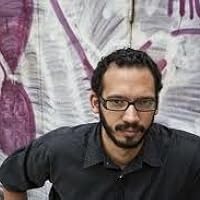
Cuban art critic and curator Iván de la Nuez explores the effects of the policies that have tried to constrain or liberate Cuba in recent decades in these sparkling essays of cultural criticism.
Essays on Cuba and the Cuban diaspora, on racism and Big Data, Guantánamo and Reggaeton, soccer and baseball, Obama and the Rolling Stones, Europe and Donald Trump—de la Nuez approaches his criticism with singularity of purpose. In Cubanthropy he does not set out to explain Cuba to the world, but rather to put the world into a Cuban context.
“Nothing explains our vexed world quite like Cuba and no one anywhere writes more brilliantly, more prophetically, more impossibly than Iván de la Nuez. As in all of his finest work, Cubanthropy delivers you beyond your old horizons into a realm of startling possibilities. Do not miss this extraordinary book or this extraordinary warlock of a writer.” —Junot Díaz, author of This Is How You Lose Her
“Cubanthropy may just be the smartest writing on Cuba—and beyond—I’ve read in ages. Insightful, unsparing, funny, and with an unerring eye for the paradoxical, Iván de la Nuez has written the definitive compilation on 21st-century Cuba. Essential reading for all who care about how the past, present, and future are disturbingly converging on the island, and off.” —Cristina García, author of forthcoming Vanishing Maps
Iván de la Nuez es ensayista, crítico y curator. Entre sus libros se encuentran La balsa perpetua (1998); Paisajes después del Muro (1999), El mapa de sal (2001); Fantasía Roja (2006); Postcapital. Crítica del futuro (2006); Inundaciones (2010) y El comunista manifiesto (2013). Estos libros han sido traducidos a diferentes idiomas y publicados en editoriales como Mondadori, Península, Debate, Periférica, Surkhamp, Galaxia Gutenberg, Castelvecci o Angelus Novo. Ha sido curator o co-curator de exposiciones como La isla posible (1995); Inundaciones (1999); Parque humano (2002), Banquete (2003); Postcapital (2006), De Facto. Retrospectiva de Joan Fontcuberta (2008); Dentro y fuera de nosotros. Retrospectiva de Javier Codesal (2009); La Crisis es Crítica (2009); Atopía. El arte y la ciudad en el siglo XXI (2010); e Iconocracia (2015).
Ha escrito ensayos para las exposiciones retrospectivas de Stan Douglas, Los Carpinteros, Manuel Álvarez Bravo, Vik Muniz, Joan Fontcuberta, Carlos Garaicoa o Javier Codesal. https://bit.ly/2K2patG
De los tres o cuatro libros que he leído de De la Nuez, este es el que más me ha gustado. Se trata de una recopilación, actualizada, de artículos escritos a lo largo de los últimos 30 años sobre Cuba. No Cuba for dummies sino Cuba como cristal para mirar y comprender el mundo actual.
This book is not for beginners. What do you know about the talking heads or afro-cuban culture? How’s your background in economics, U.S. policy, the revolution, the time before the revolution? Have you read Arenas or Lezama Lima? Without a pretty diverse knowledge of Cuba and the situation of the world as it relates to the island for the past 100 years, this book will be challenging. While thorough, i have a few complaints (although this may very well be a critique of language or the culture that informs it) I hate the word emigre. How do the challenges of Cubans truly differ from those of other immigrant groups? Cuban exceptionalism has gotten in the way of fully understanding the root causes of migration, as it guises the exodus as one uniquely political. When is migration not political?
A discrepancy that irked me throughout the book was that of the role of young people in enacting meaningful political change. On page 79, de la Nuez states that “long gone are… the student protests capable of turning whole countries upside down, destabilizing governments, overthrown tyrannies.” On page 161, de la Nuez then goes on to state that young people play a “fundamental role in global change.” He should read about the recent news coming out of Bangladesh.
I found the message of nostalgia as a driving factor within Cuban culture and the diaspora to be incredibly astute, as I’ve perceived this within my own experience as a Cuban American. Overall, I found Cubanthropy to be a retreat from the traditional approach employed to the study of Cuba which really made me question my beliefs.
Mosaico de la Cuba actual, pasada y futurible, de las muchas Cubas, las que están en Cuba y las que no, de sus mitos e imágenes. La escritura de Iván de la Nuez es muy libre y su visión aguda, sobre todo cuando se sirve del arte para leer su país. Al mismo tiempo, plantea una pregunta muy interesante: en un momento de apertura y reformismo, qué puede tomar Cuba del resto de países cuando democracia y mercado se han divorciado aumentando las desigualdades.
En sus trescientas páginas Ivan de la Nuez nos va situando por sus diversos ensayos en diversas fotografias de Cuba como fenómeno politico transgresor en la cultura, en su modelo social, su relación con USA. Sin caer en tópicos ni divagancias autocomplacientes se ofrece un análisis sobre lo que fue, es y puede ser la isla. He pasado un buen rato de lectura y pensamiento. Lo recomiendo.