Jump to ratings and reviews
Rate this book

The Age of Deer: Trouble and Kinship with our Wild Neighbors

Rate this book
A masterful hybrid of nature writing and cultural studies that investigates our connection with deer and invites readers to contemplate the paradoxes of how humans interact with and shape the natural world

Deer have been an important part of the world that humans occupy for millennia. They’re one of the only large animals that can thrive in our presence. In the 21st century, our relationship is full of contradictions: We hunt and protect them; we cull them from suburbs while making them an icon of wilderness; we see them both as victims and as pests. But there is no doubt that we have a connection to deer: in mythology and story, in ecosystems biological and digital, in cities and in forests.

Delving into the historical roots of these tangled attitudes and how they play out in the present, Erika Howsare observes scientists capture and collar fawns; hunters show off their trophies; a museum interpreter teaching American history while tanning a deer hide; an animal-control officer collecting the carcasses of deer killed by sharpshooters; and a woman bottle-raising orphaned fawns in her backyard. As she reports these stories, Howsare’s eye is always on the bigger picture: Why do we look at deer in the ways we do, and what do these animals reveal about human involvement in the natural world?

369 pages, Kindle Edition

First published January 2, 2024

141 people are currently reading
5011 people want to read

About the author

Erika Howsare

7 books11 followers

Ratings & Reviews

What do you think?
Rate this book

Friends & Following

Create a free account to discover what your friends think of this book!

Community Reviews

5 stars
144 (23%)
4 stars
251 (41%)
3 stars
151 (25%)
2 stars
49 (8%)
1 star
8 (1%)
Displaying 1 - 30 of 118 reviews
Profile Image for Will Byrnes.
1,372 reviews121k followers
January 9, 2025
…deer…occupy a middle zone between …extremes of domestication and wildness. Far from tame, they are nonetheless experts at living with people, and in many ways, they actually prefer to share habitat with us. All across North America, as in many other parts of the world, we exist in intimate proximity to deer.
--------------------------------------
The FAA considers white-tailed deer more hazardous to U.S. civil aircraft than any other animal.
Many images might pop to mind when we think about deer. I am sorry to say that the first one in my tiny mind is the sad vision of road kill. The second is the sheer joy of spotting wild deer in woods, or yards, or, more grandly, in national parks, whether the white-tail native to my part of the world, the mule deer and caribou more prevalent in the west, and even moose. I cannot say I have seen reindeer in the wild, unfortunately. Many visits to the Bronx Zoo introduced me to a much wider range of cervids, the family to which deer belong, including the diminutive muntjacs.
description
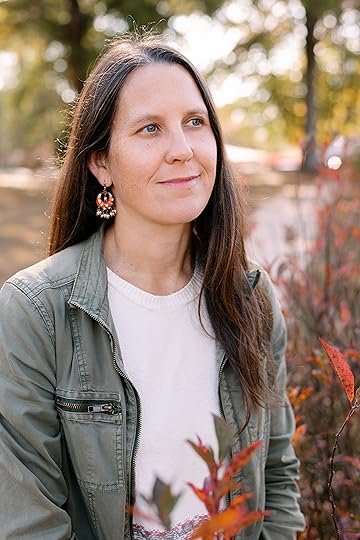
Erika Howsare - image from her site

Erika Howsare has had more of a connection to deer than, I expect, most of us. She grew up in western Pennsylvania in a family that hunted. In fact, the Monday after Thanksgiving is an unofficial holiday in our state, with most schools, and many businesses closed due to expected high absenteeism. This is one of many foci of interaction between deer and people.
I’d had an inkling, even before writing the book proposal, that deer were involved in all manner of controversies, contradictions, and human strivings. That was what got me interested in them. But I didn’t know too many specifics. When I started researching, one of the first things I did was to set up news alerts on deer and several other related terms.

Within a week, I had a rough outline of some of the major roles deer play in our world. They are victims; they are pests; they are something to hunt as well as something to study and protect. They are the targets of culling operations and the objects of sentimental love. They are trophies and intruders. It was all there in the news cycle.
- From the Lithub article
Thankfully, Howsare, a published poet, offers a lot more than the daily deer chyron.
I did start the book from a fairly cerebral place where I thought, “Oh yeah, great subject. Like, this will bring up all kinds of great questions, and I’ll be able to go down all these roads in terms of the research and make these points, and it’s gonna be a really great opportunity to dig into these intellectual questions.”
What I wasn’t expecting was how much it would change me as a person.
- from the Phoebe Journal interview
And a wondrous opportunity it proved. You will learn a lot about the human/deer connection, and a bit about deer behavior as well.

description
White tailed deer - image from PennVet – University of Pennsylvania

One thing to consider is just how long deer and humans have been interacting. Pretty much as long as there have been people, judging by the content of ancient cave art. They appear in all cultures, and are a rich presence in mythology worldwide. As our first-hand experience of deer is usually liminal, many have come to see deer as ambassadors of the wild world, crossing from theirs to ours, and maybe offering a route away from the world of living humans. Of course, for many of us there is an UR deer image that has been burned into our brains. Really, can you name any other deer this side of Santa’s team?

description
Bambi - image from Disney via KRCA.com

They are beautiful and offer us an image of wildland innocence. But for many they have become pestiferous. Consider having spent months planting and tending your beautiful back yard garden, only to wake one day to find that real-life Bambis and their kin have laid waste to all your work. There is also the carnage caused not just to deer but to people and their vehicles from collisions with deer. There are folks whose job it is to collect the bodies. Howsare spent time with one of them.

Deer have been a crucial source of food for people across the millennia, but also of a wide range of materials. Howsare gets trained in earth skills to find out how to make buckskin, and many other useful items formed from deer parts.

We usually think of reintroduction of wildlife having to do with trout, or other finned creatures. You may have heard of attempts to reintroduce predators, like wolves in Yellowstone. But the largest and most successful reintroduction in US history occurred in the early 20th century when deer, which had been driven near to extinction, were reintroduced in many parts of the nation.

description
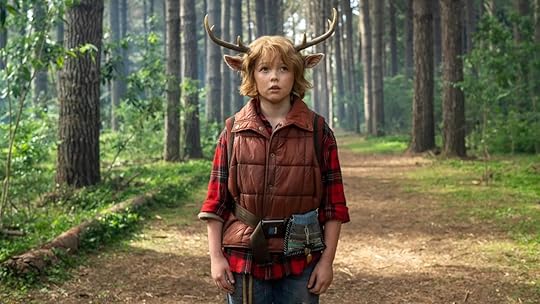
Sweet Tooth - image from Netflix via BBC
Ok, this was not at all included in the book but I kinda hoped it would gain at least a mention, as it does speak to the closeness of our species.

Factlets abound. Did you know that deer can suffer from a chronic, deadly disease that we usually associate with cattle, chronic wasting disease? Or that maybe the notion of adorning rulers with crowns was a way of imitating the stag rack? You will gain an appreciation for the use of deer-based imagery in the film Get Out. There are plenty more.

One of the main points to be gained is seeing how deer are actually quite adaptable, and have managed to carve out an ecological niche at the perimeters of human population.

description
Moose - image from Britannica

A survey course on cervid-sapiens connection makes for an entertaining, informative read on its own. But Howsare incorporates a personal journey into her narrative. Never a hunter, at least not one who shoots anything, she has enough personal connection to folks who do, relations, to want to gain a better understanding of the hunting culture and the rationales of those who kill deer. She looks at her own feelings about deer and hunting. Not all who hunt actually shoot. Hunting can be a group activity, with a diversity of roles, very reminiscent of our prehistoric ancestors. One very appealing element of this learning curve for Howsare was becoming more comfortable with being still, settling into a place and letting herself experience the environment, the moment, fully, a form of meditation almost.

She looks at some of the outrages associate with hunting as well. Like releasing or breeding deer in fenced areas to be killed by people fond of killing things, but not much interested in doing all the research and preparation that serious hunters undertake. Think Dick Cheney hunting quail.

My only gripe about the book is a petty one. I find that science/nature books always go down easier when the information is spiced with a bit of humor. No danger of that here. So, past my personal preferences, The Age of Deer is an easy thumbs up. You will learn a lot and gain a far greater understanding of the relationship between humans and cervids throughout history and our interactions today, finding yourself saying, whether aloud or internally, “I never knew that.”

In the Anthropocene, it seems that far too much of humanity has assumed the position of the prototypical you-know-what frozen in place as the headlights of global doom approach at increasing speed. Deer, at least, have an excuse for such behavior, as their woodland-creature-instinct, however misguided it might be on a paved road, is to become very still so an approaching predator might not see or hear them. Given their abundance on the planet, it is a strategy that has worked out well for them, despite the roadside carnage, as deer remain the last large wild animal in most places. The roaches and rats will not be alone after we are gone. Deer, icons of woodland beauty, are adaptable. They are survivors, and will be keeping them company.
If the American project was, in part, to make a pastoral landscape out of a wilderness, deer benefited from that project in a cultural sleight of hand. We thought of them as part of the wild, but we had misconceived them. Their secret was that they, like us—like squirrels, corn, apple trees, clover, ands sparrows—would flourish in our human garden.

Review first posted - 03/22/24

Publication dates
----------Hardcover - 01/20/24
----------Trade paperback - 1/7/25

I received a hardcover of The Age of Deer from Catapult in return for a fair review. Thanks, folks.


This review will soon be cross-posted on my site, Coot’s Reviews. Stop by and say Hi!

=============================EXTRA STUFF

Links to the author’s personal, FB, Instagram, and Twitter pages

Profile – from Catapult
ERIKA HOWSARE holds an MFA in literary arts from Brown University and has published two books of poetry. She also worked in local journalism for twenty years, covering culture and environmental issues. She teaches writing and contributes reviews and essays to various national outlets. A native of Pennsylvania, she lives in rural Virginia.

Interviews
-----Poets & Writers - Ten Questions for Erika Howsare by staff
-----Flyleaf Books - Erika Howsare presents THE AGE OF DEER -Howsare reads from the book then takes questions – the sound quality is poor
-----Phoebe Journal - Hungry Deer and Pissed off Gardeners: An Interview with Erika Howsare by Ashlen Renner

Items of Interest from the author
-----The Atlantic - An Incurable Disease Is Coming for Deer - an excerpt - but requires a subscription
-----Orion - Skin to Skin with a Deer - excerpt
-----Virginia Audio Collective - If You See a Deer - a four-episode companion podcast
-----Lithub - Erika Howsare on Finding Inspiration in Headlines

Items of Interest
-----Be vewy, vewy quiet. - Mister Fudd may be hunting a different species, but his approach applies to deer as well
-----My review of Stephen Graham Jones’s - The Only Good Indian - a wronged elk on the warpath
-----My review of Elizabeth Marshall Thomas’s - The Hidden Life of Deer: Lessons from the Natural World
-----Gutenberg - The Yearling by Marjorie Kinnan Rawlings
Profile Image for Olive Fellows (abookolive).
799 reviews6,392 followers
January 9, 2025
Oh, deer. If you also live in North America then you likely have seen these quadrupeds wandering around, maybe off in the distance, maybe jumping in front of your car, as one did to me this summer. Don't know how I didn't hit it, but miracles exist, I suppose.

The human relationship with these creatures is long-running and complicated. We love them, we hate them. We've needed them, they've come to need us in many of the urban spaces we now share. Western Pennsylvania native Erica Howsare carefully and respectfully outlines this history in her book The Age of Deer.

Click here to hear more of my thoughts over on my Booktube channel, abookolive!

abookolive
Profile Image for Chelsea Pittman.
647 reviews9 followers
January 10, 2024
I was interested in this book because I love deer. I'm the person that always points out deer like it's a cute puppy. Growing up in Ohio it is very common to see deer in the wild, in your backyard and mounted on a wall. I like to think (possibly stupidly and naively) that a deer would meet me and become my best friend. Alas, the chance hasn't come yet.

The cover of this audiobook is super cool! I love that the style of the deer is universally representing deer from all over and throughout time. I love the vibrant colors. Definitely would stand out in a collection of books as being unique.

The narrator, also the author, was a little slow and monotone for me. I had to bump up the speed to 1.5 and that made it a lot easier for me. The reading is a bit like listening to a podcast or an NPR radio station. The context isn't heavy but perhaps, dry. I don't think everyone would want to read this book or find it interesting. But to those that are interested in wildlife, I think you'll enjoy!

For me, the book focus on hunting and consuming deer was a little heavy. Two practices that I avoid as much as possible. Just be aware of that going in. And perhaps it was foolish for me to not expect those two topics in a book about deer when those are very popular aspects of deer. In a physical/ebook copy, I think you'd benefit from the table of contents and being able to jump through chapters that do not interest you.

If you enjoy books about wildlife and our relationship to them, I recommend checking out The Age of Deer by Erika Howsare. Thank you to NetGalley, Erika Howsare and High Bridge Audio. I have written this review voluntarily.
Profile Image for Collin.
1,122 reviews45 followers
didn-t-finish
March 22, 2024
I keep getting burned by books that I think will actually be about their purported subjects, and then find out that they're glorified memoirs with some light research thrown in. I would love to read this book but written by an actual zoologist, who can bring a deeper sense of science and history to the table than some personal reflections, Wikipedia-level history, and what I assume will become an overdependence on references to COVID and American politics to keep deer relevant to the general American audience.
309 reviews11 followers
May 22, 2024
This is a hard one to review. For the first 260 pages I was thinking four stars despite certain frustrations, but the last two chapters left me literally nauseous.

The good: Howsare is very effective at exploring the various contradictory ideas (and practices) that contemporary US culture has about deer— we love them, shoot them, feed them, eat them, and more. I learned a lot about the bizarre worlds of deer “management” and hunting, as well as some interesting stuff about deer in history. The writing is engaging, I am glad I read it, and I will definitely use some of this information in future research and writing.

The bad: Howsare is far far more interested in the people who kill deer (whether for food or to control deer populations) than anyone else. On some level this makes sense: we kill a lot of deer, and spending time with the people who do this killing allows her to explore various relevant issues. But I am pretty sure the only anti-hunting/culling activist she directly interviews (definitely the only one in the last half, when she explores culling and hunting in more detail) gets a single paragraph in which she is dismissed as self-righteous without actually exploring her ideas. While Howsare believes the death of a deer is sorrowful, perhaps even a tragedy, she does not meaningfully consider that killing, at least some of it, might be wrong: we get brief allusions to vegetarians from Pythagoras to Jonathan Safron Foer, accounts of controversies over culling, but she is dismissive, even disdainful, without even considering their ideas. She is right that we live in a world where some level of death and killing is inevitable, and probably right that we should face this and grapple with it rather than cling to an impossible purity. But there is still a good argument for reducing the killing we do! To be clear my critique here is not simply that she disagrees with me but that she treats anyone with my perspective as sentimental and unserious, while being very focused on her own sentiments and the sentiments of hunters—it’s not like she’s treating the issues hyper-rationally herself. (Another critique is the whole book is a little structureless, just kind of following her own curiosity in ways that can be interesting but aren’t comprehensive or always satisfying.)

The ugly: The last two chapters she accompanies hunters (including many in her own family) and gets really into the idea that killing animals is really the best way to be intimate with nature. Not to pyschoanalyze but it seems she has some guilt over being a liberal intellectual and really wants to prove she can connect with men who hunt? She marvels over how much a man “loves” a deer who he has just shot in the liver and subjected to a slow painful death. She suggests that hunting deer would be a better way to get our meat then factory farming, ignoring that we don’t actually need meat and if we replaced factory farmed meat with hunted deer we’d pretty quickly annihilate deer. She eats lots of venison throughout and romanticizes the chickens she raises on her own land (and makes her husband kill). Again, I think there are interesting questions and ideas to explore with respect to hunting (Emma Marris’ book Wild Souls does a good job even when I disagree), but here Howsare just sort of embraces the vibes of killing animals even though she doesn’t do so herself, in a way that feels gross and, as I said, left me literally nauseous upon finishing the book. Considered 2 stars, but rounded up because much of the book is interesting.
Profile Image for Stephanie.
591 reviews33 followers
December 30, 2024
In her poetic and scientific exploration "The Age of Deer," Erika Howsare delves into the complex relationship between humans and one of the few remaining large wild animal species we routinely interact with. Through a combination of lyrical prose and factual research, Howsare examines the history, biology, and symbolism of deer, and what they reveal about our own wildness and disconnection from nature.

One of the more difficult aspects of the book is its unflinching look at the many ways deer suffer and die at the hands of humans and also just nature. Howsare details gruesome injuries from car collisions, hunting, accidents (a deer falling into a cavern — that one survived), and the perils of misguided domestication attempts by people who think they are helping by feeding wild deer. These passages can be heartbreaking to read, laying bare the tragic consequences of human encroachment on deer habitat and our failure to coexist harmoniously with them. I cried a few times.

But the book is not unrelentingly bleak. Howsare also marvels at the resilience of deer, who have rebounded from near extinction in the early 20th century to abundance today. She shares fascinating biological and historical information, like the little-known fact that deer were almost wiped out a hundred years ago. Now, their numbers have recovered to the point that many consider them pests. However, she raises the alarming research that Chronic Wasting Disease has become so widespread that it could potentially lead to the species' extinction if left unchecked.

Howsare has mixed feelings about deer hunting. She is repulsed by the idea of killing these magnificent and innocent creatures, acknowledging their endearing cuteness. At the same time, she recognizes that hunting, if done responsibly, is arguably a more ethical alternative to the inhumane conditions of industrial animal agriculture. It's a nuanced take on a highly charged issue.

Throughout the book, Howsare reflects on how deer are intricately connected to the land itself, as much a natural product of forests and fields as wild berries or mushrooms. They occupy a unique place between wildness and a world shaped by human civilization. Our interactions with deer, whether through hunting, feeding, or simply observing, can either widen that gap between humans and nature or help bridge it.

"The Age of Deer" is a reminder of how much we have to learn from other species about how to live in greater harmony with the natural world. Deer are a symbol of the wildness we have lost in ourselves, but also the potential for recovering a more balanced relationship with the environment. Howsare's beautifully-written, wide-ranging meditation brings a fresh and thought-provoking perspective to our enduring fascination with these captivating, crepuscular creatures. It's a poignant call to reexamine how we treat deer (don't feed them!) and what they can teach us about our place in the order of living things.
Profile Image for Lungstrum Smalls.
388 reviews20 followers
February 3, 2024
The book straddles a sometimes uncomfortable line between memoir and pop science explainer. I learned a lot, but not as much as I would have liked, about deer. I sympathized with the author’s moral quandaries and appreciated her frankness, but there were plenty of moments where I felt alienated by her assumptions about class. The book felt like it was always on the verge of stepping deeper into discussions of animal personhood, but it never quite went there.
24 reviews
November 15, 2025
Deer loyal Goodreads followers,

I rate this book 1.5/5 stars because I did not enjoy it and would not recommend it. But the people have coerced me into writing a review as to why:

1. Direct quote: “Of course deer are not humans, but perhaps we are lurching toward a readiness to acknowledge that they are persons.” Then the book ends (SPOILER ALERT) with a story of the author claiming to have a bad night of sleep because a hunted “person” had died on her property that night unbeknownst to her… hmm.

2. Direct quote: “I’d suspected that there was a bit of an erotic aspect to modern deer hunting, though I’d always immediately think, ‘Nah that’s going too far.’ But even my first casual stroll through a big-box hunting store offered ample evidence for the theory. Frank and ample evidence.” Proceeds to describe scent labels for hunting products that are meant to attract bucks in the rut… hmmmm.

3. There’s about 10 pictures in this book. One of those is of a painting of a nude man suckling on a doe’s teat. Interesting choice. Then these sentences followed shortly after with a story of a deer breaking glass: “A deer bursting through a storefront window might seem like a mistake. But in fact, there is a long cultural history of mutually crossing the borders that separate us from deer.” Hmmmmmmmmmm.

4. The author’s experiences with high fence ranches, hunting expos, and all the hunters interviewed are written with a theme of gotcha journalism and moral superiority. And in case you’re wondering, she does eat meat but mentions she has her husband kill her chickens on her behalf. The opinions in this book seem to be at odds with each other frequently… Hmmmmmmmmmmmmmmmmmm.

These are all just my opinions. And I think in the end I just didn’t appreciate the authors opinions. I would’ve much more throughly enjoyed a book titled “101 deer fun facts.”

Here are some facts I thought were interesting but not in the book:
-Ohio deer population: ~725,000
-annual Ohio deer population harvested by hunters: ~240,000
-Ohio does not stock any deer.
Wow 1/3 of the population is killed every year but the herd survives! How? I don’t know because this book didn’t tell me.

To the recommender, Nish- this is in my Mount Rushmore of worst books of all time. My apologies.

I think this is my last written book review ever.

Your deer friend,
Ben
Profile Image for Shain Verow.
254 reviews12 followers
May 6, 2024
This is a very thought provoking book about the intersection of humans and deer, throughout history, but mostly in our current societies. Deer are pretty incredible creatures, they have thrived alongside mankind in the 20th century in ways that few other species have managed, yet they remain undomesticated and elusive living right along side us.

Of course there are domesticated deer, and that gets explored in some very interesting ways, as does hunting, survivalism, cultural impact, and social interaction based around deer. The author also takes the time to explain, to the best we can understand, just what this all looks like to the deer, and that perspective is valuable.

As someone who has spent a lot of time out in the wilderness, hunted, and lived alongside the urban deer, I think the author did a great job of capturing the multitude of perspectives that encompass our very complicated relationships with deer.

Great book, definitely read it if you like deer, hunting, nature, or interest pieces on unexpected aspects of human life.
Profile Image for Frieda.
22 reviews1 follower
January 31, 2025
started reading expecting a niche microhistory and ended up with so much more. it's thoroughly researched, thoughtfully compiled and articulates questions and discomforts that i have often felt the edges of but never stopped to examine. i would wholeheartedly recommend this to everyone i know who has Ever Seen A Deer.

🦌(ty cam for the rec!)🦌
Profile Image for Tashi Haig.
Author 1 book6 followers
February 13, 2024
This book beautifully examines our relationship with deer through the lenses of folklore and myth alongside human history and innovation. Throughout, the author gently questions moral views both for and against hunting, accompanied by interviews and experiences with hunters, biologists, conservationists, and many other interesting figures whose work intersects with deer. The Age of Deer delighted me with its lyrical and magical descriptions of encounters with nature, concrete and illuminating explanations of how we address problems with deer and hunting, and its overarching contemplative look at how humans have shaped and lived alongside nature.
Profile Image for Katie Keeshen.
185 reviews3 followers
August 12, 2024
3.5 rounded up! Interesting read, made me think and had a lot of intriguing topics. Will say some of the like speed run of different human culture/myths sections would have benefited from spending more time with those stories as opposed to just rattling them off.
Profile Image for Abigail.
Author 3 books89 followers
March 1, 2024
Howsare writes about nature through the specific relationships humans have with deer (logistic, destructive, symbolic, etc). This book applies blistering attention to how human’s beliefs about what is natural (and what is not) shape the material world. From anecdotes and interviews about roadkill (or car-killed) animals, trophy hunting, local customs, scavenging deer, and more, Howsare creates a clear depiction of human biases. This kind of depiction by attrition really works for me. I'm definitely going to be thinking about this book for years to come.
Profile Image for Dan McCarthy.
451 reviews8 followers
February 5, 2024
A Mary Roach-esque deep dive into human interactions with our close neighbors, deer. From our earliest cave paintings to deer-vehicle collisions.

It really was a fascinating book that had me thinking about my own interactions with the deer around me, from the venison in my freezer, the hide I'm tanning in the shed, to the doe and fauns I see out my backdoor every day and curse when they eat out fruit trees.
Profile Image for Zach Koenig.
780 reviews9 followers
September 26, 2024
There certainly seems to exist a reverence or appreciation in observing deer that is not reserved for other woodland creatures. In The Age of Deer, author Erika Howsare tackles that proposition from every possible angle—trying to explain human fascination with the large four-legged ruminants.

Howsare breaks her analysis into three main categories: the mysticism of deer (such as their presence on cave paintings and in ancient literature/practices), the management of deer (in terms of population, food-source, and control), and finally the hunting of deer (whether on farms or by licensed hunters). There is one thing I absolutely will not question about The Age of Deer and that is Howsare’s thoroughness. One would be hard-pressed to find more comprehensive coverage of deer than what is present here.

In manner of critique, there are a few times where the material got a little too oblique or “navel-gazing” for my tastes. Sometimes roadkill is just, well, roadkill and may not need multiple philosophical underpinnings to understand. In a way, this seems to be a bit of struggle throughout the book—Howsare’s personal emotions conflicting with her more scientific pursuits.

That being said, I’ll never ding a book or author too much for “doing a lot of thinking”, and that is precisely what The Age of Deer is all about. Instead of just taking “facts” about deer as bastions of truth, Howsare questions their underpinnings—often to extremely interesting ends. For example: human beings often profess to want deer to “return to their wild/natural state”—but what exactly is that? Does wild mean “without human interaction”? If so, then it would be nearly impossible for the two species to interact and would discount all the good that humans have done towards the species. These are the types of deeply-considered notions that Howsare unearths on a pretty regular basis.

Though many folks have expressed displeasure in the book’s final section on hunting (especially the more modern variety of the term), I found that to be some of the best material as it represents a true learning/understanding process. Through experiences documented within the book itself, Howsare lays bare her initial thoughts on hunting and its culture and how that changed after sitting in a stand, doing a drive, and processing a deer for herself. At very least, Howsare is honest about her emotions—and again I have respect for that in authorship.

Overall, I found The Age of Deer to be a fascinating read even if a tad ruminatory at times. It definitely gives the reader a lot to think about vis a vis deer and their physical, psychological, philosophical, and historical place in society.
Profile Image for CatReader.
1,029 reviews177 followers
April 9, 2025
Erika Howsare is a poet and writer. In 2024's The Age of Deer, she explores the nuanced history of humans' relationships with deer, from one extreme (humans going to great lengths to save wounded deer, protest deer culling, etc.) to the other (humans going to great lengths to hunt deer, win hunting prizes for the most impressive specimens, etc.), as well as the middle ground (federal, state, and municipal programs navigating culling and birth control programs, roadkill issues, public safety, and other topics).

I've been a vegetarian for almost three decades, yet have almost always cared for cats who are obligate carnivores; my current two eat venison (deer meat) as a regular part of their diet, so I know these ethical dilemmas well. I confess I fast-forwarded through several parts of this audiobook that get quite graphic. Overall, I found this book thought-provoking and uncomfortable (but in a good way).

Further reading: human-animal interactions
Crossings: How Road Ecology Is Shaping the Future of Our Planet by Ben Goldfarb
Flight Paths: How a Passionate and Quirky Group of Pioneering Scientists Solved the Mystery of Bird Migration by Rebecca Heisman
Return to the Sky: The Surprising Story of How One Woman and Seven Eaglets Helped Restore the Bald Eagle by Tina Morris

My statistics:
Book 113 for 2025
Book 2039 cumulatively
Profile Image for JS.
665 reviews11 followers
February 5, 2025
I am a hunter. I kill i5-10 deer every year depending on how many tags the two counties I hunt in have available for me. I was nervous this book was going to be hippy dippy and cast aspersions on all the folks who like the hunt. However, she really surprised me with the depth and consideration she gave to the subject matter. She did an excellent job showing how deer have played a part in culture and history. She was also incredibly thoughtful on what hunting means to some people and their livelihood, while shining a light on some of the worst elements of hunting/harvesting - deer farms, trophy hunters, etc.

I was a littler bored during the part about deer causing car accidents, but other than that it was surprisingly readable and a bit of a page turner
Profile Image for Demena.
28 reviews1 follower
December 29, 2024
2.5 rounded up
I have mixed feelings about this book. The topic is interesting enough, but i feel like it kind of lost its way after the halfway point.
The book heavily centers the human experience, in particular the (white) American hunter. The author initially places herself as an outsider in these spaces (as a liberal intellectual) but then goes on to fully praise of hunting as the true way of connecting with deer. Regardless of my feelings on the subject (which are not altogether negative), the last chapters were a simple glorification of the modern hunter.

While hunting deer has always been an important part of the human-deer-relationship, this all fell a little flat to me. I had expected and hoped for a profound, deeper exploration of history, myth, other-than-human-kinship. What I got was mostly a memoir of a person who discovers the joy of hunting (especially towards the end of the book). The other information in the book was interesting and entertaining, but it lacked the depth I was looking for.
Profile Image for liv.
175 reviews1 follower
May 20, 2024
quite similar to h is for hawk (although personally i liked that one better) and educational, v cognizant of western conceptions of hunting and the natural world and how it is antithetical to indigenous tradition, although i wish there was more emphasis on wolves and predator restoration in certain areas in the west (yellowstone specifically, the positive ecological impact of reintroducing wolves or other large predators into areas now overpopulated with deer)
Profile Image for Ross Haley.
15 reviews
March 5, 2025
Started really strongly, a very engaging and interesting read about how deer has been a key species throughout the history of humans and how they have been a crucial element in our own evolution.
The book dwindled off a bit towards the end becoming less factual and more a journey that the author went on when negotiating whether she would feel comfortable hunting deer or not.
This entire review has been hidden because of spoilers.
49 reviews
March 16, 2025
This was an interesting but very American book. The culture of deer hunting in the states is very different from the UK so many of the reflections are interesting but distant from my cultural experience
Profile Image for Jaime Konerman-Sease.
21 reviews
January 18, 2025
This book made me want to learn how to tan deer hides and now I’m a member of the hide tanning subreddit.
Profile Image for Chrystopher Robin’s Library .
25 reviews2 followers
January 5, 2024
Reviewing an audio arc from NetGalley.

Howsare explores this niche topic with the perfect mixture of nuance, thoughtfulness, innocence, and humor. The result is a sometimes melancholy, sometimes surprising meditation on reality, ideas, and the complex network between humans and our environment.

Throughout the text the author is careful to stand not in judgment but in curiosity, and creates a rich text full of interesting information with a few graceful brushstrokes of biographical anecdotes.

A great winter nonfiction read.
Profile Image for Elisabeth Watson.
59 reviews52 followers
September 3, 2023
Both deeply rigorous and ceaselessly tender. Questing and intimate. A really fine work of Cultural-Natural nonfiction.
Profile Image for Randi.
1,601 reviews31 followers
June 16, 2025
I love deer, always have, so of course I was going to read this. Learned a lot of things, enjoyed a lot of this. Unfortunately, it feels like half of this book is devoted to discussing different aspects of hunting deer, which makes sense. Of course this book would include a lot of that. However, it feels wedged in every other chapter and there's too much of it. Even when the book is discussing something entirely different, it often loops back to something about hunting and then goes on for another many pages about it. Hunting deer feels more like it's about the humans rather than the deer, which wasn't what I was here for. Valid topic, good info and thoughts, but it made the book feel like it was more about the culture around hunting deer than about deer as the animal. Definitely enjoyed everything else around these parts! The hunting topic just got very stale and made it feel like the author needed to stretch her talking points.
Profile Image for Brady Turpin.
173 reviews2 followers
December 17, 2025
I really liked this book. Similar to the author, I grew up in a rural part of America and come from a family that hunted. It was not uncommon to see deer and coyotes around town. Honestly, that's what true me to this book in the first place.

Howsare is very meticulous and careful with her writing; as soon as she makes what seems like a condemnation she quickly complicates it with something else. While she doesn't mention it in her book, she is likely influenced by the concept of "dark ecology," or at least her environmental outlook aligns closely with it. Nature is complicated and she does a fantastic job telling that story.

I would highly recommend.
Profile Image for Bbecca_marie.
1,550 reviews52 followers
January 22, 2024
Thank you NetGalley and HighBridge Audio for my advanced copy and the chance to review it honestly.

I received this book as an ALC and although it piqued my interest, it ultimately fell flat for me. The narrator and the story felt a bit dry and I can’t say I loved the writing. I can appreciate how the story will resonate with others though and this cover is absolutely gorgeous. I am trying to read out of my comfort zone this year so typically this isn’t a book I’d normally pick up. Please take my opinion with a grain of salt because I see a ton of great reviews! Just because it didn’t work for me, doesn’t mean it won’t work for you!

Happy reading!
Profile Image for Teresa.
174 reviews
February 15, 2024
This book was a trudge for me, but the cover sure is beautiful.
"The Old English word deor meant "animal," and so wild-doer-ness was the place of wild animals. That deer lurk in the center of our modern word wilderness suggest that deer are thoroughly baked into our idea of nature at its purest, and perhaps that deer are such a fundamental presence in human life that they, of all species, took over the word we once used for animals in general."
Profile Image for Chris.
2,076 reviews29 followers
July 30, 2024
An introspective book on our relationship with deer. From Bambi to roadkill Howsare lays it all out there. She grew up in a family of hunters but had never been on a hunt until she wrote this book. Lots of interesting facts and statistics on deer as well as philosophical musings on mythology, killing, and our relationship with nature.
Profile Image for Adrian.
87 reviews
October 3, 2024
I recently started joining my grandfather on his hunting trips as an observer, just like Erika. She expresses certain feelings in the book that I have had, about hunting; and have never been able to express myself, and for that, I'm grateful. This entire book has been a wonderful and unexpected journey.
Displaying 1 - 30 of 118 reviews

Can't find what you're looking for?

Get help and learn more about the design.