

What do you think?
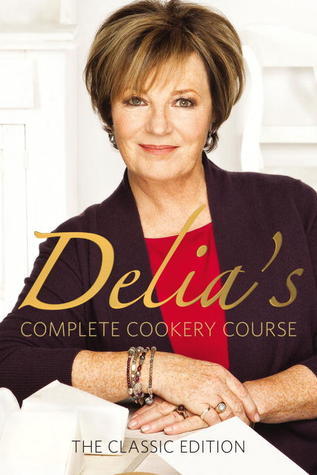
Delia's Complete Cookery Course
Completely revised and updated, this cookery "bible" still contains all the established favorites such as Flaky Fish Pie, Christmas Pudding, and the secret of Crunchy Roast Potatoes. Delia has also added some new recipes like Stir-Fried Mange Tout and Roast Stuffed Goose with Prunes and Armagnac. Clear and comprehensive, the recipes are suitable for beginners as well as more experienced cooks. Delia also gives advice on new and widely-available ingredients like easy-blend yeast, filo pastry, and fromage frais.
640 pages, Paperback
First published October 1, 1982
About the author
Delia Smith
123 books35 followersDelia Smith CBE is an English cook and television presenter, known for teaching basic cookery skills in a no-nonsense style. She is the UK's best-selling cookery author, with more than 21 million copies sold.
Smith is also famous for her role as joint majority shareholder at Norwich City F.C. Her partner in the shareholding is her husband, Michael Wynn-Jones. Her role at the club has attracted varying media attention, from positive when she "saved" the club from bankruptcy, to negative, when making a controversial on-pitch announcement in 2005.
Already an Officer of the Order of the British Empire (OBE), Smith was appointed Commander of the Order of the British Empire (CBE) in the 2009 Birthday Honours, "in recognition of ... [her] contribution to television cookery and recipe writing".
Smith is also famous for her role as joint majority shareholder at Norwich City F.C. Her partner in the shareholding is her husband, Michael Wynn-Jones. Her role at the club has attracted varying media attention, from positive when she "saved" the club from bankruptcy, to negative, when making a controversial on-pitch announcement in 2005.
Already an Officer of the Order of the British Empire (OBE), Smith was appointed Commander of the Order of the British Empire (CBE) in the 2009 Birthday Honours, "in recognition of ... [her] contribution to television cookery and recipe writing".
Ratings & Reviews
Friends & Following
Create a free account to discover what your friends think of this book!
Community Reviews
Displaying 1 - 30 of 45 reviews

September 25, 2012
Almost every time i am unsure of what to make for dinner i look in my fridge and then i look in this book. I did this just over an hour ago and decide on Roast Chicken & stuffing served with potatoes boulangere.
I was given this book by my mother when i first left home, it has helped me countless times since then. I honestly credit half of my cooking skills to Delia. I wouldn't have even a speck of kitchen confidence if i had not read this book.
Here's to you Delia, thank you for making me a better housewife :)
I would recommend this to everyone! I think it is a fantastic leaving home gift & i will be giving a copy to my children when they go :)
I was given this book by my mother when i first left home, it has helped me countless times since then. I honestly credit half of my cooking skills to Delia. I wouldn't have even a speck of kitchen confidence if i had not read this book.
Here's to you Delia, thank you for making me a better housewife :)
I would recommend this to everyone! I think it is a fantastic leaving home gift & i will be giving a copy to my children when they go :)
October 8, 2011
got click happy on Delia and clicked the non-illustrated one.
The illustrated one is the one I have and it's my bible.
If I want to know how to do, well anything really, this is the first place I look.
The illustrated one is the one I have and it's my bible.
If I want to know how to do, well anything really, this is the first place I look.

April 17, 2012
This book is quite literally the taste of my mum's home cooking. She learnt to cook from it when first maried and while the recipes aren't the most fashionable today they are very reliable and to me very nostalgic. The recipes are so easy to follow and there are so many of them! As an added bonus, ingredients that were a bit exotic when Delia wrote this are now totally everyday, so there aren't any madening chases for ingredients... infact you might not even need to go out shopping because we always seem to have pretty much all the ingredients at home. Go Delia!
February 3, 2013
Whereas I would recommend the Ballymaloe Complete Cookery Course as the perfect gift for the more experienced cook, Delia's Complete Cookery Course is really the perfect housewarming gift for the newbie cook - it wold be a lovely wedding gift for example. I got mine from my beloved aunt, and I know I will have it, and refer to it, as long as I have a kitchen to cook in. It teaches all the basics, and whereas some of the recipes (and ingredients) in my edition are definitly dated, the basics are still solid. Having this book on your stand is almost like having your Mum standing beside you, guiding your hand with her experience.

January 15, 2013
This has got to be my favourite recipe book. Having never learned to cook from my mother and going to a school where domestic science was not a school subject I did never learned to cook properly. I happened to watch one of her "How to Cook" series and was riveted. I managed to get someone to bring me a copy of this book from the U.K. and it is a constant source of reference. I would like to own a copy of the TV video series but have not been able to do so. She showed exactly how things are made and you got a close up of what they should look like.

November 20, 2009
The comprehensive reference book for food enthusiasts. This woman is the British expert of long standing and her recipes are not faddish and are simple to follow. She even tells you how to boil an egg. I picked up a lot of tips like sticking a fork into jacket potatoes to puncture them, drenching them in olive oil then rubbing rock salt into the skin, before skewering them on metal blades to get the heat into the middle before putting them in the oven.

March 26, 2012
A solid reference/recipe book. At the beginning of each section Delia educates the reader with the technical aspects of making pastry, cooking eggs (Delia suggests you weigh your eggs in order to cook them to your liking) , meats and so forth.
You know that Delia has triple-tested all her recipes so you are in safe hands.
My favourite recipes include her: apple sauce (for savoury dishes), her variations for fruit crumbles and the lemon surprise pudding.
You know that Delia has triple-tested all her recipes so you are in safe hands.
My favourite recipes include her: apple sauce (for savoury dishes), her variations for fruit crumbles and the lemon surprise pudding.

April 28, 2008
This is a great reference guide for basic cooking, centric to British cuisine. It was a gift from an English friend who knew I was looking for a good Victoria Sponge recipe.
I would say that I like Delia's how to cook series, but this is good because it's compacted down into one book. And I have enough books as it is.
I would say that I like Delia's how to cook series, but this is good because it's compacted down into one book. And I have enough books as it is.

March 17, 2010
actually i have the hardback and its lost its cover cos i use it so much. but a great book with all the basics plus some more adventurous recipes. if you only could have one cookbook on your desert island this would be it................ provided there was a kitchen and piped gas on the island that is.
March 7, 2009
The cooking bible as far as I'm concerned, I use it all the time. A lot of the recipes are adaptable although it doesn't alyways come across like that, but lots of useful basic infor such as how long to cook different typs of meat/fish for, and lots of good every day recipes.

November 5, 2012
The woman is a cookery goddess. I have never ever followed a Delia recipe that has gone wrong- my personal fave's are the banoffee cheesecake and minestrone soup. She does the classics so well and has a modern twist on some old favourites.

December 7, 2016
I've been cooking for over forty years and I'm proud to say that Delia Smith has been with me every step of the way. I'm now on my second copy of this book as I could no longer prise the pages of my 1980's edition apart as they were stuck together with several different food groups!

June 29, 2009
One day i am going to learn how to cook.
:)
:)
July 12, 2022
I picked this cookbook up from the library in February after reading a fictional British novel “Hygge and Kisses” in which it was mentioned that British women all learned to cook from Delia. Naturally, having a cookbook collection of 505 books and counting and never having heard of “Delia”, I had to look her up. Thankfully my local library was very obliging and I obtained this illustrated copy of Delia Smith’s complete cookery course…then the cooking commenced.
I poured through the book reading her advice on kitchen tools and little lessons on everything from how to tell if an egg is fresh to how to decorate a Christmas cake. I picked out what I thought was a variety of dishes to try and ended up cooking 10 recipes out of her book.
The end result was a bit of a mixed bag…but I probably could have guessed that might be the case. With the ten recipes tried, only two have the potential for me to keep or make again.
Before I discuss the dishes and my/my husband’s thoughts on them, I want to put a qualifier just in case there are any English individuals reading this review. I do understand that Delia Smith is very beloved and nothing I say is meant to malign her or her character. We all have different tastes and what tastes good to some do not necessarily taste good to all. I am American of Dutch ancestry and I grew up on the west coast of the United States. We are relatively spoiled here where it is just as easy to get Ethiopian food as Thai as Indian as Cambodian as Filipino as Greek as Italian as Southern (American) as Mexican as Puerto Rican as Moroccan as South African as Turkish as Brazilian as East Indian as American Indian as “Australian”, etc. I grew up with a Mom who worked full time and still grew her own sprouts, herbs, etc., Who canned and jammed, Who made homemade yogurt, fruit leather, dried fruit and nuts, and who managed to put a homemade well balanced meal on the table every evening from primarily Whole Foods with little to no preservatives or processing. We might just as easily have a fresh mixed green salad with steak as a falafel sandwich on homemade pita. My husband who is very American, with British Isle ancestry grew up eating a lot of processed foods and short-cut meals…and ate things like shepherds pie (something I had never eaten until my in-laws had made it for me) often. I have never been to the British Isles, so my knowledge of British food is based on my experiences in Canada, Australia and New Zealand. There I have experienced meat pies and mashy peas…and been somewhat horrified by the over cooking of vegetables and the lack of herbs and spices…and well..flavor. I say all of that to preface my review with, it is possible that British food is possibly not to my taste.
The first recipe that I selected was Delia’s Carbonnade de bœf á la flammande: this is long slow cooked beef dish that is finished by topping with bread and melted Gruyère. The presentation of the dish is rustic and nice, but both my husband and I found that while the beef was tender and tasted good the accompanying sauce was a real miss for us. I would rather use my chuck roast in Cook’s Illustrated’s classic pot roast…which is even simpler and ends with a sauce that has amazing flavor.
Recipe #2 was Chicken with Whole Spices on page 176. This was billed as “authentically Indian but with homemade freshness”. This was fairly easy to make, but shockingly even with all of the fresh spices used my husband and I found this dish to be incredibly bland. This was a very watered down dish with very little hints of Indian spice.
Recipe #3 was one of the big winners: Simple Stroganoff on page 152. This really was a classic beef stroganoff and my husband and I enjoyed the flavors brought by the tanginess of the sour cream’s addition to this creamy sauce. I used crimini mushrooms and a Pinot Grigio by Alverdi Terre Degliosci 2020. Simple ingredients, easy to put together resulting in a tangy yet creamy sauce that can be served over rice or pasta. We liked this dish so much that I have actually made it twice and is a recipe that I will keep in my collection. We have now had it over both rice and egg noodles and we preferred it over rice. (Side note: I have worked at three major hospitals in my career all of which make variations of a beef stroganoff in their cafeterias, this is my only experience with this dish and I know hospitals aren’t known for their cuisine, but this is a dish that is tolerable at all three hospitals. Having said that, this recipe is far better than anything I have tasted thus far.)
Recipe #4 Pan Fried Pizza page 370: This was a quick and easy to make recipe that gets you a small personal size pizza on the stove top…although I finished ours in the oven on my pizza tray (although I suppose I could have used my pizza stone as well). Chris and I both thought the dough was a little heavy, which may have been due to me over kneading in the incorporation process. I would keep looking for a better pan fried pizza dough.
Recipe #5 Scotch Broth on page 70: this is essentially a lamb stew. Chris (my husband) thought It was very bland. He thought the lamb was the best part but he prefers the way I do lamb (the Greek way) and he did not care for the cabbage and leek…or as he put it the “green and grey vegetables”. I agreed on the dish being very bland. It was easy to make and it makes a huge portion. I prefer all of my squash soups for winter stomach warmers.
Recipe #6 I modified her Vegetarian Shepherd’s Pie on page279 slightly by substituting 1 pound ground grass fed beef for her 6 ounces lentils and 4 ounces split peas. Also I used Greek seasoning and India red pepper flake. Chris thought this was very interesting and he liked the flavor combination. He had never had heat or tomatoes in his shepherd’s pie before and he ended up liking both.
Recipe #7 Pizza Dough: Both Chris and I liked this pizza dough, although I am still looking for a better one. Some notes…add olive oil on the bottom otherwise it sticks to pizza tray and continue searching for a better yeast the Platinum Red Star Active Yeast adds a sweetness to this recipe that I would like to get rid of.
Recipe #8 Moussaka: This was the other big winner that we tried. Chris is not a fan of eggplant (aubergine for you Brits) and he said it was better than he thought it was going to be. “The lamb was delicious with the beschamel sauce, it helped cover up the flavor of eggplant. No bad bites!” I used organic graffiti eggplant and you really only need one large or two medium to line the bottom of a baking dish. I thought this was surprisingly flavorful and a great way to use eggplant.
The last recipe I want to mention is #9: Young Carrots with Tarragon Butter page 214. This is a simple recipe and if you like butter and tarragon can add variety to the way you serve carrots.
My overall review for this cookbook is don’t necessarily come expecting a lot of recipes to add to your arsenal, but do come expecting to learn techniques and some tidbits of cooking knowledge. (If your tastes fall to the blander side, you may glean more recipes than I did.)
I poured through the book reading her advice on kitchen tools and little lessons on everything from how to tell if an egg is fresh to how to decorate a Christmas cake. I picked out what I thought was a variety of dishes to try and ended up cooking 10 recipes out of her book.
The end result was a bit of a mixed bag…but I probably could have guessed that might be the case. With the ten recipes tried, only two have the potential for me to keep or make again.
Before I discuss the dishes and my/my husband’s thoughts on them, I want to put a qualifier just in case there are any English individuals reading this review. I do understand that Delia Smith is very beloved and nothing I say is meant to malign her or her character. We all have different tastes and what tastes good to some do not necessarily taste good to all. I am American of Dutch ancestry and I grew up on the west coast of the United States. We are relatively spoiled here where it is just as easy to get Ethiopian food as Thai as Indian as Cambodian as Filipino as Greek as Italian as Southern (American) as Mexican as Puerto Rican as Moroccan as South African as Turkish as Brazilian as East Indian as American Indian as “Australian”, etc. I grew up with a Mom who worked full time and still grew her own sprouts, herbs, etc., Who canned and jammed, Who made homemade yogurt, fruit leather, dried fruit and nuts, and who managed to put a homemade well balanced meal on the table every evening from primarily Whole Foods with little to no preservatives or processing. We might just as easily have a fresh mixed green salad with steak as a falafel sandwich on homemade pita. My husband who is very American, with British Isle ancestry grew up eating a lot of processed foods and short-cut meals…and ate things like shepherds pie (something I had never eaten until my in-laws had made it for me) often. I have never been to the British Isles, so my knowledge of British food is based on my experiences in Canada, Australia and New Zealand. There I have experienced meat pies and mashy peas…and been somewhat horrified by the over cooking of vegetables and the lack of herbs and spices…and well..flavor. I say all of that to preface my review with, it is possible that British food is possibly not to my taste.
The first recipe that I selected was Delia’s Carbonnade de bœf á la flammande: this is long slow cooked beef dish that is finished by topping with bread and melted Gruyère. The presentation of the dish is rustic and nice, but both my husband and I found that while the beef was tender and tasted good the accompanying sauce was a real miss for us. I would rather use my chuck roast in Cook’s Illustrated’s classic pot roast…which is even simpler and ends with a sauce that has amazing flavor.
Recipe #2 was Chicken with Whole Spices on page 176. This was billed as “authentically Indian but with homemade freshness”. This was fairly easy to make, but shockingly even with all of the fresh spices used my husband and I found this dish to be incredibly bland. This was a very watered down dish with very little hints of Indian spice.
Recipe #3 was one of the big winners: Simple Stroganoff on page 152. This really was a classic beef stroganoff and my husband and I enjoyed the flavors brought by the tanginess of the sour cream’s addition to this creamy sauce. I used crimini mushrooms and a Pinot Grigio by Alverdi Terre Degliosci 2020. Simple ingredients, easy to put together resulting in a tangy yet creamy sauce that can be served over rice or pasta. We liked this dish so much that I have actually made it twice and is a recipe that I will keep in my collection. We have now had it over both rice and egg noodles and we preferred it over rice. (Side note: I have worked at three major hospitals in my career all of which make variations of a beef stroganoff in their cafeterias, this is my only experience with this dish and I know hospitals aren’t known for their cuisine, but this is a dish that is tolerable at all three hospitals. Having said that, this recipe is far better than anything I have tasted thus far.)
Recipe #4 Pan Fried Pizza page 370: This was a quick and easy to make recipe that gets you a small personal size pizza on the stove top…although I finished ours in the oven on my pizza tray (although I suppose I could have used my pizza stone as well). Chris and I both thought the dough was a little heavy, which may have been due to me over kneading in the incorporation process. I would keep looking for a better pan fried pizza dough.
Recipe #5 Scotch Broth on page 70: this is essentially a lamb stew. Chris (my husband) thought It was very bland. He thought the lamb was the best part but he prefers the way I do lamb (the Greek way) and he did not care for the cabbage and leek…or as he put it the “green and grey vegetables”. I agreed on the dish being very bland. It was easy to make and it makes a huge portion. I prefer all of my squash soups for winter stomach warmers.
Recipe #6 I modified her Vegetarian Shepherd’s Pie on page279 slightly by substituting 1 pound ground grass fed beef for her 6 ounces lentils and 4 ounces split peas. Also I used Greek seasoning and India red pepper flake. Chris thought this was very interesting and he liked the flavor combination. He had never had heat or tomatoes in his shepherd’s pie before and he ended up liking both.
Recipe #7 Pizza Dough: Both Chris and I liked this pizza dough, although I am still looking for a better one. Some notes…add olive oil on the bottom otherwise it sticks to pizza tray and continue searching for a better yeast the Platinum Red Star Active Yeast adds a sweetness to this recipe that I would like to get rid of.
Recipe #8 Moussaka: This was the other big winner that we tried. Chris is not a fan of eggplant (aubergine for you Brits) and he said it was better than he thought it was going to be. “The lamb was delicious with the beschamel sauce, it helped cover up the flavor of eggplant. No bad bites!” I used organic graffiti eggplant and you really only need one large or two medium to line the bottom of a baking dish. I thought this was surprisingly flavorful and a great way to use eggplant.
The last recipe I want to mention is #9: Young Carrots with Tarragon Butter page 214. This is a simple recipe and if you like butter and tarragon can add variety to the way you serve carrots.
My overall review for this cookbook is don’t necessarily come expecting a lot of recipes to add to your arsenal, but do come expecting to learn techniques and some tidbits of cooking knowledge. (If your tastes fall to the blander side, you may glean more recipes than I did.)
October 11, 2020
I have had this book for about 30 years. It is absolutely without doubt my number 1 cookery book. Of all my recipe books, this is the one I'd save first in a flood or fire. It never lets me down. The pages bear witness to it's regular use.

October 15, 2009
The cornerstone of anyone's cookery book shelf, well anyone that grew up in the era when Butterflies was on tv?! I got this for my 15th birthday and of all the cookery books I have read, has proved the most useful, perhaps not adventurous, but useful all the same!
February 2, 2010
I absolutelylove Delia! I was never really interested in cooking - thanks to Delia I can make fab cakes, she makes it all so easy. You can forget your Jamie Olivers, Gordon Ramsey's etc - Delia any day! She deserves 10 stars!
February 8, 2014
The classic cookery book for our age. What I love about Delia is that her recipes always work, and she's a cook not a chef so no fancy terminology, wacky cooking methods or ingredients from the slopes of obscure mountain ranges. Just simple great tasting food. A must for all home cooks :)

January 7, 2015
I have shelves full of cookery books but this is probably still the one I turn to the most - it has all the basics as well as most of the food and recipes I ate when growing up - it is also my mum's cooking bible!

January 19, 2008
This is how I learnt to cook!

February 26, 2008
Delia is a wonderful cook - but I wish her recipes were slightly more healthy. Everything is so fattening and full of cholestorol - yet it tastes divine.
This book is worth evey penny spent on it.
This book is worth evey penny spent on it.

March 9, 2008
Delia is my homegirl.

September 4, 2008
This was a gift from my English mother-in-law. It's her own, well-loved/well-used copy. It's a must for any wife of a nice English boy or any anglophile in the kitchen.

cookbooks
March 18, 2010Purchased in London to add to my collection

October 8, 2011
I have hundreds of cook books. But this is the one I always go back to in the end. Timeless.
May 15, 2012
The only cookbook you will ever need.

May 31, 2012
Love this cookbook!
June 9, 2012
a must have in any kitchen...

August 29, 2012
If you only buy one cookery book, make it this one. Recipes as well tested, if you follow the instructions, they work. All the basics needed for cooking are there.
February 15, 2013
You can never go wrong with Delia's recipes.
Displaying 1 - 30 of 45 reviews