

What do you think?

Cities of the Interior #1-5
Cities of the Interior
"My original concept was Roman Fleuve, a series of novels on various aspects of relationships, portraying four women in a continuous symphony of experience". -- Anais Nin, from the introduction to the British edition of Ladders to Fire
Paperback
First published January 1, 1959
About the author
Anaïs Nin
360 books9,521 followersWriter and diarist, born in Paris to a Catalan father and a Danish mother, Anaïs Nin spent many of her early years with Cuban relatives. Later a naturalized American citizen, she lived and worked in Paris, New York and Los Angeles. Author of avant-garde novels in the French surrealistic style and collections of erotica, she is best known for her life and times in The Diary of Anaïs Nin, Volumes I-VII (1966-1980).
https://en.wikipedia.org/wiki/Ana%C3%...
https://en.wikipedia.org/wiki/Ana%C3%...
Ratings & Reviews
Friends & Following
Create a free account to discover what your friends think of this book!
Community Reviews
Displaying 1 - 30 of 30 reviews

July 12, 2014
I love this so much. I wish there was less casual racism.

May 9, 2009
I have always been a hugh fan of Nin. She seemed to be a major crossroad of so many things. And i dont mean just her diaries. I mean the multiple internal dialogues she interweaves. And how these i.d's are not only affected by each other, but also how they influence each individuals internal sight of themselves and their environment. But while this may seem kind of convoluted; the writing/images are actually quit spare and illuminating. Her writing dosnt really have a generic plot; but rather is moved along by a kind of submerging into the dialogue. It works purely on the emotional level in regardes to the conversation we all have with ourselves; and how others percieve/ interpret this conversation.
And if this wasnt enough; all this also takes place in the greatest time period in the greatest city.
*A personal note-I read this mammoth tomb while traveling/living in Brazil and could not of had a better book. It really made me understand internal travelling.
P.S. Get this copy for the incredible drawings throughout the book.
And if this wasnt enough; all this also takes place in the greatest time period in the greatest city.
*A personal note-I read this mammoth tomb while traveling/living in Brazil and could not of had a better book. It really made me understand internal travelling.
P.S. Get this copy for the incredible drawings throughout the book.
April 25, 2010
Anais Nin has an incredible writing style, where every line is poetry and wrapped in beauty, truth, observation about the innermost voices of our selves we don't dare to admit, but instantly recognize on the page. Her characters are spiraling entities that encompass so much more than individual traits, and she conjures worlds and moods with such a lyrical ease. Once you really fall into Nin's world, where all senses are lightened and pleasure flows, as well as every doubt and fear in silky thoughts across the page, it's difficult to escape. She describes passions, relationships and places with a rippling beauty. And it's every bit of a pleasure to indulge in a trip to these cities of the interior.
November 16, 2016
Ce livre m’a touché là où L’insoutenable légèreté de l’être (1984) de Kundera m’a seulement effleuré.
Il s’agit d’un intégrale refermant cinq nouvelles qui « anachroniquent » les vies de Lilian, Djuana et Sabina – une pianiste, une danseuse et une mangeuse d’homme. Devant l’artifice des sourires forcés et les habits de ville qui écrasent les pensées, les personnages vacillent entre l’insoutenable et le léger. Soumises au monde des apparences, elles souffrent d’une nostalgie de la boue pour leur enfance, ce temps éphémère qu’on ne saura jamais si on l’a vécu ou rêvé.
Poursuivre la lecture : https://fabulogie.wordpress.com/2016/...
Il s’agit d’un intégrale refermant cinq nouvelles qui « anachroniquent » les vies de Lilian, Djuana et Sabina – une pianiste, une danseuse et une mangeuse d’homme. Devant l’artifice des sourires forcés et les habits de ville qui écrasent les pensées, les personnages vacillent entre l’insoutenable et le léger. Soumises au monde des apparences, elles souffrent d’une nostalgie de la boue pour leur enfance, ce temps éphémère qu’on ne saura jamais si on l’a vécu ou rêvé.
Poursuivre la lecture : https://fabulogie.wordpress.com/2016/...

March 5, 2015
A non-stop barrage of beautiful, soul-touching prose and exhaustive character analysis. The former is of course to the novel (or collection, however you prefer) advantageous no matter which way you slice it, but the latter is just "too much."
The plot is completely absent, which is not intrinsically a con, but feels as one with a book of this length. You begin to wish for the characters to stop analyzing how they live, and just LIVE. By the end they're so well-developed that one might feel frustrated or cheated that they haven't done anything except exist in a perpetual state of self-analysis.
Anais has the temperament and the style of a poet, not a traditional author, and as a result the book feels distracted or distanced from itself. I would hesitate to recommend or dissuade someone from reading this book. One's enjoyment of this novel is likely to be dependent on whether or not they consider character development to be paramount (at risk of all else) in a book, and whether the reader has a bottomless well of patience for personality proselytizing. Those that are able to surpass those obstacles or see them as virtues, will likely have a more enjoyable experience.
The plot is completely absent, which is not intrinsically a con, but feels as one with a book of this length. You begin to wish for the characters to stop analyzing how they live, and just LIVE. By the end they're so well-developed that one might feel frustrated or cheated that they haven't done anything except exist in a perpetual state of self-analysis.
Anais has the temperament and the style of a poet, not a traditional author, and as a result the book feels distracted or distanced from itself. I would hesitate to recommend or dissuade someone from reading this book. One's enjoyment of this novel is likely to be dependent on whether or not they consider character development to be paramount (at risk of all else) in a book, and whether the reader has a bottomless well of patience for personality proselytizing. Those that are able to surpass those obstacles or see them as virtues, will likely have a more enjoyable experience.

March 19, 2026
So I shamelessly enjoyed this book even though it's not really a "book" and it doesn't really have a plot. Cities of the Interior by Anaïs Nin is a collection of five books: Ladders to Fire, Children of the Albatross, The Four-Chambered Heart, A Spy in the House of Love, and Seduction of the Minotaur. Nin writes primarily like a poet, and this collection was pretty philosophical and largely autobiographical. A lot of the material is ripped from her diaries but disguised, and it delves into the deepest desires of three primary women. It's hard for me to say what I liked about this as a continuous novel besides the author. I enjoyed being in her head and reading about these women and what they wanted. It felt salacious and strangely intimate. To appreciate this, I believe one should have an interest in Anaïs Nin or else it would be difficult to follow.
Read
April 12, 2025"I want just the joy of illumination, the joy of what I see in the world. Just to receive vibrations. Susceptibility to all life. Acceptance. Taking it all in. Just BE".
I initially started this book in January and was reading alongside other books but I decided last week to give it my full attention and finish it. It was no easy feat, I think Anais Nin writes well but the formatting of the book and the older vocabulary used I found my mind wandering A LOT. I enjoyed parts of what she did here and there was some really gorgeous prose and writing throughout. But I do fear that often things are held as sacred and people do not speak out against for fear of shame or displaying a lack of intellect. I have no shame and I know I am smart and this was just okay.
I initially started this book in January and was reading alongside other books but I decided last week to give it my full attention and finish it. It was no easy feat, I think Anais Nin writes well but the formatting of the book and the older vocabulary used I found my mind wandering A LOT. I enjoyed parts of what she did here and there was some really gorgeous prose and writing throughout. But I do fear that often things are held as sacred and people do not speak out against for fear of shame or displaying a lack of intellect. I have no shame and I know I am smart and this was just okay.
September 22, 2026
Quando ci si siede davanti a una pagina bianca, si osserva una finestra dall’aria luminosa e vaporosa a cui ci spetta il compito di aprire ed osservare tutto ciò che si sarebbe agitato al suo interno. Chi scrive, non propriamente un autore o scrittore, ma colui che ripone i propri pensieri su carta, cattura il pensiero astratto su un foglio bianco, pensa a come questo semplice atto o gesto, seppur banale e forse senza senso, faccia parte di ognuno di noi.
L’uomo ha sempre trovato strane giustificazioni per il suo modo di esprimersi e per il suo desiderio di farlo riportando ogni cosa, pensiero o emozione su carta, in relazione al mondo circostante. Uno degli argomenti più in << voga >> ancora in uso è quello del racconto personale, intimistico nel quale si innesca uno splendido processo: l’anima di chi scrive si combina al mondo circostante, e, la parola scritta, diviene surrogato o registrazione di questo splendido sistema. C'è chi non accredita alcuna parvenza a questo modus operandi di riportare le cose, chi, invece, come la Nin e, da qualche anno, anche la sottoscritta, accredita a questa nobile arte alcuni strumenti utili per vivere e sopravvivere. Come? La scrittura avrebbe concesso l'opportunità di scrutare per benino ogni cosa, andare al di là del possibile, assimilare tutto ciò che sembra essere una massa gigantesca e grigiastra che nell’immediato diviene colorata.
L’argomento con cui la Nin tentò di narrare il proprio vissuto, la propria vita rappresentò nel tempo una parte di quel magnifico contenitore, quel costante fluire, un flusso graduale di scoperta in cui le immagini hanno la parvenza di un sogno, il ritmo sincopato come quello musicale del jazz. E, questa raccolta di racconti, diviene costola di un bellissimo tutto, un ciclo di romanzi nel quale le donne, ancora una volta, nuotano in un mare di possibilità e speranza.
Cities of interior, in italiano, La città interiore funse da cattedrale, unico luogo in cui ho potuto soggiornare un pò più a lungo, a dispetto dei suoi celebri Diari, nel quale ho dovuto nient’altro che abbandonare ogni coscienza e tutte quelle forme tradizionali che la letteratura odierna mi aveva inculcato, con la voce della Nin che dominava e sovrastava ogni cosa perchè visse di tutto questo. Questo suo modo di approcciarsi al mondo, confidarsi, esporsi in ogni modo - carnale e spirituale - era di frantumare quei canoni o paradigmi imposti dal patriarcato in una sequela di vicende frantumate che tuttavia sono legate e poi recise da un flusso indomabile di parole nel quale ogni cosa appare vacua. Inconsistente, informe, privo di quella lucentezza e sfolgorio di cui sono dotati i Diari, nel quale è possibile rintracciare un certo coinvolgimento interiore ed emotivo, e nel quale il compito dello scrittore o dell’artista è di delineare quelle vicende drammatiche in cui si lotta quotidianamente. Un modo atipico di vedere e sentire la realtà. L’amore libero, senza impedimenti, incuneato e circonfuso in quelle stanze di cui fa cenno uno dei romanzi di questa bella composizione, non sono forme tradizionali di tradimento in quanto guidate da forme consapevoli, razionali per cui è possibile accedere, resuscitare in un altra forma e vivere in pace in ogni sogno o illusione.
L’esortazione di scrivere, che questi cinque racconti evidenziano nell’esigenza della scrittrice ad riappropriarsi della propria sessualità, porre il proprio IO in relazione a quelle forme corporali che scardinassero il sistema del linguaggio culturale dominato dal sesso maschile. La Nin scrive di sesso, di desiderio, di piacere sessuale non filtrabili dallo sguardo, quanto mediante quella forma di esplorazione che Helene Cixous definirà come godimento nonchè motore di creatività e liberazione. Rifiutando la linearità del tempo, fluttuando costantemente tra sogno, psicoanalisi e realtà incarnando questo linguaggio fluido e corporeo teorizzando solo qualche anno dopo dal femminismo francese.
Ogni figura ritratta sembra ridere del potere patriarcale che, in ogni modo, ha tentato di rimpicciolirla, relegando il senso di colpa in una zona assopita quasi dimenticata della coscienza manifestabile mediante sentimenti, dando adito ad ogni voce, sebbene la sua esistenza fu una continua lotta a liberarsi da tali sensi legati alla trasgressione, all’emancipazione, alla ricerca dell’identità. Scrivendo apertamente delle sue relazioni, dei suoi segreti e dei suoi abissi, << ridendo >> di ogni tabù imposta dall’epoca proprio come la medusa della Cixous, poiché mappa teorica della civilizazzione, della liberazione letteraria delle donne, come dimostrazioni viventi che tale scrittura esisteva già ma che con la scrittrice francese ha prevalso, ha tracciato su carta e sulla carne un solco profondo e incancellabile. Perché relazionarsi col prossimo comporta a vestire diversi ruoli, indossare svariate maschere che celino la nostra identità in forme edulcorate ma eccessive che cozzano con la natura, quella che ammanta da ogni comprensione.
Un essere mitologico come il Minotauro, ad esempio, sarà colui che penetrerà nel labirinto umano e per il quale i protagonisti fuggiranno, dovranno sfuggirgli pur di sopravvivere e nel quale i sogni entrano in coesione con i ricordi. In immagini soffuse, contornate di densità. E che, nello specifico, sono essenza della femminilità, la cui natura interiore è stata purificata, ordinata, compresa, dominata.
In ognuno di questi racconti si cela un IO disintegrato che è tratto dall’esperienza e dalla sofferenza dell’evoluzione femminile, in una riflessione un po incompleta del mondo in quanto la stessa Nin tentò di scovare una completezza che aderisca al suo spirito, al suo corpo, come una seconda pelle. Perchè ogni vicenda o fatto narrato è emblema o essenza di verità, simbolo di un passato già vissuto e in cui la proiezione dei sentimenti, così trascendente ed suprema, descrive ed eleva ogni emozione.
L’uomo ha sempre trovato strane giustificazioni per il suo modo di esprimersi e per il suo desiderio di farlo riportando ogni cosa, pensiero o emozione su carta, in relazione al mondo circostante. Uno degli argomenti più in << voga >> ancora in uso è quello del racconto personale, intimistico nel quale si innesca uno splendido processo: l’anima di chi scrive si combina al mondo circostante, e, la parola scritta, diviene surrogato o registrazione di questo splendido sistema. C'è chi non accredita alcuna parvenza a questo modus operandi di riportare le cose, chi, invece, come la Nin e, da qualche anno, anche la sottoscritta, accredita a questa nobile arte alcuni strumenti utili per vivere e sopravvivere. Come? La scrittura avrebbe concesso l'opportunità di scrutare per benino ogni cosa, andare al di là del possibile, assimilare tutto ciò che sembra essere una massa gigantesca e grigiastra che nell’immediato diviene colorata.
L’argomento con cui la Nin tentò di narrare il proprio vissuto, la propria vita rappresentò nel tempo una parte di quel magnifico contenitore, quel costante fluire, un flusso graduale di scoperta in cui le immagini hanno la parvenza di un sogno, il ritmo sincopato come quello musicale del jazz. E, questa raccolta di racconti, diviene costola di un bellissimo tutto, un ciclo di romanzi nel quale le donne, ancora una volta, nuotano in un mare di possibilità e speranza.
Cities of interior, in italiano, La città interiore funse da cattedrale, unico luogo in cui ho potuto soggiornare un pò più a lungo, a dispetto dei suoi celebri Diari, nel quale ho dovuto nient’altro che abbandonare ogni coscienza e tutte quelle forme tradizionali che la letteratura odierna mi aveva inculcato, con la voce della Nin che dominava e sovrastava ogni cosa perchè visse di tutto questo. Questo suo modo di approcciarsi al mondo, confidarsi, esporsi in ogni modo - carnale e spirituale - era di frantumare quei canoni o paradigmi imposti dal patriarcato in una sequela di vicende frantumate che tuttavia sono legate e poi recise da un flusso indomabile di parole nel quale ogni cosa appare vacua. Inconsistente, informe, privo di quella lucentezza e sfolgorio di cui sono dotati i Diari, nel quale è possibile rintracciare un certo coinvolgimento interiore ed emotivo, e nel quale il compito dello scrittore o dell’artista è di delineare quelle vicende drammatiche in cui si lotta quotidianamente. Un modo atipico di vedere e sentire la realtà. L’amore libero, senza impedimenti, incuneato e circonfuso in quelle stanze di cui fa cenno uno dei romanzi di questa bella composizione, non sono forme tradizionali di tradimento in quanto guidate da forme consapevoli, razionali per cui è possibile accedere, resuscitare in un altra forma e vivere in pace in ogni sogno o illusione.
L’esortazione di scrivere, che questi cinque racconti evidenziano nell’esigenza della scrittrice ad riappropriarsi della propria sessualità, porre il proprio IO in relazione a quelle forme corporali che scardinassero il sistema del linguaggio culturale dominato dal sesso maschile. La Nin scrive di sesso, di desiderio, di piacere sessuale non filtrabili dallo sguardo, quanto mediante quella forma di esplorazione che Helene Cixous definirà come godimento nonchè motore di creatività e liberazione. Rifiutando la linearità del tempo, fluttuando costantemente tra sogno, psicoanalisi e realtà incarnando questo linguaggio fluido e corporeo teorizzando solo qualche anno dopo dal femminismo francese.
Ogni figura ritratta sembra ridere del potere patriarcale che, in ogni modo, ha tentato di rimpicciolirla, relegando il senso di colpa in una zona assopita quasi dimenticata della coscienza manifestabile mediante sentimenti, dando adito ad ogni voce, sebbene la sua esistenza fu una continua lotta a liberarsi da tali sensi legati alla trasgressione, all’emancipazione, alla ricerca dell’identità. Scrivendo apertamente delle sue relazioni, dei suoi segreti e dei suoi abissi, << ridendo >> di ogni tabù imposta dall’epoca proprio come la medusa della Cixous, poiché mappa teorica della civilizazzione, della liberazione letteraria delle donne, come dimostrazioni viventi che tale scrittura esisteva già ma che con la scrittrice francese ha prevalso, ha tracciato su carta e sulla carne un solco profondo e incancellabile. Perché relazionarsi col prossimo comporta a vestire diversi ruoli, indossare svariate maschere che celino la nostra identità in forme edulcorate ma eccessive che cozzano con la natura, quella che ammanta da ogni comprensione.
Un essere mitologico come il Minotauro, ad esempio, sarà colui che penetrerà nel labirinto umano e per il quale i protagonisti fuggiranno, dovranno sfuggirgli pur di sopravvivere e nel quale i sogni entrano in coesione con i ricordi. In immagini soffuse, contornate di densità. E che, nello specifico, sono essenza della femminilità, la cui natura interiore è stata purificata, ordinata, compresa, dominata.
In ognuno di questi racconti si cela un IO disintegrato che è tratto dall’esperienza e dalla sofferenza dell’evoluzione femminile, in una riflessione un po incompleta del mondo in quanto la stessa Nin tentò di scovare una completezza che aderisca al suo spirito, al suo corpo, come una seconda pelle. Perchè ogni vicenda o fatto narrato è emblema o essenza di verità, simbolo di un passato già vissuto e in cui la proiezione dei sentimenti, così trascendente ed suprema, descrive ed eleva ogni emozione.
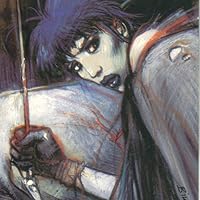
June 24, 2007
Therapy through prose is what was provided to me upon the first reading and every subsequent reading since then.
"Ladders to Fire", "Children of the Albatross", "The Four-Chambered Heart", "A Spy in the House of Love" and "Seduction of the Minotaur" can be read as a collective or individually. Each is full of languid poetry. You can feel the elements, landscape and characters. Most of which are sketches of artists within Nin's circle. Anais was always writing about what she knew, tasted and saw around her. The visceral sensuality of her storytelling always buoys my spirit and leaves me with the feeling that I am not alone in my thoughts, desires, fantasies and actions. The human condition is always fraught with complexity.
"Ladders to Fire", "Children of the Albatross", "The Four-Chambered Heart", "A Spy in the House of Love" and "Seduction of the Minotaur" can be read as a collective or individually. Each is full of languid poetry. You can feel the elements, landscape and characters. Most of which are sketches of artists within Nin's circle. Anais was always writing about what she knew, tasted and saw around her. The visceral sensuality of her storytelling always buoys my spirit and leaves me with the feeling that I am not alone in my thoughts, desires, fantasies and actions. The human condition is always fraught with complexity.

April 4, 2011
This is my favorite book. It's the first time I've ever felt so connected to a fictional character.

February 27, 2023
RIP anais nin u woulda loved mitski
February 12, 2026
In this collection of novels Anais Nin explores the interior worlds of the individual and relationships with precision and clarity. Loosely based on her own diaries, each character represents different selves within herself which are shared with such honesty. It's rare that I see so much of myself in a character and I see myself through Lillian, Djuna, and Sabina. The female psyche is split and divided amongst these three women, laid bare in self exploration and love. Their relationships are catalysts for revelations and traveling further through each own's underground city.
"The further she traveled into unknown places, unfamiliar places, the more precisely she could find within herself a map showing only the cities of the interior" (Seduction of the Minotaur, 536).
At all times we are in two places at once, especially in the face of love. We walk the streets on Earth with a lover while simultaneously walking the streets of our own internal world. The female psyche is constantly alive and endlessly colorful. Mysterious and unknown to the outsider which can create gaps of misunderstanding and pain when opening oneself to a lover. And in all of us is the simple and complex wish to be truly seen, which can create more love and new life. Anais ends Seduction of the Minotaur, the last novel in the collection, with this: "Such obsession with reaching the moon, because they had failed to reach each other, each a solitary planet! In silence, in mystery, a human being was formed, was exploded, was struck by other passing bodies, was burned, was deserted. And then it was born in the molten love of the one who cared" (588-589).
Sabina, or a spy in the house of love, touched me especially. The fear of being seen and possessed, resulting in constant movement and the division of self until it feels there is nothing left to be divided. "...to be becalmed meant to die" (Ladders to Fire, 120). She becomes acutely aware of her own theater and why she plays these roles. "It was when she saw the lives of spies that she realized fully the tension with which she lived every moment, equal to theirs...the need for continuous pretending, quick improvisations of motivations, quick justifications of their presence here or there" (A Spy in the House of Love, 410). She stands out to me in the center, but I feel I can see each of the three women clearly, how they each contract and expand in their own ways.
Throughout this collection, her language is beautiful, her imagery vivid. "A soft rain covered the city with a muted lid, making it intimate like a room, shutting out sky and sun as if drawing curtains, lighting lamps early, kindling fires in the fireplaces, pushing human beings gently to live under the surface, inciting them to sprout words, sparkling colors out of their own flesh, to become light, fire, flowers, and tropical fiestas" (Children of the Albatross, 200). There are endless descriptions and quotes that struck me because of their beauty and revelational truths. I was completely swept into this world and lived with the characters, who I love deeply. I was picked up and deposited into the smoky cafes, streets of Paris and New York, tropical islands alive with color and sea air.
I absolutely loved this collection and its one I will be constantly returning to.
"No man or woman knows what will be born in the darkness of their intermingling; so much besides children, so many invisible births, exchanges of soul and character, blossoming of unknown selves, liberation of hidden treasures, buried fantasies...."(The Four-Chambered Heart, 277).
"The further she traveled into unknown places, unfamiliar places, the more precisely she could find within herself a map showing only the cities of the interior" (Seduction of the Minotaur, 536).
At all times we are in two places at once, especially in the face of love. We walk the streets on Earth with a lover while simultaneously walking the streets of our own internal world. The female psyche is constantly alive and endlessly colorful. Mysterious and unknown to the outsider which can create gaps of misunderstanding and pain when opening oneself to a lover. And in all of us is the simple and complex wish to be truly seen, which can create more love and new life. Anais ends Seduction of the Minotaur, the last novel in the collection, with this: "Such obsession with reaching the moon, because they had failed to reach each other, each a solitary planet! In silence, in mystery, a human being was formed, was exploded, was struck by other passing bodies, was burned, was deserted. And then it was born in the molten love of the one who cared" (588-589).
Sabina, or a spy in the house of love, touched me especially. The fear of being seen and possessed, resulting in constant movement and the division of self until it feels there is nothing left to be divided. "...to be becalmed meant to die" (Ladders to Fire, 120). She becomes acutely aware of her own theater and why she plays these roles. "It was when she saw the lives of spies that she realized fully the tension with which she lived every moment, equal to theirs...the need for continuous pretending, quick improvisations of motivations, quick justifications of their presence here or there" (A Spy in the House of Love, 410). She stands out to me in the center, but I feel I can see each of the three women clearly, how they each contract and expand in their own ways.
Throughout this collection, her language is beautiful, her imagery vivid. "A soft rain covered the city with a muted lid, making it intimate like a room, shutting out sky and sun as if drawing curtains, lighting lamps early, kindling fires in the fireplaces, pushing human beings gently to live under the surface, inciting them to sprout words, sparkling colors out of their own flesh, to become light, fire, flowers, and tropical fiestas" (Children of the Albatross, 200). There are endless descriptions and quotes that struck me because of their beauty and revelational truths. I was completely swept into this world and lived with the characters, who I love deeply. I was picked up and deposited into the smoky cafes, streets of Paris and New York, tropical islands alive with color and sea air.
I absolutely loved this collection and its one I will be constantly returning to.
"No man or woman knows what will be born in the darkness of their intermingling; so much besides children, so many invisible births, exchanges of soul and character, blossoming of unknown selves, liberation of hidden treasures, buried fantasies...."(The Four-Chambered Heart, 277).

May 13, 2017
This is the second or third time I've read this book. The first time, it blew my mind. The subtle ways that Nin is able to pull one into a character, and see the interior of people in stark metaphors really grabbed me. This time around I can see how she is showing how people are fluid. Our expectations, feelings and emotions intertwine in unexpected ways so that our inside is out, and our outside in.
Her writing doesn't move me as it used to. It feels much less sophisticated now, but her ideas and her methods are still intriguing. I suppose I have more experience now, as a human adult in adult relationships so that her initial impressions aren't as romantic or as intimate as they struck me before.
Her writing doesn't move me as it used to. It feels much less sophisticated now, but her ideas and her methods are still intriguing. I suppose I have more experience now, as a human adult in adult relationships so that her initial impressions aren't as romantic or as intimate as they struck me before.

December 4, 2022
Reading Cities of the Interior was an uncanny experience. I discovered phrases and thought patterns that I have carried throughout my life (and shared with no one) repeatedly in Nin’s writing. Phenomenal emotional and psychological exploration. As someone diagnosed with Borderline Personality Disorder, I related a lot to this text and felt less alone. I absolutely adore Nin’s writing style!
July 9, 2024
DNF. Maybe if I was more patient I would enjoy this but the writing style was just not for me. Ultimately it was so boring I had to stop. I also really don’t think that people like this actually exist. No one thinks like that I promise.

November 14, 2017
Beautiful cover. I read this avidly as a young woman, but it doesn't speak to me anymore.

March 29, 2020
Nik’s prose is superbly beautiful and she is able to conjure so much emotion through her metaphors. I very much enjoyed her characters who I felt were all well developed, so much so that I have suspicions they were all modeled from real people. Unfortunately halfway through her heady prose grew tiresome to me. I wish there was more meat to her story instead of just style.

September 23, 2025
Anais Nin tells us the truth we all know but rarely even whisper to others.

December 17, 2021
If you're looking for novels with beginnings that pull you in and endings that neatly complete the story, this isn't the book for you. Nin believed that novels should reflect real life and that real life doesn't work that way. In Cities of the Interior, she holds true to that philosophy. In that sense, it isn't a traditional novel, but rather a series of things that happen.
The events occur in the lives of three women searching for meaningful expression and relationships with a few interesting men, with each other, and within their interior lives. It's comprised of five novels drawn and fictionalized from her diaries. It's not erotic in the sense we have come to know modern eroticism. Nor is it comparable in that manner to her posthumous publications, Delta of Venus and Little Birds. Nonetheless it contains remarkably beautiful, sensuous descriptive passages--poetry-within-prose that reminds me of Michael Ondaatje's earlier works. These descriptive passages, so exquisitely crafted, pull the reader through vivid sensations of color, sound, touch, movement, mood. The expressive mastery of the poetry-within-prose passages provides plenty reason to read this collection.
The title "Cities of the Interior" translates well to "landscapes of the mind." The five novels transition and blend with each other seamlessly, not so much as a series of stories but as a continuation of the same story (which, as I said, has no beginning or end).
I keep the ones I like. This one's a keeper.
The events occur in the lives of three women searching for meaningful expression and relationships with a few interesting men, with each other, and within their interior lives. It's comprised of five novels drawn and fictionalized from her diaries. It's not erotic in the sense we have come to know modern eroticism. Nor is it comparable in that manner to her posthumous publications, Delta of Venus and Little Birds. Nonetheless it contains remarkably beautiful, sensuous descriptive passages--poetry-within-prose that reminds me of Michael Ondaatje's earlier works. These descriptive passages, so exquisitely crafted, pull the reader through vivid sensations of color, sound, touch, movement, mood. The expressive mastery of the poetry-within-prose passages provides plenty reason to read this collection.
The title "Cities of the Interior" translates well to "landscapes of the mind." The five novels transition and blend with each other seamlessly, not so much as a series of stories but as a continuation of the same story (which, as I said, has no beginning or end).
I keep the ones I like. This one's a keeper.

February 9, 2015
I read a lot of Nin in my 30s. I searched for this book for many years before I finally got it. In the end I really enjoyed the way her diaries, erotica and fiction overlapped. I'm not sure she ever told what most people consider to be the "truth" about herself or her relationships, but to see one person tell similar stories from so many different perspectives is fascinating. By my mid 40s I was disenchanted with her. I'd grown out of her intensity and self-involvement. I still occasionally love dipping in for a reminder of the sticky, malaga wine emotion of it all.

June 18, 2015
I read Anais Nin in 9th grade because I found the title intriguing and was pleasantly surprised to find her writing is highly sexualized. However, I believe she is often characterized by one label, "erotica", which does not do justice to the complexity of her writing and its socio-historical significance. When I took a college-level Writing course at Truman State University the summer before 10th grade I made the professor very uncomfortable during a visit by an administrator to our class by analyzing Nin's works and applying them to my own writing.

June 20, 2013
Anais's dialogue is rich with deep thinking about the mystery that pervades all women. The mystery is more so if you are a man. Here is a snapshot from the middle of the book:
He never suspected for a moment that this mystery (of women) was part of themselves they did not know, could not see. (Anais Nin)
If you are fascinated by the concept of an interior dialogue that we all create each day, then you will really enjoy this evocative book.
He never suspected for a moment that this mystery (of women) was part of themselves they did not know, could not see. (Anais Nin)
If you are fascinated by the concept of an interior dialogue that we all create each day, then you will really enjoy this evocative book.
July 13, 2009
After Facebook told me that Nin was "the voice of my soul," I thought I should read something by her. I had purchased this a while back and had tried to read it then, but something made me put it down. I remember now what it was: I can't stand reading it. All the blathering on about nothing with no plot to speak of. Not for me. Perhaps I am unbearable, even to myself?

unable-to-finish
August 3, 2011I was really enjoying this book, although the stream-of-consciousness writing style was hard for me to get into at first. Anais Nin's characters all seem so powerful but also so human, flawed, and delicate. Unfortunately I don't have the time to finish this book right now, and had to return it to the library. I hope to come back to it someday...

April 2, 2008
Beautiful, sensual, lyrical prose...everything you'd expect from a writer like Nin. Her intense sense of sexuality emanates from her writing like a pulse. There are times I found it a little overwhelming to read and had to stagger my reading between stories, but overall it was totally immersing.
April 8, 2009
this is between 3 and 4 stars for me. definitely worth reading because she hits upon some really great passages. but that also means there are some very repetitive parts that become tedious. i think chidren of the albatross and seduction of the minotaur were my favorites of the five stories.
February 14, 2007
this book (or books) made me realize that I enjoy symoblism without form or content a bit too much - beautiful in it's lyricism yet difficult to hold on to - elusivley decadent and transformative
March 5, 2008
Sprawling, I read it at the beach!

October 13, 2008
A great collection of her work. A good and comprehensive introduction to both her intellectual and sensualist writings.
January 26, 2009
You gotta read the whole series to really get into what Nin is trying to lay out. A great study on the minds and hearts of women!
Displaying 1 - 30 of 30 reviews