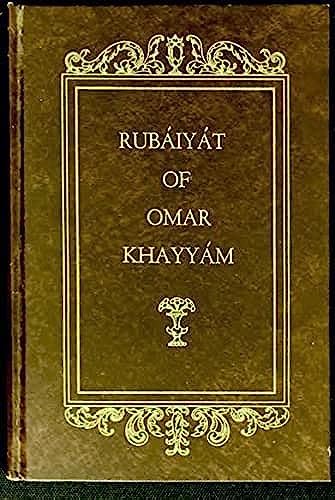
A very strange poem. Regardless, Edward Fitzgerald is a master of the English language and it is worth reading if only to absorb his meticulously crafted quatrains. Here are two examples to get you going.
"And that inverted Bowl we call The Sky, Wherunder crawling coop't we live and die, Lift not thy hands to It for help - for It Rolls impotently on as Thou or I."
or
"And those who husbanded the Golden Grain, And those who flung it to the Winds like Rain, Alike to no such aureate Earth are turn'd As, buried once, Men want dug up again."
I could not locate the edition of my copy on Goodreads, which I got from the library, but it is a hardcover and translated by FitzGerald, so hopefully the text is the same. It has delicate pen and ink illustrations by Edward T. Sullivan. This edition was published by St. Martin's Press in 1983.
I had read bits and pieces of The Rubaiyat but it was time to enjoy it in its entirety, which I did, very much. It's a romantic work that focuses on the fleeting nature of time, and how we must allow ourselves to experience love and life's beauty before we meet our end. He also referred frequently to the glories of wine, and many of the illustrations picture large, beautifully decorated bottles.
Khayyam was a Persian astronomer who composed the seventy-five verses around the end of the eleventh century and the beginning of the twelfth. They are quatrains (meaning four lines), many with all lines rhyming, though there are some variations.
I will be on the lookout for a nice used hardback copy to purchase.