In 1859, women have few rights, even to their own children. When her husband dies and her children become wards of a predator, Martha—bereaved and scared—flees their beloved country home taking the children with her to squalor of New York City. She soon finds herself nearly destitute. The Home for the Friendless, an aid society, offers free food, clothing, and schooling to New York’s street kids. Martha takes the children to the Home for what she thinks is short-term care. Martha discovers that the Society has indentured her two eldest out to work in New York and Illinois via the Orphan Train, and has placed her two youngest for permanent adoption in Ohio. Martha begs for her children back, but the Society refuses. Rather than succumb—the Civil War erupting around her—Martha sets out to reclaim each of them.
Based on the author’s research into her grandfather’s past as an adopted child, and the surprising discovery of his family of origin and how he came to be adopted, Julia Park Tracey has created a mesmerizing work of historical fiction illuminating the darkest side of the Orphan Train.
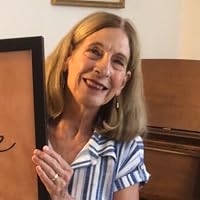
Julia Park Tracey writes historical fiction inspired by family secrets, forgotten women, and the stories that refuse to stay buried.
Coming in August 2027, Comes the Fox takes readers to Virginia in 1770, where a Quaker girl and a Southern belle are thrown together for a summer that turns both their worlds upside down. Inspired by Julia's seventh- and eighth-great-grandmothers, this provocative novel explores freedom, faith, truth, and justice in a society built on enslavement, on the eve of the American Revolution.
A mysterious train receipt tucked into a family scrapbook sent Julia down the rabbit hole of her Orphan Train ancestry—and inspired The Bereaved (2023), a novel about loss, belonging, and the family we find along the way.
Another ancestor inspired Silence (2024), the story of a grieving Puritan woman punished with a year of silence for daring to speak aloud in meeting.
Then Julia took a detour into historical-adjacent metafiction and romance with Whoa, Nelly! A Love Story (with Footnotes)* (2025), featuring a lonely librarian who finds solace in the *Little House* books while navigating childhood trauma, love, and the complicated business of growing up. A love letter to nerd-girl bookworms everywhere!
All three published novels earned starred Kirkus reviews and Kirkus Best-of honors.
More stories, more history, and more literary mischief to come. Stay tuned!
Set for the most part in the late 1850s and 1860s New York City and based on the author’s family history, The Bereaved by Julia Park Tracey follows Martha Seybolt Lozier, a young widow who flees her home in Newburgh after the death of father-in-law leaves her fate and those of four children in the hands of a lecherous lawyer with whose intentions are quite clear to Martha.
Martha struggles to make ends meet in New York City while keeping her children safe. The tenement where they rent a room houses several families like her own and though she does find people willing to help out, the lack of work opportunities, her exhausting supply of belongings to pawn off and almost nothing left of the money she had brought with them, Martha and her children are forced to survive on less than the bare minimum. To keep her children from starving, Martha makes the difficult choice to leave her children, initially, her two sons one of whose is a special needs child and later her daughter, Sarah, who is her oldest and her baby, Homer, in the care of The Home for the Friendless, charitable society that offers food, lodging and education to children whose family could not afford better care. Assuming this to be a temporary arrangement that would allow Martha access to her children on visitation days, Martha signs the papers not fully understanding what “surrendering” her children to the care of the organization entails. Unbeknownst to her, the organization places children with families across the country by way of “orphan trains” – a fact she comes to know after it is too late and all her children have been relocated.
The narrative follows Martha through the Civil War period as she struggles to better her own situation, find her children and reunite her family.
The Bereaved by Julia Park Tracey is a moving story that revolves around family, sacrifice, motherhood and grief. The author does an excellent job of describing the setting in terms of time and place while also shedding light on the how parents were tricked into signing away their rights to their children, who were then ferried across the country for adoption or indentured to work. I have read about orphan trains in the past and this story presents a darker aspect of how the orphan train movement operated. The story is presented from Martha’s perspective in the first-person narrative format. Martha is an admirable protagonist and we can feel her pain and despair as struggles with poverty and faces fear and despair when her children are taken from her. In an era where women had few rights or opportunities, Martha’s determination and strength are inspiring. She faces poverty, harassment, ridicule, and much more, but she does not give up in her search for her children. The characters are well-developed (even the unlikeable ones) and I was engrossed in the narrative from the very first page. I enjoyed the crisp writing and the structure of the narrative. However, I did feel the ending (and a large part of the second half of the novel) was a tad rushed.
In her Note, the author shares how she was inspired to research the history of her family (Martha’s youngest child was her second great-grandfather) and the facts that she discovered in the course of her quest and how those facts were combined with some fictional elements into the crafting of this beautiful novel.
Overall, this is an incredibly moving story that I would not hesitate to recommend. Just be prepared to shed more than a few tears.
Many thanks to Sibylline Press and NetGalley for the digital review copy of this novel. All opinions expressed in this review are my own.
"Count me now as a blackmailer as a jezebel, but I may as well be hanged for mutton as for lamb. I am perhaps a nobody, but I was his victim no longer."
tw: light spoilers, child abuse, sexual assault
Well, that was a rollercoaster.
The first two-thirds of this book were phenomenal. It was anything I could have ever wanted out of a historical fiction novel. But then the last third caught me off guard, and it just... ruined what could have been a five star read for me.
Pacing is extremely important. That's pretty common knowledge, but it's something that I struggle with myself in my writing. Because of my own susceptibility, I can get pretty nit-picky about it when I'm reading others' writing. The pacing in the first two-thirds was what made it so good; nothing felt rushed and everything felt very thorough and fleshed out. I started getting worried when I was around page 150 of 296 and the second half of the given summary had not yet begun to take place. Luckily, it was right there that it began to transition into the second part, so I relaxed. Unfortunately, I don't think this was timed correctly. The last third felt rushed and the ending, though quite happy for the most part, almost felt forced because of how quickly everything happened. Martha got her children back in less than a hundred pages... she had spent more time wondering whether she should put them in a home in the first place.
It's really unfortunate, because it's not that I even dislike the ending—I think it's a fine ending and I'm glad that (almost) everything worked out for Martha and her children. I liked how we learned about what happened to them and their descendants. It was a very neat ending, tied up with a little ribbon. But it feels off because of the fast-approaching ending in the last chunk of the book.
Other than that, the rest of the novel was wonderful. As previously stated, the first two thirds of the book were wonderfully written. I adored the imagery and how it painted such a clear picture in my mind. There was so much description that I could really see everything that was happening; it brought the story to life. It was delightful to read as well; I found that I really like Tracey's writing style.
The characters were a delight as well. Martha was an amazing, inspiring woman, and each of her children had such a distinct personality and I liked all of them, even the baby Homer. The villains in the story were realistic and well-done too, especially Montgomery. The sad reality of sexual harassment and how rich people (especially rich men) can worm their way out of sticky situations is presented really clearly in this book. As much as I wanted to see Montgomery get what he deserved, him disappearing from Martha's life was as much of a victory as we were gonna get.
Lastly, I wanted to mention the author's note / explanation at the very end of the book. It was a surprise to see that this was based off of her relatives, and it was really interesting to hear about their real versions compared to their characters. It's really cool that the author turned her family history into a compelling historical novel.
Thank you to Netgalley, Sibylline Press, and Julia Park Tracey for the ARC!
The Bereaved is a historical novel following the trials of a young widow and her four children in the days leading up to the Civil War. As the Little House books drew you in to early American settler life, so this story takes you right into the streets of 1860 New York City. However, you won't find the starry-eyed romanticism of the Ingalls Wilder books here... this novel lays bare the challenges and squalor of a family in free fall with no social safety net. With all the dedication to detail that puts you in the midst of daily life from over a hundred and fifty years ago, Park Tracey collects years of careful research and lovingly illuminates her ancestors' past in this true... and heartbreaking... story of Martha Seybolt Lozier as she struggles to keep her family together. This book brought to mind another historical fiction piece based on a similar time; if you enjoyed Karen Joy Fowler's Booth, I think you are going to really appreciate The Bereaved.
Martha's husband and protector dies and leaves her a widow with four children. Ultimately leaving her and her daughter in the hands of Martha's childhood abuser. She escapes with her children from the country to the big city. Martha really struggles to support herself and her children . She can't find work and can't feed the children enough. The children find a school for kids that feeds them. This "school" is a place for parents to sign over their children and they have the kids adopted out. Martha can see no way out and she signs over the kids not fully realizing what she did. Martha spends the rest of the novel trying to reunite with her children. This book is heartbreaking but such a relevant story even now. I really enjoyed it.
This entire review has been hidden because of spoilers.
It is the mid 1850s and as you can imagine women have little id any rights- when a woman is widowed she must escape the family that wants to turn her into a servant or worse marry her off to an abusive next husband. The woman and her children escape to NY and seek work shelter and a better life - but it’s hard as a single woman - instead of prostituting herself she “lends” her children to a home that adopts them away without telling her - such a sad tale
"The Bereaved" by Julia Park Tracey tells the story of a young widow Martha and her four young children. After her husband and his father die in quick succession, the fate of her and her children is held in the whims of a predatory lawyer. Rather than have her daughter face the same harassment she has endured, Martha and the children escape into the tenements of 1860s New York City. There, as the country heads towards Civil War, she has to struggle against seemingly insurmountable odds to try to eke out a living and keep her family together.
If you, like me, enjoyed the Orphan Train Adventures series by Joan Lowery Nixon or Avi's Beyond the Western Sea duology as a child/teen, this book very much felt like the "grown-up" version of those stories, telling a parent's perspective on how a child could have ended up on an orphan train. This was quite a bleak and heartbreaking book at times, and there are many moments when it seems like there is no way that Martha will be able to find a solution to the troubles the family has found themselves in or salvage some kind of happiness out of increasingly devastating circumstances.
"The Bereaved" particularly appealed to me because it is a story based on the author's own family history and the genealogical research that she has done to try to uncover the truth behind her ancestors' lives. Martha would be her 3x great grandmother and one of Martha's young sons is her 2x great grandfather. This book is such a beautiful tribute to the strength of enduring love in her family tree.
Trigger warning for scenes of sexual harassment/assault including of a child by an adult.
*DISCLAIMER: I received an eARC of this book from Sibylline Press through NetGalley for the purposes of providing an unbiased review.*
ITA Julia Park Tracey è una giornalista storica che a un certo punto della sua vita ha deciso di indagare le origini di suo nonno che a un certo punto della sua vita è stato adottato. In questa ricerca riesce a trovare informazioni sulla sua famiglia. Il libro è ambientato tra il 1840 e il 1866 in America. Il personaggio principale è Martha. Martha viene mandata adolescente a vivere da sua nonna, quando la nonna muore lo zio la manda da un'altra zia che vive in città. In questo frangente incontra il viscido avvocato, un personaggio che gode di molta fama e rispetto nel suo ambito e che le fa delle avance molto spinte a Martha, facendo sembrare che è lei che cerca di sedurlo. A toglierla dalle grinfie dell'avvocato un altro amico di famiglia che le chiede di sposarla. Passano gli anni, Martha insieme al marito e i quattro figli vivono in campagna vicino alla famiglia di lui. Il marito muore, la persona che dovrebbe essere il loro tutore, il suocero, muore poco dopo e il nuovo tutore è il viscido avvocato. Il giorno in cui deve essere discusso il testamento il viscido avvocato cerca di violentare la figlia di Martha quindi lei decide di scappare con i quattro figli a New York. A New York per via del fatto che non ha soldi e non riesci a trovare lavoro, decide di lasciare prima due i due figli maschi, poi la figlia e il figlio più piccolo a un'associazione religiosa che si chiama American Female Guardian Society. Questa associazione in primis dice che offre vitto, alloggio ed educazione ai bambini che vengono portati. In realtà, indipendentemente dal fatto che i bambini siano orfani oppure abbiano i genitori, vengono messi sui “Child Train” e portati nelle campagne dove c'è bisogno di manodopera. Quando Martha se ne accorge cerca di fare di tutto per riprendersi i suoi figli: mette da parte il più possibile, anche cedendo alla prostituzione, continua a contattare la società per sapere dove sono i figli. Quando a New York incontra il viscido avvocato, grazie all'aiuto di una donna nella boarding house dove abita, riesce a nascondersi e poi a partire alla ricerca dei suoi figli. I fatti che sono raccontati nel libro sono realmente accaduti, le motivazioni per le quali succedono questi fatti invece sono romanzo. Il libro mi è piaciuto molto. L'8 Agosto viene pubblicato quindi auguro un grande in bocca al lupo a Julia Park Tracey. Ho fatto una ricerca su Wikipedia su Child Train, ed è qualcosa che è veramente accaduto per sopperire alle condizioni misere delle persone nella New York del 1800. Molte famiglie non riuscivano a garantire un pasto ai propri figli tanto meno la possibilità di essere educati quindi c'erano parecchi orfani e bambini in condizioni misere. Queste associazioni religiose avevano dapprima lo scopo di garantire almeno vitto, alloggio ed educazione ai bambini. In seguito, c'è stata una sorta di "corruzione": i bambini, senza ulteriori verifiche, venivano mandati nelle campagne per fornire della manodopera come fossero stati tutti orfani. I Child Train o Baby Train sono durati per parecchio tempo, portando tantissimi bambini in giro per l'America. L'altro aspetto particolare è relativo al titolo. “Bereaved” indica una persona che sta il lutto. Nel libro Martha a seguito della morte del marito vestirà sempre di nero. Nel primo periodo era proprio a lutto per il marito, il suocero, e due dei suoi figli. Inoltre, il vestito nero l'ha anche aiutata a preservare una sorta di dignità. Quando poi i figli vengono mandati lontano da lei, a sua insaputa, continuerà a vestire di nero perché era una madre privata dei suoi figli. Consiglio la lettura a tutti. Il libro contiene delle descrizioni interessanti e minuziose: ad esempio quanto spende Martha nei primi periodi che sta a New York, l'alternarsi delle giornate e l’alternarsi delle attività durante le giornate. Ci sono delle scene un po' forti. Ho ricevuto una copia gratuita. Questa recensione contiene la mia opinione ed è pubblicata liberamente.
ENG Julia Park Tracey is a historical journalist who, at some point in her life, decided to investigate the origins of her grandfather, who was adopted. In this research, she manages to find information about his family. The book is set between 1840 and 1866 in America. The main character is Martha. Martha is sent as a teenager to live with her grandmother; when her grandmother dies, her uncle sends her to another aunt who lives in town. Here she meets the slimy lawyer, a character who enjoys a great deal of fame and respect in his circles and who makes some very racy advances to Martha, making it appear that she is the one trying to seduce him. Removing her from the lawyer's clutches is another family friend, who asks her to marry him. Years pass, and Martha, along with her husband and four children, live in the country near his family. Her husband dies, the person who is supposed to be their guardian, her father-in-law, dies soon after, and the new guardian is the slimy lawyer. On the day the will is to be discussed, the slimy lawyer tries to rape Martha's daughter, so she decides to run away with the four children to New York. In New York, due to the fact that she has no money and cannot find work, she decides to leave her two sons, following her daughter and youngest son to a religious association called the American Female Guardian Society. This association primarily says that it provides room, board, and education for the children who are brought in. In reality, regardless of whether the children are orphans or have parents, they are put on "Child Trains" and taken to the countryside where labor is needed. When Martha realizes this, she tries everything she can to get her children back: she sets aside as much as she can, even giving in to prostitution; she keeps contacting the company to find out where the children are. When in New York, she meets the slimy lawyer, but thanks to the help of a woman in the boarding house where she lives, she manages to hide and then leave in search of her children. The events that are told in the book really happened; the reasons why these events happened instead are novel. I enjoyed the book very much. It is published on August 8, so I wish Julia Park Tracey the best of luck. I did a Wikipedia search on Child Train, and it is something that really happened to make up for the miserable conditions of people in 1800s New York. Many families could not provide a meal for their children, much less the opportunity to be educated, so there were quite a few orphans and children in miserable conditions. These religious associations were at first intended to at least provide food, shelter, and education for the children. Later, there was a kind of "corruption": children, without further verification, were sent to the countryside to provide labor as if they had all been orphans. The Child Trains, or Baby Trains, lasted for quite some time, bringing so many children around America. The other special aspect is related to the title. "Bereaved" indicates a person who is mourning. In the book, Martha, following the death of her husband, will always wear black. In the first period, she was really mourning her husband, her father-in-law, and two of her children. In addition, the black dress also helped her preserve a kind of dignity. Then, when her children are sent away from her without her knowledge, she will continue to wear black because she is a mother deprived of her children. I recommend the book to everyone. There are some interesting and meticulous descriptions in the book: for example, how much Martha spends in the first periods that she is in New York, the alternation of days, and the alternation of activities during the days. There are some scenes that are a bit strong. I received an advance review copy for free, and I am leaving this review voluntarily.
Set in the 1850's Martha, a bereaved mother survives losing her husband and father in law and flees to New York City to save herself and her daughter from a predator. But life in New York is just as dangerous and Ira, Sarah, George and Homer are eventually surrendered to the Home for the Friendless and are sent west on the orphan train. I thoroughly enjoyed the story and I really liked that Martha was such a strong character. Yes, she was bereaved but even so, she managed to get away from a predator, protect her children, deal with their loss, and fight as hard as she could to find them. AND she did this in a time where she had no rights, while surviving poverty, with little help, and the odds against her.
I enjoyed the back matter that provides the authors family connection to the story and explains the parts that were based on actual fact. I would pair this with Orphan Train. It is a little longer and a little more mature, so may be a good challenge read for any who show an interest in the topic. I think the Museum that Tracey mentions would also be an interesting link for students to look at.
Characters: Martha, Ira, Sarah, George & Homer Lozier
I loved this book! Martha, the main character was a fabulous narrator of her own life. She suffered so many losses and hardships but still managed to be all right in the end. Martha was an amazingly strong woman who just never gave regardless of the obstacles she face. She was disowned by her own mother and sent to live with relatives so she really didn't know her own family. Molested as a young girl by a good friend of her soon to be father-in-law, but rescued by her future husband whom she has four children with. Starting with the death of her young husband, Martha and her four children move to New York to avoid them being in the custody of the same man who had molested her years ago. Once in New York, things changed and Martha worked so hard to keep her family healthy and well-fed which was quite challenge under the circumstances of the times. The author does an amazing job of describing the reality of Martha's situation and how she tried desperately to keep her family together. I highly recommend this 5-star read!!! I thoroughly enjoyed this story that actually end up being based on real people who are related to the author. I had no idea!! Thanks to NG for the ARC!!
This entire review has been hidden because of spoilers.
The Bereaved by Julia Park Tracey is one family's crushing story about poverty, heartache, loss and survival in a man's world. It is Historical Fiction set in America starting in 1859 and based on the author's harrowing family's story, a rollercoaster of emotions and gut wrenching circumstances.
Martha's life growing up is full of despair and tests her emotional endurance. She marries and has children but loses her husband. The terrible ward preying on her children necessitates a move to NYC and a life of extreme poverty. Life is a daily struggle and Martha decides the best place for two of her four children is Friends of Society. But the despair doesn't end there. Outwardly the Civil War rages but the wars within Martha are personal and deep.
Searching for a unique and achingly raw book to immerse yourself in? This is it. What makes it so good...and so frightening...is that this was reality to many. The writing is like a sorrowful yet beautiful painting by a passionate artist.
My sincere thank you to Sibylline Press and NetGalley for providing me with a digital copy of this unique novel.
The Bereaved, by Julia Park Tracey, storyline is set in the state of New York in 1859. Julia Park Tracey has written The Bereaved story with the utmost respect for life of families in 1859. Describing the desperation of impoverished families in New York City, where the women were desperately trying to feed their children and keep a roof overhead. Where different organizations offered to care for the children, but sent them on trains to be indentured for 7 years and then possibly adopted. The Bereaved ripped my heart out and then slowly pieces it back together again. This is a marvelous book. #TheBereaved #JuliaParkTracey #NetGalley
There is something so moving about getting to the end of a powerful, profound story and discovering—in the author’s note or an epilogue—that the story is based on real people, real life. While a novel, THE BEREAVED is such a book, one that kept me mesmerized and involved throughout, all the more fascinated to learn that the characters I so eagerly followed are drawn from author Julia Park Tracey’s ancestral family.
This is historical fiction of the highest level, with detailed characters, a sense of time, place, setting and sensibilities that all imbue the narrative with authenticity and a page-turning plot. THE BEREAVED is, essentially, a human study, a literary exploration, of loss, grief, tenacity, resilience, and ultimately, survival. When Martha loses her beloved husband, Bram, to illness, she’s left with four children, little money, and, given that it’s 1859, societal mandates that put her under the governance of men, in her immediate case, her father-in-law, a good man. But when that good man dies in quick succession after his son, the next in line to manage her and her children’s lives is a rapacious, assaultive predator, who first violates Martha, then makes clear her daughter, Sarah, is next. Desperate to protect Sarah and remove herself from the clutches of this vulture, Martha gathers her few belongings and her many children and absconds out of that small town to hard-edged grit of New York city. There, living in a level of squalor and poverty she could not have foreseen, she’s obligated to entrust her children to a “society” that will purportedly care for and educate them, though she discovers she’s unwittingly “surrendered” them. What this translates to is that the organization ultimately ships them out to other families, in other places, leaving Martha utterly leveled and newly grief-stricken.
As the story unfolds from there, we see Martha endure every manner of indignity and humiliation in her quest to earn enough money to go find them, though she never loses her soul, or the pull of that unrelenting goal. We follow her down some treacherous paths in her endeavors, and as we reach her denouement, we have only empathy and admiration for her doggedness and determination to reclaim her motherhood to the extent she’s able.
Park Tracey is a brilliant novelist, with a sure hand at the intricacies, cadence, and stylistic elements of historical fiction. Her work pulls you in deep, you care for and FEEL for the characters she brings to life. Having read another of her historical novels, SILENCE, I can surely attest to her excellence and offer high recommendation for THE BEREAVED.
After losing her husband and father-in-law in a short span of time, Martha Lozier's world comes crashing down around her. When she learns that the man who once tried to sexually assault her now has her teenage daughter in his sights--a man who now has guardianship over her children, by the way--Martha feels she has only one option left: to run. Martha successfully hides her young family in the anonymous warrens of New York City, but supporting four children on her own proves more challenging than Martha had anticipated. While out foraging for food or scraps they can sell, two of her children stumble upon the Home for the Friendless. Offering good food, warm clothing and beds, and education, the charity seems too good to be true. In time, Martha temporarily surrenders her children, but she is devastated when she learns that they have been sent on to placements with families in other New York and Ohio homes where they may even be legally adopted. As the nation lurches toward Civil War, Martha worries incessantly over her children. Will the family ever be reunited? Will her children ever forgive her for allowing them to be parted? Will Martha ever forgive herself for not thoroughly reading and understanding the surrender documents she signed when she enrolled her children in the Home for the Friendless? Will their lecherous, predatory guardian ever stop searching for them?
This novel is well-written and well-researched. Martha faces brutal choices that no woman should ever have to face, but the author handles them deftly and sensitively. For me, the main problem with this novel is pacing. The middle of the book is a bit of a slog, yet oddly the events of the Civil War are barely touched upon even though one of the children runs away from his foster family and lies about his age to join the Union army. Without getting into any spoilers, the resolution of the novel feels rushed. For me, some of the most interesting material is in the author's end notes about the inspiration for the story, so be sure to read all the way through to the end. If you don't mind spoilers, consider starting there, as the end notes describe the real-life inspiration for the novel and are absolutely fascinating. This is a compelling read, if a little uneven, and I will likely look for more from this author in the future.
Thank you to NetGalley for an ARC of this novel for my honest review.
American law of the Nineteenth Century not only limited women from owning property, but also stripped them of guardianship of their own biological children. In Julia Park Tracey’s historical novel The Bereaved, the year is 1859 and Martha Lozier is enjoying a laborious but satisfying life with her husband Bram and their four children on their prosperous farm in Newburgh, New York. A tragic accident strikes down Bram in his prime, and the guardianship of Martha’s children passes to the family’s attorney Charles E. Montgomery, a cruel predator. Fearing Montgomery’s unsavory intentions, Martha flees his legal authority, stealing away with her vulnerable teenage daughter and three young sons to New York City, where she attempts to eke out a living. A talented dressmaker, Martha must resort to piece work and odd jobs for mere pennies, which buys little food and barely pays the rent on squalid tenement housing. As the family’s dire situation turns hopeless, Martha “surrenders” her children to the American Female Guardian Society’s Home for the Friendless, where they will enjoy healthy meals, clothing, warm beds, and an education. Martha believes the arrangement is temporary until she herself can earn enough to support her family. She is horror-stricken to discover her children have boarded the Orphan Train, sent out to be indentured servants and adopted children in far-flung parts of the country unknown to her. Martha’s sets out on a quest to find her children and reunite her family if it is at all possible. In her author’s note at the end of the novel, Tracey explains that Martha is a distant ancestor and that her plight actually occurred. “All the facts of this novel are true—the why and the how are fiction.” It is this “why and how” that makes this novel so compelling. Tracey has painstakingly researched the era, offering minute detail of dress, transportation, food, customs, economics, language, and Nineteenth Century New York City. Martha is a well-developed character that demonstrates resourcefulness, determination, and a fierce love for her children in the face of much adversity. Readers will be caught up her in her plight and cheering her on at every turn. The Bereaved is a must-read for avid fans of women’s historical fiction.
📚 Just finished reading "The Bereaved" by Julia Park Tracey, and I'm absolutely blown away! 📖 This historical fiction novel takes you on an incredible journey back to 1860s New York City, a time when women had few rights and life was unforgivingly harsh.
💔 The story revolves around Martha, a resilient and determined woman who faces unimaginable challenges. Her struggle to hold her family together in the face of adversity is nothing short of inspiring. It reminded me of the biblical character Job, as Martha perseveres through one heartbreaking loss after another.
🌆 The book paints a vivid picture of a Dickensian New York City, devoid of today's safety nets, where every inhabitant is just one misfortune away from destitution. The author's meticulous research and historical accuracy transported me to this bygone era, with rich sensory details that immersed me in the sights, sounds, and smells of the time.
📜 The dialogue in the book is masterfully crafted, using historically accurate language that adds authenticity to the narrative. I couldn't help but be awed by the amount of research that must have gone into capturing this environment.
😱 I was horrified by the challenges Martha faced, yet inspired by her unwavering determination to reunite her family, even amidst the chaos of the Civil War. The grief she endures feels insurmountable, but her resilience is a testament to the strength of a mother's love.
💕 The author, Julia Park Tracey, beautifully weaves her own family history into the story, shedding light on the heart-wrenching toll the Orphan Train extracted from families during that time.
🌟 "The Bereaved" is not just a novel; it's an immersive, heart-wrenching, and achingly beautiful experience. It's a triumph of hard work and heart, and it will stay with me for years to come. I highly recommend it to anyone who loves historical fiction that tugs at the heartstrings and offers a glimpse into a challenging yet transformative period in history.
🥀The book "The Bereaved" penned by the author Julia Park Tracey dives readers into the harsh realities of 1859, where women's rights are a distant dream and predators lurk in the shadows. The description orbits around Martha, a widow forced into a desperate getaway from her predator-laden past, directing her and her children into the gritty core of New York City. The author's thorough study breathes life into this historical fiction, uncovering the darkest corners of the Orphan Train era.
🥀The protagonist, Martha, stands as a beacon of strength, steering the treacherous waters of 19th-century New York. As a woman alone in a world skewed against her, her voyage is both heartbreaking and motivating. The juxtaposition of the idyllic country home she flees and the filth of the city builds a vivid backdrop, inundating readers with the stark truths of the time.
🥀The author skillfully intertwines a tapestry of grief, hope, and perseverance, captivating readers into a gripping saga of maternal love and societal defiance. The Home for the Friendless, with its assurance of support, puts in a layer of irony as Martha scuffles with the effects of searching for shelter in a seemingly benevolent institution.
🥀Against the location of the Civil War, Martha's pursuit to reclaim her children unfurls like an epic drama. Society's callous judgments, particularly the indenturing of her eldest children via the Orphan Train, serve as strong catalysts that push Martha to flout societal standards and face the turbulent era head-on.
🥀The author's storytelling prowess and historical acumen converge in this mesmerizing story, making it a must-read for those who yearn a visceral, emotionally charged narrative. This story stays in the mind, exhorting readers to mull over the strength of the human soul against the backdrop of a bygone era.
Compelled to research her grandfather's history as one of thousands of children taken from their mothers and sent west on the Orphan Train, Julia Park Tracey has created a cast of believable, heart-wrenching characters, most especially the childrens' mother, Martha. She grieves the loss of her children whom she desperately hopes will be taken better care of when she can no longer feed them, and instead is deceived and loses her rights as a mother, only to discover that her children have been sent out of state for adoption or to be put to work.
The author's research and attention to period detail are meticulous, but more important than that is the sense of heart, loss and longing that pervades the narrative. The bonds between mother and child and given short shrift when Martha finds herself widowed, without male protection or the means to provide for herself and her children. Yet she doesn't stop seeking, searching, hoping to reunite with her children. Though once those bonds have been broken—especially for the very youngest—it can never be the same. And yes, I did shed some tears in the reading of The Bereaved.
I recommend The Bereaved for its prose, for the marvelous story, rich characters and settings. But also as a reminder of the devastating, lasting harm the so-called "do gooders" among do when they presume to know what's best for those they view as beneath them. People whose "crime" is generally that of poverty, which renders them vulnerable, folks who may lack the knowledge and means to protect themselves and their families from the consequences of the "good" that is being done to them—often at the ultimate cost of their way of life, and, throughout the course of history, of their language, culture, family ties, religion, lands and more.
Learning that The Bereaved is based on the life of her second great grandfather made this read even more heart wrenching for me. Set before and during the Civil War, mainly in New York City, a recently widowed mother, decides to escape the disgusting advances of her husband’s family lawyer who is their new benefactor and flees with her four children to New York City. Times are extremely difficult without a job or a place to stay. Martha struggles to keep her children warm and fed but it is never enough. One day the two middle boys come home raving about a place that fed them well. Martha returns there with her children and her life changes forever. The horrors Martha experienced trying to take care of her children broke my heart. I cannot imagine her frustration with trying to forge a life for them. The depiction of living there during that time, having to share a bed with virtual strangers - well not even a real bed - makes me feel so very guilty for living the plush life I lead. Having read The Orphan Train and several other books about that era I was not surprised to have that become part of this story. I appreciated the research and care that Julia Park Tracey took in sharing this disheartening part of our nation’s history. Many many thanks to Julia Park Tracey, Sibylline Press, and NetGalley for affording me the honor of reading an arc of Martha and her family to be published August 8th. I highly recommend this read.
1859 was a bleak time if you were a woman with no money and responsibilities. Widowed very young, with four children Martha's life was tough but when her father in law who was their guardian died and left Martha and her young family to the guardianship of the lecherous lawyer Montgomery, Martha knew she had to run away.
New York City was another world - poverty, the incessant noise, the animosity of neighbours, the environment were foreign but they all gritted their teeth and tried to survive. When things began to threaten their lives Martha took the bold step of handing first her eldest two to the Friends of Society and then the youngest two. She did not realise that she was legally giving them up.
The story of heartbreak with plenty of determination to get her children back against immense odds is beautifully told. Martha never gave up hope for a reconciliation and she was successful with the exception of Homer who did not know his biological mother at all.
At the end of the story there was a chapter giving details of how the children's lives evolved after they reconciled including Homer who had links with the author of this story. This added a great human touch to the story and it was good to see how far they all came to lead happy settled lives.
A beautifully tragic, heavy read. There's no trigger warning, but it should be noted that this book delves into the atrocities of history in a male-dominated world, so sexual assault and harassment are a large portion of this story. I found this book to be a catch-22. It proved difficult to read because of the repeated hardships that Martha and her children faced, but I couldn't put the book down. I wanted so badly for them to catch a break. However, there is no silver lining in my opinion. Martha continuously grieves for her losses until the day she dies, and as a mother, I felt this deeply.
With such a heavy read, the audience is finally relieved in the last 40 pages when Martha is able to get a foot ahead. However, I didn't understand how she suddenly had more work than she knew she could do, especially since she struggled to find work for the entire book up until that point. Was it her pride keeping her from asking Lizzie for help? Or was there literally no work to be had until then?
All in all, this book was beautifully written. It captivated me and placed me back in a time when women were dehumanized without a husband. My heart aches for my ancestors and the struggles and bereavements they faced. This book will linger in my thoughts for years to come.
This entire review has been hidden because of spoilers.
THE BEREAVED by Julia Park Tracey -- Martha and her husband live on a farm, struggling to support themselves and their children. Following the unexpected death of her husband and his father, she must choose between being kept and abused by their lawyer or leaving. She takes the children to New York City, finds a wretched place to live, and struggles to make money as a seamstress and dressmaker. Their poverty and the ongoing rape by her shop owner leads to signing over most of her children to The Home for the Friendless, charitable society that offers food, lodging and education to children whose family could not afford better care. Not understanding that she has given her children over to being indentured to families in far-away places, Martha follows the Orphan Train to try to find and reclaim her children. With the Civil War just beginning, she learns her oldest son, though underage, has enlisted in the Union Army. The first two-thirds of the book is a never-ending tale of Martha's struggles to survive her many struggles. The last third tells of her search to find and reclaim her children. I can't say I particularly enjoyed reading this book, but its many positive reviews are testimony that many others have greatly enjoyed it.
Many thanks to NetGalley and Sibylline Press for the free e-ARC in exchange for my honest review.
If you are a fan of The Orphan Train, you should read this book as it tells the opposite side of the story. This is a well researched tale based upon the author's own family that was separated by the Home for the Friendless in NYC prior to the Civil War in 1859.
Martha is a survivor. Her husband and her father in law both pass, leaving her and her children in jeopardy. Its 1859, women have not right and are merely chattel in a male society. Soon, Marth and children are being shuttled off to another residence where the family attorney, a letch of a pedofile, is the children's guardian.
Martha and children escape to NYC where they barely survive. One day 2 of her boys come home regaling her of their full tummies and a wonderful place with a school and hot meals. The fine print is not read, and so begins Martha's quest to regain her family.
Told from Martha's point of view, this is a must read for fans of historical fiction! Highly recommend!!!
4.5 stars. This is a beautifully written, but sometimes heartbreaking novel, which may not be easy to read by those who have lost a child to death/adoption. (Or it may be just the cartharsis you need.)
Disclaimer: I'm acquainted with the author on social media.
Being a single mother is hard, and it doesn't make it any easier to be a widow, in the period shortly before the Civil War. As a desperate mom faced with hungry children, there's almost ANYTHING one would do to see their kids get fed and housed. Even to giving them up... temporarily. But who knew about how the Orphan Train worked?
Like the preamble to Queen Charlotte, this story is fiction inspired by fact. According to the author's notes, one of Martha's children was her own ancestor. It was a sad story, gritty with details, but does end on a positive note.
I loved this book! I couldn't put it down and read it in a few days. It immediately pulls you in to Martha's world and you will be immersed in her situation, relating to her struggles and celebrating her triumphs. Martha is such a realistic and well-drawn character, as are all her children and the other characters in the book. Every historical detail is part of the fabric of the story and plot, adding flavor and interest without slowing the momentum. What will happen to Martha and her children? We keep reading to find out. You will not be disappointed. This is an amazing achievement by a wonderful writer. I'm buying more copies for all my friends who love a good book. This is one of the best books I've read in a long time!
This orphan train book was excellent — I was surprised how well the author told this story. I loved her turn of phrase. It tells the not-so-rosy story of when children were sent on the trains without parents knowing. They were told the Foundling House for the Homeless would care for their children temporarily while the parents found jobs or got back on their feet, but then they just put these kids on the trains and then when the parents returned to fetch their children, the foundling house told the parents they signed consent forms to “turn over” the children. 😢
This was the story of a strong woman who worked for years to earn enough money to get on a train to find her children. It’s based on the true story of the author’s grandfather.
The Bereaved. Historical fiction. Set in 1859. A widow’s harrowing journey to fight for her rights, and reunite with her children, two who have been adopted out, and two who have been indentured out to work via the Orphan Train. Riveting, page-turning and poetic prose. The historical details—based in fact on the author’s carefully-researched family history—situate readers into the vivid settings and visceral dramatic action. Brava! Beautifully written story of hope, resilience, and perseverance. Julia Park Tracey. #HistoricalFiction #OrphanTrain #WomensFiction #MothersandChildrenFiction
A fiercely feminine tale of love & loss In the mid 1800s a widow doesn’t have the right to inherit her husband’s wealth or control the lives of her children, who descend with her into poverty. It’s a compelling story, rich in historic detail from how clothes were made to life among the poor in New York City’s tenements. Told from the mother’s point of view and filled with her emotions, the plot is a deep dive into the female rage that birthed contemporary feminism. Entertaining, and thankfully ends on a positive note.
Take a step back in time, with an emotional look into history through a fictional lens, although based on events that happened. Death can take so much from a family, and in the 19th century, there was so much more to lose, especially if the man of the house passed away. The author clearly did a lot of research, and does a great job bringing the setting and tough circumstances to life. Your heart will absolutely break for Martha and her children as you read this. (I found myself tearing up a few times). If you enjoy books that will tug at your heart strings, you'll want to grab this.
I’m familiar with the Orphan Train, but not like this. Julia Park Tracey really gave her readers an inner lens into the Orphan Train, and it was amazing to discover that the inspiration behind it had been her own family roots. I can’t even imagine how that would feel to make that kind of discovery.
Martha represented strength and perseverance in a time when it was unheard of for women to live alone, particularly with their children. After experiencing and later witnessing the severity of their situation after her husband dies, her only option is to run. The descriptions given when there is little to no food, or heat, was painful to read and so eye-opening. As a mother myself, I know Martha felt like she had no other option but to utilize what The Home for the Friendless had offered her and her children. It was sickening how dishonest the employees were, though, and dismissive. All in an effort to claim children they can later ship out for employment or adoption. When Martha eventually discovers the truth about that, it was heartbreaking and emotional.
I don’t know how she would be able to hold onto her strength in those moments, and in the months and years that follow, but she does. All in an effort to eventually find a way to reunite with her children again. The writing was honest and didn’t sugarcoat anything, pulling back the curtain on life in the later part of the 1800s–particularly for a single woman on her own, with no real protection. I love how she found safety in unusual and unique ways, having to let go of her own preconceived notions of people, relying on those around her who are essentially in the same boat she is. It was beautifully written, and a genuine five-star experience!
This is such a raw written historical fiction that takes you into how families were ripped apart from trying to do what they thought was best for their children. It demonstrates where the distrust in community and protective services comes from. It also addresses at what lengths families will go to try and survive when it feels like every obstacle just gets harder to overcome. Well written and informative and is also based on the authors research into her grandfathers past as an adopted child from the orphan train.
I received a free copy of this book and am voluntarily leaving a review.