

What do you think?
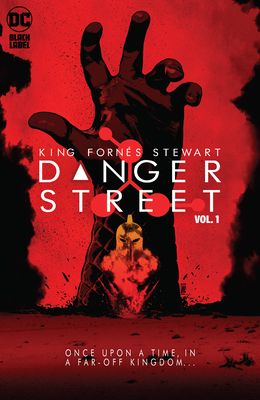
Danger Street #1-6
Danger Street, Vol. 1
Joining the Justice League is a goal for any superhero, but what happens when a quest for membership takes a sinister turn?
Join Starman, Metamorpho, and Warlord as they look to prove themselves worthy by summoning and defeating Darkseid in battle. Soon they’ll learn that calling upon a New God never ends well, and their world is headed for a crisis as a result! The journey to save the day will be a treacherous one filled with princesses, knights, and all kinds of monsters. Each person the heroes encounter plays a crucial role in this sprawling yet gripping narrative that is a little bit silly, a whole lot dark, and completely cool. Expect the unexpected with a supporting cast featuring Manhunter, Lady Cop, the Green Team, and the Creeper!
Tom King and Jorge Fornés ( Rorschach ) return for an unforgettable tale that reimagines the characters and their stories. A multicharacter, multilayered crime drama starring some of DC’s most obscure no one will see it coming, but everyone will want to see where it goes! Collects Danger Street #1-6.
Join Starman, Metamorpho, and Warlord as they look to prove themselves worthy by summoning and defeating Darkseid in battle. Soon they’ll learn that calling upon a New God never ends well, and their world is headed for a crisis as a result! The journey to save the day will be a treacherous one filled with princesses, knights, and all kinds of monsters. Each person the heroes encounter plays a crucial role in this sprawling yet gripping narrative that is a little bit silly, a whole lot dark, and completely cool. Expect the unexpected with a supporting cast featuring Manhunter, Lady Cop, the Green Team, and the Creeper!
Tom King and Jorge Fornés ( Rorschach ) return for an unforgettable tale that reimagines the characters and their stories. A multicharacter, multilayered crime drama starring some of DC’s most obscure no one will see it coming, but everyone will want to see where it goes! Collects Danger Street #1-6.
192 pages, Paperback
Published November 28, 2023
Ratings & Reviews
Friends & Following
Create a free account to discover what your friends think of this book!
Community Reviews
Displaying 1 - 30 of 110 reviews

April 21, 2024
This is another one of those books where Tom King takes noble, innocent or happy superheroes from my youth and shits all over them. At least this time, he had the grace to choose a group of B-, C-, and D-list characters that are mostly so obscure that even I, familiar with all of them for decades, can't find it in myself to care how roughed up they get. Still, I don't really much care for the story either, not because it's mean-spirited toward the characters but because it's just sort of boring and familiar: the end of the world is looming in the background as heroes in the foreground try to figure out who killed one member of the cast.
Even so, I'm giving the book a thumbs up because I admire the trick that King is trying to pull off here as he retells a 1970s DC Comics anthology series -- 1st Issue Special
-- as a coherent epic. It's sort of like what Alan Moore did with the Charlton characters in Watchmen, but King isn't changing the character names and even tries to match the order of the covers and chapter titles to the order of the original series. Any skilled performer can cover a hit song and make it sound decent, but what chutzpah to remix a song that tanked on the charts in the original release.
So back in 1975 1st Issue Special debuted as a showcase to ostensibly introduce new characters or relaunch old characters. It ran for thirteen issues but most of the concepts were dead on arrival with only The Warlord and Return of the New Gods going to full series afterward (well, maybe not "full" as the The New Gods relaunch only lasted eight issues compared to The Warlord's 133). The issues:
#1: Atlas by Jack Kirby
#2: The Green Team by Joe Simon and Jerry Grandenetti
#3: Metamorpho The Element Man by Bob Haney and Ramona Fradon
#4: Lady Cop by Robert Kanigher and John Rosenberger
#5: Manhunter by Jack Kirby
#6: The Dingbats of Danger Street by Jack Kirby
#7: The Creeper by Michael Fleisher and Steve Ditko
#8: The Warlord by Mike Grell
#9: Dr. Fate by Martin Pasko and Walt Simonson
#10: The Outsiders by Joe Simon and Jerry Grandenetti
#11: Code Name: Assassin by Gerry Conway and Nestor Redondo
#12: Starman by Gerry Conway and Mike Vosburg
#13: Return of the New Gods by Gerry Conway and Mike Vosburg
Here's hoping King can actually make me care about the characters and story in the concluding volume, but I'm pretty doubtful at this point.
FOR REFERENCE:
Originally published in single magazine form in Danger Street #1-6.
Contents: Book One. Once Upon a Time, in a Far-Off Kingdom -- Book Two. The Green Team -- Book Three. Metamorpho -- Book Four. Lady Cop -- Book Five. Manhunter -- Book Six. The Dingbats of Danger Street -- Variant Cover Gallery
Even so, I'm giving the book a thumbs up because I admire the trick that King is trying to pull off here as he retells a 1970s DC Comics anthology series -- 1st Issue Special
-- as a coherent epic. It's sort of like what Alan Moore did with the Charlton characters in Watchmen, but King isn't changing the character names and even tries to match the order of the covers and chapter titles to the order of the original series. Any skilled performer can cover a hit song and make it sound decent, but what chutzpah to remix a song that tanked on the charts in the original release.
So back in 1975 1st Issue Special debuted as a showcase to ostensibly introduce new characters or relaunch old characters. It ran for thirteen issues but most of the concepts were dead on arrival with only The Warlord and Return of the New Gods going to full series afterward (well, maybe not "full" as the The New Gods relaunch only lasted eight issues compared to The Warlord's 133). The issues:
#1: Atlas by Jack Kirby
#2: The Green Team by Joe Simon and Jerry Grandenetti
#3: Metamorpho The Element Man by Bob Haney and Ramona Fradon
#4: Lady Cop by Robert Kanigher and John Rosenberger
#5: Manhunter by Jack Kirby
#6: The Dingbats of Danger Street by Jack Kirby
#7: The Creeper by Michael Fleisher and Steve Ditko
#8: The Warlord by Mike Grell
#9: Dr. Fate by Martin Pasko and Walt Simonson
#10: The Outsiders by Joe Simon and Jerry Grandenetti
#11: Code Name: Assassin by Gerry Conway and Nestor Redondo
#12: Starman by Gerry Conway and Mike Vosburg
#13: Return of the New Gods by Gerry Conway and Mike Vosburg
Here's hoping King can actually make me care about the characters and story in the concluding volume, but I'm pretty doubtful at this point.
FOR REFERENCE:
Originally published in single magazine form in Danger Street #1-6.
Contents: Book One. Once Upon a Time, in a Far-Off Kingdom -- Book Two. The Green Team -- Book Three. Metamorpho -- Book Four. Lady Cop -- Book Five. Manhunter -- Book Six. The Dingbats of Danger Street -- Variant Cover Gallery

June 11, 2024
An enjoyable mystery starring a group of DC’s fairly obscure characters. Not what I thought it was going to be but definitely looking forward to volume 2.

January 21, 2024
I thought this whole story was just 6 issues...BUT IS IT NOT AND NOW I HAVE TO WAIT FOR VOL. 2??
This is bull droppings, I tell you.
This is bull droppings, I tell you.

December 4, 2024
Pretty good!

February 8, 2024
If this is another Tom King 12-issue thing, I wish DC would just collect them in one volume, like they did with RORSCHACH and STRANGE ADVENTURES and a bunch of previous ones.....splitting them up like this does no good to anyone.
I have no idea what this is about, because the whole volume is set-up, and since I thought it was a self-contained story told in one book, I was pissed to see a "To be continued..." at the end...But the mystery has me hooked, so...I'll be back.
I have no idea what this is about, because the whole volume is set-up, and since I thought it was a self-contained story told in one book, I was pissed to see a "To be continued..." at the end...But the mystery has me hooked, so...I'll be back.

July 27, 2026
I was hoping to give this series a higher rating but it really disappointed me with some of the twists given to some of these characters.
Most of these characters were created by DC in the mid-70s as tryouts, but most have been forgotten or used only occasionally. Throwing them all together in one world and tossing the New Gods into the mix just makes it more complicated.
Hope the second volume holds together better than this one.
Most of these characters were created by DC in the mid-70s as tryouts, but most have been forgotten or used only occasionally. Throwing them all together in one world and tossing the New Gods into the mix just makes it more complicated.
Hope the second volume holds together better than this one.

December 10, 2023
When it comes to Tom King, who has tackled some of the most iconic characters in DC Comics whether it is through long runs or limited series, his best work is where he dabbles with the most obscure characters and places them in situations that step outside the conventions of superhero storytelling. Look no further than Mister Miracle that King worked on with frequent collaborator Mitch Gerads, placing the New Gods into a psychological drama about war, depression and questioning one’s reality.
In the case of his new limited series, Danger Street, where he reunites with another frequent collaborator Jorge Fornés, King looks back at a certain period in DC’s history. In the mid-seventies, DC published 1st Issue Special, a comics anthology series that showcased a new possible first issue of an ongoing series each month, with some issues debuting new characters and others reviving dormant series from DC's past. To prove themselves that they can be part of the Justice League, Starman, Metamorpho, and Warlord plan to summon and defeat Darkseid in battle, only to take a sinister turn, starting with a couple of murders.
From its initial issue, King is playing the long game from establishing all its players, from Liza Warner/Lady Cop who is constantly having trouble with the Dingbats of Danger Street, to the three C-list superheroes who try and rise above the challenge, only to mess up majorly. Considering some of these characters weren’t technically superheroes, though you get the odd heroes like The Creeper, King places all of them in a crime narrative that weaves in conspiracy theories and Fourth World shenanigans, all of which narrated by Doctor Fate’s helmet.
If you have read plenty of King’s titles, you do expect a familiar bag of tricks from the writer and upon reading the first volume of Danger Street, it felt reminiscent of King’s earlier work, Heroes in Crisis. Whereas that comic was a murder mystery that centred around the A-list/-B-list heroes, Danger Street is about the murderers upfront in the shape of obscure characters like Lady Cop questioning the point of having superheroes when even Superman can’t really hear everything.
King is also a fan of Alan Moore, a writer who has cynically deconstructed superheroes through works like Watchmen, and King approaches the Creeper in a similar way. Created by Steve Ditko, Jack Ryder is a talking news head that goes on about a supposed terrorist group known as the Outsiders, but at night, he is incredibly violent and enjoys beating a petty criminal to a pulp as the Creeper. Serving as a scary piece of social commentary, Ryder’s subplot gets better with a single appearance of Batman, proving that King is one of the best Batman writers.
Having worked on Batman and Daredevil, proving that he is the new David Mazzuchelli, Jorge Fornés has always embraced a classical presentation to his comics, using techniques like the traditional nine-panel grid. Despite the modern setting, there is a 70s aesthetic to the characters such as Manhunter and the New Gods looking very much how the late, great Jack Kirby designed them. Please note that this is a DC Black Label title with content that will be disturbing for young readers, such as harm towards young children, no matter how nasty they are depicted.
As with The Human Target, it is frustrating that the twelve-issue series Danger Street is being sold as two separate trades, with the second volume being released later next year. However, based on these first six issues, King and Fornés may be moving at a slow pace, but they are telling a compelling narrative that places obscure DC characters into a crime saga that continues to expand into unexpected territories.
In the case of his new limited series, Danger Street, where he reunites with another frequent collaborator Jorge Fornés, King looks back at a certain period in DC’s history. In the mid-seventies, DC published 1st Issue Special, a comics anthology series that showcased a new possible first issue of an ongoing series each month, with some issues debuting new characters and others reviving dormant series from DC's past. To prove themselves that they can be part of the Justice League, Starman, Metamorpho, and Warlord plan to summon and defeat Darkseid in battle, only to take a sinister turn, starting with a couple of murders.
From its initial issue, King is playing the long game from establishing all its players, from Liza Warner/Lady Cop who is constantly having trouble with the Dingbats of Danger Street, to the three C-list superheroes who try and rise above the challenge, only to mess up majorly. Considering some of these characters weren’t technically superheroes, though you get the odd heroes like The Creeper, King places all of them in a crime narrative that weaves in conspiracy theories and Fourth World shenanigans, all of which narrated by Doctor Fate’s helmet.
If you have read plenty of King’s titles, you do expect a familiar bag of tricks from the writer and upon reading the first volume of Danger Street, it felt reminiscent of King’s earlier work, Heroes in Crisis. Whereas that comic was a murder mystery that centred around the A-list/-B-list heroes, Danger Street is about the murderers upfront in the shape of obscure characters like Lady Cop questioning the point of having superheroes when even Superman can’t really hear everything.
King is also a fan of Alan Moore, a writer who has cynically deconstructed superheroes through works like Watchmen, and King approaches the Creeper in a similar way. Created by Steve Ditko, Jack Ryder is a talking news head that goes on about a supposed terrorist group known as the Outsiders, but at night, he is incredibly violent and enjoys beating a petty criminal to a pulp as the Creeper. Serving as a scary piece of social commentary, Ryder’s subplot gets better with a single appearance of Batman, proving that King is one of the best Batman writers.
Having worked on Batman and Daredevil, proving that he is the new David Mazzuchelli, Jorge Fornés has always embraced a classical presentation to his comics, using techniques like the traditional nine-panel grid. Despite the modern setting, there is a 70s aesthetic to the characters such as Manhunter and the New Gods looking very much how the late, great Jack Kirby designed them. Please note that this is a DC Black Label title with content that will be disturbing for young readers, such as harm towards young children, no matter how nasty they are depicted.
As with The Human Target, it is frustrating that the twelve-issue series Danger Street is being sold as two separate trades, with the second volume being released later next year. However, based on these first six issues, King and Fornés may be moving at a slow pace, but they are telling a compelling narrative that places obscure DC characters into a crime saga that continues to expand into unexpected territories.

May 18, 2024
Only Tom King can make me care about superheroes/villains that I’ve never heard of before. And make me fall in love with the story too. Halfway through, and enjoying it very much.

January 29, 2025
Got tired of trying to find coherence between obscure subplots with characters I barely know by name after 3 issues. Life’s too short...

March 24, 2024
This is (probably) prime Tom King material.
Obscure DC heroes in a more adult storyline..but weird plot twists and plenty of surprises.
I think I pieced the general plot lines together..but I'm sure I'll be thrown by Volume 2.
Obscure DC heroes in a more adult storyline..but weird plot twists and plenty of surprises.
I think I pieced the general plot lines together..but I'm sure I'll be thrown by Volume 2.

Read
February 8, 2024I'd been enjoying Tom King comics more lately, thought maybe he'd got his Alan Moore fixation out of his system by doing Rorschach (not that I'd touch that one with someone else's bargepole). So a series by him starring Metamorpho, Warlord and the blue disco Starman sounded fun. Well, fun is the one thing this is absolutely determined not to be. Those three have an obviously idiotic plan to get a Justice League invitation, in the course of which they kill a New God who is apparently vital to the running of the universe, and also one of the Dingbats - against strong competition, the Kirby kid gang about whom everyone cares least, and based on this showing, no wonder (one of the survivors' only discernible character trait is liking grapes). Another kid gang of similar vintage, the Green Team, are now evil because they're rich, and yet not even as interesting as our own world's fuckwit boy billionaires. They own a sub-Fox 'news' channel which employs Jack Ryder. And so on. I can see the need to update some of these old characters if you're going to exhume them, not least Lady Cop (yes, she really is that self-explanatory, and the worst bit is that was a seventies not a thirties character), but none of these updates are particularly interesting - they all just end up as a bunch of unhappy fools, and we get plenty of that in the real world. On top of which, where Human Target at least made up for questionable characterisation with that gorgeous Smallwood art, here everything looks as drab as it reads - even the Creeper's colours don't pop. The most forgiving interpretation I can put on it is that it's meant to be an indictment of the trend for comics where heroes fight each other instead of villains, but if so it's made the same glaring mistake as those endless Geoff Johns comics where bitter, overpowered characters tear Silver Age oddballs in half while screaming that comics used to be fun, and contributed to exactly the trend it's supposedly against. Though even that wouldn't explain why the Helmet of Fate is narrating everything as though it's a fairytale. Should a point become apparent in the second volume, somebody please let me know.

December 7, 2023
I had placed myself on aTom King exile after the debacle known as the Batman/Catwoman wedding. I’m sure no one at DC Comics had any inclination of letting those two characters actually get married, so it’s probably not King’s fault that the whole storyline seemed like a gigantic bait-and-switch. But in addition to that, I pretty much hated his previous collaboration with artist Jorge Fornés, Rorcharch, which was a six-issue mini-series stretched out to 12, and Strange Adventures (with art by Evan Shaner and Mitch Gerads), which was … well, ditto.
But I was fascinated by the premise of Danger Street, so I picked up a copy of volume 1 (luckily at a half-off sale), which collects the first six issues of—again—yet another 12-issue mini-series (or is that a maxi-series?). That premise is to take all the characters that appeared in DC’s 1970s-era tryout series, 1st Issue Special, and combine them into one story. That includes Jack Kirby’s final work for DC—Atlas, Manhunter, and the Dingbats of Danger Street (hence the title)—Joe Simon’s Green Team, Lady Cop, the “blue” version of Starman, Mike Grell’s Warlord (the only real hit from this series), an early version of The Outsiders, Doctor Fate (made memorable by the early art of Walter Simonson), the Creeper, and a continuation of Kirby’s New Gods, sans Kirby. None of those books were great. And the conceit of combining all of these characters into one story—no matter how brilliant that story is—relies on someone, ANYONE, remembering this all-but-forgotten title from almost 50 years ago. But hey … that’s comics today. At least comics from the Big Two. 50-year old continuity is king.
Having said all that, I did enjoy this first volume and will definitely pick up the concluding second volume when it comes out. King tells the story in an entertaining fable-like fashion, with princes and princesses, knights and ogres, monsters and gods. Essentially it’s the tale of Warlord and blue Starman trying to get into the Justice League. They fail miserably and cause the death of one young character. I admit, I have not read any of the 1st Issue Special books since they first appeared, so I kind of—at times—got my Green Team mixed up with my Dingbats, but a cooler head persevered and an enjoyable tale ensued. So, Tom … you’re okay again in my book. For now.
But I was fascinated by the premise of Danger Street, so I picked up a copy of volume 1 (luckily at a half-off sale), which collects the first six issues of—again—yet another 12-issue mini-series (or is that a maxi-series?). That premise is to take all the characters that appeared in DC’s 1970s-era tryout series, 1st Issue Special, and combine them into one story. That includes Jack Kirby’s final work for DC—Atlas, Manhunter, and the Dingbats of Danger Street (hence the title)—Joe Simon’s Green Team, Lady Cop, the “blue” version of Starman, Mike Grell’s Warlord (the only real hit from this series), an early version of The Outsiders, Doctor Fate (made memorable by the early art of Walter Simonson), the Creeper, and a continuation of Kirby’s New Gods, sans Kirby. None of those books were great. And the conceit of combining all of these characters into one story—no matter how brilliant that story is—relies on someone, ANYONE, remembering this all-but-forgotten title from almost 50 years ago. But hey … that’s comics today. At least comics from the Big Two. 50-year old continuity is king.
Having said all that, I did enjoy this first volume and will definitely pick up the concluding second volume when it comes out. King tells the story in an entertaining fable-like fashion, with princes and princesses, knights and ogres, monsters and gods. Essentially it’s the tale of Warlord and blue Starman trying to get into the Justice League. They fail miserably and cause the death of one young character. I admit, I have not read any of the 1st Issue Special books since they first appeared, so I kind of—at times—got my Green Team mixed up with my Dingbats, but a cooler head persevered and an enjoyable tale ensued. So, Tom … you’re okay again in my book. For now.

March 26, 2024
Dec 2024 addendum: Bumping up to five stars. Tom King juggles so many disparate elements here, yet it's an absolute page-turner.
Original review: Tom King digs deeeeeeeep into the DC bag of lost toys for Danger Street. And, no surprise, churns out an engaging, fascinating, twisty-turny adventure. Don't bet against ol' T.K.
There are several threads here, more than usual for King, but the weave comes together by the end of this first volume (hello, DC, can you just give me the full story at once? thx). Fate's helm narrates a tale in which a trio of D-list heroes steal the helm in a very failed attempt to prove themselves worthy of the Justice League. Meanwhile, the Dingbats gang (who reside on the titular Danger Street) engage in lighthearted battle with Lady Cop (who has a mysterious dark past) before, unexpectedly, a stray bolt from the heroes' battle kills a Dingbat, as well as a New God. Cue the murder mystery!
Meanwhile meanwhile, a washed-up anchorman (and sometime vigilante named Creeper) gets a new job on a Fox News-style channel owned by the Green Team, a corporation composed of violent billionaire teens (um, what?). These stories intersect as the New Gods back on Apokolips put out a kill order on those who killed the New God - and the assassin goes after the Green Team (for reasons I can't quite recall) and the Justice League tryouts.
It's a big story with dozens of moving parts, but it's never difficult to follow (though I have no idea where it's going to end up). Each character is distinct and draws you in, despite everyone getting relatively little screentime. Danger Street is a total oddity, nothing like The Human Target which I just finished, but I'm very onboard.
And and and the artwork! Jorge Fornes is killing it here.
Original review: Tom King digs deeeeeeeep into the DC bag of lost toys for Danger Street. And, no surprise, churns out an engaging, fascinating, twisty-turny adventure. Don't bet against ol' T.K.
There are several threads here, more than usual for King, but the weave comes together by the end of this first volume (hello, DC, can you just give me the full story at once? thx). Fate's helm narrates a tale in which a trio of D-list heroes steal the helm in a very failed attempt to prove themselves worthy of the Justice League. Meanwhile, the Dingbats gang (who reside on the titular Danger Street) engage in lighthearted battle with Lady Cop (who has a mysterious dark past) before, unexpectedly, a stray bolt from the heroes' battle kills a Dingbat, as well as a New God. Cue the murder mystery!
Meanwhile meanwhile, a washed-up anchorman (and sometime vigilante named Creeper) gets a new job on a Fox News-style channel owned by the Green Team, a corporation composed of violent billionaire teens (um, what?). These stories intersect as the New Gods back on Apokolips put out a kill order on those who killed the New God - and the assassin goes after the Green Team (for reasons I can't quite recall) and the Justice League tryouts.
It's a big story with dozens of moving parts, but it's never difficult to follow (though I have no idea where it's going to end up). Each character is distinct and draws you in, despite everyone getting relatively little screentime. Danger Street is a total oddity, nothing like The Human Target which I just finished, but I'm very onboard.
And and and the artwork! Jorge Fornes is killing it here.

January 5, 2024
Rua Perigo tem como premissa resgatar personagens C e até Z da DC Comics em uma trama de crime extraterrestre. King e Fornés pegam personagens menos visados como o Metamorfo, Starman (Azul), Guerreiro e misturam com outros que talvez a maioria dos leitores nunca tenham ouvido falar como os Dingbats, os Verdinheirados e a Dona Tira. Juntam tudo numa mistura nada homogênea e botam no forno para pegar fogo. Mas a receita, que tinha tudo pra satisfazer os comensais, acaba crua e sem sabor, isso porque King coloca muito mais elementos, textos e baderna numa história em quadrinhos, que simplificada ficaria uhlala! Os desenhos de Jorge Fornés são sensacionais, emprestam todo um tom noir e vintage para a trama. Os personagens são interessantes e bem escolhidos, mas todos falam demais, demais, demais. O quadrinho também tem muitos quadros por página e muito texto por página, tornando ele carregado e enfadonho como aqueles outros trabalhos do Tom King que as pessoas não gostam. Infelizmente, um quadrinho que capturou muito a minha atenção, dessa vez não atingiu minhas expectativas.

April 10, 2025
Maybe Tom at his trollest. 3.5
May 25, 2026
This is a very slow burn but...I'm digging it.
I like the fact we bring in characters not really every talked about like Warlord and such. I also like the idea behind the Manhunter and man, does he hunt. The art, as always, is reall good. I think the teenage billionaire evil guys are just okay but everything else in this run from the kids from danger street, the Lady Cop, to the accidental murder of a kid, all work really well for mystery. Eager to see where we go on the back half.
I like the fact we bring in characters not really every talked about like Warlord and such. I also like the idea behind the Manhunter and man, does he hunt. The art, as always, is reall good. I think the teenage billionaire evil guys are just okay but everything else in this run from the kids from danger street, the Lady Cop, to the accidental murder of a kid, all work really well for mystery. Eager to see where we go on the back half.

December 1, 2023
4.5 stars
I mostly picked this up for the cover and title, but I was not disappointed. Really looking forward to the next volume.
I mostly picked this up for the cover and title, but I was not disappointed. Really looking forward to the next volume.
August 9, 2025
Very slow moving and, at times, confusing but colour me intrigued by the mystery. Fornes' art is also fantastic looking!
A lot of typical Tom King-isms that don't do any favours: overwritten dialogue/lame 'jokes', overuse of wingdings, and people talking at each other (not listening and having conversations).
I noticed some strange visual/narrative inconsistencies too:
-Is that a bloody pen and neck wound on the middle panel of #4's final page?
-Somebody is clearly shot in the chest (via the splatter and visible wound) in #5, but the very next page only shows a 'minor' leg wound.
Let's see if Vol. 2 ties up the mystery well.
A lot of typical Tom King-isms that don't do any favours: overwritten dialogue/lame 'jokes', overuse of wingdings, and people talking at each other (not listening and having conversations).
I noticed some strange visual/narrative inconsistencies too:
-Is that a bloody pen and neck wound on the middle panel of #4's final page?
-Somebody is clearly shot in the chest (via the splatter and visible wound) in #5, but the very next page only shows a 'minor' leg wound.
Let's see if Vol. 2 ties up the mystery well.

July 11, 2024
I don't usually write reviews but this was awful enough that it deserved one. Tom King is usually a hit or miss for me but this is a collection of all his worst writing quirks put together but it almost borderlines in parody. The story is pretty boring and at least in this volume doesn't lead anywhere. I'll read volume 2 later in the year but just because im a completionist. I wouldn't recommend this one to anybody

August 31, 2023
Prima parte.
Non si capisce dove vuole arrivare.
Spero in una seconda parte (e un finale) più convincente.
Non si capisce dove vuole arrivare.
Spero in una seconda parte (e un finale) più convincente.


August 30, 2024
WTF did I just read? No clue so discombobulated.
For the rest of my review, visit my Vlog at:
https://youtu.be/e8fyJdt8iWA
Enjoy!
For the rest of my review, visit my Vlog at:
https://youtu.be/e8fyJdt8iWA
Enjoy!

January 27, 2025
I love the art of Jorge Fornés but I don't like the storytelling of Tom King. It's like he's trying to imitate The Watchmen.

August 10, 2024
I'm loving this maxiseries. The artwork by Jorge Fornés is wonderful. As always, Tom King's narrative prose is comically overwrought and too cute by half.

August 23, 2026
Really a mixed bag... Parts that were amazing, and some that barely made any sense.
July 19, 2024
As in many of his other works, here Tom King rescues completely forgotten fourth-tier DC characters and gives them their best story. In this case, Tom King uses a particularly large cast in a thriller to talk mostly about the meaning of friendship. Some individual issues are brilliant (such as the dueling knights), while others are a bit inconsequential. The art by Jorge Fornes is exceptional and fits the tone of the story perfectly.
I highly recommend reading the whole thing in volumes and not issue by issue. Otherwise, it is very difficult to follow the story. I started reading the series as it came out, but with each new released issue I had to reread the previous ones.
I particularly liked how King and Fornes mix and match in epicity cosmic events involving gods with mundane activities like changing the ink in a printer. In short, it's not King's best work, but it's still great. Of this artistic duo I liked Roschach better.
I highly recommend reading the whole thing in volumes and not issue by issue. Otherwise, it is very difficult to follow the story. I started reading the series as it came out, but with each new released issue I had to reread the previous ones.
I particularly liked how King and Fornes mix and match in epicity cosmic events involving gods with mundane activities like changing the ink in a printer. In short, it's not King's best work, but it's still great. Of this artistic duo I liked Roschach better.

March 19, 2024
Metamorpho trades his arm for Doctor Fate's helmet as he, Warlord, and Starman (Mikaal Thomas, the blue one) foolishly attempt to use the helmet for a JLA membership invitation. But things take a dark turn when they kill a New God and member of the Dingbats, Jack Kirby's kid gang creation that's not the Boy Commandos or Newsboy Legion. Meanwhile, Jack Ryder is hired by the Green Team (another kid gang, but uber rich) to report propaganda on a series of terrorist attacks committed by Manhunter. And Lady Cop (a literal DC character from the 70s) is on the trail of the Dingbat killers.
A lot going on, in other words. It's another Tom King 12-issue puzzle box that darkens minor DC characters, and while the DC nerd in me appreciates the connections (though I'd never come across Green Team and Lady Cop before), I couldn't bring myself to care all that much. The story drags and I still don't know what the whole point is after this first half. Also, the fantasy narration by the helmet doesn't add anything. With all these characters, the story should be more fun than it is.
And I'm getting tired of these Black Label books that bleep out swear words. This book has SO many, and it's annoying to read all those @#&! signs. It says 17+ on the back, surely readers can handle seeing swears? Vertigo books didn't bleep out swears. What's DC afraid of? Does this go back to the Bat-wang controversy? Maybe it's mandated from corporate way up high?
I like Fornes's art, but he was the wrong artist for this book. It needs more pop, more pizzazz. His realistic noir style doesn't suit this superhero mishmash, no matter how "grounded" the story tries to be.
A lot going on, in other words. It's another Tom King 12-issue puzzle box that darkens minor DC characters, and while the DC nerd in me appreciates the connections (though I'd never come across Green Team and Lady Cop before), I couldn't bring myself to care all that much. The story drags and I still don't know what the whole point is after this first half. Also, the fantasy narration by the helmet doesn't add anything. With all these characters, the story should be more fun than it is.
And I'm getting tired of these Black Label books that bleep out swear words. This book has SO many, and it's annoying to read all those @#&! signs. It says 17+ on the back, surely readers can handle seeing swears? Vertigo books didn't bleep out swears. What's DC afraid of? Does this go back to the Bat-wang controversy? Maybe it's mandated from corporate way up high?
I like Fornes's art, but he was the wrong artist for this book. It needs more pop, more pizzazz. His realistic noir style doesn't suit this superhero mishmash, no matter how "grounded" the story tries to be.

January 22, 2024
Varios de los mejores cómics de Tom King han triunfado al darle protagonismo a personajes menos conocidos dentro de las historietas de superhéroes: Supergirl, Vision, Mr. Miracle, Adam Strange, Omega Men, son los mejores ejemplos. Ese magnífico recurso es llevado al extremo en la muy buena "Danger Street" o "Calle peligro", pues acá King escarba en los anaqueles más escondidos de DC y rescata a personajes, varios de los cuales yo creo que ni siquiera sus editores sabían que existían. Lo otro que hermana a la mayoría de los protagonistas de "Danger Street" es que fueron creados en los 70: El Green Team, un grupo de engreídos adolescentes millonarios; los olvidados héroes Warlord y Starman; Lady Cop, una policía atormentada por un crimen de su infancia; y, sobre todo, los Dingbats de Danger Street, una de las creaciones más ignoradas del rey Jack Kirby, a quien King idolotra, y que no son más que una pandilla de niños más traviesos que la media, pero sin poder alguno. A ellos se les unen Metamorpho, Jack Ryder / Creeper, Manhunter, y el panteón del Cuarto Mundo de Kirby: Darkseid y el Highfather. Como se puede apreciar, esto es ñoñería en estado puro. No sólo King rescata a los más olvidados, sino también a varias de las más ridículas creaciones de DC, y los usa para narrar una historia realista de intrigas, asesinatos y profecías apocalípticas. Muy meritorio.
El comienzo es hasta cómico. Metamorpho, Warlord y Starman quieren ingresar a la JLA. Para ello se consiguen -de modo no muy legal-, el yelmo de Dr. Doom, con el cual piensan invocar y derrotar a un villano, lo cual, creen, las conseguirá el respeto de Superman y cía. Pero todo sale mal, pues el invocado no es quien esperaban y, para peor, en la invocación, matan a alguien accidentalmente. Ahí aparece, Lady Cop, quien debe investigar quién ha asesinado a ese alguien (Warlord y los demás abandonan la escena), y que, además, sospecha (con acierto), que de algún modo los Dingbats de Danger Street están involucrados. En la otra línea argumentativa, vemos al Green Teams, estos niños millonarios, siendo cazados uno por uno por el Manhunter, pues se supone que ellos traerán una gran catástrofe al planeta (sin que sepamos bien en qué consiste esa catástrofe). Por su parte, el Green Team contrata a Jack Ryder para que -como periodista-, divulgue información falsa sobre un misterioso grupo, los "Outsiders", a quienes presentan como terrotistas. Y en una tercera línea argumental, vemos a Darkseid, Metrón y el Highfather desesperados pues algo ha ocurrido en la tierra que -admiten-, acarreará la muerte de todo el universo.
Durante la mayor parte de estos seís números estas tres historias corren paralelas, pero sin que se logre comprender qué las une. Y lo maravilloso es que la narración en ningún momento pierde interés, y ese es todo mérito de King. Logra construir una atmósfera de intriga que te mantiene pegado a la página, aunque no sepas qué es lo que está realmente ocurriendo. ¿A qué le temen tanto Darkseid y el Highfather? ¿Quiénes son los Outsiders? ¿Por qué Manhunter quiere eliminar al Green Team? Todo eso comienza a dilucidarse recién al final de este primer tomo recopilatorio, cuando se nos cuenta que, entre otras cosas, Warlord y Starman compraron el yelmo de Dr. Doom al Green Team, o que la persona invocada por aquellos fue el dios Atlas, con lo cual han echado a andar la catástrofe que tanto atormenta a los dioses del Cuarto Mundo.
No está claro tampoco (repito, sólo en estos seis números), qué quiere decir King. ¿Es una historia de crímenes? ¿Es una reflexión sobre el poder? ¿Es una crítica a la ambición desmedida? No lo sabemos aún, pero todavía así -insisto-, la historia en ningún momento deja de ser disfrutable. En esto es esencial el arte maravilloso del español Jorge Fornés, quien ya había trabajado con King en la excelente "Rorschach" (2021). El dibujo pulido y realista de Fornés (muy influido por el David Mazzuccelli de los 80), sirve como contraste perfecto con lo ridículo de los personajes, lo cual es importantísimo. King quiere contar una historia seria con personajes que rozan lo cómico (quién puede tomarse en serio a un grupo de héroes cuya única característica es ser adolescentes y millonarios), de modo que todo el tono de la historia lo sostiene el arte de Fornés, cuyas viñetas, cada una de ellas, son una obra de arte por sí sola.
No queda más que esperar, ansiosos, el segundo tomo recopilatorio.
El comienzo es hasta cómico. Metamorpho, Warlord y Starman quieren ingresar a la JLA. Para ello se consiguen -de modo no muy legal-, el yelmo de Dr. Doom, con el cual piensan invocar y derrotar a un villano, lo cual, creen, las conseguirá el respeto de Superman y cía. Pero todo sale mal, pues el invocado no es quien esperaban y, para peor, en la invocación, matan a alguien accidentalmente. Ahí aparece, Lady Cop, quien debe investigar quién ha asesinado a ese alguien (Warlord y los demás abandonan la escena), y que, además, sospecha (con acierto), que de algún modo los Dingbats de Danger Street están involucrados. En la otra línea argumentativa, vemos al Green Teams, estos niños millonarios, siendo cazados uno por uno por el Manhunter, pues se supone que ellos traerán una gran catástrofe al planeta (sin que sepamos bien en qué consiste esa catástrofe). Por su parte, el Green Team contrata a Jack Ryder para que -como periodista-, divulgue información falsa sobre un misterioso grupo, los "Outsiders", a quienes presentan como terrotistas. Y en una tercera línea argumental, vemos a Darkseid, Metrón y el Highfather desesperados pues algo ha ocurrido en la tierra que -admiten-, acarreará la muerte de todo el universo.
Durante la mayor parte de estos seís números estas tres historias corren paralelas, pero sin que se logre comprender qué las une. Y lo maravilloso es que la narración en ningún momento pierde interés, y ese es todo mérito de King. Logra construir una atmósfera de intriga que te mantiene pegado a la página, aunque no sepas qué es lo que está realmente ocurriendo. ¿A qué le temen tanto Darkseid y el Highfather? ¿Quiénes son los Outsiders? ¿Por qué Manhunter quiere eliminar al Green Team? Todo eso comienza a dilucidarse recién al final de este primer tomo recopilatorio, cuando se nos cuenta que, entre otras cosas, Warlord y Starman compraron el yelmo de Dr. Doom al Green Team, o que la persona invocada por aquellos fue el dios Atlas, con lo cual han echado a andar la catástrofe que tanto atormenta a los dioses del Cuarto Mundo.
No está claro tampoco (repito, sólo en estos seis números), qué quiere decir King. ¿Es una historia de crímenes? ¿Es una reflexión sobre el poder? ¿Es una crítica a la ambición desmedida? No lo sabemos aún, pero todavía así -insisto-, la historia en ningún momento deja de ser disfrutable. En esto es esencial el arte maravilloso del español Jorge Fornés, quien ya había trabajado con King en la excelente "Rorschach" (2021). El dibujo pulido y realista de Fornés (muy influido por el David Mazzuccelli de los 80), sirve como contraste perfecto con lo ridículo de los personajes, lo cual es importantísimo. King quiere contar una historia seria con personajes que rozan lo cómico (quién puede tomarse en serio a un grupo de héroes cuya única característica es ser adolescentes y millonarios), de modo que todo el tono de la historia lo sostiene el arte de Fornés, cuyas viñetas, cada una de ellas, son una obra de arte por sí sola.
No queda más que esperar, ansiosos, el segundo tomo recopilatorio.

May 26, 2024
One of the more inexplicable comics I've read in a while. Not in a plot sense - a bunch of extremely fringe DC characters become entangled in a caper-gone-wrong with cosmic repercussions; it's all pretty legible even if you're only getting half of a drawn-out story here. But in a deeper, "why on earth does this comic exist?" sense.
I'll tell you why it seems to exist. "A 12-issue miniseries doing dark post-Crisis retcons of the FIRST ISSUE SPECIAL characters" is exactly the kind of thing DC would have published in, say, 1989, alongside Howard Chaykin's TWILIGHT and the "Second Crisis" bits of ANIMAL MAN. In fact, once you write that idea out, it feels like a mere parallel universe mishap that they *didn't* publish such a thing, a nagging omission that someone jolly well ought to correct. DANGER STREET is precisely that comic, in look, in concept, and even in execution, with laboured narrative captions offering an oh-so-80s postmodern contrast between the fairytale described and the grubby doings on-panel.
So we have the Green Team as amoral kid billionaires backstabbing each other; Starman, Manhunter and Warlord as pathetic wannabe superheroes trying to scam their way into the Justice League; Beware The Creeper as a Fox News prejudice-peddler. Other characters need less cynicism - Lady Cop gets her histrionic backstory pared away to leave her as a paper-pushing everycop trying to do right in an uncaring world. Codename Assassin and Manhunter don't need many tweaks to function in this mildly grim and slightly gritty milieu. As for the Dingbats Of Danger Street, there's no real way to darken them, so Tom King kills one of them off instead.
So it's an early 20s comic paying tribute to late 80s storytelling and vibes by means of early 70s concepts. It's fairly clever; it's not badly done; but there's an emptiness to this whole setup which makes the whole thing seem even more deeply pointless than most character revivals. What are the ideas here? What is Danger Street *about*?
For a while now people like Rob Liefeld have been publishing comics the main purpose of which seems to be to give readers who liked comics in the 90s some new things which feels just like 90s comics. Tom King appears to be fulfilling that role for the post-Crisis, late 80s era, making revisionist, highly stylised explorations of the DC universe, marinated in a post-Watchmen formalist cynicism.
From an "is this an entertaining comic?" perspective this isn't a bad thing to be doing - that era was the high point of DCs; a reasonable facsimile won't fail to be a solid page-turner, and that indeed is what Danger Street is. But it's unusually pointless - in many ways, comics never actually left the late 80s, and this studious recreation of the post-Crisis aesthetic lacks some of the kitschy pleasure comics pastiches usually offer.
But it also, inevitably, lacks the drive of that era, the way a lot of people from outside the US comics mainstream were suddenly getting to play in that mainstream, and were playing with it in the doomed expectation some of their punky IP-wrecking moves might somehow stick, or at least tell people something about the medium, genre, and universes that had comics in a headlock. Without that context, Danger Street is a story about The Green Team and Lady Cop which apparently exists mostly for readers to go, "haha they remembered The Green Team and Lady Cop". Even in 1988, that would have been a thin thing to hang a book on. Thirty-five years later, and I'm back where I started - why on earth does this comic even exist?
I'll tell you why it seems to exist. "A 12-issue miniseries doing dark post-Crisis retcons of the FIRST ISSUE SPECIAL characters" is exactly the kind of thing DC would have published in, say, 1989, alongside Howard Chaykin's TWILIGHT and the "Second Crisis" bits of ANIMAL MAN. In fact, once you write that idea out, it feels like a mere parallel universe mishap that they *didn't* publish such a thing, a nagging omission that someone jolly well ought to correct. DANGER STREET is precisely that comic, in look, in concept, and even in execution, with laboured narrative captions offering an oh-so-80s postmodern contrast between the fairytale described and the grubby doings on-panel.
So we have the Green Team as amoral kid billionaires backstabbing each other; Starman, Manhunter and Warlord as pathetic wannabe superheroes trying to scam their way into the Justice League; Beware The Creeper as a Fox News prejudice-peddler. Other characters need less cynicism - Lady Cop gets her histrionic backstory pared away to leave her as a paper-pushing everycop trying to do right in an uncaring world. Codename Assassin and Manhunter don't need many tweaks to function in this mildly grim and slightly gritty milieu. As for the Dingbats Of Danger Street, there's no real way to darken them, so Tom King kills one of them off instead.
So it's an early 20s comic paying tribute to late 80s storytelling and vibes by means of early 70s concepts. It's fairly clever; it's not badly done; but there's an emptiness to this whole setup which makes the whole thing seem even more deeply pointless than most character revivals. What are the ideas here? What is Danger Street *about*?
For a while now people like Rob Liefeld have been publishing comics the main purpose of which seems to be to give readers who liked comics in the 90s some new things which feels just like 90s comics. Tom King appears to be fulfilling that role for the post-Crisis, late 80s era, making revisionist, highly stylised explorations of the DC universe, marinated in a post-Watchmen formalist cynicism.
From an "is this an entertaining comic?" perspective this isn't a bad thing to be doing - that era was the high point of DCs; a reasonable facsimile won't fail to be a solid page-turner, and that indeed is what Danger Street is. But it's unusually pointless - in many ways, comics never actually left the late 80s, and this studious recreation of the post-Crisis aesthetic lacks some of the kitschy pleasure comics pastiches usually offer.
But it also, inevitably, lacks the drive of that era, the way a lot of people from outside the US comics mainstream were suddenly getting to play in that mainstream, and were playing with it in the doomed expectation some of their punky IP-wrecking moves might somehow stick, or at least tell people something about the medium, genre, and universes that had comics in a headlock. Without that context, Danger Street is a story about The Green Team and Lady Cop which apparently exists mostly for readers to go, "haha they remembered The Green Team and Lady Cop". Even in 1988, that would have been a thin thing to hang a book on. Thirty-five years later, and I'm back where I started - why on earth does this comic even exist?
November 13, 2024
Tom King, who's an amazing writer, is known for taking some beloved B-list characters from the DC Universe and destroying our childhood notions of them. Case in point: Mister Miracle. Second case in point: Adam Strange. In Danger Street, King dips deep into DC lore with a series that was so unthinkable when it debuted, it really confused a lot of readers and was cancelled pretty darn quick.
Carmine Infantino had the brilliant idea of releasing an anthology series of only first issues. In 1975, First Issue Special released a baker's dozen of issues that introduced readers to all-new concepts such as the Dingbats of Danger Street as well as tried and true DC characters such as Metamorpho and Doctor Fate. Tom King takes all 13 of those characters and teams and creates a unique story filled with intrigue, murder, conspiracy and humor. It unlike anything you've ever encountered in the DC Universe and probably never will.
Metamorpho, Starman and Warlord are all hoping for spots in the Justice League of America. Despite their own heroic exploits over the years, it seems to this trio that they've really got to capture the attention of the League in order to score an invitation. So using the helmet of Doctor Fate and a spell, the heroes decide to summon Darkseid to Earth and subdue him for Superman, Batman and Wonder Woman. Instead, what comes through the portal is a force so destructive and so terrible that when it dies, it threatens the existence of all of the known universe.
Meanwhile, reporter Jack Ryder has been hired to anchor a new 24-hour news channel owned by the boy billionaires, the Green Team. They want Ryder to blame the rise in crime and violence on a mysterious group known as the Outsiders. However, when Ryder in his Creeper form, witnesses an attack on an immigrant by anti-Outsider supporters and it's blamed on the Green Team pariahs, the anchor man will begin to investigate a conspiracy that could destroy the very foundation of the DC Universe!
You might be wondering why I would be willing to read more from Tom King despite how he destroyed some really great characters. Well, he is a good writer. Plus, the inclusion of the New Gods was something that I just couldn't overlook. Besides, this is a Black Label title, so it's not canon. If I end up hating this book I can just say it didn't happen, which is one of the things that makes the DC Black Label line so appealing. They leave the validity of these stories up to the fans as whether they are canonical or not.
The art was good. It wasn't by Mitch Gerads, Tom King's usual artist. But it was good. By Jorge Fornes, it had the quality of a Gerads work but with nostalgic nuances to it.
There's still a second volume to read. So the jury isn't out yet. I love how all these characters from an obscure 70s anthology of which I am a fan of, have all been tossed together in this story. I like the surprises that have awaited inside. That one scene with Darkseid; I never saw it coming in a million years and yet it was so perfect. But I am not a fan of the narrator who weaves this story like a very complicated fairy tale written in iambic pentameter or so other archaic pride. Just give me the story in modern jargon please.
Carmine Infantino had the brilliant idea of releasing an anthology series of only first issues. In 1975, First Issue Special released a baker's dozen of issues that introduced readers to all-new concepts such as the Dingbats of Danger Street as well as tried and true DC characters such as Metamorpho and Doctor Fate. Tom King takes all 13 of those characters and teams and creates a unique story filled with intrigue, murder, conspiracy and humor. It unlike anything you've ever encountered in the DC Universe and probably never will.
Metamorpho, Starman and Warlord are all hoping for spots in the Justice League of America. Despite their own heroic exploits over the years, it seems to this trio that they've really got to capture the attention of the League in order to score an invitation. So using the helmet of Doctor Fate and a spell, the heroes decide to summon Darkseid to Earth and subdue him for Superman, Batman and Wonder Woman. Instead, what comes through the portal is a force so destructive and so terrible that when it dies, it threatens the existence of all of the known universe.
Meanwhile, reporter Jack Ryder has been hired to anchor a new 24-hour news channel owned by the boy billionaires, the Green Team. They want Ryder to blame the rise in crime and violence on a mysterious group known as the Outsiders. However, when Ryder in his Creeper form, witnesses an attack on an immigrant by anti-Outsider supporters and it's blamed on the Green Team pariahs, the anchor man will begin to investigate a conspiracy that could destroy the very foundation of the DC Universe!
You might be wondering why I would be willing to read more from Tom King despite how he destroyed some really great characters. Well, he is a good writer. Plus, the inclusion of the New Gods was something that I just couldn't overlook. Besides, this is a Black Label title, so it's not canon. If I end up hating this book I can just say it didn't happen, which is one of the things that makes the DC Black Label line so appealing. They leave the validity of these stories up to the fans as whether they are canonical or not.
The art was good. It wasn't by Mitch Gerads, Tom King's usual artist. But it was good. By Jorge Fornes, it had the quality of a Gerads work but with nostalgic nuances to it.
There's still a second volume to read. So the jury isn't out yet. I love how all these characters from an obscure 70s anthology of which I am a fan of, have all been tossed together in this story. I like the surprises that have awaited inside. That one scene with Darkseid; I never saw it coming in a million years and yet it was so perfect. But I am not a fan of the narrator who weaves this story like a very complicated fairy tale written in iambic pentameter or so other archaic pride. Just give me the story in modern jargon please.
Displaying 1 - 30 of 110 reviews