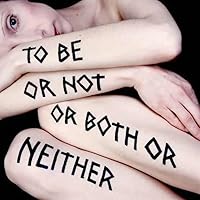
An Astonishment of Fire draws together MacGillivray's extensive research into the life and work of Norwegian-Shetlandic poet Kristján Norge, who vanished from Eilean a’ Bhàis in the Outer Hebrides in 1961. Comprising two previously unpublished manuscripts by Norge, A History of Ghost (1950) and Ravage (1961), this collection also includes rare original material, giving insight into Norge's troubled existence and mysterious disappearance. Through a combination of fragments that include poetry, logbook entries and correspondence between historical figures such as Sir David Brewster and Sir Walter Scott, MacGillivray introduces us to the troubled and mysterious character of Kristján Norge. The book ranges from meditations on Greek optics, to accounts of isolation and demonic transformation on a remote island, to various archival materials including maps and photographs that bring the story of Norge to life. The book includes a QR code which can be used to access extra multimedia material by MacGillivray to further flesh out the world of Kristján Norge.
MacGillivray is a Scottish writer and artist. Her poetry inhabits a rich artistic universe encompassing performance art, song-writing and the use of visual media such as sculpture and photography. Her multi-disciplinary practice gives her words an imaginative scope which few young poets in the UK can rival.
MacGillivray's work summons forth a pantheon of muses, outlaws and showmen from the dark corners of Scottish and American history, animating their world with an incantatory free verse that is shockingly contemporary and hauntingly ritualistic. The poems excavate passion and transgression with precision and sympathy, allowing the reader to witness history from surprising new angles.
Under her birth name Kirsten Norrie, she has a Doctorate in Performance and Scottish Identity, for which she studied at the Ruskin School of Drawing and Fine Art, Oxford University. Her thesis is titled Cloth, Cull and Cocktail; Anatomising the Performer Body of 'Scotland'. The wealth of academic research she undertook as part of this finds further expression in her debut collection, The Last Wolf of Scotland. This work treads a fine line between surreal reality and imaginative abstraction, in order to trace the violence through which national mythologies are forged and perpetuated, from the wilderness of the Scottish Highlands to the piratical showmanship of the wild west.
Her poetry has been published in ASLS New Scottish Writing and Magma; her art criticism in Performance Research and several editions of Art Monthly. She has performed alongside writers such as Alan Moore, Don Paterson, Brian Catling and Iain Sinclair. The Last Wolf of Scotland was published in October 2013.
I wanted so badly to like this book. The idea of it is so cool. The concept of a fake biography/analysis of a poet's life and work and disappearance is so cool. Unfortunately, this book was so unbelievably dense, and not in a way that made it interesting. If it was 50-100 pages shorter, I think I could have withstood the slowness, but instead it felt like such a slog. I kept thinking "Well, I'll just read another 10 pages and maybe something will make sense or something will happen", and it was like that for a good 200 pages. I kept waiting for this book to *do* something, and it didn't.
I also think it wasn't sure what it wanted to be, and unfortunately its attempts to be about 4 different genres or ideas was detrimental. The book opens with a very academic, journalistic voice, the voice of a biographer or a literary analysis. I would describe the first part of this book as a novel that wants to be nonfiction, that is so convinced of its nonfiction-ness that it completely believes its own delusion. Which is a really interesting way to write. House Of Leaves is similarly convinced of its own nonfiction-ness, but by its very nature the formatting constantly reminds the reader that it's fake. Ravage doesn't have that. Ravage is totally deluded and up until the middle of the book I was happy to ride that delusion. The end of the book suddenly became a ghost story, a horror story, a fantasy, when previous to this it had felt much more academic. I don't mind a twist ending, a change-up, but the entire novel is so stylistic on its own that to change it up in the last 10 pages feels like a cop-out, like MacGillivray/Norrie wasn't sure how to end it and so took the easier way out, a supernatural forces deus ex machina or hand-waving. So much of this book is logical, is rooted in reality, even when Kristjan is delusional and raving about demons and about mnemonics and all that, there is never ever the sense that there is even a whisper of a chance that supernatural or otherworldly forces could be at play. Which, yes, could be a mechanic of the twist at the end, but instead it felt like a cheap surprise, contrived and uncomplicated where the rest of the book was complicated and strange.
Unfortunately, I think it is really hard for a single author to hide their own voice when writing in a nonfiction style, or when writing a very unusual genre like this one. While the academic voice at the beginning was, for the most part, convincingly detached, there were moments of odd phrasing that did feel strange. Then the part of the book that transcribed Kristjan's works had a much stronger, more individual voice. The parts that were transcriptions of Luce Moncrieff's journals were where that delusion started to crumble and become apparent. The writing as Luce is too similar to Kristjan's poetry, or it's shot through with poetic phrasing in ways that feel strange and jarring. It was hard for me to enjoy Luce's part because it felt too much like the author dragging a non-poetic character through poetry, the way you might drag bread through a tub of butter to make it taste better.
Like I said, this book probably could have had about 50-100 pages cut from it and I think I would have been more willing to play its game. Unfortunately, Kristjan's poetic ramblings read like abstracted Beat cut-up poetry, which is fun and interesting for a short amount of time or when supplemented with coherent thoughts, but becomes tedious when all the poetry is so disjointed. There were points while reading the Kristjan poetry section of the book that I found myself reading words without actually taking anything in, because the flashes of images and unconnected symbolism meant nothing to me, and therefore there was nothing I could connect it to in order to make sense. Which I'm sure is in part what the author was trying to do, but 100 pages of that becomes a serious slog.
So, two stars for this book, because I think the concept is really cool. The execution is, unfortunately, too long and drawn out. It needs either compacting or grounding in order to feel more complete and secure. I can see the sort of Turn Of The Screw-esque, epistolary novel tradition that this book is influenced by, but I think it needed to decide whether it was going to lean more into the epistolary style/nonfiction delusion or into the poetic urges. But the same poetic style bleeding through into all three voice "segments" of the book (the nonfiction biography/analysis at the beginning, Norge's writings in the middle, and Luce's journals at the end) feels jarring and strange.
If this book had tried a little harder to concentrate its style/genre/voice in certain ways, and if it had shaved off some of the more repetitive, abstract bits, I think it would have been very cool. Unfortunately, anchorless, abstract, cut-up poetry turns into nothingness after a while, and I think the lack of true tension build-up in Luce's diary parts (and lack of genuine suspicion re: supernatural forces at play) made the climactic scene just really confusing and forced rather than a natural point of action in the story.