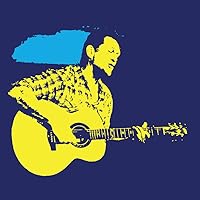
This extraordinary memoir begins with Don Walker's early life in rural Australia and goes up to the late '80s. In mesmerising prose, Walker evokes childhood and youth, wild times in the '70s, life on the road and in Kings Cross, music-making and much more. Shots is a stunningly original book, a set of word pictures - ''shots'' - that conjure up the lowlife and backroads of Australia. Don Walker is one of Australia's leading songwriters - first with Cold Chisel and now as a solo performer and with Tex, Don Charlie. This is his first book.
Laconic and dry. That's probably the write-up you've got in mind for Shots, songwriter Don Walker's first book. And you're probably not all that far wrong. But that reductionism is a disservice: The book is dry, with one economical eye on the door, but there's a lot more going on.
The book is an autobiography, more or less, but it's not a lot like that of his on-again off-again bandmate Tex Perkins, say. It's a collection of images gathered together under the names of places that exist, or are a state of mind - Home, Carr's Creek, Kings Cross, The Road, Paris and so on - but they flit, moment to moment.
You won't get a lot of factual information unless it refers to the road, or to place names, to the whir of changing postcodes as wheels rip by. Names and dates are ephemera, forgotten, while it's the stuff you wouldn't normally countenance - the way light plays across a shitty hotel window, the cost of a grim tea as commuters pass, the increasing knowledge that you're stuffed which suffuses the body as a cheque fails to turn up and you're stuck cashless - that takes the central role.
You will learn stuff about Walker, though. I had no idea he had been a bit of a physics gun, say, that before Cold Chisel he'd modelled airflows for bomber pods. But then, the stuff we already know - the rise of that band to a thing of Southern Cross tatt-level fetishism, a sort of rocket fuel-soaked penates for the ANZAC spirit - is let lie. Sure, there's stuff about the band in there, but it's not glorified: it's shit sets and siphoning fuel, because the awards and the success, well you already know all that.
I assume the title refers to the photographic moment - the snapshot, something selectively caught to emulsion and processed, rather than the continual stream of images on every bloody phone - because each moment is considered, composed. There's a greater narrative we only see a frame of, and that's fine, because like his songs, these moments aren't just meant for us: they're meant for the places and people they document. We're voyeurs, conducted into the smoked-glass vestibule by a dry wit with good taste in shoes.
(Yeah, there's undoubtedly a narcotic connotation at work here too - but fuck, junk isn't as composed as these moments.)
Shots is a great book, because it's unsentimental about the past and about what people do. There's drugs, addiction, struggles with government departments over the future of a child. There's hard graft, free rides and momentary escape. It's nothing if not real, and reminds you that yes, Walker's lyricism is really pretty fucking great. I had no expectations going into the thing, but I can say the quality is hardly a surprise - more a reminder how good he is.
The nearest thing I can liken the book to is to the way, pre-GPS, you'd hit the road with a plan of how to get somewhere. Maybe with a Gregory's in the passenger seat. But at some point on the journey, though you knew your destination, there'd be that moment of elation or panic (depending on your demeanour) when you realised that you only had an idea of how to get there, a vague impression. That the reality was still ahead, black tarmac you hadn't covered yet.
Shots is full of that expectation, that quest to get around the next corner and see what the fuck's going on. And maybe find a good SF novel and a cuppa in the process.
Don Walker is a genius. Every day, his lyrics and melodies fire across building sites and work sheds and are beamed to tractors and mantlepieces and Ford Rangers across Australia.
So maybe you want to get inside the head of the writer of Flame Trees and Khe Sahn and Choirgirl and Cheap Wine and….? Maybe you want to hear his story?
Well, be careful what you wish for! This book is what it says on the cover - Shots. Reading it is doing shots of don’t-ask-just-drink-it-and-while-we’re-at-it-here’s-another hit of Don Walker moonshine. It’s paragraphs, perhaps two pages at most of DW stream-of-consciousness, memory-mine gems - and mullock, so you don’t get the wrong idea about how easy this stuff is to dig up. It’s relational and geographical meditations (you can smell Don’s flat - and some of his compatriots. Petrol, pills, pot and piss…)
Make no mistake, you discover a LOT about Don Walker in these pages. In fact, it’s a bit of a ghost train ride of a book, jerking left and right, a bit of hang on and be ready for whatever Don decides comes next - he is master of the what, who and why of the untidy theme ride murk of memory.
Shots builds its broad cohesion from Don’s unique, philosophical, conversational, poetic, milk-bar-laminex meets metaphysics. Straight-talking one moment, in a 3am post-gig fog the next. The book does hold to the broad narrative arc of Don’s life, but it’s highly selective, very personal and crafted in a form that can take a little careful re-reading along the way to catch the drift and get the good stuff out of it. The arcane and profound and ugly appear suddenly from beneath the upturned stones of a rural coastal childhood, a migration to Adelaide, Melbourne, Paris, Sydney…vignettes showing themselves briefly like slaters, before scuttling to find shelter in fresh shadows. You need to keep your wits about you to catch them. But the writing is immersive, poignant, vivid…certainly got me in.
There’s a touch of Dylan’s Chronicles in Walker’s Shots. They are both master craftsmen, wordsmiths and, in their own ways, enigmas. There’s a sense we all co-inhabit the ordinary and the sublime. Most of us just don’t know it. And most of us aren’t Bob Dylan or Don Walker.
Part of me really wanted the esoteric to intersect with the more straightforward story of a north coast boy becoming Don Walker. Clearly that’s not what Don wanted to give us. On the one hand, he gave us a lot more. But he excluded the story of Cold Chisel, the unfolding of the songs, the path to becoming an iconic part of Australian culture. In fact, getting into Don’s head as Shots does only makes the broader, more straightforward story of Don Walker and The Chisels more enticing. But I don’t want the facts from a music journo. I want this man to tell me the story.
I went from reading this to listening to Don Walker’s songs. I’m not familiar with his solo work. But as a chaser to this book, it was brilliant. If the book feels a bit like Dylan, the music felt a bit like Randy Newman - the phantom storyteller, a shape shifter, a dispenser of drops of musical and lyrical magic potion that transform you. You’ll be Alice tumbling into Walker’s Wonderland, getting glimpses of the profound and the familiar, the ambiguous, the desperate and the downright confusing, all mixed together, somehow leaving you not necessarily wiser but with a mix of exhilaration and terror. As if truth just blew past you like the North Coast mail train, inches away, that close that you know you’re lucky to be alive. And a part of you has been sucked from the familiar, still air swallowed by the slipstream of the Don Walker Express.
Writing style threw me at first but I soon got into the headspace and went with the flow.. So many snippets of a life not many of us get even a sniff of, great imagery, wild times in a rough and tough music world, faded a bit towards the end but guess you just have to pullover somewhere and refuel the best way you can.. Loved the local geographical references, the countless road trips and his love of an endless highway.. second time read for me, Walkers a survivor, waiting now for the new sequel called 'Songs'.. who knew what lasting memories would linger from a boring laundromat in the burbs of Balranald.. Aussie classic
Series of tripped out anecdotes. Damn this is a weird book. Calling it a memoir is a disservice. Seems to somehow sum up a moment time despite or maybe because of its unsettling narration
I love it when you randomly remember books that you read many years ago. Not only because it adds to your tally of read books, but because you can relive the pleasure of reading it back then. This book is a must-read for any Cold Chisel fans, or anyone with an interest in the Australian music industry. Don Walker's stories of life on the road, and the struggles of trying to make it in the music business are an important part of Australian history.
The events described in this memoir are sharply drawn but key moments are often obliquely referenced or insinuated rather than spelled out. Geographical shifts reflect the change that n circumstance as Don negotiated his way through adolescence and his early educational achievements before ultimately choosing a career in music where Don seems to have been the chief negotiator dealing with a series of managers promising the world but delivering little. Few full names are given except for Swanee, Ian Moss, Billy Rowe, Jimmy Little, Paul Hewson, Louise Tillet and a handful of others. But there are lots of stories about drugs and sex and a life on the Cross that sounds little changed since Billy Thorpe penned his own reminiscences about living in the Cross in the 1960s.
There are escapades in the Philippines and trips to China and Japan. Don has a negative outlook on Japan that seems quite fixed. This is Don travelling ‘germ free first class’ on Japan Airlines:
“… translucent food from the sea served by sterilised Android comfort women in surgical masks, no odour as the air-con and turbo-fans whisper us into Narita.” (163)
Don then tells the story of his uncle in Changi and the Burma railway where he was forced to kneel:
“… the exquisite frond of oriental steel, the wet thonk so easily through bone and ligament severing the moment forever from a country farm and mother and the long years in the sun and his children and their children in that moment gone…” (164)
Don’s conclusion?
“Don’t talk to me about civilisation, bar to say we live in a feudal world and man is a feudal creature and all this exquisite butchery from the elegant slit cut below the nose of the seventeenth-century Catholic missionaries crucified upside down to the modern-day tattooed then flayed human hides will within my lifetime prevail over the fleeting tissue of warped and impossible ideas we kid ourselves with in Greater Europe.” (164)
And then there are the moments of utter madness like when he describes sitting in the laundromat:
“You think it’s boring going in there once a week and waiting, how bad is it for the machines chained there day and night? We saw an escaped one once hitchhiking by the side of the road north of Nambour but we didn’t slow down. These roving bands of rogue washing machines roam the badlands outa control, breeding and shuddering through the scrub, sometimes sending a decoy out on the highway in ambush, if you stop they kidnap you off into the mulga and just wash the fuck out of you, don’t be fooled by appearances, those wild washing machines they can move surprisingly fast.” (138)
This story explains perhaps the spaced out look on Don’s face on the front cover?
Probably my favorite songwriter, Don Walker writes his autobiography like his songs - a way with words but brief and to the point. Won't get much about his days with Cold Chisel, it's primarily about his interactions with all sorts of people he encountered throughout his life, including his daughter who he battled for custody from her mother early in her life.
Not your typical memoir, Shots is written in a very loose poetic style giving glimpses into Don Walker’s life.
If you’re expecting Cold Chisel anecdotes you won’t find them, but perhaps some of the stories behind the songs will reveal themselves to you if you are very familiar with the songs and able to read between the lines of the memoir.
I couldn’t get into the writing style. As much as I wanted to love it, I couldn’t understand it. It was unreadable for me and I’m just sad about that because he’s a very talented man.
In clipped prose, Walker conjures up an autobiography quite unlike the norm. More a series of snapshots with a chronological thread, it traces his early life in rural Australia to his time in the Australian music scene. Life in the bush, a crack at uni, boredom in the public service and a struggling muso stuck in Adelaide. The gap – much to the dismay of some readers – is the period of success. I’m happy to take Walker’s word that we’d be bored by that.
That said, there’s enough wild times on the road, sex, drugs and rock ‘n roll and hard-living Kings Cross if that’s what you are after. The vignettes are all evoked in a pared-back but creative and captivating manner.
I enjoyed it, you might enjoy it too. Highly recommended.
Don Walker is one of the country’s finest storytellers, a man who manages to evoke the stories of Australia and Australians with great life, balance and empathy. His memoir is different to any other I’ve read in that it is not told in the standard linear fashion of most bios; born here, went there, did this, here’s a funny story, etc. Rather, it is a collection of personal thoughts and recollections, captured as brief vignettes painted with poetry and the driest of humour. He tells his life as if it were one of his songs. By turns beautiful, dark, violent and hilarious, instead of merely getting the plot of Walker’s life, I felt you really get the story.
finally tracked down this book, been looking to read it since hearing it had come out... took me a while to get into it and adjust to his style, but once in it was an interesting ride. after awhile i started to enjoy his rambling poetry style of writing, and the stories and experiences scraping money together in the early years of touring and living out of shitty hotels were very interesting and eye opening. great songwriter, great storyteller.
World-weary memoir from a man way too smart for the legacy most associate him with. Reflections on small-town upbringing (around the coast and ranges of northern NSW if you know this part of the world), slogging it out on the road, urban ennui. Some sparkling moments of beauty and insight in the stream of consciousness ebb and flow.
on the 2nd read I wasn’t as awed by this as the first time. it does slow down and lose focus toward the end, and parts of it are narratively baffling. but the writing is brilliant and it makes me cry like every 5 pages with its sheer evocative power so still a 4.5. would highly recommend even if you do not care about rock n roll - just brilliant Australian memoir.
A fantastic read. Beautiful, evocative and poetic language. It really was like drinking a lot of shots, but I found myself wanting more. A taste wasn't enough in some ways...
Australia has a beat Poet, and he is Don Walker. Poetic and fluid mental flow of the life of a rock and roll songwriter. Unpretentious, humane and very readable. Recommended.