A gripping memoir that shows what freedom looks like when we choose to examine the uncomfortable past Jane is to the world a charismatic personality – opinionated, an inner-city teacher and public activist, a lover of Italy, proud and successful – who thrives on a carefully crafted life narrative. Susannah, her beautiful only daughter and her intended protégé, senses the stricter, darker truth, and fights to resist the control imposed on her by her mother’s narcissistic tale, especially as Susannah becomes a mother herself. But then Jane at 75, healthy and fit, chooses suicide, leaving her daughter with grief and the unwelcome gift of 45 years of hidden diaries. Daring to “read” Jane after her death is like unlatching Pandora’s Box. For a year, Susannah twists and turns to the truths she uncovers, comparing what she remembers with what her mother put down in words. As Susannah Kennedy re-lives her life through her mother’s eyes, she grapples with the ties between mothers and daughters and the choices parents make.
I can't wait to share READING JANE: A DAUGHTER'S MEMOIR with readers and listeners. It's an exploration of a mother and daughter (me) that I've been told reads like literary fiction. Although it tells the story of my family, I think you'll find yourself with insights into the ways our culture often pretends to be well when we aren't, as well as real-life examples of the many ways parents pass on their emotions or lack of emotions to their children and how that affects the children's lives. It is also about connection and travel and coming of age.
The nitty gritty: READING JANE tells the story of the year I spent reading the 45 years of diaries my mother left me after she chose to end her life. Through her written words, I remember my childhood in new ways and I find out secrets that my mother wanted to put away forever. Because I'm reading them as an adult mother myself, however, I am no longer a passive recipient of her tale. I can draw the traces through the generations and by explaining the connections, can find understanding and try to become a better mother myself.
Who I am: I was born in India and raised in the United States. I was a journalist and then became a social anthropologist, which essentially means I am curious and like to figure out how people and cultures work underneath the surface. My German husband, our three children and I lived in a thatched-roof farmhouse in the countryside outside Hamburg before returning to northern California in the aftermath of my mother's suicide.
Tooting my horn: READING JANE won honorable mention at the 2023 San Francisco Book Festival. It also just received a great Kirkus Review! Short pieces have been published in The Summerset Review, Evening Street Review, Halfway Down the Stairs and Wilderness House Literary Review and (mac)ro(mic).
This was a very thought proving book. I focused on the mother-daughter relationship spirals. It also raised issues of suicide, domestic Violence, women’s roles and how we evolve.
Kennedy's story takes us in and out of her mother's conscientiously daily diaries covering 45 years. Moments described by her mother as experienced by her daughter are vivid and evocative. Jane and her diaries raise provocative ideas of control, death, and narcissism and the author's spirit and intelligence make for an engrossing read. Full disclosure; I am not the Amazon account holder, but her husband.
I could not put this book down and stayed up many a night way too late, mesmerized by the story of a twisted mother/daughter relationship. Susannah’s writing is powerful and her mother, Jane, horrific in her manipulations yet brilliant. How the author did not crack up completely under her mother’s care is a testament to her own strength (therapy helped of course). The book is fascinating.
Susannah Kennedy has a doctorate in social anthropology. At times, while reading her memoir, it felt as if she were approached her mother and their relationship as a case study in human behavior. This is not a criticism. It is to say that Kennedy’s education and training come through on the page. In some ways, she is objective in her approach. But in other ways, readers get the sense that she yearns to understand herself better through knowing her mother and her family.
In Reading Jane, Susannah Kennedy uses her mother’s diaries to guide her through exploration of her mother’s life. Kennedy opens her memoir with a remembering of her mother’s ceremonial journal writing episodes. As a child, she had wanted to read her mother’s diaries, but Jane understandably said no. It might have been less important if Jane had been more open and honest with her daughter throughout her life. But Jane was an enigma until after her death, when these forbidden-to-read diaries served as an access point into Jane’s mind.
In the next chapter, the narrator is forced to identify her mother’s body at the medical examiner’s office after her mother has committed suicide. Kennedy is Jane’s only child, and the burden and trauma are hers alone. The rest of the book is a journey through Kennedy’s attempt to understand why Jane chose to take her own life, why Jane chose to tell Kennedy about it before doing it, and why Jane was the way she was.
In exploring her mother, Kennedy also learns about herself. Moments of mirroring feel most haunting. The last time she saw her mother, Kennedy and her children were visiting her in California. Kennedy sensed her mother’s unrest, but pretended everything was okay, much like her own mother had done at different times in her own childhood.
After her mother dies, Kennedy reads the diaries in an effort to make sense of her mother’s behavior and choices. Her planned suicide is of course sad and shocking, but Kennedy’s re-remembering of her own childhood and her discovery of her mother’s childhood loss and trauma is perhaps sadder. It’s a story of what was never said, never shared and never known. From there it becomes Kennedy's story to write.
It is painful to witness someone's pain. It is joyful to witness someone’s self-discovery. In that way, it was both painful and joyful to read Kennedy’s words.
Thank you #NetGalley and #Sibylline Press for the opportunity to read an advance copy of this memoir.
Reading Jane A Daughter's Memoir by Susannah Kennedy Pub Date 05 Sep 2023 | Archive Date 04 Sep 2023 Sibylline Press Biographies & Memoirs| Nonfiction \(Adult\)| Parenting & Families
Netgalley and Sibylline Press have provided me with a copy of Reading Jane for review:
Initially, I want to say that this was a very impactful book, because it dealt with a very difficult subject, suicide, and reminded me how suicide affects those who are left behind.
In the world's eyes, Jane is an opinionated, inner-city teacher and public activist, a lover of Italy, proud and successful, whose life narrative is carefully constructed. Susannah is her beautiful only child, her intended protege.
Susannah's childhood is chronicled by Jane once a day. During those magnetic twosome years, "Mommy, can I read your diaries?" was a common question. After saying "Some day," Jane changes it to "When you're the age I was when I wrote them," then "Maybe," then "No, probably not."
The diaries recede. Susannah grows up. Jane, who is 75 years old and fit, decides to commit suicide, insisting it will be better for everyone this way. That controlling assessment is wrong from the moment Susannah hears the news and has to identify the body.
She actively resists reading the 45 years of diaries her mother left behind in order to resist the control imposed by her mother's seductive tale. It's like unlatching Pandora's Box when she finally begins to "read" Jane.
For a year, Susannah reads, comparing what she remembers with the strange pull of her mother's public tale. Each memory encased in her body is accompanied by physical symptoms. Then she uncovers yet another secret, one that forever changes her mother.
In the end, Susannah is able to separate, heal, and embrace her own story.
What would you do if, after your mother's death by suicide, you found 45 years' worth of her intimate diaries? That's what happened to Susannah Kennedy, the author of this well-written and expertly paced memoir. Some friends advised Kennedy to burn or throw away the diaries, and when she (and we, as readers) start to delve into them, we can see the possible wisdom of such advice.
Kennedy learns difficult truths about her mother's life and about how her mother (Jane) saw her daughter. Jane wrote often (and often disparagingly) about her daughter, an only child, a hard thing for any child to read. Kennedy also discovers just how obsessed her mother was with dying before she became "a burden."
This is not an easy book to read, but it is a satisfying one. Such a deep dive into a difficult mother-daughter relationship took a lot of courage. Jane’s criticism of her daughter brought up a lot for me — I guess it’s pretty common that parents want to control their children’s minds and bodies. Especially mothers of a certain era imposing their fears and biases on daughters that come of age in different times. Kennedy's story of her mother wanting to medicate away her growing height gave me chills.
Not all of the memoir revolves around her mother: we also learn about the author studying anthropology, traveling the world by herself, and raising kids in Germany with her German husband. I read these experiences as the author seeking out different ways of being in the world -- which helped expand her understanding and counteracted some of her mother's narrow beliefs and inability to love fully.
Susannah Kennedy has pulled off something amazing — she went under, wrestled with demons, and surfaced with important knowledge about her mother and herself. It's knowledge that the rest of us can use, too, as we think about our own lives and our own mothers.
One’s relationship with his/her parent will resound all throughout life. This memoir, Reading Jane, by Susannah Kennedy explores just that, the memories, effect, and trauma of a relationship between a child and her mother. Interestingly enough, Ms. Kennedy explores this relationship through the reading of her mother’s journals. Susannah’s mother has always indicated that she would not leave this life by her own hand, prior to the age of 75. At the age of 75, Jane (Susannah’s mother), is successful at committing suicide and this is how Susannah comes into possession of the journals, spanning over 45 years. Reading these journals uncovers a lot of feelings and thoughts for Susannah. Exploration of her mother’s life allows Susannah to remember and explain events in her own life, as her views at times, and remembrances differ from that of her mother’s. While her relationship with her mother was fraught with pain, the reading of her mother’s journals allows Susannah to gain a greater understanding of her mother and her personality. The writing was easy to read and the book flowed. I found myself invested in the characters and events. My heart ached for the relationship that Susannah did have for her mother and the loss of the one that she yearned for. Thank you to NetGalley and the publisher for the advance review copy in exchange for my honest review.
From the first word, Reading Jane captivated me in everyway. Kennedy is a gifted writer and her prose alone will hold your attention, but more than that, this book centers on the real debate about aging and dying in our modern culture. Whether you agree with Jane's decision to take her own life while she was still able to make such a choice, as her diaries reveal, such a choice was completely inline with a personality like Jane's. Add to that her sensitive, poetic daughter Susannah, and an abusive ex-husband, and you have a family story filled with pain, beauty, and lessons that any of us can relate to. As my own mother ages in a not so graceful way, I have also wondered just how long one must live. Who do we live for? Our children? Our spouse? Our grandchildren? Our legacy? Our God? Why do we remain alive even after the body has worn itself to tatters, using medical technology to keep us breathing but perhaps without our own mind to navigate our humanity? What is the purpose for all of this? And at the heart of it all...what does it mean to be a mother and daughter? How do we go into the dark night together? How does a mother's aging prepare her children for their own end? Reading Jane is truly a gift to this world.
Judging from Reading Jane's success, I guess I'm a minority of one. I am not a fan of Susannah Kennedy. This book, not to mention its author, bugged the heck out of me.
A lot of people grow up with a difficult parent or two. Most of us don't publish a highly successful memoir providing the details.
Not that there's anything inherently wrong with that, usually, but the cool thing about writing about parents after they're dead is that you get the final word. It's a solemn responsibility. The dead are helpless. They can never argue their case.
Jane will forever be the Jane that is between the pages of her daughter, Susannah's, book. Meanwhile Alan, Susannah's drunken wife-beating father comes off as the second of Jane's victims, after Susannah.
It's not that I'd have liked Jane, it's that I also don't like Susannah. Jane would never admit to being wrong, she never considered herself at fault. That's unfortunate, but you know who else never, ever was in the wrong? Yeah. Susannah.
Susannah is highly...offended I think would be the word...by her mother's suicide. Hurt, saddened? Maybe not so much. Toward the end of the book Susannah writes, "My mother would not want to be brought back. And I didn't want her here."
Which left me asking her, In that case, what's the problem? What's the point of this memoir, Susannah?
The writing is worthy of 4-stars; however, I came away irritated and feeling as if the story could never be completed but this could be a projection.
I did wonder why the author continued to communicate with her volatile mother when the option of no-contact would have been easily accomplished. Jane gave Susannah the opportunity to cease communication many times and while I respect Susannah's decision not to let her mother live a lonely life, it seems as if that is what Jane wanted for herself. Whether because she was a martyr or narcissist who enjoyed basking in the pity of others, I was frequently annoyed with Susannah's emotional self-flagellation within this mother-daughter dynamic.
This book also reinforced my theory that women born during the Baby Boomer generation who go on to have their own children are quite possibly the most narcissistic and manipulative mothers. Perhaps because they were neglected by their parents to be raised by household help or older siblings, but time and again these traits seem to persist throughout mothers of this generation. Including relying on their own children (typically eldest or only daughters) for nurturing emotional support.
Susannah is a very talented writer. Her 75-year-old mother, Jane, committed suicide. Susannah has gone through her mother’s diaries and compiled them into a fascinating personal and anthropological perspective of their lives together. The effect of her mother’s suicide on her own life and those who knew her mother are insightful and are important studies on how a person’s suicide does not end with their death. Her mother wanted her to read her diaries. In a sense, it was the only thing her mother could give her. “The diaries have shown that it was as if she carried too many secrets for too long. As if she were exhausted from the struggle to be the Jane she showed the world. Her obsession with death robbed her of joy she might have felt over so many years and has tinged the lives of everyone who loved her. “ Examining the past and living in the present and future thoughts carry events that are important to explore.
For anyone like me who grew up with a very difficult, maybe mentally ill mother, this book is a reassurance that it's not our fault, we are not responsible for our mother's happiness, and sometimes a person is beyond reach. Insightful and therapeutic, this memoir is a study in the complicated tapestry of womanhood, the expectations we have for ourselves and how they are woven through the expectations our mothers had for their own lives. It's as though disappointment is hereditary. The diaries her mother left behind are the author's curse and blessing. She uses them well. No need to accuse her mother of being an awful person. It's right there in the woman's own words. "Mommy Dearest" syndrome. A satisfying read for this daughter, helped me see my own burdensome relationship in a clearer light.
I can’t really say I enjoyed it, so withhold that 5th star, but did think it was very good. Susannah dives deep into her dead mother’s diaries, at some risk to her own mental health. In the process, she in some ways gets a little better understanding of Jane’s dark side, but not quite enough. Because at the end it’s pretty inexplicable. I have to admire Susannah for doing the hard work of educating herself to do a better job & be less emotionally crippled than her mother. Her writing style had me in her head, almost anticipating what she was going to say - in a “that was predictable” way, just having the same thoughts on her behalf. Wouldn’t it benefit us all to be able to see into our parents’ past & gain some understanding of what shaped them (& by extension, shaped us)?
From the first moment I was entranced by this beautifully written, painful walk down history lane in one woman's life after she finds her mother's memoirs and discovers truths and events about her mother that most of us would run from, and yet with elegance and grace Ms. Kennedy managed to peel back the layers of her mother and even harder, her mother's opinion of her, and faces them head on, with herself, her family, her kids, and us. It is beautifully rendered, and better yet, Kennedy manages to stand tall and come out from under the shadow of her damaged mother to be she the world through her own eyes. An amazing feat. A great read.
Through the reading of her deceased mother's diaries and personal experience, Susannah Kennedy draws a well-written, compelling analysis of her mother's character and her relationship with her. Mother-daughter relationships are of great interest to me, and this did not disappoint. In addition to this, Kennedy has led an interesting, varied life, which I also enjoyed.
Lately I have been reading a fair amount about narcissism and about being caught in relationship with a narcissist; nothing brought home to me the damage this type of personality can cause as viscerally as Reading Jane. This books brings hope to any adult child raised by a narcissist. It is possible to escape and, as Susannah Kennedy so grippingly reveals, it is possible to thrive.
Reading Jane is one of those books that I will remember for a long time. I thought Kennedy did an amazing job of telling the story of her relationship with her mom while she was alive and after her death. The writing was excellent and flowed well. Thanks to NetGalley for the ARC. Five stars.
For me, it was just ok. The mother is a troubled, awful human, and Susannah is overly self-congratulatory for NOT also being a troubled and awful human. Narcissists, both...just in different ways. This book was disappointing.
Mother/daughter relationships are so complicated. I mostly sympathized with Susannah but she did a great job on presenting her mother’s issues and demons that I understood and felt for her mother. Well written.
Picked this up at the Bay Area book festival (last May) - local author - I don’t think I would have known about this book otherwise. Topic is depressing but WOW - some things the author learned from her mothers diary shook her to the core & would of me too!
An engrossing read about a complicated mother-daughter relationship, suicide, narcissistic personality disorder and grieving, which cumulatively will keep you turning page after page. Kennedy's professional and academic background in anthropology inform the story with details and insights that make the reader view her story, although deeply personal, with a nuanced perspective of cultural expectations of what is it to be a mother, a daughter, a woman. It is a compelling read that I think will help others find a path to healing from our collective traumas. Kennedy has found the words as she describes them as "the secret sauce" of healing. Reading "Reading Jane" helped me to discover greater insight into my mother-daughter relationships.
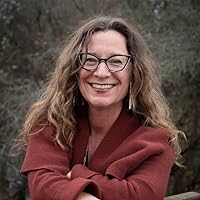
I’m at page 220 and continue to be appallingly disturbed by Susannah’s story of the abuse she survived and the trauma she relived through commentary from her mother’s diaries. I find myself flipping to the picture of the author at the back if the book and it confounds me that she can smile so openly despite all I am reading.