This landmark book chronicles the development of a kind of photography that is created out of the energy and chance juxtapositions found in everyday life on the street. Street photography is at the heart of what makes photography unique. An unprecedented study that is the first history of this tradition ever published, Bystander explores street photography through a discussion of the medium's masters - Atget, Stieglitz, Strand, Cartier-Bresson, Brassai, Kertesz, Evans, Levitt, Frank, Arbus, Winogrand, and many others - and reveals along the way much about the craft and creative process of photography. Profusely illustrated with the work of more than eighty photographers, the book is composed of four parts separated by lively folios of pictures. Each part discusses a different era - from the early days of the medium in nineteenth-century Europe, to America in the late twentieth century - and devotes entire chapters to the key figures of that period.
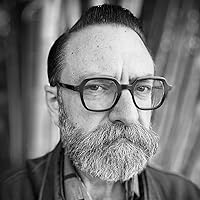
Joel Meyerowitz is an award-winning photographer whose work has appeared in over 350 exhibitions in museums and galleries around the world. He was born in New York in 1938 and began photographing in 1962. Meyerowitz is a “street photographer” in the tradition of Henri Cartier-Bresson and Robert Frank, although he works exclusively in color. As an early advocate of color photography (early-60’s) he was instrumental in changing the attitude toward color photography from one of resistance to nearly universal acceptance. His first book “Cape Light” is considered a classic work of color photography and has sold over 100,000 copies during its 26-year life. He has published nineteen other books including “Bystander: The History of Street Photography” and “Provence: Lasting Impressions.”
In 1998 Meyerowitz produced and directed his first film, ”POP”, an intimate diary of a three-week road trip he made with his son Sasha and his father, Hy. This odyssey has as its central character an unpredictable, street wise and witty 87-year-old with Alzheimer’s. It is both an open-eyed look at aging and a meditation on the significance of memory.
Within a few days of the 9/11 attacks on the World Trade Center in New York, Meyerowitz began to create an archive of the destruction and recovery at Ground Zero. He was the only photographer who was granted unimpeded access to the site. Meyerowitz took a meditative stance toward the work and workers there, systematically documenting the painful work of rescue, recovery, demolition and excavation. The World Trade Center Archive includes more than 8,000 images and will be available for research, exhibition, and publication at museums in New York and Washington, DC.
In 2001 The Bureau of Educational and Cultural Affairs of the U.S. State Department asked the Museum of the City of New York and Meyerowitz to create a special exhibition of images from the archive to send around the world. The images traveled to more than 200 cities in 60 countries and over three and a half million people viewed the exhibition.
In addition to the traveling shows, Meyerowitz was invited to represent the United States at the 8th Venice Biennale for Architecture with his photographs from the World Trade Center Archives. In September 2002, he exhibited 73 images – some as large as 22 feet – in lower Manhattan. Some recent books are: “Taking My Time”, his fifty year, two volume, retrospective book by Phaidon Press of London, “Provence: lasting Impressions,” co-authored with his wife Maggie Barrett, a book on the late work of Paul Strand by Aperture, "Glimpse": Photographs From Moving Car, which was a solo show at MoMA, and "Joel Meyerowitz Retrospective", published in conjunction with his recent show at NRW Forum in Dusseldorf.
Meyerowitz is a Guggenheim fellow and a recipient of both the NEA and NEH awards. His work is in the collection of the Museum of Modern Art, the Boston Museum of Fine Art, The Art Institute of Chicago, and many others.
The key for all of these guys was to find a really ugly old lady or a really ugly little kid. Once you got your hands on of them you were going to be all right.
A fascinating history that helps to place street photography into a firm historical tradition and sketch out some rough ethos of the artform. As an amateur street photographer myself, it really helps to give some context and guidance for what I attempt to do.
Read this for my Bachelor’s thesis and there are some notes I want to share: As my interest in Street Photography goes beyond the confines of uni work, I was very excited to not only purchase and own this gem of a book but also have the freedom to roam in it as I see fit. The range of photographs selected was exhaustive and beautiful. Yet I did feel like some photographers were missing.
On the writing: It was very repetitive and I felt like in a lot of things they could have just come to a point and not talk so much about details around it. Additionally, information on photographers after the 1960s was significantly missing, I wished there had been a section on more contemporary works too.
And finally the most interesting photographers to me: Garry Winogrand and Lee Friedlander were only talked about during the interview part, which I found disappointing. It was obviously very interesting to read about these legendary figures directly from Meyerowitz’s experiences, yet I wish there was a more exhaustive section on their work. Similarly, Diane Arbus and Vivian Maier are names I wished to see more.
All in all, I really enjoyed reading and especially scanning all the beautiful photographs and I am delighted to add this huge book into my collection!