This play features characters that evolve in an ambiguous and dark atmosphere. This fact may be called a bourgeois drama, but it is particularly long, too much for a performance. It's a play to read, more than a piece to see.
The oath of the beginning is a parody that immediately sows doubt in the mind of the reader or spectator. Afterward, we will see that the characters cannot communicate with each other and that the couples are poorly matched (Johanna and Werner) or incestuous (Frantz and Leni). The theme of the lie is recurrent throughout the play.
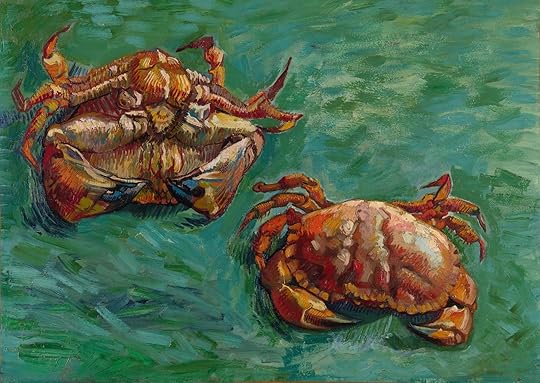
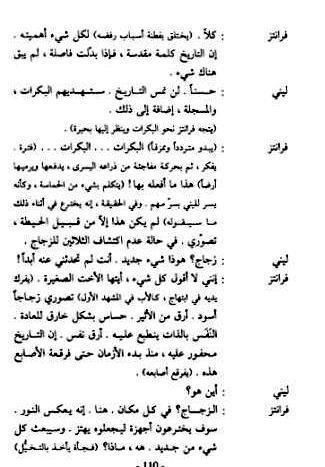
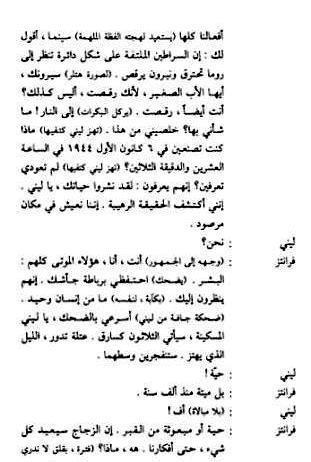
Frantz is an allegory of madness: he communicates with imaginary and fantastic characters, the eternal, hybrid nature, half men, half crabs. Through them, he expresses himself and testifies to a story where he was an actor. He even identifies with them. The crab becomes a symbol of unreason with its biased approach. Sartre recognizes that Frantz is a writer's voice and defines it as: "My main character is a former German officer, to whom I have lent a great deal (courage, sensitivity, culture, a Puritan morality) and who pretends to have gone to the crime to save his country from mortal danger. This act is all the more reprehensible: one can find explanations for it, not a single excuse, on the other hand, its voluntary sequestration, the eagerness to lie, and its so-called folly-which is only vain effort to embroil the mind - everything proves that he has long been aware of his crime and that he is exhausted in defending himself before invisible magistrates to hide the sentence of death he has already brought on himself".
With a capital letter, the Father represents the very type of pater familias. He is a natural leader who regulates everything militarily through fear and fascination. It is authoritarian, attached to old-fashioned values, and castrates, preventing freedom of action under a protective exterior. In the play, he leads the game like an intra-diegetic playwright.
Johanna is the wife and daughter-in-law, a stranger to family and home. She is less easy to handle, even if she does not escape the tragic fate of her siblings. Nevertheless, it reveals that his awareness brings events to the public's attention; she asks the right questions.
Leni customizes the bridge between the complexity of the play and its spectators or readers, providing them with keys to interpretation.
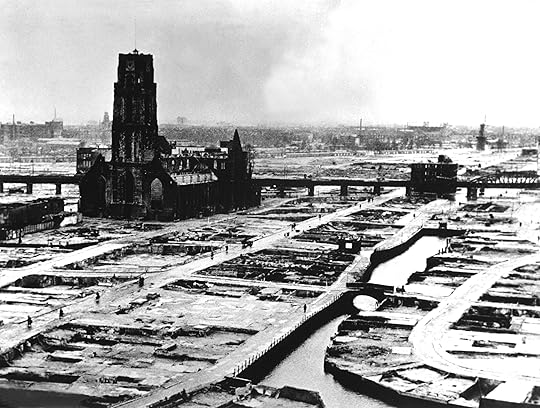
On the other hand, Werner illustrates submission to the Father, passive obedience, and unconditional filial respect. Yet his modern office represents Germany's reconstruction, like an airlock between family confinement and the outside world.
Sartre utilizes the stage space and sets with originality, and the script is both developed and precise. Thus, Frantz's room resembles a cell, but its disorder reveals a hint of bourgeois luxury. The bathroom becomes a place where one hides, like in a skit. The clock plays the role of essential disturbance.
The space division highlights the difficulty of exchanges; the doors are closed between the living room on the ground floor and the bedroom upstairs. The show illustrates the "bourgeois conventional" and conservative framework par excellence with its fake luxury; the room symbolizes the disintegrated universe of madness.
The games of light are essential throughout the play.
The sanctuary's theme is recurrent: all characters are confined to the family house and, therefore, within the family unit, except the Father. He can travel to Leipzig to meet the needs of his company. The Father wants to retain them even after his death by engaging them with the word given at the beginning. As for Frantz, he is in a state of voluntary sequestration, a minimal form of survival. Besides, the family configuration, particularly suffocating, is an opportunity for Sartre to propose a critique of the oppressive universe of bourgeois families, showing especially the disastrous consequences of paternal behavior.
To conclude this masterful work, I very much want to take the academic approach of Sartre while quoting him: "None of us was hangman but, in one way or another, we were all accomplices of this or that policy that we would disavow today. We too are running away, and we are continually asking ourselves what role we have played - as small as it has been - in our history, which we do and which tears and deviates from actions that we must recognize. For ours. [...] how will the invisible magistrates - our little sons - judge us? In this sense, Frantz, an extreme case, a fugitive who relentlessly questions his historical responsibilities, should, if I am lucky, fascinate and horrify to the extent that we resemble him ".
The author should highlight collective guilt and our proximity to monsters to demonstrate that everyone has a role in the world's theater. We should reflect not only on our history's responsibility but also on history's effect on our behavior and perhaps on its possible absurdity.