A woman struggles with love, work, and identity in a novel by "one of the finest and most necessary voices in contemporary American and Caribbean fiction" (Colum McCann, author of Let the Great World Spin).
Anna, a Caribbean American immigrant, is eager to assimilate in her new country—but she is about to discover that a gap yawns between her and American-born citizens. The head of a specialized imprint at a major publishing house, Anna is soon challenged for her position by an ambitious upstart who accuses her of not really understanding American culture—particularly African American culture.
Her job at stake, Anna turns for advice to her boyfriend, a fellow Caribbean American himself, but even here she finds conflict—in this riveting, thoughtful novel about immigration, family dynamics, race, and relationships, in which "many moments of elegant, overarching insight bind the personal to the collective past" (The New York Times Book Review).
"Spare and transcendent prose . . . a unique and riveting perspective on Caribbean life as well as immigrant life in general." —The New York Amsterdam News
"If I wore a hat, I'd tip it to novelist Elizabeth Nunez. [Boundaries] is timely and provocative—and it's written with such vivid prose that, despite the bittersweet ending, you'll step away from this refreshing take on contemporary publishing with a smile." —Essence
"In Nunez's latest, the author further explores immigrant life, a life where a hard-working woman can progress up the corporate ladder, buy an apartment in a soon-to-be trendy neighborhood, and still be plagued by outsider's angst. A thoughtful literary novel exploring the shadows of cultural identity and the mirage of assimilation." —Kirkus Reviews
"A quiet, sensitive portrait . . . This work covers a lot of ground, from mother-daughter and male-female relationships to the tensions between immigrants and the American born." —Library Journal
"Deftly dissects the immigrant experience in light of cultural traditions that impact family roles, professional obligations, and romantic opportunities." —Booklist
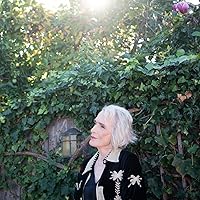
Elizabeth Nunez was a Trinidadian-American novelist academic who was a Distinguished Professor of English at Hunter College, New York City. Her novels have won a number of awards: Prospero's Daughter received The New York Times Editors' Choice and 2006 Novel of the Year from Black Issues Book Review, Bruised Hibiscus won the 2001 American Book Award, and Beyond the Limbo Silence won the 1999 Independent Publishers Book Award. In addition, Nunez was shortlisted for the Hurston/Wright Legacy Award for Discretion; Boundaries was selected as a New York Times Editors' Choice and nominated for a 2012 NAACP Image Award; and Anna In-Between was selected for the 2010 PEN Oakland Josephine Miles Award for literary excellence as well as a New York Times Editors' Choice, and received starred reviews from Publishers Weekly, Booklist, and Library Journal. Nunez is a contributor to the 2019 anthology New Daughters of Africa edited by Margaret Busby.
I liked this book, and it held my attention, but I felt heavy and weighted down while reading it. Athough the author did not identify Anna as being depressed, she certainly appeared to be, and I found this hard to bear witness to. Additionally, although the style of writing matched the character and the themes, the prose was too sparse and clinical for my taste - it had an empty feeling. My reaction may be due to cultural factors, and I do think the book was well-written, but it just didn't personally move me.
My other criticism was that I felt confused about the messages at the end. Was the author implying that the despicable actions of Anna's colleagues were justified because the suffering of one minority group should "trump" another (and it will be her children's "turn" in the next generation)? Unless I misunderstood the message, I found this to be very bizarre. I thought it did not make sense for Anna to fight what was happening at work, but only because it was a losing battle -- not because the behaviors were justified.
In any case, I give this book a mixed review. I liked the relationships between Anna and her parents, and Anna's descriptions of working through emotions stemming from childhood. I liked the questions raised about race and racism in literature and publishing, and I loved the descriptions of the meaning and importance of literature.
This is the third book that I've read by this author and overall I like her style. I thought the storyline was interesting, about the adjustments and struggles of the non-American blacks who migrate to American. I did not care for the main character and that effects to a small extent my overall view of the story. The main character, Anna, was immature in her thinking where her mother was concern. She seemed to always misinterpret whatever her mom said, even if it was good. She was either hurt or angry, and although she finally acknowledged her childish behavior towards the end, she seemed content to continue in it. I understood that her mom was not an affectionate woman when she was growing up and one incident in particular was damaging, but she's 39 and it had been long time to forgive and move on. She was just too old for such foolish thinking. Whether she wanted to see it or not, culturally, there are differences with African Americans and non-Americans, but that is not necessarily a bad thing. I do think that it made a difference in her judgment as it related to her job. How can you read about me and really know and understand me, when your experiences and overall beliefs differ so much from my own. She was too idealistic for her role in the publishing field.
I loved the book, with its portrayal of an immigrant woman trying to find where she belongs, and the office politics of the publishing industry. The lyrical writing style sucked me in despite the third person present tense which usually makes me abandon ship fast. The ending, however, made me rage. Maybe it's realistic, but I don't care. I read fiction to see how the world COULD be! Where are we if we can't dream?
As a Trinidadian expatriate herself, who better to speak to the challenges faced by Caribbean people in America than Elizabeth Nunez. Boundaries is equal parts social critique, and a first-rate character study of the delicate pieces a family is comprised of.
I decided to read this book because it involved a group I didn't know much about - people who come from the Caribbean. There are a lot of snippets on the history and colonization of the region, very similar to Children of the Sugarcane on the arrogance and cruelty of the British. The main female character is an manager and editor of a section of a publishing company and this subplot was very interesting, revealing attitudes of the publisher, looking more for books that sell than those which present issues, are well-written and actually demeans the readers for wanting to read books about themselves rather than literary fiction, which would be well-written and ave themes about larger humanity. There are a number of sub-plots - the mother with breast cancer and the budding romance between the main character and the surgeon, which give a broad look at daily lives and bigger issues. Towards the end of the book there is the sub-plot of what the main character called 'segregation' of black literature from mainstream.
This is a sequel to Nunez’s novel Anna In-Between, an investigation of a Trinidadian-American woman’s struggle to come to peace with her life at midpoint. Nunez is a compassionate and skillful writer. I especially admire her descriptions of places. The little details she includes are spot-on. I also totally agree with her assessment of the segregated book-selling world that she describes. I hope that that may have changed in the years since publication. Since this is a sequel, there is a good deal of summarizing of the previous book. Although necessary for readers unfamiliar with the original, those parts are rather tedious and seem clumsily inserted. I respect Ms. Nunez and her crusade to recognize that good literature is good literature, no matter the background/ethnicity of the author.
This relatively novel, published in 2011, speaks to the issues we have to deal with in this time in our country. The book gives us us some insights about what it's like to be an immigrant. Unfortunatley, the book is too often focused on a romance story. Nonvoting wrong with romance but this book has so much more to say.
h/t Electric Lit's "small press" recs https://feedly.com/i/collection/conte... mostly I want to read one of Nunez' novels, not sure the current one, Now Lila Knows, is the one to start with.
It is a straight-from-the-heart book by a Caribbean writer - honest, simple and my main read during a Covid quarantine. It’s not one for critiquing or study but conversational, confessional even, in parts. The first half is more hopeful although the second half despairs for the future of publishing and migration patterns.
It has taken Anna Sinclair years to climb up the ladder at Windsor, an internationally renowned publishing company to the head of Equiano, Windsor’s imprint for writer’s of color.
An immigrant from the Caribbean she does not subscribe to her friend’s philosophy that new immigrants work while native-born Americans rule. Though the streets are not ‘paved with gold’, the myth perpetrated and sustained by those whom have emigrated and their parents back home, Annie has had modest success.
Boundaries is not a big story. As well as the new immigrant perspective, it is about Annie’s relationship with her parents, particularly her mother. They are coming to New York because her mother has breast cancer and needs surgery and will stay with Annie. It is about the relationship Annie develops with her mother’s surgeon, also an immigrant from the same island and family friend.
None of these plot elements are dramatic enough to sustain the novel for me. However, the story is also about the publishing industry and the profit versus art dilemma inherent in all creative endeavors. Here Nunez, as an industry insider, captures my interest.
Annie feels authors of color need their own imprint and wants Equiano to publish literary works by authors of color. She wants to publish books that have esthetic and moral virtue over pulp fiction that stereotypes blacks.
Her boss, Tanya Foster, is more inclined to want to publish works of authors of color that sell.
When Windsor merges with another large publishing firm Anna is pushed aside and demoted. Tim Greene is a black American with an eye for the profit line and no esoteric delusions about the need for authors of color to have a foothold in the literary market.
Nunez prose gets a bit didactic when assails the Greene’s philosophy of profits ahead of every thing else and argues that important books illuminate lives and can and have changed the course of history.
The plot gets further befuddled with Annie contradicting her argument for establishing Equiano by saying that Tim Greene’s vision of grouping together all authors of color, genre or literary, would ghettoize them, and that reader’s don’t care what color of skin the writer has, a good book is a good book regardless.
Though Annie strives the fight stereotypes she stereotypically capitulates in her career to a man and justifies it by stereotypically choosing marriage and possible motherhood as the greater good.
Considering the arguments put forward in this novel, it is ironic that the quote on the front page states the author is ‘one of the finest and most necessary voices in contemporary American and Caribbean fiction.’
More like 3.5 stars. I'm a fan of Nunez's from way back when and I enjoyed reading Anna (the prequel to Boundaries) so I was looking forward to this read. I wanted to know what Anna's mother would do regarding surgery for her breast cancer...and maybe kinda of sorta wanted to know what would happen with Anna's position at a publishing company. Well that said...I'm not sure another book was needed to add closure. For the most part, I enjoyed Boundaries because it was a easy, quick read...once I started reading I was able to finish in two quick treadmill sessions (okay the treadmill sessions weren't that quick...they were actually anout 3.5/4 hours). The first 100 pages of Boundaries was engaging and held my interest...but somewhere along the way I tired of Anna's whining and anger...and wanted to reach through the pages and shake her and say...'you're 40 years old...stop your bytching and complaining...whining...grow up...piss or get off the pot.' Her angst, insecurity, anger...just became too much and too overbearing in a very negative way. I kept wanting an empowered, fierce, 40something, 'I don't give a dayum about the rest of you...I'm a grown woman and this is my life and I'll do what I want' to emerge...I didn't ever really see that. Although we did get a little more backstory regarding Anna's mother and a better understanding of why so was so distant to Anna when she was growing up. And just when Anna thought her father would be in her corner and understand her it was actually her mother who came to her rescuse and emphathized with her...but, of course, that didn't last very long. Although I would have preferred if it had...and felt they had turned a corner. That both of them had grown and were able to move forward. My ranting aside, Nunez is still an author I will follow and I'm sure I'll read her next book...I just ask that the next time she do more showing and a little less telling. I really want to hear the character's voice...and not so much of Nunez's political/social commentary. (I'm so over the literary authors vs. the ghetto fab/street lit authors...it's time for everyone to just do self...write the best darn book you can and stop worrying about ill-edited, poorly written books selling. At some point, everyone gets tired of McDonald's and wants a 5-star meal.)
I'm actually giving this 3.5 stars. I liked it, at least up to the middle. The lead character, a naturalized American citizen from the Caribbean, heads an imprint in a large publishing house that features black writers. She takes a month to visit her aging parents back home at the island and learns that her mother, who has never shown her any physical affection or heartfelt appreciation, has neglected and hidden her breast cancer for a long time. Anna does all of the right things, risking her job and swallowing distrust of her mother to support her through chemotherapy. She helps persuade her mother to have surgery in the United States by the son of a dear family friend. She offers her apartment to house them during this period, which is difficult because her parents have never seen her apartment in New York although they have visited her in the City many times. Then, as soon as she can leave, she returns home and to work and finds that she has lost control of her job. Throughout all of this, Anna is concerned about the position women not of the color white have achieved and must achieve in the world of dominant men of all colors. Upon her return to work she discovers that in her absence the art and sales departments have chosen a steamy near- soft-porn cover for a serious book that she loves. The cover, she believes, is ridiculous and insulting to the work. She cannot get it changed. She rails against the cheap sexuality and the black stereotypes and so on. Meanwhile, she is becoming friends with the surgeon. I could write the spoiler out for you, but why? The author lost me with the last third of the book. Also, there was very little humor. The surgeon was wooden. But then, most of the island men seemed to be wooden. I came away with the feeling that I do not belong on a Caribbean island. Now I'm going to have to find a book written by a man from the Caribbean to see if lightheartedness and laughter lives with the men.
Anna is the almost 40 year old protagonist of this breezy novel. The book is aptly titled, because the novel deals with the boundaries that exist in Anna's life. There is the boundary of affection, Anna feels her mother wasn't loving enough in a physical way. She didn't get the hugs and kisses that would have signaled an undying love. There is the boundary that exists at work, in Anna's mind the fact that she is an immigrant(Caribbean-American)is preventing her rise to head of a publishing house. There is also the boundary of love, as a divorcee, Anna longs for love and possibly a child.
The prose is intellectual and there is a very good debate about the merits of publishing literary work by writers of color. I think the author does a good job of representing the main tracts of this ongoing debate in the industry. The only thing that keeps me from giving 5 stars to this novel is Anna's belief that she is discriminated against by her new boss because he is African-American and she is not. Her family and best friend seem to share this sentiment, but we never know if this is so. The voice of Tim(her new boss) is never given full throat, so the reader must speculate as to the real motivation for his actions.
Besides that, this was a very good read and Anna is definitely a character that you will root for, and I would recommend this novel, especially to those who have an interest in the publishing industry.
I thoroughly enjoyed this book. I found Anna to be most relative to the Black/Caribbean-American woman in the workplace. I found it ironic how Anna was shunned because of her connection to American culture. I used to experience a reverse thing with my family. I wish to be included in cultural conversations but can't be taken seriously because I'm considered a Yankee. I was born on the island but did not grow up there so that automatically puts me in an "outsider" status.
I felt the anxiety each time Anna was in the office. The setting is all too familiar - feeling betrayed, lied to, placed in an awkward position, having to reconsider what's important, talking yourself off the ledge, keeping a cool head keeping the bigger picture in sight. All familiar and relative to the woman in the corporate office setting.
Anyway, I always look forward to reading Nunez. She's a phenomenal writer and I just enjoy her prose and how she weaves historical accolades and literary anecdotes from other writers we enjoy - Ellison, Morrison, etc.
I highly recommend this book as an easy, comfortable read. Nothing too complex. You just have to enjoy language.
I really empathized with the character of Anna because she was trying to challenge the status quo of using sex to sell a book. I appreciated the conflict Nunez shows between Blacks in the U.S. and Blacks in the Caribbean. She shows this conflict like no other writer today. I appreciate her narrator a lot. It is a narrator that empathizes with the colonized, yet at the same time is not so revolutionary that they cannot appreciate incremental change in society. Anna is obviously a character who wants to break social mores as a woman in the Caribbean, but also as a Black reader in the U.S. This was a fascinating read and I strongly think we need to read more characters like Anna Sinclair who are ambitious personally and professionally: Anna strives to produce meaningful literary fiction and is still capable of sustaining a committed loving relationship. Thank you very much, Elizabeth Nunez. -RF.
Nunez has filled her main character in this book with marvelous conflict. She is literally stuffed with conflicts. Her conflicts have conflicts, even conflicts with her other conflicts. I mean, she has conflicts between her duties to her parents and her commitment to her career, both vying for primacy. At the same time, she has intimacy issues with her parents conflicting with her increasingly close ties to her parents. Conflicts within conflicts within conflicts. And Nunez has carefully and delicately connected these conflicts to the world that the character inhabits, creating some real tension for the reader. Then, just having to give something a little push, Nunez drives the story forward marvelously. Combined with marvelous details regarding a Carribean immigrant's perspective on life in this country, this makes for a good read.
I LOVE her prose - they are poetic. Moreover, I LOVE stories about self-discovery and identity - this novel has it ALL! Anna, the protagonist is a talented and ambitious woman whose encounter with sexism is tainted by "outsiderness." This would have been okay if her private life was smoothly sailing along - however, it is not. Such is life - never are all things completely well for any length of time. This period of self-discovery Anna learns to choose what is of importance and value. I love the subplot between Anna and her mother -what girl has not had conflict with their mother's?? The explanation of this conflict mirrors my own in some way -- another poetic moment - of sacrifice - which at times is misread becoming antagonistic. WOW - how similiar to my own life. There are some parts about outsiderness that I thought were blunt - but possibly truthful.
I'm interviewing Elizabeth Nunez, author of Boundaries on October 30, 12:45-1 p.m. central time on KAZI Book Review on KAZI 88.7 FM. The main character Anna, is senior editor of an imprint of a publishing house in New York specializing in African American fiction. While she works hard to bring literary novels to the reading public it's the urban romances with lots of sex that pay the bill. Meanwhile Anna has had to go back to her home in the Caribbean she emigrated from 20 years ago to check on the health of her mother. I'm only about 60 pages into the book and it has begun to mesmerize me with its lyrical prose and the struggles Anna has coping with her fears of not being successful enough for her parents.
While I could relate to Anna's struggles to live life on her own terms in the midst of her parent's expectations, I had trouble identifying with her.
I thought Anna was judgmental about books that weren't "literary" material and the people who read those books. And she was so shocked that her company wanted to put profit over literary standards! Oh my, a business that wants to make money--how evil!
She seemed to ascribe very questionable motives to everyone but herself. For someone who was concerned about racial differences, her way of thinking was (pardon the pun) very black or white, right or wrong; there were no shades of gray.
I was a bit underwhelmed by the writing and the story but I enjoyed the character of Anna and her dilemmas as a Caribbean-American immigrant. The plot set in the "writers of color" imprint in a publishing company, which drew me to the book, was novel and yet predictable. The romance with a fellow immigrant and the conflict between Anna and her mother were more interesting, nuanced and successfully made universal.
Nunez describes an experience so similar to my own that sometimes I wonder if it is the familiarity that draws me in or the story itself. Either way, I enjoyed the read even though I did not always enjoy the character. Shout out to Ulrich Cross who is featured on this video of Caribbean women and men who went to England to fight in the war: http://www.youtube.com/watch?v=ViGwxJ... We must learn to love...
The main character is a Caribbean-American woman who heads an imprint at a publishing house. The novel explores her professional challenges, her relationship with her mother, and her involvement/separation from the Caribbean immigrant community in New York.
I didn't realize until near the end that this book is a sequel, picking up where Anna In-Between left off. Wish I had read the preceding book first, but this one absolutely still stands on its own.
I always like elzabeth Nunez' spare,direct writing- somehow it fits the Caribbean cultural theme. this book would make a great discussion book regarding Caribbean immigrants and African american culture and history as well as responsibilities of grown immigrant children to ageing,ill parents back home.
I gave up about a third of the way through. I could not get interested in the characters. The mother is elegant. Of course she is. The father cheated and then became an extremely devoted husband. Naturally. The new boyfriend is intelligent and attentive. Sure. It was all too familiar and not very interesting.
It became a slow read for me. This was my first book by Elizabeth Nunez that I have read. I am a 1st generation Jamaican. This book helped me to understand my parents a little better. The protagonist really was depressing.