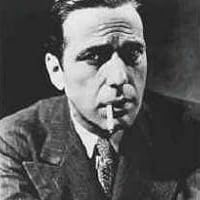
John Thomas Sladek (generally published as John Sladek or John T. Sladek, as well as under the pseudonyms Thom Demijohn, Barry DuBray, Carl Truhacker and others) was an American science fiction author, known for his satirical and surreal novels.
Christy's recent post (message #27 on That's Racist) reminded me of this episode from The Müller-Fokker Effect. The White Supremacist is ranting as usual to his cell-mate:
"Now suppose you're doing your laundry? You take your nice white clothes and you put them in the washing machine and you miss a pair of black socks. And then you open the door and all your clothes are ruined. Just because of one... little... HARMLESS... Negro sock!"
The cell-mate thinks about it, and then he says:
"What happened to the other one?" ____________________________
Langford: John, I have a long-standing grudge against you. Have you ever considered what trouble you caused young people called Langford, as they asked partially-deaf librarians for your title The Müller-Fokker Effect?
Sladek: Young persons have no business reading such a book, which contains sex, violence and anagrams. I think I can speak for the moral majority here when I assure you that we are doing our best to prevent such problems by closing all libraries. ____________________________
Black supremacists may be interested to know that the trope works in reverse, as Not elegantly demonstrated this morning. She added a linen tablecloth to the load of washing she was running, leaving my favourite black T-shirts covered in disgusting white fluff.
I will have more to say when I've finished Karl May's Halbblut.
A rampaging, anarchic comic novel à la Ishmael Reed or Ronald Sukenick. Belongs in the vintage sixties-seventies postmodernist camp alongside the finest punnilinguists and oulipian sorts, not buried in a SF anthologies.
There's a song by Pink entitled 'Chaos and Piss', if you extended it to 'Chaos, Piss and Computers' it would not be a terrible description for this book. The central premise is that the government want to transfer human consciousness to computer, but since this is set in the '60's they only have those big tape machine's to work with. However that's beside the point, as realistically this doesn't have a plot. Imagine a Dickens novel or Catch-22 maybe but with NO central character. So your just stuck with the crazy side characters. You have an eccentric millionaire who thinks everyone else is fictional, the founder of a playboy-esque magazine, a tele-evangelist, a painter, an advertising executive, about a half-dozen other major characters aswell as a full accompaniment of racists, conspiracy theorists, art critics, military cadets, indians and transvestites. The '60's aesthetic is one of the best things about it and the individual elements are interesting if a little hard to follow at times due to the large assortment of characters. It's also not the worst time to read it as its sci-fi elements are probably more apt today than they were in the '60's and its political connotations are unfortunately not out of date especially with Donald Drumpf running for the american presidency. Overall better than Roderick the only other Sladek i've read, but definitely not for those who like to have a normal a-b-c plot.
I would have rated this book higher if it wasn't so dang hard to read! It's full of clever satire and outright absurdism. It touches on so many facets of American society that none of them can claim to be the real focus of the story. It's cool to see an author explore the idea of uploading human consciousness, keeping in mind he was writing this as the Apollo program was reaching its pinnacle. As it turns out, that ends up being a thread as thin as fishing line that just barely ties together the multitude of subplots and huge cast of characters. There are some passages of wordplay that at first appear to be complete nonsense and then somehow Sladek manages to show that he had a purpose for it. Other times all I saw was nonsense and if there was a point being made, I just wasn't clever enough to keep up with him. I must give him credit for pointing out some things about the military industrial complex, fascist tendencies of the police establishment and racist bigotry that seem very prescient. I was amused to see he named Ronald Reagan the president a full 10 years before it became reality. The climax was pretty good, although he didn't quite manage to bring everything together and a couple of loose ends needed to be tidied up on their own. Challenging, interesting, but I am glad to be done struggling through it and finding a change of pace with whatever I pick up next.
I really struggled with the rating for this because the book is absolutely batshit. On one hand that's good because it makes for kind of a unique experience. But on the other, I had absolutely no idea what was happening most of the time. With a lot of SF you just have to keep reading knowing that you're eventually going to get it. I got to the end and was non the wiser. I could recognise some of its endless characters and recall one or two things about them, but I honestly don't know what the plot of the book is.
If you thought Kurt Vonnegut could do with making less sense then this is for you.
A youthful effort that is a bit all over the place. The concept of the transference of a self, from organic body to computer reels, could have been focused on more in the narrative. A lot of side actions and characters, but this chaos weakens the narrative thrust. A lot of fun jabs at the media and commercialism in general. Typical SF new-wave targets. Sladek was a good writer and better than most writers working in the genre.
From the New Wave of speculative fiction: A dadaistic deconstruction of Vietnam War Era America. I laugh, get a little nostalgic of a simpler time, and am reminded that military industrial complexes never die, they just become more and more absurd.
A good, but not brilliant, Sladek novel. As always, there's plenty of absurdist fun involved in the novel, but on this occasion the plot is muddier and more complex than normal, and if you try to keep too many plates spinning, some of them will inevitably fall down.
Myra's in the hospital again. She's decided she wants oriental eyes.
Two of the defining events at the heart of the counterculture movement of the 1960s are the summer of love in 1967 and Woodstock in New York in 1969. A few months before Woodstock, on May 15, 1969, a group of citizens occupied a vacant lot that had been overdue for conversion to a park in Berkeley, California, and proceeded to plant the trees themselves. This seemingly inoffensive offshoot of the peaceful protest movement that had spread across the globe in the preceding years was met with an outsized reaction by the Governor of California, Ronald Reagan: he ordered in the National Guard against the tree-planting hippies. The times they were a'changin.
John Sladek's 1970 novel THE MULLER-FOKKER EFFECT serves as a good portrait of this turning point in American history: a trenchant, intelligent, savage satire of the absurdities pervading every corner of American society at the transition from the engaged and optimistic 60s to the jaded and decadent 70s. In sharp contrast with the mood of optimism that defined the summer of love just a few years earlier, here we're steeped in a mood of deep cynicism about the underpinnings of American society with its innumerable racial, religious, and political divisions. Although nominally science fiction in lineage, really it's speculative fiction set in the near future, extrapolating on current trends to paint a bleak picture of an ever more paranoid, racist, militarized, violently divided America. Who does Sladek predict runs such an America overrun by every stripe of social strife? None other than Ronald Reagan. Fully 8 years before Reagan even first ran for the Republican nomination, Sladek predicted his presidency. Sladek's bitter satire of America has turned into prophecy in more ways than one.
An anti-Semite usually hates a Black Muslim who hates a black Jew who hates a homosexual Jew and a white Jew about equally, who hate each other, and who also both may hate a white Jewish cop who hates his superior who hates an anti-authoritarian young man who hates an authoritarian young man who hates and envies anyone wealthier than he.
In the more science-fictiony first half of the book, a set of tapes that are able to preserve a person's personality (bearing the unfortunate name of their German inventor... MULLER-FOKKER) are shuttled about between different parties seeking the tapes for different purposes. The idea poses some interesting questions about what defines the individual, but more for satirical purposes than in the serious vein of later cyberpunk fiction. The second more outlandish half deals with the butterfly effect-like repercussions as society devolves into chaos (hence the title?). For my money, the extraordinary, uproarious climax of the novel is worth the price of admission. In an extended riot sequence that gradually escalates to cataclysmic proportions (blowing Dr. Strangelove away and presaging Fritz the Cat), conflict explodes along racial, religious, ethnic, sexual, and economic lines as Catholics, Buddhists, cops, FBI agents, undercover cops, American Nazis, Maoist communists, redneck Klansmen, Muslim brothers, Zionists, anarchists, and assorted combinations of the same, clash in a melee of Mace, tricorner hats, garbage pail lids, Molotov cocktails, blacksnake whips, and hobnail boots. It's an incredible, hilariously nihilistic cartoon mash-up of every form of bigotry and extremism this great nation has produced over the course of the 20th century, all hacking away at each other unto death.
The Iructu have no word for death. They refer to it indirectly as "potatoes". The potato, like death, they explain, has many eyes.
It all begins when a white supremacist hillbilly author writes a tome about the supposed black conspiracy that turns him into an Adolf-like idol among suddenly emboldened all-American Fascists, whereupon he goose-steps on Washington with a troupe of Whiteshirts singing the national anthem in a version where it's not the flag that's gallantly streaming but smoke from oven chambers. (Again, dark satire turned prophecy.) African American locals protest the march, but the police urge black observers to move on, killing an 11 year old girl in the routine process of using excessive force. Protests ensue, so the riot police and federal marshals are called in (Reagan strikes again). The chaos spreads like wildfire, engulfing the whole city. A bomb destroys Lincoln's tomb, and furious tourists flail prostrate guardsmen with their thermos bottles and cameras in front of the ruins for ruining their vacation. Iroquois warriors launch arrows from the steel beams of a construction site into Klansmen preparing to lynch a gang of Nazis in blackface. Zionist students picket the Arab embassy as usual blaming the poor oil billionaires for everything, while national guardsmen protecting their country's "oil inneress" stroll inside out of boredom and turn their machine guns on what they view as long robed deviants. Frustrated fighter pilots launch missiles into fishing boats to affirm their masculinity, worried sick they might be queer and not know it. A team of lost helicopters spray a ton and a half of defoliants over the Capitol, mistaking the three cordons of paratroopers for rioters, causing the cherry blossoms on the South Lawn to fall prematurely. The general ponders using artillery and napalm to level unimportant sectors of the city, but opts instead for the path of least resistance: evacuate the president and nuke the joint. Meanwhile, in a quiet part of town, a 'Cumminist Conspiracy' theorist spies on a crossdressing psychiatrist who fears that Hoover's FBI is onto him, furiously decoding nonexistent secret messages while eating an Almond Joy and catching the Early Bird movie, Blowup.
The general considered playing with oneself sinful, weakening, deleterious to physical and mental health, and probably the main cause of syphilis, so-called 'thalidomide babies', divorce, and losing battles.
Acerbic in tone, punny, cynically irreverent, politically charged, chaotic in plot, sprinkled with strange drawings, THE MULLER-FOKKER EFFECT comes across as Vonnegut-style social satire, but more caustic and bitter, infused with the misanthropic venom of Swift. The novel doesn't bother with typical novelistic niceties like creating emotional resonance and achieving depth of character delineation, opting instead to carpet bomb the reader with a chaotic onslaught of hilariously cynical parody. Story and character and emotion take a back seat to pitch-perfect black humor that mercilessly skewers the defining ills of the era: zealous patriotism, the racist history of the antebellum south, big-tent religion, creeping authoritarianism, the military-industrial complex, the dehumanizing effect of pervasive computerization, secret government experiments, and the barely suppressed fascism lurking at the core of American democracy. This more scattershot format and MAD Magazine style of blunt-force humor undoubtedly accounts for why the book was so poorly received by general audiences as to prompt the poor Sladek to stop writing novels for the rest of the decade. Luckily he began again in the 80s and produced more well-regarded books, not coincidentally coinciding with the election of his foretold president, when his voice was needed more than ever. After reading this, his other books are now definitely on my must-read list. Sladek showed himself with this ambitious debut (putting aside a previous collaborative effort) to be one of the masters of satire of our age.
This stands as one of the greatest achievements of the 60s/70s new wave of SF, to say nothing of SF as a whole - although it really has little about it that is very much related to science at this point, as was the case with most of the new wave, which was more concerned with inner space than outer space: The nominal plot device of the transference of consciousness to magnetic tapes serves mainly as a coathanger for social commentary rather than for an explorations of the ramifications of a given technology.
The influence of the writings of notable intellectuals of the era can be felt in the various themes that underpin the book, e.g. Konrad Lorenz on human aggression ("Most of us fail to realize how abjectly stupid and undesirable the historical mass behavior of humanity actually is"), C. Wright Mills on the oligarchy of powerful men who dictate the country's fate ("For the first time in American history, men in authority are talking about an 'emergency' without a foreseeable end. Such men as these are crackpot realists: in the name of realism they have constructed a paranoid reality all their own"), and Marshall McLuhan on the deleterious influence of mass media ("The medium is the message").
I re-read it after 45 years, having just read Singularity, since it is also about digitising human consciousness.
In this book Bob Shairp works for National Arsenamid, and is transferred to a different branch where his new task is to be the guinea-pig in an experiment to see if it is possible to back up a human being on tape. The recording process is under way when some white supremacists break into the lab, convinced that it is an attempt to transplant a nigger brain into a white man, so they kill Bob, and the tapes are dispersed. Bob's son, Spot, is sent to a military school where he is desperately unhappy, and his mother goes into advertising, where she meets a salesman for a process of freezing people. Bob Shairp has a series of bizarre adventures in his taped form, as do most of the other characters, though for the most part in their actual bodies rather than on tape.
It's an extended satire on 1970s America, sending up manufacturing, advertising, the military and militarism, journalism (notably Playboy, politics and ideologies, especially white supremacy and fanatical anti-communist conspiracy theorists.
Concerning the last, one can read it as a send-up of The Da Vinci Code, as the conspiracy theorists decipher codes that are more and more complex. In that respect it anticipates several books. It also predicts that Ronald Reagan would become US president (Nixon was president at the time it was written).
After 45 years I'd forgotten how funny it was (in parts, anyway), and in retrospect it also throws light on some subsequent developments, technical (the Singularity), cultural and political.
Pynchon by way of Attack! Books. I love John Sladek but this is mental. The satire is vicious and witty, but the plot’s thinner than the paper it’s printed on.
The kind of novel where a character is introduced in the first chapter, disappears for 150 pages, then headbutts a landmine before a race war starts. Nowhere near Sladek’s best, but still more than entertaining enough to finish.
Unless your special interest is late 60s/early 70s American geopolitics, don’t bother reading this.
I had a fun time with one of Sladek’s other books, Tik-Tok, so revisiting his writing style and humor appealed to me. Unfortunately, the Müller-Fokker Effect was about as far from appealing as a book can be. Sladek completely abandons the plot a couple chapters in and ignores it the entire time. Instead, he jumps back and forth between a menagerie of characters ranging from money-hungry evangelicals, homophobic military leaders, an involuntarily celibate owner of a nude-magazine company, and racist… racists(?). There are so many people to remember and hardly any of them are relatable or worth rooting for. Plus, Sladek will have entire chapters of complete nonsense, adding to the confusion.
It’s a farse and a commentary on 60s/70s America, so some of the decisions Sladek made when writing this heavily mirror the frustrations many Americans had with their government at the time. There are definitely some genius moments of satire, but there is so much garbled mess between those moments that makes this such a frustrating read. Maybe that aspect in itself makes it a perfect satire, but I’m of the opinion that if you set out to make shit, you still made shit at the end of the day.
A busy, mocking, postmodernistic attack on the senses. Its a full on, no time for breaths and vicious satire, a lesson in puns and the odd clever anagram. Sladek introduces a lot of wierd and wonderful characters with no real central one to follow. But that's okay because there is only a vague central plot about transferring the human consciousness into a data stream!
It's not an easy read given the emphasis on the absurd sprinkled with nonsense. Given the date of publication I wondered if Sladek had been smoking something heavy and illicit while typing.
That said, he made me laugh out loud in places. Real belly efforts. Especially (spoiler alert) picking a future president ten or so years early.
Warning. If you were born after 2001 then Slakek's delving into racism, conspiracy theories, rude and pointed asides about the artistic community, indians, the US military and transvestites even if it were tongue-in-cheek for the time, is likely to offend you. If you have to look up the word irony then avoid this book.
"I find Sladek’s novels notoriously difficult to parse into cohesive reviews—his SF (and my reviews by extension) stretch satirically in all directions, unfolding in fascinating experiments that jest with layered wordplay and (often) diagrammatic dalliances (see example below). There’s a humorous indulgence in his work you have buy into that rewards the diligent.
Far superior to Mechasm (variant title: The Reproductive System) (1968), The Müller-Fokker Effect tells the story of Bob, “a technical writer with a BA in English” recently terminated by “National Arsenamid” (9) and his position [...]"
Bevor er verschwand, hat der geniale Wissenschaftler Müller-Fokker ein Computerband entwickelt, auf das man ein menschliches Bewusstsein aufzeichnen kann. Die wenigen Exemplare, die davon existieren, gelangen in die freie Wildbahn und landen bei ganz verschiedenen Leuten.
Schwankt zwischen einer nachvollziehbaren Handlung und wahllos scheinenden Ideenansammlungen. Das Lesen wird auf Dauer doch arg anstrengend und immer weniger vergnüglich. Darum abgebrochen.
This book is categorized as science fiction but it is more parody, social commentary, and black humor . Bob Shairp, the main character, if there is a main character in this mad capped romp, works for the National Arsenamid corporation. He is a technical writer that actually doesn’t write anything and is being replaced by a dog. He is put on assignment for a project in conjunction with the United States Army. He is going to be turned into data and stored on a computer using Muller-Fokker tapes invented by a possible Communist doctor who may or may not have defected to Russia. The book takes on some many themes in pop culture and society in general. Uproariously funny many passages had me literally laughing out loudGreat read. For a book written in 1970 the themes and context is very applicable to the age we currently live in
Second read, increasing my rating to the highest possible.
I read this after reading Sladek's "Tik-Tok" and I thought it was clever but not all that impressive.
My second reading has shown me that it is quite that impressive, better than even "Tik-Tok" and the Roderick books. What a brilliant, unappreciated writer he was.
I regret having taken so long to go through this book--it's dense and twisted and overpopulated enough to disorientate a focused reader. But I promise I'll reread it carefully--I'm sure I'll find nothing but more genius inside it.