Jump to ratings and reviews
Rate this book

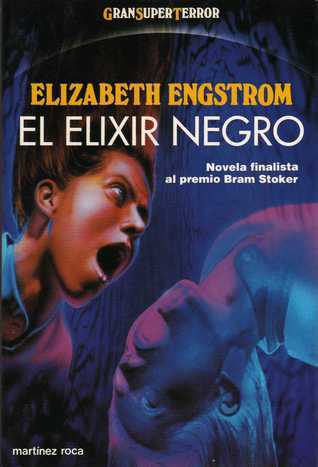
El elixir negro

Rate this book
Si estás lo bastante cerca para besarla, también estás lo bastante cerca para morir. Angelina es una asesina. Nadie lo diría a primera vista... hasta mirarla a los ojos.
Angelina no mata por odio ni por miedo. Mata por amor, para otorgarle la paz eterna a sus víctimas.
Actúa guiada por la voz sobrenatural que le habla sólo a ella. Además, succiona la sangre de sus víctimas.
¿Le convierte eso en un vampiro?
La policía cree que no. Boyd cree que sí. Y tiene razones para opinar así. Estuvo enamorado de Angelina. Ahora le lee el pensamiento desde muy lejos. Boyd es un cazador nato. Angelina será su próxima presa.

238 pages, Paperback

First published January 1, 1988

48 people are currently reading
2409 people want to read

About the author

Elizabeth Engstrom

65 books449 followers
Elizabeth (Liz) Engstrom grew up in Park Ridge, Illinois (a Chicago suburb where she lived with her father) and Kaysville, Utah (north of Salt Lake City, where she lived with her mother). After graduating from high school in Illinois, she ventured west in a serious search for acceptable weather, eventually settling in Honolulu. She attended college and worked as an advertising copywriter.

After eight years on Oahu, she moved to Maui, found a business partner and opened an advertising agency. One husband, two children and five years later, she sold the agency to her partner and had enough seed money to try her hand at full time fiction writing, her lifelong dream. With the help of her mentor, science fiction great Theodore Sturgeon, When Darkness Loves Us was published.

Engstrom moved to Oregon in 1986, where she lives with her husband Al Cratty, the legendary muskie fisherman. She holds a BA in English Literature with a concentration in Creative Writing, a Master’s in Applied Theology, and a Certificate of Pastoral Care and Ministry, all from Marylhurst University. An introvert at heart, she still emerges into public occasionally to teach a class in novel or short story writing, or to speak at a writer’s convention or conference.

Ratings & Reviews

What do you think?
Rate this book

Friends & Following

Create a free account to discover what your friends think of this book!

Community Reviews

5 stars
178 (21%)
4 stars
359 (42%)
3 stars
231 (27%)
2 stars
60 (7%)
1 star
15 (1%)
Displaying 1 - 30 of 159 reviews
Profile Image for Grady Hendrix.
Author 66 books34.5k followers
March 14, 2015
Elizabeth Engstrom Black Ambrosia is the book where a comparison with Anne Rice becomes almost unbearable because it’s about *gag* vampires. Engstrom writes like an Anne Rice who is actually interested in real people. Deeply rooted in the details of hardscrabble lives, her language is heady and romantic, occasionally dissolving into a dreamlike haze, but she never loses sight of, or interest in, the fact that even inhuman, bloodthirsty vampires need to eat, sleep, and poop. Unlike Rice, who’s mostly interested in rich fancy people, Engstrom’s writing is most uncomfortably alive in its unflinching descriptions of the drab, humdrum existence of people living on the bottom rungs of the economic ladder.

Here Engstrom bashes the dust and rust off the traditional vampire tropes, and boy howdy are they traditional. Engstrom’s vampire, Angelina Watson, doesn’t like crucifixes, can turn into fog, controls the minds of men, sleeps in a coffin, and she sucks the blood of her lovers. But Engstrom manages to twist these clichés into something new.

Read the rest of this review.
Profile Image for megs_bookrack.
2,155 reviews14.1k followers
July 19, 2025
Hands-down one of the most interesting and introspective vampire novels I have ever read.


It's clear that Elizabeth Engstrom was ahead of her time. This was a fascinating slow-burn.

🖤❤️🖤❤️🖤❤️🖤❤️🖤❤️🖤❤️🖤❤️🖤
Profile Image for Char.
1,947 reviews1,868 followers
January 6, 2020
BLACK AMBROSIA is exactly what I hoped it would be, plus some.

Here's the synopsis:

"Angelina is a killer. You'd never know it to look at her--until you look into her eyes. Angelina doesn't kill out of hatred or fear--she kills out of love, bringing solace to her victims, guided by the seductive Voice that speaks only to her. Angelina offers you eternal peace--at the cost of your soul!"

Quiet horror is more to my liking these days, and this book fits the bill. Don't get me wrong, violent and gory scenes appear throughout this book, but most of the picture comes from the reader's imagination rather than with blow-by-blow descriptions.

This review has to be rather general to avoid spoilers, but here I am going to wander into spoiler territory for just a moment. I'm a huge fan of a book called SOME OF YOUR BLOOD by Theodore Sturgeon. In a lot of ways this book reminded me of that one. This book is horrific, no matter how you would answer that question.

Perhaps a little slow to get going, but once Angelina leaves home things start to pick up. The whole time leaving you wondering, is she or isn't she? I prefer to think she is, but you'll have to read this to find out!

Highly recommended!

Get your copy here: https://amzn.to/2ZWUQJM

*Thanks to Valancourt Books for the e-copy of BLACK AMBROSIA in exchange for my honest feedback. This is it!*
Profile Image for Latasha.
1,358 reviews435 followers
March 10, 2020
I am so glad Valancourt is saving these gems from obscurity. I read this with some friends and i think we all liked it. Elizabeth Engstrom's writing is fantastic. I liked this one as well as When Darkness Loves Us. This story is about Angelina. It is dream like and uncertain. You learn pretty early on that Angelina is an unreliable narrator. So it's hard to tell what's real, what's really going on or has happened. I liked that about this book.I liked the ending a lot, too.
I wold love to read more from this author.
Profile Image for Lizz.
434 reviews116 followers
March 12, 2023
I don’t write reviews.

And I don’t like it one bit when a good storyline is bogged down by straight-up filler and characters’ repetitive thought/action cycles. It doubly frosts my cookies since this was an interestingly original vampire novella (never could nor should have been longer than that). As a wise woman once said, “A good vampire tale is hard to find.”

So this was long. Long. Long. Each new scene would regain my interest, but then the transitions in-between scenes brought back the repetitive thought/action cycles. “I’m strong. No, I’ll get help just this once. I will make it. I’m so exhausted. I renounce the dark. I’m beyond tired. I renounce the light. I got this, wait no it’s falling apart again,” says the main character vampire. Not to mention the vampire hunter’s repetitiveness. “I’m perfectly prepared to find her. I’ve trained forever to hunt prey such as this. I’m too slow, I should give up. But I hate my boring life. She always eludes me. I’ll go back to my boring life then… No, I’m ready for this now!

Yes it was a bit of a fluffed-out short story/novella. 2.5 stars. I don’t regret having read it, though I doubt I’ll read her other stories.
Profile Image for mark monday.
1,873 reviews6,309 followers
June 27, 2020
"Do you know
Where you're going to?
Do you like the things
That life is showing you
Where are you going to?
Do you know?

Now looking back at all we've had
We let so many dreams just slip through our hands
Why must we wait so long, before we see?
How sad the answers to those questions can be

Do you get
What you're hoping for?
When you look behind you
There's no open doors
What are you hoping for?
Do you know?"


Fade Out

Frightened

thoughts on the book, with spoilers, copied/updated from the comment thread in the excellent group Literary Horror:

Profile Image for Jon Von.
580 reviews81 followers
June 6, 2025
This book really F'd me up. I finished it a month ago and it keeps popping back into my head. It's like a poison sliver, but one it's fun to itch. It is like the worst forms of love. It is a quiet psychic violence on the back of a ski brochure. It's like being shaken hard by the shoulders from a ghost and listening. Raising this to 5 stars, highly recommended!
Profile Image for Josh.
1,732 reviews174 followers
July 24, 2019
A different kind of vampire novel which substitutes outright blood and gore for implied and subtle horror; leaving the acts of violence to the readers imagination and ultimately making the book more scarier.

The gentle slant towards horror at the beginning of the book holds the remainder in good stead as Angelina, the unassuming vampire slowly builds and comes to accept her lust for blood. The transformation from a helpless child to hardened killer is executed perfectly with the end result nothing short of breathtaking.

One of the more enjoyable aspects to Black Ambrosia is the fact that this is a lone wolf (vampire) story. Angelina doesn't have like-minded nightmarish ghouls to hang out with so the book and story is all about her; her struggle, her travels, her desire for a sense of place.

Despite starting off in young adult territory, there are some seriously dark moments in this book which fans of horror and darker fiction in general will enjoy.

My rating: 4/5 stars.
Profile Image for Amalia (◍•ᴗ•◍)❤.
342 reviews77 followers
May 25, 2022
Una historia macabra y espeluznante acerca de una chica que necesita sangre para calmar su sed.
Ha habido sucesos que me han aborrecido y otros que me han dejado asustada. Y el final ha sido totalmente inesperado y sorprendente.
.
A macabre and creepy story about a girl who needs blood to quench her thirst.
There have been events that have hated me and others who have left me scared. And the end was totally unexpected and surprising.
Profile Image for Kimberly.
1,938 reviews2 followers
March 14, 2020
BLACK AMBROSIA, by Elizabeth Engstrom, started out as a creepy, psychological story. A young woman develops her own version of "love", to help along those that she feels deserving... At first, I loved the interludes throughout the novel--written as interviews from people who knew Angelina. Those gave a great contrast to the way that Angelina saw things, herself.

After a while, however, the interludes became focused more on one person, and it was this that made the novel go into another direction, in my opinion. Still a good read, but would have been better for me if the focus hadn't remained on one acquaintance.
Profile Image for Alex (The Bookubus).
445 reviews546 followers
November 10, 2019
This is a unique vampire story that manages to combine the ethereal and sensual notion of a vampire with the cold and violent one. Angelina is a fascinating character and we follow her on her travels as she claims her victims, and also falls victim herself to certain people and situations.

The story is told in the first person from Angelina's perspective. Each chapter ends with an excerpt from another character as though they are being interviewed. This works really well to give other perspectives as the story goes on and also to give hints to the fact that our narrator might not be totally reliable. The story escalates as Angelina's condition develops and I loved the ending.

There is some violent and sexual content, some of which involves children.
Profile Image for Chris.
182 reviews18 followers
April 7, 2024
DNF. The meandering thoughts of a runaway sixteen year old girl, told in excruciating detail. Oh, she’s a vampire too somehow, but I didn’t read far enough to find out how that happened. This is not for me, this is for girls who enjoy LiveJournal.
Profile Image for Tara.
454 reviews11 followers
September 9, 2023
“Angelina. Like steel, she was. So hard she glinted. And it all showed in her eyes. Her eyes were—I don’t know. Mesmerizing, almost. Like no other eyes I’ve ever seen. You know how sometimes you can look into someone’s eyes and see love and softness? Alice had eyes like that. Well, when you looked into Angelina’s eyes, you knew right off that someone was in there, lurking about. No God-fearin’ mortal’s got any right to eyes like that.”


Not at all your typical vampire story, Black Ambrosia is a tantalizing slow burn. You almost imperceptibly begin to fall under the spell of the lovely, lonely, vicious Angelina, who, once you get to know her, is sort of impossible to resist. I’m not talking bad-Angel-from-Buffy levels of irresistibility here


but she was pretty damn close. In her own way.

I also loved how the theme of loneliness was handled; perpetual alienation can turn you into a cold, hard, unfeeling creature all on its own.

And then the ending was brilliant. It almost out-Jokered Joker.


All in all, a rather unusual vampire story, bleak and depressing, haunting, violent, and cruel. Don’t expect any happy endings here.
Profile Image for Maria Hill AKA MH Books.
322 reviews135 followers
July 6, 2020
This is a really rather decent and intelligently written exploration of the Vampire myth. Engstrom tells a tale of a young teenage girl who slowly enters into a vicious murder spree as a result of metal illness, vampirism or quite possibly both. It is reminiscent of other stories such as Shirley Jackson’s the Haunting of Hill House and more recently Paul Tremblay’s Head full of Ghosts, in that it explores whether the supernatural phenomena are real or imagined by the protagonist.

It is written in the first person from the perspective Angelina a rather odd but likeable girl, who eventually identifies as a vampire as a result of a rape (or possibly attempted rape as Angelina is unclear on this neither are we).

At the end of each chapter, we get the first-person perspective from another character. I really enjoyed the flip at the end of each chapter, its a great plot device in that it rounds out the narrowness of a first-person narrative, and here it is used by Engstrom to further the plot and foreshadow the next scenes. It also provides a much-needed break from reading the psychopathic killer's thoughts and ramblings.


Most excitingly though is that at last, I have found another strong female horror/darker speculative fiction writer! I look forward to reading some of her back catalogue soon. Starting with her more famous When Darkness Loves Us that is also part of Valancourt’s Paperback from Hell Series.
Profile Image for Scott.
614 reviews
April 5, 2016
Angelina Watson leaves home at the age of fifteen, following the death of her mother. Once on the road she begins to exhibit vampirish behavior. She sleeps all day. She drinks blood, though she believes she is bestowing on her victims a gift out of love. She begins to hear a voice that urges her on. What makes all of this interesting is the ambiguity. She was never bitten. There was nothing that "turned" her. She can't change into anything and she is not fussed by religious icons. And while she seems to develop special powers later on, we must remember that we are reading the first person narration of a young woman who is possibly mentally ill. Even the book's final lines don't offer certainty. Can madness be contagious? Perhaps. I suppose, in the end, it is up to the reader to decide.
Profile Image for Julio Bernad.
484 reviews194 followers
January 2, 2025
El vampiro quizá sea el arquetipo más adaptable de todo el bestiario terrorífico. Pese a ser tan antiguo como la propia humanidad -puede rastrearse en época romana, y no me extrañaría encontrar una variación seminal en civilizaciones aun más arcaicas-, el vampiro literario, el clásico muerto no muerto, el aristocrático chupasangre, aparece con sus ya bien conocidas galas a finales del siglo XVIII y los albores del siguiente en los textos románticos europeos, y desde ese momento hasta hoy no ha dejado de mutar y transformarse. Y es que el vampiro, reducido a sus elementos esenciales, puede usarse como una versátil metáfora de lo que se le ocurra a su autor. Así, la insaciable sed de sangre puede usarse como analogía de la drogodependencia, como hiciera Emilio Bueso en su Diástole o, mucho antes, o Whitley Strieber en su Ansia. Cualquier rasgo vampírico puede exagerarse lo suficiente para ofrecer un enfoque novedoso a algo que, dada su antigüedad, parecería haber quedado anticuado tiempo ha. El rasgo que elige Engstrom es uno tan pedestre que pone en duda la condición del monstruo en cuestión, esto es, si el vampirismo pudiera ser fruto de una enfermedad mental.

El elixir negro nos narra la historia de Angelina, una huérfana que a sus quince años se ve obligada a recorrer la geografía estadounidense en busca de una nueva vida, errar que se hace más urgente conforme crece, pues Angelina tiene un secreto: necesita, o cree necesitar, sangre humana para sobrevivir. La historia se nos cuenta a dos voces, a través de la protagonista, que nos narra en primera personas sus vicisitudes y la agudización de su mal, y a través de los testigos que se encuentran con la joven presunta vampiro y que ocupan un espacio al final de cada capítulo.

La historia es un rito iniciático contado por un narrador no fiable. Al principio Angelina se nos presenta como una adolescente desamparada, un tanto peculiar y con rasgos aparentemente autistas, pero una adolescente en definitiva que busca vivir una vida normal: tener una casa, casarse, formar una familia. Estos propósitos van cambiando con el tiempo conforme descubre su sanguinaria condición al asesinar y alimentarse de sus primeras víctimas, a las que, al principio, siente que libera de su triste existencia al succionar su vida a través de la carótida. Sin embargo, víctima a víctima, este componente piadoso y trascendental va desapareciendo para dejar paso a un hambre animal, de bestia cazadora. Es conforme la protagonista va incorporando este vampirismo a su personalidad que el resto de rasgos vampíricos se manifiestan o exacerban, como por ejemplo la hipersensibilidad a la luz del sol y necesidad de hibernar hasta la noche o ciertas capacidades hipnóticas con las que atrae y subyuga a sus presas. Contada por ella misma, Angelina está convencida de que es un vampiro con todas las de la ley; sin embargo, esto no está tan claro para el lector, pues las descripciones que hacen los testigos de sus encuentros con Angelina y con el rastro que esta va dejando a su paso dejan una duda razonable. Y es que Angelina podría ser una perturbada homicida que se ha creído a pies juntillas su locura; podría, pero, por desgracia, la deriva que elige seguir la autora en el último acto acaba con todo este juego. Y no diré más por este lado.

Lo más interesante de la novela, además de la presentación del vampiro como un caso clínico, del mismo modo que hiciera Theodor Sturgeon en su Un poco de tu sangre, es esta confrontación entre un narrador no fiable y los testimonios de los supervivientes. Hay escenas en que este juego es brillante. Por ejemplo, a la mitad de la novela Angelina te describe sus vivencias, cómo se adapta a cada localidad en la que vive, y su conflicto, cómo lucha contra el ansia que la consume, pero no te describe dónde vive, o lo hace muy poco; no es sino hasta que las autoridades entran en su apartamento que descubres en qué circunstancias estaba viviendo Angelina, y como su casa era más un cubil que una morada. No convence tanto la manera en que Engstrom describe el conflicto de la protagonista. El vampirismo aquí es como una segunda personalidad, una sombra jungiana que la protagonista debe incorporar para trascender y convertirse en su versión definitiva, esto es, en vampiro. El problema es que al abrazar deliberadamente este vampirismo la ambigüedad desaparece y la interpretación fantástica del caso se convierte en la única aceptable.

Otro problema reside en la estructura de la novela. Es un rito iniciático, una historia de formación que empieza con una desamparada Angelina y termina con una reina de los vampiros. Es por ello que, a mitad de la novela, más o menos al final del segundo acto, el ritmo decae y la historia entra en un valle que consiste en un via crucis del que la protagonista saldrá convertida en cazadora sobrenatural. Por suerte, el tercer acto mejora mucho y casi perdonas lo repetitivo que han sido las anteriores cuarenta páginas. Creo que Engstrom era consciente de este problema de ritmo, también de que la extensión de la novela iba a ser un problema para una historia con tan pocos elementos, y es por ello que crea el personaje Boyd, un joven que se prendó de Angelina y la persigue por todo el país para acabar con ella. Si este personaje lo eliminas de la trama apenas habría consecuencias. Cambiaría el final, sí, pero cualquier otra contingencia podría haber valido para terminar la novela como termina.

El elixir negro es una brillante novela de temática vampírica, y todas mis quejas vienen más de ciertas decisiones que la autora toma antes que de defectos formales de la historia. De hecho, esta novela luce más si se compara con lo que se estaba haciendo durante esos años en el género del terror. Tu coges una historia de Richard Laymon y esta novela y no hay color. Así que, si os gustan las historias protagonizadas por vampiros, con un toque ochentero, esta novela os va a resultar la mar de original y estimulante. Y luego podéis leer Un poco de tu sangre, que me pareció aún mejor.
Profile Image for Liza.
103 reviews9 followers
April 14, 2010
This vampire novel is very creatively written with interestingly structured chapters. The first person narrator / protagonist is introspective and self–reflective, which adds a depth to the action and makes it more interesting than if the story were written in third person. The italacized portions at the end of each chapter present the point of view and opinion on the protagonist of the other characters in the story. These brief interview-like excerpts add another layer to the tale. However, as creative as Engstrom gets with this fairly simple girl-becomes-vampire story, having read her other work I think the potential in this story suggests she could've done more with the plot or pulled more out of her protagonist.
Profile Image for Olethros.
2,724 reviews534 followers
August 27, 2013
-Dentro del vampirismo, más sentimientos.-

Género. Narrativa fantástica.

Lo que nos cuenta. Angelina Watson es una joven que desde muy pronto vivió su vida a solas tratando de manejar y comprender ciertos impulsos que superan su control, pero normalmente deja que las cosas ocurran. La duda está en si esos impulsos son algún tipo de desorden o si son algo más.

¿Quiere saber más de este libro, sin spoilers? Visite:

http://librosdeolethros.blogspot.com/...
Profile Image for Steven.
262 reviews9 followers
October 24, 2022
*** 3.4 STARS ***

What did I just read?
Black Ambrosia was like a 'Road Movie' (Road Book?!), crossed with George A. Romero's 1977 film, Martin. We follow Angelina, a very troubled and deluded mid-teen with a penchant for blood, through a trek of America, leaving a trail of death and despair.

I struggled with this book early on. Black Ambrosia is quite slow, not much happens, and when it does, it's over very quickly. However, Angelina is such a fascinating character that I was willing to just enjoy the ride. The last quarter of the book is very disturbing and by far the best part of the book.
Profile Image for Briar Page.
Author 32 books177 followers
November 2, 2019
Truly a unique spin on the vampire tale; I loved it! Angelina, the protagonist, is both an intensely sympathetic character even as her behavior moves further and further into the realms of grotesque, sadistic depravity, and one of the *least* romanticized vampire main characters I've ever encountered in fiction.
She begins the book as a teenage runaway who seems more like a compulsive serial killer than anything supernatural, and whose urge to drink human blood functions a lot like a drug or alcohol addiction (her early struggles reminded me rather painfully of my own past alcoholism, down to constantly moving with the idea that somehow in a new town/state/apartment Everything Will Be Different and Fine), but isn't a real biological need. She ends the book apparently in possession of classically vampiric mind control and mind-reading abilities, able to become invisible at will, and unable to tolerate sunlight or consume anything besides blood for nourishment. It's left up to the reader to judge the degree to which Angelina is a delusional unreliable narrator and the degree to which this transformation is real, perhaps induced by her consumption of blood and her increasing acceptance of her vampire nature-- though *some* of the psychic power stuff has to be real, else several plot points in the novel simply would not work. In either case, the reader is never tempted to envy Angelina, to excuse or minimize the murders she commits (or the B&Es, sexual molestations, etc.), or to see her as a (conventionally, non-disturbingly) sexy anti-heroine.
Angelina's life is sordid, grimy, dangerous, full of blood and vomit and torn skin and sexual assault by physically repulsive strangers and cat shit and saliva and a body increasingly warped: emaciated, twisted, and drained of color by her transient, nocturnal, bloodsucking lifestyle. Yet precisely because of these things, Angelina remains more pitiable than terrifying or abhorrent. On some level, she never stops being a lonely little girl. Her futile and bizarre attempts to return to a normal human life, and later to find a companion in vampirism, are incredibly poignant. Even at her worst, Angelina is frail and vulnerable, frequently sick, injured, or in hiding. She has to use hypnotism and trickery to bring down her victims, or prey on young children and people incapacitated by age, alcohol, or disability. Although she's dangerous, she's never truly powerful-- even when she believes she is. BLACK AMBROSIA gives us both the vampire as alluring/repulsive, visceral monster in the dark *and* the vampire as perversely relatable main character, damned but worthy of our empathy, and it doesn't take the easy way out or resort to cliche on either front. This is an uncomfortable novel in the way that, in my opinion, all vampire stories SHOULD be uncomfortable.

I will, however, admit that it's far from tightly plotted; large swathes of the middle feel like episodic meandering that's not clearly going anywhere in particular. I find Angelina fascinating enough as a character and narrator that I didn't mind this, but some readers may feel that BLACK AMBROSIA drags in places or takes too long to develop a clear narrative throughline and get to the climax.
Profile Image for Thomas.
2,087 reviews83 followers
December 4, 2019
After reading When Darkness Loves Us, I had high hopes for this book, and man, was I let down. The book isn't bad, but it's not nearly as interesting or as engaging as I had expected after reading those two novellas. Part of the problem could have been me not understanding how Engstrom used vampirism in the book (I saved the introduction until I finished the book this time around, since I felt like they spoiled parts of the story in the previous reprints), but even once I understood what she was doing, I just thought, "Eh".

One thing's for sure: I'm glad I didn't spend the kind of money this book was commanding before it got a reprint.
Author 8 books34 followers
February 15, 2018
This was an unusual vampire tale. I can agree with some comparison to the style of Anne Rice. I enjoyed the snippets of interview sprinkled throughout the story, as it presented several perhaps unreliable perspectives. I couldn't get a handle on the personality of Angelina- the characterization was inconsistent, making it hard to me to take an interest in her or her nefarious deeds.
Profile Image for Addy.
276 reviews55 followers
April 6, 2020
Hmmm. What to say?? This book had me at hello but then it lagged a bit towards the middle and had a pretty good ending. Mediocre at best but if u enjoy obscurity and ambiguity then this is just for you!!
Profile Image for Nate.
494 reviews31 followers
October 19, 2019
Another knockout from Elizabeth Engstrom. Thought I had a handle on this until the last quarter. Angelina at that point is unbearably horrific and worth every page. Love this book.
Displaying 1 - 30 of 159 reviews

Can't find what you're looking for?

Get help and learn more about the design.